
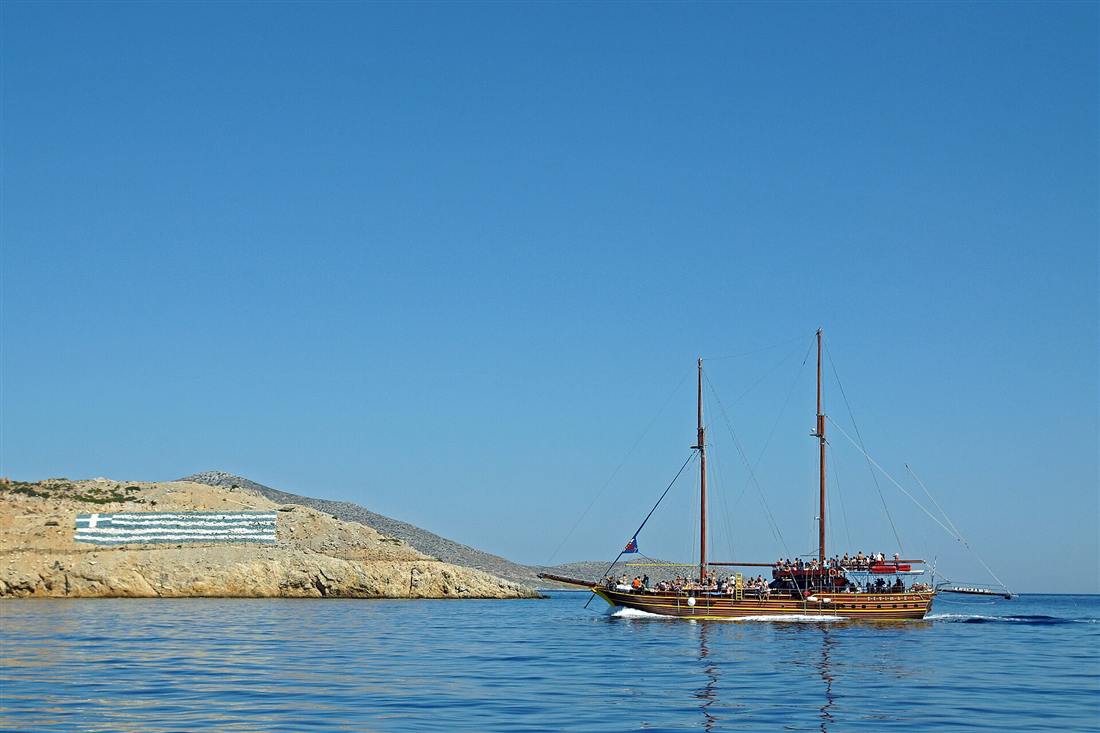
Kos scuba diving is diving in the Dodecanese from centres on Kos, with a morning boat out of Kos harbour to the Pserimos channel and Plati islet, Discover Scuba sessions for beginners and guided two-dive days for certified divers. Plan the whole trip with Greece Tours.
This guide covers Kos scuba diving in full: what a session includes, the Discover Scuba programme for beginners with no certification, the shape of a Kos diving boat day, guided dives for certified divers, the dive sites from Kefalos bay to Mastichari, what you see underwater, the courses, the season and conditions, what it costs, and how to book.
What Is Kos Scuba Diving and What Does a Session Include?
Kos scuba diving is guided underwater diving run from dive centres in Kos town and Kefalos, covering shore entries and boat trips to reefs, walls, and neighbouring islets. A session pairs a certified instructor with full equipment, a safety briefing, and one or two dives matched to the diver’s skill level.
Kos scuba diving ends with the surface interval and the logbook entry. Kos scuba diving is booked ahead for a fixed, agreed price per person. Registration starts the day: a medical questionnaire, a signed liability form, and equipment fitting for mask, fins, wetsuit, buoyancy vest, regulator, and tank. Staff run through hand signals, entry technique, and the dive plan before the group moves to the boat or the shore point. Kos town’s harbour puts a cluster of centres within walking distance, so a morning session leaves the rest of the day open.
Kos scuba diving ends with the surface interval and the logbook entry. Two formats cover the market. Trial or introductory dives take first-timers through pool-style skills before a short guided descent, while guided dives for certified divers head straight to a chosen site with a dive leader setting the route and depth. Course days run alongside both, so a beginner can start a certification the same week as a trial dive.
Kos scuba diving is booked ahead for a fixed, agreed price per person. Equipment on Kos scuba diving trips is centre-owned and checked before each departure: tanks filled and pressure-tested, regulators serviced, and buoyancy vests fitted to the diver rather than handed out at random. A debrief after the dive covers what was seen, depth and bottom time reached, and air consumption.
Do You Need a Certification, or Can Beginners Try Kos Scuba Diving?
No certification is required for a first dive. The Discover Scuba programme takes complete beginners through a theory briefing, shallow-water skills practice, and a guided dive to five or six metres with an instructor alongside for the entire time underwater.
The instructor on Kos scuba diving holds contact with beginners throughout. For beginners, Kos scuba diving starts with a briefing and shallow-water skills. The briefing covers equalising ear pressure, breathing through a regulator, clearing a flooded mask, and the hand signals used underwater. Skills practice happens standing or kneeling in shin-to-waist-deep water off the beach, where an instructor checks each skill is comfortable before moving to open water. The guided dive that follows stays shallow, close to the entry point, and paced to the slowest member of the group.
The instructor on Kos scuba diving holds contact with beginners throughout. A medical questionnaire is completed before booking, screening for conditions that affect diving such as heart or lung issues, recent surgery, or pregnancy; anyone flagged on the form is referred to a doctor for clearance before entering the water. Minimum age for the beach programme is ten, and centres run a one-to-one instructor-to-diver ratio for younger participants.
For beginners, Kos scuba diving starts with a briefing and shallow-water skills. Confidence in the water, not swimming ability at a competitive level, is what the programme tests. A diver comfortable floating and breathing calmly through a mouthpiece passes the pool-style skills, and the instructor stays within arm’s reach through the descent, the ascent, and every moment in between.
Where Are the Best Kos Scuba Diving Sites?
Kos scuba diving sites cluster around Kos town harbour, the channel toward Pserimos island, the reefs off Plati islet, and the strait shared with Kalymnos, plus shore-entry spots at Kefalos bay, Agios Stefanos, Tigaki, and Mastichari.
Kos scuba diving passes rocky reefs, walls and seagrass meadows. The choice of Kos scuba diving comes down to the centre, the site and the certification. Kos town centres run their boats out of the main harbour, a short crossing from the Pserimos channel and the drop-offs near Plati islet, giving two dive sites in a single boat trip. The strait toward Kalymnos opens onto deeper walls and stronger current, a step up used once a diver has logged open-water time on Kos.
Kos scuba diving passes rocky reefs, walls and seagrass meadows. The south-west coast around Kefalos bay and Agios Stefanos offers sheltered, shallow shore entries: sandy patches broken by rock and seagrass, calm even when the wind picks up elsewhere on the island. These sites suit trial dives and refresher dives, since the entry is a walk-in from the beach rather than a boat transfer, and the shallow depth keeps bottom time long.
The choice of Kos scuba diving comes down to the centre, the site and the certification. On the north shore, Tigaki and Mastichari add flatter, sandier terrain with shorter boat runs from centres based nearer those towns. Kos scuba diving covers rock reef, open sand, seagrass meadow, and wall terrain within a compact stretch of coastline, so a week on the island rarely repeats the same site twice.
What Does a Kos Scuba Diving Boat Day Look Like?
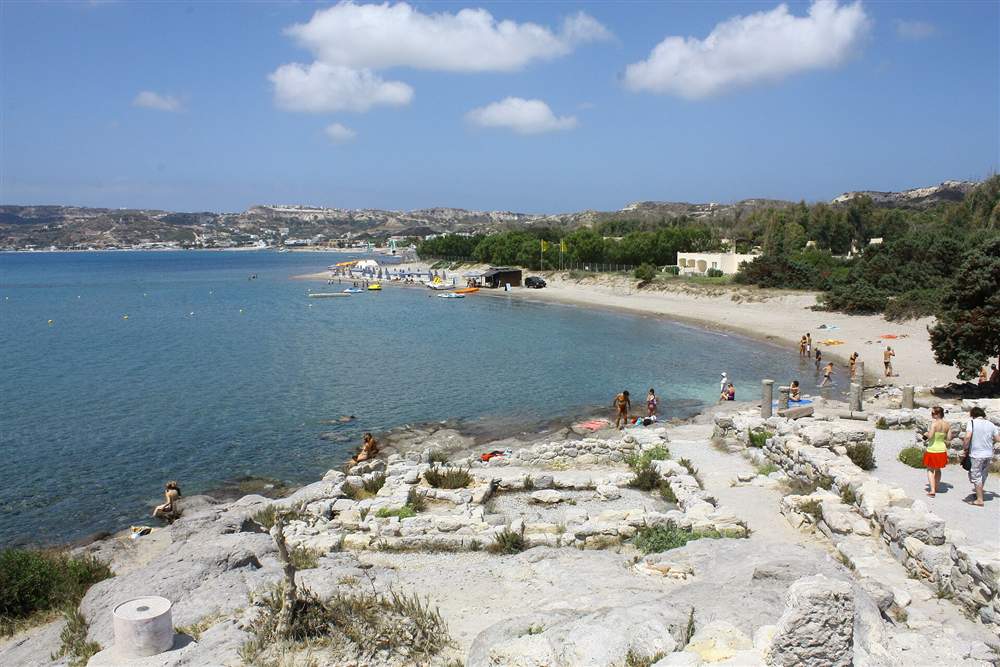
A boat day starts with a morning departure from Kos harbour, a run out to Pserimos or Plati, two dives with a surface interval between them, and a return to port in the early afternoon, leaving the rest of the day free.
For certified divers, Kos scuba diving opens the deeper walls and caverns. A private Kos scuba diving session pairs one instructor with one guest. Divers gather at the centre before the boat leaves, gear is loaded and checked, and the crossing to the first site takes under an hour on a calm morning. The first dive of the day goes to the deeper of the two planned sites while air supplies are at their freshest, with the group following a dive leader along a set route.
For certified divers, Kos scuba diving opens the deeper walls and caverns. Between dives, the boat anchors or drifts while the group surfaces, logs air and depth, and takes a break of at least an hour before the second dive, the minimum interval needed to let dissolved nitrogen clear from the body. Non-divers and certified divers alike use this window to snorkel over the shallow fringe of the site.
A private Kos scuba diving session pairs one instructor with one guest. Groups on Kos scuba diving boats stay small, split further by two instructors on busier departures so that a Discover Scuba group and a certified group can dive the same trip without either one waiting on the other. The boat is back at the harbour by early afternoon, in time for lunch in the old town or an afternoon at a nearby beach.
What Do Certified Divers Dive at Kos?
Certified divers on Kos scuba diving trips book guided two-dive days to walls, drop-offs, reefs, and caverns, with refresher dives available after time away from the water and nitrox offered by centres set up to fill it.
The medical questionnaire is completed before Kos scuba diving begins. The morning slot for Kos scuba diving fills first in high season. A wall dive off the Pserimos channel or the Kalymnos strait drops from a shallow reef top into deeper blue water along a rock face, giving an Advanced-level diver depth, current, and a clear reference line to follow on the descent and ascent. Caverns and swim-throughs along the rockier stretches of coast add an overhead component for divers who hold the training for it, with a dive leader briefing the route and the exit points before entry.
The medical questionnaire is completed before Kos scuba diving begins. Refresher dives, a short pool or shallow-water session to rebuild comfort with the gear, are booked by certified divers returning after a long gap between trips; the refresher runs skills review followed by a guided dive rather than a full course. Divers chasing more range after a Kos trip continue their training at Rhodes scuba diving centres in the same island chain, where deeper wrecks and longer wall dives extend the same certification.
The morning slot for Kos scuba diving fills first in high season. Centres offering nitrox fill tanks with an enriched-air blend that extends bottom time at depth by reducing nitrogen loading, available to divers holding the enriched-air certification or willing to add it as a short specialty course. Underwater scooter dives, using a battery-powered DPV to cover more ground per dive, run as a guided add-on for certified divers.
What Do You See Underwater on a Kos Dive?
Kos dives pass through Posidonia seagrass meadows and rock reef holding moray eels, octopus, grouper, barracuda schools, damselfish, salema, scorpionfish, nudibranchs, and sponge growth, in water that runs clear to twenty-five or thirty metres of visibility.
Kos scuba diving includes the transfer from the hotel where the centre offers it. Families take Kos scuba diving for the guided shallow dives off Pserimos. Posidonia seagrass carpets the sandy flats between reef patches, a protected native meadow that shelters juvenile fish and anchors the sand against current; divers are briefed not to touch or kick through it. Moray eels sit in rock crevices with just the head showing, octopus change colour and texture against the reef within seconds of being spotted, and grouper hold still in the open where the rock gives them cover on one side.
Kos scuba diving includes the transfer from the hotel where the centre offers it. Open water off the drop-offs brings barracuda moving in loose schools, while damselfish and salema crowd the shallower reef top in dense, moving clouds that scatter and reform around a diver passing through. Scorpionfish lie motionless on rock or sand, camouflaged well enough that a dive leader points them out, and nudibranchs turn up in bright, small patches on rock walls.
Families take Kos scuba diving for the guided shallow dives off Pserimos. Sponge growth on the deeper rock ties directly into the wider Dodecanese: Kalymnos, across the strait from Kos, built its economy on sponge diving for generations, and the same sponge beds extend into Kos scuba diving sites on the deeper walls. Visibility across the region holds in the twenty-five to thirty metre range for most of the season, dropping only after heavy rain stirs sediment near river mouths and harbour entrances.
What Courses Run From Kos Dive Centres?
Kos dive centres run the PADI and SSI ladder from Discover Scuba through Scuba Diver, Open Water Diver, Advanced Open Water, Rescue Diver, and specialty courses, each stage adding depth range, skills, and dive count to the certification.
The south-west coast at Kefalos adds shore entries to Kos scuba diving. Kos scuba diving runs from centres in Kos town and along the island coast. Discover Scuba is a single-day trial with no certification issued, built to test the water before committing to a course. Scuba Diver, a shortened entry certification, runs over two days of theory and pool work plus open-water dives, capping depth lower than the full Open Water award. Open Water Diver, the standard first certification, spans three to four days combining theory, confined-water skills, and four open-water dives, clearing a diver to eighteen metres unsupervised with a buddy.
The south-west coast at Kefalos adds shore entries to Kos scuba diving. Advanced Open Water builds on that base over two days of five adventure dives, one of them a deep dive to thirty metres and one a navigation dive, extending the depth limit and adding skills such as night diving or wreck orientation depending on which specialties are chosen. Rescue Diver, a heavier course run over two to three days, drills self-rescue, diver-assist, and emergency management scenarios.
Kos scuba diving runs from centres in Kos town and along the island coast. Specialty courses layered onto any stage include nitrox, navigation, night diving, and underwater photography, each a short add-on of one or two dives. A diver arriving on Kos with no certification can, across a single stay, complete Open Water and move into Advanced training before flying home.
When Is the Kos Diving Season and What Are the Conditions?
The Kos diving season opens in April and runs through late October, extending into the following month in mild years. Water temperature starts near seventeen or eighteen degrees in spring and climbs to twenty-five or twenty-six degrees by late summer.
The price of Kos scuba diving covers the instructor, the equipment and the boat. Spring dives call for a thicker wetsuit, five to seven millimetres, or a semi-dry suit for divers sensitive to cold, since the water at depth stays cooler than the surface reading even once air temperatures climb. By high summer a three-millimetre shorty is enough for most divers on shallow sites, though anyone doing repeat dives across a full day tends to keep a full suit on for the extra insulation over long bottom times.
Every Kos scuba diving session starts at the centre with theory and kit. The meltemi, a strong seasonal wind out of the north that builds through summer, roughens the open crossings and pushes centres to switch sites rather than cancel outright: boats reroute to the sheltered lee side of Pserimos or tuck closer to shore on the Kefalos side of Kos, where the island blocks the worst of the swell. Wind speed builds through the afternoon, the practical reason morning boat slots stay calmest and sell out first in peak weeks.
The price of Kos scuba diving covers the instructor, the equipment and the boat. Late-season dives, into October, bring the flattest water of the year on calm mornings, along with cooler air topside. A wetsuit thickness recommendation from the centre at booking accounts for the exact week, since spring, midsummer, and autumn each sit on a different point of the same temperature curve.
What Does Kos Scuba Diving Cost and What Is Included?
Kos scuba diving pricing is agreed with the centre at the time of booking and set per person by the type of dive or course chosen. A standard package covers full equipment, an instructor or dive leader, a briefing, and the guided dive itself, plus the boat where the site is offshore.
Kos scuba diving runs as a half-day session or a full two-dive boat day. Trial dives and single guided dives are priced as a flat package that folds in tank, weights, mask, fins, wetsuit, and regulator rental, so a first-time diver arrives with only swimwear and a towel and leaves with nothing extra to rent separately. Course pricing for Open Water or Advanced Open Water bundles the multi-day instruction, all open-water dives, and the training materials into one package.
Kos scuba diving carries a PADI and SSI course path from Open Water upward. Extras sit outside the base package and are quoted separately: underwater photo or video packages covering the dive, an additional dive added onto a boat day beyond the standard two, and hotel pickup where a centre runs a shuttle from resorts along the coast. Nitrox fills and specialty course add-ons are priced per dive or per short course.
Kos scuba diving runs as a half-day session or a full two-dive boat day. Confirming exactly what is bundled into a quoted package, rather than assuming it, avoids surprises at checkout: a number of packages include the marine park or site fee charged on certain protected areas, while others list it as a separate line, and the difference is worth asking about at the point of booking rather than on the boat.
What Do You Bring and How Do You Prepare for a Dive?
Bring swimwear, a towel, sun protection, and water. Skip alcohol before diving, avoid flying for eighteen to twenty-four hours after the last dive, stay hydrated through the day, complete the medical form honestly, and skip a heavy meal right before entering the water.
The dive sites for Kos scuba diving reach Plati islet and the Kalymnos strait. Sun protection matters more on a boat than on a beach, since the reflected glare off open water adds to direct exposure; a reef-safe sunscreen, a hat for the surface intervals, and a rash guard under the wetsuit cut down on burn. Water intake through the morning keeps a diver properly hydrated, since dehydration is one of the recognised contributing factors in decompression stress.
The set price on Kos scuba diving covers the equipment, the guide and the dives. Alcohol the night before or morning of a dive is avoided outright, since it dehydrates the body and slows reaction time underwater. A heavy meal immediately before a dive sits poorly with the pressure changes involved, so a light breakfast a couple of hours ahead is the better call, with proper eating saved for after the boat returns.
The dive sites for Kos scuba diving reach Plati islet and the Kalymnos strait. The eighteen-to-twenty-four-hour no-fly window after the last dive of a trip is a fixed safety rule tied to residual nitrogen clearing before cabin pressure drops on a flight. The medical questionnaire completed at booking is filled in honestly rather than skimmed, since it exists to catch conditions that change how a dive is planned.
How Do You Book Kos Scuba Diving, and Where Does It Fit in a Kos Trip?
Book Kos scuba diving ahead of the date, since morning slots fill first in high season. Confirm certification level and any medical condition at booking, along with group size, the instructor-to-diver ratio, and the pickup point before the day arrives.
Booking Kos scuba diving ahead secures the date and the instructor. Booking lead time matters most in the middle of summer, when the morning boat slot, the calmest and most popular window, sells out days ahead at busier centres. At the point of booking, stating a certification card number or level, any relevant medical history, and swimming comfort lets the centre match the right site and group to the diver.
Planning Kos scuba diving ahead beats the scramble for a summer date. Group size and the instructor-to-diver ratio are worth asking about directly, since a smaller group on the boat means more individual attention and shorter waits between briefings. Pickup point matters for divers staying outside Kos town, since a centre running shuttle service from Kefalos, Tigaki, or Mastichari saves a taxi or bus trip to the harbour.
Booking Kos scuba diving ahead secures the date and the instructor. A half-day dive slot, whether trial dive, guided dive, or a single course session, leaves the rest of the day open for the Asklepion sanctuary, the medieval castle, and the streets of the old town. Built this way, Kos scuba diving becomes one stop inside a wider Kos itinerary rather than a trip in itself.
Frequently Asked Questions
How much is Kos scuba diving?
Kos scuba diving is priced per person for the whole session, agreed at booking. The price covers the instructor or guide, the full equipment, the briefing, the boat and the guided dives; photos, extra dives and hotel pickup are included by the centres that offer them.
Do you need a certification for Kos scuba diving?
No. The Discover Scuba programme takes complete beginners: a briefing and theory session, shallow-water skills with the instructor, then a guided dive to about five or six metres with the instructor alongside throughout.
Where are the Kos dive sites?
The Kos dive sites run out of Kos harbour to the Pserimos channel and Plati islet toward Kalymnos, and along the island coast at Kefalos bay, Agios Stefanos, Tigaki and Mastichari, with reefs, walls and caverns close inshore.