
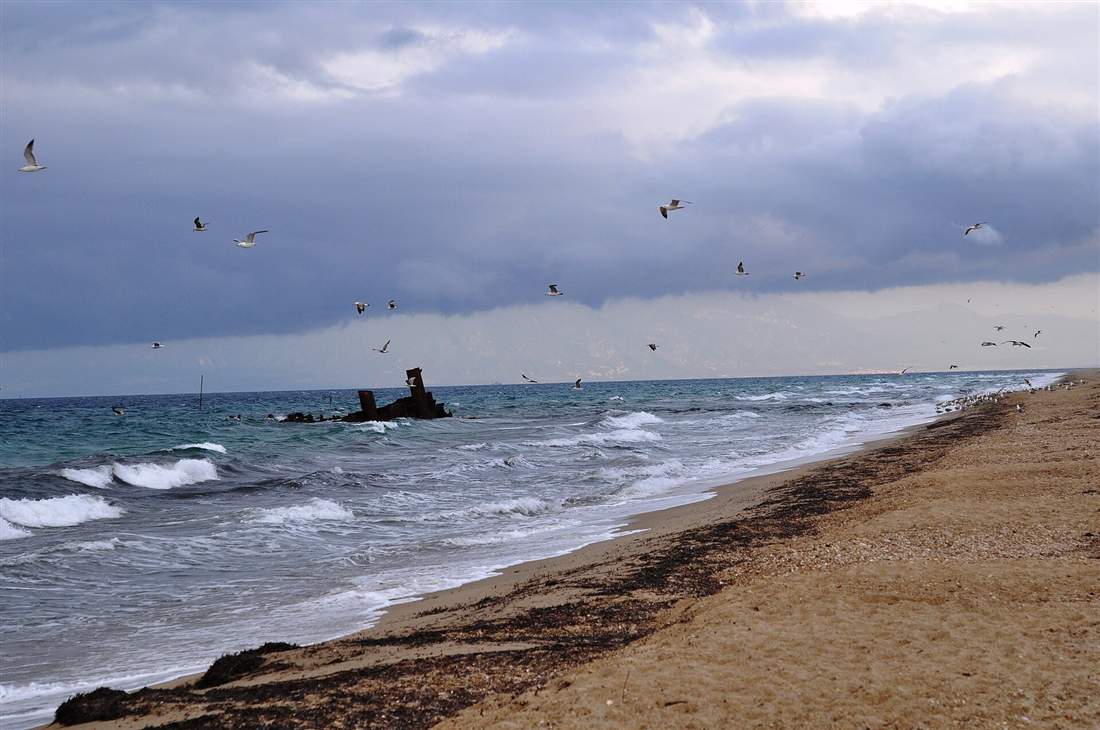
Thessaloniki scuba diving is diving in the Thermaic gulf from centres on the Kalamaria waterfront and the city’s eastern suburbs, with the shallow Epanomi shipwreck as the set-piece beginner dive and guided dives down the gulf for certified divers. Plan the whole trip with Greece Tours.
This guide covers Thessaloniki scuba diving in full: what a session includes, the Discover Scuba programme for beginners with no certification, the Epanomi shipwreck dive, guided dives for certified divers, where the centres go along the gulf, what you see underwater, the courses, the season and conditions, what it costs, and how to book.
What Is Thessaloniki Scuba Diving and What Does a Session Include?
Thessaloniki scuba diving pairs a city-based dive centre with guided dives along the Thermaic Gulf, spanning a first shallow dive on a sunken wreck to multi-tank days for certified divers, with wetsuit, tank, briefing and an instructor included in every booking.
Thessaloniki scuba diving ends with the surface interval and the logbook entry. Thessaloniki scuba diving is booked ahead for a fixed, agreed price per person. Dive centres operating out of Thessaloniki sit on the waterfront, close to the city centre and a short drive from the airport. A booking opens with check-in, where staff confirm certification level or, for a first dive, work through a medical questionnaire before fitting a wetsuit, mask, fins, buoyancy vest and tank. The visit runs as a half-day block, leaving the rest of the day open for the city.
Thessaloniki scuba diving ends with the surface interval and the logbook entry. On the water, the format tracks diving history. A first-timer stays shallow, close to the instructor, who holds contact through descent and ascent. Certified divers get a full site briefing covering planned depth, the route around the wreck or reef, and hand signals before entry. Every dive logs bottom time, depth and air use, and the centre debriefs the group on land, comparing what was seen against the site map.
Thessaloniki scuba diving is booked ahead for a fixed, agreed price per person. The Thermaic Gulf gives Thessaloniki scuba diving a character distinct from the open Aegean: flatter seas, short boat runs, and sites sitting inside sheltered bays rather than exposed headlands. That shelter keeps entries calm for beginners and keeps boat days short for certified groups working two tanks in a morning.
Do You Need a Certification, or Can Beginners Try Thessaloniki Scuba Diving?
Beginners dive without a certification through a Discover Scuba session: a theory and safety briefing at the dive centre, shallow-water skills practice, and a guided dive to about six metres with an instructor alongside throughout, open to anyone from age ten who clears a short medical questionnaire.
The instructor on Thessaloniki scuba diving holds contact with beginners throughout. For beginners, Thessaloniki scuba diving starts with a briefing and shallow-water skills. The Discover Scuba format starts on land. An instructor covers the equipment, the hand signals and the skills every diver practises before descending: clearing water from the mask, recovering a regulator, and controlling buoyancy at the surface. The group stays small so the instructor keeps a hand on each diver during the descent, and every first-timer completes a written medical form declaring fitness to dive.
The instructor on Thessaloniki scuba diving holds contact with beginners throughout. The dive itself sits shallow, close to six metres, deep enough to see fish, rock and wreck structure without the pressure changes that concern new divers. The instructor stays within arm’s reach for the entire bottom time, adjusting buoyancy and pointing out marine life. Ten is the minimum age, and children dive a shorter, shallower profile than adults. No swimming test is asked for beyond basic water comfort.
For beginners, Thessaloniki scuba diving starts with a briefing and shallow-water skills. Thessaloniki scuba diving programmes for first-timers take a booking a few days ahead, since group sizes are capped and morning slots fill first through the season. Confirming the date early gives the centre time to review the medical form. A Discover Scuba dive counts toward credit on a certification path for a diver who later enrols in a course.
Where Do Thessaloniki Dive Centres Go?
Thessaloniki dive centres sit on the Kalamaria waterfront and in the eastern suburbs, running boats and road transfers south along the Thermaic Gulf to Epanomi, Nea Michaniona, Angelochori and Peraia, with the shallow Epanomi wreck as the closest site and deeper ground further toward the Kassandra coast.
Thessaloniki scuba diving passes seagrass beds, wreck structure and encrusting growth. The choice of Thessaloniki scuba diving comes down to the centre, the site and the certification. The Kalamaria stretch of the city holds the highest concentration of dive shops and instructors, with boats launching from the marina there. South of it runs a chain of small harbours: Nea Michaniona, a working fishing port with its own sheltered bay; Angelochori, a flatter shoreline suited to shore entries; and Peraia, closer to the city and used for checkout dives before a boat trip.
Thessaloniki scuba diving passes seagrass beds, wreck structure and encrusting growth. Epanomi sits roughly forty minutes from the Kalamaria centres and holds the region’s best-known dive: a shallow wreck close enough to shore that first-timers and certified divers book it on the same trip. Beyond Epanomi the coast bends toward the base of the Kassandra peninsula, where the ground drops deeper and the sites shift from sand and seagrass toward rock and reef, suited to divers already certified.
The choice of Thessaloniki scuba diving comes down to the centre, the site and the certification. Centres plan the day’s route around wind and visibility, choosing the sheltered side of the gulf when the wind picks up. A morning slot from a Thessaloniki base still reaches the Kassandra peninsula within a half-day window when conditions favour the run, though most trips stay within the closer Epanomi-to-Peraia stretch.
What Is the Epanomi Shipwreck Dive?
The Epanomi shipwreck is the signature Thessaloniki scuba diving site: a hull sitting shallow enough for a first dive, a maximum depth of about six metres, and a guided circuit of around forty-five minutes led by an instructor, with the structure encrusted in growth and colonised by resident fish.
For certified divers, Thessaloniki scuba diving opens the deeper ground down the gulf. A private Thessaloniki scuba diving session pairs one instructor with one guest. The wreck lies close enough to the Epanomi shore that a Discover Scuba group and a certified team dive it on the same boat trip, entering within minutes of leaving harbour. Its shallow depth removes the pressure limits that shape deeper dives, so bottom time runs longer than a typical open-water dive elsewhere on the gulf, and the instructor keeps the group moving in a loop around the hull.
For certified divers, Thessaloniki scuba diving opens the deeper ground down the gulf. Time underwater has turned the hull into a reef in its own right. Sponges, tube worms and algae cover the metal, and the structure shelters sea bream, damselfish and the occasional moray eel tucked into a gap in the plating. Sunlight still reaches the wreck, so colour and visibility inside the hull stay better than on deeper sites down the gulf.
A private Thessaloniki scuba diving session pairs one instructor with one guest. Because the site is shallow and sheltered, centres run it as a standard stop through the season, pairing it with a second dive further along the coast for certified groups or keeping it as the single dive on a beginner’s half-day trip. Its position close to Epanomi harbour keeps the boat ride short, which matters on a windier day when longer runs get cancelled first.
What Do Certified Divers Dive From Thessaloniki?
Certified divers from Thessaloniki book guided two-dive days that reach deeper wrecks and reef ground further down the gulf, drift dives and boat entries beyond the shallow Epanomi site, refresher dives before a first outing of the trip, and the Halkidiki peninsulas within an hour and a half by road.
The medical questionnaire is completed before Thessaloniki scuba diving begins. The morning slot for Thessaloniki scuba diving fills first in high season. A standard certified-diver day runs two tanks with a surface interval between, the first dive the shallower of the two and the second pushed toward the depth limit of the diver’s certification. Boat entries are the norm south of Epanomi, where the coastline turns rocky and a shore entry is impractical; drift conditions appear where current runs along the gulf mouth.
The medical questionnaire is completed before Thessaloniki scuba diving begins. Divers returning to the water after time away book a refresher before the first open dive of the trip, running through mask clearing, buoyancy and emergency signals in shallow water before joining the group. Nitrox fills are offered at centres equipped for it, extending bottom time on deeper sites without shortening the surface interval, useful on a multi-day trip stacking dives back to back.
The morning slot for Thessaloniki scuba diving fills first in high season. For divers wanting more ground than the gulf offers, the peninsulas covered by Halkidiki scuba diving sit within an hour and a half of the city by road, opening up clearer water and rockier terrain than the Thermaic Gulf sites closer to Thessaloniki. Centres run these as day trips with an early departure, or pair a gulf dive earlier in a stay with a Halkidiki day later on.
What Do You See Underwater in the Thermaic Gulf?
Thessaloniki scuba diving sites in the Thermaic Gulf show seagrass beds, octopus, moray eels, scorpionfish, sea bream and damselfish, alongside nudibranchs, sponges and encrusting growth on wreck structure, in water that runs greener and more silted than the open Aegean depending on wind and river outflow.
Thessaloniki scuba diving is arranged a few days ahead with the dive centre. Families take Thessaloniki scuba diving for the guided shallow dive on the wreck. Seagrass meadows carpet the sandy stretches of the gulf floor, giving cover to juvenile fish and a hunting ground for octopus, which tuck into rock crevices and empty shells by day. Scorpionfish sit motionless on sand or rock, camouflaged well enough that a diver needs a guide’s eye to spot one before a fin comes close. Sea bream move in loose groups over open ground; damselfish hold territory around shelter.
Thessaloniki scuba diving is arranged a few days ahead with the dive centre. Moray eels favour the wreck sites and rocky ledges, holding a fixed den and showing head and jaw at the entrance rather than swimming in open water. Nudibranchs turn up on rock and wreck surfaces for divers who slow down, their colour standing against the duller background. Sponges and tube worms cover the Epanomi wreck’s plating and any undisturbed ledge, building the encrusted texture that makes these sites work as a reef.
Families take Thessaloniki scuba diving for the guided shallow dive on the wreck. Visibility on Thessaloniki scuba diving sites shifts with the season and the weather rather than staying constant. The gulf carries sediment from rivers feeding into it, giving the water a greener cast than the clearer Aegean sites further from the mainland, and a stretch of strong wind or heavy rain stirs the bottom and cuts visibility for a day or two after. Centres check conditions before a trip and move to the sheltered side when needed.
What Courses Run From Thessaloniki?
Thessaloniki dive centres run the full PADI and SSI course path: Discover Scuba, Scuba Diver, Open Water Diver, Advanced Open Water, Rescue Diver and Divemaster, plus specialty courses including wreck diving and nitrox, with pool and theory sessions held in the city year-round.
The Halkidiki peninsulas extend Thessaloniki scuba diving by an hour and a half of road. Thessaloniki scuba diving runs from centres on the Kalamaria waterfront. Open Water Diver is the entry certification: theory covering physics and physiology, confined-water skills in a pool, and open-water dives on the gulf sites, run across a handful of days with classroom and pool work early and dives toward the end. Scuba Diver is a shorter, limited version for divers wanting a card without the full skill set, upgradeable later.
The Halkidiki peninsulas extend Thessaloniki scuba diving by an hour and a half of road. Advanced Open Water builds on the entry certification with five dives from a fixed list, deep diving and navigation among the required pair, and specialty dives such as wreck or drift filling the rest. Rescue Diver shifts focus to managing another diver in difficulty, covering surface rescue and emergency response, and stands as a prerequisite for Divemaster.
Thessaloniki scuba diving runs from centres on the Kalamaria waterfront. Divemaster is the first professional level, combining theory, rescue skills and supervised leadership of certified-diver groups under instructor oversight, run over a longer stretch than the recreational courses. Specialty courses sit alongside the main path: wreck diving, built around the Epanomi site, and nitrox, covering gas planning for extended bottom times. Pool and theory sessions run year-round regardless of sea temperature.
When Is the Thessaloniki Diving Season and What Are the Conditions?
The Thessaloniki scuba diving season runs from spring through late October, with water near 15-16°C early in the season rising to 24-25°C by late summer; a thicker wetsuit or a drysuit covers the cooler shoulder months, and centres schedule morning slots around the Vardaris wind for the calmest water.
Every Thessaloniki scuba diving session starts at the centre with theory and kit. The price of Thessaloniki scuba diving covers the instructor, the equipment and the dive. Water temperature climbs through the season rather than jumping straight to summer warmth. Early dives sit in the mid-teens, cold enough that a thicker wetsuit or a drysuit is standard kit, and by high summer the gulf warms into the mid-twenties, comfortable in a standard wetsuit for a two-tank day. Shoulder months at each end of the season bring the coolest water and the smallest crowds.
Every Thessaloniki scuba diving session starts at the centre with theory and kit. The Vardaris is the dominant local wind, blowing out of the north-west and picking up strength through the afternoon on the days it runs. Centres plan around it, choosing the sheltered eastern shore when the Vardaris is active and shifting the site list to whichever stretch sits out of the direct wind line. A windy afternoon on one side still leaves calm water on the other.
The price of Thessaloniki scuba diving covers the instructor, the equipment and the dive. Morning slots run calmest, before the day’s heat builds and the wind picks up, which is why centres load the first boat with deeper or more exposed sites and hold shallower, sheltered dives for later if conditions turn. Booking the early slot means first pick of the route rather than whatever is left once the wind rules others out.
What Does Thessaloniki Scuba Diving Cost and What Is Included?
Thessaloniki scuba diving pricing is set per person at booking and covers the instructor or guide, full equipment rental, the safety briefing, the guided dive itself and boat or transfer to the site, with photos, extra dives and certification card fees priced separately as add-ons.
Thessaloniki scuba diving carries a PADI and SSI course path from Open Water upward. Thessaloniki scuba diving runs as a half-day session or a guided two-dive day. The base package for a Discover Scuba session and a certified-diver dive alike bundles equipment, guiding and transport into a single per-person rate confirmed at booking. Wetsuit, mask, fins, buoyancy vest, tank and regulator come as standard, so a diver with no personal gear arrives needing only swimwear and a towel. The instructor leading the dive sits inside that same rate.
Thessaloniki scuba diving carries a PADI and SSI course path from Open Water upward. Items outside the core dive carry their own charge, confirmed with the centre ahead of the trip. Underwater photos or video sit outside the base rate, as does a second or third dive added onto a single-dive booking. Certification cards issued at the end of a course carry a processing fee set by the issuing agency, separate from the course fee.
Thessaloniki scuba diving runs as a half-day session or a guided two-dive day. Group size affects what is charged per head, with a smaller group commanding a higher per-person rate than a full boat since the instructor cost and the boat run split fewer ways. Centres confirm the exact figure and what it covers at booking rather than publishing one fixed rate across every date.
What Do You Bring and How Do You Prepare for a Dive?
Divers bring swimwear, a towel, sun protection and drinking water to a Thessaloniki scuba diving trip, skip alcohol before the dive, avoid flying for eighteen to twenty-four hours afterward, arrive hydrated without a heavy meal beforehand, and complete the medical form ahead of the booked date.
The set price on Thessaloniki scuba diving covers the equipment, the guide and the transfer. The dive sites for Thessaloniki scuba diving reach Epanomi, Angelochori and Peraia. Personal items stay minimal since the centre supplies the technical gear. Swimwear worn under the wetsuit, a towel, sun protection for time on the boat between dives, and a bottle of water cover the essentials, plus a change of clothes and a dry bag for phones or wallets.
The set price on Thessaloniki scuba diving covers the equipment, the guide and the transfer. Physical preparation matters as much as what gets packed. Alcohol before a dive raises the risk of decompression sickness and dulls judgement underwater, so centres ask divers to skip it entirely on a dive day. A heavy meal shortly before entering the water sits poorly with the pressure changes of a descent, so a light meal well ahead of dive time and steady hydration suit the day better.
The dive sites for Thessaloniki scuba diving reach Epanomi, Angelochori and Peraia. After the last dive of the day, flying stays off the table for eighteen to twenty-four hours, since cabin pressure at altitude interacts with residual nitrogen still in the body. The medical questionnaire, covering heart, lung and ear conditions among other flags, needs completing ahead of the date, giving the centre time to review any condition needing a doctor’s clearance.
How Do You Book Thessaloniki Scuba Diving, and Where Does It Fit in a Trip?
Booking Thessaloniki scuba diving ahead secures the date and the morning slot, which fills first through the season; confirm certification level and any medical condition at the time of booking, along with group size and instructor ratio, then meet at the dive centre for a half-day trip that leaves the rest of the day free.
Planning Thessaloniki scuba diving ahead beats the scramble for a summer date. Booking Thessaloniki scuba diving ahead secures the date and the instructor. Confirming a date early matters most in the warmer months, when morning slots at busier centres book out first and later dates are left for anyone booking closer to the trip. The booking asks for certification level, or none for a Discover Scuba dive, along with any medical condition flagged on the questionnaire, so the centre plans group composition and instructor assignment ahead of the day.
Planning Thessaloniki scuba diving ahead beats the scramble for a summer date. Group size and instructor ratio shape the day: a smaller group gets closer instructor attention and more flexibility on the site chosen, while a fuller boat still keeps a fixed diver-to-guide ratio for safety. The meeting point sits at the dive centre, where check-in, gear fitting and briefing happen before the group moves to the boat or shore entry together.
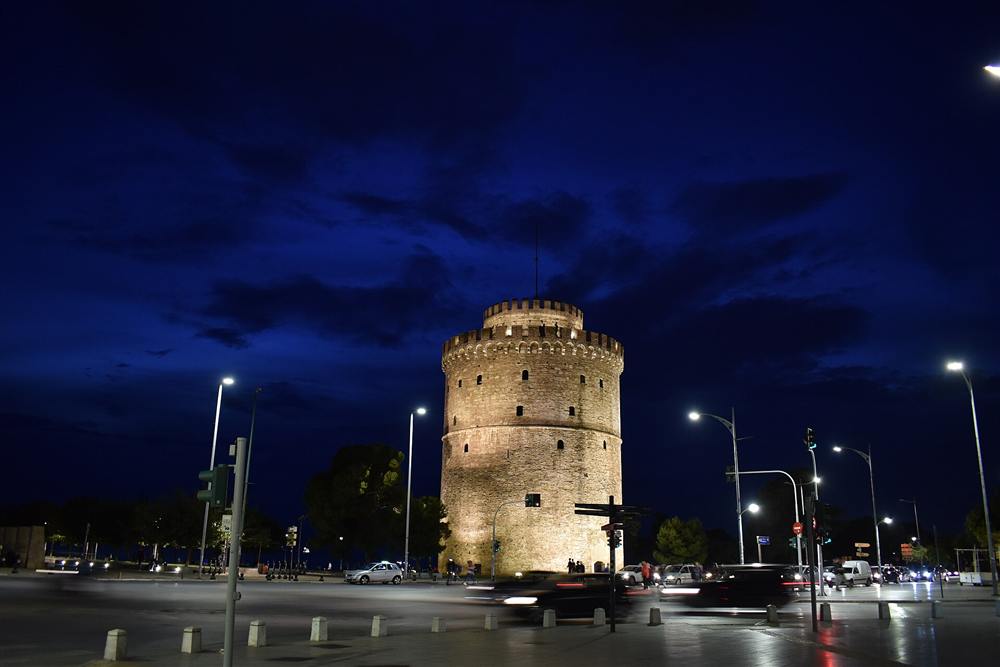
Booking Thessaloniki scuba diving ahead secures the date and the instructor. A half-day dive trip leaves the rest of the day open for the city, making efficient use of a short stay. The waterfront promenade, the White Tower and the upper town’s older streets sit within easy reach of a Kalamaria-based centre. Divers extending the stay add a day trip into Halkidiki, pairing the gulf dive with a longer look at the peninsulas beyond it.
Frequently Asked Questions
How much is Thessaloniki scuba diving?
Thessaloniki scuba diving is priced per person for the whole session, agreed at booking. The price covers the instructor or guide, the full equipment, the briefing, the transfer and the guided dive; photos, extra dives and certification card fees are quoted separately.
Do you need a certification for Thessaloniki scuba diving?
No. The Discover Scuba programme takes complete beginners: a theory and safety briefing at the dive centre, shallow-water skills with the instructor, then a guided dive to about six metres on the Epanomi shipwreck with the instructor alongside.
Where do the Thessaloniki dive centres go?
The centres sit on the Kalamaria waterfront and run south along the Thermaic gulf to Epanomi, Nea Michaniona, Angelochori and Peraia, with the shallow Epanomi shipwreck about forty minutes out and the Halkidiki peninsulas within an hour and a half by road.