
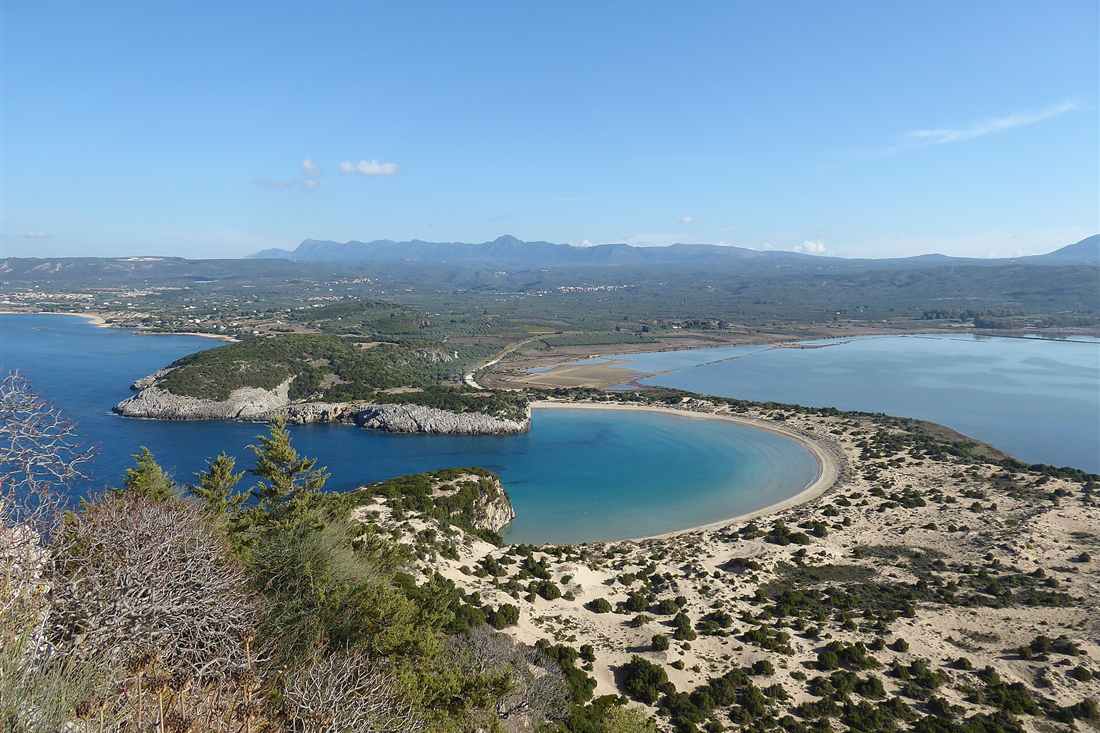
A Pylos day trip is a seven to nine hour run from Kalamata or Costa Navarino covering Voidokilia beach, the Palace of Nestor, the Niokastro fortress, Navarino Bay and Methoni castle, priced from 55 euros a head. Plan the rest of the trip with Greece Tours.
This page covers the day: what it costs, the route, Voidokilia, the Mycenaean palace, the two fortresses, the 1827 battle, the Gialova lagoon and how to book.
What does a Pylos day trip cost?
From 55 to 95 euros a head on a shared full-day tour from Kalamata, 250 to 420 for a private day for two to four, 120 to 180 from Costa Navarino with a guide, and 45 to 70 for a half day covering the bay alone.
The price covers the vehicle, the driver-guide and the fuel, and site entries are separate. A Pylos day trip is booked around it.
Palace of Nestor entry is 6 euros and Niokastro is 6, with a combined ticket at 8. This is what a Pylos day trip delivers.
Lunch at a Pylos or Gialova taverna runs 15 to 25 euros a head.
Cruise-passenger versions from the Katakolo and Kalamata berths are timed to the ship.
Private tours quote by the party and set their own route through the day.
Children go half price on the shared departures.
What does a Pylos day trip cover?
Voidokilia beach, the Palace of Nestor, the Niokastro fortress above Pylos town, Navarino Bay and the 1827 battle site, the Gialova lagoon, and Methoni castle on the coast south of it.
Voidokilia and the palace sit together at the northern end of the bay. Every Pylos day trip is routed around this.
Niokastro and the town square are the middle of the day. Pylos day trip guides prepare for it.
Methoni adds 40 minutes of driving and the best castle in Messenia.
Gialova lagoon is passed on the road and stopped at by the birding versions.
The whole circuit is 60 kilometres and the driving is under two hours.
A full day covers all six and a half day covers three.
What is Voidokilia beach?
A perfect semicircle of sand between two rock headlands at the north end of Navarino Bay, shaped like the Greek letter omega, with no road to it, no development on it and a lagoon behind.
The beach is reached on foot across the dunes from the Gialova side or by the path from Petrochori. The Pylos day trip listing states it plainly.
Homer’s description of the sandy shore where Telemachus landed is placed here. A Pylos day trip settles this at pickup.
Nestor’s Cave sits in the rock above the northern horn of the bay.
The water is shallow, warm and protected by the enclosing arms.
Nothing is sold on the beach, so the day needs water and shade carried in.
The dunes are protected and the marked paths are the only routes across them.
What is the Palace of Nestor?
The best-preserved Mycenaean palace in Greece, built around 1300 BC, excavated from 1939, holding a throne room with a circular hearth, a bathroom with its terracotta tub, and the archive of Linear B tablets found on the first day of digging.
The palace burned around 1200 BC and the fire baked the clay tablets that preserved them. This is what a Pylos day trip delivers.
Those tablets gave Michael Ventris the material that decoded Linear B as early Greek. The Pylos day trip route is set by it.
A modern roof covers the whole site and raised walkways run over the rooms.
The throne room’s hearth is four metres across and the floor plaster survives around it.
Homer’s Nestor ruled sandy Pylos and the site carries his name from that.
Entry is 6 euros and a visit takes 60 to 90 minutes.
The finds are in the Chora museum three kilometres away.
What is Niokastro?
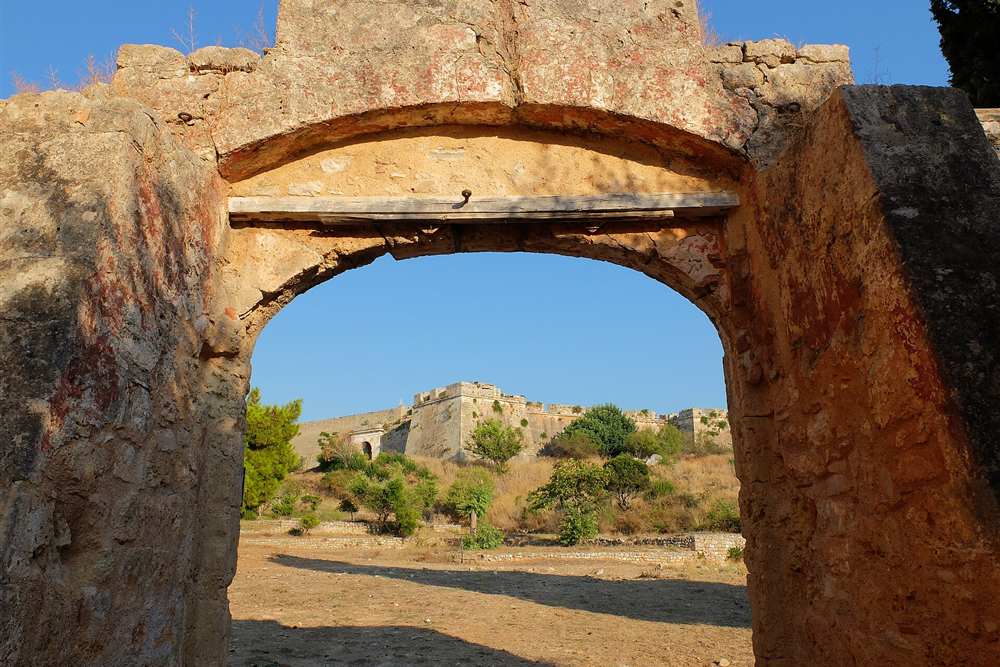
The New Castle built by the Ottomans in 1573 above Pylos town, a hexagonal fortress with a citadel, a bastion circuit, the Church of the Transfiguration inside it and an underwater archaeology museum in its restored barracks.
The fortress was raised after the battle of Lepanto to close the southern entrance to the bay. Pylos day trip guides prepare for it.
Venetians, French and Greeks all held it in turn. Guides raise it early on a Pylos day trip.
The walls run down to the sea and the view covers Sfaktiria and the whole bay.
The Centre for Underwater Archaeological Research occupies the restored buildings.
Entry is 6 euros and the grounds take an hour.
The site is five minutes on foot above the town square.
What happened at the battle of Navarino?
On 20 October 1827 a British, French and Russian fleet destroyed the Ottoman and Egyptian fleet inside Navarino Bay, the last major battle fought entirely under sail, and the action that secured Greek independence.
The allied fleet sailed into the enclosed bay and anchored among the Ottoman ships. A Pylos day trip settles this at pickup.
Sixty of the 78 Ottoman and Egyptian vessels were sunk in four hours. It decides which Pylos day trip suits the party.
The wrecks are still on the bottom and are surveyed by the underwater research centre.
The three admirals are commemorated by the obelisk in the Pylos town square.
Memorials to the British, French and Russian dead stand on Sfaktiria island.
A Pylos day trip tells the battle from the Niokastro walls above the water.
What is Sfaktiria?
The long island closing Navarino Bay from the west, four and a half kilometres of cliff and scrub, the site of the Athenian victory over Sparta in 425 BC and of the 1827 battle memorials.
The Spartan surrender here broke the belief that Spartans never surrendered. The Pylos day trip route is set by it.
Thucydides describes the campaign in detail and the ground matches his account. The Pylos day trip price reflects it.
The island is uninhabited and reached by boat from Pylos harbour.
Chapels and graves of the Russian and French sailors sit on its eastern shore.
Boat trips around it run from the harbour for 15 to 30 euros.
The island is what makes the bay the natural anchorage it is.
What is the Gialova lagoon?
A shallow coastal wetland of 700 hectares behind Voidokilia, the southernmost migration stop in the Balkans, holding flamingos, herons, ospreys and the African chameleon that lives nowhere else in Europe.
More than 270 bird species have been recorded around the lagoon. Guides raise it early on a Pylos day trip.
Spring and autumn passage bring the raptors and the waders. A Pylos day trip fills first on that count.
The African chameleon population here is the only European one.
Observation hides and a marked path run along the northern edge.
The lagoon is a Natura 2000 site and part of the same protected block as the dunes.
Birding versions of the day start here at first light.
What is Methoni castle?
A Venetian sea fortress on a promontory 12 kilometres south of Pylos, entered across a stone bridge over a moat, with a walled town inside and the octagonal Bourtzi tower standing in the sea beyond it.
Venice held Methoni from 1209 as a staging post on the route to the Holy Land. It decides which Pylos day trip suits the party.
The circuit walls run a kilometre and enclose the ruins of the medieval town. The Pylos day trip calendar is shaped by it.
The Bourtzi was built by the Ottomans after 1500 and is reached by a causeway.
Entry is free and the site is open through the day.
Methoni village and its beach sit beside the walls.
Koroni’s castle is 35 minutes further east on the other finger of the peninsula.
Where does a Pylos day trip start?
Kalamata at 50 minutes, Costa Navarino at 15, Methoni and Finikounda on the southern coast, and Katakolo cruise port at two hours for passengers coming off a ship.
Kalamata is the usual base and its airport takes summer flights from northern Europe. The Pylos day trip price reflects it.
Costa Navarino resorts sit on the bay itself and run their own guided versions. Guests meet it within the first Pylos day trip hour.
Athens is four hours by the motorway through Tripoli.
Cruise-day products are timed to the ship and sold separately.
Hotel pickup is included from Kalamata, Pylos, Gialova and Methoni.
Self-drivers park free at every site on the route.
When is the best time to go?
April to June and September to October, with 20 to 28 degrees for walking the sites and the bird passage through the lagoon. July and August reach 35 degrees and the palace has shade only under its roof.
Wildflowers cover the headland above Voidokilia through April. A Pylos day trip fills first on that count.
Sea temperature holds into late October for the beach stop. That is the Pylos day trip advantage over a hire car.
Winter is mild and wet and the sites stay open on shorter hours.
August fills the Costa Navarino resorts and the coastal tavernas.
Site hours shorten from November and the guides check before setting the route.
Morning starts beat the heat and the coach parties at the palace.
Is a Pylos day trip good for families?
Yes. Voidokilia is a safe shallow swim, the palace walkways are short and covered, Niokastro has open ground to run in, and the whole route has under two hours of driving.
The beach stop is what makes the day work for children. The Pylos day trip calendar is shaped by it.
Methoni’s moat bridge and sea tower hold attention better than a museum. A Pylos day trip covers the bay around it.
Child seats are fitted on request when the booking names the ages.
Shade is scarce at the beach, so hats and cover matter in summer.
Nestor’s Cave above Voidokilia is a ten-minute climb children manage.
Private versions let a family cut a site and add an hour of swimming.
What are the common Pylos day trip mistakes?
Driving to Voidokilia expecting a car park at the sand, skipping the Chora museum where the palace finds are, visiting the palace at midday in August, and trying to add Ancient Messene to the same day.
The beach is reached on foot and the nearest parking is a walk across the dunes. Guests meet it within the first Pylos day trip hour.
The gold cups and the tablets from the palace are in Chora, not on the site. The Pylos day trip season turns on this.
Midday at the palace is hot even under the roof.
Ancient Messene is 90 minutes north-east and deserves its own day, as do the Polylimnio waterfalls.
The fifth is leaving no time for Methoni, which is the best castle on the route.
A full day here runs eight hours and the half day misses the point.
How do you book a Pylos day trip?
Book two to four days ahead in July and August and a day ahead otherwise. Shared departures cap at eight to sixteen, and the private versions are the standard format out of Kalamata and Costa Navarino.
Operators confirm the pickup by message the evening before. That is the Pylos day trip advantage over a hire car.
Free cancellation up to 24 hours ahead is standard on the platform listings. A Pylos day trip is booked around it.
Entries, lunch and the boat to Sfaktiria are extra and are named on the listing.
Groups of four or more get a better rate on a private quote than on separate seats.
Cruise-day bookings state the ship and the berth time.
The Kalamata end of the region sits at Kalamata catamaran cruise.
What is Costa Navarino?
A resort development on the Messenian coast north of Pylos, opened in 2010, holding four hotels, four golf courses, a spa complex and a conference centre across 1,000 hectares of former farmland behind Navarino Bay.
The development was built by the Constantakopoulos family, who bought the land over 30 years. A Pylos day trip covers the bay around it.
The Dunes and Bay courses were the first championship golf links in southern Greece. Every Pylos day trip is routed around this.
Olive trees on the site were transplanted rather than cleared during construction.
Most guided Pylos days out of the resort are private and run four to eight hours.
The resort put an international airport route into Kalamata and lengthened the season.
Pylos town is 15 minutes south and the palace 20 minutes north.
What is Nestor’s Cave?
A large cavern in the rock above the northern horn of Voidokilia, reached by a ten-minute climb from the beach, where the myth places Hermes hiding the cattle he stole from Apollo.
Stalactite formations inside were read by antiquity as hanging hides. The Pylos day trip season turns on this.
Bronze Age and Neolithic material has been excavated from the floor. The Pylos day trip listing states it plainly.
The climb starts at the northern end of the sand and uses a rough path.
The view from the mouth covers the whole omega of the beach and the lagoon behind.
The ruined Palaiokastro fortress sits on the ridge above the cave.
Shoes rather than sandals are what the scramble needs.
What is at Chora?
The village four kilometres from the Palace of Nestor holding the archaeological museum of Messenia’s Mycenaean material: the palace frescoes, the gold cups from the tholos tombs, seals, weapons and the Linear B tablets.
The museum opened in 1969 and was refitted in recent years. A Pylos day trip is booked around it.
Finds from the palace itself are all here rather than on the site.
Gold kylikes and a silver cup with gold inlay are the strongest pieces.
Entry is 4 euros and a visit takes 45 minutes.
The combined ticket with the palace costs 8 euros.
Guides pair the two because the site without the museum is half the story.
What is Palaiokastro?
The Old Navarino castle on the ridge above Voidokilia, built by the Franks in the 1280s on the acropolis of ancient Pylos, abandoned when the Ottomans raised Niokastro across the bay in 1573.
The walls enclose a long ridge with the bay on one side and the sea on the other. Every Pylos day trip is routed around this.
Venetians and Ottomans took it in turn through the fifteenth century.
The climb from Voidokilia takes 30 minutes on a marked path past the cave.
Entry is free and the site is unfenced.
The view covers Voidokilia, the lagoon, Sfaktiria and the whole bay in one frame.
Half the tours view it from below and the walking versions go up.
What do you bring on a Pylos day trip?
Walking shoes for the palace walkways and the castle ground, a swimsuit and towel for Voidokilia, a hat, water, and cash for the site entries and the village tavernas.
Shade is scarce at Voidokilia and absent on the Methoni walls. The Pylos day trip listing states it plainly.
The palace roof covers the ruins and the approach path is open.
Site tickets are bought at each gate and cards work at the staffed ones.
Binoculars change the Gialova lagoon stop completely.
Sandals fail on the scramble to Nestor’s Cave.
Guides carry water and the entries are named on the booking.
What does Koroni add to a Pylos day trip?
Koroni adds a second Venetian castle on the eastern side of the Messenian peninsula. Its walls enclose a convent, gardens and chapels above a town of whitewashed houses, with Zaga beach below. A long Pylos day trip links it with Methoni.
Venice called Methoni and Koroni the eyes of the Republic. The two ports guarded the sea route from Venice to the Levant. The Ottomans took both castles in 1500.
Koroni lies 35 km east of Methoni. The convent of Timios Prodromos stands among the bastions. The town below climbs in stepped lanes, and Zaga beach offers a kilometre of sand with tavernas at its end.
Finikounda sits between the two castles. It is a fishing village with a bay known for windsurfing. The Methoni and Koroni tour covers both fortresses in one day.
What does Kalamata show before or after a Pylos day trip?
Kalamata shows a castle of 1208 above the old town, the Byzantine church of the Holy Apostles, the central market, the Railway Park and a 4 km beachfront with a marina. Kalamata International Airport lies 8 km west of the city.
The Villehardouin family built the castle in 1208, after the Frankish conquest of the Peloponnese. The Greek revolution was declared at the Holy Apostles church in March 1821. Kalamata became the first town freed, on 23 March 1821.
An earthquake in 1986 destroyed much of the old town. The surviving lanes of stone houses climb from Ypapanti square towards the castle. The Kalamata walking tour follows them on foot.
The Railway Park sets retired locomotives and carriages in a public garden on the tracks of the old station. The central market sells olives, oil, figs and cheese from the whole region. Silk weaving made the city rich before olives, and the folklore museum keeps its looms. The International Dance Festival fills the castle theatre each July.
The airport is the only one in the southern Peloponnese, and Kalamata airport transfers run from its terminal.
What does Ancient Messene hold for a second day?
Ancient Messene holds a city wall of 9 km, the Arcadian Gate, a stadium framed by a colonnade, the Asklepieion with its theatre and council house, and the fountain of Arsinoe. The site lies 30 km north of Kalamata and needs two hours.
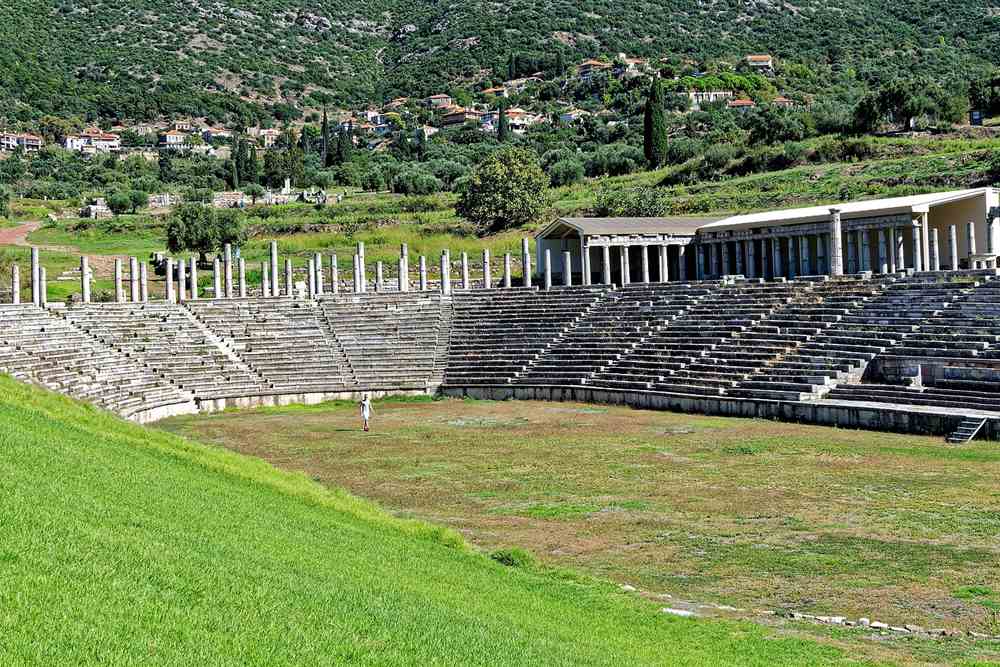
Epaminondas of Thebes founded the city in 369 BC, two years after he broke Spartan power at Leuctra. The new city freed the Messenians after three centuries as helots of Sparta.
The Arcadian Gate has a circular court 19 m across behind a double gateway. Ancient cart ruts still mark its road surface. The wall stands up to 7 m high in places, with towers along the circuit.
Excavation has run since 1986. The village of Mavromati sits above the site, with tavernas looking over the ruins. The Voulkano monastery stands on Mount Ithomi above, at 798 m. The Ancient Messene tour covers the site in detail.
Which beaches near Pylos suit a swim after Voidokilia?
Romanos and Golden Beach run north of the Gialova lagoon on the Ionian coast. Methoni and Finikounda have sand in the south. Kalogria and Delfinia at Stoupa face the calmer Messenian Gulf, and Kyparissia holds a long strand further north.
The two coasts differ. The Ionian side is open and sandy, with dunes behind it and surf when the wind turns west. The Messenian Gulf is sheltered and calm almost every day, which suits swimming with children.
The Kyparissia coast holds one of the largest loggerhead turtle nesting grounds in the Mediterranean. The nests are marked from June.
A cold spring rises in the sea at Kalogria in Stoupa. Divers explore the reefs off Methoni and the Navarino wrecks, which lie in 20 to 50 m of water. The wrecks are protected, so only licensed operators dive them.
What food and wine does Messenia serve?
A Pylos day trip eats from the Messenian kitchen: Kalamon olives, Koroneiki olive oil, sun-dried Kalamata figs, sfela cheese, lalagia fritters, diples pastries and spit-roast gournopoula pork. Wine estates at Vasilada and around Ancient Messene offer tastings with a meal.
The Kalamon olive is a large purple-black table olive with a pointed end. Producers cure it in vinegar and oil rather than brine. The Kalamata fig carries a protected designation and dries on racks in the villages of the plain.
Sfela is a hard, salty sheep cheese of Messenia and Laconia. Lalagia are fried strips of dough, and diples are honey pastries served at feasts.
The oil presses run day and night from November to January. The Kalamata olive oil tasting covers the oil side of the same kitchen.
How does a Pylos day trip fit into three days in Messenia?
Day one covers Ancient Messene and Mavromati. Day two holds the Pylos day trip itself: the Palace of Nestor, the Chora museum, Niokastro, the Gialova lagoon and Voidokilia. Day three takes Methoni, Finikounda, Koroni and Zaga beach.
Kalamata holds the widest choice of hotels and the shortest airport transfers. Small hotels at Gialova look over the bay. Koroni and Finikounda suit the southern day, and Kardamyli and Stoupa keep stone guesthouses on the Mani coast.
Each day covers 60 to 110 km on good roads. Two days drop Koroni and Finikounda. A longer stay adds Kardamyli, where Patrick Leigh Fermor built his house at Kalamitsi, now opened to visitors by the Benaki Museum. Kardamyli marks the start of the Mani, set out on the Mani tours page.
Frequently Asked Questions
What does a Pylos day trip cost?
From 55 to 95 euros a head on a shared full day out of Kalamata, 250 to 420 for a private day for two to four, and 120 to 180 from Costa Navarino with a licensed guide. Site entries are separate.
Can you drive to Voidokilia beach?
No. There is no road onto the sand. Parking sits at the Gialova and Petrochori ends and the beach is reached on foot across the protected dunes on marked paths.
Where are the Palace of Nestor finds?
In the archaeological museum at Chora, four kilometres from the site: the gold cups, the frescoes, the seals and the Linear B tablets. The combined ticket for both costs 8 euros.