
A Kalamata olive oil tasting runs 90 minutes to three hours at a mill or a bottling plant on the Messenian plain, walking the grove before a guided tasting of three to six oils poured from a blue glass with bread, olives and cheese. Plan the rest of the trip with Greece Tours.
This page covers the visit: where the mills sit, what the Kalamata olive and the PDO oil actually are, how Koroneiki tastes, how a professional tasting is run, the price bands, what happens at the mill in harvest, what else reaches the table, and how to book a Kalamata olive oil tasting.
What is a kalamata olive oil tasting and what happens during the visit?
A kalamata olive oil tasting is a 90-minute to three-hour visit to a working mill or bottling plant outside the city, combining a grove walk, a guided sampling of three to six oils from blue glasses, bread, olives, cheese and a bottle to take home.
The sequence rarely changes. A producer meets the group at the gate, walks 200 to 400 metres into the Koroneiki grove, and explains pruning cycles, the two-year alternate bearing rhythm of the tree, and the difference between hand-picked fruit and fruit shaken onto nets. Trees aged 80 to 300 years stand in the same rows as replanted stock from the last two decades. The walk lasts 20 to 30 minutes. The Kalamata olive oil tasting hosts state this at booking. The Kalamata olive oil tasting room is set up for it.
Inside the mill, the hopper, the leaf blower, the washing drum, the hammer crusher, the malaxer and the horizontal decanter get named and shown in working order. Outside harvest, staff run the line dry or on a small sample batch. Stainless steel storage tanks of 5,000 to 30,000 litres sit under nitrogen in the back room, and the guide explains why light and oxygen destroy polyphenols within months. The Kalamata olive oil tasting price reflects it.
The seated part follows at a long table. Three oils marks the short format: an early-harvest Koroneiki, a ripe-harvest blend, and a defective sample kept deliberately for contrast. Six oils marks the long format, adding an organic lot, an unfiltered lot and a neighbouring PDO from Messinia. Each pour measures 10 to 15 millilitres into a cobalt tulip glass. A Kalamata olive oil tasting is planned around it.
Every kalamata olive oil tasting closes at the shop counter. A 500-millilitre bottle of extra virgin runs 9 to 16 euros at the mill door, a 3-litre tin 28 to 45 euros, and producers stamp harvest date, acidity and polyphenol figures on the label. Groups of 2 to 14 people are standard, and English-language sessions run daily from April through November. The Kalamata olive oil tasting season turns on this.
Where around Kalamata do the mill tours and tastings take place?
Tastings run at family mills across the Messenian plain, at the Lia olive oil hub, at bottling plants that open their floors to visitors, and in the groves of Kardamyli and Koroni, all reached in 10 to 60 minutes from the Kalamata seafront.
The dense cluster sits west and north of the city. Messini lies 10 kilometres out, a 15-minute drive along the coastal road. Thouria, Aris, Asprochoma and Arfara sit 8 to 22 kilometres inland, each 12 to 30 minutes from Navarinou Street. These villages hold two-generation and three-generation mills that press for their own groves plus 40 to 300 neighbouring smallholders during the winter season. Every Kalamata olive oil tasting works to that rule. A Kalamata olive oil tasting starts with this settled.
The Lia olive oil hub functions as the structured option, built for scheduled groups with a tasting room, a laboratory bench and fixed departure slots. Bottling plants in the industrial zone east of Kalamata show filtration, nitrogen flushing and glass filling lines rather than milling, and they suit visits between February and September when no fruit arrives. A Kalamata olive oil tasting fills first on that count in August.
Kardamyli, 36 kilometres south on the Mani road, delivers terraced groves on dry stone walls above the Messenian Gulf and a 45-minute drive each way. Koroni, 52 kilometres southwest past Petalidi, needs a full hour but pairs the grove with the Venetian castle and Zaga beach. Operators building day itineraries combine a mill with the Polylimnio waterfalls near Kazarma, 32 kilometres northwest. This is what a Kalamata olive oil tasting delivers at the bench.
Rental cars reach every mill on paved road, and parking sits on site. Guided pickups from Kalamata hotels, from the marina and from Kalamata International Airport form part of most half-day Kalamata tours, with minibuses of 8 to 19 seats covering the Messenian plain circuit. Guests at a Kalamata olive oil tasting meet it in the first half hour.
What separates the Kalamata table olive from Kalamata PDO olive oil?
The Kalamata table olive is a large almond-shaped purple-black fruit eaten whole after brine curing. Kalamata PDO olive oil comes from the small Koroneiki variety pressed for oil. Two distinct protected designations, two distinct trees, one shared place name that confuses buyers worldwide.
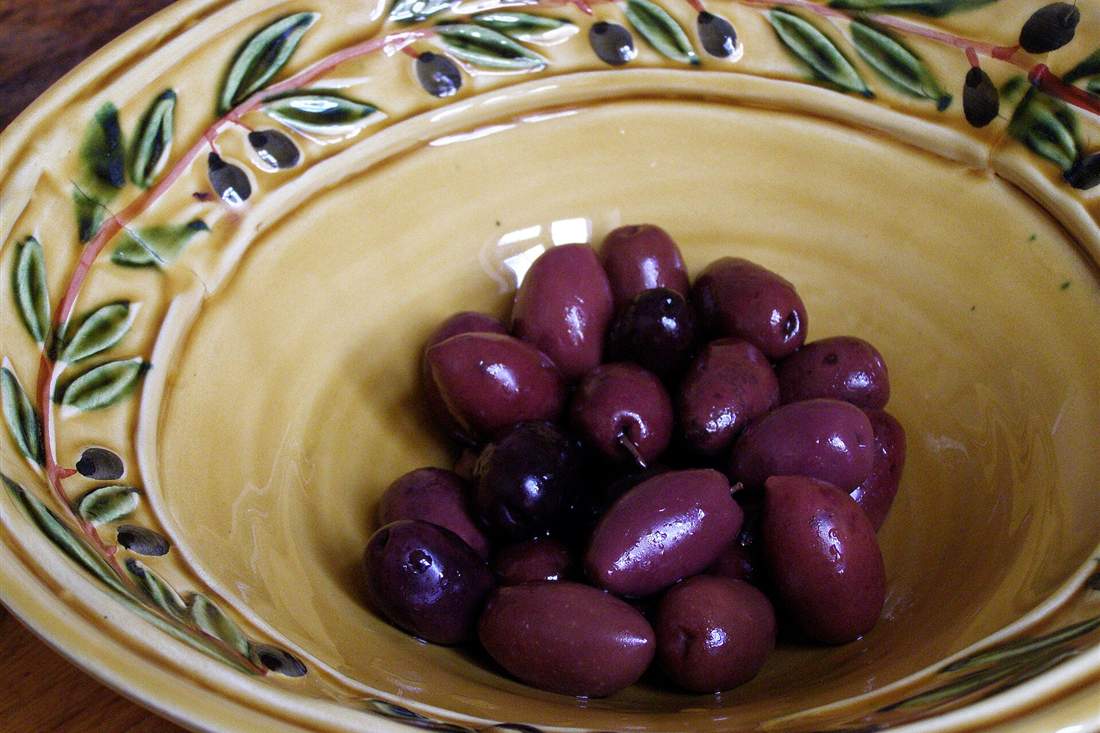
The table variety, called Kalamon in Greek, grows to 4 to 7 grams per fruit with a firm flesh and a distinct nipple at the tip. Growers harvest it by hand from mid-October to late November at full purple ripeness, then cure it in brine, in water changed daily for 10 to 20 days, or by slitting each fruit. The finished olive carries a wine-vinegar sharpness. A Kalamata olive oil tasting is planned around it. The Kalamata olive oil tasting timetable is built on it.
Koroneiki fruit weighs 0.5 to 1 gram, roughly one-eighth of the table olive. Nobody eats it whole. Its value sits in the oil yield of 18 to 25 percent by weight and in a phenolic profile that survives 18 months in a sealed tin. Messinia holds more than 15 million Koroneiki trees, and the variety takes its name from Koroni on the southwestern cape. The Kalamata olive oil tasting season turns on this.
Two protected designations exist under European Union rules. One covers the Kalamata table olive as a product of the Messinia prefecture. The other covers Kalamata extra virgin olive oil produced, milled and bottled inside defined municipal boundaries with acidity capped by the specification. A jar of Kalamata olives sitting beside a bottle of Kalamata oil holds no botanical relationship beyond the genus. The Kalamata olive oil tasting room is set up for it.
Guides open every kalamata olive oil tasting with this distinction because supermarket shelves abroad merge the two names. Producers hand round both fruits in a shallow bowl so the size gap registers physically before anyone lifts a glass. The Kalamata olive oil tasting flight is set by it.
What is Koroneiki oil and how does it taste in the glass?
Koroneiki oil is a high-polyphenol extra virgin pressed from a small hard fruit, showing green apple, cut grass and artichoke on the nose, a bitter mid-palate and a peppery catch at the back of the throat, with free acidity below 0.3 percent on early pressings.
The aroma arrives first. Warmed to 28 degrees Celsius in the palm, an early-harvest Koroneiki releases green almond, tomato leaf, unripe banana and freshly cut grass. Late-harvest lots from January soften into ripe apple and sweet almond, with the grass note retreating. Defective samples announce themselves as vinegar, wet cardboard, rancid walnut or the muddy sediment fault the trade calls fusty. This is what a Kalamata olive oil tasting delivers at the bench. That detail shapes a Kalamata olive oil tasting from the first glass.
Bitterness registers on the sides and rear of the tongue after two seconds. Pungency, the burn produced by oleocanthal, arrives three to five seconds later and provokes a cough. One cough marks a moderate oil, three coughs mark an intense early-harvest lot. Panels score fruitiness, bitterness and pungency on a scale of 0 to 10, and a balanced Koroneiki lands near 6, 4 and 5. Guests at a Kalamata olive oil tasting meet it in the first half hour.
Laboratory numbers back the sensory read. Total polyphenols in October-picked Koroneiki reach 400 to 900 milligrams per kilogram, against 100 to 250 for late-picked fruit. Peroxide value stays under 8 milliequivalents per kilogram. The European health claim on hydroxytyrosol derivatives requires 250 milligrams per kilogram, a threshold plenty of Messinian producers clear and print on the label. A Kalamata olive oil tasting starts with this settled.
A kalamata olive oil tasting places these figures next to the glass. Producers show the analysis certificate from the laboratory in Kalamata or Athens, dated within weeks of pressing, so the pepper felt in the throat connects to a printed number rather than to marketing language. A Kalamata olive oil tasting keeps the glasses for it.
How does a professional kalamata olive oil tasting get run?
Panels use a cobalt blue tulip glass that hides colour, warm 15 millilitres in the palm under a watch glass, sniff deeply, then slurp air across the oil to spread it over the whole palate, scoring fruity, bitter and pungent between bites of apple.
Colour carries no quality information, which is why the glass hides it. Green pigment reflects chlorophyll from leaves milled with the fruit, and golden tone reflects carotenoids in riper olives. Judges in the International Olive Council method work blind on colour deliberately. Home tasters who judge by green intensity buy on the wrong signal, and every mill guide in Messinia makes that point early. The Kalamata olive oil tasting room is set up for it. It decides which Kalamata olive oil tasting to take.
The warming step runs 30 to 60 seconds, cupping the glass in one hand and covering it with the other or with a supplied lid. Volatile compounds lift at 28 degrees. Removing the cover and inhaling twice, three seconds each, registers the fruity family. Rest the nose 20 seconds before the second sniff to reset the receptors. The Kalamata olive oil tasting flight is set by it.
The slurp does the technical work. Draw a small sip, hold it at the front of the mouth, then pull air through clenched teeth in three short bursts. Aerosolised oil coats the tongue and reaches the retronasal passage. Swallow, then wait five seconds for the pungency in the throat. Record fruity, bitter and pungent intensities on the sheet. The Kalamata olive oil tasting timetable is built on it.
Palate cleansing between samples uses a slice of green apple and room-temperature still water, never bread, because bread carries oil residue forward. Professional sessions cap at six oils before fatigue sets in. Any kalamata olive oil tasting that runs eight or more samples splits into two rounds with a 15-minute break. The mill confirms it when a Kalamata olive oil tasting is booked.
What does a kalamata olive oil tasting cost per person?
A mill visit with a guided tasting runs 20 to 45 euros per person. Food-focused programmes that add a light lunch run 55 to 95 euros. Full olive-oil-route days with transport from Kalamata and two producer stops run 90 to 150 euros.
The 20 to 45 euro band buys 90 minutes to two hours: the grove walk, the mill floor, three to four oils, bread, table olives and a small bottle of 100 to 250 millilitres. Groups of four or more pay the lower end. Solo visitors and pairs pay the upper end because the producer opens the tasting room for a single sitting. Payment happens on site or online. A Kalamata olive oil tasting starts with this settled. The Kalamata olive oil tasting price reflects it.
The 55 to 95 euro band stretches to three hours and adds a seated meal cooked in the farmhouse kitchen: horta boiled and dressed at the table, gigantes beans, sfela cheese, lalagia, and a dessert of figs with honey. Local wine or tsipouro accompanies the food. This format suits visitors staying in Kardamyli or Koroni who arrive by car and treat the mill as the day’s anchor. A Kalamata olive oil tasting keeps the glasses for it.
The 90 to 150 euro band covers hotel pickup in Kalamata, an air-conditioned minibus, two producers in the Messenian plain, a village stop at Petalidi or Chandrinos, lunch and a driver-guide for six to eight hours. Entry fees, tastings and a 500-millilitre bottle sit inside the price. Fuel, tolls and parking sit inside as well. That detail shapes a Kalamata olive oil tasting from the first glass.
Children under 12 pay 0 to 15 euros and receive juice instead of oil samples. Cruise passengers docking at Kalamata port book the shortest kalamata olive oil tasting to clear the four-hour window, while guests arriving on a Kalamata yacht charter schedule mill visits between marina departures. The Kalamata olive oil tasting hosts state this at booking.
What happens inside the mill during the harvest months?
Picking runs from late October to January. Fruit reaches the mill within 4 to 12 hours, gets crushed, malaxed under 27 degrees Celsius for 30 to 45 minutes, then separated in a decanter. Oil pours out green, cloudy and unfiltered straight from the tank.
Crews spread nets under each tree at first light and comb the branches with battery-powered rakes rated at 20 volts. A three-person crew clears 30 to 50 trees a day and fills crates of 20 to 25 kilograms. Plastic crates replaced sacks decades ago because stacked sacks heat the fruit and start fermentation, which pushes free acidity above the 0.8 percent extra virgin ceiling within a day. The Kalamata olive oil tasting timetable is built on it. A Kalamata olive oil tasting fills first on that count in August.
At the mill, the load crosses a weighbridge, drops into the hopper, loses leaves to the blower and enters the washing drum. The hammer crusher reduces fruit and stone to paste in seconds. The malaxer then stirs that paste slowly in a jacketed trough held below 27 degrees, the temperature line that defines cold extraction and preserves the volatile aldehydes behind the grass aroma. The mill confirms it when a Kalamata olive oil tasting is booked.
The horizontal decanter spins at 3,000 revolutions per minute and splits paste into oil, water and pomace in one pass. A vertical centrifuge polishes the oil. From crate to tank the whole cycle takes 60 to 90 minutes. Visitors watching in November see the first oil of the year run from the spout at 25 to 27 degrees, thick with suspended solids. It decides which Kalamata olive oil tasting to take.
November and December deliver the richest visit for that reason. A kalamata olive oil tasting during those eight weeks includes agoureleo, the unfiltered early oil, poured onto warm bread within minutes of extraction. Mills operate 14 to 20 hours a day then, and tours slot around the delivery queue. Every Kalamata olive oil tasting works to that rule.
What else is served on the table beside the oil?
Producers pour oil alongside cracked and brine-cured Kalamata olives, lalagia fried dough strips, sfela cheese from Messinia, pasteli sesame bars, dried Kalamata figs and thyme honey, with local wine added on the three-hour and full-day programmes.
The table olives arrive in two preparations. Cracked green Kalamon, split with a stone and soaked in water changed daily for 10 days, taste bitter and firm. Naturally black-ripe Kalamon cured 4 to 8 months in 8 percent brine with red wine vinegar taste soft and winey. Dressing both with the same early-harvest oil demonstrates how pungency reads differently against salt. That detail shapes a Kalamata olive oil tasting from the first glass. The Kalamata olive oil tasting season turns on this.
Lalagia belongs specifically to Messinia. Flour, olive oil, orange juice and a pinch of cinnamon form a slack dough, cut into strips and fried in olive oil. Households make it at Christmas, and mills serve it year-round because it carries oil without competing with it. Sfela, the semi-hard sheep and goat cheese of Messinia and Laconia, matures 3 months in brine and cuts salty against a bitter lot. The Kalamata olive oil tasting hosts state this at booking.
Sweet items close the table. Pasteli of sesame and Messinian honey presses into 1-centimetre bars. Dried figs from Kalamata, sun-dried on cane trays and packed with bay leaves, carry protected status of their own. Thyme honey from hives in the Taygetos foothills spoons over strained sheep yogurt with a thread of oil across the top. The Kalamata olive oil tasting price reflects it.
On the longer programmes, producers pour Mavroudi or Fokiano red from Messinian vineyards and, at the end, tsipouro distilled from pomace. A kalamata olive oil tasting stretched over three hours therefore functions as a meal, and organisers advise skipping a heavy breakfast before an 11:00 start. A Kalamata olive oil tasting is planned around it.
How do you book a kalamata olive oil tasting and what do you bring?
Reserve two to five days ahead from June to September, confirm the group minimum of two people, note the free cancellation window closing 24 hours before, wear closed shoes for the grove, skip perfume, and pack purchased tins in hold luggage.
Booking runs through producer websites, hotel desks along Navarinou Street and tour platforms. From June to September, when Kalamata beach fills and cruise calls stack up, a two to five day lead secures a slot. In April, May and October, 24 hours suffices. During the November and December harvest, mills accept visitors around production, so confirm by telephone the evening before rather than assuming a fixed schedule. It decides which Kalamata olive oil tasting to take.
Minimums sit at two people for most family mills and four for the structured hubs. Solo travellers join an existing group or pay a supplement of 15 to 25 euros. Cancellation terms cluster at full refund to 24 hours before, 50 percent inside 24 hours, nothing for no-shows. Rain postpones the grove walk but not the mill floor or the tasting room. Every Kalamata olive oil tasting works to that rule.
Closed shoes matter because grove floors hold irrigation lines, netting stakes and loose stone. Long trousers help from October to March. Perfume, aftershave, scented sunscreen and hand cream all interfere with the nose of the whole table, so producers ask guests to arrive unscented. Coffee and mint within 30 minutes of a session flattens the palate as well. A Kalamata olive oil tasting fills first on that count in August.
Purchases travel in hold luggage only. Cabin rules cap liquids at 100 millilitres, so a 500-millilitre bottle or a 3-litre tin goes in the checked bag, wrapped in clothing. Mills sell bubble sleeves for 1 to 2 euros. Book a kalamata olive oil tasting for the first days of a stay, and buy oil on the final visit instead. This is what a Kalamata olive oil tasting delivers at the bench.
Frequently Asked Questions
What does a Kalamata olive oil tasting cost?
From 20 to 45 euros per person for the mill visit and tasting, 55 to 95 euros for the food tour that adds a light lunch, and 90 to 150 euros for the olive-oil-routes day with transport and three stops.
What is the difference between Kalamata olives and Kalamata olive oil?
The Kalamata olive is the almond-shaped purple-black table fruit with its own protected designation. The oil carries a separate PDO and is pressed from Koroneiki, a small hard variety grown across the same groves.
When is the olive harvest around Kalamata?
Late October to January, with the mills running day and night from November. Fruit reaches the malaxer within hours of picking, and the tastings pour green cloudy oil straight from the tank in those weeks.