
The Parga Acheron river trip runs 35 km south-east to the springs at Glyki, where the river of the Greek underworld comes out of the rock at 10 to 12 degrees and walkers wade upstream into the gorge on a four to eight hour day. Plan the rest of the trip with Greece Tours.
This page covers the whole excursion: how to reach the springs, what the river walk involves, the kayaking and rafting, the Souli jeep tour, the Necromanteion oracle of the dead, the river mouth at Ammoudia, the prices, the myth, the season, and how to book a Parga Acheron river day.
What is the Acheron and why do travellers leave Parga to see it?
The Acheron is the river Homer and Herodotus named as the passage to Hades, rising at Glyki 35 kilometres south-east of Parga, where springs push out water at a constant 10 to 12°C into a limestone gorge walked daily from May to October.
The springs sit at the foot of the Souli massif, where groundwater emerges through fissured karst and forms a river already 12 metres wide within 200 metres of its source. Ancient geography placed the entrance to the underworld here, with the Cocytus and Pyriphlegethon joining the main channel downstream. Plane trees shade the banks at Glyki, and the water runs clear enough to read the gravel bed at a depth of one metre. The Parga Acheron river operators state this at booking. It decides which Parga Acheron river trip to take.
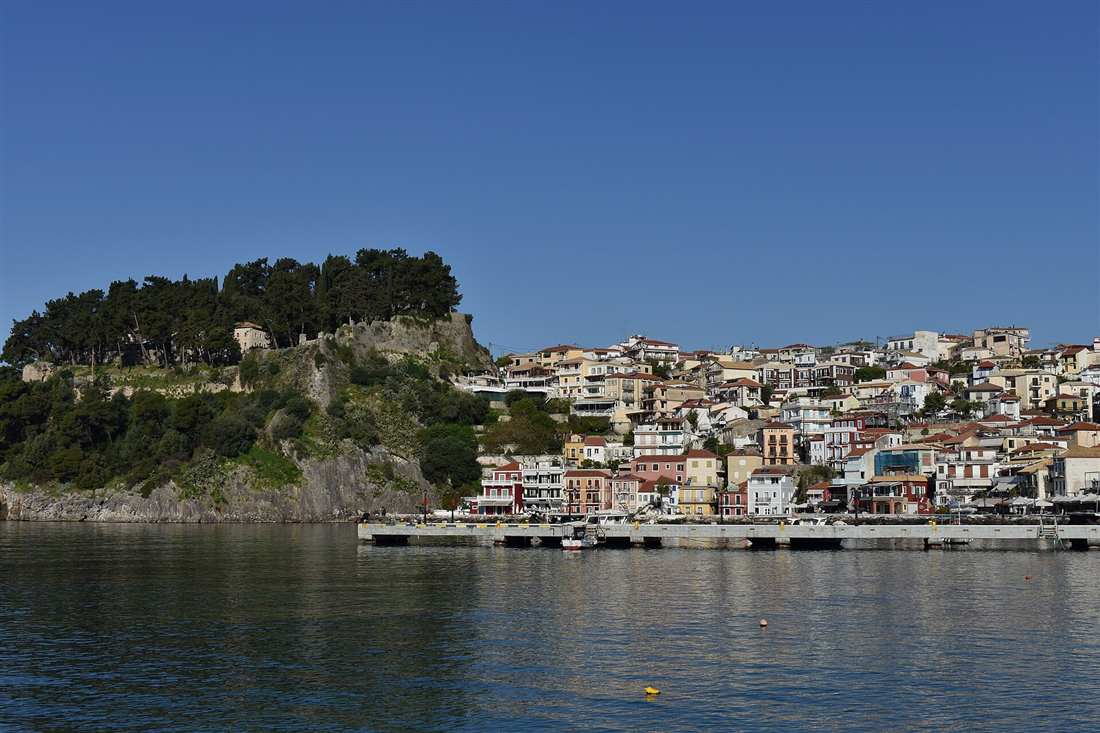
Parga functions as the coastal base for the whole valley. The town has 2,400 permanent residents, a Venetian castle above the harbour, and a tourism office network that sells the river as its principal inland excursion. Day tours run four to eight hours depending on format, leaving between 08:30 and 09:30 from the main car park at Krioneri and returning before 18:00. A Parga Acheron river trip is planned around that.
The contrast drives the demand. Air temperature at Parga reaches 32 to 35°C in July and August, while the spring water holds at 10 to 12°C through every month of the year. Visitors who spend the morning on Valtos or Lichnos beach at sea temperatures near 26°C find the gorge water shocking on first contact, which is precisely the appeal for families travelling with teenagers. The Parga Acheron river guides brief it before the wade.
A parga acheron river excursion also fits the wider Epirus circuit. Ioannina lies 100 kilometres north-east, the Necromanteion 8 kilometres downstream at Mesopotamos, and Zalongo 30 kilometres north. Operators bundle these into single itineraries, so one departure covers mythology, archaeology and swimming in a single working day without a second hotel change. The Parga Acheron river timetable is built on it.
How do you reach the Acheron springs from Parga?
The drive covers 35 kilometres in 45 minutes via the E55 towards Kanallaki, then the secondary road to Glyki, ending at signed gravel parking beside the tavernas. Guided transfers with hotel pickup, coach tours, and taxis charging 60 to 90 euros each way all serve the route.
Leaving Parga on the Preveza road, the first landmark is the Loutsa turnoff, then Kanallaki at kilometre 22, the largest settlement in the Fanari municipality with fuel stations and a supermarket. From Kanallaki the road climbs gently east through Ammoudia’s hinterland farmland to Glyki, a village of roughly 700 residents where every taverna sign points toward the springs. Parking sits 400 metres past the bridge. Every Parga Acheron river day is timed against it. The Parga Acheron river price reflects it.
Rental cars dominate. Agencies on Parga’s Spyrou Livada street rent compact hatchbacks at 35 to 60 euros per day in July and August, dropping to 25 to 35 euros in May and October. Parking at Glyki costs nothing at the public gravel lot, while the private lots behind the tavernas charge 2 to 3 euros and refund it against a meal order. This is what a Parga Acheron river day delivers at the springs.
Organised transfers remove the navigation. Minibuses of 8 to 19 seats collect from hotels in Parga, Valtos and Lichnos between 08:15 and 09:00, reach Glyki by 09:45, and allow three to four hours at the water. Larger coaches from Preveza and Igoumenitsa add Parga as an intermediate stop, which lengthens the transfer to 70 minutes. A Parga Acheron river group sets off with this settled.
Visitors arriving on a Parga day trip from Corfu rarely have time for the springs on the same day, since the ferry legs consume five hours. Those staying two nights in Parga combine the river with a second sea excursion instead, keeping the parga acheron river outing to the middle day of the stay. That detail separates one Parga Acheron river tour from the next.
What is the parga acheron river gorge walk actually like?
The walk starts at the wooden bridge beside the Glyki tavernas and heads upstream against the current, with water at knee height for the first 300 metres, waist to chest depth in the narrows, and a fixed rope handline through the tightest 60-metre section.
Total distance to the point where sheer rock closes the passage measures roughly 1.5 kilometres. Walkers cover it in 40 to 90 minutes each way, the range set by group pace and by how long people stop in the pools. The riverbed alternates between rounded cobbles, submerged plane roots and short sand shelves. Depth changes without warning at the outside of each bend, dropping from 40 centimetres to 1.4 metres in two steps. A Parga Acheron river trip is planned around that. A Parga Acheron river tour books out on that count in August.
Footwear decides comfort. Closed water shoes with rubber lugs grip the algae-coated stones; flip-flops wash off within the first crossing and bare feet bruise on the cobbles. Rental stalls at Glyki supply water shoes at 3 to 5 euros and dry bags at 5 euros. Waterproof phone pouches sell for 4 euros, and the shallow spray in the narrows soaks anything held above shoulder height. The Parga Acheron river guides brief it before the wade.
Cold governs the timetable. At 10 to 12°C, most adults tolerate 20 to 30 minutes of continuous immersion before wanting sun. The gorge walls rise 40 to 60 metres and block direct light until 11:00, so groups starting at 10:00 walk the shaded section first and warm up on the gravel bars afterwards. Children under seven ride shoulders through the deep pools. The Parga Acheron river timetable is built on it.
The parga acheron river walk requires no guide, no ticket and no reservation. Signage at the trailhead marks the route in Greek and English, and the horse-riding stables 200 metres upstream offer a dry alternative along the bank for 20 to 25 euros per hour. It decides which Parga Acheron river trip to take.
What kayaking and rafting formats run on the Acheron?
Two descents operate: a 5.5-kilometre family run from Glyki towards Gliki bridge lasting two hours, and a 13-kilometre route to the coastal plain taking three and a half to four hours. Both sit at grade I to II, guided, with helmet, buoyancy aid and paddle supplied.
Grade I to II means moving water with small standing waves, gravel riffles and no drops above 50 centimetres. Spring melt in April and early May raises the flow and speeds the descent; by August the lower sections shallow out and paddlers push off gravel bars with their hands. Guides run one safety kayak at the front and one at the rear for groups of eight to fourteen boats. This is what a Parga Acheron river day delivers at the springs. The Parga Acheron river season turns on this.
Craft choice varies by operator. Inflatable two-person kayaks dominate the family run because they self-drain and shrug off rock contact. Rigid sit-on-top singles serve the 13-kilometre route, and 6-person rafts appear on high-water days in March, April and May. Wetsuit shorties come standard from operators working the cold spring section, since water there holds 10 to 12°C year-round. A Parga Acheron river group sets off with this settled.
Minimum age sits at 6 years for the family descent when a child shares a boat with an adult, and 12 years for the long run. Weight limits of 110 kilograms apply to single sit-on-tops. Briefings last 15 minutes and cover paddle strokes, the swim position feet-downstream, and the whistle signals used by guides in the noisier riffles. That detail separates one Parga Acheron river tour from the next.
Every operator runs a shuttle. Minibuses with trailers collect paddlers at the take-out near Ammoudia or at the Gliki bridge and return them to the departure car park in 10 to 25 minutes. Combined packages pair the paddle with the gorge walk, filling a six-hour parga acheron river day that ends with lunch at a Glyki taverna. The Parga Acheron river price reflects it.
What does a parga acheron river trip cost?
Guided day tours with transport run 30 to 55 euros per person, kayaking 45 to 75 euros, the Souli jeep safari 90 to 140 euros, and a private sunset hike with riverside dining 150 to 260 euros for two people including transfers and wine.
The 30 to 55 euro band covers hotel pickup in Parga, the 45-minute transfer, an English-speaking guide at the springs and free time of three to four hours. Entrance to the springs costs nothing, so the fee is transport and guiding. Lunch runs separately at 12 to 20 euros per head for grilled trout, village salad and half a litre of house wine at the Glyki tavernas. The Parga Acheron river guides brief it before the wade. Walkers on a Parga Acheron river day meet it in the first hour.
Kayak pricing splits by distance. The 5.5-kilometre family run sits at 45 to 55 euros with equipment, guide, shuttle and photographs. The 13-kilometre descent reaches 65 to 75 euros because it consumes four hours of guide time and a longer shuttle. Children under 12 pay 30 to 40 euros. Group bookings of six or more attract discounts of 10 per cent at most Glyki operators. The Parga Acheron river timetable is built on it.
The jeep safari at 90 to 140 euros includes the 4×4 with driver-guide, the climb to the Souli plateau, entry to Zalongo, and a light meal. Private evening formats at 150 to 260 euros cover a two-person transfer, a guided bank walk from 18:00, and a set dinner on a riverside platform with the water running beside the table. It decides which Parga Acheron river trip to take.
Compared with sea excursions, the river is cheaper per hour. A Parga to Paxos boat trip costs 35 to 60 euros for a nine-hour day at sea, which places the parga acheron river outing at similar value with shorter travel time and a fixed indoor lunch option. A Parga Acheron river tour books out on that count in August.
Where does the Souli jeep tour go above the Acheron?
The Souli safari climbs from Glyki on dirt tracks to the Souli plateau at 600 to 900 metres, visiting Samoniva, Avariko and Kiafa castle, then the Zalongo monument 30 kilometres north, returning to the river for a swim after six to eight hours.
Souli was a confederation of four core villages whose Souliote fighters held the mountains against Ali Pasha of Ioannina from 1789 until the fall of Kiafa in 1803. The ruins of the fortress sit on a spur above the Acheron gorge, reached by a 15-minute walk from the track head. Stone terraces, cistern shafts and the outline of the church of Agios Donatos remain visible. A Parga Acheron river group sets off with this settled. The Parga Acheron river route is set by it.
The driving is the tour’s substance. Tracks average 3.5 metres wide with loose surface, gradients to 18 per cent and exposed sections above the gorge, which is why operators use short-wheelbase Suzuki and Land Rover vehicles carrying four to six passengers. Total off-road distance runs 40 to 55 kilometres. Drivers stop at three or four viewpoints where the river shows 400 metres below as a green thread. That detail separates one Parga Acheron river tour from the next.
Zalongo stands on Mount Zalongo above Kamarina, marked by the 1961 sculpture of six stone figures, 18 metres long and 13 metres high, commemorating the Souliote women who died there in December 1803. A staircase of 410 steps climbs from the monastery car park to the base. The ascent takes 15 to 20 minutes and the platform overlooks the Ambracian plain toward Preveza. The Parga Acheron river price reflects it.
The day closes back at the springs. Vehicles return by 16:00 or 17:00, leaving 45 minutes for immersion in the 10 to 12°C water before the transfer to Parga. This closing swim is the reason the jeep format outsells the plain parga acheron river coach tour among visitors staying five nights or longer. The Parga Acheron river season turns on this.
What is the Necromanteion of Acheron and how long does a visit take?
The Necromanteion is the ancient oracle of the dead at Mesopotamos, 15 minutes by car from the Glyki springs, built with polygonal Hellenistic walls above a barrel-vaulted underground chamber. Entry costs 4 euros full, 2 euros reduced, and the visit occupies 30 to 45 minutes.
Sotirios Dakaris excavated the site from 1958 to 1964 and identified it as the sanctuary where pilgrims consulted the dead, matching the description in Book 11 of the Odyssey. The complex sits on a low hill that stood on the shore of the ancient Acherousian lake, now drained farmland. Excavators recovered iron mechanisms interpreted as a crane for staging apparitions, along with pithoi and sulphur. The Parga Acheron river timetable is built on it. A Parga Acheron river operator carries the kit for it.
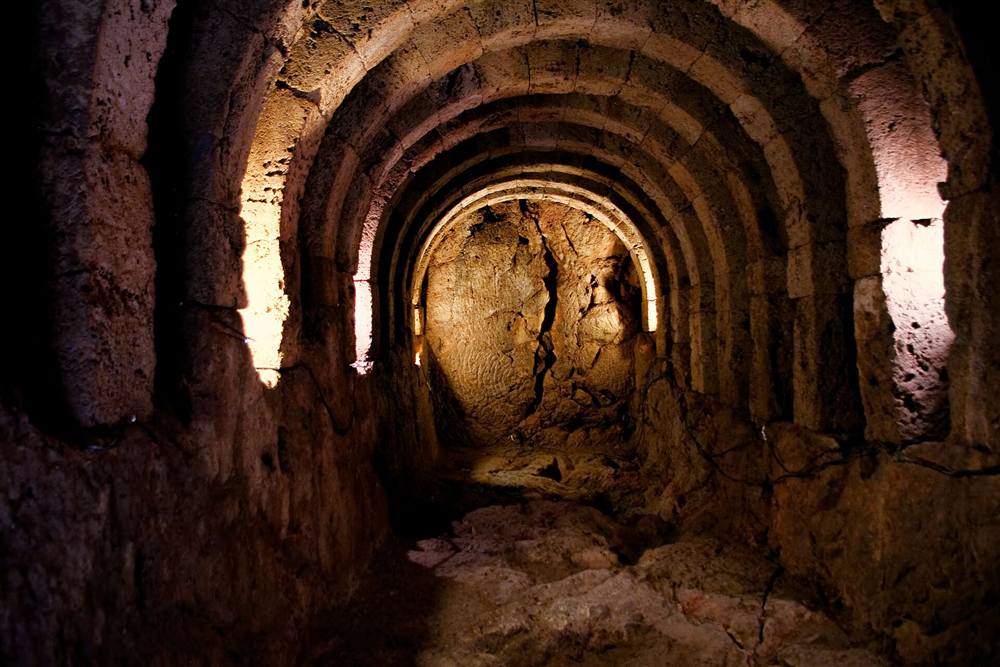
The layout follows a controlled sequence: a dark corridor with three iron gates, three side chambers used for a diet of broad beans and pork, then a central hall of 15 by 4 metres. Beneath it lies the vaulted crypt, reached today by a metal staircase of 12 steps. Fifteen stone arches support the roof, and the chamber measures 4 metres in height. It decides which Parga Acheron river trip to take.
Opening hours run 08:30 to 15:30 through the winter season and extend to 19:00 from April to October, with closure on 1 January, 25 March, Orthodox Easter Sunday, 1 May and 25 December. The ticket booth sells a combined pass covering Kassope, Nikopolis and the Necromanteion for 8 euros, valid three days. A Parga Acheron river tour books out on that count in August.
The site sits 300 metres from Mesopotamos village square, where two kafeneia serve coffee at 2 euros. Its position 8 kilometres from Ammoudia and 6 kilometres from Kanallaki makes it the natural second stop after the springs, and every full-day parga acheron river itinerary with a guide includes it between the gorge walk and the return leg. Walkers on a Parga Acheron river day meet it in the first hour.
Where does the Acheron reach the sea near Parga?
The Acheron empties at Ammoudia, 8 kilometres downstream from the springs and 22 kilometres south of Parga, where a 1.5-kilometre sand beach meets the river mouth beside a protected wetland listed under Natura 2000 for its herons, egrets and kingfishers.
Ammoudia holds around 200 permanent residents and a seafront strip of twelve tavernas serving mussels, eel and sardines, with main courses at 9 to 16 euros. The river arrives through reed beds and slides across the sand into the Ionian, creating a band of brackish water where the temperature drops noticeably. Swimmers feel cold fingers of river water inside the warmer 25 to 27°C sea. That detail separates one Parga Acheron river tour from the next. Operators confirm it by message when a Parga Acheron river tour is booked.
Flat-bottomed boats work the last 3 kilometres upstream from the mouth. Departures run hourly from 10:00 to 18:00 in July and August, cost 8 to 12 euros per adult, and last 45 to 60 minutes. The route passes beneath overhanging willows and turns at the old irrigation weir. Guides point out terrapins on the mud banks and the grey herons standing in the shallows. The Parga Acheron river price reflects it.
The wetland behind the beach covers roughly 1,000 hectares of marsh, lagoon and wet meadow. Ornithologists record over 200 bird species across the Acheron delta, including little bitterns in summer and flamingos in the adjoining Kalodiki marsh. A raised observation platform sits 600 metres east of the boat quay along a gravel track. The Parga Acheron river season turns on this.
Ammoudia works as the closing stop of a parga acheron river day. Cars leaving Glyki at 15:00 arrive by 15:20, allowing two hours of beach time and an early dinner before the 30-minute drive back to Parga. Parking behind the beachfront holds around 150 vehicles and fills by 12:00 in August. The Parga Acheron river route is set by it.
When is the best month for a parga acheron river visit?
May to October carries the river walk, with July and August pairing 32 to 35°C air against the constant 10 to 12°C water, and June and September delivering the emptiest gorge. Winter rain from November to March raises the flow and closes the upstream wade.
May opens the season. Water levels stay high from spring runoff, so the narrows run waist to chest deep and the current pushes harder against upstream walkers. Air temperature at Glyki reaches 24 to 27°C, which limits how long people stay immersed. Kayak operators favour May because the extra flow floats boats over the gravel bars that surface later in summer. It decides which Parga Acheron river trip to take. The Parga Acheron river operators state this at booking.
July and August bring maximum contrast and maximum crowds. Coaches from Preveza, Sivota and Parga deposit 600 to 1,200 visitors at the springs on peak days, and the first kilometre of the gorge carries a continuous line of walkers between 11:00 and 15:00. Arriving before 10:00 or after 16:00 halves the density. Taverna tables at Glyki require a reservation for lunch after 13:00. A Parga Acheron river tour books out on that count in August.
June and September hold the balance. Air sits at 28 to 31°C, water still at 10 to 12°C, visitor numbers drop by roughly half against August, and hotel rates in Parga fall 25 to 35 per cent. September water stays at its lowest flow, making the wade easiest for children and older walkers. Walkers on a Parga Acheron river day meet it in the first hour.
From November to March the springs discharge more volume, the river turns opaque after rainfall, and the rope handline section becomes unusable. Operators suspend guided walks and kayak descents. The Necromanteion, Zalongo and Ammoudia stay open, so a winter parga acheron river visit shifts entirely to archaeology, birdwatching and the view from the Souli road. A Parga Acheron river operator carries the kit for it.
What myth attaches to the Acheron, and what does a parga acheron river visitor see of it today?
Homer places the Acheron at the edge of the underworld in Odyssey Book 11, and Virgil sends Aeneas across it in Aeneid Book 6. At Glyki the springs, the gorge and the Necromanteion at Mesopotamos supply the physical setting for that literature.
The Acheron carries the name “river of woe”. Charon ferried shades across it for one obol, the coin placed in the mouth of the dead. Ancient geographers fixed the crossing near the Acherousian Lake, a marsh drained in the twentieth century between Mesopotamos and Ammoudia. The lake surface is now farmland growing maize and alfalfa, and the old shoreline reads as a low terrace above the fields. The Parga Acheron river price reflects it. Every Parga Acheron river day is timed against it.
Guides on the parga acheron river route open with Charon and close with Odysseus digging his pit for the blood offering. The archaeology is more restrained. The Necromanteion hill was excavated by Sotirios Dakaris from 1958, who read the vaulted underground chamber as the oracle of the dead. Later scholars, including Dietwulf Baatz, argue the fortified building is a Hellenistic farmhouse with a storage cellar and iron catapult parts. The Parga Acheron river season turns on this.
Both readings are shown on the site panels, and the entrance ticket costs 4 euros with the standard reductions. The chamber sits 3 metres below ground under fifteen stone arches, reached by a staircase of modern steel. From the top of the hill the view runs 5 km west to the Ionian at Ammoudia and east up the valley toward the Souli mountains. The Parga Acheron river route is set by it.
What a walker on the parga acheron river actually sees is colder and clearer than the myth: water at 11 to 14 degrees emerging from limestone at the Skala Tzavelenas springs, plane trees closing overhead, and a gorge narrowing to 4 metres of rock wall. The temperature drop of 15 degrees between the car park and the narrows explains the ancient association with the world below. Operators confirm it by message when a Parga Acheron river tour is booked.
What do you wear and carry into the water on the Acheron?
Closed water shoes with a rubber grip sole, quick-dry shorts, a swim top, a 5 to 10 litre dry bag for the phone and wallet, and a fleece for the drive back. The tavernas at Glyki lend wooden walking sticks free.
The riverbed is white limestone cobble, rounded and coated in a thin algal film from May onward. Flip-flops slide off the heel in current above the ankle and float away within seconds. Crocs with a heel strap hold better but the open toe catches on submerged stones. Neoprene-soled water shoes in the 15 to 30 euro band, sold in the Parga shops on Anexartisias street, solve the whole problem. A Parga Acheron river tour books out on that count in August. A Parga Acheron river trip is planned around that.
The walking sticks stacked in barrels outside the Glyki tavernas are cut plane branches, 1.4 to 1.6 metres long. Two-point contact on the streambed matters at the narrows where the flow reaches thigh height and pushes downstream at walking pace. Returning the stick to the barrel is the expected courtesy. Trekking poles with rubber tips work equally well for anyone who brings their own. Walkers on a Parga Acheron river day meet it in the first hour.
Leave the car keys, passports and dry clothing in the boot at the Skala car park, which is supervised in daylight through the summer. A waterproof phone case on a neck cord fails when the wearer sits down in a pool; a roll-top dry bag worn as a chest pack does not. Sunglasses on a retainer cord survive; loose ones sink into 1.5 metres of green water and stay there. A Parga Acheron river operator carries the kit for it.
Most parga acheron river excursions run between 10:00 and 15:00, so the fleece matters on the return. Skin temperature after 90 minutes in 12-degree water drops fast in the shade of the gorge, and the minibus air conditioning finishes the job. A microfibre towel of 80 by 130 centimetres packs into the same dry bag. The Parga Acheron river operators state this at booking.


Can children and non-swimmers manage the parga acheron river walk?
Yes for the first 200 metres, which stay between ankle and knee depth over a flat bed. Beyond the second bend the water reaches waist height on an adult. Kayak operators issue buoyancy aids and set minimum ages between 6 and 12.
The entry point at Skala Tzavelenas opens into a wide shallow pool where the current slows to almost nothing. Children of 4 and 5 wade there under supervision, and grandparents sit on the bank stones with their feet in the water. The gradient stays under 1 percent for that opening stretch, and the bed is visible through the whole depth because the spring water carries no sediment. The Parga Acheron river season turns on this. This is what a Parga Acheron river day delivers at the springs.
The narrows, roughly 600 metres upstream, are the decision point. The channel tightens to 4 metres between vertical rock, the depth rises to 1.1 metres on an average July flow, and a rope is fixed along the right-hand wall. Non-swimmers who hold the rope and keep both feet planted pass it without trouble. Guides on the parga acheron river route position one staff member at each end of that section. The Parga Acheron river route is set by it.
Rafting and kayaking on the lower Acheron near Gliki run on Class I and Class II water. Operators such as Rafting Acheron and Alfa Rafting set 12 as the minimum for the kayak descent and 6 for the family float, with life jackets and helmets included in the 25 to 40 euro fee. Weight below 20 kilos disqualifies a child from the standard jacket sizes. Operators confirm it by message when a Parga Acheron river tour is booked.
For the youngest, the springs area offers alternatives that need no swimming at all: horse rides of 20 minutes along the bank at 15 to 20 euros, pedal boats on the calm pool at 10 euros per half hour, and the shaded picnic ground under the plane trees. Every Parga Acheron river day is timed against it.
What else stands at the Acheron springs besides the river walk?
Six tavernas line the bank at Skala Tzavelenas with tables set in the shallows, horse stables, two rope bridges, an adventure park with archery and a zip line, a shaded picnic ground, and a car park charging 2 to 3 euros.
The river-cooled tables are the signature. Wooden platforms sit directly in 20 centimetres of spring water, and diners eat with their feet in 12-degree flow while the air above reads 34 degrees in August. Reservation is unnecessary before 12:30 and advisable after. A plate of grilled trout with lemon potatoes runs 12 to 16 euros, a half kilo of lamb chops 18 to 22. Walkers on a Parga Acheron river day meet it in the first hour. The Parga Acheron river guides brief it before the wade.
Horse riding operates from two stables on the approach road. The short ride follows the bank for 2 km and lasts 20 to 30 minutes; the longer route climbs toward the Souli foothills for 90 minutes at 45 to 55 euros. Horses walk through the shallows on the return leg, which is the part children remember. A Parga Acheron river operator carries the kit for it.
Two suspension bridges cross the river below the springs, one of steel cable with timber planks at 30 metres span. The adventure park behind the eastern bank sells archery at 5 to 8 euros for a set of arrows, a zip line of 120 metres across the valley at 10 to 15 euros, and a low ropes course for ages 6 and up. The Parga Acheron river operators state this at booking.
The picnic ground holds 40 tables under plane trees planted along the old irrigation channel. Groups arriving on a parga acheron river day trip use it for a packed lunch when the tavernas fill. Toilets and changing cabins sit at the northern end of the car park, which fills by 11:30 on Saturdays in July and August. A Parga Acheron river trip is planned around that.
How does the parga acheron river day compare with a boat trip out of Parga?
The Acheron is a cold mountain river 45 minutes inland by road at 25 to 45 euros per head. A Parga boat trip sails within 20 minutes to Ionian water at 24 to 26 degrees, costing 20 to 35 euros for a shared caique.
Temperature separates them completely. The Acheron holds 11 to 14 degrees all summer because it emerges from karst springs at constant temperature, and the gorge blocks direct sun from 15:00 onward. The sea off Valtos and Lichnos sits above 24 degrees from late June to early October, and the beaches face west into full afternoon light. The Parga Acheron river route is set by it. A Parga Acheron river group sets off with this settled.
Driving to Glyki covers 33 km via Morfi and Gliki village, 45 to 55 minutes each way, with a minibus departure from Parga harbour at 09:00 and a return at 16:00. Boats leave Parga harbour hourly for Paxos, Antipaxos and the Blue Caves, and a private Parga yacht charter reaches Sivota and the Bella Vraka sandbar in under an hour. Operators confirm it by message when a Parga Acheron river tour is booked.
Cost per head favours the shared sea trip for two people and the river for four, because a car rented at 35 euros a day carries the whole group to Glyki with only the 3-euro parking to add. The parga acheron river excursion includes transport, guide and stick in the ticket price when booked as an organised tour. Every Parga Acheron river day is timed against it.
Pairing them across two days works because they demand different weather. A north wind that chops the Ionian and cancels the Paxos crossing leaves the gorge untouched, since the river runs 20 km inland behind the Chionistra ridge. A day of flat calm and 36 degrees is the day for the boat, and the river is the answer to the heatwave that follows. This is what a Parga Acheron river day delivers at the springs.
What does a private Acheron sunset hike with riverside dinner include?
A guided late-afternoon walk from Skala Tzavelenas into the gorge at 17:00, two hours in and beside the water, then a table set on the bank at Glyki for a set dinner with tsipouro. Three to four hours total, 150 to 260 euros for two.
The light changes character after 18:00. The gorge walls run north to south, so the low sun strikes the upper limestone and reflects down onto the water in amber while the streambed itself falls into shade. Photographers work that window between 18:15 and 19:30 in July, shifting to 17:30 in late September as sunset moves forward by an hour. A Parga Acheron river operator carries the kit for it. The Parga Acheron river timetable is built on it.
Groups thin out sharply after 17:00. The coach parties that fill the narrows between 11:00 and 14:00 have gone, and a private parga acheron river hike at that hour meets four or five other walkers on the whole route. Guides take the eastern bank path for the outward leg and the water for the return, which keeps clothing dry until the last section. The Parga Acheron river operators state this at booking.
Dinner is served on the wooden platforms in the shallows. The standard menu runs grilled river trout or kontosouvli, wild greens with lemon, feta baked in vine leaves, and a carafe of tsipouro from Tzoumerka distilled at 40 percent. Wine comes from Zitsa, a dry sparkling Debina at 14 to 20 euros the bottle. A Parga Acheron river trip is planned around that.
The 150 to 260 euro band covers hotel pickup in Parga, the guide, park fees and the meal for two. Operators cap the group at six and run the trip from May to early October, subject to the flow reading at the Glyki gauge. Return to Parga lands between 21:30 and 22:30. The Parga Acheron river guides brief it before the wade.
What food and wine does the Acheron valley produce?
Trout from the spring-fed farms at Glyki and Skala, grilled meat from the village tavernas, honey from the Souli slopes, tsipouro distilled in Thesprotia, and Debina wine from Zitsa, 60 km north near Ioannina, in still and sparkling styles.
Rainbow trout farms sit directly on the spring outflow because the water holds a constant 12 to 13 degrees and high dissolved oxygen year-round. Fish reach plate size of 300 to 400 grams and travel under 500 metres from tank to grill. Tavernas serve them whole with olive oil, lemon and oregano at 11 to 15 euros, and the flesh is firm rather than muddy. Operators confirm it by message when a Parga Acheron river tour is booked. That detail separates one Parga Acheron river tour from the next.
Glyki village runs on charcoal. Kokoretsi, kontosouvli and lamb chops turn on spits from 12:00, and the goat comes from flocks grazing the Souli plateau above 900 metres. Wild greens, chicory and vlita, arrive boiled with lemon at 5 to 6 euros a plate. Feta and mizithra come from Thesprotia dairies at Paramythia, 18 km east. Every Parga Acheron river day is timed against it.
The Zitsa appellation, recognised as a PDO for the Debina grape, produces a dry sparkling white at 11 to 12 percent alcohol with green apple acidity that matches the trout precisely. Domaine Glinavos and Zoinos Winery both run tasting rooms, a 75-minute drive from Glyki through the Louros gorge. This is what a Parga Acheron river day delivers at the springs.
Fir honey and thyme honey from the Souliot hives sell at roadside stands between Gliki and Paramythia at 8 to 12 euros the kilo. Tsipouro without anise, distilled from Debina pomace, is the standard close to a meal. A wine-and-food tour pairing Zitsa cellars with a parga acheron river morning fills a full day of 9 to 10 hours from Parga and runs 90 to 130 euros per person with tastings included. A Parga Acheron river group sets off with this settled.
Where do you stay for the easiest access to the Acheron?
Parga sits 33 km and 45 minutes from the springs. Ammoudia at the river mouth is 15 minutes from the Necromanteion, Glyki stands at the springs themselves, Sivota is 35 minutes away, and Preveza is 55 minutes by the Aktio tunnel road.
Parga offers the widest hotel stock, roughly 90 properties from studios at 45 euros in May to seafront rooms at 180 euros in August, plus the harbour boats, Valtos beach and the Venetian castle. The parga acheron river tours collect from the harbour car park and the Anthousa road, so no private transport is needed for an organised departure at 09:00. The Parga Acheron river operators state this at booking. It decides which Parga Acheron river trip to take.
Ammoudia is the quiet alternative, a village of 400 residents where the Acheron enters the Ionian across a sandbar. Rooms run 40 to 90 euros, the beach faces southwest, and the drive to Skala Tzavelenas takes 22 minutes on the Mesopotamos road. Kayak rentals on the estuary paddle upstream 3 km against negligible current. A Parga Acheron river trip is planned around that.
Glyki itself holds guesthouses and a handful of stone-built rooms within 1.5 km of the springs, priced 50 to 85 euros. Staying there puts a walker in the water at 08:30 before the first coach arrives, which changes the experience of the narrows entirely. Dinner is 200 metres downhill at the river tavernas. The Parga Acheron river guides brief it before the wade.
Sivota, 35 minutes north, trades river proximity for the Bella Vraka sandbar and the Mourtemeno islet, with a marina for charter yachts. Preveza works for anyone flying into Aktio airport, 8 km south of the town, and combines the parga acheron river with the Ambracian Gulf and the Roman city of Nikopolis on a single itinerary. The Parga Acheron river timetable is built on it.
How do you book a parga acheron river trip and what are the conditions?
Reserve two to five days ahead for July and August, later in May, June and September. Operators require four to six passengers to run, grant free cancellation to 24 hours before departure, and state the pickup point on the confirmation email.
Booking channels are the Parga harbour agencies on Anexartisias and Vasila streets, hotel reception desks, and the operators’ own sites with instant confirmation. Payment is a deposit of 20 to 30 percent online with the balance in cash to the guide, or full card payment through the platform. Prices run 25 to 45 euros per adult and 15 to 25 for children under 12. Every Parga Acheron river day is timed against it. The Parga Acheron river price reflects it.
Minimum numbers matter in the shoulder season. A departure listed for 09:00 on 5 October cancels if only two seats sell, and the operator notifies by 19:00 the previous evening with a full refund or a transfer to another date. In July and August the 09:00 minibuses run daily regardless, with a second departure at 14:00 when demand justifies it. This is what a Parga Acheron river day delivers at the springs.
The confirmation names the pickup: Parga harbour car park, the Valtos road bus stop, or the Anthousa junction for hotels on the hill. Hotel-door collection applies in Parga town and Lichnos, and passengers staying at Sarakiniko or Ai Giannis meet the vehicle on the main road. Departure windows carry a 10-minute tolerance. A Parga Acheron river group sets off with this settled.
Water level governs everything. After 30 millimetres of rain on the Souli catchment the flow at Glyki rises and turns turbid within six hours, and operators suspend the parga acheron river walk for 24 to 48 hours until clarity returns. That pattern belongs to October through April; the June to September flow holds steady from the springs. Cancellations for high water carry a full refund or a free reschedule. That detail separates one Parga Acheron river tour from the next.
Frequently Asked Questions
What does a Parga Acheron river trip cost?
From 30 to 55 euros per person for the guided day tour with transport, 45 to 75 euros for the kayaking, 90 to 140 euros for the Souli jeep tour, and 150 to 260 euros for a private sunset hike with riverside dining.
How far is the Acheron river from Parga?
About 35 km south-east, a 45-minute drive through Kanallaki and Glyki. Guided transfers pick up at Parga hotels, and the river mouth at Ammoudia sits 15 minutes from the springs by road.
How cold is the water in the Acheron?
Between 10 and 12 degrees all year, because the river comes straight out of the rock at the springs. Air temperatures of 33 to 38 degrees in July and August are what make the wade bearable.