
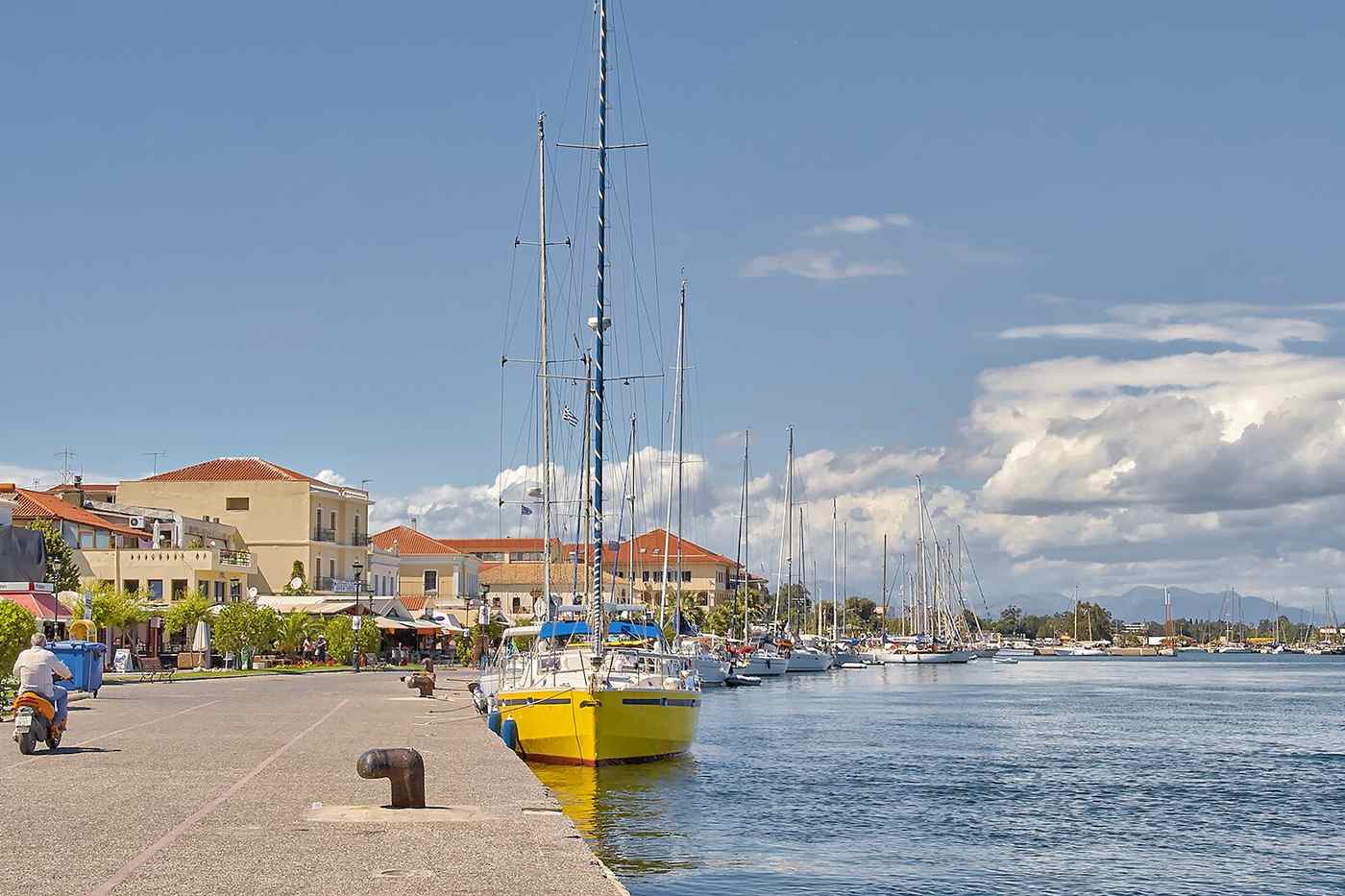
Preveza tours start in the capital of the Preveza regional unit in Epirus, a port town at the tip of a peninsula where the Ambracian Gulf meets the Ionian Sea. The routes cover the castles of the town, the Roman city of Nikopolis, the beaches of the Ionian coast and the Acheron river to the north. Greece Tours lists the boat trips and day tours that start in and around the town.
This page covers what Preveza tours see in the town, at Nikopolis, on the Acheron, at Kassope and Zalongo and along the coast, what the gulf and the vineyards serve, how visitors reach Preveza, which islands pair with it and which season suits each route. The tours below are checked on GetYourGuide and leave from Preveza and Lefkada.
What do Preveza tours cover?
Preveza tours cover the town of Preveza, capital of the Preveza regional unit, which stands at the southern tip of Epirus on a peninsula at the mouth of the Ambracian Gulf. The 2021 census counted 19,309 residents in the town.
The town sits on the north side of the Preveza strait, the channel that links the Ambracian Gulf with the Ionian Sea. The channel between Aktio and Preveza is 700 metres wide. The Aktio–Preveza Immersed Tunnel, opened in 2002, joins the two shores under the water. The name Preveza is traced to the Slavic word prěvozъ, meaning “passage”, which reached the area through an Albanian form.
Preveza tours start from a commercial harbour and tourist hub with a marina. The town is the seat of the Municipality of Preveza, which covers 380.541 square kilometres. The wider regional unit has three municipalities, Preveza, Parga and Ziros, with the Ionian Sea on its west side. Preveza tours on foot stay inside the old town, while longer Preveza tours follow the Ionian shore north or head into the gulf.
- Old town: the Castle of Saint Andrew, the Castle of Saint George, the Pantokrator fortress and the Venetian clock tower.
- History: the sea battles of Actium in 31 BC and Preveza in 1538, both fought in the waters off the town.
- Beaches: the Ionian shore from Monolithi north to Vrachos, Loutsa and Alonaki.
- Wetlands: the Amvrakikos Wetlands National Park, its lagoons and the island village of Koronisia.
- Sea trips: the town marina, the base for a yacht charter in Preveza.
Which castles and old-town sights do Preveza tours visit?
Preveza tours of the old town visit the Castle of Saint Andrew, the largest of six surviving castles in the town area, the Castle of Saint George from 1807, the Pantokrator fortress and the Venetian clock tower built in 1792 beside Saint Charalampos church.
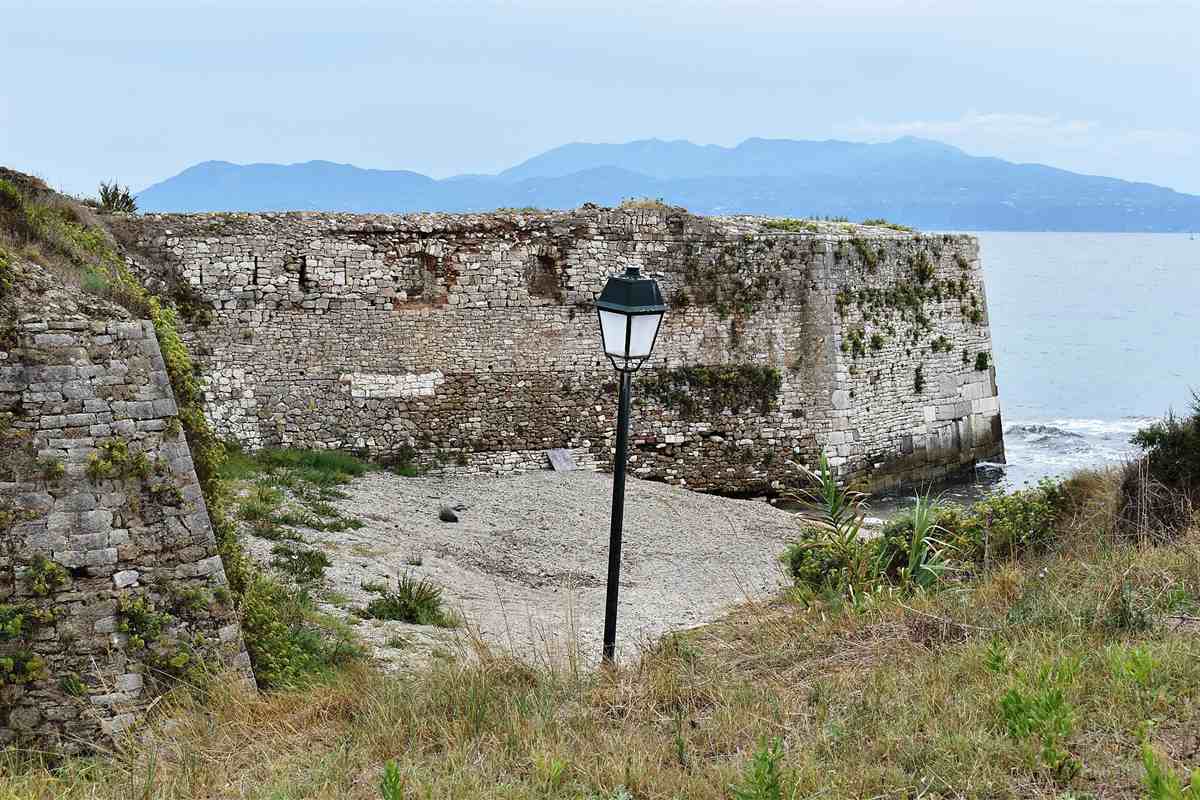
The Castle of Saint Andrew, also called Its Kale, has three building phases. The Ottomans raised a square earth fort with four stone bastions and finished it by August 1702. The Venetians cut its area almost by half, faced the earth walls with stone and added a fifth bastion. Ali Pasha enlarged it in 1807–1808. Six stone reliefs and two inscriptions survive in its walls. The castle became a listed historic monument in 1965.
Ali Pasha built the Castle of Saint George in 1807 to plans by French engineers, with 300 labourers and 200 masons. A Greek Army infantry regiment held it from 1912 until 2002. The Pantokrator fortress stands about one kilometre further west, at the mouth of the strait. Its wedge-shaped rivellino guards the channel with five arched gun ports. Four large fortifications survive inside the town, and Preveza tours on foot link them.
The clock tower went up in 1792, paid for by the townspeople under the Venetian governor Alexandros Semitekolo. It stood about 12.5 metres tall on four levels. Ali Pasha took its first bell, cast by the Canciani workshop of Venice, to the castle of Ioannina around 1808. The tower stands on the central market street. Seytan Pazar, Turkish for “devil’s bazaar”, forms part of the historic centre that Preveza tours cross.
- Saint Charalampos: the metropolitan church beside the clock tower, dated 1715–1793.
- Panagia ton Xenon: the Madonna Church of Foreigners, dated 1780.
- Venetian churches: 14 new churches went up in the town during the second Venetian period.
- Ottoman baths: the baths of Ali Pasha Tepelena inside the town.
- Vrysoula bastion: a bastion on the Preveza waterfront.
What history do Preveza tours tell?
Preveza tours tell of two sea battles fought off the town: Actium on 2 September 31 BC, when Octavian defeated Mark Antony and Cleopatra, and Preveza on 28 September 1538, when Hayreddin Barbarossa beat the Holy League fleet of Andrea Doria.
Preveza tours start the story at Actium, where Octavian’s fleet, led by Marcus Agrippa, faced the combined fleets of Antony and Cleopatra. Antony held 500 ships and 70,000 infantry. Octavian brought 400 ships and 80,000 infantry. The Roman Senate later gave Octavian the title Augustus, and he built Nicopolis nearby to mark the victory.
The Holy League of 1538 joined the Papal States, Habsburg Spain, Genoa, Venice and the Knights of Malta. The battle ranks among the three largest sea battles of the 16th century in the Mediterranean, with Djerba and Lepanto. The Ottoman win made the Ottoman Empire the first naval power in the Mediterranean for thirty years, until its loss at Lepanto in 1571. The Turkish Navy marks the day as a national holiday. Preveza tours link both battles to the same stretch of water.
The Ottomans built the first castle on the strait, the Castle of Bouka, in 1478. Venice held the town from 1684 to 1701 and again from 1717 to 1797. France then took over, and 280 French grenadiers arrived under General La Salchette. Ali Pasha of Ioannina seized Preveza in October 1798, after his troops and his son Mukhtar overwhelmed the French and their local allies at the Battle of Nicopolis on 12 October. The Greek Army entered the town on 21 October 1912, during the First Balkan War, and the Treaty of London made the union formal in 1913. Preveza tours trace these rulers through the forts they left behind: Venetian stone walls at Saint Andrew, and the forts of Ali Pasha at Saint George and Pantokrator.
- 31 BC: the Battle of Actium in the sea west of the town.
- 1538: the Battle of Preveza between Barbarossa and Doria.
- 1684–1797: two Venetian periods, split by Ottoman rule from 1701 to 1717.
- 1798–1820: Ali Pasha’s rule, with a period of self-rule from 1800 to 1806.
- 1912: the Greek Army takes Preveza on 21 October.
Which beaches do Preveza tours reach?
Preveza tours reach the Ionian shore north of town: Monolithi, a sandy beach that runs from Mytikas to Kastrosykia past Kanali, then the joined Vrachos and Loutsa beaches 34 to 36 kilometres northwest of Preveza, and the Alonaki cove near Valanidorrachi.
Monolithi faces the Ionian Sea along the western edge of the regional unit. Its name means “single stone”, after a lone rock that stood off the shore. Italian soldiers broke the rock with mortar fire during the Second World War, and it now lies as a reef just under the surface. Preveza tours to Monolithi start at Mytikas, a fishing village about 7 kilometres northwest of the town centre. A guided walk of the old town tavernas appears on our Preveza food tour page.
Behind the sand lies the Monolithi aesthetic forest, declared in 1977, which covers 660 stremmata along about 8 kilometres of shore. Building is banned on the strip, which is archaeological zone “Alpha” because of Ancient Nicopolis. Kanali sits 13 kilometres north of Preveza, with a sandy beach, hotels and rooms below the national road. Kastrosykia stands at 120 metres above sea level, about 22 kilometres north-northwest of Preveza, near beaches with campsites.
Paralia Vrachou and Paralia Loutsas form one sandy stretch 6 kilometres long. Paralia Vrachou has a supermarket, restaurants, tavernas, cafés, rooms and a hotel, and Loutsa beach hosts water sports. Alonaki is a protected cove ringed by forest beside a large rock, where camping is banned. Allied troops landed there at the end of the Second World War, and concrete layers still lie on the sand. Preveza tours along this coast use the Preveza–Igoumenitsa national road.
- Monolithi: sand from Mytikas to Kastrosykia, backed by a protected forest.
- Faros Mytika: fine sand and pebbles, 8 kilometres from Preveza.
- Kanali: a sandy village beach 13 kilometres north of Preveza.
- Vrachos and Loutsa: 6 kilometres of joined sandy beach.
- Alonaki: a protected cove with clear water and thick vegetation.
What do Preveza tours see in the Ambracian Gulf wetlands?
Preveza tours in the Ambracian Gulf see a 400-square-kilometre enclosed sea, about 40 kilometres long and 15 wide, with 26 lagoons such as Rodia and Tsoukalio, a Ramsar wetland listed in 1975, pelicans, flamingos, sea turtles and dolphins.
The gulf ranks among the largest enclosed gulfs in Greece and has been a national park since 2008. Its only link to the Ionian Sea is the narrow channel at Preveza. Fresh water from the Louros and Arachthos rivers keeps the gulf warmer and less salty than the open Ionian. Preveza tours of the gulf set out from the town at this channel.
The 26 lagoons cover 85 square kilometres. Rodia, Logarou and Tsoukalio rank among the main lagoons of Greece. The national park covers the whole sea area of the gulf and the land around it, with the highest protection on the lagoons of the northern part. The Ramsar list records the Amvrakikos gulf site at 23,649 hectares. The EU “life transfer” project counts the gulf among its seagrass restoration sites. Preveza tours of the lagoons cross this protected zone.
The lagoons draw birds, among them pelicans and flamingos, and the northern part of the gulf holds birds in very high density. Sea turtles and dolphins also appear in the gulf, the focus of a dolphin watching cruise from Preveza. The gulf yields grey mullet, sole, eel and a local large shrimp called gabari. Preveza tours to the wetlands also reach Koronisia, a fishing village on the small island of Pera Nisi, about 25 kilometres from Arta. The 2021 census counted 134 permanent residents there, who work in fishing and tourism.
- Size: about 40 kilometres long and 15 kilometres wide.
- Lagoons: 26 lagoons over 85 square kilometres.
- Ramsar site: 23,649 hectares, listed in 1975.
- Birds: pelicans and flamingos on the lagoons.
- Koronisia: 134 residents on Pera Nisi in the Arta regional unit.
What do Preveza tours see at Nikopolis?
Preveza tours at Nikopolis cover the Roman city that Octavian founded in 29 BC after his victory at Actium in 31 BC: the walls, the theatre with 77 rows of seats, the Odeon, six Early Christian basilicas with mosaics, and the Archaeological Museum of Nikopolis.
The name Nikopolis means “City of Victory”. Octavian placed the city on the narrow isthmus between the Ambracian Gulf and the Ionian Sea, and he forced the people of Kassopaia, Ambracia and parts of Acarnania to move into it. On the hill where his tent had stood, he built a monument to Apollo and decorated it with the rams of captured warships.
Preveza tours follow the Roman walls to the theatre and to the Odeon, which Anastasios Orlandos restored. The stadium of the Actian Games held at least 10,000 spectators. An aqueduct carried water about 50 km from the Louros river to the Nymphaeum. The later Byzantine walls still stand beside the national road, with 35 square and semicircular towers.
Preveza tours then reach the basilicas. Six were built from around AD 460, and Basilica B, named after Bishop Alcison, was the largest. A local workshop laid floor mosaics in them until the 550s, and Basilica A keeps an extensive series. The Stoic philosopher Epictetus also founded his school in the city.
- Museum: the Archaeological Museum of Nikopolis stands 5 km north of Preveza and opened to the public in July 2009.
- Augustus: a marble bust of the emperor, found at his Actium monument in 2003.
- Portraits: a marble head of General Agrippa and a head of Faustina the Younger, wife of Marcus Aurelius.
- Halls: Hall A traces the birth of the city, and Hall B shows trade, crafts, private life and attitudes to death.
Preveza tours with a guide for both stops join a Nikopolis tour, which pairs the ruins with the museum halls.
Which Preveza tours follow the Acheron river?
Preveza tours along the Acheron river visit the Springs of Acheron near Glyki, the gorge known as the Gates of Hades, the Necromanteion at Mesopotamos and the river mouth at Ammoudia, where the 52 km river meets the Ionian Sea.
The Acheron rises near the village of Zotiko in the Ioannina regional unit and drains 705 square kilometres. Greek myth made it a river of the underworld, where Charon ferried the souls of the dead across. Homer called it a river of Hades, and Pindar, Aeschylus and Plato place Charon on its waters.
The Springs of Acheron lie 1 km from Glyki and 2 km from Vouvopotamos, where water rises at the foot of a large rock at 17 degrees Celsius. Upstream, the Acheron Gorge runs 10 km from the Serziana bridge to Skala Tzavelainas, between rock walls that pass 100 m in height. A team from the EOS mountaineering club of Preveza first crossed the whole gorge in June 1994. Preveza tours on the water book Acheron river rafting and kayaking, with the straits as the starting point.
Preveza tours then stop at the Necromanteion, on a hill at Mesopotamos 42 km from Preveza, where the Acheron meets the Kokytos. Homer set the descent of Odysseus to the underworld here, and Herodotus writes that Periander of Corinth sent envoys to question his dead wife, Melissa. The visible remains date to the late 4th and early 3rd century BC, and the Romans burned the site in 167 BC. Sotirios Dakaris identified the hilltop, found in 1958, as the oracle, though later scholars read it as a fortified Hellenistic farmhouse.
- Springs: karst springs with cafés, restaurants and a marked hiking path.
- Ephyra: the remains of the ancient city lie 1 km from the Necromanteion.
- Delta: boats run on the last 5 km of the river down to the sea at Ammoudia.
- Souli: a 3-hour path climbs from Skala Tzavelainas to Samonida in Souli.
Preveza tours along the delta enter a Natura 2000 area, code GR2140001, that holds 699 plant species.
What do Preveza tours see at Kassope and Zalongo?
Preveza tours at Kassope and Zalongo see a 4th-century BC city built on a street grid, the Monastery of Agios Dimitrios, and the Zalongo Monument, which honours the Souliote women who died at the cliff edge in December 1803.
Kassope was founded in the middle of the 4th century BC as the capital of the Kassopaeans, a branch of the Thesprotians. It sits on a plateau at 550–650 m on the slopes of Zalongo. Its Hippodamian plan set 20 parallel streets, each 4.20 m wide and 30 m apart, across wider 6 m avenues, with about 600 two-storey houses inside the walls.
Preveza tours enter by the east gate, the same gate visitors use today. The first monument on the left is the Odeon of the 3rd century BC, with room for 300 to 500 people. Beyond it lie the Katagogeion, a public building of 31 bedrooms around a courtyard, the agora with its North Stoa, and a vaulted Macedonian tomb. Roman forces destroyed the city in 168–167 BC, and its last residents moved to Nikopolis in 31 BC.
Preveza tours then climb Mount Zalongo, north of the site. In December 1803, after Ali Pasha defeated the Souliotes, about 60 Souliote women were trapped on the mountain. Tradition holds that they danced and sang, then went over the cliff with their children rather than face capture. Sculptor George Zongolopoulos and architect Patroklos Karantinos built the monument from 1954 to 1960.
- Monument: six abstract female figures, 18 m long and 13 m high, faced with 4,300 limestone blocks.
- Steps: a cobbled path of 410 steps climbs from the Monastery of Agios Dimitrios to the monument.
- Monastery: Agios Dimitrios lies below the rock, 3 km northeast of Kamarina, and became a convent after its rebuilding from 1956.
- Visitors: 30,000 people visit the monument each year, and Kamarina holds the Zalongeia feast every summer.
Preveza tours reach the monument after 28 km by road from Preveza, by way of Kanali, Archangelos and Kamarina.
Which coastal towns do Preveza tours reach?
Preveza tours reach four Ionian coastal towns: Parga with its Venetian castle, Ammoudia at the mouth of the Acheron, Kanali on the road north of Preveza, and Loutsa, a seaside village of the Parga municipality with a pine forest that runs to the shore.
Parga lies in the northwest of the Preveza regional unit, between Preveza and Igoumenitsa, and its houses rise in tiers up the hill. Known as the Bride of Epirus, it stayed in Venetian hands from 1401 until 1797. Preveza tours climb to the Castle of Parga above the town. Residents first built it in the 11th century against pirates and the Ottomans. Hayreddin Barbarossa burned it in 1537, and the Venetians rebuilt it for the third time in 1572. It held until 1819, when Britain handed Parga to Ali Pasha, who added a hammam and his harem quarters. The gate still shows the winged lion of Saint Mark. A Parga and Acheron River day trip pairs the town with the river.
Preveza tours in Ammoudia stand where the Acheron enters the sea, 45 km from Preveza. The village was called Splantza, from the Italian word for beach, until 1928. On 16 July 1822, Kyriakoulis Mavromichalis, who had landed here with 500 men from Mani to help the Souliotes, fell in the Battle of Splantza.
Kanali, the former seat of the Zalongo municipality, groups five villages, Kastrosykia among them. Loutsa, a village of 340 people, keeps five churches, and Preveza tours on 6 August find its feast of the Transfiguration.
- Parga castle: 400 houses once stood inside its acropolis, and the walls are lit at night.
- Ammoudia: German troops burned the village on 12 August 1943, and it was rebuilt in 1948.
- Kastrosykia: 6 km northwest of Kanali, on the site of a city of ancient Epirus.
- Loutsa: the Flevas family water mill once stood at a stream mouth west of the village.
What food and drinks do Preveza tours taste?
Preveza tours taste PGI olive oil from the Lianolia Kerkyras or Prevezana olive, Ambracian Gulf fish such as farmed sea bream and sea bass, avgotaracho from the female grey mullet, Preveza sardines, local honey, and drinks such as tsipouro, ouzo and kranada.
Preveza tours by the Ambracian Gulf reach waters with at least 33 fish species, and fish farms in its western part raise sea bream and sea bass. At the Ntaliani site of Laskara, fishers catch the female grey mullet, called bafa, by the traditional method. Avgotaracho is made from it between late August and mid-October, packed in wax sticks, and the yearly output stays under 500 kg. Units near the Louros river also produce smoked trout.
Olive oil ranks among the main sources of income in Preveza. It comes from the Lianolia Kerkyras, or Prevezana, variety, has a dark yellow-green colour and a fruity taste, and carries Protected Geographical Indication status. Greenhouses near the town grow tomatoes, and the regional unit yields early fruit and vegetables, citrus and cereals.
In antiquity, the ships of Kassope carried Epirus wine, oil and olives to Carthage, Rome and Egypt. Today Preveza firms make ouzo, tsipouro and liqueurs, and Preveza tours also meet kranada, a slightly sour soft drink from the fruit of the cornelian cherry, Cornus mas, picked in August and September and boiled with very little water. Tastings of the wines made in the region today are on our Preveza wine tasting page.
- Sardines: Preveza sardines appear with Ambracian shrimp on the list of Epirus seafood.
- Honey: local firms pack flower honey, thyme honey, pine honey and royal jelly.
- Dairy: small family firms make cheese from sheep and goat milk.
- Rice: farmers at Glyki, beside the Springs of Acheron, grow rice.
- Pasta: women’s cooperatives make traditional pasta and local dishes.
Preveza tours eat at the tavernas and ouzo bars of Ammoudia, the restaurants of Mesopotamos and the tavernas of Kamarina below Zalongo.
How do visitors reach Preveza for Preveza tours?
Preveza tours start from Aktion National Airport (PVK) on the Aktion peninsula, 8 kilometres from the town, or from the KTEL Preveza bus station. By road, Preveza lies 363 kilometres from Athens, 104 kilometres from Ioannina and 50 kilometres from Arta.
Aktion National Airport carries the IATA code PVK and the ICAO code LGPZ. It stands in Acarnania, and the flat, sandy cape of Aktio lies only 600 metres across the strait from Preveza. The airport opened in 1968 and serves both Preveza and Lefkada. Regular flights link it with Athens, and charter flights land in the peak tourist months. Buses and taxis connect the terminal with Preveza, Lefkada and Aetolia-Acarnania.
Visitors who want a driver waiting at arrivals book one of the Preveza airport transfers, with private cars from Aktion to Preveza town, Parga, Syvota and Igoumenitsa.
Preveza tours by car use the Ionia Odos (A5), a motorway that starts at Ioannina and follows the western coast of the mainland down to the Gulf of Corinth. Its last section opened in August 2017 and cut the drive between Antirrio and Ioannina from 3 hours 30 minutes to 1 hour 40 minutes. The Aktio–Preveza Immersed Tunnel, the only undersea tunnel in Greece, carries traffic under the strait. For Preveza tours without a car, KTEL Preveza runs regular buses to Athens, Thessaloniki, Patras and the cities of Epirus and Thessaly.
- Air: Aktion National Airport, with scheduled flights to Athens and charters in the peak season.
- Road: 363 kilometres to Athens, 347 kilometres to Thessaloniki and 168 kilometres to Patras.
- Bus: the KTEL Preveza station on Ioanninon Avenue, with services to the Kifisou terminal in Athens.
- Sea: the port of Igoumenitsa, 85 kilometres away, with ferries to Corfu and Italy.
Which islands do Preveza tours pair with?
Preveza tours pair with Lefkada, 27 kilometres away and joined to the mainland by a causeway and floating bridge, with Meganisi by car ferry from Lefkada, and with Paxos and Antipaxos, which summer boats link with Parga, 60 kilometres from Preveza.
Preveza tours to Lefkada need no ferry, because a long causeway and a floating bridge carry the road onto the island. Its main town sits in the north, about 25 minutes by car from Aktion National Airport. Mount Stavrota rises to 1,158 metres at its centre. Nidri is its largest resort, Vasiliki is a windsurfing centre, and Porto Katsiki beach lies on the west coast. The Lefkada island page covers its towns and beaches.
Meganisi lies just east-southeast of Lefkada, and car ferries from Vathy and Spartochori cross to Lefkada. Day cruises on small boats leave the Preveza area for Lefkada and Paxos. Paxos lies about 15 kilometres off Parga, and steep white cliffs with sea caves line its west coast. Preveza tours to Paxos add Antipaxos with a 15-minute sea-taxi ride from Gaios. In summer, boats link Parga with Paxos and Antipaxos, and the Parga to Paxos boat trip makes that crossing.
- Lefkada: 27 kilometres by road from Preveza, with regular car ferries to Kefalonia, Ithaca and Meganisi.
- Meganisi: three villages, the central village of Katomeri and the ports of Vathy and Spartochori.
- Paxos: 25.3 square kilometres, the smallest of the seven main Ionian Islands, with Gaios as its main town.
- Antipaxos: 5 square kilometres, largely under vineyards, with the beaches of Vrika, Mesovrika and Voutoumi.
Which festivals and cultural events do Preveza tours meet?
Preveza tours meet the International Choral Festival in the first week of July, the Sardine Festival on the first Saturday of August, the Preveza Jazz Festival on the seafront, the Festival of Preveza through July and August, and the Women’s Carnival before Lent.
Preveza tours in early July meet the International Choral Festival. The Armonia choir of Preveza founded it in 1983 and organises it every year with partner bodies. The Sardine Festival is a folk feast of the Municipality of Preveza, held in recent years at the Castle of Saint Andrew. It serves freshly grilled Preveza sardines, known locally as papalina, with salads of local vegetables, wine, dancing and song.
Preveza tours in the last week before June meet the Preveza Jazz Festival on the town’s seafront, with bands from European countries and Greece. The Festival of Preveza continues the older Nikopoleia and fills July and August with music, dance and theatre groups from Greece and abroad. The Women’s Carnival, on the last Thursday of the carnival season, keeps a tradition of half a century.
The area held games in antiquity too. The Actia honoured Apollo Actius at Nicopolis with wrestling, music contests, horse races and sea battles. Augustus re-established them to mark his victory over Mark Antony off Actium in 31 BC, and they ranked next after the four great games of Greece.
- Saint Charalambos: on 10 February, a procession carries the relics and icon of the patron saint of Preveza.
- Botia custom: on Holy Saturday morning, crowds gather in the Saitan Pazar street.
- Tsipouro festival: on the third weekend of November in Kryopigi.
- Christmas village: from 20 December to 5 January on Androutsos Square.
When do Preveza tours run best?
Preveza tours run best from spring to autumn. Spring starts in March, summer arrives before June with stable weather and rare rain, and autumn lasts long. Heavy, prolonged rain falls mainly from October to April, and winter is short and mild.
The Preveza regional unit has a Mediterranean climate with hot, dry summers and cool winters. Snow is not uncommon at higher elevations in winter, but the coastal winter stays mild. Humidity remains high in every month, even in summer, and the prevailing winds blow from the south and south-west.
The Hellenic National Meteorological Service places the Ionian Islands and the larger part of the western coast in the hot-summer Mediterranean type, coded Csa. Summer days there are mainly sunny and dry. Midday heatwaves strike inland at times, while the sea breeze cools the coastal strip. Frosts are infrequent and fall between December and March, with a peak in January.
Preveza tours follow the busy season at Aktion, where passenger traffic grows in the five summer-season months up to September, as organised groups arrive on charter flights. Preveza tours in winter meet a short, mild season with heavy rain.
- Spring: from March, ahead of the summer charter season.
- Summer: from before June to September, with stable, hot weather and rare rain.
- Autumn: a long season, with the rains returning in October.
- Winter: from mid-December to the end of February, mild on the coast.
How do Preveza tours fit into a trip through Epirus?
Preveza tours fit into an Epirus trip as the southern base for Arta, 50 kilometres away, with its stone bridge over the Arachthos, Ioannina, 104 kilometres away on Lake Pamvotis, and the 46 villages of the Zagori with the Vikos Gorge.
The Municipality of Preveza names Arta, Ioannina, Dodona, the Vikos Gorge and the Zagori villages as excursions from the town. Preveza tours that continue inland find Arta nearest. Known in antiquity as Ambracia, it served as the capital of King Pyrrhus and later of the Despotate of Epirus. Its stone bridge crosses the Arachthos river on the west side of the city, and the present structure is Ottoman work. The folk ballad of the bridge tells of a master builder who buried his wife in the foundations to stop the nightly collapse of the work. Between 1881 and 1912, the top of the bridge marked the border between the Ottoman Empire and Greece.
Ioannina, the capital of Epirus, stands about 500 metres above sea level on the western shore of Lake Pamvotis. Its castle holds the Fethiye Mosque, the tomb of Ali Pasha and the Byzantine Museum, and motorboats cross to the inhabited island in the lake, home to six monasteries. The guided tours of Ioannina cover the city. North of the city, the Zagori region holds 46 villages and is a UNESCO World Heritage Site. More than 160 arched bridges were built in the area, and the Vikos Gorge, about 38 kilometres long, lies at the heart of the Vikos–Aoös National Park.
- Arta: 50 kilometres from Preveza, with the stone bridge, a 13th-century castle and the Paregoretissa church of about 1290.
- Ioannina: 104 kilometres from Preveza, with its lakeside castle and an Archaeological Museum that features finds from Dodona.
- Zagori: 46 villages in the Pindus, once linked by arched stone bridges such as the three-arched Kalogeriko near Kipoi.
- Ionia Odos: the motorway north to Ioannina, with the Arta bypass ending at Filippiada near the Preveza border.
Frequently Asked Questions
Which airport serves Preveza tours?
Aktion National Airport serves Preveza tours and is also known as Preveza Airport. Fraport Greece operates it as one of 14 regional airports, under a 40-year concession. Lefkada uses the same terminal, and NATO and the Hellenic Air Force share the field with civil traffic.
How do Preveza tours reach Paxos by ferry?
Preveza tours reach Paxos on the combined passenger and vehicle ferries that sail all year from the port of Igoumenitsa, a crossing of 1.5 hours. In the tourist season, hydrofoils, passenger ferries and sea taxis also run from Corfu in 1 to 2 hours. Gaios, Lakka and Longos are the main settlements of Paxos.
Which twin-town events do Preveza tours meet?
Preveza tours meet the town twinning of the Douzelage, an association of 24 towns across the European Union. Preveza is a founding member, and the network began in 1991. Its regular events include a produce market from each of the other countries and festivals.
Can Preveza tours continue to the Zagori?
Preveza tours continue to the Zagori through Ioannina, which borders the southern point of the Zagori triangle. The region covers about 1,000 square kilometres, has about 3,400 residents and keeps its municipal seat at Asprangeloi. The Voidomatis river has its source in the Vikos Gorge.