
Poseidonio is a small fishing and yachting harbour village on the east coast of Samos, set in a green bay southeast of the island capital. Named after Poseidon, the sea god, it keeps a quiet, traditional character built around its port. Fishing boats and a compact marina fill the sheltered water, seafront tavernas serve the day’s catch, and a short pebble beach edges the calm bay. The village faces the Turkish coast across the narrow Mycale strait. Plan the whole trip with Greece Tours.
This guide covers what Poseidonio is and where it sits on the east coast of Samos, the little port and marina, the fishing boats, and the seafront fish tavernas. It describes the pebble beach and swimming, the sheltered water, and access from Vathy by car. It also explains the striking view across the Mycale strait to Turkey, only about 1.2 kilometres away, and how the quiet village suits travellers seeking a calm, scenic base.
What is Poseidonio on Samos and where does the fishing harbour village sit?
Poseidonio is a small fishing and yachting harbour village on the east coast of Samos, southeast of Vathy in a green bay that faces the Turkish coast across the narrow Mycale strait.
Poseidonio sits on the eastern edge of Samos, about 12 kilometres southeast of the island capital by a winding coast road. The village grew around a sheltered bay where fishing families moored their boats for generations, and it keeps that working-harbour character today. Pine slopes and olive groves rise behind the waterfront, and the road descends in tight bends to reach the sea. The settlement stays small, with stone houses, a handful of rooms to rent, and a quiet square near the water. Its name honours Poseidon, the sea god, a fitting choice for a place shaped entirely by the sea.
Drivers reach it from Vathy in about 15 to 20 minutes, following signs toward the east-coast coves. The bay opens east, so morning light reaches the harbour first.
The bay of Poseidonio faces almost due east, which shelters it from the strong northern meltemi wind that sweeps the open Aegean in summer. This position keeps the water calm on most days when north-coast beaches turn choppy. The village sits among a string of small east-coast coves, close to the sheltered inlets of Kerveli, Mykali and Psili Ammos further along the shore. Terraced land behind the beach once carried vines and olives, and low stone walls still mark the old plots. A single main lane runs along the water, lined with tamarisk trees that throw shade over parked boats and cafe chairs.
The pace stays slow, and most visitors arrive for a meal, a swim, and the wide sea view. Cars park easily along the lane outside the peak midday hours.
Access to Poseidonio runs from Vathy, the island capital and main ferry port on the north coast. Drivers leave the town on the signed road toward the east-coast beaches, then follow a route that climbs over a low ridge before dropping to the bay. The full trip covers roughly 12 kilometres and takes about 15 to 20 minutes by car. Buses to the east coast run on a limited schedule, so most travellers reach the village with a rental car, a scooter, or a taxi. The final descent tightens into hairpin bends with sea views opening between the pines. Parking sits near the waterfront, and the walk from car to shore takes only a couple of minutes.
Return trips to the town are quick, which suits an evening meal by the water.
The village suits travellers who want a calm base on Samos within reach of the capital. It offers a short stretch of pebble beach, a marina, a cluster of fish tavernas, and rooms to rent above the shore. Families with small children value the sheltered water and the easy parking, while sailors use the marina as a stop on the east-coast route. The bay lies close to the coves of Kerveli, Mykali and Psili Ammos, so a car opens the neighbouring beaches in one day. Evenings stay quiet, with tavernas serving until late and little other activity.
Travellers who want bars, clubs, and busy resorts head instead to Pythagorio or the Kokkari strip, both a longer drive across the island. That contrast keeps Poseidonio firmly on the restful side of the island.
What does the little port and marina at Poseidonio on Samos look like?
Poseidonio wraps around a small harbour where wooden fishing boats moor beside a compact marina for yachts. A stone jetty and a short breakwater shelter the moorings, and nets, traps, and painted caiques line the quay along the village waterfront.
The harbour at Poseidonio centres on a stone quay that curves around the head of the bay. Fishing boats tie up along the inner edge, their bows pointing to shore, while a short breakwater takes the swell from the open sea. Local fishermen still work these waters, and their caiques carry the bright blue, white, and red paint typical of the Aegean. Early mornings bring the sorting of nets and the unloading of the night’s catch onto the quay. Cats gather near the cleaning tables, waiting for scraps from the boats. The scene changes little through the year, and the working rhythm of the port gives the village much of its character.
Visitors often sit on the harbour wall and watch the boats come and go across the calm bay.
A compact marina sits alongside the fishing quay and draws yachts cruising the east coast of Samos. Sailing routes link the island with the nearby Turkish port of Kusadasi and the wider Dodecanese, so foreign-flagged boats often moor here overnight. The marina offers basic shelter rather than a large resort harbour, with mooring lines, calm water, and a short walk to the tavernas. The narrow strait keeps the crossing to Turkey short, which makes the bay a natural stop for cruising sailors. Depths near the quay suit medium yachts, and the breakwater blocks the worst of the summer chop. The mix of working caiques and visiting sailboats in one small basin defines the port.
It marks Poseidonio as a genuine harbour village rather than a built resort along this quiet coast.
Boat traffic at Poseidonio stays modest, dominated by fishing craft and private yachts rather than large ferries. The main island ferries dock at Vathy and Karlovasi on the north coast and at Pythagorio in the southeast, not at this bay. Small local boats sometimes run day trips to nearby coves and to Psili Ammos when the weather allows, though schedules stay informal. The calm eastern bay lets boats anchor offshore, and swimmers share the water with moored craft near the marina. Fishermen sell part of the catch to the seafront tavernas, which shortens the path from sea to plate. The harbour lighting stays low at night, so the marina rests quietly under the stars.
This unhurried traffic keeps the port safe and pleasant for families walking the quay.
The port defines daily life in Poseidonio more than any monument or square. Wooden tables spill from the tavernas toward the water’s edge, so diners look straight onto the moored boats as they eat. Repair work on hulls and engines happens in the open, part of the harbour’s honest, working feel. The bay faces east, so the port catches the first light of day and the water often lies glassy at dawn. Photographers value this early calm, when reflections of the caiques hold steady on the still surface. The marina and quay together form the heart of the village, and almost every visit begins or ends beside the boats.
This close bond between the settlement and its harbour is the reason travellers remember Poseidonio as a fishing port first.
Where do you eat fresh fish at the seafront tavernas of Poseidonio on Samos?
Poseidonio lines its waterfront with family-run fish tavernas that serve the day’s catch beside the moored boats.
The tavernas of Poseidonio sit in a row along the harbour, their tables set almost on the water. Most are family businesses that have served the same recipes for generations, with the day’s fish displayed on ice for guests to choose. The catch depends on the season and the weather, so the selection shifts through the year rather than following a fixed menu. Fishermen supply the tavernas directly from the boats moored a short distance away, which keeps the fish fresh. Diners point to the fish they want, and it goes straight to the charcoal grill.
This direct link between the port and the kitchen is the main reason travellers drive out from Vathy for a meal here rather than eating in the town centre.
Grilled fish anchors the menus, cooked simply over charcoal with olive oil, lemon, and oregano from the Samos hills. Small seafood plates, salads, and vegetables from local gardens round out a typical table by the water. The island’s sweet Muscat wine appears on most lists, alongside dry white wines from the same terraced slopes of Mount Ampelos. Prices track the daily catch and the type of fish, so travellers are wise to ask the weight and the rate before ordering. Portions suit sharing, and a long lunch by the water can stretch across the whole afternoon. The cooking stays traditional rather than elaborate, letting the freshness of the fish lead the plate.
This plain, honest style matches the working character of the harbour and keeps regulars returning across the seasons.
Meals at Poseidonio follow the slow rhythm of the coast, and diners rush their table. Tamarisk trees shade the tables at midday, while evenings bring cooler air off the strait and the glow of lights on the water. The eastern bay stays calm on most days, so the sea beside the tables lies quiet during a meal. Visitors often combine lunch with a swim, moving between the pebble beach and their table through the afternoon. The tavernas open through the warmer months and thin out in winter, when the village returns to its fishing families. Reservations are rarely needed outside the peak weeks of high summer, when tables fill early.
This unhurried pace, more than any single dish, is what draws travellers back to the Poseidonio waterfront each year.
Eating at the Poseidonio seafront pairs naturally with a wider tour of the east coast of Samos. The village sits close to the beaches of Kerveli, Mykali and Psili Ammos, so a meal often follows a morning swim at one of the coves. Sailors moored in the marina walk ashore for dinner, mixing with drivers down from Vathy and guests staying in the village rooms. The bay looks across the strait to the Turkish coast, and the lights of the far shore appear after dark beyond the boats. Local wine, fresh fish, and this open sea view form the core of the experience here.
Travellers who value setting and produce over a long menu find the harbour tavernas a fitting stop on an east-coast day, well away from the busier resort strips.
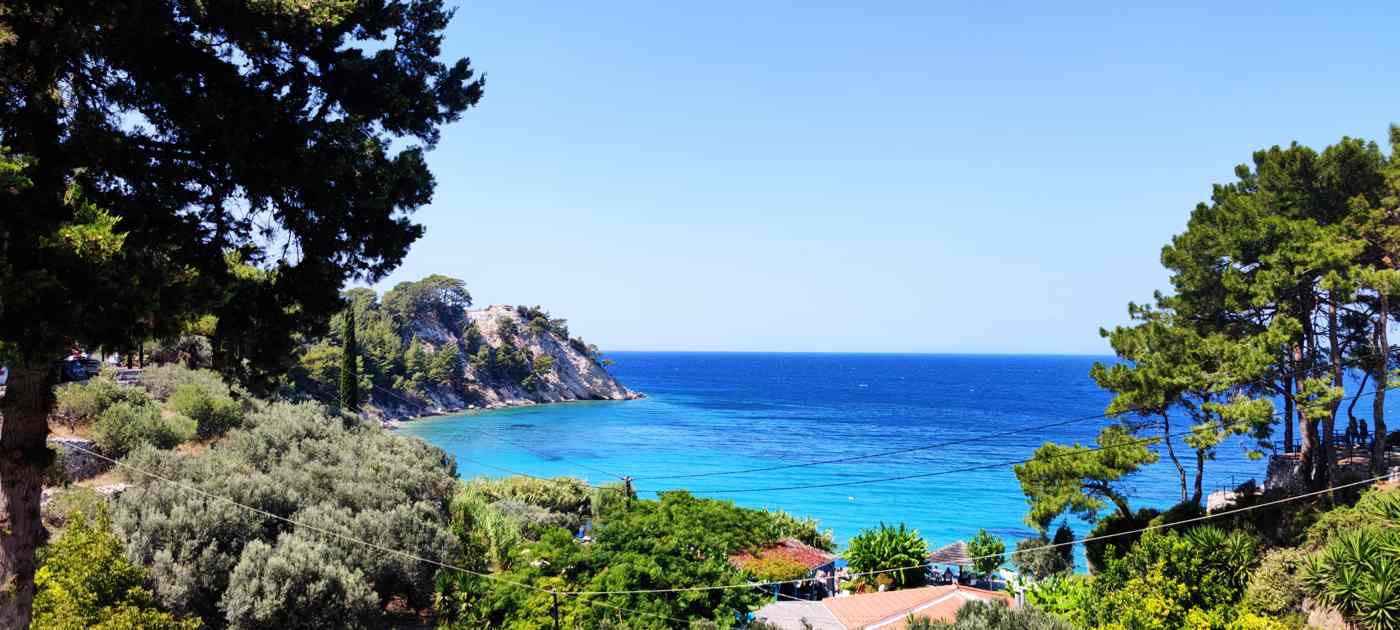
What is the pebble beach at Poseidonio on Samos like for swimming?
Poseidonio has a short pebble beach beside the harbour with clear, calm water that deepens quickly from the shore. The eastern bay shelters swimmers from the northern meltemi wind, so the sea stays flat on most summer days.
The beach at Poseidonio runs a short stretch of grey pebbles and coarse sand beside the harbour wall. The water turns clear and blue within a couple of steps, and the bottom slopes down quickly, so the sea deepens close to the shore. This suits confident swimmers, while families with small children tend to enter near the calmer, shallower corner by the jetty. Tamarisk trees behind the pebbles give natural shade, a welcome feature on the exposed east coast in high summer. A handful of sunbeds and umbrellas appear near the tavernas, but the beach stays small and low-key throughout. Swimmers share the bay with moored boats, so care near the marina is sensible.
The sheltered position keeps the water calm when north-coast beaches turn rough with the wind.
Poseidonio sits within a short drive of the finest coves on the east coast of Samos. Kerveli beach lies just north, a sheltered bay backed by pines with calm, clear water that draws families and snorkellers. Mykali stretches longer and sandier to the south, while Psili Ammos offers shallow water and a clear view across the strait to Turkey. Drivers can pair the Poseidonio harbour with two or three of these beaches in a single day, since the roads linking them are short. Each cove faces east or south, so all of them stay largely protected from the summer meltemi wind.
This cluster of calm, tree-backed beaches around the village is a key reason travellers choose the quiet east coast over the busier north shore of the island.
Swimming at Poseidonio rewards visitors with clean water and a quiet setting away from the crowds. The bay holds its clarity because there is little development and no large resort runoff along this stretch of coast. Snorkellers find rocks at each end of the beach where small fish gather in the shallows. The pebbles mean water shoes help, both for comfort and for grip on the slippery stones near the edge. Shade from the tamarisks lets swimmers stay through the hottest hours without booking a sunbed. The calm, east-facing water makes morning swims especially still, before any afternoon breeze picks up across the bay.
A swim, a meal, and a rest under the trees fit easily into one relaxed visit.
The beach and the harbour together make Poseidonio a practical base for east-coast swimming on Samos. Parking sits close to the shore, so families carry gear only a short distance to the pebbles. The sheltered bay and gentle entry near the jetty suit a wide range of swimmers, from children to older visitors. Facilities stay simple, limited to the tavernas, the sunbeds, and the shade of the trees, so visitors carry their own water and supplies for a full day. The lack of loud beach bars keeps the soundscape to waves and cicadas along the shore. Swimmers who want variety use the village as a hub and drive between the neighbouring coves.
This blend of calm water, shade, and easy access defines the swimming at the small Poseidonio beach.
How close is Turkey across the Mycale strait from Poseidonio on Samos?
Poseidonio looks east across the Mycale strait to the Turkish mainland, which lies only about 1.2 kilometres away at the channel’s narrowest point. The hills of Anatolia rise clearly across the water, and their lights show after dark.
The Mycale strait separates Samos from the Turkish mainland, and near Poseidonio it narrows to about 1.2 kilometres. This is one of the shortest sea gaps between Greece and Turkey, and the far coast fills much of the eastern horizon. The Dilek peninsula, part of a Turkish national park, rises green and steep directly across the water. From the harbour and the beach, walkers pick out headlands, coves, and buildings on the opposite shore with the naked eye. The closeness gives the bay a striking sense of place, poised at the very edge of the Aegean. This narrow channel, named after ancient Mycale, carries a long history as a sea frontier between the two coasts.
They face each other across a short and busy stretch of open water.
The view to Turkey shapes every part of a visit to Poseidonio. Boats crossing the strait pass within sight of the village, and the calm water often mirrors the far mountains at dawn. After dark, the lights of Kusadasi and the smaller Turkish settlements glitter across the channel, close enough to trace the line of the coast. The short distance once made this a crossing point, and small boats still work both sides of the water. Sunrise arrives over the Anatolian hills, so the east-facing bay glows early while the rest of Samos lies in shadow.
This daily play of light across the narrow strait gives Poseidonio a rare setting that few other Greek harbours can match along the whole eastern frontier of the Aegean sea.
Standing at Poseidonio, travellers grasp how tightly Samos and Anatolia sit together across the strait. The ancient Battle of Mycale took place on this coast, and the channel has linked and divided the two shores through centuries of trade and conflict. Today the crossing serves cruising yachts and the ferries that run between Samos and Kusadasi from the ports of Vathy and Pythagorio, not from the village itself. The narrow water stays busy with fishing boats working both sides of the channel. The steep Dilek peninsula opposite shelters rich wildlife within its Turkish national park.
This blend of a short sea gap, a working border, and a wild far shore makes the view from Poseidonio a lesson in geography as much as a pleasing sight.
The strait view completes the character of Poseidonio as a quiet frontier harbour on Samos. Diners at the seafront tavernas watch the far coast change colour through the evening as the sun drops behind the island. Swimmers float in the calm bay while the Turkish mountains stand across the channel in plain sight. The closeness of the two countries here is a talking point for most visitors, who rarely expect the far shore to feel so near. This setting, combined with the fishing port, the marina, the pebble beach, and the fish tavernas, gives the small village its full appeal.
Poseidonio rewards travellers who want a calm, scenic corner of the east coast, where the working sea and the narrow strait to Turkey define the day.
What gives Poseidonio its quiet, traditional character on the east coast of Samos?
Poseidonio keeps a slow fishing-village rhythm on Samos, with a short row of seafront tavernas, moored caiques, and pine-and-olive slopes rising behind the bay. Quiet lanes and no nightlife strip preserve its calm, unhurried feel.
The village wraps around a small bay southeast of Vathy, where fishing boats swing at their moorings and the water stays glassy through the morning. Whitewashed houses with terracotta roofs climb the low slope behind the waterfront, screened by cypress, pine and old olive terraces. A short seafront lane carries the whole settlement: a row of tavernas, rooms to rent above the quay, and a jetty where day boats tie up. Poseidonio counts only a small permanent population, so the pace stays domestic rather than commercial. Cats doze under tamarisk trees, nets dry along the quay, and the loudest sound is often a diesel engine leaving at dawn.
This remains a working harbour first and a visitor stop a distant second, holding its everyday routine through the season.
Terraced groves rise quickly behind the waterfront, and the scent of pine and warm resin drifts down to the harbour on hot afternoons. Olive trees, planted in stone-walled rows, hold the slope together and mark the old field boundaries of the bay. Poseidonio grew as a fishing anchorage rather than a resort, so it never gained tower hotels or a boardwalk of bars. The buildings stay low, the colours stay white and blue, and the lanes stay narrow enough that traffic slows to a crawl. Bougainvillea spills over garden walls near the church, and vegetable plots sit between the houses.
The setting frames the harbour with green cover on three sides, leaving the fourth open to the sea and the Turkish shore across the strait.
Life in the village follows the boats and the seasons rather than a nightlife clock, so the day starts early and winds down slowly. Fishermen unload their catch in the early hours, and the tavernas buy directly from the quay for the day’s menu. By mid-morning the harbour settles into a hush, broken by the clink of rigging and the odd scooter climbing toward Vathy. Families who own the tavernas often live above them, so the same faces greet returning guests across the years. Elderly regulars take coffee under the plane trees, and children swim off the jetty in the afternoon heat.
Poseidonio ties its festival days to the church calendar, when the square fills with music and grilled fish, and the visitor slots into the rhythm rather than reshaping it.
The traditional character shows most clearly in what the village lacks: no strip of clubs, no water-park signage, and no fleet of jet-ski rentals churning the bay. Poseidonio trades on calm water, shade, and a table close to the sea, and that is the whole draw for a visitor. Evening arrives slowly, with the harbour lights reflecting off still water and the smell of charcoal drifting from the tavernas. The eastern position means the sun rises straight over the strait, so dawn swimmers watch the light climb from behind the Turkish hills. Prices stay modest against Pythagorio or Kokkari, since the village never rebuilt itself for mass tourism.
For travellers who want the older, quieter Samos of fishing harbours and olive terraces, Poseidonio holds the line better than the island’s busier resorts.
How do you reach Poseidonio from Vathy, Samos Town?
Poseidonio lies southeast of Vathy, reached by a winding paved road that climbs over a low ridge and drops to the coast in about 15-20 minutes. The route passes olive groves and the Kerveli turn before the harbour.
The drive begins in Vathy, the island capital and main ferry port on the north coast, and heads south out of town past the upper suburbs. The road narrows as it climbs the ridge that separates Vathy bay from the eastern coves, gaining height through pine and scrub. Near the top the tarmac reaches a saddle with open views over the strait, then bends downhill in a run of tight curves toward the sea. Signposts mark the junctions for Kerveli, Mykali and Poseidonio, so the turns stay easy to follow. The distance stays short in kilometres, yet the gradient and bends keep the pace measured rather than quick.
Most drivers cover the run from Vathy in about 15-20 minutes without hurrying, longer with a stop for the coastal views on the descent.
A hire car or scooter gives the most direct access, since the winding road rewards flexible timing over a fixed bus schedule. The route is fully paved and signposted, though the curves demand attention and low speed on the descent to the harbour. Drivers who dislike hairpins can take the bends slowly, as there is little through traffic outside the peak weeks. The gradient means the same climb back to Vathy tests underpowered scooters, so a small car suits two people with luggage better. Parking sits along the harbour front and on the approach lane, and it fills only at midday in high season. Poseidonio has no petrol station, so drivers refuel in Vathy before setting out.
The road links onward to Kerveli and Mykali, making a short circuit of the eastern coves practical in one afternoon.
Public transport reaches the eastern coves only thinly, so a car remains the reliable way in for most visitors. The KTEL island buses concentrate on the Vathy-Pythagorio-Karlovasi spine, and services to the small eastern hamlets run sparingly. Travellers without a vehicle often use a taxi from Vathy, a short hop that takes about the same 15-20 minutes as driving. A taxi works well for a lunch trip, with a booked return time so the quiet harbour does not strand anyone at dusk. The winding road is comfortable for confident cyclists in the cooler hours, though the climb back to Vathy is steady work.
Poseidonio suits a planned day out rather than a spontaneous walk-up, and pinning down the return leg matters most for anyone relying on hired transport or a booked driver.
The approach itself forms part of the appeal, because the ridge road delivers a sequence of sea views before the harbour appears. The final descent frames Poseidonio against the strait, with the Turkish hills filling the horizon beyond the moored boats. Drivers coming from Pythagorio or the airport route through Vathy first, then join the same eastern road for the final descent to the bay. Signage on the edge of Vathy points clearly toward Kerveli and Poseidonio, so first-time visitors rarely miss the turn. The road stays open year-round, though winter rain can leave grit and fallen pine needles on the bends.
Working from a base in Vathy, Poseidonio makes an easy early-evening drive for dinner by the water, returning under harbour lights within about twenty minutes.
Which east-coast coves lie near Poseidonio on Samos?
Poseidonio sits between three sheltered east-coast coves: Kerveli to the north, Mykali to the south, and Psili Ammos near the strait’s narrowest point. Each lies within a short drive, giving swimmers calm, clear water close to the harbour.
Kerveli lies just north of Poseidonio, a small bay backed by cypress and pine where the water shelves gently over sand and fine gravel. The cove faces east, so it catches calm morning water and shade from the wooded slope in the afternoon. A short seafront holds tavernas serving fish and grilled meats, and the swimming stays sheltered from the meltemi wind that batters the north coast. The setting resembles Poseidonio in scale and mood, another quiet inlet rather than a developed resort. Walkers follow the coastal paths between the coves, and the road ties them together in a short loop by car.
Kerveli ranks among the calmer Samos beaches, valued for clear water and protection when the northern shore turns rough under a hard summer wind.
Mykali stretches south of Poseidonio as a long open beach of sand and small pebbles, facing the Turkish coast across the narrow strait. The bay runs straighter and wider than Kerveli, with a mix of organised sections and free stretches where the sunbeds thin out. The shallow entry and gentle slope suit families, and the water clears to bright turquoise over the pale seabed. A line of tavernas and rooms backs the shore, though the strip stays low-rise and quiet compared with the north-coast resorts.
The exposure means afternoon breezes ripple the surface, welcome in the summer heat rather than a nuisance. Mykali beach pairs naturally with a Poseidonio lunch, since the two sit minutes apart on the same eastern road below Vathy.
Psili Ammos marks the point where Samos comes closest to Turkey, with the Mycale strait narrowing to about 1.2 kilometres of water. The name means fine sand, and the shallow bay stays warm and calm, wading out a long way before it deepens. A small wetland behind the beach draws flamingos and other birds in the cooler months, adding a quiet nature stop to the swim. Tavernas line the short front, and the view across to the Turkish hills is the clearest on this coast. The shallow water and soft sand make Psili Ammos a favourite family cove, busier than Kerveli yet still modest in scale.
From Poseidonio the drive takes only minutes, so the three coves combine easily into one unhurried day along the eastern shore of Samos.
The eastern coves share a common character: small bays, wooded backdrops, calm water, and shelter from the north wind that defines this corner of Samos. Poseidonio works as a natural base or lunch stop between them, its harbour tavernas balancing the beach time at Kerveli, Mykali and Psili Ammos. The road linking the coves runs close to the shore, so hopping from one to the next takes minutes rather than a major transfer. Each bay keeps its own feel: Kerveli the most enclosed, Mykali the longest and most open, Psili Ammos the shallowest and closest to Turkey. Swimmers who dislike crowds shift between them through the day as the sun and wind move.
Together they make the Vathy-to-Poseidonio coast the quiet swimming heart of eastern Samos, sheltered from the meltemi that scours the north.


What does Poseidonio offer sailors and yachts on the east coast of Samos?
Poseidonio provides a sheltered anchorage and a small marina on the east coast, giving yachts a calm overnight stop with tavernas ashore. The bay’s protection and position near the Turkish strait make it a practical Aegean waypoint.
The harbour at Poseidonio combines a working fishing quay with a small marina, offering berths and moorings for visiting yachts through the sailing season. The bay faces east and sits under wooded slopes, so it shelters boats from the prevailing north meltemi that funnels down the Aegean. Skippers value calm holding for an overnight stop, with tavernas and water steps from the pontoon. The marina stays modest in scale, matching the village rather than a large commercial port with fuel docks and chandleries. Sailors top up serious supplies in Pythagorio or Vathy, then drop to Poseidonio for a quiet night at anchor.
The setting suits cruising yachts working the eastern Aegean between Samos, Ikaria and the Turkish coast, looking for a sheltered pause away from the busier harbours around the island.
Poseidonio sits on the cruising route between Samos and the nearby Turkish resorts of Kusadasi and the Dilek peninsula, only a short hop across the strait. The narrow Mycale channel means the crossing to Turkey is one of the shortest in the Aegean, so charter yachts often use the eastern coves as a jumping-off point. The anchorage holds well in sand and weed, and the wooded headlands cut the swell that builds on exposed north-coast bays. Space stays limited, so arriving early in the afternoon secures a berth or a good spot to drop the hook. Poseidonio rewards crews who want dinner ashore without the wash and noise of a big marina.
The village quay lets sailors step straight from the boat to a taverna table beside the water, then back aboard for the night.
General facilities match a small harbour rather than a full-service marina, so crews plan around modest provisions ashore. Water and basic supplies are available near the quay, while fuel and major repairs mean a run to Pythagorio or the port at Vathy. The pontoon and moorings suit yachts of moderate draught, and the sheltered water makes stern-to berthing straightforward in calm conditions. Poseidonio has no large slipway or boatyard, keeping the harbour focused on fishing craft and visiting cruisers. Local boats share the quay, so visiting skippers leave room for the working fleet coming and going at dawn.
The mooring charges stay modest against the island’s larger harbours, part of why cruising sailors favour this eastern bay for a night before pushing on around the coast toward Pythagorio.
Day sailors and small boats also use Poseidonio to explore the eastern coves, hopping the short distances to Kerveli, Mykali and Psili Ammos by water. The calm bays and clear water reward swimming stops off the boat, with the Turkish coast filling the eastern horizon beyond the anchorage. Wind on this shore stays lighter than the north coast, so the sailing here favours relaxed cruising over hard beating into the meltemi. Poseidonio anchors a gentle stretch of coast, linking the harbour village to a chain of protected inlets suited to a slow day afloat. Skippers watching the forecast time their crossing of the strait for the settled morning hours.
The combination of shelter, short crossings and quiet tavernas keeps the eastern bays a steady favourite on Samos cruising itineraries through the sailing season.
Who suits the quiet harbour of Poseidonio, and when is the best time to visit?
Poseidonio suits couples, families and sailors seeking calm water and traditional tavernas over nightlife. Late spring and early autumn bring warm seas, thinner crowds, and comfortable temperatures, while midsummer stays hot, busier at midday, yet still quiet by island standards.
Poseidonio rewards travellers who rank calm water, shade and a seafront dinner over bars and organised entertainment. Couples find a low-key base for swimming and long taverna evenings, with the harbour lights and still water setting the tone after dark. Families gain a safe, shallow harbour and the nearby sandy coves of Mykali and Psili Ammos for the children. Sailors treat the sheltered bay as an overnight anchorage on the eastern Aegean route toward the Turkish coast. Older visitors and returning regulars value the steady, familiar pace and the same taverna faces across the years. The village holds little for anyone chasing nightlife, shopping or large resort facilities, and that filter is exactly what keeps it quiet.
Poseidonio draws people who want the older rhythm of a Samos fishing harbour rather than a packaged resort.
Late spring brings warm days, green hillsides and sea temperatures climbing toward comfortable swimming, with the tavernas open and the crowds still light. The eastern coves stay calm in this season, and the pine slopes behind Poseidonio hold their fresh colour before the summer dries them. Walkers and cyclists find the winding road from Vathy pleasant in the milder air, avoiding the heat of the midday descent. Wildflowers line the terraces, and the birdlife around the Psili Ammos wetland stays active before the peak heat arrives. This shoulder period gives the clearest water and the easiest parking along the harbour front.
Poseidonio in late spring shows the eastern coast at its most relaxed, with settled weather and open tavernas without the midsummer press of visitors around the bay and the quay.
Midsummer delivers the hottest, driest weather and the warmest sea, drawing the peak of families and sailors to the eastern coves. Poseidonio stays calmer than Kokkari or Pythagorio even in high season, though the harbour tavernas fill at lunch and the parking tightens by midday. The strait catches an afternoon breeze that cools the shore and ripples the bay, a relief in the summer heat. Visitors who dislike crowds arrive early or late in the day, keeping the middle hours for shade and a long lunch. The clear water and shallow entry make the coves reliable for children through the school holidays.
Poseidonio absorbs the summer numbers without losing its character, a quiet harbour that stays quiet even when the island as a whole runs busy with high-season traffic.
Early autumn holds the warmth in the sea while the crowds thin, making September and October a strong window for a calm eastern-coast stay. The water stays warm from the long summer, and the light softens over the strait and the Turkish hills across it. Tavernas keep serving the day’s catch, and the winding road from Vathy quietens as the season winds down. Birdwatchers return to the Psili Ammos wetland as migrating flocks pass through the cooler months. Winter closes much of the tourist trade, leaving Poseidonio a working fishing village with a small core of year-round tavernas.
For warm-sea swimming with space and calm, the shoulder months on either side of summer suit the harbour best, matching its unhurried pace with settled, comfortable weather along the coast.
Frequently Asked Questions
Is Poseidonio worth visiting on Samos?
Poseidonio is worth visiting for travellers who want a quiet, traditional fishing harbour rather than a busy resort. The village offers a small port with moored caiques, a row of seafront fish tavernas, a pebble beach, and pine-and-olive slopes rising behind the bay. Its position on the east coast of Samos places it minutes from the sheltered coves of Kerveli, Mykali and Psili Ammos, so a single base covers several calm swimming spots. The view east reaches the Turkish coast across the narrow Mycale strait, one of the shortest sea gaps in the Aegean. Poseidonio suits a slow lunch by the water, an afternoon swim, and an early dinner as the harbour lights come on.
It holds little for anyone seeking nightlife, shopping or large hotels. For visitors drawn to the older, unhurried Samos of working harbours and terraced groves, the village earns the short winding drive from Vathy.
Is Poseidonio good to visit with kids?
Poseidonio works well for families, thanks to its calm harbour water and the shallow sandy coves a short drive away. The bay itself stays sheltered from the north wind, so young children paddle in still, clear water off the quay and the pebble beach. Nearby Mykali and Psili Ammos add long stretches of sand with a gentle slope, where the sea shallows out a long way and warms quickly. The harbour tavernas serve simple grilled fish, chips and salads that suit children, and tables sit close enough to the water for easy supervision. The wetland behind Psili Ammos draws flamingos and other birds in the cooler months, a quiet nature stop between swims.
Parking sits near the front, cutting the walk with beach gear and pushchairs. Families do best with a hire car to link the coves, and the low-key pace lets children roam the quay away from heavy traffic and crowds.
Can you eat fresh fish at Poseidonio?
Poseidonio centres its tavernas on fresh fish landed by the local boats, so seafood is the natural choice at the harbour tables. Fishermen unload their catch in the early hours, and the seafront tavernas buy directly from the quay, so the menu reflects the day’s landings rather than a fixed card. Grilled fish, small fried fish, octopus and seafood mezes appear alongside Greek staples like salads, cheese and grilled meats for non-fish eaters. Tables sit close to the water, with moored boats and the Turkish coast beyond making the setting part of the meal.
Prices track the season and the size of the catch, and fish sold by weight is usual across Greek harbours, so guests ask the price per kilo before ordering. Poseidonio keeps the cooking plain and traditional rather than elaborate. For a seafront fish lunch on the quiet eastern coast of Samos, the harbour tavernas deliver a straightforward, sea-fresh meal.
Where do you park at Poseidonio?
Parking at Poseidonio sits along the harbour front and on the approach lane that drops into the village, and it stays free and informal rather than a paid car park. Space is limited by the small scale of the settlement, so the front fills around midday in high summer when day trippers arrive for lunch and a swim. Drivers who come early or later in the afternoon find room close to the tavernas and the quay. The winding road down from Vathy is fully paved, and the final stretch narrows near the water, so larger vehicles take the descent slowly. Poseidonio has no multi-storey or ticketed parking, matching its village character.
Visitors bringing beach gear benefit from the short walk between the parking and the pebble beach. Outside the peak weeks, parking rarely poses a problem, and the quiet harbour absorbs the modest number of cars that make the trip down from Samos Town.
How do you get to Poseidonio without a car?
Poseidonio is reachable without a car, though the options are limited by the thin public transport on the eastern coast of Samos. A taxi from Vathy is the most direct choice. Covering the winding road in about 15-20 minutes. Booking a return time avoids being stranded at the quiet harbour after the tavernas quieten. The KTEL island buses focus on the main Vathy-Pythagorio-Karlovasi routes, so services to the small eastern hamlets run sparingly and need checking locally. Confident cyclists ride the paved ridge road in the cooler hours, accepting a steady climb on the return to Vathy. Others reach the eastern coves by boat or on a hire scooter based in Samos Town.
Poseidonio suits a planned day out rather than a spontaneous walk-up, so pinning down the return leg matters most. For a lunch trip, a taxi with an agreed pickup keeps the day simple and reliable.
What beaches are near Poseidonio?
Poseidonio sits within minutes of three of the calmest beaches on the eastern coast of Samos: Kerveli, Mykali and Psili Ammos. Kerveli lies just north, a small bay of sand and fine gravel backed by cypress and pine, sheltered and shaded through the afternoon. Mykali stretches to the south as a long open beach of sand and small pebbles, facing Turkey with a shallow, gentle entry that suits families. Psili Ammos marks the closest point to the Turkish coast, its fine sand and warm, shallow water fronting a small wetland that draws flamingos in the cooler months. The village’s own pebble beach adds a quiet swim beside the harbour tavernas.
The eastern road links the coves closely, so a single afternoon covers all of them by car. These bays share shelter from the north meltemi, keeping their water calm when the exposed north-coast beaches turn rough and windblown.
When is Poseidonio quietest?
Poseidonio stays quietest outside the July and August peak, with late spring and early autumn offering warm seas alongside thin crowds. May, June, September and October bring settled weather, comfortable temperatures and open tavernas, without the midday press of high-summer day trippers. The eastern coves keep their calm through these shoulder months, and parking along the harbour front stays easy. Winter turns Poseidonio back into a working fishing village, with a small core of year-round tavernas and visitors making the winding drive from Vathy. The sea holds its warmth well into autumn, so September and October reward swimmers with warm water and space.
Birdlife around the Psili Ammos wetland is most active in the cooler months, adding interest beyond the beach. For travellers seeking the harbour at its most peaceful, the months on either side of midsummer combine settled conditions with the unhurried pace that defines the village.