
Mykali beach lies on the southeast coast of Samos, a long strand of pale sand and fine shingle running south of the village of Psili Ammos. The open shore faces the Turkish mainland across the narrow Mycale strait, and it sits about fifteen minutes by car from Pythagorio and the island airport. Calm mornings, gentle shallows and a straight, uncrowded beach make it a steady choice for families and unhurried swimmers on this quieter eastern flank of the island. Plan the whole trip with Greece Tours.
This guide places Mykali on the map, describes its sand-and-shingle shore and shallow water, and explains why it suits families with young children. It covers the view across to Turkey and the Mycale strait that gives the beach its name. Then outlines the sunbeds, tavernas and small hotels behind the sand in general terms. Access from Pythagorio and Vathy, the neighbouring east-coast coves. The afternoon meltemi breeze that ruffles this exposed stretch all feature, so you can judge whether Mykali fits your beach day.
Where is Mykali beach on Samos, and how long is the southeast-coast strand near Psili Ammos?
Mykali stretches along the southeast coast of Samos, just south of the village of Psili Ammos and southeast of Pythagorio. The long, straight strand faces the Turkish coast across the narrow Mycale strait that names it.
The beach sits on the eastern end of Samos, one of the larger islands in the eastern Aegean and a short hop from the Turkish shore. Mykali runs south of the small settlement of Psili Ammos, along a stretch of open coast that catches the morning sun. Drivers reach it from Pythagorio in about fifteen minutes, following the coastal road southeast past the airport. The strand forms a broad arc of pale sand and fine gravel, backed by low hills and scattered greenery. Its position on the sheltered southeast flank of the island gives it calm mornings and clear water, before the afternoon breeze picks up. The name recalls the ancient Mycale promontory opposite.
This corner rewards visitors who want a quiet swim well away from crowds.
Mykali counts among the longer beaches on the east coast, running for roughly one kilometre in a near-straight line. The sand shelves gently into the sea, so the shallows extend well out from the waterline before the depth increases. Because the strand is open and flat, walkers can trace almost the whole length at the water’s edge in about twenty minutes. Low dunes and tamarisk trees fringe the back of the beach, giving pockets of natural shade above the sand. The southern end tends to stay the quietest, while the central section near the road draws the most visitors. Views run clear across the strait to the Turkish hills, close enough to pick out coastal villages.
The scale suits long, slow beach days by the sea.
Access is straightforward from either side of the island. From Pythagorio, drivers take the road east toward Psili Ammos, then follow signs down to the shore, a trip of about twelve kilometres. From Vathy, the capital and main port, the drive south runs about eighteen kilometres over the hills and down to the coast. A car or scooter gives the easiest reach, since bus links to this eastern corner stay limited through much of the season. Parking spreads along the back of the beach on rough ground near the tavernas. The final approach descends past olive groves and small vineyards toward the water.
Arriving early secures a shaded spot and the calmest sea before midday, and eases the drive back to town. The route stays well signposted from the main coast road.
The setting is low-key and rural rather than resort-built. Behind the sand, a thin line of seasonal tavernas and rooms breaks up a backdrop of farmland and hillside. Psili Ammos village, just to the north, adds a second small cluster of eateries within easy reach. The coast here belongs to the east of Samos, a stretch of coves and headlands well away from the northern resort strip around Kokkari. Kerveli and Poseidonio, two quieter inlets, lie a short drive further north along the same shoreline. The mix of a broad open beach and a handful of low buildings keeps the mood relaxed and slow.
Mykali works as a base for an easy day, with the ancient harbour town of Pythagorio a quick hop back inland.
What is the shore like at Mykali beach, and how shallow is the water for swimming on Samos?
Mykali has a mixed shore of pale sand and smooth shingle that shelves gently into clear, shallow water. The gradual slope keeps the sea knee-deep well out from the shoreline, easing entry and giving a wide, calm swimming zone.
The beach reads as sand near the waterline and coarser shingle higher up, a common pattern among Samos beaches on the eastern coast. Underfoot, the mix runs from soft pale grains at the tideline to rounded pebbles toward the back of the strand. The sea floor stays mostly clean sand and fine gravel, so the water holds its clear, pale-blue tone through the morning. Water shoes help on the shingle sections, though barefoot bathers manage the sandy stretches with ease. The gentle gradient means the depth builds slowly, giving a long shallow band close to shore. Currents stay mild in calm conditions, and the seabed holds surprises for swimmers.
The overall feel is open, bright and easy for a straightforward swim. Families and lap swimmers share the space with room to spare.
Depth increases gradually rather than dropping away, which shapes how the beach swims. A bather can wade out ten or fifteen metres and still stand comfortably on calm days. The shallow shelf warms quickly under the morning sun, so the near-shore water feels mild early. Beyond the shallows, the floor slopes to swimming depth without ledges or sudden steps. The clarity lets swimmers see the sandy bottom and drifting fish in the first metres. On still mornings the surface turns glassy, ideal for a long, unhurried swim parallel to the shore. Snorkellers find modest interest over the rocks at the far ends of the bay.
The combination of clean water and a soft gradient defines the swimming at Mykali for most visitors. The sandy floor stays firm and even underfoot throughout.
Conditions shift through the day because the coast lies open to the wind. Mornings usually bring flat, quiet water, the best window for calm bathing and floating. By early afternoon the meltemi, the dry north wind of the Aegean summer, can push chop onto the exposed shore. The waves stay small rather than heavy, but they cloud the shallows and stir the shingle. The southern end offers a touch more shelter when the breeze rises off the strait. Swimmers who prefer glassy water plan their dip before midday and relax on the sand later. On calm-weather days the sea stays gentle from dawn to dusk.
Reading the daily wind forecast helps time a visit for the smoothest possible sea. Afternoons often calm again as the sun drops toward the ridge behind.
The water quality holds up well thanks to the open, flushing coastline. With no harbour or river mouth beside it, the sea at Mykali stays clean and clear for most of the season. The pale sand reflects light through the shallows, giving the turquoise shade that draws swimmers to the east coast. Litter stays low, and the tavernas behind the beach keep their frontage tidy. The seabed mix of sand and pebble supports patches of seagrass toward the edges, a sign of a healthy shore. Because the beach faces east, it takes the sun from sunrise and warms early.
All of this makes Mykali a dependable spot for a clean, comfortable swim across a long day by the water. The east-facing aspect keeps the shallows bright and inviting all morning.
Is Mykali beach good for families with young children on Samos?
Mykali suits families well, thanks to its long shallow shelf, soft sand near the waterline and gentle morning sea. Children can paddle safely close to shore, and the flat, open strand gives clear sight lines for watchful parents.
Families gravitate to Mykali because the shallow entry matches how small children swim. The sea stays ankle- and knee-deep across a wide band, so toddlers can splash without sudden drop-offs. The soft sand at the tideline gives an easy surface for building and digging close to the water. Parents keep a clear line of sight along the flat, straight beach, with no rocks or hidden coves to lose a wandering child. The gentle gradient also warms the near-shore water early, so young swimmers feel the mild temperature sooner. Space is rarely tight on such a long strand, letting each group spread out with room.
The calm mornings give the safest window for children in the sea, before any afternoon breeze arrives. Lifeguard cover is not standard, so parents watch the water themselves.
Comfort on land matters as much as the swimming for a family day. Sunbeds and umbrellas line parts of the beach, giving shade for babies and a base for bags and towels. The tavernas set just behind the sand keep meals, water and cold drinks within a short walk. Firm ground near the beach allows a pushchair to reach the front without a long carry over soft sand. Toilets and simple facilities cluster around the eating spots rather than spread along the whole strand. The rural setting stays quiet, without loud beach bars or big crowds, so nap times work on the sand.
A shaded picnic under the tamarisk trees rounds out an easy, low-cost family outing beside the sea. Changing a baby and warming a bottle both work near the tables.
Timing turns a good family beach into an easy one. Arriving in the morning secures shade, a calm sea and a parking spot before the day fills up. The meltemi tends to rise after midday, so families with small children often swim early and rest through the windy hours. On days when the north wind blows hard, the southern end of Mykali offers a calmer corner for paddling. Water shoes protect small feet on the shingle patches away from the sandy centre. Sun cover matters on this east-facing shore, which takes strong light from early morning.
A cool box, a beach umbrella and a mid-morning meal at a taverna make the day run smoothly from start to finish for everyone. Late afternoons often bring the sea back to a gentle calm.
The wider area gives families more to do than a single beach. Pythagorio, about fifteen minutes away, offers a harbour promenade, an ancient theatre and the Eupalinos Tunnel for an afternoon off the sand. Psili Ammos, the small village just north, adds a second gentle beach and a cluster of tavernas within a couple of kilometres. Kerveli and Poseidonio, two sheltered coves further along the east coast, suit a change of scene on a windy day. The island airport sits close by, easing the transfer for families arriving with young children. This blend of a safe swimming beach and nearby sights makes the southeast coast a practical base for a family holiday on Samos.
Older children enjoy the ruins and the tunnel, while toddlers keep to the sand.
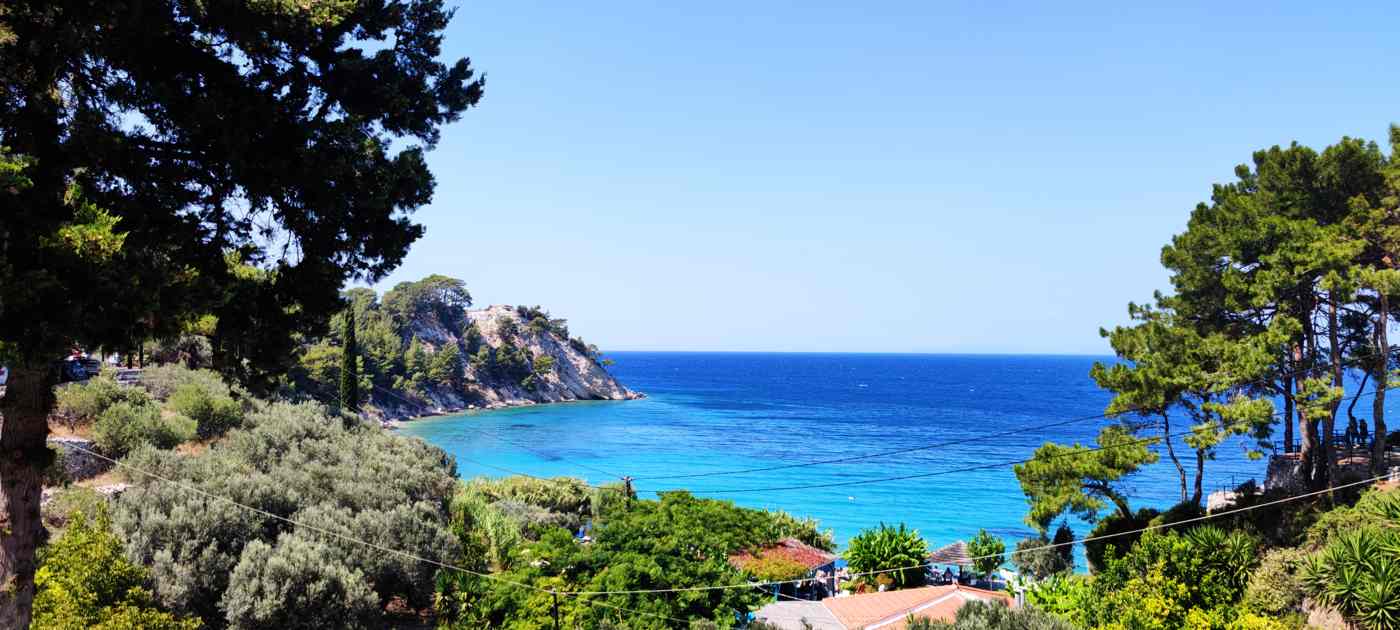
Can you see Turkey from Mykali beach, and how does the Mycale strait give the beach its name?
Mykali looks directly across the Mycale strait to the Turkish mainland, which rises only kilometres away. The beach takes its name from Cape Mycale opposite, the ancient promontory that narrows this stretch of sea.
The view east from Mykali reaches the coast of Asia Minor across a slim band of sea. On clear days the Turkish hills stand out sharply, close enough to trace the ridgelines and pick out coastal settlements. The Mycale strait between Samos and the mainland narrows to about 1.2 kilometres at its tightest point, one of the closest approaches in the Aegean. This proximity gives the horizon a layered look, with the sea, the far shore and the mountains stacked behind. Sunrise over the strait lights the water early, since the beach faces east into the morning. Fishing boats and the occasional ferry cross the channel through the day.
The near presence of another country adds a distinct edge to the outlook here at Mykali.
The name Mykali comes straight from this geography, echoing Cape Mycale on the mainland opposite. Mycale, known in Greek as Mykale, is the ancient promontory that pushes toward Samos and pinches the strait to its narrowest. The same headland lends its name to a famous ancient sea battle fought in these waters. Standing on the beach, you look across almost the exact line that separates the island from Anatolia. The east-coast setting pairs the everyday calm of Psili Ammos beach and Mykali with a horizon steeped in history. This blend of a working swimming beach and an old, storied strait gives Mykali its character.
Few beaches on Samos put the mainland and its past so plainly in clear view. The historian Herodotus recorded the great battle fought off this coast.
Geography also shapes how the beach feels through the day. Facing the strait, Mykali takes the first light of sunrise and warms early while the western beaches stay in shade. The same eastern exposure opens the shore to the meltemi, the north wind that funnels down the channel on summer afternoons. Calm mornings give a mirror-flat sea and the clearest view to Turkey, before the breeze textures the surface. The narrow strait means the far shore never leaves the outlook, a constant backdrop to a swim or a meal. Evening light softens the mainland hills to blue as the sun drops behind the island.
The interplay of light, wind and the close horizon defines the daily mood of the beach. Cooler evening air draws diners to the tables above the sand.
The strait carries a long human story that frames the modern beach. These waters lie on an ancient sea route between the Aegean islands and the harbours of Anatolia. Cape Mycale gave its name to the decisive battle that, by tradition, helped end the Persian advance into the Aegean. Today the same channel is a quiet passage watched from the sand, with the airport and Pythagorio close behind. Kusadasi, on the Turkish side, lies within sight and a short boat crossing from nearby ports. Standing at Mykali, a swimmer takes in a view that has drawn traders, sailors and armies for centuries. The beach reads as both a simple swimming spot and a window onto a storied strait.
Day boats to Kusadasi run from Pythagorio and Vathy through the season.
What facilities does Mykali beach have, and what sunbeds, tavernas and hotels lie behind the sand on Samos?
Mykali offers a low-key set of facilities: sunbeds and umbrellas along parts of the strand, a handful of seasonal tavernas behind the sand, and small hotels and rooms nearby. The setting stays rural rather than a built-up resort.
Facilities at Mykali stay simple and seasonal rather than extensive. Sunbeds and straw umbrellas line sections of the beach, mainly in front of the tavernas, while long open stretches remain free for towels. Sun cover is worth taking early on this east-facing shore, since natural shade thins away from the tamarisk trees at the back. The eating spots supply water, cold drinks and light meals steps from the sand. Basic toilets and freshwater rinses cluster around these tavernas rather than spread along the strand. No large watersports centre operates here, which keeps the beach quiet and unhurried through the day.
Visitors who want more shops and services drive the short distance back to Pythagorio for the fuller range. Umbrellas and loungers usually come with a drink or a meal at the taverna.
The tavernas behind Mykali serve the classic fare of a Greek beach day. Grilled fish, Samian salads, meze plates and cold drinks come out through the long afternoons, with tables set close to the water. Because the coast stays rural, the choice runs to a small cluster rather than a strip of bars and clubs. Psili Ammos village, just to the north, adds a second group of eateries within a couple of kilometres. Meals here lean on local produce, including the sweet Muscat wine that the island grows on its terraced slopes. Prices track the relaxed, family setting rather than a busy resort strip.
Sitting under a tamarisk with a plate of fish and the strait in view sums up the pace of the place.
Accommodation near Mykali runs to small hotels, studios and rooms rather than big complexes. A scatter of low-rise buildings sits behind the beach and along the lanes toward Psili Ammos, set among gardens and farmland. The style suits travellers who want a quiet base with the sea a short walk away and a car for day trips. Many visitors instead stay in Pythagorio, about fifteen minutes off, and drive out to Mykali for beach days. The harbour town holds the wider spread of hotels, tavernas and services on this side of Samos. Booking ahead helps in the peak weeks, when the small east-coast stock fills quickly.
The result is a calm, low-density stay close to a long, open beach. Sea-view rooms look straight across the strait toward the Turkish hills.
Practical planning keeps a Mykali day running smoothly. A hire car or scooter gives the easiest reach, since public transport to this eastern corner stays thin through the season. Parking spreads on rough ground behind the sand, close to the tavernas, and fills first at the central section. Bringing water, sun cover and beach shoes covers the gaps left by the modest facilities. The airport and Pythagorio sit close enough for an easy arrival or a late-afternoon change of plan. Combining a morning swim with an afternoon in Pythagorio or a nearby cove makes full use of the setting.
Overall, Mykali rewards a self-sufficient, unhurried approach, trading resort polish for a broad, quiet beach and a clear view east. Packing a picnic and a beach umbrella covers a full day here.
How does the meltemi wind affect Mykali beach on Samos?
The meltemi blows from the north through summer and reaches Mykali across the open southeast coast, building afternoon chop and short waves. Mornings stay calmer, and the wind eases by evening on most days.
Mykali faces open water on the straight southeast coast, so it lacks the headland shelter that guards the north-coast coves near Kokkari. The meltemi, the dry north wind of the Aegean summer, funnels down the Mycale strait between Samos and the Turkish mainland and reaches the beach with force. Wind strength climbs through July and August, the peak meltemi months, when gusts push whitecaps onto the long strand by early afternoon. The shore holds little natural windbreak beyond the low ground behind the sand, so the breeze runs the full length unbroken. Swimmers who want flat water plan their dip before midday, when the sea keeps its calm and the surface stays smooth across the shallow entry.
The exposed setting is the trade-off for the beach’s length and easy sand.
The wind that troubles swimmers also draws watersport visitors, since a steady afternoon breeze suits windsurfing and kitesurfing on the open bay. Mykali sees less of this than the north-coast windsurf hub at Kokkari, yet the flat fetch across the strait gives boards clean, consistent air. Families with young children read the wind differently, choosing the calm morning hours for shallow paddling before the surface roughens. The meltemi also clears haze and drops summer humidity, so wind days often bring the sharpest views over to the Turkish hills. Beach umbrellas need firm anchoring on gusty afternoons, and loose towels and light gear travel fast down the sand.
Reading the daily forecast for wind strength helps set the rhythm of a Mykali beach day. Local beachgoers treat the pattern as routine, not a warning.
Not every day brings strong meltemi, and the wind runs in spells of two to four days between calmer breaks. Early summer in June and the shoulder weeks of May and late September often stay gentler than the July-August peak, giving glassy mornings and mild afternoons. When the meltemi does set in, the south and southwest coasts under Mount Kerkis sit sheltered, so a windy Mykali day can send beachgoers across the island for calm water. The east-coast coves ringed by higher ground, such as Kerveli, also break the wind better than Mykali’s open line. Checking the coast against the wind direction is the local trick for a swim in flat sea.
This flexibility is one advantage of touring Samos with a car. Wind apps and harbour talk both flag the stronger days ahead.
The meltemi shapes the safest swimming window as much as the comfort of a beach day at Mykali. Morning swims meet warm, clear, shallow water over a sand-and-shingle bottom that shelves gently for a long way out. Afternoon chop rarely creates real danger on such a shallow slope, though small children and weak swimmers feel steadier in the calm before noon. Onshore wind can raise a light undertow near the deeper middle of the bay, so parents keep young ones close to the shallows on rough afternoons. Sunbeds set back from the waterline give shelter from blown sand when the breeze picks up.
Timing a visit to the wind, rather than fighting it, turns the exposure from a drawback into a simple daily rhythm. The pattern repeats reliably through the high-summer weeks.
How do you reach Mykali beach from Pythagorio and Samos airport?
Mykali lies a short drive southeast of Pythagorio and Samos airport, reached by car, taxi or seasonal bus along the southeast coast road. The trip from Pythagorio takes about 10 to 15 minutes.
The airport near Pythagorio sits closest to Mykali, so visitors reach the beach within minutes of landing or from a base in the harbour town. Pythagorio makes the natural gateway, its marina and rooms lying a short hop from the southeast beaches. The coast road runs east from the town past the airport and the Alyki wetland toward Psili Ammos and Mykali. A rented car covers the run in about ten to fifteen minutes, and taxis wait at the Pythagorio marina and the airport terminal. The road is paved and easy, with signs for Psili Ammos guiding the last stretch. Drivers find a rough parking area behind the sand at the beach itself.
Bus riders use the KTEL service that links Pythagorio with the airport and the nearer beaches on a summer timetable.
Samos airport, named Aristarchos of Samos and coded SMI, sits on the southeast coast about three kilometres from Pythagorio and close to the Mykali shore. Arriving flyers who rent a car at the terminal reach the beach almost at once, without crossing the island’s mountainous interior. The runway lies beside the sea near the Alyki wetland, on the same flat coastal strip that carries the road to Psili Ammos and Mykali. Visitors landing in the afternoon meet the meltemi at its daily peak, so a first swim often waits until the calmer morning after. Car-hire desks at the airport and offices in Pythagorio supply the wheels most people use for the southeast beaches.
The short transfer makes Mykali an easy first or last stop of a Samos trip.
Reaching Mykali from Vathy, the island capital in the northeast, takes longer than the hop from Pythagorio, about twenty-five to thirty-five minutes by road. The route climbs over the low hills that divide the north and southeast coasts, then drops to the airport plain and the beach. Drivers based in Kokkari or Karlovasi face a longer haul across the island, so Mykali reads as a southeast beach best paired with a Pythagorio stay. The public KTEL bus serves the Pythagorio corridor and the airport, though runs to the beach itself thin out in the shoulder season and on Sundays. Taxis fill the gaps for travellers without a car.
Planning the visit around the wind and the drive keeps a Mykali day simple and unhurried on this spread-out island.
The drive to Mykali doubles as a short tour of the southeast coast’s mix of sea, wetland and ancient ground. The road passes the edge of the Alyki lagoon behind the airport, a birdwatching spot where flamingos and waders feed in the shallows. Pythagorio’s UNESCO sights. The Eupalinos Tunnel. The ancient harbour and the Castle of Lykourgos Logothetis. Sit minutes from the same route. A morning of history pairs with an afternoon on the sand. Fuel stations and shops cluster in Pythagorio, the last easy stop before the beach, since Mykali itself keeps only its tavernas. Parking behind the sand fills on August weekends, when an early arrival secures a spot.
The compact geography lets a visitor combine the airport, the town and the beach in one loop.
Which beaches lie near Mykali on the east coast of Samos?
Mykali sits beside a string of east-coast beaches: sandy Psili Ammos next door, and the quieter coves of Kerveli and Poseidonio a short drive north toward Vathy. Each offers a different shore and mood.
Psili Ammos, whose name means fine sand, lies right beside Mykali and ranks as the best-known sandy beach on the Samos east coast. Its shallow, warm, gently shelving water and soft sand pull families in, and it fills fast in high summer because true sand is scarce on rocky Samos. A small wetland behind the beach draws birds, and sunbeds and tavernas line the shore. Where Mykali runs long and open, Psili Ammos curves shorter and busier, so the two make an easy pair on one visit. Both face the Turkish coast across the narrow Mycale strait, close enough to pick out buildings on the far shore.
Choosing between them often comes down to crowd tolerance and the day’s wind on the exposed sand. A second Psili Ammos near Mesokampos shares the name.
Kerveli sits north of Mykali, a sheltered pebble-and-sand cove southeast of Vathy in a green bay ringed by pines and olive groves. Calm, clear, deep water and a quiet setting mark it as a relaxed alternative to Mykali’s long open strand and to the busier north-coast beaches. A winding road drops from Vathy in about twenty to twenty-five minutes through the villages of the east. A taverna or two and sunbeds serve the bay in season, but no large resort crowds the shore. The higher ground around Kerveli breaks the meltemi better than Mykali’s exposed line, so it holds calm water on most windy days.
Swimmers who find Mykali choppy in the afternoon often shift to Kerveli for a sheltered second dip. The pine shade behind the sand gives cover the open Mykali strand lacks.
Poseidonio lies north of Kerveli on the same east coast, a small fishing settlement and cove near the northeast tip of Samos facing the Turkish shore. A tiny harbour, a pebble beach and a scatter of tavernas define the low-key spot, well away from resort development. The bay looks across the narrowest part of the Mycale strait, where the Turkish coast stands about one to two kilometres off. Fishing boats and a quiet swim, rather than sunbed rows, set the tone here, so it suits visitors after calm over facilities. The road from Vathy reaches Poseidonio in roughly twenty-five minutes through the eastern villages.
Strung together, Mykali, Psili Ammos, Kerveli and Poseidonio let a car-borne visitor sample the whole east coast in a single unhurried day.
The east-coast beaches share the view over the Mycale strait to Turkey, yet each reads differently for a beach day. Mykali gives length, sand and full facilities but the most wind. Psili Ammos gives the softest sand and the biggest summer crowds. Kerveli and Poseidonio give shelter. Pines and quiet at the cost of sunbed rows and space. All sit within a short drive of one another and of Vathy, so a rough afternoon on one sends beachgoers to a calmer neighbour with ease. This clustering is the east coast’s strength, letting a family match the day’s wind and mood to the right cove.
A car turns the four beaches into one flexible stretch rather than four separate trips across the island. The Samos beaches guide sets these coves in the island’s wider shore map.
Where can you stay near Mykali beach on Samos?
Mykali offers small hotels, studios and rooms set behind the beach and along the southeast coast, with Pythagorio and its wider choice a short drive away. Most stays here favour a quiet, beach-first base.
Accommodation at Mykali itself runs to small hotels, studios and self-catering rooms set behind the sand, with a quiet, beach-first character rather than a resort strip. The wider picture of where to stay in Samos spreads across Pythagorio, Vathy, Kokkari and the southwest, but the southeast coast around Mykali and Psili Ammos suits travellers who want to wake steps from the water. Staying on the beach means calm mornings before day-trippers arrive and quiet evenings once the sunbeds empty. The trade-off is a narrower range of tavernas and shops than the towns hold. A car or scooter closes that gap, putting Pythagorio’s marina and its restaurants minutes away for dinner or supplies.
Booking ahead matters for the July and August peak, when the southeast beds fill early. Rooms open from late spring to mid-autumn.
Pythagorio makes the most popular base for the southeast coast, a UNESCO harbour town whose marina, rooms and boutique hotels sit a short drive from Mykali. The town packs tavernas, shops, car hire and the ancient sights into a walkable centre, so a stay there covers dinner, history and the beach without long drives. Families and first-time visitors often choose Pythagorio for this balance, treating Mykali and Psili Ammos as easy day beaches. The airport lies minutes west, which shortens transfers at both ends of a trip. Prices and crowds climb in July and August, so early booking secures the better harbour-front rooms.
Pythagorio suits travellers who want facilities and sights on the doorstep and a car for the surrounding beaches. The town also runs the day boats across the strait to Kusadasi in Turkey.
Vathy, the island capital in the northeast, offers a working harbour, the archaeological museum and ferry links, and sits about twenty-five to thirty-five minutes from Mykali by road. It suits travellers who want a town base with services and the Kouros museum near the east-coast beaches of Kerveli and Poseidonio. Beach-first visitors instead pick the studios directly behind Mykali and Psili Ammos for the shortest walk to the sand. Choosing a base on Samos matters more than on small islands, since the towns, beaches and mountain villages spread far apart across a large island. Matching the base to a trip’s priorities — history, beaches or nightlife — saves time on the road.
For a beach-led stay on the southeast coast, the Mykali and Pythagorio area covers most needs.
Staying near Mykali works best with a rented car, since the beach itself keeps only tavernas and a parking area rather than a full village of services. Supplies, pharmacies, banks and a wider choice of restaurants sit in Pythagorio, the last town before the southeast beaches. The season for rooms runs from late spring to mid-autumn, with the fullest weeks in July and August and quieter, cheaper shoulder months in May, June, September and October. Winter turns the coast to local life, with most beach lodgings closed. Booking a southeast base early in high summer secures both a room and its parking.
A ground-floor studio behind the sand gives the classic Mykali stay: a morning swim before the meltemi and a taverna dinner steps from the door.
Who does Mykali beach suit, and what are the best times of day to visit?
Mykali suits families, swimmers and beachgoers who want space, sand and easy facilities on a long open shore. Early morning brings the calmest sea, while late afternoon delivers breeze, watersports and cooler air.
Mykali suits beachgoers who value room to spread out over a polished, crowd-free stretch of sand. The long, straight shore absorbs a summer crowd without the packed feel of the shorter east-coast coves, so groups and families find space through the day. Its shallow, gently shelving water and soft sand-and-shingle bottom make it a safe, easy swim for children in the calm hours. Sunbeds, tavernas and small hotels behind the beach cover comfort and lunch without a drive. Watersport fans read the same beach differently, welcoming the afternoon meltemi that others avoid.
The one group less suited is swimmers set on flat water all day, since the exposed shore roughens after noon; they pair Mykali with a sheltered cove nearby. Its size and facilities make it a dependable default beach for a southeast base.
The morning holds the calmest, clearest water at Mykali, before the meltemi builds over the open bay. Early arrivals meet a smooth, glassy sea over the shallow entry, the best window for children, snorkelling and a long swim. Cooler air and empty sand also make the morning the quiet time, ahead of the day-trippers who drive out from Pythagorio and Vathy. Shade thins as the sun climbs, so a morning base near the tamarisk behind the sand or under a hired umbrella keeps the heat off. Parking behind the beach sits easy to find before mid-morning, then fills on August days.
A dawn-to-lunch visit captures Mykali at its gentlest, with the swim done before the wind and the crowd both arrive. Breakfast at a beach taverna rounds out the slow start.
The afternoon changes Mykali’s character as the meltemi picks up and the open shore turns lively. Windsurfers and kitesurfers make the most of the steady breeze, while swimmers after flat water drift to a sheltered cove or wait for the evening drop. The wind keeps the afternoon cooler than an enclosed bay, a relief on the hottest July and August days. Sunbathers still fill the sand, since the chop stays mild over the shallow slope and rarely spoils a lie in the sun. As evening falls the wind usually eases, the sea settles, and the tavernas behind the beach fill for dinner with the Turkish coast darkening across the strait.
This shift makes late afternoon into evening a fine second window for a calmer swim.
Matching the visit to the day’s rhythm gets the most from Mykali across a summer trip. Swimmers and families take the calm morning; watersport fans and those chasing a breeze take the windy afternoon; diners and sunset-watchers take the settled evening. Season shifts the balance too, as June and September bring gentler wind and thinner crowds than the July-August peak, and May and October offer quiet sand with a cooler sea. Weekdays stay calmer than August weekends, when the southeast beaches draw island-wide crowds. Reading both the clock and the calendar, rather than arriving at random, turns Mykali’s open exposure into an asset.
The long strand rewards a flexible plan, giving a different but rewarding beach at each hour of the day. That daily variety is the payoff for a beach open to the sea.
Frequently Asked Questions
Is Mykali beach good for families with kids?
Mykali suits families with young children, thanks to soft sand-and-shingle, shallow water and a gently shelving bottom that stays waist-deep a long way out. The calm morning hours give the safest, flattest sea for paddling and first swims, before the meltemi raises afternoon chop on the open shore. Sunbeds, umbrellas and tavernas behind the beach cover shade, lunch and breaks without a drive, and the long strand leaves room for games away from the waterline. Parents watch the wind, since onshore breeze can lift a light undertow near the deeper middle of the bay in the afternoon. Young ones stay in the shallows on rough days.
The neighbouring sandy Psili Ammos offers the same easy, shallow swimming a step away, and the sheltered Kerveli cove nearby gives a calm fallback when Mykali turns windy. A morning visit with shade and water works best for a family day here. Changing facilities are limited, so families bring what they need for the day.
Is there parking at Mykali beach?
Parking at Mykali uses a rough, unpaved area set behind the sand rather than a large formal car park. Spaces fill quickly on July and August weekends and around midday, when day-trippers arrive from Pythagorio and Vathy. An early morning arrival secures the easiest spot close to the beach. The southeast coast road from Pythagorio and the airport reaches Mykali on paved tarmac, with the final approach signed for Psili Ammos and the beaches. Drivers who find the nearest ground full often continue the short distance to neighbouring Psili Ammos and walk back along the shore.
A car or scooter is the practical way to reach Mykali, since the public bus runs the Pythagorio corridor but thins out to the beach itself in the shoulder season and on Sundays. Leaving valuables out of sight and parking clear of soft sand keeps a beach day trouble-free. Arriving before mid-morning avoids the worst of the high-season squeeze.
Does Mykali beach have sunbeds and umbrellas?
Sunbeds and umbrellas operate at Mykali in the summer season, set out along part of the beach in front of the tavernas and small hotels behind the sand. They typically come as a pair of loungers under a shared umbrella, run by the tavernas and hotels that back the beach, with the exact arrangement varying by operator. The long strand also leaves ample open sand for visitors who bring their own umbrella and towels and prefer to set up away from the organised rows. Shade is limited beyond the umbrellas, since the low ground behind the beach carries little natural cover, so bringing sun protection helps on the exposed shore.
On gusty meltemi afternoons the umbrellas need firm anchoring against blown sand. Arriving in the morning secures a front-row bed before the day-trip crowd fills the sunbed line in the peak weeks of July and August. Renting a bed for the day gives shade and a base close to the water.
What are wind days like at Mykali beach?
Wind days at Mykali come from the meltemi, the dry north wind that funnels down the Mycale strait and builds afternoon chop on this exposed southeast shore. The wind runs in spells of two to four days, strongest through July and August, and usually eases by evening and overnight into a calmer morning. Swimmers who want flat water head out early, before the breeze picks up over the open bay. When the meltemi sets in hard, the sheltered east-coast cove of Kerveli, ringed by higher ground, holds calmer water. The south and southwest coasts under Mount Kerkis sit sheltered too, so a windy Mykali day sends beachgoers to a protected shore.
Watersport visitors instead welcome the wind, since the steady breeze and flat fetch across the strait suit windsurfing and kitesurfing. Checking the daily forecast and matching the coast to the wind direction is the local way to plan a swim. The exposure is the beach’s one real drawback in high summer.
Is Mykali beach good for snorkelling?
Snorkelling at Mykali works best in the calm morning, when the sea lies clear and flat over the shallow sand-and-shingle entry before the meltemi stirs the surface. The gently shelving bottom means clear, warm water close to shore, good for beginners and children trying a mask for the first time. Rockier ground and clearer depths at the ends of the long beach and around neighbouring coves hold more fish and marine life than the open middle sand. The nearby pebble beaches of the east coast, and the pine-backed coves further north, give clearer, deeper water for keener snorkellers within a short drive.
Afternoon chop from the meltemi cuts visibility and stirs sand, so an early session beats a late one on this exposed shore. Bringing your own mask and fins is wise, and swimming with a buddy and watching for the light afternoon undertow keeps a snorkel safe. Sea grass and open sand fill much of the shallow central stretch.
What beaches are near Mykali on Samos?
Nearby beaches ring Mykali along the Samos east coast, all within a short drive. Sandy Psili Ammos lies right next door, sharing the shallow, family-friendly water and the view across the strait to Turkey. North toward Vathy sit the sheltered coves of Kerveli, in a green bay of pines and olives. Poseidonio, a small fishing settlement with a pebble beach near the northeast tip. Each holds calmer water than Mykali on windy days, thanks to higher ground around the bays. A second Psili Ammos near Mesokampos shares the name further along the coast. Pythagorio and the airport lie a short drive west, putting the town’s harbour beaches within reach too.
This tight cluster lets a visitor with a car swap beaches through the day. Matching the wind and the mood. Turn the east coast into one flexible stretch rather than separate outings. The whole east-coast run makes an easy day of beach-hopping by car.
When is Mykali beach quietest?
The quietest months at Mykali fall in the shoulder season of May, June, September and October, when the summer crowds thin and the sunbed lines stay open. May and October bring the calmest, quietest sand of the warm season, with a cooler sea, gentler wind and fewer day-trippers than the peak. June and September pair warm water and open facilities with lighter crowds than July and August. The busiest and hottest weeks, when the southeast beaches draw island-wide visitors, especially on weekends. Weekdays run calmer than weekends across the season. Winter empties the coast entirely, turning it to local life with most beach tavernas and lodgings closed and reduced flights and ferries to the island.
Travellers after a quiet Mykali visit aim for the shoulder weeks and weekday mornings, when the long strand offers space, calm water and easy parking well before the midday arrivals appear. The green landscape and wildflowers of spring add to the shoulder-season appeal.