
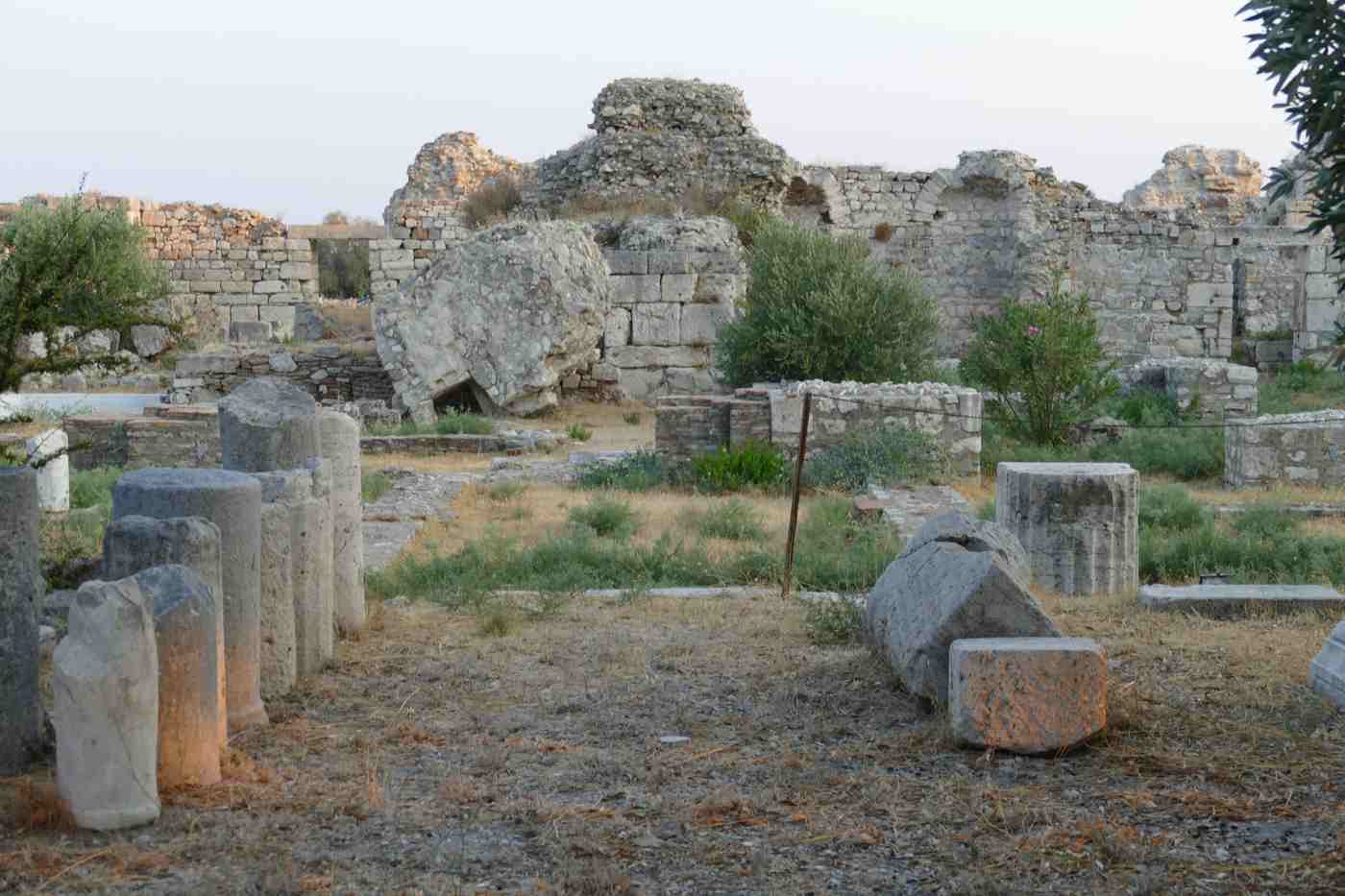
Vathy, officially Samos Town, is the capital of Samos and the island’s main gateway on the northeast coast. The town wraps around a long, deep bay whose name means exactly that in Greek. Ferries dock at its quay, the administration sits in its streets, and the road network fans out from its square. This guide covers the harbour, the lower town, the upper quarter of Ano Vathy, the archaeological museum, and the town’s daily rhythm. Plan the whole trip with Greece Tours.
The setting joins water, mountains, and a working port into one compact capital. The lower town lines the waterfront with cafes and shops, while older Ano Vathy climbs the hillside in tiled lanes above the bay. The Archaeological Museum of Samos holds the island’s giant Kouros, and the metropolis church rises over the harbour. Read on for what Vathy is, how the town is laid out, and what fills a day in the capital of Samos.
What is Vathy, and why does Samos Town sit at the head of a deep bay?
Vathy is the capital of Samos, and its name means deep. The town wraps around a long, sheltered bay on the northeast coast. Ferries dock at its quay, and the harbour handles the island’s daily traffic to the mainland.
Vathy sits at the head of a deep inlet on the northeast coast of Samos, and the bay gives the town its name. The Greek word vathy means deep, and the water runs far inland between two green hillsides. Ships once found shelter here from the open Aegean, which made the bay a natural harbour. The capital of Samos grew around this protected water across the centuries. Today the ferry quay, the town square, and the main road all follow the curve of the shore. Mountains rise directly behind the houses, so the town climbs the slope rather than spreading flat. The bay faces roughly north, toward the Turkish coast across a narrow strait.
This deep, sheltered water shaped every part of the settlement that rose above it.
Vathy serves as the administrative capital of the island, home to the main offices, the port authority, and the largest harbour. The ferry quay handles the island’s principal links to Piraeus and to neighbouring Aegean islands. Locals often call the town Samos, so the island and its capital share a single name in daily speech. The commercial port at Malagari, just west along the shore, once loaded the island’s wine and produce. Government buildings, banks, and the courthouse cluster near the waterfront and the central square. The town holds the bulk of the island’s services in one compact centre by the bay.
This role as gateway and seat of government has fixed Vathy at the heart of Samos for generations. Every road on the island points back toward this harbour.
The geography of the bay explains the shape of the modern town. Two ridges frame the deep inlet, and the houses spread up both slopes in tiers of red-tiled roofs. The oldest quarter, Ano Vathy, sits high on the southern hillside, while the newer lower town lines the water. A single shore road ties the ferry port, the square, and the promenade into one long waterfront. Beyond the town the coast opens to small coves such as Gagkou, within easy reach of the centre. The green hills behind carry pine, olive, and cypress down toward the sea. This tight fit between mountain and water keeps the capital small and walkable.
Visitors cross the built-up centre on foot in under half an hour. The small scale keeps every district close by.
Vathy rewards a slow day that moves from the harbour up into the older streets. The waterfront holds the ferry quay, the square, and the promenade in one easy line. Above it, Ano Vathy offers quiet lanes, small churches, and views back over the bay. The Archaeological Museum of Samos, near the square, holds the giant Kouros and finds from the Heraion. The metropolis church rises over the town, and the wine cellars at Malagari sit a short way along the shore. Nearby beaches such as Gagkou lie within a short walk, and the east-coast coves of Kerveli and Psili Ammos are a brief drive away.
A single base in the capital opens all of these in one stay. The town works as both a port and a place to linger.
What fills the lower town of Vathy, around the square and the waterfront promenade?
The lower town of Vathy lines the harbour with cafes, shops, and ferry offices. A central square opens behind the quay, and a waterfront promenade runs along the bay past tavernas, the town hall, and moored fishing boats.
The lower town of Vathy stretches along the bay in one long strip between the water and the hillside. Ferry offices, travel agents, and car-hire desks cluster near the quay where the boats from Piraeus tie up. Behind them run streets of shops, bakeries, pharmacies, and tavernas that serve both locals and travellers. The pace shifts through the day, busy when a ferry arrives and quiet through the afternoon heat. Fishing boats and small yachts moor along the harbour wall beside the working port. The lower town holds most of the island’s services within three short blocks of the sea. A walk from one end of the waterfront to the other takes about twenty minutes.
This flat shoreline strip forms the everyday heart of the capital.
The central square, known as Plateia Pythagora, opens just behind the harbour and gives the town its main gathering point. A stone lion statue stands at its centre, a landmark that locals use to give directions. Cafes and tavernas ring the square under plane trees that throw shade across the tables. Families gather here in the evening while children play around the fountain and the statue. The square hosts markets, festivals, and the slow evening stroll that shapes island life. From here the streets climb toward the older quarter and drop back down to the promenade. The plaza links the ferry port, the shops, and the residential lanes in one node.
Travellers weighing things to do in Samos often start from this central square. The square marks the town’s true centre.
The waterfront promenade runs the length of the bay and forms the town’s front porch on the sea. A paved walkway follows the shore past palm trees, benches, and moored boats. The town hall, banks, and a line of cafes face the water along this stretch. In the evening the promenade fills with walkers who take the cool air after the day’s heat. Fishermen sell the morning catch near the quay, and small boats bob against the harbour wall. The walk gives clear views across the deep bay toward the hills on the far side. Restaurants set tables at the water’s edge so diners eat beside the moored fleet.
This shoreline path ties the whole lower town together in one continuous line. Benches face the water the whole way along.
Daily errands and evening leisure both play out along the harbourfront of Vathy. Shops sell island wine, honey, and crafts to travellers who step off the ferries. Bakeries and grocers serve the residents who live in the streets above the water. The promenade doubles as a meeting place where neighbours pause to talk on the benches. Cafes fill through the morning with coffee drinkers watching the boats come and go. The square and the waterfront together carry the social life of the capital. A base in the lower town puts the ferry, the shops, and the tavernas within a short walk. This compact centre lets a visitor cover the whole waterfront on foot in an hour.
Grocers, tavernas, and ferry desks all sit within a short walk of the square.
What makes the old upper quarter of Ano Vathy worth the climb above the harbour?
Ano Vathy is the original settlement, a hillside quarter of narrow lanes and tiled houses above the harbour. Its stone streets, small churches, and shaded steps sit apart from the busy waterfront and hold the town’s older character.
Ano Vathy is the oldest part of the capital, a dense cluster of houses on the hillside above the modern port. Settlers built the quarter high on the slope, back from the water, in an age when pirates raided the open coast. Narrow lanes wind between tall stone houses with wooden balconies and red-tiled roofs. Steep steps and covered passages link the levels where cars cannot pass. The quarter keeps the layout of an older Aegean town, tight and turned inward for defence. Small squares open now and then between the houses to catch the light. From the upper lanes the view drops down over the whole bay and harbour.
This hillside maze holds the roots of the town below it. The height once guarded families from raiders off the coast.
The architecture of Ano Vathy marks it out from the newer streets on the waterfront. Two-storey and three-storey houses press close together along the sloping lanes. Overhanging wooden balconies, carved doorways, and stone arches line the passages. Old walls carry the faded colours of an earlier Samos, ochre, white, and pale blue. Vines and potted plants soften the stone in the narrow courtyards. Small stone churches stand tucked among the houses, their bell towers rising over the tiled roofs. The whole quarter climbs the slope in tight tiers held by stone retaining walls. Walking here feels like stepping back into the island’s past. The upper town preserves a texture the modern harbour has lost.
Stone stairways climb between the walls where no car can reach the doors.
A walk through Ano Vathy rewards anyone who leaves the flat waterfront behind. The lanes climb from the square in a couple of minutes, though the slope is steep in places. Small churches such as Agios Ioannis and the older parish chapels open along the way. Shaded steps and quiet corners give relief from the summer heat of the shore. Cats doze on warm stone while residents tend gardens behind old walls. The higher one climbs, the wider the view opens over the bay and the ferry port. A viewpoint near the top frames the whole town, the water, and the hills beyond. This slow uphill wander forms one of the simplest pleasures in the capital.
The lanes stay cool and quiet even at the height of summer.
Ano Vathy holds the memory of the town before the harbour front grew. The lower waterfront rose later, as trade and ferries pulled the town down toward the sea. The old quarter kept its houses, churches, and lanes largely intact through that shift. Today a mix of restored homes and quiet older houses fills the slope. Restored tavernas and guesthouses now sit among the lanes, drawing visitors up from the port. The quarter offers a calm counterpoint to the busy square and promenade below. Evening light on the stone walls and tiled roofs makes the climb worthwhile. Ano Vathy shows where the capital of Samos began, high and safe above its deep bay.
The old town and the new port together tell the story of Vathy.
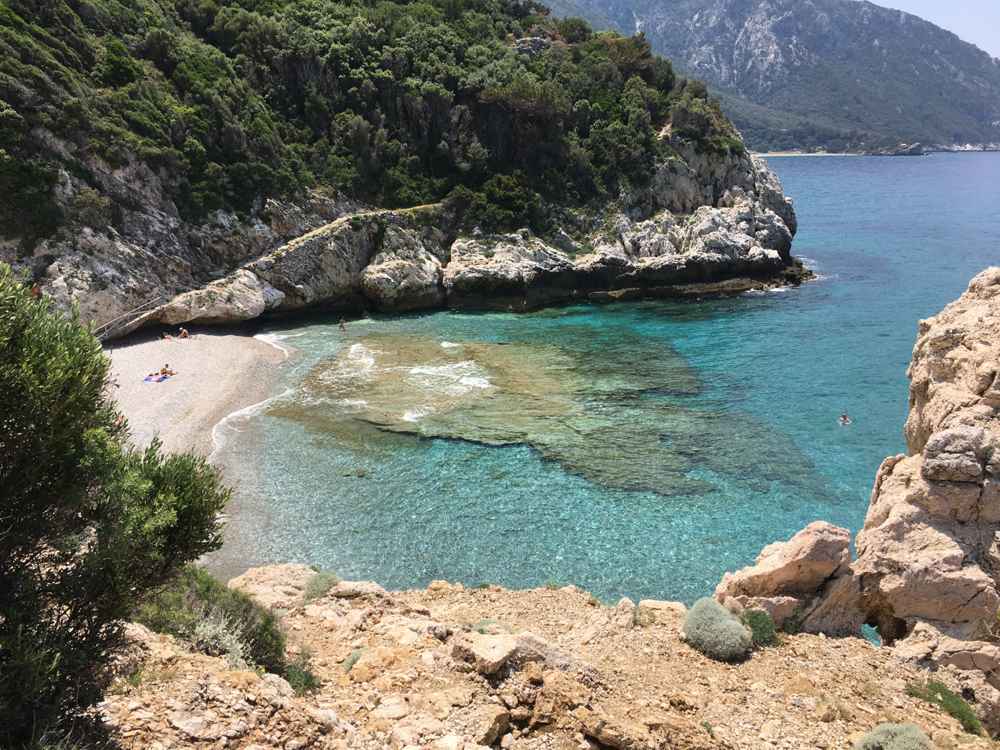
Why does the Archaeological Museum of Samos and its giant Kouros draw visitors to Vathy?
The Archaeological Museum of Samos stands near the square in Vathy. Its centrepiece is a giant marble Kouros about 5 metres tall, one of the largest surviving. The statue stands among finds recovered from the Heraion sanctuary.
The Archaeological Museum of Samos sits close to the central square, in the lower town of Vathy. Two buildings house the collection, an older hall and a newer wing built to hold the largest finds. The museum gathers the treasures dug from the Heraion, the great sanctuary of Hera on the south coast. Statues, bronzes, ivories, and offerings fill the rooms across two floors. The collection ranks among the richest of any Aegean island museum. A visit pairs naturally with the ruins of Pythagorio and the Heraion on the far side of the island. The setting near the square puts the museum within a short walk of the ferry and the promenade.
This single building holds the deep history of Samos under one roof. Two floors carry the finds in order.
The giant Kouros forms the centrepiece and the reason most travellers climb the museum steps. This marble youth stands about 5 metres tall, among the largest surviving statues of its kind from the archaic age. Sculptors carved the figure as an offering to Hera at the Heraion sanctuary. The Kouros shows the stiff, frontal pose and clasped stance typical of early Greek sculpture. Its sheer scale fills the tall gallery built to display it. Fragments found over separate digs were joined to raise the figure to its full height. The statue speaks to the wealth and ambition of ancient Samos at its peak. Standing before it gives a clear sense of the island’s early power.
No other single object in the museum draws the eye so strongly.
Beyond the Kouros, the museum holds a dense collection from the sanctuary of Hera. Rows of smaller kouroi, korai, and animal figures line the halls. Bronze griffin heads, once fixed to great cauldrons, show the metalwork traded across the ancient Aegean. Ivory carvings, wooden objects, and pottery reveal links to Egypt, the Near East, and beyond. Votive offerings left at the Heraion record the reach of Samos as a trading power. Each case ties the finds back to the sanctuary excavated on the south coast. The range of material shows how far the island’s contacts stretched in the archaic age. The collection turns the ruins at the Heraion into a full, vivid picture.
Griffin heads and ivory pieces trace trade routes that ran east across the sea.
A stop at the museum anchors any day spent understanding the island’s past. The location near the square makes it easy to fit around a ferry or a harbour walk. A visitor often pairs the museum with the Heraion and the ruins at Pythagorio. Signs and labels explain the finds in plain terms for the general visitor. An hour or two covers the main halls and the great Kouros without rush. The museum sets the wider island in context, from the sanctuary to the ancient harbour town. Families based in Vathy reach the door on foot from the waterfront. This visit fixes the story of ancient Samos firmly before a trip to the ruins.
The museum works as the key to the ancient sites across the island.
How do the metropolis church and daily life shape the working town of Vathy?
The metropolis church anchors the religious life of Vathy above the waterfront. Daily life mixes markets, harbourside cafes, school runs, and ferry arrivals. The capital works as a real working town, not only a stop for visitors.
The metropolis church rises over Vathy as the main cathedral of the island capital. Its dome and bell tower stand above the roofs between the waterfront and the older quarter. The church serves as the seat of the local bishop and the focus of the town’s feast days. Inside, painted icons, a carved screen, and hanging lamps fill the nave. On Sundays and holy days the bells call residents down through the lanes to the service. Church festivals spill out into the square and the streets with music and food. The building marks the religious centre of a town that lives by its own calendar.
This cathedral ties the everyday life of Vathy to the rhythm of the Orthodox year. Feast days fill the square with music and food.
Daily life in Vathy runs on the ordinary business of a working island town. Farmers and fishermen bring produce to the market, and shops open early before the heat. Children walk to school through the lanes while parents gather at the harbour cafes. The port authority tracks the ferries that arrive and leave through the day. Civil servants, teachers, and shopkeepers fill the offices and stores around the square. The town holds the island’s hospital, courts, and main services in one centre. This steady round of work and errands gives Vathy a life beyond tourism. The capital keeps its own pace whether or not a cruise or ferry has just docked.
Markets open early with produce from the island’s farms. The offices and shops keep regular hours through the week.
The harbour sets the tempo of the town from dawn until late. Fishing boats return in the early morning to sell the night’s catch along the quay. Ferries from Piraeus and the neighbouring islands time the flow of arrivals and departures. Anyone weighing how to get to Samos lands first at this waterfront. Travellers step off the boats into the ring of cafes, agencies, and tavernas by the water. Trucks load and unload beside the ferry ramp through the working day. The comings and goings of the port drive the trade of the shops behind it. This constant movement of boats keeps the capital tied to the wider Aegean.
Ferries run to Piraeus and to the nearby islands through the season. Cargo boats and fishing craft share the same working quay.
Evening in Vathy draws the town out to the square and the promenade. Families take the cool air along the waterfront after the heat of the day. Cafes fill under the plane trees while children play around the lion statue. Tavernas set tables at the water’s edge for a slow dinner beside the moored boats. The metropolis bells and the harbour lights mark the close of the day over the bay. This mix of faith, work, and leisure gives the capital its full character. Vathy stands as both the gateway to Samos and a town that lives on its own terms. A stay here shows the working heart of the island, not only its harbour front.
The square and the promenade fill with residents each evening.
What can you see at the wine museum at Malagari near Vathy?
The Samos wine museum sits at the Malagari winery, about 2 km southwest of Vathy along the coast road. It displays old barrels, presses and tools behind the cooperative that produces the island’s PDO Muscat.
Malagari stands about 2 km southwest of Vathy, on the coast road that leads toward the airport. The winery belongs to the Union of Vinicultural Cooperatives of Samos, the body that gathers grapes from growers across the island. Stone buildings from the industrial past line the site above a small harbour once used to load barrels onto ships. The museum occupies part of these old cellars. Visitors walk between towering wooden vats and cast-iron presses inside. Rusted pumps, copper stills and hand tools show how sweet Muscat moved from terrace to bottle. Photographs record the men and mules that carried fruit down from the slopes of Mount Ampelos. Panels beside them date each machine and name its task.
The setting ties the drink to the working port beside it.
The grape behind everything here is Muscat Blanc a Petits Grains, the small white variety that carries the PDO Samos name. Growers train it on stone terraces high on Mount Ampelos, where cool nights concentrate the sugar. Harvest runs through late summer, when pickers carry baskets down the steep rows by hand. The museum explains this chain, from hand-picking to the fortified and naturally sweet styles that fill the cellar. Tasting rooms let guests sample the range, and staff pour examples of Samos wine beside the barrels. Staff describe each style and its serving temperature. Bottles of Vin Doux, Nectar and dry Muscat sit on the shelves for purchase. Groups book tastings ahead in the summer season.
The whole visit takes about an hour along the coast road.
The building itself dates from the industrial expansion of the Samos cooperative, one of the oldest wine unions in Greece. Its founders organised scattered growers so that small farmers sold fruit at a fair price. The museum records this social history alongside the machinery, using panels, ledgers and old labels. Old export ledgers list shipments to Marseille, Trieste and Odessa. Barrels stacked three high show the scale of storage the port once demanded. A short film traces the year of the vine, from winter pruning to the autumn harvest. The wine trade built the grand houses along the bay. The Malagari name now marks both the museum and a premium label from the same cooperative.
Visitors leave understanding why wine and Vathy grew together here.
Reaching Malagari from Vathy takes about ten minutes by car, taxi or the local bus toward Pythagorio. Cyclists and walkers follow the shore road, passing the ferry quay and the customs buildings on the way out of town. Signposts on the main road mark the turning clearly. The site opens to the public through the day, and the tasting counter handles both individuals and small groups. Parking sits beside the entrance, next to the old loading pier that reaches into the bay. Combining the museum with a harbour lunch makes a relaxed half-day around the capital. The stop pairs neatly with the Archaeological Museum in town, linking the island’s ancient past to its farming present.
Together they frame Vathy as more than a ferry gateway.
Which beaches lie closest to Vathy on Samos?
Gagkou beach sits just south of Vathy, within walking distance of the harbour. The east-coast coves of Kerveli and Psili Ammos lie about 10 to 12 km away, reached by a short coastal drive.
Gagkou is the town beach of Vathy, a strip of fine pebbles about 1 km south of the main square. A flat waterfront path leads there, so guests staying in the centre reach it on foot in around fifteen minutes. Tamarisk trees line the back of the shore, giving shade over sunbeds and a couple of beach bars. The water deepens quickly and stays clear, protected inside the wide northeast bay. Families gather at the shallow northern end, while swimmers use the calmer southern stretch. Showers and a small kiosk serve the busier northern end. Being close to town, Gagkou fills on summer afternoons once the day’s heat eases.
Its value is convenience, letting visitors combine a museum morning with an easy swim before dinner along the harbour.
Kerveli lies about 10 km east of Vathy, reached by a winding road over the headland through pine forest. The cove faces the Mycale strait, where the Turkish coast stands close across the water. Cypress and olive trees run almost to the sand, and the sheltered bay keeps the sea flat on most mornings. A small cluster of tavernas and rooms sits above the beach, serving swimmers who linger for lunch. The drive itself rewards visitors, opening views over Vathy bay and the eastern capes. Nearby coves such as Klima and Posidonio break up the shoreline into quiet pockets. The road continues to Mourtia beach just beyond the headland.
Kerveli suits travellers who want green surroundings and calm water within a short trip of the capital.
Psili Ammos sits about 12 km east of Vathy, at the point where Samos comes closest to Turkey. The Mycale strait narrows to roughly 1.2 km here, so the Turkish shore fills the horizon across the channel. Its name means ‘fine sand’, and the shallow water stretches far out, warming early in the season. A low wetland and reed bed behind the beach draws flamingos and herons during migration. Two or three tavernas edge the sand, shaded by tamarisks and serving fish straight from the strait. Calm conditions and the gentle gradient make it a steady choice for children. Signposts from the eastern villages point the way down to the bay.
Drivers follow the eastern coast road from Vathy, then descend a narrow lane to the shore.
Choosing between the three depends on the day and the mood of the visitor. Gagkou wins on distance, sitting within a short walk for anyone without a car. Kerveli and Psili Ammos reward a rented vehicle, spreading the day across scenery and a taverna lunch. All three face east or north, so morning light and calm water favour early swims. A single coastal loop links the eastern coves, taking about 30 minutes each way from the harbour. Buses run from Vathy toward the eastern villages, though a car gives far more freedom. Water and snacks are worth carrying, since the coves keep only limited shops.
Together these beaches let a base in the capital reach open sand quickly, without the crowds of the southern resorts.
How does the ferry port at Vathy connect Samos to other places?
Vathy holds the main ferry port of Samos, set on the harbour in the lower town. Boats link it to Piraeus, the eastern Aegean islands, the Cyclades, and the Turkish coast at Kusadasi.
The port sits directly on the Vathy waterfront, a short walk from the town square and the bus stop. Large car ferries dock at the main quay, while smaller catamarans and day boats use the inner berths. Ticket offices line the street opposite the pier, handling the main Greek ferry companies that call here. Samos runs two ferry ports, Vathy in the northeast and Karlovasi in the northwest, and most routes stop at both. Pythagorio adds a third, smaller harbour on the south coast for Dodecanese hops. Vathy handles the bulk of the long mainland sailings, so most Piraeus boats arrive here. Luggage trolleys wait near the arrivals gate for foot passengers.
Its central position makes arrival simple, dropping passengers within reach of hotels on foot.
Routes from Vathy fan out across the Aegean in four broad directions. Northbound boats call at Chios and Lesvos, linking Samos up the eastern island chain toward the north. Southbound and westbound services cross to Ikaria and Fournoi, then continue to Cycladic ports such as Naxos, Paros, Mykonos and Syros. Fast catamarans cover the shorter hops in a fraction of the time. The long haul to Piraeus runs overnight on most schedules, covering the wide stretch of open sea to Athens. Seasonal boats also cross the narrow strait to Kusadasi in Turkey, a trip of well under two hours. Sailings thin out in winter and multiply in summer, when demand from travellers peaks.
Checking a current timetable before travel matters, since departures shift with the season.
Arriving by ferry places visitors at the heart of Vathy straight away. The quay opens onto the promenade, so wheeled luggage rolls easily to nearby rooms. Taxis wait beside the exit, and the KTEL bus station stands three minutes along the shore. Signs direct arrivals to each service. Car-hire desks cluster near the port, letting drivers collect a vehicle within sight of the boat. Left-luggage lockers and a cafe sit near the terminal. The airport near Pythagorio lies about 25 km south, roughly 30 minutes by road for those combining sea and air. Foot passengers dominate the shorter island hops, while the mainland ferries carry cars, motorbikes and campers.
This easy transfer between boat, bus and hire car is a core reason travellers base themselves in the capital.
Planning a ferry trip through Vathy rewards a little care with timing. Summer sailings sell out on popular routes, so booking cabins and car space ahead protects the plan. Arrivals from Piraeus often reach Samos in the early morning, giving a full day on the island. Departures toward the Cyclades tend to leave at midday or evening, freeing the morning for a last swim. Weather in the open Aegean can delay boats, and the meltemi wind stirs the sea in high summer. A quick call to the ticket agent confirms the day’s status. Keeping a flexible connection avoids stress when a sailing shifts by an hour.
Used sensibly, the Vathy port turns Samos into a stepping stone between the mainland, the Cyclades and the Dodecanese.
What are eating and evenings like in Vathy on Samos?
Vathy concentrates its dining along the harbour and around the main square, where tavernas and ouzeri serve mezedes and fresh fish. Evenings stay relaxed, with waterfront cafes and bars filling slowly after sunset.
The main square, Plateia Pythagora, anchors the evening scene, marked by a marble lion and a fountain. Cafes spread tables under trees here, filling with locals over coffee through the afternoon. A little inland, Ano Vathy’s lanes hide small tavernas where families cook from the day’s market. Along the harbour, fish tavernas set tables at the water’s edge, plating grilled catch and seafood mezedes. Ouzeri pour ouzo and the local souma, a grape spirit distilled across the island. Waiters recommend the day’s catch chalked on a board. Sweet Muscat closes the evening meal, poured chilled as a dessert wine straight from Samos vineyards.
The mix lets a single street offer quick coffee, a long fish lunch, or a late plate of small dishes by the sea.
Food in Vathy leans on the produce of a green, mountainous island rather than imports. Kitchens use Samos honey, olive oil, wild greens and goat cheese gathered from the Ampelos slopes. Fishermen land octopus, red mullet and sardines that reach the harbour tables within hours. Traditional plates include stuffed vine leaves, revithokeftedes chickpea fritters, and slow-cooked goat with herbs. Bakeries sell bougatsa and honey pastries that pair with strong morning coffee. Local wine and souma round out most tables here. Cheese pies and grilled sardines fill the mezedes plates. Prices near the water run higher than in the back lanes, where family tavernas keep portions large.
Eating where the menu is short and handwritten usually signals a kitchen cooking to the season of the year.
Evenings in Vathy build gently rather than roar into a party. Families take the volta, the slow stroll along the promenade, once the heat drops after sunset. Children play in the square while parents settle at cafe tables nearby. Bars along the front pour cocktails and cold beer, though the mood stays closer to conversation than to clubbing. Live rebetiko or laiko music appears in waterfront tavernas on summer nights, drawing a mixed crowd. The capital keeps a working-town rhythm, so its nightlife feels local rather than staged for tourists. Visitors chasing loud clubs head to Pythagorio or Kokkari instead. The last cafes close only in the small hours.
Those who prefer a quiet drink by the water find Vathy suits them very well here.
The harbour setting shapes how a night in Vathy unfolds. Yachts and the last ferries sit lit across the black water, framing the waterfront tables. A single main strip means visitors can wander the whole scene on foot in minutes. Dinner often stretches for hours, moving from mezedes to fish to a final glass of Muscat. Cafes stay open late, serving frappe and dessert to groups who linger over cards or backgammon. Street lamps and boat lights carry the mood past midnight. Groups linger long after the kitchens close. The pace rewards travellers who treat eating as the evening’s main event, not a rush before a bar.
Compared with the resort strips, Vathy trades volume for a steadier, more Greek tempo that draws food-minded visitors.
Who does Vathy suit best as a base on Samos?
Vathy suits travellers who want an authentic working town with strong transport links rather than a resort. Its ferries, bus hub, museum and central position make it a practical base for exploring the whole island.
Vathy works best for travellers who value access over resort polish. The main ferry port, the KTEL bus station and the island’s car-hire desks all sit within the town. From this hub, day trips reach Kokkari and the north beaches, the Heraion, and the mountain villages of Ampelos. The capital also holds the Archaeological Museum and the giant Kouros, giving culture on the doorstep. Guests without a car still move around by bus, since most routes begin at Vathy. Ferry timetables and bus routes hang in the town’s offices. The town keeps shops, banks, pharmacies and a hospital open year round, unlike seasonal resorts.
This everyday infrastructure makes Vathy a steady choice for longer stays and for travellers who dislike being marooned in one bay.
Accommodation in Vathy ranges from harbour hotels to family-run rooms climbing the slopes of Ano Vathy. Prices tend to run below the resort rates of Pythagorio, and the town stays open across the seasons. Advice on where to stay in Samos often points independent travellers toward the capital for exactly this balance. Rooms near the square place guests among cafes and tavernas, while the upper lanes offer quieter nights and bay views. Wide balconies over the bay catch the morning ferry traffic below. Waking beside a working port, visitors watch fishermen and ferries start the day. The trade-off is a pebble town beach rather than a sandy resort strip.
Those who plan to move around the island rate the central location above beachfront convenience here.
Comparing Vathy with Pythagorio clarifies the choice for most visitors. Pythagorio offers a pretty yacht harbour, UNESCO monuments and the airport close by, but fills with package tourism in summer. Vathy trades that polish for a genuine town that lives through the winter. The two towns sit about 12 km apart by road. Couples chasing a quiet resort night lean toward the south, while independent explorers favour the capital’s links. Families find Vathy practical, with a walkable town beach, shops and short drives to calm eastern coves. Travellers arriving by ferry and leaving by plane often split their stay between the two.
The capital rewards those who treat Samos as a whole island to roam, not a single beach. Buses and hire cars bridge the gap easily.
A base in Vathy pays off for anyone building a varied Samos itinerary. Mornings can start with a museum visit or a harbour coffee, then run out to a beach or village. The eastern coves of Kerveli and Psili Ammos lie half an hour away, and Kokkari sits a similar drive north. Wine lovers reach the Malagari cellars in minutes, tying the town to the island’s Muscat trade. Ferry links mean island-hopping to the Cyclades or Dodecanese starts from the doorstep. Evenings return to harbour tavernas and a glass of Muscat. The capital rarely empties, so services and company remain even in the shoulder season.
For travellers who prize movement, culture and everyday Greek life, Vathy earns its place as the practical heart of Samos.
Frequently Asked Questions
Is Vathy worth staying in on Samos?
Vathy is worth staying in for travellers who want a real Greek town with strong transport links and everyday services. As the capital of Samos, it holds the main ferry port, the central bus station and most car-hire offices. The whole island opens up from one base. The Archaeological Museum and its 5-metre Kouros give culture within walking distance, and the harbour lines up tavernas, cafes and the tree-shaded main square. Gagkou beach sits a short walk south, while the calm eastern coves of Kerveli and Psili Ammos lie about 10 to 12 km away. Prices generally run below the resort rates of Pythagorio, and shops, banks and a hospital stay open through the year.
The trade-off is a pebble town beach rather than a sandy resort strip, and a working-town pace instead of a nightlife scene. Independent travellers who plan to explore rate Vathy highly; those wanting a pure beach-resort holiday prefer the south coast.
Vathy or Pythagorio: which is the better base?
Vathy and Pythagorio suit different travellers, so the better choice depends on your plans. Vathy, the capital, is a working town on the northeast bay with the main ferry port, the bus hub and the Archaeological Museum. It offers authentic town life, lower room rates and quick access across the whole island. Pythagorio sits on the southeast coast, a smaller harbour town with a yacht marina. UNESCO monuments such as the Eupalinos Tunnel and Heraion lie nearby, and the airport sits only minutes away. Pythagorio looks prettier and packs more history into a short walk, but it fills with package tourism in summer and quietens sharply in winter.
Vathy stays busy year round and connects better to the north coast and the mainland ferries. Families and independent explorers often prefer Vathy for its practicality, while couples chasing a polished resort evening lean toward Pythagorio. Visitors often split their stay, using Pythagorio for the airport and Vathy for ferries.
Is Vathy good for a holiday with kids?
Vathy works well for families who want convenience and calm water rather than a big resort. The town beach at Gagkou lies about 1 km south of the square, reachable on foot along a flat promenade. Tamarisk trees give shade, and the northern end offers shallow entry for paddling. The eastern coves of Kerveli and Psili Ammos, about 10 to 12 km away, offer sandy, gentle-gradient swimming for young children. Psili Ammos even draws flamingos to its reed beds. In town, the wide waterfront gives space for evening strolls, and the main square lets children play safely while parents sit at cafes. Everyday shops, pharmacies and a hospital add reassurance for families.
The Archaeological Museum and its giant Kouros give an easy cultural outing on a hot afternoon. The main limitation is the pebble town beach, so families set on soft sand plan short drives east. Overall, Vathy balances practicality, safety and quiet beaches for a family base.
Is Vathy walkable?
Vathy is highly walkable, with its main sights, port and dining strung along a compact waterfront. The lower town wraps around the harbour. The ferry quay, ticket offices, tavernas and the tree-shaded main square all connect by a flat promenade. Arriving passengers wheel luggage from the boat to most central rooms in minutes. The Archaeological Museum stands a short walk inland from the square. The town beach at Gagkou lies about 1 km south along the shore path. The older quarter of Ano Vathy climbs the hillside above. Its stepped, tiled lanes demand a steeper walk, rewarded by bay views and quiet corners.
Cars help only for reaching the eastern beaches, the Malagari wine cellars or villages further out. Within the town itself, walking is the natural way to move, and the bus station and taxi rank sit on the same waterfront. Comfortable shoes handle the upper lanes, while the harbour level stays flat and easy for everyone.
What are the nearest beaches to Vathy?
Gagkou is the nearest beach to Vathy, a fine-pebble strip about 1 km south of the main square. Walkers reach it in around fifteen minutes along the waterfront. It has tamarisk shade, sunbeds and a couple of beach bars, with clear water deepening quickly inside the sheltered bay. For sand, the east-coast coves lie a short drive away. Kerveli sits about 10 km east over a pine-covered headland. This green, sheltered bay has tavernas above the shore and views toward the Turkish coast. Psili Ammos lies about 12 km east, where the Mycale strait narrows to roughly 1.2 km. Its shallow, sandy water and reed-bed wetland suit children and birdwatchers.
Nearby Posidonio adds another quiet inlet on the same eastern shore. All of these face east or north, so mornings bring the calmest water and the best light. A rented car or a local bus reaches the eastern coves in about 30 minutes from the harbour.
What I know about Vathy’s ferry port?
Vathy holds the main ferry port of Samos, set on the harbour in the lower town. Arrivals land in the centre, within walking distance of most rooms. Ticket offices for the main Greek ferry lines sit along the street opposite the quay. Taxis, the KTEL bus station and car-hire desks all stand a short walk away. Routes fan out in four broad directions. Northbound boats reach Chios and Lesvos. Westbound and southbound services cross to Ikaria, Fournoi and the Cyclades ports such as Naxos, Paros and Mykonos. The long overnight haul runs to Piraeus. Seasonal boats also cross the narrow strait to Kusadasi in Turkey.
Samos runs a second port at Karlovasi in the northwest, and certain sailings call at both. Summer departures sell out on popular routes, so booking cabins and car space ahead is wise. Timetables shift with the season, and the meltemi wind can delay open-sea crossings, so keep the connections flexible.
Is Vathy quiet or busy?
Vathy keeps a steady, working-town rhythm rather than a resort’s high-summer roar. As the administrative capital, it stays active year round, with shops, offices, banks and a hospital open through the winter when beach resorts close. In summer, the harbour and main square fill with a mix of locals, ferry passengers and independent travellers. Cafes and tavernas run late, but the mood stays closer to conversation than to clubbing. Families take the evening volta along the promenade, and children play in the square well after dark. Travellers chasing loud bars and organised nightlife head to Pythagorio or Kokkari instead, leaving Vathy calmer after midnight.
The upper quarter of Ano Vathy stays quiet at all hours, its lanes far from the waterfront noise. Daytime brings the bustle of a real town going about its business, not a crowd of sunburned tourists. Vathy therefore reads as lively but grounded: busy enough for company, quiet enough for a genuinely Greek stay.