
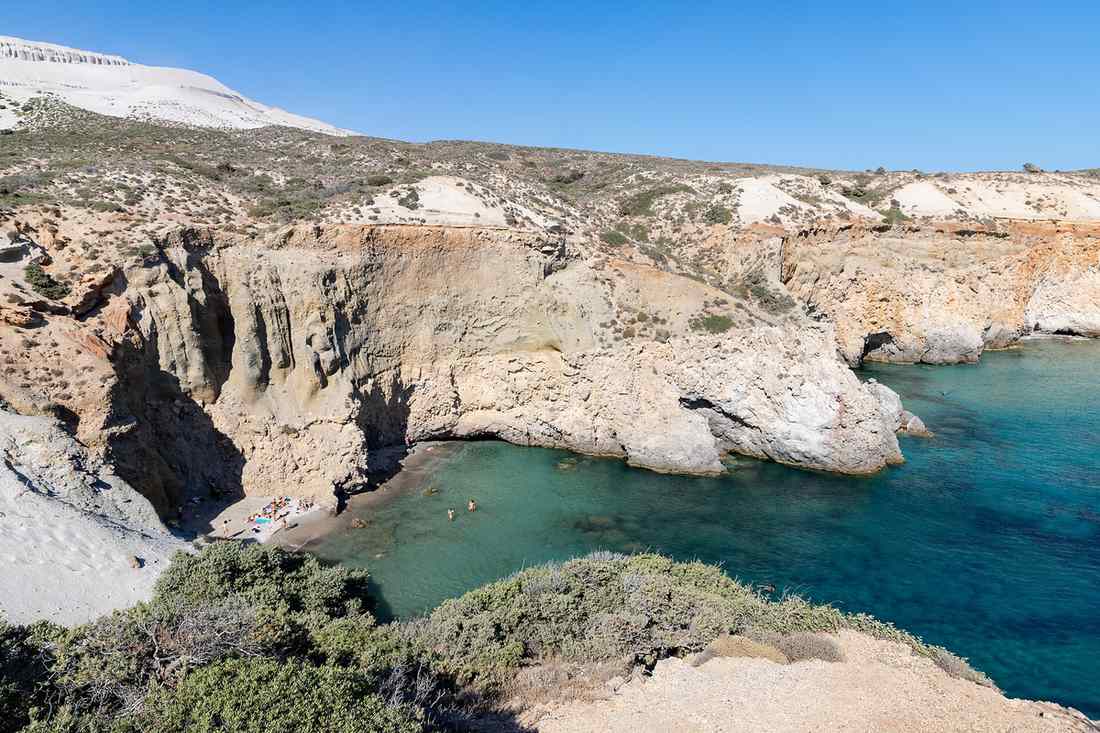
Naxos and Milos sit on opposite flanks of the Cyclades, and the ferry between them ties the marble heart of the archipelago to its volcanic west. The crossing runs mostly on high-speed catamarans through the summer months, threading past Ios, Folegandros or Sifnos on many sailings rather than a straight line. This guide covers the route pattern, journey time, seasonal frequency, tickets, taking a car and the two ports, all written from a departing-Naxos perspective. Naxos rewards a slow visit before you sail west, and Milos answers with volcanic coves and the lunar white of Sarakiniko. Map both islands into one Cycladic loop and plan the whole trip with My Greece Tours.
The port at Naxos Town anchors this crossing, a busy hub with frequent western-Cyclades departures through the warm season. Read our full Naxos travel guide for context on the island before you board, then use this page for the ferry itself. The sections below cover how the route actually runs, how long the crossing takes, when boats sail, how to buy tickets, whether to bring a car, and how the two ports work on arrival and departure. Each answer stays practical, so you can book with confidence and step onto Milos ready to explore.
How does the Naxos to Milos ferry route work?
The Naxos to Milos ferry runs mostly on high-speed catamarans across the western Cyclades. Sailings are often indirect, calling at Ios, Folegandros or Sifnos before reaching Milos, so the exact path shifts by departure and operator.
The route links two islands on opposite sides of the Cyclades, so the boat rarely draws a straight line. Operators such as SeaJets and Zante Ferries slot Milos into a chain of western-Cyclades calls, and the vessel threads through intermediate ports on the way. A single sailing might stop at Ios, then Folegandros, then Sifnos before docking at Adamantas on Milos. This chain shapes the whole experience, since each call adds minutes and the running order changes across the summer timetable. Naxos itself is a natural gateway west, a point echoed in our how to get to Naxos guide.
Read your ticket carefully, note the intermediate ports, and confirm that the boat you booked actually terminates at Milos rather than turning back east.
The catamaran dominates this corridor because it covers the distance fast and carries foot passengers with ease. Conventional car ferries also work the western Cyclades, and these run slower yet accept vehicles and cost less per seat. The distinction matters for planning, because a fast boat trims the crossing while a standard ferry stretches it and rolls more in open water. Check the operator behind each departure, since the same day can offer both vessel types at different hours. Naxos connects onward to other islands too, and travellers weighing options often compare it against a Naxos vs Milos overview before committing.
Confirm the boat class, the intermediate stops and the arrival port so the route matches the day you have mapped for your western-Cyclades hop.
How long does the Naxos to Milos ferry take?
The Naxos to Milos ferry takes roughly 2 hours to 4 hours 30 minutes. A direct high-speed catamaran runs near the low end, while sailings routing through Ios, Folegandros or Sifnos stretch the crossing toward the upper figure.
Journey time hinges on two things: the vessel class and the number of intermediate calls. A fast catamaran on a near-direct sailing can reach Adamantas in about 2 hours, cutting cleanly across the open channel. Add a stop at Ios and the clock creeps past 3 hours, since each port call means slowing, docking, loading and pulling away again. Route the boat through Folegandros or Sifnos as well and the total can approach 4 hours 30 minutes. The published duration on your ticket already folds in these stops, so trust the operator figure over rough distance math.
Travellers chaining islands eastward often study the Naxos to Santorini ferry for comparison, and the same logic applies here: fewer calls mean a shorter, smoother ride toward Milos.
Sea conditions also nudge the timing, because the western Cyclades channel opens to the meltemi wind through high summer. A strong northerly slows even a fast catamaran and, on rough afternoons, can trim service entirely. Morning departures tend to run more reliably, so an early boat is the safer choice for a same-day plan. Build a buffer into onward arrangements on Milos, since a delayed arrival can compress your first afternoon. Compare the corridor with the longer Naxos to Crete ferry to see how open-water legs behave under wind. Read the operator’s stated crossing time, add a margin for the meltemi season, and you land at Adamantas with your itinerary intact and time to spare.
When does the Naxos to Milos ferry run and how often?
The Naxos to Milos ferry runs mainly in summer, from around May to early October, with the densest schedule in July and August. Off-season sailings thin out sharply, sometimes to a couple of departures a week.
The western-Cyclades timetable is a seasonal creature, built around the tourist peak. Through July and August you find one or more daily options on most days, spread across the fast catamarans and the slower car ferries. Shoulder months such as May, June and September carry a lighter frequency, with departures on set weekdays rather than every day. This rhythm shapes island-hopping plans, since a missed boat in the shoulder season can mean a full-day wait for the next. Naxos Town sits at the centre of this network, and its harbour life is described in our Naxos Town guide.
Check the current season’s grid early, because operators publish and adjust summer schedules as the peak approaches and demand firms up on the corridor.
Winter reduces the corridor to a skeleton, and direct Naxos-to-Milos options can vanish for weeks. Off-season travellers sometimes route through a larger hub, backtracking to catch a separate connection rather than a single through-boat. This makes the warm months the practical window for a smooth crossing between the two islands. Book the sailing you want as soon as the timetable opens, since popular July and August departures fill fast on the fast boats. Travellers exploring the quieter corners nearby also look at the Small Cyclades from Naxos before heading west. Confirm the exact days your chosen month offers, lock in the departure that fits your Milos plans, and you sidestep the shoulder-season gaps that catch out unprepared island-hoppers.
How do you book tickets and can you take a car?
Book Naxos to Milos ferry tickets online in advance or at a Naxos Town port agency. Car transport is possible on conventional ferries, not on most high-speed catamarans, so match the vessel to your vehicle needs.
Advance booking is the sensible default on this corridor, especially through the July and August peak when fast boats sell out. Online platforms and the operators’ own sites list every western-Cyclades departure, and a port agency in Naxos Town handles the same tickets in person. Reserve early to secure the sailing time you want, then collect or print the ticket before boarding. Foot passengers move fastest, boarding the catamaran with luggage and settling into assigned seats. Prices swing by vessel class, since a fast boat commands a premium over a slower car ferry. Travellers linking wider routes across the region cross-check the Naxos to Santorini ferry when planning a multi-island ticket chain.
Confirm the operator, the exact departure and the passenger type before you pay, so the booking matches your western-Cyclades itinerary.
Bringing a car changes the calculation, because most high-speed catamarans on this route carry passengers only. Vehicle transport rides on the conventional car ferries, which sail less often yet load cars, motorbikes and campers into their hold. Book a vehicle slot well ahead, since car decks fill before passenger seats on busy summer sailings. A car unlocks Milos’s dispersed volcanic beaches, though the island also rents vehicles at Adamantas on arrival. Weigh the ferry car fee against a local rental before you decide to ship your own across. Read the vessel details on each departure, verify that it accepts vehicles, and reserve the deck space early so your western-Cyclades drive stays on schedule.
How do the two ports work and can you combine Naxos with Milos?
Naxos departs from its main harbour at Naxos Town; Milos arrives at Adamantas, the island’s central port. The two pair naturally, letting you combine Naxos’s marble villages with Milos’s volcanic beaches and Sarakiniko on one Cycladic loop.
The Naxos port sits right below the Portara and the old town, so boarding is a short walk from the waterfront cafes and agencies. Adamantas on Milos is the island’s main gateway, ringed by tavernas, rental desks and the road network that fans out to the beaches. Arriving here puts you within easy reach of Sarakiniko’s white volcanic rock, the fishing colour of Klima, and the sweeping south-coast bays. The two ports work as clean bookends, one marble and mountainous, the other volcanic and low. Travellers deciding how to split their days weigh a Naxos vs Milos comparison to balance beach time against inland exploring.
Note the port names on your ticket, since a mistaken arrival assumption can throw off a same-day transfer or booked rental at Adamantas.
Combining the islands makes for a strong western-Cyclades itinerary, pairing contrasting landscapes across a single ferry hop. Give Naxos its due first: the Portara at sunset, the mountain villages of Halki and Apiranthos, and the long sandy beaches of the west coast. Sail to Milos with a rental waiting, then chase Sarakiniko, Firiplaka and the boat-only coves that ring the volcanic south. This sequence flows well because Naxos suits a slower, greener stay while Milos rewards active beach days. Two islands, one crossing, and a Cycladic loop that shows off both faces of the archipelago. Plan your visit and tours through our Naxos travel guide.
Frequently Asked Questions
Is there a direct ferry from Naxos to Milos?
Direct sailings exist but they are the exception rather than the rule on this corridor. A handful of high-speed catamarans link Naxos and Milos with no intermediate stop, reaching Adamantas in around 2 hours on a clean run. Most departures instead route through the western Cyclades, calling at Ios, Folegandros or Sifnos before docking at Milos. These indirect boats stretch the crossing toward 4 hours 30 minutes as each port call adds loading time. Read the routing on every ticket, since two departures on the same day can differ sharply in stops and duration.
Prioritise a direct or near-direct catamaran to save time, and book it early through the July and August peak when the fastest sailings sell out. A slower conventional car ferry remains the fallback, trading speed for a lower fare and the ability to carry a vehicle across the channel to Milos.
What is the best time to make the Naxos to Milos crossing?
The warm season from May to early October delivers the fullest schedule and the smoothest sailings on this route. July and August offer the densest frequency, with one or more daily options across fast catamarans and slower car ferries. The trade-off is crowding and higher fares, so shoulder months such as June and September strike a balance of good frequency and thinner crowds. Morning departures suit this corridor best, because the meltemi wind builds through the afternoon and can slow or cancel boats. An early sailing lands you at Adamantas with the day ahead for Sarakiniko and the volcanic beaches.
Off-season travel is possible but sparse, sometimes dropping to a couple of weekly departures or forcing a backtrack through a larger hub. Book the peak-summer sailings as soon as timetables open, target a morning boat, and you cross the western Cyclades with time and daylight on your side.
Should I bring a car or rent one on Milos?
Renting on Milos usually beats shipping your own car across on this route. Most high-speed catamarans carry passengers only, so a vehicle rides on the slower conventional car ferries, which sail less often and add cost. Booking a car deck slot ties you to those specific departures and their longer crossing times. Milos rewards its own transport because the volcanic beaches spread across the island and public options are limited. Rental desks cluster at Adamantas, the arrival port, so a car waits for you the moment you step off the boat. This keeps your ferry choice flexible, letting you take a fast passenger catamaran and pick up wheels on arrival.
Weigh the ferry vehicle fee against a few days of local rental before deciding, and remember that a rental spares you the car-deck queue on busy summer sailings. For most itineraries the clean move is to sail light and rent at the port on Milos.