
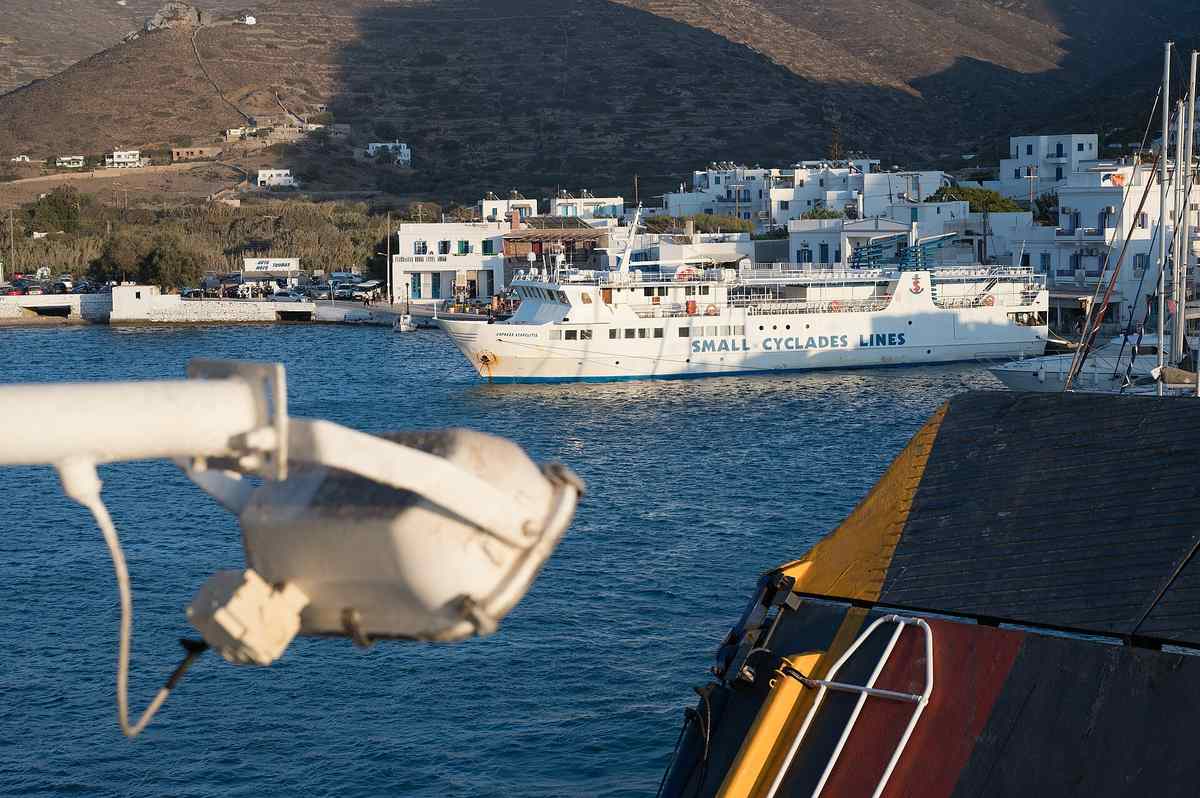
Naxos sits in the heart of the Cyclades, roughly midway between Athens and Santorini, which makes it one of the easier Greek islands to reach and one of the best-connected hubs in the archipelago. Most travellers arrive by sea, boarding a ferry at one of Athens’ two ferry ports, though a small national airport also receives seasonal domestic flights. Whether you favour a fast catamaran, a relaxed conventional ferry, or a short hop by plane, the route into Naxos is straightforward once you understand your options. Planning your trip with My Greece Tours takes the guesswork out of transfers and guided excursions if you would rather have the logistics handled for you.
This guide gathers everything you need to arrive smoothly, and it pairs well with our wider Naxos travel guide for what to do once you land. The sections below cover how you get to Naxos overall, ferries from Athens via Piraeus and Rafina, ferry connections between the Cycladic islands, flying into the small national airport, and finally getting from the port into town and around the island itself.
How do you get to Naxos?
You reach Naxos mainly by ferry from Athens, departing from either Piraeus or Rafina port, with high-speed and conventional services available. You can also arrive on inter-island ferries from neighbouring Cyclades, or by a short seasonal domestic flight into the small national airport.
The sea route is the backbone of travel to Naxos. From Athens, ferries leave from Piraeus, the country’s largest port, and from Rafina, a smaller harbour closer to the eastern suburbs and the city’s main airport. Both ports run regular sailings across the sailing season, with high-speed vessels covering the distance in a handful of hours and conventional ferries taking longer but offering a calmer, more affordable crossing. Naxos also functions as a central Cycladic hub, so it links directly to popular neighbours such as Paros, Mykonos, Santorini and Ios. For travellers already island-hopping, this means you rarely need to backtrack to Athens to continue your journey through the group.
Beyond the ferries, Naxos has its own small national airport that receives limited domestic flights from Athens, chiefly during the warmer months. This gives time-pressed visitors a faster alternative, although capacity is modest and seats fill quickly. Dozens of people combine transport modes, flying one direction and sailing the other to enjoy the scenery of the Aegean at least once. Once you have decided how to arrive, exploring the a wide range of things to do in Naxos becomes the pleasant part of planning, from mountain villages to long sandy shores. To choose the right crossing, it helps to look closely at the two Athens ports and how their ferry services differ.
How do you take a ferry from Athens (Piraeus and Rafina)?
From Athens you sail to Naxos from either Piraeus or Rafina. Piraeus offers the widest range of routes and vessel types, while Rafina sits nearer the airport and eastern Attica. Both run high-speed and conventional ferries throughout the sailing season.
Piraeus is the natural starting point for most visitors, reachable from central Athens by metro, bus or taxi. It is the largest passenger port in the region and handles the greatest volume of Cyclades traffic, so it usually offers the most departures to Naxos each day in season. From here you can pick between sleek high-speed catamarans that prioritise speed and larger conventional ferries that carry vehicles, offer open decks and cost less. The conventional crossing is slower but a host of travellers enjoy the leisurely pace, the fresh air on deck and the sight of other islands slipping past along the way.
Rafina is the alternative worth knowing, especially if you are arriving into Athens by plane, since it lies a great deal of closer to the airport than Piraeus does. The harbour is smaller and calmer, and its routes tend to run through the northern and central Cyclades, reaching Naxos comfortably within the sailing season. You will find both fast and conventional options, so you can trade speed against comfort and price to suit your plans as with Piraeus. Whichever port you choose, booking ahead in the busy months is wise, as popular sailings sell out.
Once you are moving through the islands, you will discover that Naxos connects seamlessly to its neighbours, which is where inter-island ferries come in.
How do ferries between the islands work?
Naxos is a central Cycladic ferry hub with direct connections to Paros, Mykonos, Santorini and Ios. Both high-speed and conventional vessels link these islands, making Naxos an ideal base or midpoint for island-hopping without returning to Athens.
Its central position gives Naxos frequent links to the most visited islands in the group. Paros lies just a short hop away and is often the quickest connection, sometimes only a matter of minutes by fast ferry. Mykonos to the north is well served too, making it easy to combine a lively nightlife island with quieter Naxos. Santorini to the south is a popular pairing, with regular sailings that let travellers see the famous caldera without committing to it as their only base. Ios sits between Naxos and Santorini and is another straightforward connection, especially for younger visitors drawn to its beaches and buzz.
The island works beautifully as a hub for a multi-island trip because so dozens of routes call at Naxos. You can build an itinerary that loops through a cluster of Cyclades and treats Naxos as your calm home base, returning to its long beaches and hearty food between excursions. Both fast catamarans and slower conventional ferries serve these routes, so you can match each leg to your budget and schedule. Timetables shift with the seasons, thinning outside the busy months, so it pays to confirm sailings close to your travel dates. The small national airport offers another way to reach Naxos directly from the capital if sailing between islands does not suit your timing.
Can you fly to Naxos?
Yes, Naxos has a small national airport that receives limited domestic flights from Athens, mostly during the warmer months. The runway suits smaller aircraft, so capacity is modest and seats fill quickly, but flying is the fastest way to arrive.
Naxos national airport lies a short distance from Naxos Town and handles domestic services connecting the island with Athens. The flight itself is brief, turning what can be a multi-hour ferry crossing into a quick hop over the Aegean. Appeals to travellers short on time or prone to seasickness. The number of daily services is limited, and schedules lean heavily towards the busier travel season because the airport is small and built for smaller aircraft. Fares can rise sharply when demand peaks, so early planning helps you secure both a seat and a sensible price for your journey.
For a host of visitors the smart approach is to mix transport modes, perhaps flying into Naxos to save time and sailing out to enjoy the islands at a gentler pace, or the reverse. Keep in mind that the airport’s capacity means flights are not always the reliable fallback that ferries provide. It is wise to have a sea route in mind as a backup. Remember that Rafina port is nearby should you decide to switch to a ferry if you are connecting through Athens airport. You touch down, the next question is a practical one, namely how to travel from your point of arrival into Naxos Town and out across the island.
How do you get from the port into town and around the island?
The ferry port sits right in Naxos Town, so you arrive in the heart of the action.
The main port lands you directly in Naxos Town, the island’s lively capital, so a wealth of hotels, tavernas and the old quarter are within easy walking distance of the quay. This is a real convenience compared with islands where the harbour sits far from the main settlement. You may not need any transport at all beyond your own two feet, wandering the waterfront and the maze of whitewashed lanes that climb towards the Venetian castle above if you are staying in town. For trips further afield, though, you will want to consider your options for reaching the wider countryside and coast.
Local buses run from the port area to popular villages and the famous beaches of Naxos, offering an affordable way to get around without a vehicle of your own. For greater freedom, car and scooter hire is widely available and lets you reach mountain villages, remote coves and viewpoints on your own schedule. Taxis are handy for shorter trips or late arrivals, though numbers are limited in the busy season. With the whole island open to you, the pleasure lies in choosing among the dozens of highlights, from ancient sites to sandy shores. Plan your visit and tours through our Naxos travel guide.
Frequently Asked Questions
Is it better to fly or take the ferry to Naxos?
It depends on your priorities. The ferry is by far the most common and reliable way to reach Naxos, with frequent departures from both Piraeus and Rafina and a choice between fast catamarans and slower, cheaper conventional vessels. Sailing also lets you enjoy the scenery of the Aegean and easily carry a hire car or extra luggage, and services run throughout the sailing season. Flying, by contrast, is the fastest option, turning a multi-hour crossing into a short hop from Athens, which suits travellers who are short on time or uncomfortable at sea.
The catch is that the island’s small national airport handles only limited domestic flights, mostly in the warmer months, so seats are scarce and fares can climb. For most visitors the ferry offers the best mix of frequency, value and flexibility, while flying works well as an occasional time-saver. A wide range of people simply combine the two, flying one way and sailing the other to enjoy the best of both.
Which Athens port should I use to reach Naxos, Piraeus or Rafina?
Both ports connect Athens to Naxos, and the better choice depends mainly on where you are coming from within the city. Piraeus is the largest and busiest passenger port, easily reached from central Athens by metro, bus or taxi. It usually offers the widest range of sailings to Naxos, including the most vessel types and departure times in season. Piraeus is the natural pick if you are staying in the city centre or want maximum choice. Rafina, on the other hand, is a smaller and calmer harbour that sits considerable closer to the Athens airport and the eastern suburbs. This makes it convenient if you are flying into Athens and heading straight for the islands.
Its routes serve the northern and central Cyclades and reach Naxos comfortably in season. In short, choose Piraeus for the greatest frequency and choice, and consider Rafina if you value proximity to the airport and a quieter, more manageable port.
Do I need a car on Naxos, or can I rely on public transport?
You can manage without a car if you base yourself in Naxos Town, since the ferry port sits right in the capital and puts hotels, tavernas, the old quarter and the waterfront within walking distance. Local buses connect the port area to a wealth of popular villages and beaches, offering an affordable way to explore without driving. Works well for travellers on a budget or those who prefer not to drive on unfamiliar roads. That said, Naxos is one of the larger Cyclades, with mountain villages, remote coves and scenic viewpoints that buses reach less often, especially outside the busy months when services thin out. Hiring a car or scooter is well worth considering.
Rental is widely available near the port and in town if you want the freedom to explore the interior and quieter beaches on your own schedule. Taxis fill the gaps for shorter journeys and late arrivals, though their numbers are limited in peak season, so it is wise to plan longer trips ahead.