
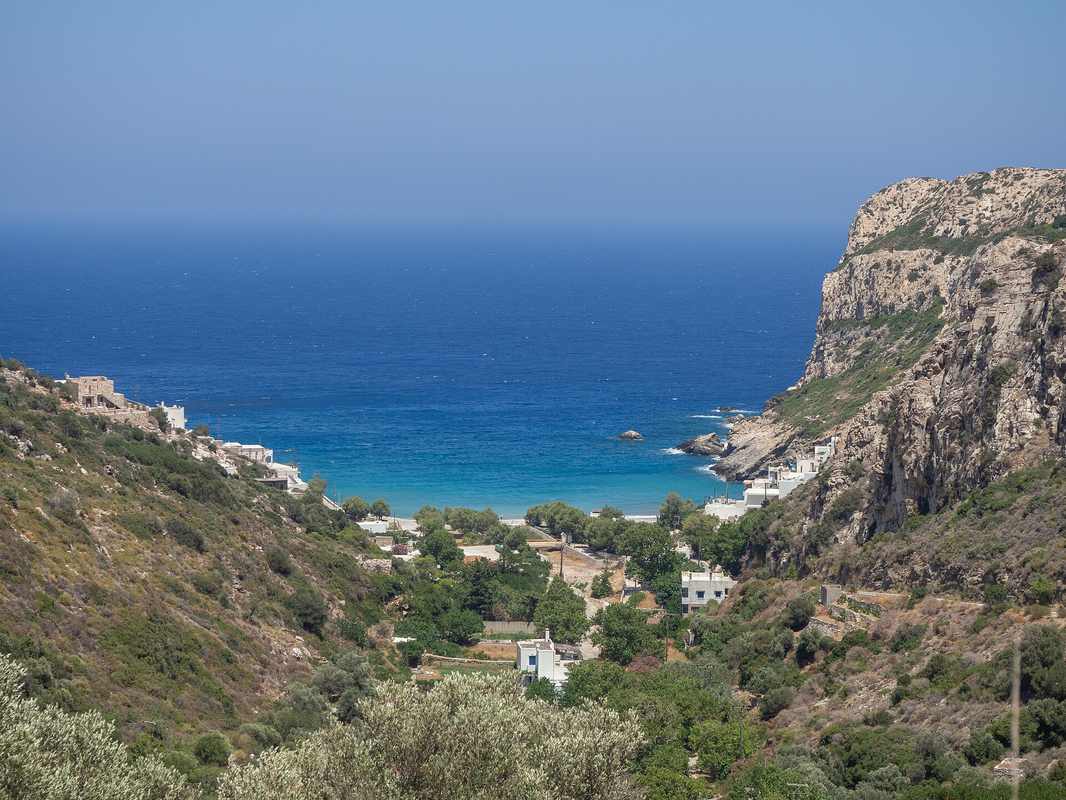
Lionas beach sits on the wild northeast coast of Naxos, tucked into a steep ravine below the mountain village of Koronos. Grey pebbles line a narrow cove, and the water drops fast into deep blue clarity. Emery-streaked cliffs press in on both sides, dark and vertical, marking a coast shaped by mining rather than tourism. Two small tavernas serve the beach, and little else disturbs it. The setting rewards travellers who want raw landscape over sunbeds and crowds. Naxos hides many such corners, and this one carries the island’s industrial past in its very rock. Plan the drive down and explore this rugged shore with My Greece Tours.
This guide treats Lionas as a remote-beach node within the wider northeast of the island. Read it alongside our Naxos travel guide to place the cove in context with the mountain villages and the emery country that surrounds it. The sections below cover what the beach actually is, the character of its pebbles and deep water, the emery-mining heritage that loaded ore from this shore, the winding approach through Koronos, and the type of traveller Lionas suits best.
What is Lionas beach on Naxos?
Lionas is a remote pebble cove on the northeast coast of Naxos, set in a steep ravine below Koronos. Grey pebbles, deep clear water, sheer emery-streaked cliffs and two tavernas define this quiet, undeveloped shore.
Lionas occupies the mouth of a dramatic ravine that cuts down from the mountains to the sea. The cove is narrow, framed by steep cliffs that rise almost vertically on either side. Grey and dark pebbles form the shore, worn smooth by the surf over long stretches of time. The beach stays small, and development remains minimal, which keeps the atmosphere raw and honest. Two tavernas mark the only real services here, sitting close to the water with a handful of tables. The northeast coast of Naxos feels a world away from the busy western resorts.
Compared with the broad sandy strands of the beaches of Naxos on the west, Lionas trades softness for drama and delivers a landscape carved by rock and gravity.
This is not a beach built for umbrella rows or beach bars. The appeal rests on isolation, on the sheer scale of the cliffs, and on water so clear you can read the seabed from the shore. The ravine funnels a cooler air down from the peaks, and the light shifts sharply as the sun moves behind the ridge. Swimmers, hikers and photographers gravitate here for the contrast with the polished coast elsewhere. The cove links naturally to the wider network of mountain villages of Naxos that overlook this coast.
Lionas reads as an outpost rather than a destination in itself, a place you reach with intent, and its quiet rewards the effort of the drive down through the folded interior.
What are the pebbles and water like at Lionas?
The shore is grey pebbles and small stones rather than sand, steep at the waterline. The sea deepens quickly into clear, cool, dark-blue water, excellent for swimming and snorkelling but exposed to northerly wind and swell.
The beach surface is grey pebbles, ranging from coarse gravel to fist-sized stones, streaked here and there with the dark emery that colours this whole coast. Water shoes make the walk in and out far more comfortable, and they help on the steep entry at the waterline. The sea shelves quickly, dropping into deep water only a short way from shore. Clarity is the standout trait: the water reads cool and glass-clear, shading from turquoise at the edge to deep blue over the drop. Snorkellers find good visibility along the cliff bases where the rock meets the sea. The pebble bed keeps the water clean, free of the churned sand that clouds softer beaches.
The northeast exposure means the cove faces open sea toward the Cyclades horizon rather than a sheltered bay.
The exposure cuts both ways. On calm days the cove is a swimming pool of deep clarity, still and inviting under the cliffs. The meltemi wind pushes northerly swell straight into the ravine, and the beach can turn rough and choppy with little warning. Check the forecast before committing to the drive, since conditions here change faster than on the protected western shore. There is little natural shade beyond the shadow the cliffs throw in the late afternoon, so bring cover for the middle of the day. The tavernas offer respite from the sun and a cold drink between swims.
Lionas suits confident swimmers who read the sea well; the deep water and pebble entry make it less forgiving than the shallow sandy bays that draw families to the opposite coast. Reaching this remote coast needs a hire vehicle from car rental in Naxos.
How does emery mining shape Lionas beach?
Lionas served as a loading point for Naxos emery, the hard abrasive ore mined in the mountains above. Ships once took on ore at this cove, and the emery-streaked cliffs still mark the beach’s industrial heritage.
Naxos holds some of the world’s finest emery, a dense abrasive rock long prized for grinding and polishing. The ore came out of the mountains around Koronos and Apeiranthos, hauled down toward the coast for shipping abroad. Lionas was one of the coves where ore reached the sea, a working shore rather than a leisure one for much of its history. The dark streaks in the cliffs are the emery itself, threaded through the surrounding stone. The story of the Naxos emery mines explains why this remote coast was ever developed at all. Mining shaped the roads, the villages and the very reason a track ever descended to this ravine.
The industrial past sits just beneath the surface of what now feels like pure wilderness.
The main loading and cable-way infrastructure centred on the larger port at Moutsouna to the south, where an aerial ropeway carried emery down from the peaks. Lionas played its own smaller role in the same trade, tied to the mining villages perched above. Rusting fragments and old workings still dot this stretch of coast for those who look. The heritage gives the beach a depth that pure scenery lacks: the cliffs are not just dramatic, they are worked and historic. Understanding the emery story turns a swim into a visit to an industrial landscape reclaimed by the sea.
The abrasive that once left Naxos to sharpen tools across the world came from these very mountains, and this quiet cove was one of its doorways to the wider Mediterranean.
How do you get to Lionas beach?
Reach Lionas by car from Naxos Town, driving inland through the emery villages to Koronos, then down a winding, narrow road to the coast. The descent through the ravine takes patience but is fully paved and passable.
The drive is the adventure. From Naxos Town the road climbs inland through the mountainous heart of the island, passing the emery villages before reaching the turn for the coast. Koronos sits high in a green ravine, one of the most striking of the mountain settlements, and the road to the beach drops from just below it. Break the journey in Koronos for a coffee among the terraced houses before the final descent. The route to the water is a narrow, twisting road that switchbacks down the ravine toward the sea.
It is paved and passable in a normal car, but the bends are tight and the drops steep, so drive slowly and use the horn on blind corners.
Allow roughly an hour or more from Naxos Town, depending on stops and traffic in the villages. A car is essentially the only practical way in, as public transport does not serve this remote cove reliably. The nearby hill town of Apeiranthos, with its marble streets and museums, pairs well with the trip as a morning stop before the beach. Parking at the bottom is limited to a rough area near the tavernas, so arrive earlier in the day in high season. The winding approach filters out casual visitors and keeps numbers low.
The effort of the drive is the price of the solitude, and the mountain scenery along the way is a genuine part of the reward rather than a chore to endure.
Who is Lionas beach best for?
Lionas suits travellers who want solitude, dramatic scenery and deep clear swimming over sand and sunbeds. It rewards explorers, hikers, photographers and confident swimmers, and anyone drawn to the emery-mining heritage of the northeast coast.
The beach fits a specific kind of traveller. Explorers who chase the least-developed corners of an island will find Lionas a highlight, reached by a memorable drive and framed by cliffs that feel almost alpine at the shore. Photographers work the contrast of dark emery rock, grey pebbles and clear blue water, especially in the low light of morning or late afternoon. Confident swimmers relish the deep, cool water and the snorkelling along the cliff bases. Anyone interested in industrial heritage reads the coast as a working landscape, tied to the mines and the villages above.
The two tavernas make a long, slow lunch a genuine pleasure, the kind you linger over between swims with the ravine rising around you and the sea flat and clear below.
Families with small children, and anyone wanting shallow sheltered water, sunbeds and beach-bar comforts, are better served on the western coast around Naxos Town. Lionas offers little shade, a steep pebble entry and exposure to northerly swell, which asks for a bit of self-reliance. Pack water shoes, sun cover, snacks and a swim in mind, and treat the drive as half the experience rather than a means to an end. Pair the cove with the mountain villages and the emery trail for a full day in the wild northeast, well away from the resort belt. The reward is a coast that still feels genuinely remote and honest. Plan your visit and tours through our Naxos travel guide.
Frequently Asked Questions
Is Lionas beach worth the drive from Naxos Town?
Lionas rewards the drive for travellers who value scenery and solitude over convenience. The route itself is a highlight, climbing through the emery villages of the mountainous interior before dropping down a dramatic ravine to the sea. The payoff is a cove of grey pebbles ringed by sheer emery-streaked cliffs, with deep, clear, cool water excellent for swimming and snorkelling. Two tavernas provide food, drink and shade, so a half-day trip works comfortably. The heritage adds meaning: this was a loading point for the island’s famous emery ore, and the worked cliffs carry that story. Travellers wanting sandy shallows, sunbeds and easy access will prefer the western coast, and they should skip the long mountain road.
The remote nature, the steep pebble entry and the exposure to northerly wind ask for a little self-reliance. For explorers, photographers and confident swimmers, the answer is a clear yes.
Can you swim safely at Lionas beach?
Swimming at Lionas is excellent on calm days and demands respect on windy ones. The water deepens quickly from the pebble shore into deep, clear, cool sea, which makes it superb for confident swimmers and snorkellers but less suited to small children or nervous paddlers. The pebble bed keeps the water clean and clear, ideal for snorkelling along the cliff bases where fish gather. The steep entry at the waterline calls for water shoes, which also protect against the coarse grey stones. The main caution is exposure: the northeast-facing cove catches the meltemi wind and northerly swell, and the sea can turn choppy and rough with little warning.
Check the forecast before you drive down, and avoid the water on strongly windy days. There are no lifeguards on this remote beach, so judge conditions carefully and swim within your ability. On a settled day the cove reads like a deep, clear natural pool beneath the cliffs.
What facilities and tavernas are at Lionas beach?
Lionas keeps facilities deliberately minimal, which is central to its remote appeal. Two small tavernas sit close to the shore, serving fresh food, cold drinks and a shady spot to escape the midday sun between swims. They are the only real services on the beach, so travellers should not expect organised sunbeds, umbrella rows, beach bars or shops. Natural shade is limited beyond the shadow the cliffs cast in the late afternoon, so bring your own sun cover for the middle of the day. Parking is a rough area near the tavernas, limited in high season, which rewards an early arrival. There is no reliable public transport, so a car is essentially necessary to reach the cove.
Pack water, snacks, water shoes and sun protection to stay comfortable through a long, slow visit. The lack of development is precisely why the beach feels genuinely wild, honest and far removed from the busy resorts of the western coast.