
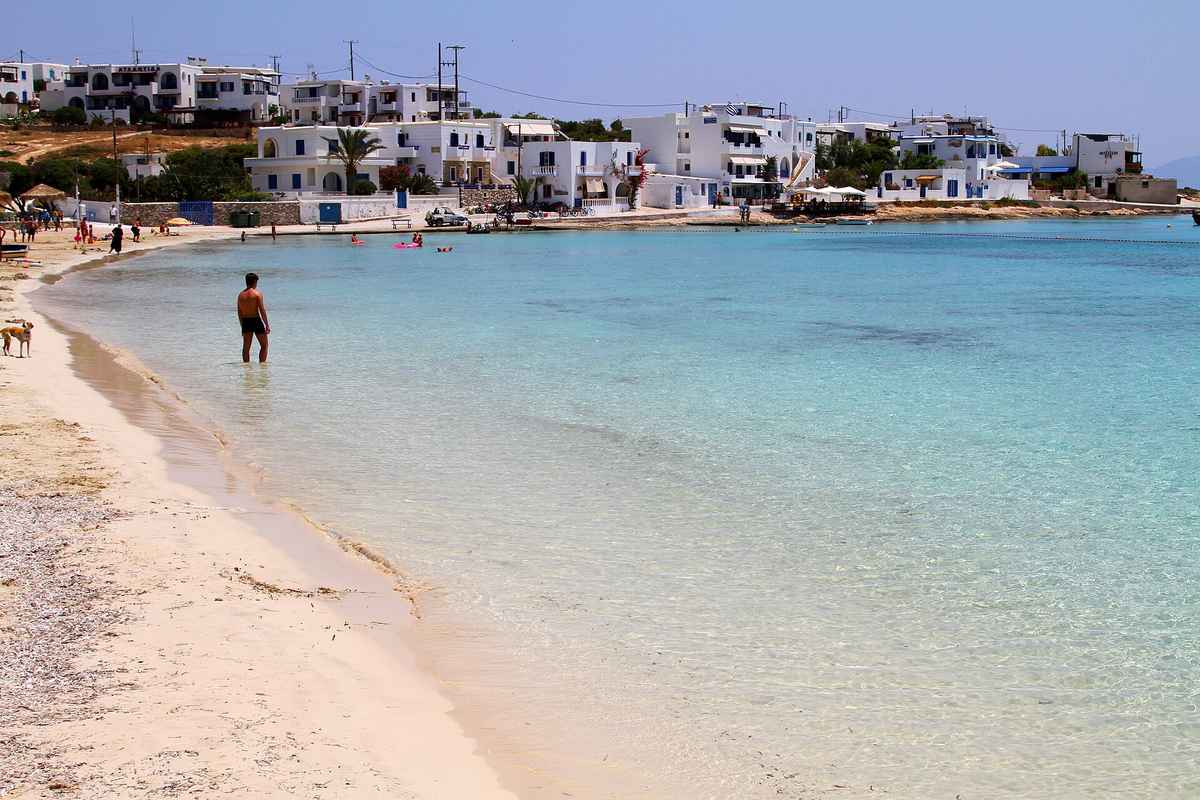
The Small Cyclades sit in the sea just southeast of Naxos, a compact cluster of tiny, unspoilt islands where turquoise water, quiet sandy beaches and a slow, authentic pace replace the crowds of the bigger destinations. Naxos is the natural gateway to this hidden corner of the Aegean, close enough that Koufonisia, Iraklia, Schinoussa and Donousa all sit within easy reach for a single day out or a longer island-hopping loop. Their small size is exactly the appeal: whitewashed hamlets, empty coves and clear shallows that feel almost private. A wide range of travellers first sample them on a relaxed guided tour departing from the island with My Greece Tours.
Our Naxos travel guide sets out where to stay, how to move around and what to prioritise, so this cluster fits neatly into a wider itinerary if you are already planning your base. The sections below cover what the Small Cyclades are and why to visit from Naxos, what Koufonisia is like, the character of Iraklia, Schinoussa and Donousa, how to reach the islands from Naxos, and how to plan a Small Cyclades trip.
What are the Small Cyclades and why visit from Naxos?
The Small Cyclades are a cluster of four tiny inhabited islands, Koufonisia, Iraklia, Schinoussa and Donousa, plus the uninhabited Keros, lying just southeast of Naxos. Their quiet beaches, clear water and slow pace make Naxos the ideal launch point.
The Small Cyclades form a scattered chain in the open sea between Naxos and Amorgos, and together they hold only a couple of hundred permanent residents. This is their whole character: no airports, no resort strips and very little traffic, just low whitewashed villages, dry hills, small chapels and a coastline of coves and shallow bays. They were historically linked to Naxos for supplies, schooling and trade. This is why Naxos still functions as the hub of the group because the islands are small and the distances between them are short. That connection matters for visitors, since almost every practical route into the cluster passes through Naxos first, making it the obvious starting point for a trip.
Choosing Naxos as your base gives you both the convenience of a large, well-served island and the quiet of the smaller ones a short hop away. Naxos has its own long beaches, an atmospheric old town and mountain villages. You never run short of things to do on the days you stay put; you can browse ideas in our guide to things to do in Naxos. From this comfortable base, the Small Cyclades become an easy add-on rather than a complicated expedition, whether you want a single day at sea or a slow multi-island loop.
The most visited of the four, and usually the first that travellers ask about, is Koufonisia, so it is worth understanding what that island is actually like.
What is Koufonisia like?
Koufonisia is the most popular of the Small Cyclades, famous for exceptionally clear turquoise water and a string of soft sandy beaches.
Koufonisia is really two islands, the inhabited Pano (Upper) Koufonisi and the tiny wild Kato (Lower) Koufonisi opposite, though when people say Koufonisia they almost always mean the upper one. The single village clusters around the port, a compact grid of whitewashed houses, small tavernas and a handful of cafes that stay low-key even in high season. What sets the island apart is the colour of the sea: sheltered bays such as Pori, Fanos, Italida and Platia Pounta glow in shades of pale blue and green over pale sand. A series of are shallow enough for very easy swimming. A well-trodden coastal footpath links these beaches, so exploring on foot is genuinely practical.
Most visitors get around by walking or by bicycle, and dozens of beaches lie within a comfortable stroll of the village because the island is flat and distances are short. Small boats also shuttle across to Kato Koufonisi, an almost empty islet with a taverna and quiet coves, which makes an easy half-day escape. The atmosphere is unhurried and family-friendly, geared toward long swims, slow lunches and sunset drinks rather than nightlife. Koufonisia works beautifully as a headline day trip, but it is only one quarter of the cluster; the other three islands, Iraklia, Schinoussa and Donousa, each offer a distinctly quieter and more rugged version of the same unspoilt appeal.
They reward travellers who want to slow down further.
What about Iraklia, Schinoussa and Donousa?
Iraklia, Schinoussa and Donousa are the quieter three of the Small Cyclades. Iraklia is the smallest and most remote-feeling, Schinoussa is gentle and beach-rich with rolling low hills, and Donousa sits further out with wild coves and a strong sense of isolation.
Iraklia is the least developed of the group, a rugged little island of maybe a hundred residents where life centres on the small port of Agios Georgios and the hillside village of Panagia. It is prized for its silence, its walking trails and the celebrated Cave of Agios Ioannis, reached on foot across scrubby hills. Schinoussa, just to the north, feels softer and more open, with a central village on a ridge and a scatter of accessible sandy bays below it, a cluster of within walking distance of the harbour.
Both islands are tiny enough to explore slowly on foot, and both keep the same low-rise, whitewashed character that defines the cluster, with only a handful of tavernas and rooms.
Donousa lies apart from the other three, further north and east. That separation shapes its mood: it is the most solitary-feeling of the Small Cyclades, with a small port settlement, dramatic coastline and beaches such as Kedros that draw travellers seeking real quiet. Getting to Donousa on the same day as the others is harder because of its position and less frequent connections. It often suits an overnight rather than a quick visit. Taken together, these three islands are for people who want the unspoilt Cyclades at their most stripped-back. Deciding which of the four to target naturally depends on the practical question of how you actually reach them from Naxos.
How do you reach the Small Cyclades from Naxos?
You reach the Small Cyclades from Naxos by regular small local ferries that thread through the cluster, or by organised boat excursions. Short crossings make a day trip realistic to the nearer islands, while the further ones often suit an overnight stay.
A small dedicated ferry serves the Small Cyclades on a looping route out of Naxos, calling at Iraklia, Schinoussa, Koufonisia and Donousa, with additional larger fast and conventional ferries stopping at part of them in season. Crossings to the nearer islands are short, often under an hour to the first stops. This is what makes a self-guided day trip feasible: you catch a morning boat, spend the day swimming and exploring, and return on a later sailing. Schedules are seasonal and can be sparse in the quieter months, so checking timetables in advance is essential. For the wider picture of arriving in the region in the first place, see our guide on how to get to Naxos.
The alternative is an organised boat excursion, which typically bundles the crossing, swimming stops and sometimes lunch into a single guided day, taking the timetable guesswork out of the trip; these usually focus on Koufonisia and nearby swimming spots. The key planning distinction is day trip versus overnight. Koufonisia, Iraklia and Schinoussa are all realistic as day trips from Naxos when sailings align. Donousa’s position and thinner schedule make it far better as an overnight or a stop on a longer hop. Once you understand these connections, the remaining decisions, timing, packing and booking, come together into a simple plan for the whole trip.
How do you plan a Small Cyclades trip?
Plan a Small Cyclades trip by first choosing between a single day trip and a multi-island hop. Match your dates to the ferry season, book crossings early, and pack light for islands with limited shops.
Start with the shape of the trip. One day trip from Naxos to Koufonisia, or a guided boat excursion, delivers the essence of the cluster with almost no logistics if you have limited time. An island-hopping loop through Iraklia, Schinoussa, Koufonisia and Donousa lets you stay overnight and feel the slower rhythm. It demands closer attention to the ferry timetable if you have a cluster of days and want the quieter islands. The best window is the warmer months, when the sea is inviting and connections run most often; the shoulder season is calmer and cheaper but with thinner sailings. Whichever you choose, base yourself well and use central Naxos Town as your comfortable anchor between island days.
Pack for simplicity: swimwear, reef-friendly sun protection, a hat, water shoes for pebbly coves, and enough cash, since card facilities and ATMs are limited on the smaller islands. Bring anything essential with you rather than expecting to buy it there, as shops are limited and stock is basic. Book ferry tickets or an excursion ahead in the busy months, when both boats and the modest range of rooms fill quickly, and always confirm return sailings so you are not stranded by a cancelled or rescheduled boat. For more ideas on filling the non-island days, revisit our guide to the a wide range of things to do in Naxos.
Plan your visit and tours through our Naxos travel guide.
Frequently Asked Questions
Can you visit the Small Cyclades as a day trip from Naxos?
Yes, a day trip from Naxos to the Small Cyclades is entirely realistic, especially to Koufonisia, the most popular of the four islands. Short ferry crossings, often under an hour to the nearer stops, let you catch a morning boat, spend the day swimming and exploring. Return on a later sailing the same day. Koufonisia is the easiest and most rewarding day-trip target because it is flat, walkable and lined with turquoise bays close to the port. Iraklia and Schinoussa can also work as day trips when the timetable cooperates, though they offer fewer facilities and a more remote feel. Donousa, being further out with thinner connections, is usually better as an overnight.
The simplest option for a single day is an organised boat excursion. Bundles the crossing and swimming stops into a guided outing and removes the need to juggle ferry schedules yourself. In all cases, confirm return sailings before you set out, since seasonal timetables can be sparse.
Which Small Cyclades island is best to visit from Naxos?
The best island depends on what you want from the trip. For a first visit or a single day out, Koufonisia is the clear choice: it is the most popular of the Small Cyclades, famous for exceptionally clear turquoise water, soft sandy beaches and an easy, walkable layout that suits swimming and relaxed exploring. The quieter three reward you instead if your priority is peace and untouched scenery. Iraklia is the smallest and most remote-feeling, ideal for walkers and travellers who want near-total silence and trails like the route to its famous cave. Schinoussa is gentler and beach-rich, with a series of sandy bays within walking distance of its ridge-top village.
Donousa sits further out and offers the strongest sense of isolation, with wild coves and a solitary mood. A wealth of visitors combine a handful of islands on a hopping loop rather than choosing just one. Koufonisia gives the fullest taste of the cluster’s appeal if you only have time for a single stop.
When is the best time to visit the Small Cyclades from Naxos?
The best time to visit the Small Cyclades is during the warmer months, when the sea is at its most inviting and ferry connections from Naxos run at their fullest. This peak stretch brings reliable sailings, warm swimming and the widest choice of open tavernas and rooms across the islands, though it is also the busiest and priciest period. Booking crossings, excursions and accommodation early is wise. The shoulder season on either side is quieter and more affordable, with pleasant weather and a calmer atmosphere. Ferry schedules thin out and part of facilities on the smaller islands close, which can complicate day trips and island-hopping.
Outside the main season, connections become sparse and a host of services pause, making travel to the tiniest islands difficult and unpredictable. For most travellers seeking turquoise water, quiet beaches and dependable boats, the warm months offer the best balance. Whenever you go, always check current timetables and confirm return sailings before committing to a day trip.