
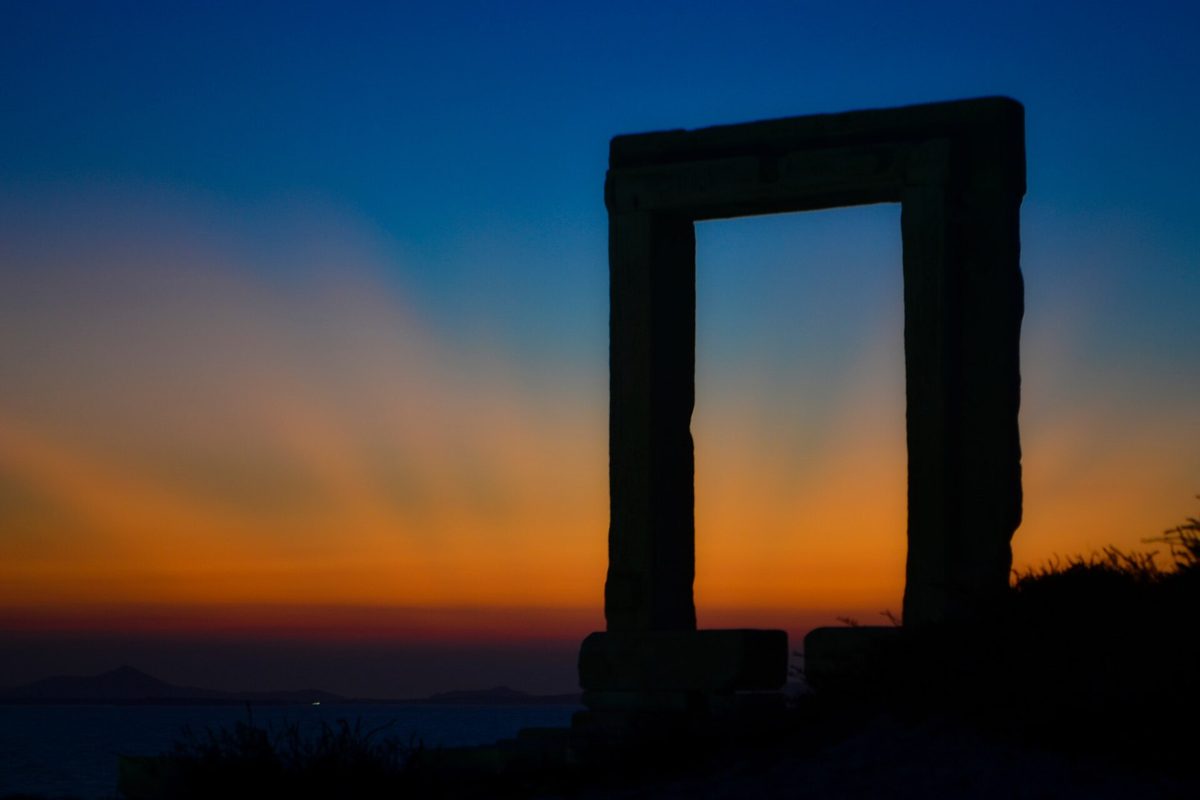
Six days on Naxos give you room to move slowly across the largest Cycladic island. This plan splits the week into clear halves: the coast and the town anchor the first stretch, the mountains and outlying islands fill the rest. You reach the Venetian Kastro, the marble Portara, the western sand beaches, the Tragaea highland villages, the Small Cyclades, the northern kouros sites and the summit of Zas. Each day sits within easy driving distance of Naxos Town, so you keep one base and branch out. Build your rental car, ferries and guided walks around it, and plan the whole trip with My Greece Tours.
This route rewards travelers who want depth over speed. It reads as a companion to our Naxos travel guide, adding a full-week structure that a shorter trip cannot hold. The sections below cover six themed days, each one a single question with an answer-first summary and two practical paragraphs. You get monuments, sand, mountain stone, boat decks and a real mountain hike, paced so no day feels rushed and no corner of the island stays unseen.
Day 1: How do you spend your first day in Naxos Town?
Day one stays in Naxos Town. Walk the harbor to the Portara at sunset, climb the marble lanes of the Kastro, and settle into the old quarter before the rest of the island opens up over the coming days.
Start at the Portara, the giant marble doorway on the Palatia islet linked to the harbor by a short causeway. This unfinished temple gate to Apollo frames the sea and marks the entrance to the port. From there, work uphill into the Kastro, the walled Venetian citadel that crowns the town. Narrow marble streets wind past coats of arms, the Catholic cathedral and the archaeological museum. The old quarter of Bourgos below the walls holds tavernas, bakeries and small shops. Give the afternoon to slow wandering rather than a fixed list. For a broader menu of ideas across the island, browse things to do in Naxos and mark the ones that fit your week.
Anchor the whole trip in Naxos Town, since every later day starts and ends here. The port district puts ferries, car rentals and dinner within a short walk. Evening light turns the Portara gold, so time your first sunset for the causeway. Book a table in Bourgos afterward and taste local cheese and Kitron, the island citrus liqueur. Keep day one light on driving to recover from travel. Compare this fuller plan against the shorter Naxos 5-day itinerary to see what the extra day buys you. The sixth day, in particular, adds a real mountain or a second quiet beach that a five-day trip has to cut.
Day 2: Which west-coast beaches make the best beach day?
Day two runs down the west coast. Agios Prokopios, Agia Anna and long Plaka sit minutes apart on soft sand and shallow water, with Mikri Vigla further south for wind sports and quieter dunes.
Drive south from Naxos Town along the flat western shore, where the island’s best-known sand strings together. Agios Prokopios opens first, a broad blue bay with organized sunbeds and a small resort strip. Agia Anna follows, a fishing settlement with tavernas right on the water. Plaka stretches beyond it for kilometers, part organized and part wild, backed by dunes and cedar. The sand stays pale and the sea shelves gently, which suits families and long swims. Rent an umbrella at one end and walk the shoreline for space. These west-coast bays anchor most swimming days, and you can map the full run of the beaches of Naxos before you choose where to settle.
Push further south for variety when the northerly meltemi wind blows. Mikri Vigla splits into two bays around a rocky headland, with a kite and windsurf scene on the exposed side and calm water on the other. Kastraki and Alyko lie beyond, the latter fringed by a rare cedar forest on the dunes. Pack water and shade, since services thin out the further you go. A car makes this day easy, as the beaches spread across a long coast road. Return north for dinner in Naxos Town or eat at a beach taverna in Agia Anna. This coast delivers the classic Cycladic swim day that most visitors picture.
Day 3: What do the Tragaea mountain villages offer?
Day three climbs inland to the Tragaea. Halki, Filoti and Apeiranthos sit among olive groves and marble, holding Byzantine churches, kitron distilleries and stone lanes that reveal the island’s interior life.
Head east into the Tragaea, a green upland valley of olive groves and old villages beneath Mount Zas. Halki serves as the first stop, a former commercial center with neoclassical houses and the Vallindras Kitron distillery, where you taste the citron liqueur at its source. The Panagia Protothronis church nearby holds frescoes spanning centuries. Filoti climbs the slope next, the largest mountain village, with plane-shaded squares and a grand church tower. The drive alone rewards the trip, as the road curls past terraces and marble outcrops. Move at village pace and stop for coffee where the light looks right.
This interior day pairs naturally with the deeper coverage in our Naxos 7-day itinerary, which adds even more highland stops.
End the day in Apeiranthos, the marble village high on the eastern slopes. Settlers from Crete gave it a distinct dialect and character, and its paved lanes glint with local stone underfoot. Small museums cover geology, folklore and archaeology in a few rooms each. The setting looks out over the interior toward the sea, so the views run wide from the upper terraces. Eat a mountain lunch of local meat and cheese in a village taverna. The road back to Naxos Town descends through Filoti and Halki, so you retrace the valley in softening afternoon light. This trio of villages shows a side of Naxos that the beaches never reveal.
Day 4: Is a Small Cyclades boat trip worth a full day?
Day four heads to the Small Cyclades. A ferry or day boat reaches Koufonisia, Iraklia, Schoinoussa or Donousa, tiny islands with clear water, few cars and empty beaches within easy reach of Naxos.
Take a day boat or scheduled ferry from Naxos port to the cluster of small islands to the southeast. Koufonisia draws the most visitors, with turquoise coves, a walkable main village and sea caves along its low limestone coast. Iraklia and Schoinoussa stay quieter, offering hiking trails, small harbors and near-empty sand. Donousa lies further out for those chasing real isolation. Check timetables closely, since some crossings run daily and others only on set days. A guided boat trip removes the schedule stress and often includes swim stops. Explore the routes and options for the Small Cyclades from Naxos before you book, and pick the island that matches your appetite for solitude.
Pack for a full day off the grid, as facilities on these islands stay minimal. Bring cash, water, sunscreen and a hat, and wear shoes that handle both boat decks and rough paths. Koufonisia suits swimmers who want a string of coves within a short walk of the port. Schoinoussa rewards walkers with quiet bays reached on foot. Time your return ferry with a margin, since afternoon winds can shift schedules. This day trades island size for calm, giving your week a slower, sea-facing rhythm. Return to Naxos Town by evening for dinner, salt-tired and content, with a memory card full of impossibly clear water.
Day 5: What lies along the north coast to Apollonas?
Day five follows the north road to Apollonas. The route passes the Melanes and Flerio kouros statues, mountain villages and the huge unfinished kouros lying in a quarry above Apollonas village.
Drive the northern loop toward Apollonas, a scenic road that climbs and drops through the island’s wild interior. Detour first to the Melanes valley and the Flerio site, where an unfinished marble kouros lies where ancient sculptors abandoned it in a garden of springs and trees. The statue rests on its back, half-formed, a direct link to the island’s marble trade. Continue north through Koronos and Koronida, tight mountain villages clinging to terraced slopes. The road offers long sea views and few other cars. Stop often, as the drive itself is the attraction here.
Slot this touring day into a longer plan by comparing it with the pacing of the Naxos 5-day itinerary, which handles the north in less depth.
Reach Apollonas on the far north coast, a small fishing village with a beach and waterfront tavernas. Above the village lies its famous kouros, a colossal unfinished statue over ten meters long, still attached to the bedrock of its ancient quarry. The scale surprises most visitors who expect a smaller figure. Eat lunch by the harbor before the return drive. Loop back along the coast or retrace the mountain road for different views. This day covers the most driving of the week, so start early and keep the pace relaxed. The far corners of Naxos feel remote and reward the effort, closing the touring half of your itinerary on a quiet, historic note.
Day 6: Should you hike Mount Zas or choose a quiet beach?
Day six offers a choice. Hike Mount Zas, the highest peak in the Cyclades, for summit views and a mythic cave, or spend a slow final day on a quiet southern beach.
Choose the hike for an active finish to the week. The trail to Mount Zas starts near the Aria spring above Filoti and climbs to the highest summit in the Cyclades at just over one thousand meters. The route passes the Cave of Zas, tied to myths of the god’s childhood, before reaching a broad rocky top with island-wide views. Allow three to four hours round trip and carry water, sturdy shoes and sun protection. Start early to beat the midday heat, especially in summer. The panorama stretches across the Aegean to neighboring islands on a clear day. This summit gives the trip a memorable high point that a purely coastal week would miss.
Prefer the calm option for a gentle last day. Drive to a quiet southern beach such as Alyko or Pyrgaki, where cedar-backed dunes and clear shallows invite one final unhurried swim. Pack a picnic, since services stay sparse at these southern coves. Spend the afternoon reading, swimming and watching the light soften over the sea. Return to Naxos Town for a farewell dinner in Bourgos, closing the week where it began. Either ending suits the full six-day arc, and the choice depends on your legs and your mood. Plan your visit and tours through our Naxos travel guide.
Frequently Asked Questions
Is six days enough time to see Naxos properly?
Six days give you a genuinely full picture of Naxos, more than most visitors ever get. The largest Cycladic island holds a real mountain range, a marble-carving heritage, long sand beaches and a Venetian town, and a week lets you reach each without rushing. This itinerary devotes separate days to the town, the west-coast beaches, the Tragaea highland villages, a Small Cyclades boat trip, the northern kouros route and a final hike or slow beach day. That structure keeps one base in Naxos Town while branching out on day trips. You still leave some corners unseen, as the island rewards even longer stays. Travelers with only a short break should compress the plan and accept trade-offs.
Those wanting even more depth can stretch to a longer stay and add villages, dive sites and extra islands. Six days strikes a strong balance between coverage and a relaxed daily pace.
Do you need a rental car for this Naxos itinerary?
A rental car makes this six-day plan far easier and unlocks the parts that public buses reach slowly or not at all. The Tragaea villages, the Melanes kouros, the north road to Apollonas and the southern cedar beaches all sit off the main bus spine, and a car turns each into a comfortable half or full day. Naxos does run a bus network from the port to the popular west-coast beaches and larger villages, so a car-free trip stays possible for the town-and-beach days. The mountain and north-coast days lose the most without one. Rent from Naxos Town, where agencies cluster near the port, and book ahead in peak summer.
A small car handles the narrow village lanes and steep mountain roads better than a large one. Drive with care on the interior routes, as they curl tightly through terraces and marble outcrops with limited passing room.
What is the best time of year to follow this plan?
Late spring and early autumn suit this itinerary best, balancing warm seas with comfortable temperatures for the mountain and touring days. May, June and September deliver reliable sunshine, swimmable water and lighter crowds than the July and August peak. The Mount Zas hike in particular grows punishing in high-summer heat, so a shoulder-season attempt stays far more pleasant. Spring adds green hillsides and wildflowers across the Tragaea, while autumn keeps the sea at its warmest after a long summer. High summer still works for a beach-heavy version of the plan, though you should start the hike and long drives early to dodge the midday sun and book accommodation well ahead.
Winter turns quiet, with cooler seas, reduced ferry frequency to the Small Cyclades and some closures, which weakens the boat-trip day. The shoulder months give this full-island week its most rewarding and flexible conditions overall.