
Naxos rewards travelers who slow down, and five days is the sweet spot for feeling the island rather than racing through its highlights. This plan pairs the marble Portara and the Venetian Kastro with long west-coast beaches, the granite mountain villages of the interior, a boat trip to the Small Cyclades, and a quiet northern day around Apollonas. Each day is built to leave afternoons open for a swim, a taverna lunch, or an unhurried coffee in a shaded square. You will drive short distances, eat well, and see both the coast and the highlands. Build your route, book ferries, and reserve day trips with My Greece Tours.
Use this five-day plan alongside our wider Naxos travel guide for ferry schedules, where to base yourself, and seasonal tips on when the beaches and villages are at their best. Five days suits travelers who want beach time, mountain scenery, and one island-hopping excursion without feeling rushed. The sections below cover each day in order, with concrete stops, driving notes, and suggestions for meals and swimming so you can adapt the pace to your own energy and the weather.
Day 1: How do you spend your first day in Naxos Town and Kastro?
Start in the port town: walk up through the Kastro’s Venetian lanes, cross the causeway to the Portara at sunset, and swim at the town beaches of Agios Georgios and Agios Prokopios in the afternoon to ease into the island.
Begin at the harbor and follow the whitewashed alleys uphill into the Kastro, the Venetian old town that crowns Naxos Town. Duck into the Domus Venetian Museum and the small Catholic quarter, then browse the shops selling local citron liqueur and cheese. The maze is meant for wandering, so let the marble thresholds and coats of arms lead you rather than a strict route. When the heat builds, head down to Agios Georgios, the shallow bay right beside town, for an easy first swim. For a fuller list of stops in the capital, our guide to Naxos Town maps the Kastro, the waterfront, and the best places to eat.
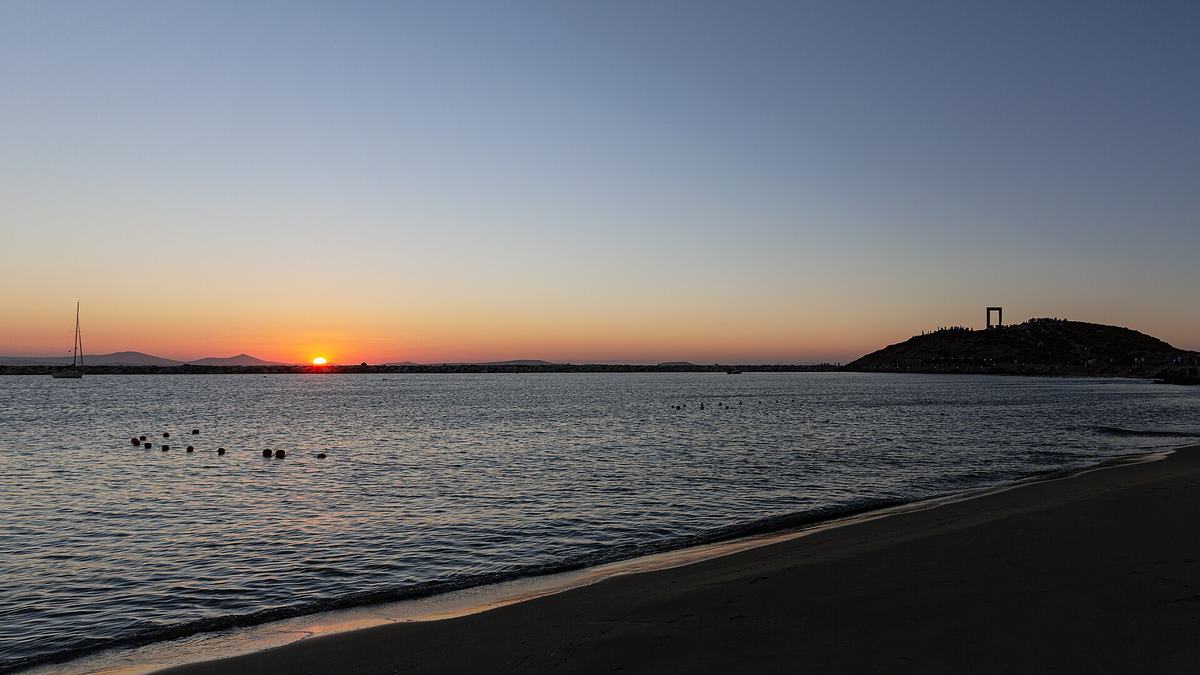
In the late afternoon walk out along the causeway to Palatia islet and the Portara, the giant marble doorway of an unfinished temple to Apollo. It frames the sunset perfectly and is the island’s signature image. Afterward, settle into a waterfront taverna for grilled fish and a glass of local wine. If you have energy, the sandy sweep of Agios Prokopios is a short drive south for a second swim before dinner. This first day is deliberately light on driving so you can adjust to island time; for more ideas on filling any gaps, browse the wider list of things to do in Naxos and pick what suits your group.
Day 2: Which west-coast beaches are worth a full day?
Devote day two to the west coast: Plaka for its long soft sand, Mikri Vigla for wind and kitesurfing, and Kastraki or Alyko for quieter coves and the cedar forest, ending with a sunset swim before dinner.
The west coast of Naxos is one long ribbon of sand, and a full day lets you sample several beaches at your own pace. Start at Plaka, a wide, gently shelving stretch backed by dunes and beach bars, ideal for a lazy morning under an umbrella. Continue south to Mikri Vigla, where a rocky headland splits a calm swimming bay from a breezier flank popular with windsurfers and kitesurfers. Rent a lounger, grab lunch at a beach taverna, and let the afternoon unfold slowly. This coast is exactly why many visitors extend a shorter trip; if you are comparing plans, our Naxos 3-day itinerary shows how much more beach time five days buys you.
Further south the landscape turns wilder around Kastraki and Alyko, where low cedar trees grow right down to pale coves and the water glows turquoise. Alyko’s small bays are good for snorkeling and for escaping crowds, while the abandoned hotel nearby is now covered in colorful street art worth a quick look. Pack water and snacks, since services thin out at this end of the coast. Close the day back near Mikri Vigla or Plaka for the sunset, then drive the short distance back to town for dinner. For a full rundown of every stretch of sand and how to reach each one, see our guide to the beaches of Naxos.
Day 3: What is the best route through the mountain villages?
Drive the interior loop through Halki, Filoti, and Apeiranthos, tasting citron in Halki, lunching under the plane trees in Filoti, and exploring Apeiranthos’s marble lanes, with the foothills of Mount Zas as your backdrop.
Trade the coast for the granite highlands and give day three to the villages of the Tragaea valley and beyond. Begin in Halki, the old commercial heart of the interior, where the Vallindras distillery still makes citron liqueur from local leaves and the neoclassical mansions speak of a wealthier past. Continue to Filoti, the largest mountain village, built in tiers across the slopes below the island’s highest peak. Settle in at a taverna under the plane trees in the square for a long lunch of local meat and cheese. These villages sit directly beneath Mount Zas, and even if you save the full hike for another day, the foothill drives and viewpoints are spectacular.
From Filoti the road climbs to Apeiranthos, the most striking village on Naxos, paved entirely in marble and threaded with vaulted passages and tiny museums. Park at the edge and walk the stepped lanes slowly, stopping for coffee and looking into the archaeological and folklore collections. The village has a distinct dialect and a proud, old-Cycladic character that rewards an unhurried visit. Our dedicated guide to Apeiranthos covers where to park, which museums are worth your time, and the best tavernas for a highland dinner before you wind back down to the coast.
Day 4: Is a boat trip to the Small Cyclades worthwhile?
Yes, spend day four on the water: a day cruise from Naxos reaches Koufonisia, Iraklia, Schinoussa, or Donousa, tiny islands with clear coves and slow tavernas that make a perfect midweek change of scenery.
A five-day plan has room for one full excursion, and the Small Cyclades from Naxos are the obvious choice. These little islands sit just southeast of Naxos and are reachable by regular ferry or by organized day cruises that include swimming stops in secluded bays. Koufonisia is the star, with shallow, almost tropical water at Pori and a walkable path linking a string of coves. Iraklia and Schinoussa are quieter still, offering little more than a harbor, a beach, and a taverna, which is exactly the appeal for a slow day away from the crowds.
Book your boat the day before and confirm departure times, since summer schedules fill quickly and the last return can be early. Bring a hat, water, and cash, because facilities on the smaller islands are minimal. Whether you take a self-guided ferry hop to Koufonisia or a guided cruise that anchors for swimming, plan a relaxed lunch of fresh fish at a harbor taverna before the trip back. Returning to Naxos in the golden late-afternoon light, with the Portara ahead, is one of the trip’s quiet highlights and a fine way to close a day spent entirely on the sea.
Day 5: How should you spend a final day in the north?
Save day five for the north: drive the scenic coast road to Apollonas to see the giant unfinished kouros, then choose between a slow beach afternoon or a gentle Mount Zas foothill walk before your final island dinner.
The road north from Naxos Town is a highlight in itself, curving past sea views, small monasteries, and terraced hillsides toward the fishing village of Apollonas. There, a short uphill path leads to the Kouros of Apollonas, a colossal unfinished marble statue still lying in its ancient quarry, more than ten meters long. It is an easy, memorable stop that tells the story of the island’s marble trade. Apollonas itself has a modest beach and a row of tavernas where a leisurely seafood lunch caps the drive. On the way back you can loop inland to catch villages and viewpoints you missed earlier in the week.
How you spend the rest of the day depends on your energy. If you want to be active, the lower slopes of Mount Zas offer a gentle out-and-back walk to the Zas cave with big valley views, a fitting finale for a trip that balanced coast and mountains. If you would rather wind down, return to a favorite west-coast beach for a last long swim, then head into Naxos Town for a final sunset by the Portara and dinner in the Kastro. Plan your visit and tours through our Naxos travel guide.
Frequently Asked Questions
Is five days too long for Naxos?
Five days is not too long for Naxos; if anything, it is the length that lets the island make sense as a whole rather than as a checklist. Naxos is the largest of the Cyclades, and its appeal comes from contrast: a lively port town, a long west coast of sandy beaches, and a mountainous interior of granite villages, marble quarries, and hiking trails. Three days forces you to pick between the coast and the highlands, while five days lets you enjoy both without rushing, plus a full day out to the Small Cyclades.
The relaxed pace in this plan deliberately leaves open afternoons for swimming, long taverna lunches, and unplanned wandering, which is how the island is best experienced. If you have children, mixed fitness levels, or simply want a genuine holiday rather than a tour, the extra days absorb slow mornings and weather changes gracefully. Only if you are island-hopping on a tight overall schedule would fewer days make sense, and even then Naxos tends to make travelers wish they had stayed longer.
Do you need a car for this Naxos itinerary?
A rental car makes this five-day itinerary far easier and is strongly recommended for the mountain and northern days. Naxos is large by Cycladic standards, and the best mountain villages, quieter beaches, and the Apollonas kouros are spread across the island with limited or infrequent bus service. On days one and four you could manage without a car, since Naxos Town is walkable and the Small Cyclades trip is by boat, but the west-coast beach day, the Halki-Filoti-Apeiranthos village loop, and the drive north to Apollonas all benefit enormously from your own wheels. Book a small car or a compact SUV in advance during high season, as availability tightens quickly.
Roads to the main villages and beaches are paved and in good condition, though mountain routes are narrow and winding, so drive calmly and use the pull-offs to enjoy the views. If you prefer not to drive at all, combine local buses for the beaches with an organized day tour of the villages, but expect a less flexible and more time-consuming week overall.
When is the best time to follow this five-day plan?
Late spring and early autumn are the ideal windows for this relaxed five-day plan, roughly May to mid-June and September into early October. In these shoulder months the sea is warm enough for daily swimming, the mountain villages are pleasant to walk rather than sweltering, and the beaches and tavernas are lively without the peak-summer crush. July and August bring the warmest water and the fullest schedule of boat trips and ferries to the Small Cyclades, but also stronger heat, occasional powerful north winds, and busier beaches, so start village and hiking days early and save the coast for afternoons.
Travellers arriving in the meltemi wind season should keep the boat-trip day flexible and be ready to swap it for a sheltered east-coast or town-beach day if crossings are rough. Outside the main season, from November to April, many beach tavernas and some excursions close and ferry links thin out, so the full itinerary as written works best from May through October. Whatever month you choose, book ferries, cars, and any guided cruises ahead during summer.