
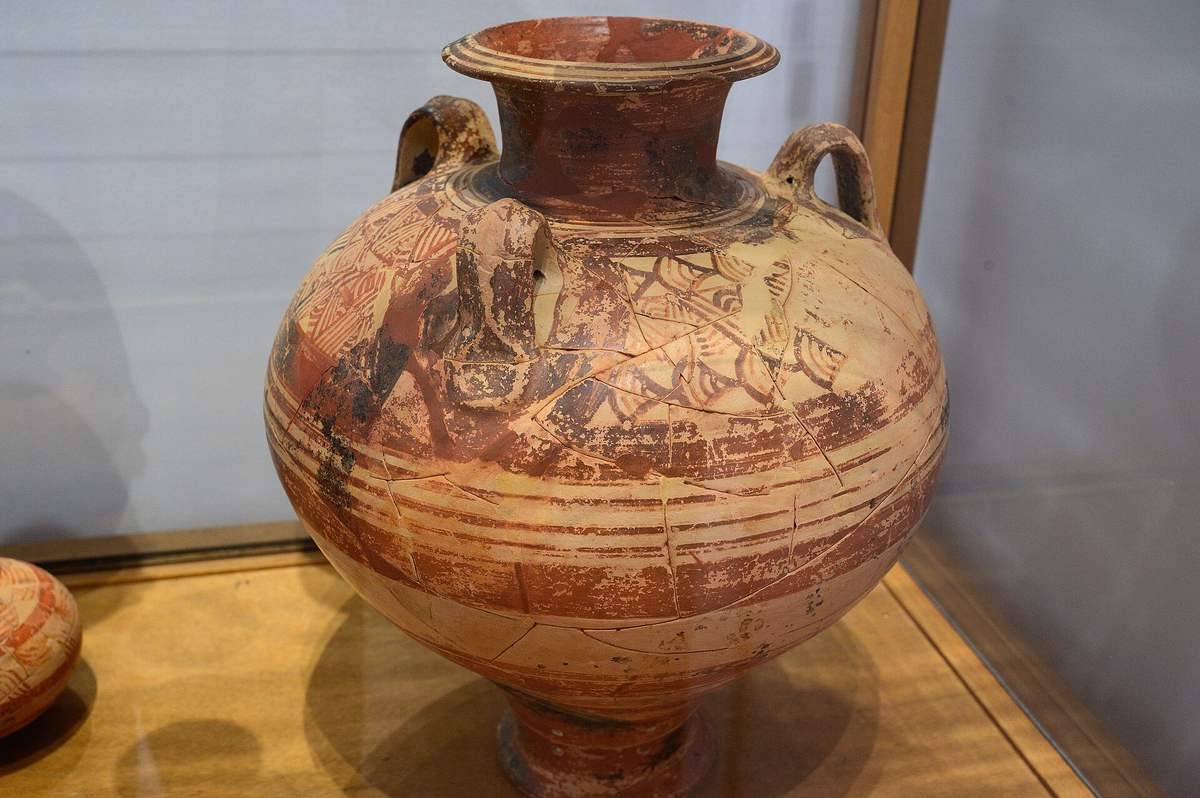
The Archaeological Museum of Mykonos, on the Old Port waterfront, holds finds from Mykonos and the neighbouring island of Rhenia, its star exhibit the famous 7th-century BC amphora depicting the Trojan Horse, alongside statues, vases, jewellery and grave stelae. This guide covers the exhibits, the history, the hours and how to visit.
The museum is a rewarding cultural stop in the Mykonos travel guide, telling the ancient story of the region. The sections below cover it in full.
What is the Archaeological Museum of Mykonos?
The Archaeological Museum of Mykonos, established, sits on the Old Port waterfront above the central bus station. It displays finds from excavations on Mykonos and the nearby island of Rhenia, including statues, vases, jewellery, weapons and grave stelae, spread over six rooms and a courtyard, telling the region’s ancient story.
The Archaeological Museum of Mykonos counts among the island’s key cultural sights, holding a fine collection of ancient finds that illuminate the deep history of Mykonos and its surroundings. Established, it is one of the older museums in the Cyclades, and it occupies a handsome neoclassical building in the heart of Mykonos Town, on the waterfront of the Old Port just above the central bus station, an easy and central location. The museum’s exhibits come largely from excavations on Mykonos itself and on the neighbouring island of Rhenia, where the ancient inhabitants of sacred Delos buried their dead, so the collection has a strong link to the religious and historical importance of the area. Arranged across six halls and a courtyard, the displays range from pottery and jewellery to statues and funerary monuments, welcoming visitors with statues of Hercules and Aphrodite. Compact and rich, it offers a window into the ancient Cyclades, set out alongside the guide to Delos. Its exhibits span many centuries.
What can you see in the museum?
The museum displays a large collection of vases from the mid-third millennium BC down to the first century before Christ, statues from the 2nd to 3rd century BC, tomb statues and grave stelae, jewellery, weapons and pottery, all found on Mykonos and Rhenia, tracing the region’s art and burial customs across the ancient eras.
The collection is wide-ranging and traces thousands of years of ancient life and art in the region. A particular strength is its large collection of vases and pottery, spanning a vast span from around the mid-third millennium BC down to the 1st century BC, showing the development of Cycladic and Greek ceramic art over millennia. There is also a notable collection of statues dating from around the 2nd to the 3rd century BC, along with tomb statues and carved grave stelae from the 2nd to 1st century BC that came from the burial sites on Rhenia, reflecting ancient funerary customs and beliefs. The displays, arranged across six rooms and a courtyard, also include jewellery, weapons and other everyday and ceremonial objects, with visitors greeted by statues of Hercules and Aphrodite before moving through rooms of pottery, arms and adornments. Together these finds give a vivid sense of the art, daily life and rituals of the ancient Cyclades, set out alongside the guide to things to do. Several star pieces stand out.
What is the museum’s most famous exhibit?
The museum’s most celebrated exhibit is the unique 7th-century BC relief amphora carved with scenes of Troy’s fall and the legendary wooden horse, one of the earliest known portrayals of that story. Other highlights include the statue of Hercules from Rhenia and the grave stele of Tertia Horaria.
The undisputed star of the collection is the famous Mykonos vase, a unique large relief amphora dating from the 7th century BC, carved with detailed scenes of Troy’s fall, among them one of the earliest known depictions of the legendary wooden horse, with figures of warriors emerging from it. This remarkable, ancient piece is of international importance and is the highlight that draws many visitors. Beyond it, several other exhibits stand out. The statue of Hercules from Rhenia, found in 1899 and carved from the finest Parian marble, depicts the hero nude, holding his club and lion skin. The grave stele of Tertia Horaria, dating to the 2nd century BC, movingly shows the seated deceased woman extending a parting hand to her husband, atop an inscribed marble sarcophagus. There is also a distinctive Cycladic frying pan, an intricately decorated vessel from an early Cycladic grave on Mykonos. These masterpieces make the museum well worth a visit, set out alongside the guide to Mykonos Town. Its history goes back over a century.
What is the history of the museum?
The museum was founded, partly to house finds from the burial sites on the island of Rhenia, where the dead of sacred Delos were reburied. One of the older museums in the Cyclades, it has long preserved and displayed the region’s important ancient discoveries.
The museum has a long history reflecting the archaeological importance of the area. It was established, more than a century ago, making it one of the oldest archaeological museums in the Cyclades, and it was created in significant part to house and protect the many finds being uncovered on the nearby island of Rhenia. Rhenia holds special significance because, in antiquity, the sacred island of Delos was kept ritually pure, and so the dead of Delos were buried, and later reburied, on neighbouring Rhenia, leaving extensive cemeteries that yielded a wealth of statues, stelae, vases and grave goods. Excavations on Rhenia and on Mykonos itself filled the museum’s collection with these important discoveries, tying it closely to the religious history of Delos, one of the most sacred sites in the ancient Greek world. Housed in its neoclassical building by the Old Port, the museum has preserved and presented these treasures ever since, set out alongside the guides to a Delos tour and the Aegean Maritime Museum. Visiting is simple and central.
What are the opening hours and how do you visit?
The Archaeological Museum sits on the Old Port waterfront in Mykonos Town, above the bus station, an easy walk from the centre. It generally opens around 8.30am to 3.30pm daily except Tuesday, the closing day, with a modest entry fee. Allow about 1 to 1.5 hours, and check current hours before visiting.
Visiting the Archaeological Museum is easy and central, making it a convenient cultural stop. The museum stands on the waterfront of the Old Port in Mykonos Town, just above the central bus station, so it is within an easy walk of the old town and handy to combine with arriving or departing by bus. It is typically open from around 8.30am to 3.30pm every day except Tuesday, which is the official closing day, though hours can change by season and year, so it is wise to check the current times before you go, especially outside high summer. Admission is for a modest fee. You should set aside approximately one to one and a half hours to explore the six halls and the courtyard at a relaxed pace, plenty of time to take in the famous Trojan Horse amphora, the statues, the vases and the grave stelae without rushing. Its central location and reasonable opening hours make it easy to fit into a morning in town, set out alongside the guides to the bus and a Mykonos itinerary. It rewards a visit for history lovers.
Why visit the Archaeological Museum?
The Archaeological Museum is worth visiting for its world-class ancient finds, above all the famous Trojan Horse amphora, and for the context it gives to nearby Delos and Rhenia. Compact, central and inexpensive, it makes an ideal cultural break, a windy-day refuge, and a rich complement to a Delos day trip.
The Archaeological Museum offers a rewarding cultural experience that deepens a Mykonos visit beyond the beaches and nightlife, particularly for those interested in history and ancient Greece. Its collection of internationally important finds, above all the unique 7th-century BC amphora depicting the fall of Troy and the Trojan Horse, along with fine statues, vases, jewellery and grave monuments, lets you stand before genuine masterpieces thousands of years old. Crucially, the museum provides valuable context for the sacred island of Delos and its cemetery island of Rhenia, so visiting it before or after a Delos day trip greatly enriches the understanding of that ancient world. Compact and easily seen in about an hour, centrally located by the Old Port and inexpensive to enter, it is an easy, low-commitment addition to a day in town, and it makes an excellent cultural break or a refuge on a windy day when the beaches are blustery. For anyone curious about the ancient Cyclades, it is a small but significant gem, set out alongside the guide to Mykonos with kids. The questions below cover the points travellers ask most.
Is the Archaeological Museum worth visiting and how long do you need?
The Archaeological Museum is worth visiting for history lovers and anyone planning a Delos trip, with about 1 to 1.5 hours enough to see its six rooms and courtyard. Its famous Trojan Horse amphora and finds from Delos’s cemetery island of Rhenia give valuable context to the sacred site nearby.
The Archaeological Museum rewards a visit, particularly for those with an interest in ancient history and for anyone combining it with a trip to Delos. Its collection, headlined by the unique 7th-century BC amphora depicting the fall of Troy and the Trojan Horse and supported by fine statues, vases, jewellery and grave stelae, lets you stand before genuine masterpieces thousands of years old, a tangible link to the ancient Cyclades. Crucially, because much of the collection comes from Rhenia, the cemetery island of sacred Delos, the museum provides rich context for a Delos day trip, so visiting it before or after greatly deepens the understanding of that world; the two complement each other beautifully. The museum is compact and easily seen, with about one to one and a half hours enough to explore its six exhibition rooms and the courtyard at a relaxed pace, so it fits neatly into a morning in town without dominating the day. Its central position by the Old Port, above the bus station, and its modest entry fee make it convenient and accessible, and it makes a fine cultural break or a refuge on a windy day. For history enthusiasts, it is a small but significant gem, set out alongside the guides to a Delos tour and things to do. Combining it with a Delos day trip is especially rewarding, as the museum holds many of the finds and gives the context that brings the ancient sanctuary and its cemetery island of Rhenia to life, so the two together tell a far fuller story than either alone. From the Trojan Horse amphora to the marble Hercules, these are objects that connect you directly to the myths and history of the ancient Aegean. Its star pieces alone justify the visit.
Frequently Asked Questions
What is the most famous exhibit in the Mykonos Archaeological Museum?
The most celebrated exhibit is the unique 7th-century BC relief amphora carved with scenes of Troy’s fall and the legendary wooden horse, one of the earliest known portrayals of that story. Other highlights include the marble statue of Hercules from Rhenia and the grave stele of Tertia Horaria.
What are the museum’s opening hours?
The Archaeological Museum generally opens around 8.30am to 3.30pm daily except Tuesday, which is the closing day, with a modest entry fee. Allow about 1 to 1.5 hours to see the six halls and the courtyard, and check current hours before visiting, as they can vary by season and year.
Where is the Mykonos Archaeological Museum?
The Archaeological Museum of Mykonos is on the Old Port waterfront in Mykonos Town, just above the central bus station, an easy walk from the old town. Established, it displays finds from excavations on Mykonos and the neighbouring island of Rhenia.