
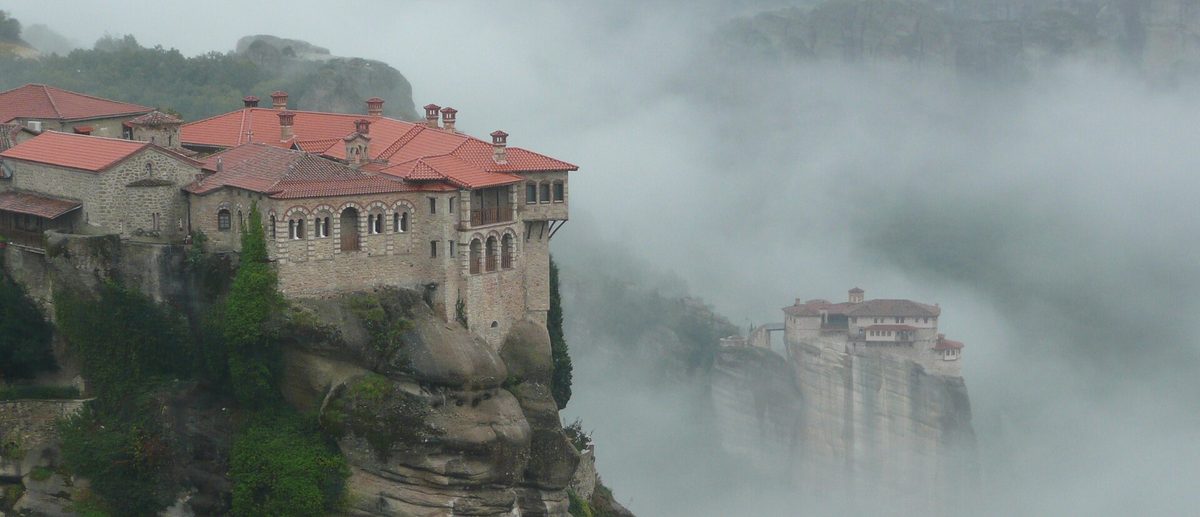
Meteora in winter trades summer crowds for cold, quiet air and dramatic light. From December to February the conglomerate pillars often wear mist and low cloud, and snow occasionally dusts the six working monasteries. Terraces and roadside viewpoints stay uncrowded, so photographers get clear compositions. Days are short and the ring road can ice over, which shapes how you plan each stop. The monasteries stay open on reduced winter hours, and each still closes one or two weekdays. Kalabaka keeps its hotels and tavernas running all year, giving you a warm base. Book a guided winter visit with My Greece Tours.
Winter rewards travellers who want solitude over long daylight. You get empty balconies, soft grey skies and the chance of snow-capped rock, but you also face short afternoons and a monastery grid that shifts closures in the cold months. Our Meteora travel guide frames the wider destination, and this page focuses on the December-to-February window. The sections below cover snow and light, the seasonal monastery schedule, what to wear and drive, where to base yourself in the off season, and the local Christmas and Epiphany colour that a summer trip never shows.
What is Meteora like in winter?
Meteora in winter is cold, quiet and often dramatic. Mist and low cloud wrap the rock towers, snow occasionally dusts the monasteries, and uncrowded terraces reward patient photographers, though days are short and the ring road can ice over.
The winter mood comes from weather more than crowds. Low cloud rolls between the pillars, lifts for minutes, then settles again, and each break reveals a different monastery against grey sky. Snow arrives on cold fronts and dusts the conglomerate rock, turning the towers pale for a day or two before it melts. You share the main viewpoints with a handful of photographers rather than tour buses, so the balcony at Great Meteoron or the roadside spurs above Kalabaka stay open and calm. This is the season for stillness and long looks. Read our best time to visit Meteora notes to weigh winter quiet against the longer, warmer days of spring and autumn.
The daily rhythm changes with the light. First light arrives late and the sun sits low all day, skimming the rock and lengthening shadows across the valley floor. You plan your schedule around a window that opens near mid-morning and closes by mid-afternoon. Warm afternoons in the tavernas of Kalabaka fill the gaps between viewpoint sessions, and the villages stay lit and lived-in through the cold months. Sound carries differently too: without buses the valley falls silent, and you hear wind in the cliffs and the distant church bells of Kastraki. Pack for changeable skies, since a clear dawn can turn to fog by noon.
The reward is a Meteora stripped back to rock, sky and stone monasteries, seen almost alone from the ring road.
Are the Meteora monasteries open in winter?
Yes. The six working monasteries stay open through winter but on shorter hours, and each still closes one or two fixed weekdays. Some shift their closure days in the cold months, so confirm the current schedule before you drive up.
Winter opening runs on a tighter clock than summer. Doors open later, close earlier, and the reduced daylight leaves a narrow window to cover more than one or two houses in a morning. Each monastery keeps at least one rest day, and those days can move for the winter season, so a printout from summer will mislead you. Plan two monasteries per short day rather than a full loop. Check current times directly against our Meteora monasteries page and confirm the day’s closures before setting out. The same modest dress code applies year-round: covered shoulders and knees, with wrap skirts provided at the gate for anyone who needs one.
Interiors reward the winter visitor with warmth and calm. You step out of the cold into candlelit katholikons where frescoes glow against dark stone, and the reduced numbers let you stand quietly before the icons without a queue behind you. Monks and nuns keep the houses running through the season, and the working rhythm of prayer and chores continues around visiting hours. Great Meteoron and Varlaam sit highest and hold the widest views over snow-touched valleys, while Roussanou and Saint Nicholas Anapafsas reward a shorter climb on an icy day. Carry cash for the modest entry donation, since card facilities are limited at the gates.
Match your route to the day’s confirmed closures, and you can pair two houses comfortably inside the short winter afternoon without rushing the steep steps.
Can you photograph snow at Meteora in winter?
Yes, when a cold front delivers it. Snow dusts the pillars and monastery roofs for a day or two, and combined with mist it produces rare photogenic scenes. Timing is luck, so keep two or three flexible mornings free.
Snow at Meteora is a windfall, not a fixture, and the photographers who catch it plan for patience. A fresh dusting on the rock reads best in the flat light of an overcast morning, while a gap in the cloud can suddenly backlight a single monastery. Shoot from the ring-road spurs and the Kastraki approach, where foreground rock frames the towers. Sunrise and the hour before dusk give the strongest colour on the pale stone. Bring a tripod for the low winter light and spare batteries, since cold drains them fast. Our Meteora photography guide maps the viewpoints, and the cliffs also hold older hollows worth framing, covered in Meteora caves and hermitages.
Composition changes in the cold season. Mist simplifies the scene, letting you isolate one tower against a soft white ground rather than the busy summer backdrop. A dusting of snow separates the monastery roofs from the dark conglomerate beneath, so exposures that hold both highlight and shadow matter. Shoot wide from the Psaropetra sunset terrace for the classic panorama, then switch to a longer lens to compress the pillars into stacked layers. Keep a lens cloth handy for drizzle and fog, and let a cold camera warm slowly indoors to avoid condensation. The low winter arc keeps golden light on the rock far longer than midsummer, giving you two workable golden windows in a single day.
Watch the forecast for incoming cold fronts and stay flexible, since the finest frames follow a night of fresh snow.
What should you pack for Meteora in winter?
Pack warm layers, a windproof jacket, gloves and grippy footwear. Monastery steps and stone terraces get slick, days are short, and the ring road can ice over, so grip and warmth matter more than style in December, January and February.
Winter kit centres on grip and warmth. Cut stone steps and open terraces hold frost and meltwater, so lugged soles beat smooth trainers on the monastery climbs. Layer a base, a fleece and a windproof shell, because the towers channel cold wind even on bright days. Add gloves, a hat and a headlamp, since afternoons fade early and you may finish a viewpoint in half-light. Drivers should watch for ice on the shaded upper bends and carry water and a phone charger. A thermos suits the long, cold waits for cloud to clear. Renting a car gives flexibility between the monasteries and viewpoints, and our getting around Meteora page covers winter road conditions and parking near each gate.
Plan the driving day around ice and light. Shaded stretches of the ring road hold frost into the afternoon, and the upper bends near the monasteries stay slick after a cold night. Set out once the morning sun has softened the surface, keep speeds low on the descents, and park in the marked bays rather than the verge. A small daypack should hold water, snacks, a spare battery pack and a paper copy of the confirmed opening days. Winter tyres or chains suit anyone driving in from higher ground toward Thessaloniki. Fuel up in Kalabaka, since the pumps sit in town rather than on the rock loop.
Give yourself buffer time between two monasteries, because the short afternoon leaves no room to recover a missed opening slot before the gates close for the day.
Where should you stay near Meteora in winter?
Base in Kalabaka, where hotels and tavernas run all year and sit minutes from the ring road. Kastraki turns quieter in the off season, with fewer rooms and eateries open, so Kalabaka gives the most reliable winter comfort and services.
Kalabaka is the dependable winter base. Its hotels, bakeries and tavernas stay open through the cold months, the train station links to Thessaloniki and Athens, and the road up to the monasteries starts on the town’s edge. You return each afternoon to heating, hot food and a short drive, which matters when daylight runs out by mid-afternoon. Kastraki, tucked directly under the rock, is prettier and closer to the trailheads but thins out in winter, with fewer open rooms and restaurants. Choose it only if you have booked ahead and want the quiet. Compare both villages and their winter openings on our where to stay in Meteora page, with more town detail under Kalabaka.
Pick a room for warmth and a rock view. Ask for heating and a window facing the pillars, since a snow-dusted dawn over the towers is the winter trip’s finest moment and worth watching from bed. Family-run guesthouses in Kalabaka often light a wood stove in the lounge and serve a hearty breakfast that fuels a cold morning on the steps. Evening dining stays easy in town, where tavernas plate slow-cooked stews, local sausage and Tsipouro against the winter chill. Book directly and confirm the dates hold, because a slow season sometimes means a property pauses midweek. Stay two or three nights to absorb weather changes, since a foggy first day often clears into a bright, snow-touched second.
A central base keeps you minutes from the ring road when the light suddenly turns for photography.
Frequently Asked Questions
Does it snow at Meteora in winter?
Snow reaches Meteora on cold fronts through December, January and February, though it is not guaranteed on any given day. A dusting settles on the conglomerate pillars and monastery roofs, then usually melts within a day or two as milder air returns. Combined with the mist and low cloud that wrap the towers, a fresh snowfall produces rare, dramatic scenes that summer visitors never witness. Photographers who want snow keep two or three flexible mornings free and watch the forecast for incoming cold. Even without snow, the winter light stays soft and moody, and the low cloud drifting between the rocks gives its own reward.
The upper ring road can ice over after snow, so grippy footwear and cautious driving matter through the season. Treat any snow as a bonus rather than the reason for the trip, and you will enjoy the quiet cold months either way, with the towers to yourself from the roadside viewpoints and the terraces above Kalabaka.
Is Meteora worth visiting in winter?
Meteora is worth a winter visit for travellers who value solitude, atmosphere and photography over long daylight and hiking. The viewpoints and monastery terraces stay uncrowded, so you get clear compositions and unhurried time at each stop, and the chance of snow or drifting mist adds drama the summer season lacks. The trade-offs are real: short afternoons compress your plans, monastery hours shrink, and the ring road can ice over. Hikers lose long daylight for the trails between the pillars. Weigh those factors against the calm, and winter rewards a slower, photography-led trip. Kalabaka keeps its hotels and tavernas open all year, so comfort and food are never a problem for a winter base.
Plan two monasteries per short day, dress warmly with grippy shoes, and confirm each schedule in advance. Handled that way, the off season delivers a memorable and peaceful Meteora, with the towers and terraces almost entirely to yourself under moody winter skies.
How do the Christmas and Epiphany festivals affect a Meteora trip?
Christmas and Orthodox Epiphany bring local character to Kalabaka and Kastraki that a summer trip never shows. Streets and squares carry seasonal decoration, churches hold their services, and the towns feel lived-in rather than tourist-driven, since most winter visitors are Greek. Epiphany, in early January, centres on the blessing of the waters, a local ceremony worth catching for its atmosphere. Expect the shops, tavernas and services to keep holiday hours around the main feast days, so confirm opening times and book any restaurant table ahead. Monastery schedules may also adjust around major religious days, which reinforces the need to check each house’s hours before you drive up.
The payoff is a warmer, more authentic sense of the region, with festive light in the towns beneath the rock. Combine the festivals with the quiet viewpoints and possible snow, and a late-December or early-January visit feels distinctly local, rooted in the living faith that built the stone monasteries high above the valley.