
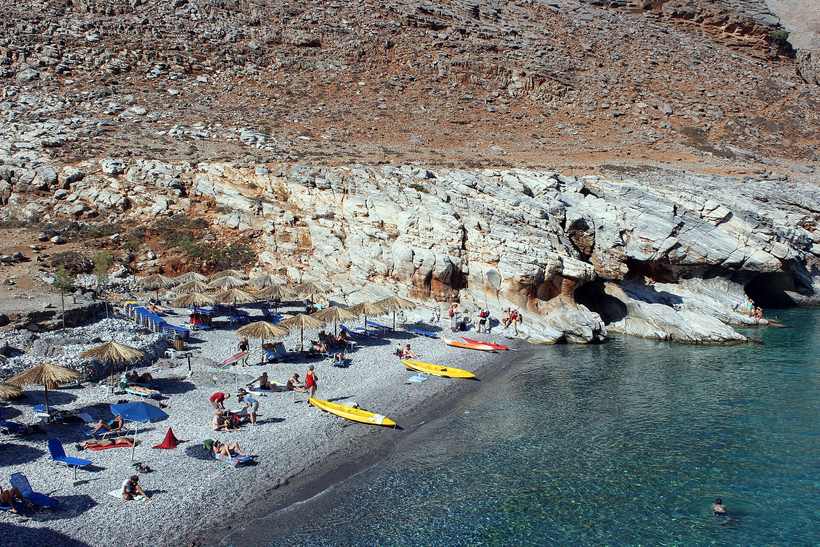
Marmara Beach sits at the point where the Aradena Gorge spills into the Libyan Sea on Crete’s remote south coast. Smooth, pale marble rocks polished by waves frame this small cove in the Sfakia region of the Chania district, giving the beach its name and creating a striking contrast with the turquoise water. The roadless setting between steep cliffs draws hikers finishing the gorge walk, travellers arriving by boat from coastal villages, and swimmers seeking clear water and small sea caves. A seasonal taverna perches above the pebbles, serving walkers and sailors who anchor in the cove. Discover this marble-fringed retreat and other coastal treasures with My Greece Tours.
The beach rewards those who make the journey on foot along the coastal path from the car-free village of Loutro or down through the gorge itself. A small boat also calls in summer months, connecting Marmara to other south coast settlements. The combination of marble slabs, deep blue water, and isolation from roads creates a memorable swimming spot for active travellers. The sections below cover how to reach this hidden cove, what makes the marble rocks distinctive, and practical details for your visit. For broader island planning, consult our Crete travel guide.
How do you reach Marmara Beach on Crete’s south coast?
Marmara has no road access. Hikers reach the beach by walking down the Aradena Gorge or along the coastal path from Loutro. A small seasonal boat also connects the cove to other south coast villages in summer.
The most dramatic approach follows the route down the Aradena Gorge, which descends from the plateau villages to the Libyan Sea. The gorge walk takes hikers through narrow passages between high rock walls before opening onto the beach at the finish. Marmara serves as the natural reward for completing the descent, offering swimmers a chance to cool off in clear water after the hike. The single taverna above the pebbles provides refreshment and simple meals for walkers emerging from the gorge. This combination of challenging terrain followed by a swim in a beautiful cove makes the route popular with active visitors exploring the Sfakia region during warmer months.
The coastal footpath from Loutro offers an alternative route for those staying in that car-free village. The path hugs the shoreline, passing other small coves before reaching Marmara. A small boat operates in summer, calling at the beach as part of its route between south coast settlements. This boat option suits travellers who prefer not to hike or who want to combine a beach visit with a coastal cruise. The lack of road access keeps visitor numbers lower than at beaches with parking, preserving the quiet character that appeals to those seeking isolation. Water shoes prove helpful for walking on the marble slabs and pebbles at the water’s edge.
What makes the marble rocks at Marmara Beach distinctive?
Smooth, pale marble rocks polished by waves give the beach its name. These marble formations frame the shoreline and extend into the water, creating a striking visual contrast with the turquoise sea and forming small caves that attract snorkellers.
The marble slabs that define Marmara distinguish it from typical sand or pebble beaches found elsewhere on the island. Wave action over long periods has polished the pale stone to a smooth finish, creating surfaces that gleam in sunlight. The rocks extend from the shore into the water, forming natural platforms where swimmers can enter the sea. The geological character of the cove reflects the broader landscape of the Sfakia region, where limestone and marble formations dominate the terrain. The marble continues underwater, visible through the exceptionally clear water that characterizes this stretch of the south coast facing the Libyan Sea.
Small sea caves carved into the marble cliffs at the edges of the cove draw snorkellers who explore the underwater rock formations. The caves remain shallow enough for confident swimmers to investigate without special equipment. The combination of marble rocks, deep blue water, and the dramatic backdrop of steep cliffs creates a photogenic setting that rewards the effort required to reach this roadless beach. The pale stone reflects light, contributing to the brilliant turquoise colour of the water in the shallows. This distinctive geology places Marmara among the hidden gems in Crete for travellers who value unique natural features over developed beach facilities.
What facilities and services exist at Marmara Beach in Crete?
A single seasonal taverna sits above the pebbles, serving food and drinks to hikers and boat visitors. The beach has no other facilities, no road access, and no permanent structures beyond the taverna that operates during summer months.
The taverna provides the only commercial service at Marmara, offering simple meals and refreshments to walkers finishing the gorge descent or arriving by boat. The seasonal operation means the taverna closes outside the main visitor months, typically operating from late spring through early autumn. The menu focuses on straightforward Greek dishes suited to hungry hikers, with fresh fish often available given the coastal location. Shaded seating areas overlook the cove, allowing diners to rest while enjoying views of the marble rocks and turquoise water. The taverna’s presence makes Marmara more practical for day visitors than completely undeveloped coves, providing a meal option without requiring hikers to carry extensive provisions.
The beach lacks sunbeds, umbrellas, changing facilities, and other infrastructure common at accessible beaches. Visitors bring their own shade, food, and water if they prefer not to rely on the taverna. The absence of development preserves the natural character that appeals to hikers and adventurous travellers. The small size of the cove means it never feels crowded even during peak summer weeks. The setting suits those who include Marmara as part of a hiking itinerary rather than as a destination for a full beach day. The combination of basic facilities and stunning natural beauty exemplifies the appeal of remote Crete beaches that reward effort with isolation and clear water.
When is the best time to visit Marmara Beach?
Late spring through early autumn offers the best conditions, with warm water, operating taverna, and boat service. Summer brings calm seas ideal for swimming and snorkelling, though the gorge walk becomes hot during midday hours in July and August.
The swimming season at Marmara extends from May through October, with water temperatures warmest from June onwards. The taverna operates during these months, providing refreshment for visitors. The seasonal boat service also runs during this period, offering an alternative to hiking for those who prefer sea access. Summer months bring the calmest sea conditions, making the small caves safer to explore and the water clearest for snorkelling. The south coast location means Marmara receives abundant sunshine and less rainfall than northern parts of the island. The Libyan Sea typically remains calmer than the Aegean along the north coast, though occasional winds can create waves even in summer.
Hikers walking down the gorge should consider starting early in summer to avoid the hottest midday temperatures in the narrow canyon. Spring and autumn offer cooler hiking conditions while still providing warm enough water for swimming. The beach faces south, receiving direct sun throughout the day with limited natural shade beyond the taverna area. Winter months see the taverna closed, the boat service suspended, and rougher seas that make swimming less appealing. The gorge remains walkable year-round for experienced hikers, though flash flood risk increases during rainy periods. The beach fits well into itineraries focused on active things to do in Crete during the warmer half of the year.
What should visitors bring to Marmara Beach?
Water shoes help on marble slabs and pebbles. Bring sun protection, drinking water, snorkelling gear for cave exploration, and cash for the taverna. Hikers need proper footwear for the gorge or coastal path approach.
The marble rocks and pebbles at the shoreline make water shoes valuable for comfortable entry and exit from the sea. The smooth marble can become slippery when wet, and the pebbles prove uncomfortable for barefoot walking. Sun protection remains essential given the south-facing exposure and limited natural shade, with hat, sunscreen, and possibly a beach umbrella recommended for extended stays. The taverna accepts cash, so visitors should bring euros rather than relying on card payment options. Snorkelling equipment allows exploration of the small sea caves and underwater marble formations, though the taverna may rent basic gear during peak season. Drinking water proves important, particularly for those hiking in from the gorge or Loutro.
Hikers descending the Aradena Gorge need sturdy footwear with good grip, as the canyon includes rocky sections and uneven terrain. The coastal path from Loutro requires less technical footwear but still benefits from proper walking shoes rather than sandals. A small backpack allows carrying of supplies while keeping hands free during the approach. Swimmers might pack a dry bag for phones and valuables given the absence of facilities. The remote location means visitors should bring everything needed for their stay, as no shops exist nearby. The combination of hiking and swimming makes Marmara a destination for active travellers who come prepared with appropriate gear for both activities rather than casual beachgoers expecting full services.
Frequently Asked Questions
Can you reach Marmara Beach by car?
Marmara Beach has no road access and cannot be reached by car. The three ways to arrive are hiking down the Aradena Gorge from the plateau villages above, walking along the coastal footpath from Loutro, or taking the small seasonal boat that calls at the cove during summer months. The nearest point accessible by vehicle is the village of Aradena at the top of the gorge, where hikers can park before beginning the descent. Loutro itself is also car-free, reached by boat or on foot from Chora Sfakion, which does have road access and parking.
The lack of vehicle access keeps Marmara quieter than beaches with parking facilities and preserves its character as a destination for hikers and adventurous travellers. Those unable or unwilling to hike can use the summer boat service as a comfortable alternative that still provides access to this distinctive marble-fringed cove on the south coast.
Is Marmara Beach suitable for families with children?
Marmara suits families with older children who can manage the hike from the gorge or coastal path, or who arrive by boat. The beach itself offers clear, calm water ideal for swimming and shallow areas near shore where children can play. The small sea caves provide interest for young snorkellers under supervision. The marble rocks and pebbles require water shoes for comfortable walking, and parents should watch children on the slippery marble surfaces. The taverna provides food options that eliminate the need to carry extensive provisions. The lack of facilities like changing rooms, lifeguards, or beach toys means families must be self-sufficient.
The remote location and hiking access make Marmara less practical for families with very young children or those preferring developed beach infrastructure. Families who enjoy outdoor activities and hiking will find the combination of gorge walk and beach swim rewarding, while those seeking convenience should choose more accessible beaches with full facilities and parking.
How long does it take to hike to Marmara Beach from Aradena Gorge?
The hike down the Aradena Gorge to Marmara Beach typically takes two to three hours, depending on fitness level, pace, and how often hikers stop to rest or photograph the canyon scenery. The descent covers roughly seven kilometres through the gorge, with the path following the streambed between high rock walls before opening onto the coast. The route includes rocky sections that require careful footing, though it remains accessible to hikers with moderate fitness and proper footwear. The return journey involves climbing back up the gorge, which takes longer and proves more strenuous than the descent, typically requiring three to four hours.
The coastal path from Loutro to Marmara takes roughly one to one and a half hours each way, offering an easier alternative with less elevation change. Hikers should start early in summer to avoid the hottest midday temperatures in the narrow gorge, carry adequate water, and allow enough time for the return journey before dark.