
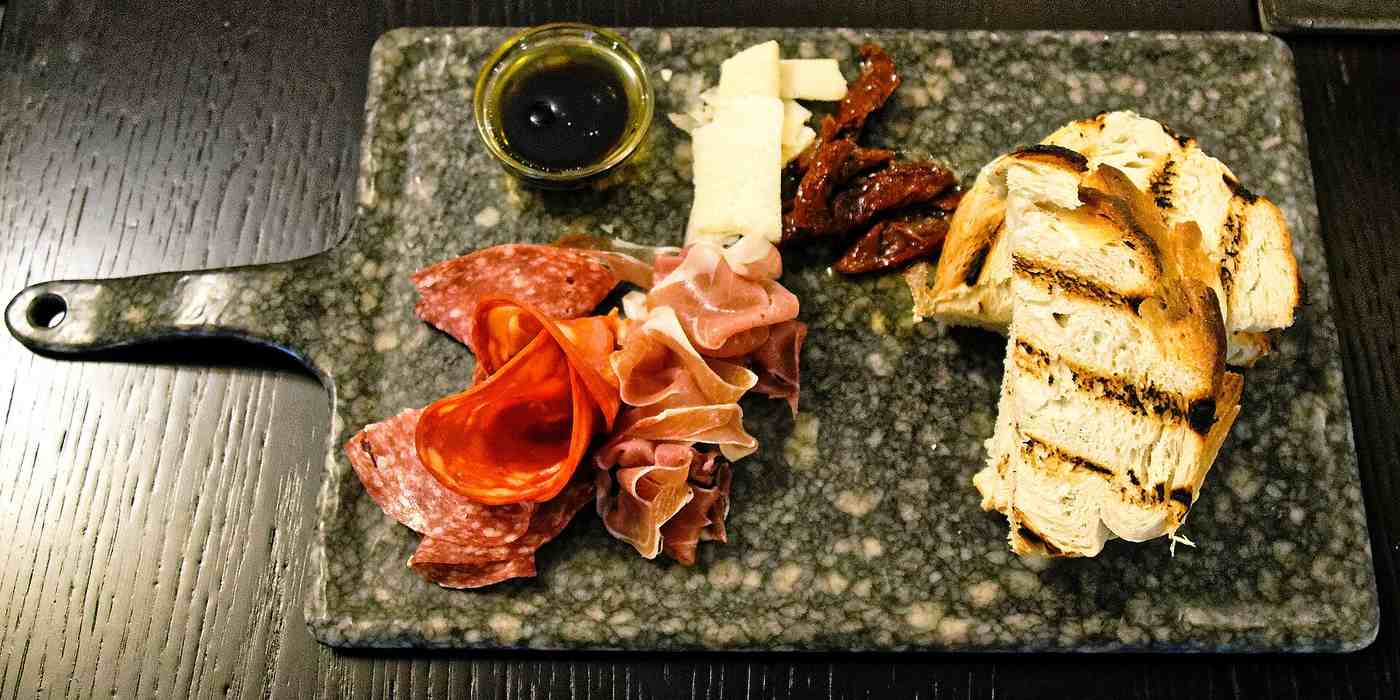
Louza is the traditional Cycladic cured pork of Syros, made from a lean cut of pork loin or fillet that is salted, spiced, cased and air-dried for three to six weeks. Producers on Syros slice it very thin and serve it cold as a meze, alongside cheese, bread, olives and a glass of wine or tsipouro. Plan the whole trip with Greece Tours.
The charcuterie belongs to the pork-curing tradition of Syros, the same craft that produces the island’s loukaniko sausage. It sits on the meze board beside the sharp San Michali cheese and the sweet Syros loukoumi. This guide covers what louza is, how it is cured, which spices flavour it, how it is served, where to buy it in Ermoupoli, and how it fits the wider Cycladic charcuterie map.
What is louza and why is it the cured pork of Syros?
Louza is a traditional Cycladic cured pork, made across Syros from a lean cut of loin or fillet. The meat is salted, spiced, cased and air-dried for three to six weeks, then sliced very thin and eaten cold as a meze.
Louza is a whole-muscle cured meat, not a ground or minced product. The maker takes one lean cut of pork, usually the loin or the fillet, and cures it as a single piece. That single-muscle base gives louza a clean, sliceable texture once it dries. On Syros the meat is salted, rubbed with a spice mix, cased and hung to air-dry for three to six weeks. The result is a firm, deep-red charcuterie that is served raw and cold, never cooked. Cooks slice it paper-thin, since the cured loin is dense and full-flavoured. Two or three thin slices cover a plate, which is why louza appears as a meze rather than a main course on the island.
The name louza covers a family of Cycladic cured pork rather than a single recipe. Every island in the Cyclades makes a version, and the details of cut, spice and drying time shift from place to place. Syros keeps its own style within that family, tied to the island’s butchers and home curers. Louza belongs to the wider pork-curing tradition of Syros, which also yields the island’s loukaniko sausage from the same animals. Households once cured a pig through the cold months, turning the loin into louza and the trimmings into sausage. That whole-pig logic still shapes how the two products sit side by side in delis and on menus across the island today.
Louza reads as the flagship charcuterie of Syros because it uses the prime cut and the longest care. The loin is the leanest, most tender part of the pig, so it rewards slow curing with a fine, even slice. The long air-drying concentrates the meat and fixes the spice, giving a product that keeps for weeks without refrigeration. That keeping quality mattered on an island, where a cured loin gave protein through the year. Today louza is a marker of Syros food identity, named on menus and stacked in shop cabinets in Ermoupoli. Visitors meet it as the pork half of the island’s classic meze board, opposite the cheese and the bread.
The charcuterie sits inside a clear island food identity rather than standing alone. Syros pairs its cured pork with the hard, spicy San Michali cheese, the only Cycladic cheese with a Protected Designation of Origin. The two share the same board and the same drinks, salt and fat against sharp cheese. Louza also belongs to a sweet-and-savoury trio with the island’s loukoumi, the soft rose-water confection sold in Ermoupoli. Together the cured loin, the aged cheese and the sweet loukoumi form the short list that most food guides use to describe Syros. Each item comes from a distinct local craft, yet the three read as one island table.
How is Syros louza cured from fresh pork loin to air-dried charcuterie?
Syros louza starts with a lean pork loin that is trimmed, heavily salted, then coated in a spice mix and sometimes soaked in wine. The maker cases the meat and hangs it to air-dry for three to six weeks in a cool room.
Curing begins with trimming the fresh loin to a clean, even cylinder of lean meat. The maker cuts away surface fat and silverskin so the salt reaches the muscle evenly. Salt is the core of the process, drawing moisture out and blocking spoilage during the weeks ahead. The trimmed loin is packed in salt for a set period, often a day or two per kilo of meat, then rinsed and patted dry. The spice stage begins only once the salt has finished drawing out moisture. This first phase decides the safety and the keeping quality of the finished louza, so island curers treat the salting time as fixed rather than something to rush through for a faster result.
The salted loin is next rubbed with the island spice blend and, in most recipes, bathed in wine. Certain Syros curers soak the salted meat in red or white wine for hours before drying, which softens the surface and carries the spice into the muscle. The wine also adds acidity that helps preserve the pork through the drying weeks. Once spiced, the loin is packed into a natural casing that holds its shape and slows moisture loss from the outside in. The cased meat is then tied at both ends and readied to hang. Each maker sets the exact wine step and spice load, which is why two Syros louzas can taste distinctly different side by side.
The cased loin then air-dries for three to six weeks in a cool, well-ventilated room rather than in an oven or smoker. Drying is passive, driven by air movement and low humidity rather than heat, so the meat cures instead of cooking. Over the weeks the loin loses roughly a third of its weight as water leaves the muscle. That water loss firms the texture and deepens the colour to a dark red. Curers check the meat by feel, waiting until it is firm through to the centre before calling it ready. A thin loin may finish in three to four weeks, while a thicker piece can take six weeks or more to dry evenly across the whole cut.
Traditional louza carries no smoking and no cooking, which keeps it a raw, air-dried charcuterie. That places it in the same family as Italian lonza and other whole-muscle cured loins around the Mediterranean. The finished piece is shelf-stable, so it keeps for weeks at cool room temperature without refrigeration. Makers store the dried loins hanging or wrapped, and cut into them only when a plate is needed. Once a louza is cut, the exposed face is best used within two or three days, since the fresh surface is no longer protected by the dry rind. Home curers on Syros still follow this cycle each winter, timing the salting and drying to the cold season.
Which spices give Syros louza its flavour and colour?
Syros louza is seasoned with black pepper, cinnamon, cloves and savory, along with other local spices in the rub. The blend leans warm and aromatic rather than hot, and the wine soak often used before drying adds a faint acidity to the cured loin.
Black pepper forms the backbone of the louza rub, coating the loin and lasting through the whole cure. Cinnamon and cloves sit beside it, bringing a warm, sweet-spice note that marks Cycladic charcuterie apart from northern European cured meats. Savory, a Mediterranean herb close to thyme in character, adds a green, slightly resinous edge to the mix. These four form the recognised core of the Syros blend, though each curer adjusts the balance to taste. Other spices appear in individual recipes, so no two rubs match exactly across the island. The combined effect is aromatic rather than fiery, since the warm spices dominate and the pepper adds fragrance and a mild bite rather than real heat on the palate.
The wine step shapes the flavour as strongly as the dry spices do. When a Syros curer soaks the salted loin in wine before drying, the meat takes on a faint tang and a rounder aroma. Red wine deepens the colour and adds a fruit note, while white wine keeps the profile cleaner and lighter. The acidity from the wine also brightens the finished slice, cutting the richness of the cured pork. Not every recipe uses wine, so a wine-soaked louza and a dry-rubbed one differ clearly in taste. This variation is part of why louza is discussed as a family of island products, with each village and household guarding a slightly different formula from the next.
The spice rub does visible work as well as flavour work on the cured loin. The pepper and warm spices form a dark crust on the outside of the meat as it dries, a rind that seals the surface. That crust protects the loin from the air and concentrates the aroma right at the edge of each slice. Inside, the paste stays deep red from the salt cure and any red wine used in the soak. When the loin is sliced thin, each round shows a dark spiced rim around a red centre. That two-tone slice is a visual signature of well-made louza, and it tells a buyer that the meat was cured slowly and dried through to the middle.
The seasoning of louza reflects the old spice trade that reached the Cyclades by sea. Cinnamon and cloves are not native to Greece, yet they anchor this island recipe, a sign of how far Aegean cooking travelled through trade. Ermoupoli was a major nineteenth-century port, and imported spices passed through its harbour on the way across Greece. That trade history helps explain why a rural pork cure on Syros leans on warm eastern spices rather than only local herbs. The result is a charcuterie that tastes of both the farm and the port. Modern curers keep the same spice list, treating the warm blend as the fixed identity of louza rather than a detail open to swapping out.
How is louza served and eaten as a meze on Syros?
Louza is served cold and raw, sliced very thin and laid out as a meze plate. Diners eat it with bread, cheese and olives, and drink it with wine or tsipouro. A small amount goes far, so two or three slices anchor a shared table.
Louza reaches the table as a cold cut, sliced thin and never heated before serving. The knife work matters, since the cured loin is dense and only tastes right when the slices are near translucent. A good slice drapes rather than stands, and a plate holds a dozen rounds from a short length of meat. Servers fan the slices across a dish so each piece is easy to lift by hand. Louza is a finger food and a shared plate, set in the middle of the table for everyone to reach. Because the flavour is concentrated, two or three slices satisfy per person, which is why a single cured loin stretches across a long meze session with drinks and talk.
The classic pairing puts louza beside cheese, bread and olives on one board. The salt and spice of the pork play against the sharp bite of San Michali cheese, the island’s aged PDO cheese. Fresh bread carries the fat and cools the spice, while olives add a briny counterpoint to the cured meat. This combination is the standard meze spread across Syros, in homes and in the tavernas of Ermoupoli alike. Each element is local, so the plate reads as a snapshot of island produce. The board asks for no cooking, which suits a warm-weather table and a casual pace, and it lets the quality of each cured or aged item speak for itself.
The drink of choice with louza is tsipouro, the strong Greek pomace spirit, or a glass of local wine. Tsipouro is a clear distillate, often served cold in small measures, and its clean burn cuts through the fat of the cured pork. Wine works the same way, with a dry white or a light red refreshing the palate between slices. The pairing follows the meze logic of small bites matched to slow sipping rather than a single large course. On Syros the cured loin, the spirit and the shared board go together as one ritual. Diners linger over the plate, topping up drinks and reaching for another slice, so the meze doubles as the social centre of the meal.
Louza also works as a first course or a light lunch beyond the full meze board. A plate of the sliced loin with bread and a wedge of cheese makes a quick meal on a warm day. Cooks sometimes lay the thin slices over other dishes, letting the residual warmth of a plate soften the fat slightly. The cured pork keeps well once bought, so a length of louza in the fridge yields four or five small servings over a week. Visitors to Syros meet it most often on taverna meze lists in Ermoupoli, where it is priced by the plate. Ordering it with cheese, olives and a carafe of wine gives a direct taste of the island’s cured-meat tradition.
Where can you buy louza in Ermoupoli and across Syros?
Louza is sold by local butchers and delicatessens in Ermoupoli, the capital of Syros, and in shops around the island. Delis stack the cured loins for slicing to order, and vacuum-packed lengths travel well as an edible souvenir from the island.
The main place to buy louza is a butcher or deli in Ermoupoli, the capital and port of Syros. Traditional butchers cure their own loins or stock those of nearby makers, and they slice to order at the counter. Delicatessens carry louza beside the island’s other named products, so a single shop can supply the whole meze board. Buyers can ask for a specific weight, since the shop cuts from a whole cured loin rather than a pre-packed tray. The counter staff will usually slice it thin on the spot, ready to eat. Ermoupoli is the retail centre of the island, so its food shops hold the widest choice of cured pork and local cheese in one place.
Beyond the capital, louza turns up in village shops and small producers across Syros. The northern district of Apano Meria, the same rural upland that gives San Michali cheese, keeps the farm-and-cure tradition alive. Certain makers sell directly from their premises, and island tavernas often source cured meat from a named local curer rather than a wholesaler. Farmers’ stalls and grocers in the smaller settlements stock louza during and after the winter curing season. Buying near the source can mean a fresher cut and a chance to ask about the specific spice blend used. The island is compact, roughly eighty-four square kilometres, so a short drive links the port shops with the rural producers in the hills.
Louza travels well, which makes it a practical edible souvenir from Syros. Because it is a dried, shelf-stable charcuterie, a whole or half loin keeps for weeks without refrigeration. Shops will vacuum-pack a length for the journey home, which protects the cut surface and extends its life further. A sealed louza survives a flight or a ferry crossing far better than a fresh product would. Buyers often pair it with a wheel of San Michali cheese and a box of loukoumi to carry the full island trio home. Prices are set by weight at the counter, so a buyer can take a small tasting length or a full loin depending on how large a bag and appetite allows.
Choosing a good louza at the counter comes down to three visible signs. A well-cured loin is firm to the touch, deep red inside, and ringed by a dark spiced rind on each slice. The shop should be able to say who made it and roughly how long it was dried, since named local makers stand behind their cure. A slice that is dry but not hard, with a clear spice aroma, points to a properly aged piece. Buyers wary of very lean cuts can ask for a loin with a thin fat edge, which carries flavour. Ordering a small taste before committing to a full length is normal practice in an Ermoupoli deli, and it helps match the cure to a buyer’s palate.
How does louza fit the Syros food trio with San Michali cheese and loukoumi?
Louza forms the cured-pork corner of the Syros food trio, set beside the sharp San Michali cheese and the sweet loukoumi. Together the three cover salt, sharp and sweet, and food guides use them as the short list that defines the island’s table.
The Syros food trio groups three named products that each come from a distinct island craft. Louza represents the cured-meat tradition, made by butchers and home curers from the island’s pigs. San Michali cheese stands for the dairy craft of the northern hills, a hard cow’s-milk cheese with Protected Designation of Origin status. Syros loukoumi covers the confectionery trade of Ermoupoli, a soft rose-water sweet dusted in sugar. The three sit at different points of a meal, from the savoury opening board to the sweet close with coffee. Grouping them gives visitors a simple, accurate map of what to taste on the island, each item tied to a specific local producer rather than a generic label.
On the plate, louza and San Michali cheese are natural partners on the same board. The cured pork is salty, spiced and rich, while the aged cheese is sharp, dry and granular. Set together, the two balance each other, and both stand up to a strong drink like tsipouro. Bread and olives round out the savoury side of the trio, giving the classic Syros meze spread. This half of the trio is the working lunch or the evening starter, eaten slowly with wine or spirit. The pairing is old and stable, since both products keep well and both come from the same rural corner of the island, so they were always on hand together in island kitchens.
Loukoumi closes the sequence and turns the trio from a meze into a full island tasting. After the salt and sharpness of the cured pork and cheese, the soft, sweet loukoumi resets the palate. It is served with Greek coffee or a digestif, in the café tradition that Ermoupoli built during its port years. Where louza and cheese are farmhouse products, loukoumi is a town craft, made in workshops near the harbour and sold in decorated boxes. That contrast, rural and urban, savoury and sweet, is part of what makes the trio a neat summary of Syros. A visitor who tastes all three has met the island’s meat, its dairy and its sugar work in one short list.
Travellers use the trio as a shopping and tasting checklist for a stay on Syros. A single afternoon in Ermoupoli can cover all three, since delis, cheese counters and loukoumi shops cluster in the same port town. Buying one of each fills a food souvenir bag that captures the island in three items. On the table, serving louza, San Michali and loukoumi together tells the whole story of Syros produce from salt to sweet. Food writers repeat this grouping because it is accurate and easy to follow, not a marketing invention. For anyone planning to eat their way around the island, the trio is the sensible starting point, and louza is the first, savoury item on that list.
How does Syros louza compare with louza from other Cycladic islands?
Syros louza shares the core method with versions on Mykonos, Tinos and other Cycladic islands, since all cure a lean pork loin with warm spices. The differences lie in the exact spice blend, the use of wine, and the drying time each island keeps.
Louza is a Cycladic product first and a Syros product second, so the base recipe crosses the Cycladic islands. Mykonos, Tinos, Naxos and others each make a cured pork loin under the same name, and the method is broadly shared. Every version starts from a lean cut, uses salt as the core cure, and relies on air-drying rather than smoke. The warm spice profile of pepper, cinnamon and cloves recurs across the islands, marking louza apart from mainland cured meats. That shared frame is why the name travels and why a visitor meets louza on menus throughout the Cyclades. Within that frame, though, each island keeps its own habits, so Syros louza is one clear dialect of a wider Aegean language of cured pork.
The differences between island versions show up in spice, wine and timing rather than in the basic cut. Other islands lean harder on cinnamon and clove, giving a sweeter, more aromatic slice, while others keep the rub closer to plain pepper. The wine soak that most Syros curers use is not universal, so a dry-rubbed louza from one island tastes cleaner than a wine-soaked one from another. Drying times also vary with local climate and habit, changing how firm and concentrated the final loin becomes. These are small shifts, yet they are enough to tell versions apart in a side-by-side tasting. Regional pride keeps the variations alive, since each island treats its own spice balance as the correct one.
Syros holds a particular place in the Cycladic charcuterie map because of its wider food identity. The island is one of the rare cases whose cured pork sits beside a PDO cheese, the San Michali, giving louza a ready and famous partner. Ermoupoli’s history as the leading nineteenth-century Aegean port also shaped a richer food culture than smaller islands could support. That port trade brought the spices and built the shops that still sell the cured loin today. So while the louza recipe itself is shared across the Cyclades, its setting on Syros, next to the cheese and the loukoumi, is distinct. The product reads as part of a fuller island table rather than a single farmhouse item on its own.
For a visitor, comparing louza across islands is a practical way to read the Cyclades through food. Tasting the Syros version beside a Mykonos or Tinos one shows how a shared method splits into local styles. The exercise mirrors the way island cheeses, wines and sweets each carry a home mark despite common roots. On Syros the comparison is easy to set up, since the delis of Ermoupoli stock the island’s own cured loin ready to slice. A traveller moving between islands can line up three or four louzas and taste the spice and drying differences directly. That hands-on tasting turns a simple cured meat into a short lesson in how the Cyclades keep distinct food identities within one archipelago.
Frequently Asked Questions
Is louza the same as Italian lonza or prosciutto?
Louza is closest to Italian lonza, since both cure a lean, whole pork loin rather than a leg. Prosciutto is made from the hind leg and cured for months, while louza uses the loin and dries in weeks. The Cycladic version is set apart by its warm spice rub of pepper, cinnamon and cloves, and by an optional wine soak. All three are raw, air-dried and sliced thin, so they share a serving style even though the cut and cure time differ.
How long is Syros louza cured before it is ready to eat?
Syros louza is salted for a short first stage, often a day or two per kilo of meat, then spiced and air-dried for weeks. A thin loin can finish in about three to four weeks, while a thicker cut may need six weeks or more to dry through to the centre. Curers judge readiness by firmness rather than a fixed date, since climate and thickness change the timing. During drying the loin loses close to a third of its weight as water leaves the muscle.
What does louza taste like?
Louza tastes of salted, air-dried pork with a warm, aromatic spice edge. The pepper, cinnamon and cloves in the rub give a fragrant, faintly sweet note rather than heat, and any wine soak adds a light tang. The texture is firm and dense, so thin slices are tender rather than chewy. Compared with a fatty cured meat, louza is lean and clean on the palate, with the spice crust adding aroma at the rim of each slice. It reads as a savoury, concentrated cold cut best eaten in small amounts.
Can you buy louza to take home from Syros?
Yes, louza is a dried, shelf-stable charcuterie, so it travels well as an edible souvenir. Butchers and delis in Ermoupoli will slice it to order or sell a whole cured loin by weight. Shops can vacuum-pack a length, which protects the cut face and lets it survive a ferry crossing or a flight home. Buyers often carry it alongside a wheel of San Michali cheese and a box of loukoumi to take the full island food trio with them. A sealed loin keeps for weeks at cool room temperature.
Is louza gluten-free and what casing is used?
Louza itself is a plain cured pork loin seasoned with salt and spices, so the meat contains no grain and is naturally gluten-free. Traditional makers case the loin in a natural casing, which holds the shape and slows moisture loss during drying. Buyers with a strict dietary need should still confirm the exact spice blend and casing with the maker, since recipes vary between curers and shops. The core product, however, is simply salted, spiced and dried pork, with no flour, breadcrumb or grain-based ingredient in the classic method.
What drink goes best with louza?
Tsipouro is the classic match for louza on Syros, since the strong, clear pomace spirit cuts through the fat of the cured pork. A dry white or a light red wine works the same way, refreshing the palate between slices. The pairing follows the meze pattern of small bites matched to slow sipping rather than a single large drink. Served cold with cheese, bread and olives, the cured loin and the spirit or wine make the standard island meze board that anchors a long, shared table.