
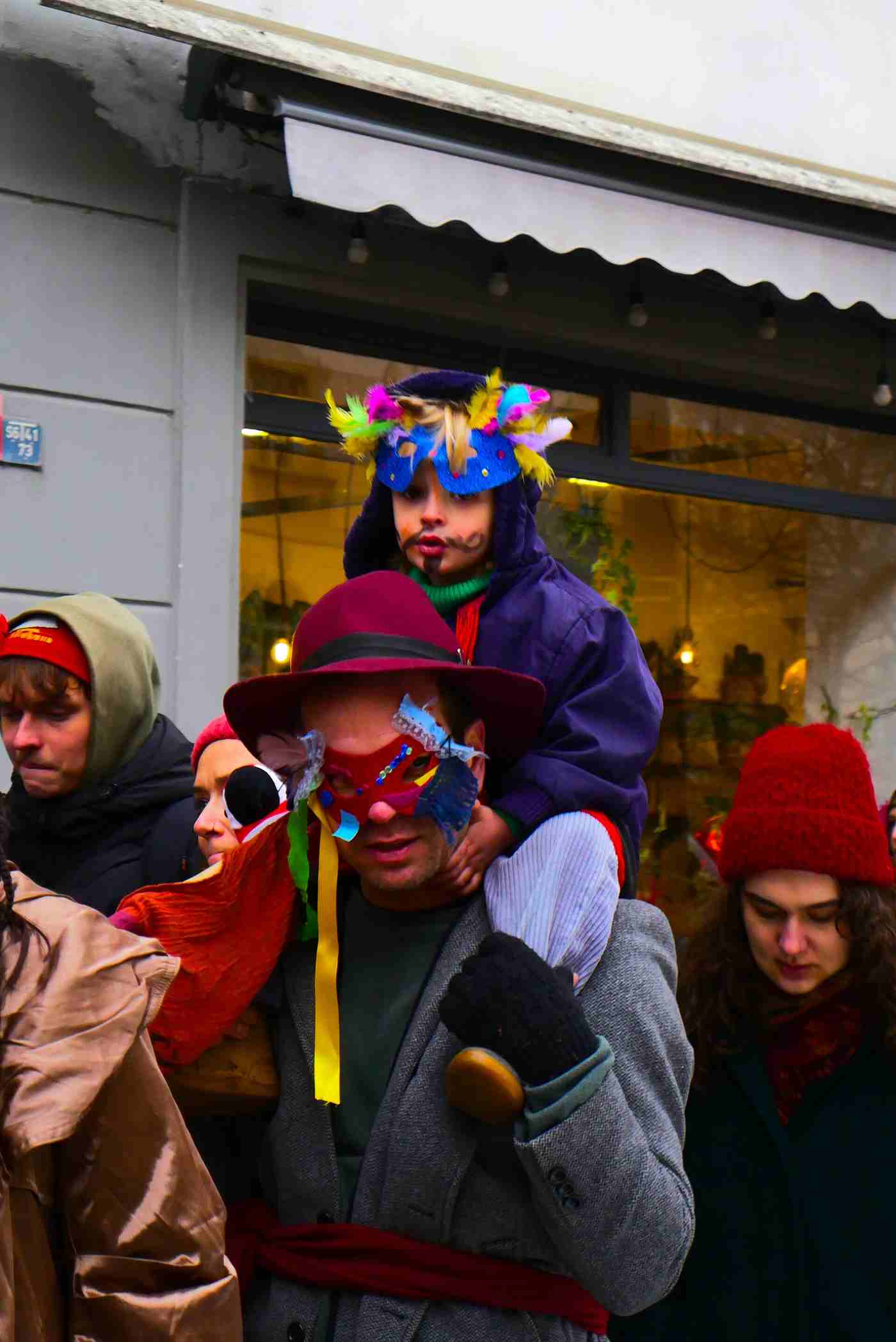
The Syros Carnival, known in Greek as Apokries, is the pre-Lenten festival that fills the marble streets of Ermoupoli and the medieval hill of Ano Syros. It runs through the weeks before Lent and builds to the final Carnival weekend before Clean Monday. Costume parades, masquerade balls, satirical troupes, and children’s events spread across Miaouli Square and the neoclassical quarter of the port. Street music, including live rebetiko, sounds from the terraces of the upper town. The island’s dual Catholic and Orthodox communities share the season together. This guide maps the timing, the venues, and the food of Apokries on Syros, from the harbour up to the Catholic hilltop. Plan the whole trip with Greece Tours.
The Carnival centres on two linked stages: the grand square of the capital and the stepped lanes above it. Miaouli Square and the neoclassical avenues of Ermoupoli host the main parades and the public balls. The medieval Catholic town of Ano Syros adds street music, small-scale events, and views over the port. The season ends with Clean Monday, when families fly kites and switch to Lenten food. Ferries from Piraeus and Rafina serve the island through the winter weeks of the festival. This guide sets out where the events happen, how crowds build, and how to time a visit around the last Carnival weekend.
What is the Syros Carnival and when does the Apokries season take place?
The Syros Carnival, or Apokries, is the pre-Lenten festival of the island. It runs through the three weeks before Clean Monday and peaks on the final Carnival weekend, filling Ermoupoli and Ano Syros with parades, balls, and street music.
Apokries names the Greek carnival season that precedes the forty days of Lent. The word marks the run-up to the fast, when the calendar still allows meat and rich food. The season opens about three weeks before Clean Monday, the movable date that starts Orthodox Lent. Its exact dates shift each year with the Orthodox Easter cycle, so they land between late January and early March. The Syros Carnival follows this national rhythm across the Cyclades. Ermoupoli, the capital of the island group, stages the largest programme in the region. The festival grows week by week toward a climax on the last weekend before the fast begins.
The season splits into named weeks that build toward the final weekend. The middle week, called Tsiknopempti or Smoky Thursday, centres on a Thursday of grilled meat across the tavernas of the port. Smoke from the charcoal grills fills the streets of Ermoupoli on that night. The last week, Tyrofagi or Cheese Week, drops meat and turns to cheese and dairy before the fast. Each stage carries its own events, from small parties to public balls in the halls of the town. The programme peaks on the final Carnival Sunday, when the grand parade crosses Miaouli Square. Clean Monday closes the season the next day and opens Lent.
The Syros Carnival draws on a long tradition tied to the island’s mixed population. Ermoupoli grew in the nineteenth century as a wealthy port and shipping centre of the new Greek state. The neoclassical town built theatres, mansions, and grand squares that still frame the parades today. Above the harbour, the medieval Catholic town of Ano Syros kept its own feast customs. The two communities shaped a season that blends formal balls with older masquerade rites. Refugees and merchants from across the Aegean added their own carnival practices to the mix. This layered history gives the festival its distinct character among the Cycladic islands.
The winter timing sets the Syros Carnival apart from the summer festival calendar. Cold, changeable weather marks the weeks of Apokries across the Aegean, with rain and wind common. Most events move between indoor halls and covered venues alongside the open-air parades. The low tourist season means the crowds come mainly from the island itself and from Athens. Ferry schedules run on winter timetables, with fewer daily sailings than the summer peak. Visitors plan around the weather and the reduced boat service. The reward is a festival shaped for the island’s own people rather than for the summer tourist trade.
When do the main Apokries events happen during the Syros Carnival?
The main Apokries events cluster on the final Carnival weekend before Clean Monday. Tsiknopempti, or Smoky Thursday, opens the busiest stretch ten days earlier, and the grand parade crosses Miaouli Square on the last Carnival Sunday.
Tsiknopempti falls on the Thursday of the second Carnival week and marks the first mass event. Tavernas across Ermoupoli fire up charcoal grills, and the smell of grilled meat gives the day its name. Families and friends book tables early, and the streets around Miaouli Square fill by evening. Live music and impromptu dancing spill out of the eating houses onto the pavements. The night sets the tone for the ten days that follow. Smaller costume parties and school events run through the week that comes after. This Thursday works as the informal opening of the busiest stretch of the season on the island.
The final Carnival weekend carries the peak of the whole programme. Saturday brings evening masquerade balls in the halls and clubs of the port town. Costumed groups move between venues, and satirical troupes stage skits about the year’s events. Sunday holds the grand parade, the single largest gathering of the season. Floats, marching bands, and costumed clubs cross Miaouli Square before large crowds. The route runs through the main avenues of the neoclassical centre of Ermoupoli. This Sunday afternoon draws the fullest turnout of islanders and visitors alike.
Children’s events fill their own slot within the Carnival programme. A dedicated children’s parade runs on the final weekend, often on the Sunday morning or the Saturday. Schools and local clubs prepare costumes and floats for the young marchers. Treasure hunts and games spread across the squares and public gardens of the town. Parents follow the routes and gather at Miaouli Square for the finish. These daytime events run before the adult parties of the evening. The split lets families join the season without the late nights of the main balls.
Clean Monday closes the calendar and turns the season toward Lent. Families leave the town for the countryside and the coast to fly kites in the open wind. Picnics of Lenten food replace the meat and cheese of the weeks before. The masquerade costumes come off, and the fast of Orthodox Lent begins. The Catholic community of Ano Syros follows its own Lenten calendar, which can fall on different dates. The kite-flying and the Lenten table mark the shared end of Apokries. The next day returns the island to its quiet winter routine until spring.
Where do the Syros Carnival celebrations happen in Ermoupoli and Ano Syros?
The Syros Carnival centres on Miaouli Square and the neoclassical streets of Ermoupoli, which host the parades and public balls. Events climb into the medieval Catholic quarter of Ano Syros, where street music and small-scale gatherings fill the stepped lanes.
Miaouli Square forms the heart of the Syros Carnival in Ermoupoli. The vast marble plaza sits at the centre of the port town, framed by the town hall and cafes. The grand Sunday parade ends here, and floats and troupes gather on the open paving. The bandstand and the surrounding arcades hold music and small stages through the season. Crowds pack the square for the finish of the main parade each year. The nearby Apollon Theatre and cultural halls host indoor balls and concerts. This central square anchors the largest public events of the whole festival.
The neoclassical streets around the square carry the parade routes and the street life of the season. Ermoupoli grew rich in the nineteenth century, and its mansions, marble avenues, and squares still stand. Costumed groups move along these avenues between the balls and the eating houses. Shopfronts and balconies fill with spectators on the parade days. The port waterfront adds another stage, with cafes and bars busy through the Carnival nights. The compact centre lets walkers cross between venues on foot in minutes. The built fabric of the port frames the festival in grand nineteenth-century surroundings.
Ano Syros rises above the port as the medieval Catholic town on the hill. Venetians founded the settlement in the thirteenth century, and its car-free lanes climb to the cathedral of San Giorgio. During Apokries, the upper town adds street music, small parties, and rebetiko sessions in its tavernas. The stepped alleys and terraces host performers who play into the night. Walkers climb from the port in about twenty minutes to reach the quarter. The hilltop gives wide views over the illuminated town during the festival evenings. This upper stage complements the grand public events down in the square.
The two levels of the town split the season between formal and informal events. The port hosts the parades, the balls, and the large public crowds on the main days. The hill offers a quieter, music-led scene in the tavernas of the Catholic quarter. Visitors move between the two on foot or by a short local bus ride. A full Carnival day might start with a parade in the square and end with rebetiko on the hill. The layout rewards a base in central Ermoupoli, within walking reach of both. The whole festival fits inside a compact, walkable stretch of the island’s capital.
What happens during the Syros Carnival parades, balls, and Apokries events?
The Syros Carnival stages costume parades, masquerade balls, satirical troupes, children’s parades, and treasure hunts. Floats and marching bands cross Miaouli Square on the final Sunday, while evening balls and street music fill the halls and lanes of Ermoupoli and Ano Syros.
Costume parades form the visible core of the Syros Carnival. Local clubs and neighbourhood groups spend weeks building floats and sewing costumes for the marches. The grand parade on the final Sunday moves floats, dancers, and bands through the streets of Ermoupoli. Marchers dress as characters from myth, history, and the year’s news. The procession ends in Miaouli Square before the largest crowd of the season. Music from marching bands and sound systems drives the pace of the parade. The spectacle turns the marble centre of the port into an open-air stage.
Masquerade balls run through the evenings of the final Carnival weeks. Cultural clubs, schools, and private halls host costumed dances across the town. Guests hide behind masks and elaborate outfits, a custom rooted in the old carnival rite of disguise. The Apollon Theatre and other neoclassical halls stage the grander events. Music ranges from island tunes to modern dance sets for the younger crowds. The balls run late, often past midnight on the Saturday of the peak weekend. These indoor events shelter the season from the cold, wet weather of the Aegean winter.
Satirical troupes give the Syros Carnival its sharp local edge. Groups of friends form themed teams that mock the year’s political and social events. The troupes perform skits, songs, and chants in the squares and along the parade route. Costumes and props exaggerate public figures and island affairs for laughs. This tradition of satire runs deep in Greek carnival across the country. The Syros troupes tie their jokes to island life and to national news. The performances draw crowds who follow the teams from stop to stop through the town.
Children’s parades, treasure hunts, and street music round out the programme. The dedicated children’s parade sends young marchers through the centre in home-made costumes. Treasure hunts scatter clues across the squares, gardens, and lanes of the port. Street musicians play through the season, and rebetiko sounds from the tavernas of Ano Syros. The mix gives families, teenagers, and older islanders each their own share of the season. Daytime games give way to evening music and dance across the two towns. The full range of events keeps the whole community inside the Carnival for weeks.
How do the Catholic and Orthodox communities share the Apokries season on Syros?
Syros holds a rare dual Catholic and Orthodox population, and both communities share the Apokries season. The Catholic town of Ano Syros and the largely Orthodox port join in the parades and balls, even though the two Easters can fall on different dates.
Syros carries one of the largest Roman Catholic communities in Greece. Venetian and Frankish rule brought the Latin faith to the island in the medieval period, and France later protected it. The Catholic population settled the hill of Ano Syros around the cathedral of San Giorgio. Orthodox Greeks built the port of Ermoupoli in the nineteenth century, crowned by the church of Anastasi. The two faiths still divide the island’s skyline between two hilltop churches. This dual identity sets Syros apart from the mostly Orthodox Cyclades. The shared Carnival grew out of this centuries-old coexistence.
The two communities keep separate religious calendars that shape the season. The Catholic Church follows the Gregorian date for Easter, while the Orthodox Church uses its own reckoning. In many years the two Easters fall weeks apart, and the pre-Lenten seasons diverge with them. Carnival customs on the island blend the two traditions rather than splitting along faith lines. Masquerade and disguise, older than either church calendar, belong to both communities. The public parades and balls of Apokries welcome islanders of both faiths. The festival works as common ground across the religious divide.
Ano Syros brings the Catholic quarter’s own flavour to the season. The medieval town holds its feast-day customs and its music through the winter weeks. Rebetiko, born in part on this Catholic hill, fills the tavernas during Apokries. The stepped lanes host small parties that draw both Catholic and Orthodox islanders. The link between the hill and the port keeps the two communities in constant contact. Walkers cross between the levels through the festival days and nights. The Catholic town adds a distinct layer to the shared island carnival.
The mixed heritage of Syros gives the Carnival a breadth beyond a single-faith feast. The music, the food, and the customs draw on both Catholic and Orthodox roots. The rebetiko tradition ties the season to the wider musical story of the island. Visitors can trace this heritage through the work of Markos Vamvakaris and rebetiko, born on the Catholic hill. The festival stands as a public expression of the island’s dual identity. Both communities close the season with Clean Monday and the start of their own Lents. The shared celebration remains one of the defining marks of Syros.
What food and music define the Syros Carnival and Apokries table?
The Syros Carnival table centres on grilled meat during Tsiknopempti, then cheese and dairy in the final week. Sweets such as loukoumades and bourekia appear, and the island’s loukoumi adds to the season, while rebetiko and street bands fill the towns with music.
Grilled meat defines the food of the first Carnival weeks. Tsiknopempti, the Smoky Thursday, turns the whole island toward charcoal grills and roasted meat. Tavernas across Ermoupoli fill their tables and fire their grills through the evening. Pork, lamb, and sausages dominate the plates during this stage of the season. Families and groups of friends gather for long, loud meals in the eating houses. The custom empties the larder of meat before the coming fast of Lent. This shared feast marks the culinary high point of the early Carnival weeks.
Cheese and dairy take over in the final week before Clean Monday. Tyrofagi, or Cheese Week, drops meat and turns to cheese, milk, and eggs. Cooks fill pies and pastries with the local cheeses of the island. Syros makes San Michali, a hard cheese from the north of the island with a protected name. The switch prepares the household for the strict fast that follows. Dairy dishes fill the table in the days before the season ends. This stage bridges the meat feast and the Lenten fast that Clean Monday begins.
Sweets and fried treats run through the whole Apokries season. Loukoumades, small fried dough balls in honey and cinnamon, appear at the street stalls and cafes. Bourekia, filled pastries in local styles, come out for the carnival table. Syros loukoumi, the island’s famous soft confection, adds another sweet to the mix. Cafes and pastry shops in Ermoupoli sell these treats to the crowds between events. The sweets fuel the long days and nights of parades and parties. These foods tie the taste of the season to the island’s own specialities.
Music carries the season as strongly as the food. Marching bands drive the parades through the streets of the port on the main days. Rebetiko, the urban folk music tied to Ano Syros, sounds from the tavernas of the hill. Street musicians and sound systems fill the squares between the formal events. Masquerade balls run their own mix of island tunes and modern dance sets. The music runs from daytime parades to late-night sessions across both towns. This constant soundtrack binds the whole Carnival together from the harbour to the hilltop.
How do visitors reach Syros and plan around the Carnival crowds and ferries?
Visitors reach Syros by ferry from Piraeus or Rafina, a crossing of two and a half to four hours on winter timetables. A base in central Ermoupoli puts the parades and balls within walking reach, and early rooms matter on the peak weekend.
Ferries link Syros to the mainland ports of Piraeus and Rafina. Fast boats cross from Piraeus in about two and a half to three hours, while conventional ferries take around four. Syros serves as a hub port of the Cyclades, with onward links to Mykonos, Tinos, and Paros. Winter timetables run fewer daily sailings than the summer peak. Weather in the Apokries weeks can delay or cancel boats across the Aegean. Travellers check the schedule close to the date and allow a spare day. The national airport at Syros also takes short flights from Athens.
Central Ermoupoli makes the best base for the Carnival. Hotels and rooms in the port town sit within a short walk of Miaouli Square. The compact centre lets visitors reach the parades, the balls, and the tavernas on foot. A room near the square puts the main events on the doorstep during the peak weekend. Ano Syros lies a twenty-minute climb or a short bus ride above the harbour. Staying in the port keeps both stages of the festival within easy reach. The walkable layout removes the need for a car during the season.
Crowds concentrate on the final Carnival weekend rather than across the whole season. The Saturday balls and the Sunday grand parade draw the largest numbers to the town. Islanders and visitors from Athens fill the hotels and tavernas on those two nights. Rooms and restaurant tables book out early for the peak weekend. Midweek days and the earlier Carnival weeks stay far quieter across the island. Visitors who want the full spectacle target the last Sunday before Clean Monday. Those who prefer calm can pick an earlier week and still catch the season’s mood.
A few practical steps smooth a Carnival trip to Syros. Warm, waterproof clothing suits the cold, changeable weather of the Aegean winter. Flat shoes handle the marble streets of the port and the steep lanes of Ano Syros. Cash covers the small tavernas and street stalls that may not take cards. Booking ferries and rooms ahead protects against the peak-weekend rush. A base in Ermoupoli keeps the parades, balls, and food within a short walk. These simple moves let a visitor follow the season from the harbour to the hilltop with ease.
Frequently Asked Questions
When is the Syros Carnival held?
The Syros Carnival, or Apokries, runs through the three weeks before Clean Monday, the movable date that opens Orthodox Lent. Its dates shift each year with the Orthodox Easter cycle and usually fall between late January and early March. The season builds through named weeks and peaks on the final Carnival weekend. The grand parade crosses Miaouli Square on the last Sunday, and Clean Monday closes the season the next day. Travellers check the current year’s Orthodox Easter date to fix the exact weekend.
Where do the main Syros Carnival events take place?
The main Syros Carnival events centre on Miaouli Square and the neoclassical streets of Ermoupoli, the capital of the island. The grand Sunday parade, the masquerade balls, and the children’s events fill the port town. The medieval Catholic quarter of Ano Syros, a twenty-minute climb above the harbour, adds street music and rebetiko in its tavernas. The compact centre lets visitors walk between the venues in minutes. A base in central Ermoupoli puts both stages of the festival within easy reach.
What food is eaten during Apokries on Syros?
The Apokries table on Syros moves through two stages. Tsiknopempti, or Smoky Thursday, fills the tavernas with grilled meat, while the final Cheese Week turns to cheese and dairy before the fast. Sweets such as loukoumades and bourekia appear through the season, alongside the island’s famous Syros loukoumi. Clean Monday closes the season with Lenten food, when families switch to seafood, pulses, and unleavened bread. The local San Michali cheese features in the pies of Cheese Week.
Why do Catholics and Orthodox both celebrate Carnival on Syros?
Syros holds one of the largest Roman Catholic communities in Greece, settled on the medieval hill of Ano Syros, alongside the Orthodox port of Ermoupoli. Both communities share the Apokries season, which blends masquerade and carnival customs older than either church calendar. The two faiths keep separate Easter dates, so their Lents can begin weeks apart. The public parades and balls welcome islanders of both traditions. The shared festival reflects the island’s long history of Catholic and Orthodox coexistence.
How do you get to Syros for the Carnival?
Ferries reach Syros from the mainland ports of Piraeus and Rafina, a crossing of about two and a half to four hours on winter timetables. Syros serves as a hub port of the Cyclades, with onward links to Mykonos, Tinos, and Paros, and short flights run from Athens. Winter schedules offer fewer daily sailings, and Aegean weather can delay boats during the Apokries weeks. Travellers check the timetable close to the date and allow a spare day. A base in central Ermoupoli needs no car.
How does the Syros Carnival end?
The Syros Carnival ends with Clean Monday, the first day of Orthodox Lent that follows the final Carnival Sunday. Families leave the town for the coast and countryside to fly kites in the open winter wind. Picnics of Lenten food replace the meat and cheese of the weeks before, and the masquerade costumes come off. The Catholic community of Ano Syros keeps its own Lenten calendar, which can fall on different dates. Clean Monday returns the island to its quiet winter routine.