
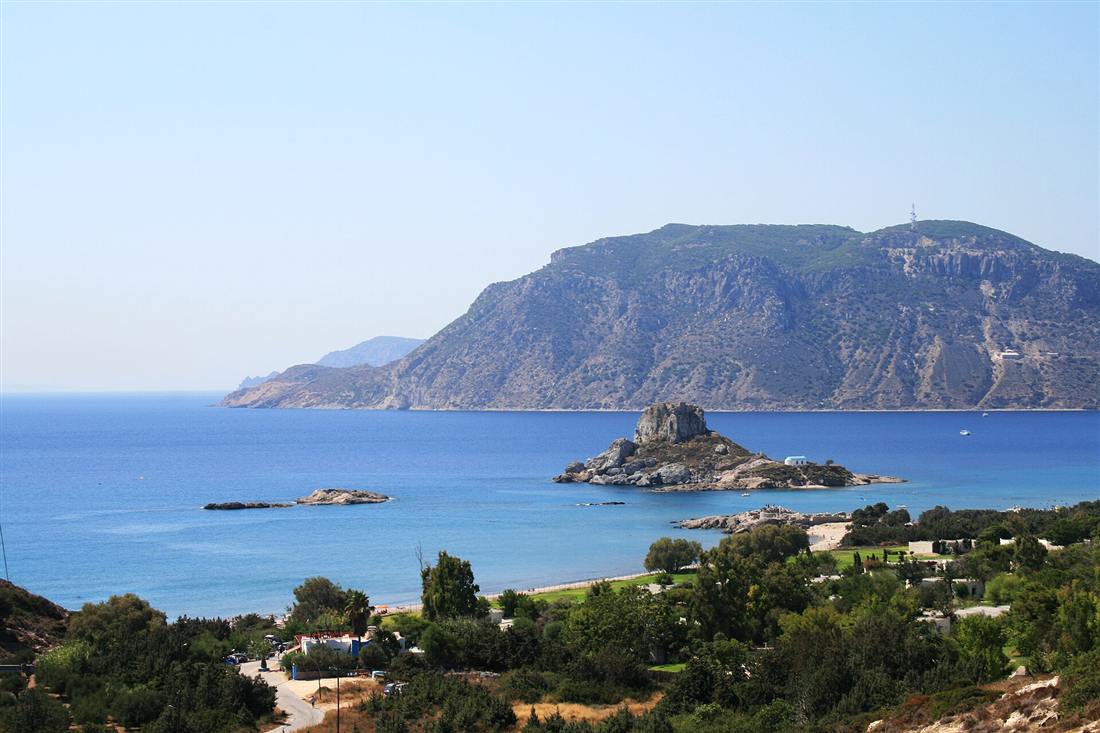
Kos snorkeling runs as a guided cruise out of Kos harbour to the blue lagoon on Pserimos and the clear water off Kalymnos and Plati, and as a free shore entry at Kefalos bay and the rocky points along the island coast. Plan the whole trip with Greece Tours.
This guide covers Kos snorkeling in full: the cruises and what they include, the best spots on the island shore, what you see underwater, the visibility and the season, the equipment and how to fit it, what it costs, safety for families, the rules in the water, and how to book.
What Is Kos Snorkeling and What Does a Guided Boat Trip Include?
Kos snorkeling is a guided boat excursion out of Kos harbour that pairs mask-and-fin swimming with a crewed vessel, snorkel gear, a safety briefing and swim stops at clear bays around Kos, Kalymnos, Pserimos and Plati.
Kos snorkeling is booked ahead for a fixed, agreed price per person. The boat leaves the harbour with the crew checking names against the passenger list, then anchors at the first bay within the opening hour so guests are in the water early. A guide sets a marked swim boundary, calls small groups in together, and the crew keeps watch from the deck while towels, shade and a hot drink wait on the return leg.
For stronger swimmers, Kos snorkeling opens the deeper water off the points. A private charter runs the same route on a hired boat with the plan agreed directly with the skipper, while Kos scuba diving puts guests on a tank at depth instead of the surface. Kos itself sits at the centre of every departure, a short walk from the harbour to the old town.
Do You Need Experience to Go Snorkeling Off Kos?
No experience is needed for Kos snorkeling: crews fit the mask and fins on the harbour, run a short briefing on breathing through the tube and clearing water, and keep noodles or a buoyancy vest ready for anyone who wants extra support.
For a first time in the water, Kos snorkeling starts with the mask fit and the briefing. The fitting happens before the boat leaves the dock. A crew member checks the mask seal against the face, swaps a fin size that pinches, and pairs a dry-top snorkel with anyone unfamiliar with clearing a flooded tube, then covers hand signals and the marked boundary of the swim area.
The mask and the fins are fitted before Kos snorkeling begins. Foam noodles and inflatable vests sit stacked on the swim platform for anyone who wants to stay afloat without treading water. A weak swimmer stays paired with the guide along the shallow edge of the bay rather than the wider group, so the pace of a stop is set by the slowest swimmer, never the fastest.
What Kos Snorkeling Cruises Run to Pserimos?
A dedicated Kos snorkeling cruise to Pserimos leaves the harbour near the Dolphins roundabout around 08:30 and returns near 14:30, sailing to the island’s blue lagoon where the crew hands out gear and guides lead the group through the shallow water in small pairs.
The choice of Kos snorkeling comes down to the boat, the route and the stops. The departure point sits on the quay by the Dolphins statue, and the crossing runs under an hour, putting guests in the lagoon before midday sun flattens the light underwater. The lagoon itself is a shielded cove of pale sand and a gentle slope, letting first-timers wade in rather than jump from a ladder.
Kos snorkeling includes the lunch and drinks on the cruises that carry them. Snorkel gear is carried aboard for every guest and handed out at the first stop, and guides split the group into pairs, each led along a set stretch of rocky edge where the seabed shelves gently. A second, quieter bay along the Pserimos coast follows before the run back. The full island itinerary sits on Pserimos day trip from Kos.
What Stops Do the Three-Island Snorkeling Cruises Make?
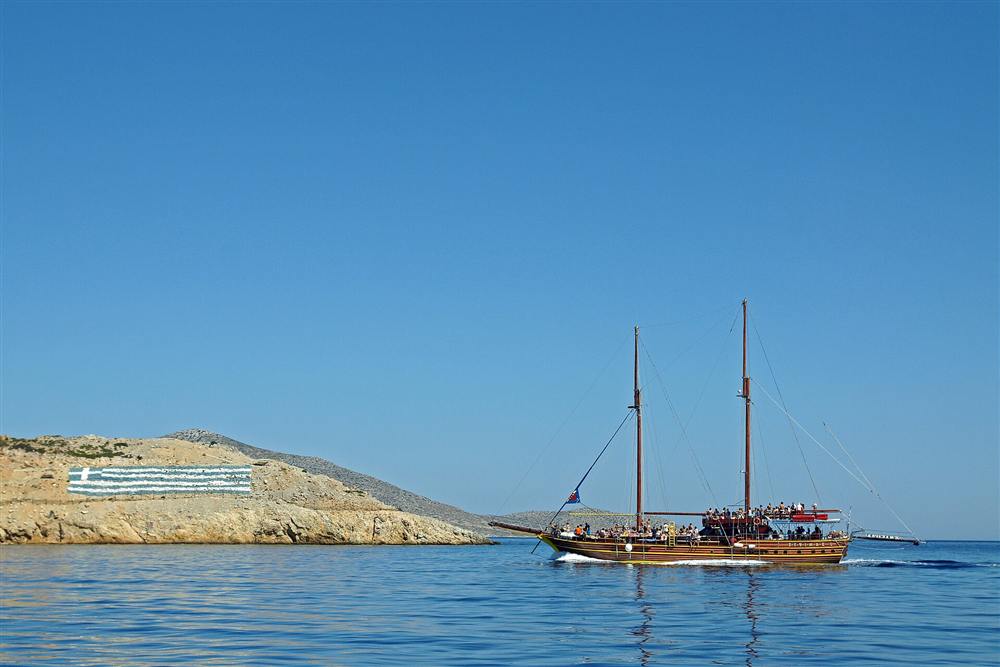
The three-island cruise links Kalymnos, Pserimos and Plati in a single day, with a swim stop off each island’s clear water, snorkel gear kept aboard between stops, and a return to Kos harbour after roughly six hours at sea.
A private charter keeps Kos snorkeling to one group for the cruise. The Kalymnos leg puts guests over a rocky stretch of coast where the seabed drops quickly into deeper blue, a different scene to the shallow sand of Pserimos later on. Plati, the smallest of the three, is little more than a beach and a single taverna, and the sandy bottom here suits anyone still building confidence after the rockier Kalymnos stop.
The blue lagoon off Pserimos is the set piece of Kos snorkeling. Gear stays packed in crates on deck between stops rather than reissued fresh each time, so guests keep the same mask and fins fitted at the first island for the rest of the run. A full three-island day covers more distinct water than the direct Pserimos crossing, with a later afternoon return to Kos.
Where Are the Best Kos Snorkeling Spots on the Island Shore?
The best shore spots for Kos snorkeling sit at Kefalos bay’s rocky ground, Agios Stefanos beside its basilica ruins and islet, Paradise beach, the Cavo Paradiso headland, the Therma hot spring coast and the calmer north shore at Tigaki and Mastichari.
The morning departure for Kos snorkeling fills first in high season. Kefalos bay, at the island’s southwestern tip, carries a long stretch of rock and reef broken by sandy pockets, with the deepest, clearest ground for anyone entering straight from shore. Agios Stefanos sits a short drive further along, where the ruined basilica stands beside a narrow channel to a small islet thick with sea life on both sides.
Every Kos snorkeling cruise starts with the safety briefing on board. Paradise beach gives a sheltered, shallow entry, while Cavo Paradiso, a headland further along the same coast, drops into deeper rock ledges for a stronger swimmer. The Therma coast mixes a stony beach with warm patches of sea, and the rock shelf offshore holds sponges among the boulders. On the north shore, Tigaki and Mastichari offer flatter, sandier ground with less current. A full rundown of every beach sits on Kos beaches.
What Marine Life Do You See While Snorkeling in Kos?
Kos snorkeling turns up thick beds of Posidonia seagrass, shoals of salema and damselfish, wrasse and sea bream over the rocks, octopus and moray eels tucked into crevices, sea urchins and starfish on the seabed, and the sponges the Dodecanese has long been known for.
Families take Kos snorkeling for the sheltered lagoon and the flotation aids. Seagrass meadows between rocky points are a nursery for juvenile fish and a feeding ground for salema that move in loose, glinting shoals near the surface. Damselfish hold territory around individual rocks, wrasse pick along the reef edge in a spread of colours, and sea bream cruise in slower groups over open sand.
Kos snorkeling carries life jackets for every guest on the boat. An octopus, when spotted, is folded into a crevice with only an eye showing, changing colour within seconds. Moray eels favour the same rocky gaps, mouths working in a normal breathing motion rather than a threat. Sea urchins cluster under shaded ledges, and starfish sit out on open sand and low rock, rounding out a stop worth more than a plain swim.
How Clear Is the Water for Kos Snorkeling?
Water clarity for Kos snorkeling runs high across the swimming season, with the clearest conditions in calm morning light on the sheltered south coast; the meltemi wind stirs sediment along the exposed north shore on stronger days, cutting visibility there while southern bays stay settled.
Kos snorkeling runs from the harbour in Kos town and from the island beaches. Early in the day, before the wind builds and boat traffic picks up, the sea sits close to flat, and light reaches the sand without the surface chop that scatters it. Guided cruises schedule the first stop for mid-morning for this reason, catching the water at its clearest.
The set price on Kos snorkeling covers the boat, the crew and the gear. The meltemi, the seasonal north wind through the warmer months, pushes sediment along the northern coastline and can leave Tigaki and Mastichari cloudier on a windy afternoon, while Kefalos and the southern bays stay calm the same day. A sandy bay clears within minutes once disturbed; a rocky shoreline holds fine particles in suspension longer, so a rocky point on the calm side, visited early, gives the sharpest water.
When Is the Best Season for Kos Snorkeling?
Kos snorkeling runs comfortably from May to October, with warm, swimmable water through the peak summer months, a milder sea in the shoulder months that suits a shorty wetsuit, and an autumn sea that holds its warmth well after the air cools.
The price of Kos snorkeling covers the boat, the crew and the equipment. In May the sea still trails the air, and a shorty wetsuit adds welcome warmth for a long stop, though light and clarity are already strong before the peak crowds arrive. June brings the water to a comfortable temperature without extra layers, and July and August sit at the year’s warmest point, ideal for hours spent floating over the reef.
Planning Kos snorkeling ahead beats the scramble for a summer date. September holds much of that summer warmth while the island empties out, and October cools gradually, retaining heat well into its back half, so a wetsuit top is a comfort rather than a necessity for most of it. Outside this window most cruises pause for winter.
What Equipment Do You Need for a Kos Snorkeling Trip?
A Kos snorkeling trip calls for a mask, snorkel and fins, a rash vest or shorty wetsuit for warmth and sun cover, reef shoes for rocky entries, a signal float, and a dive flag for anyone swimming from open shore rather than a supervised boat.
Kos snorkeling runs as a half-day cruise or a full three-island day. The mask matters most: a poor seal lets water trickle in constantly, while a well-fitted one holds a vacuum against the face with no strap tension at all. Fins add propulsion without tiring the legs, and a dry-top snorkel with a purge valve keeps water out on a splashy surface and clears with one sharp exhale.
Kos snorkeling is booked ahead for a fixed, agreed price per person. A rash vest protects against sun and the light chill of longer stops, and reef shoes matter wherever the entry runs over rock or urchin-covered ground. A dive flag is required by law for shore snorkeling away from a supervised area. Guided boat cruises supply the mask, snorkel, fins and a float as standard, so a guest brings only a swimsuit and towel.
How Do You Fit a Mask and Clear a Snorkel Properly?
A correctly fitted mask passes the suction test, sitting against the face without a strap pulled tight, hair clear of the skirt seal, and a cleared snorkel needs one sharp exhale through the tube to blow flooded water out through the purge valve or open top.
The stops on Kos snorkeling reach the lagoon and the coves no road serves. The suction test checks a fit before touching water: press the mask lightly to the face without the strap on, breathe in gently through the nose, and if it holds unaided the seal is right for that face. The strap sits low across the back of the head, pulled only until the mask stops shifting, since overtightening bends the frame and breaks the seal.
For a first time in the water, Kos snorkeling starts with the mask fit and the briefing. Hair caught under the skirt is the most common cause of a slow leak, so pulling it back before fitting solves most flooding complaints. A dry-top snorkel closes if a wave washes over the tube, and any water that gets in collects at a purge valve near the mouthpiece; a short, sharp burst of air clears it and normal breathing resumes straight away.
What Does Kos Snorkeling Cost and What Is Included?
Kos snorkeling is priced per person on shared boat cruises and per boat on a private charter, with the figure confirmed directly at booking; the fare covers the boat and crew, snorkel gear, a guide, and on full-day cruises, lunch, drinks and a shore transfer.
Booking Kos snorkeling ahead secures the date and the place on the boat. A shared cruise splits the cost of the boat, crew and fuel across every guest, keeping the per-person figure lower than a private hire, while a charter reserves the entire boat and lets the group set its own pace, with the total agreed with the skipper directly rather than fixed to a headcount.
The choice of Kos snorkeling comes down to the boat, the route and the stops. What sits inside the price varies by operator, so it is worth confirming before a deposit: gear rental is standard on nearly every cruise, a guide accompanies the group into the water on most, and a full-day itinerary tends to add a cooked lunch and drinks where a short half-day trip does not. A hotel pickup, when offered, is built into the fare rather than charged separately.
Is Snorkeling in Kos Safe for Children and Families?
Kos snorkeling suits families once a child is old enough to wear a mask comfortably, with sheltered bays chosen over open water, flotation aids fitted to smaller swimmers, a close guide-to-guest ratio at every stop, and swim stops that stay optional rather than compulsory.
Kos snorkeling ends with the run back to the harbour and the gear handed in. Operators set a minimum age for boarding rather than for entering the water, since a child comfortable in a pool adapts quickly to a mask and snorkel in a calm, shallow bay such as the Pserimos lagoon or Plati’s beach, favoured over the deeper rocky points that suit stronger adult swimmers.
A private charter keeps Kos snorkeling to one group for the cruise. A buoyancy vest or arm floats keep a smaller child comfortably at the surface, freeing them to focus on breathing rather than staying afloat, and a parent or the guide stays within arm’s reach for the full stop. No swim stop is compulsory: anyone uneasy stays aboard and rejoins at the next one.
What Are the Safety Rules for Snorkeling Off Kos?
Safe Kos snorkeling means never entering the water alone, keeping a buddy within sight, staying inside the marked swim zone away from boat traffic, watching for currents in the Pserimos strait, covering the back from sun exposure, staying hydrated, and leaving marine life untouched.
The crew on Kos snorkeling hand out masks, fins and noodles at each stop. The buddy system matters even on a guided cruise: pairing off, or staying close to the guide, means a cramp or a flooded mask gets noticed and helped immediately. The crew marks the swim zone with a buoy line at every stop, and staying inside it keeps a snorkeler clear of passing boat traffic and moored propellers.
The morning departure for Kos snorkeling fills first in high season. The Pserimos strait carries a stronger current than the sheltered lagoon, and crossing open water is done only alongside the guide, never independently. Sun cream before entering prevents a burn from hours floating face-down, water between swims prevents dehydration, and reef shoes guard against sea urchins and the weever fish buried in the sand. Nothing in the water is touched or stood on.
How Do You Book a Kos Snorkeling Trip and Where Does It Fit the Itinerary?
Booking Kos snorkeling ahead of the date secures a place on the morning departure, which fills first through the high summer months; confirm swimming ability and the harbour meeting point at booking, and a half-day cruise still leaves the rest of the day free.
Kos snorkeling passes seagrass meadows, rock shelves and sandy patches. The morning slot is the one to book early, since it catches the calmest water and clearest light and is the first departure to sell out once summer gets underway. Confirming swimming ability lets the operator match a guest to the right group pace, and pinning down the exact harbour meeting point near the Dolphins roundabout avoids a rushed search among the row of boats on departure morning.
Families take Kos snorkeling for the sheltered lagoon and the flotation aids. A half-day Kos snorkeling cruise returns to Kos town by early afternoon, leaving the rest of the day open for a walk through the old town or an afternoon at one of the beaches along the coast. Fitting the trip into the first half of the day keeps the itinerary flexible around whatever else the visit includes.
Frequently Asked Questions
Do you need experience for Kos snorkeling?
No. The crew fit the mask and the fins on board, give a briefing before the first stop and carry noodles and buoyancy aids. Weak swimmers wear a flotation aid and stay beside the guide.
Where is the best Kos snorkeling?
The blue lagoon on Pserimos holds the clearest water within reach of Kos. On the island itself, Kefalos bay and the rocky ground at Agios Stefanos, Paradise beach and Therma cover the best shore entries.
What time do the Kos snorkeling cruises leave?
The Pserimos cruise leaves Kos harbour at about half past eight in the morning and returns at about half past two. The three-island run to Kalymnos, Pserimos and Plati takes a full day.