
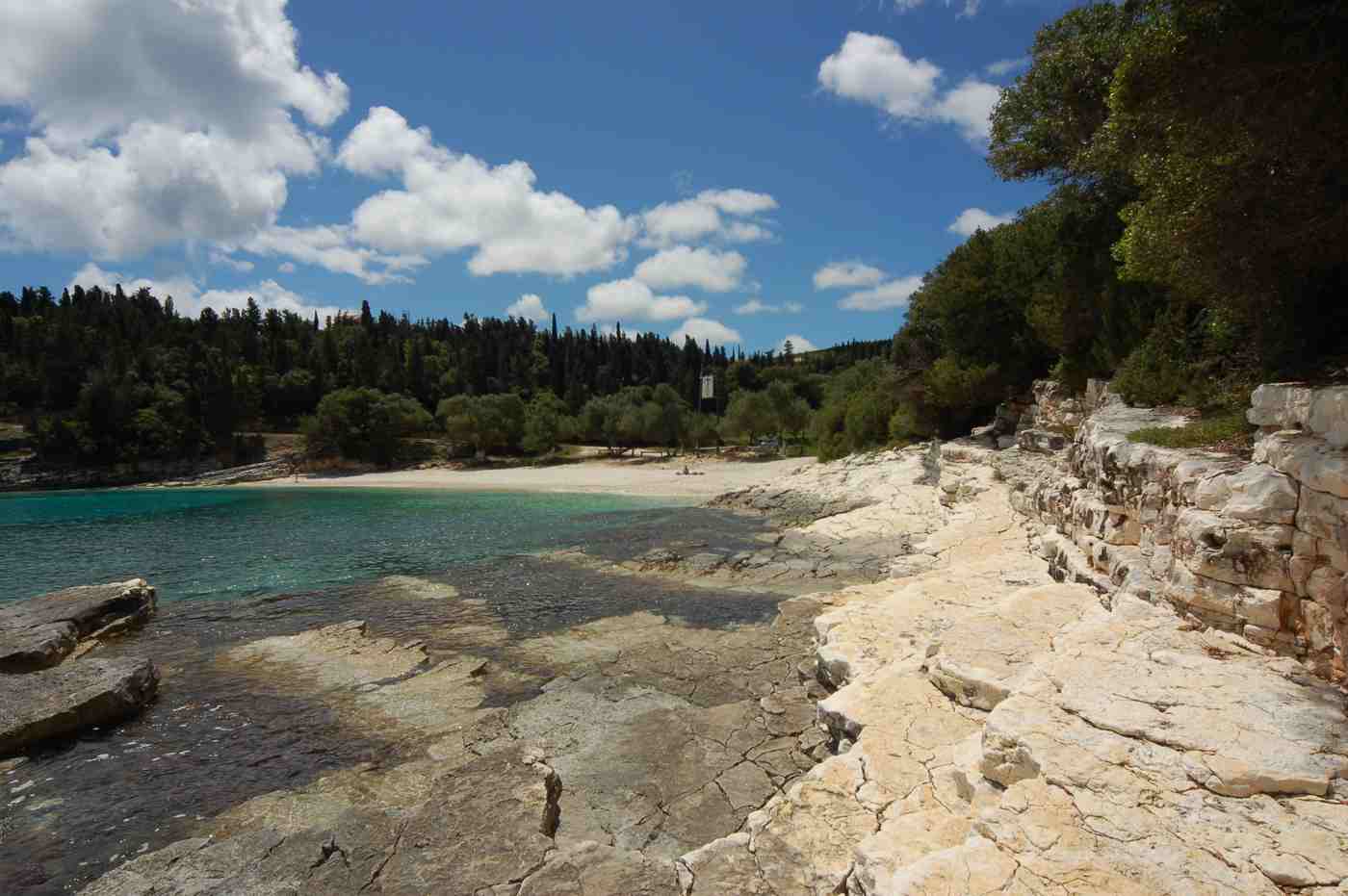
Loggerhead sea turtles, Caretta caretta, are the emblem of Kefalonia’s wildlife. Adults feed in the sheltered bay at Argostoli and rest inside the Koutavos lagoon. The lagoon sits beside the De Bosset bridge, minutes from the town centre. Females nest on the sandy south coast near Skala. Watchers on the harbour quay see shells break the surface three or four metres away. The same visitors then follow marked nests along Mounda and Kaminia. The encounter costs nothing and needs no boat. That makes it the most accessible wildlife sighting on the island. Plan the whole trip with Greece Tours.
Access carries obligations. Feeding, touching, chasing and crowding harm the animals, and each act is prohibited under Greek law. Boats hold their distance from surfacing shells. Nesting sand stays clear of umbrellas and vehicles. Lights behind the beach go dark after sunset, so hatchlings run toward the sea rather than inland. This guide sets out where the turtles gather and how the nesting cycle runs. It also covers the dawn work of conservation teams on the sand. The closing sections explain how a visitor watches without doing damage.
What are the loggerhead sea turtles of Kefalonia and why does the island matter for them?
Loggerhead sea turtles, Caretta caretta, use Kefalonia as both a feeding ground and a nesting ground. The sheltered bay at Argostoli holds adults through the year.
Caretta caretta is the most widespread sea turtle in the Mediterranean, and Kefalonia holds one of the steadier populations in the Ionian Sea. Adults reach about one metre in shell length and weigh close to 100 kilograms. The species carries a broad head and powerful jaws built for crushing crabs, molluscs and jellyfish. Females return to the coast where they hatched, which ties each generation to specific beaches. That homing behaviour explains why the sandy strands of the southeast coast carry weight far beyond their modest size.
The island’s geography suits the species. A wide, shallow bay cuts into the southwest at Argostoli, and its calm water and soft seabed hold crabs, sea urchins and discarded fish. The south and southeast coasts run to fine sand rather than the white pebbles of Myrtos. Sand is what a nesting female needs. Warm, low-energy shorelines at Mounda and Kaminia let a clutch incubate without washing out. Feeding ground and nesting ground sit within about 40 kilometres of each other, on one island of 773 square kilometres.
Loggerheads carry protection under Greek and European law, and stretches of the island’s nesting coast fall inside designated conservation areas. Harming, capturing or disturbing a turtle is an offence, and damaging a nest is treated the same way. Beach businesses near nesting sand work under limits on umbrella lines, vehicles and night lighting. Fishermen at Argostoli report entangled or injured animals to rescue teams rather than handling them alone. Legal protection sets the floor, and daily behaviour on the quay and the sand decides the actual outcome.
Turtles also shape how visitors move around the island through the day. Wildlife watching pulls people to the harbour early, before the traffic and the heat, and to the south coast in the evening. That interest funds monitoring, supplies volunteer programmes and pushes hotels toward shielded lamps and lower beach furniture. Pressure runs in both directions, because crowds, boat wakes and bright terraces reach the same water and the same sand. The balance between visitor access and animal welfare underpins every rule set out in the sections below.
Where do turtles gather in Argostoli harbour and the Koutavos lagoon?
Turtles gather along the Argostoli fishing quay, where crews clean their catch, and inside the sheltered Koutavos lagoon beside the De Bosset bridge. Both sites sit within a short walk of the town centre.
Argostoli wraps around the head of a long bay, and the fishing quay runs along the northern edge of the waterfront. Boats come back in the morning, and crews gut and rinse their catch at the water’s edge. Loggerheads learned to follow that routine generations ago, and adults now hold station beside the moorings. Watchers stand on the paving and look down into water about two metres deep. A shell breaks the surface for a breath, then the animal sinks back beneath the hulls, out of sight for a minute or two.
The Koutavos lagoon lies immediately east of the town, closed off by the De Bosset stone bridge that carries the road across the water. Seagrass, mud and shallow warmth turn the lagoon into a nursery for fish and a resting basin for turtles. Walkers on the bridge and on the wooded footpath around the shore spot shells drifting under the surface. Herons, eels and mullet share the same water. The lagoon is a protected wetland, so swimming and private boating inside it are not permitted.
Early morning delivers the calmest viewing at the harbour. Fishing boats arrive soon after sunrise, the quay stays quiet, and the low sun cuts the glare off the water. Turtles concentrate near the boats for about an hour, then spread back across the bay. Midday brings heat, crowds and engine noise, and the animals move into deeper water. Evening opens a second, thinner window near the bridge. The quay sits level with the road, so pushchairs and wheelchairs reach it. Watching costs nothing and needs no ticket, boat or guide.
Feeding is the hard line at the harbour. A turtle that takes bread, scraps or bait from human hands loses its wariness. The same animal then crowds the quay where propellers turn. Scarred shells on the Argostoli turtles record what contact with a hull does. Watchers keep hands empty, keep noise down and stay behind the quay edge instead of leaning over the water. Photographs work from the paving without flash. The rule stays simple: watch from dry stone, and let the turtles find their own food.
Which beaches near Skala are the main loggerhead nesting sites in southern Kefalonia?
Mounda and Kaminia, on the southeast coast near Skala, hold the island’s main loggerhead nesting sand. Both beaches run long, flat and fine-grained. Monitoring teams mark and cage individual nests across the whole warm season.
Mounda beach stretches east of Skala along a shallow, open bay, backed by low dunes and scrub rather than cliffs. Fine grey-gold sand runs for kilometres with buildings behind it, and the gradient stays gentle. A female hauls out at night and climbs above the tide line. She digs a chamber with her rear flippers, lays a clutch, then covers it and returns to the sea. Loose, dry sand above the waterline is what that process requires, which is why Mounda records the highest nest numbers on the island.
Kaminia sits a short drive further east, past the Skala lighthouse road, and stays the quieter of the two beaches. Sand, tamarisk trees and a rough access track keep the crowds thin. Nest markers stand in clear view above the tide line. Shade comes from the tamarisks rather than from parasols. Set beside the pebble coves that headline the wider Kefalonia beaches, these southeastern strands look plain to a swimmer. Turtles read them differently, because soft sand, low wave energy and darkness behind the beach add up to workable nesting ground.
Marked nests appear as small wooden or bamboo frames, often with a mesh cage over the sand and a tag carrying a code. The frame warns beachgoers away from the chamber below, and the mesh blocks digging by dogs and foxes. Hatchlings still pass through it. Walking inside a marker, sitting on it or planting an umbrella beside it damages the clutch. Sand compacted by vehicles or sunbeds hardens the crust and traps hatchlings underneath. Keeping about three metres of clear space around every marker costs a visitor nothing.
Nesting is not limited to the two headline beaches. Sand near Potamakia, Ratzakli and the eastern edge of Skala takes clutches too, and single nests turn up along the Katelios and Lourdas coast. Katelios lies between Skala and Lourdas, and its long strand carries markers in the same pattern. Drivers on the south coast road pass all of these bays within an hour. Treating any marked sand as active nesting ground, rather than only the two famous stretches, is the practical approach for a visitor.
When do loggerhead turtles nest and hatch on the beaches of Kefalonia?
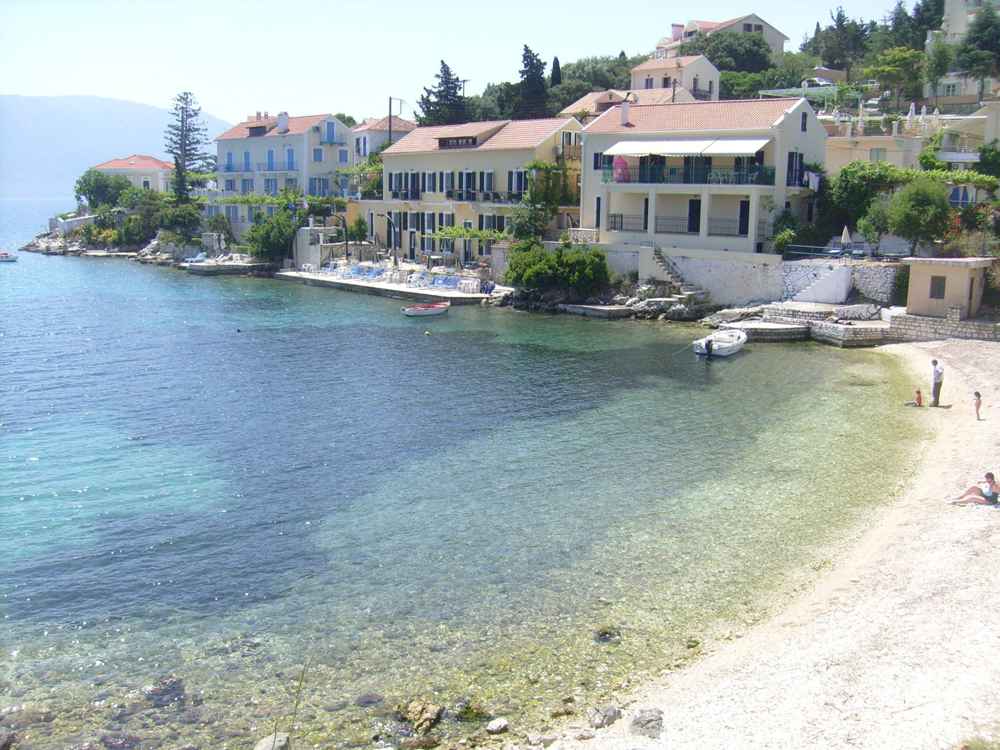
Nesting runs through the warm half of the year on Kefalonia. Females come ashore at night from late spring into midsummer. Incubation lasts roughly two months, and hatchlings emerge from high summer into early autumn.
The cycle starts offshore. Adults mate in the water near the nesting coast during spring, and females then wait close inshore between clutches. One female comes ashore more than once in a season, spacing her nests about two weeks apart. Each clutch holds roughly 100 eggs, laid in a flask-shaped chamber about half a metre deep. She never returns to tend them. Everything after the covering of the sand rests on temperature, moisture and whether the nest stays undisturbed until the hatchlings dig their way out.
Incubation takes about 55 to 60 days, and sand temperature drives both the speed and the result. Warmer sand produces faster development and more females, while cooler sand produces more males. That link makes shade, sand colour and beach position biologically important rather than incidental. Nest depth of about half a metre buffers the daily swings. Travellers planning around the cycle read the best time to visit Kefalonia alongside the nesting calendar. Peak hatching overlaps the hottest and busiest weeks on the south coast, when Skala and Katelios fill with beach traffic.
Hatchlings break the shell, then rest under the sand for two or three days while the group works upward together. Emergence happens at night, once the surface cools. The young turtles orient toward the brightest low horizon, which above an undeveloped beach is the sea reflecting the sky. They cross the sand in minutes, swim hard for about a day and a half, and reach open water. Fewer than one in a thousand reaches breeding age, so every clutch that emerges cleanly carries real weight.
Harbour viewing at Argostoli works across the whole warm season, and adults stay in the bay outside the nesting window as well. Beach viewing runs on different terms, because nests sit under markers and emergence happens in darkness without an audience. Visitors arriving in high summer see marked nests by day at Mounda and turtles in the harbour by morning. Anyone hoping to watch a female nest at night keeps expectations low. The event is rare, unpredictable and closed to unsupervised watchers on protected sand.
How do conservation groups monitor and protect the sea turtles of Kefalonia?
Conservation teams walk the nesting beaches at dawn, record fresh tracks, mark and cage each clutch, then count hatchlings after emergence. Volunteers also photograph the Argostoli harbour population and respond to injured or entangled animals.
Morning surveys form the backbone of the work. A team walks a fixed stretch of Mounda or Kaminia soon after first light and reads the night’s tracks in the sand. Track width and pattern identify the species, and a shallow scrape marks a false crawl, where the female turned back without laying. Confirmed nests receive a location record, a marker and, where predation risk runs high, a mesh cage. The same route is covered daily, so the record builds into a picture of the whole season.
Excavation follows emergence. Once the hatchlings leave, the team opens the chamber and counts empty shells, unhatched eggs and any young trapped below the crust. Each excavation takes about half an hour. Those figures give hatching success per nest and flag flooding, compaction or root invasion. Turtles in the harbour are photographed for identification, because shell scars and head-scale patterns work like fingerprints. Injured animals go to rescue facilities for treatment. Records from Kefalonia feed regional Mediterranean assessments alongside the far larger nesting coast of Zakynthos.
Awareness work runs alongside the fieldwork. Information stands appear on the Argostoli waterfront and near the Skala beaches. Volunteers talk to beach operators about umbrella lines and lighting, and school groups join sessions during term. Talks reach visitors as well as residents, because the summer beach crowd arrives from abroad. Quayside signs in Greek and English explain why feeding harms the animals. Hotels behind the nesting coast are asked to shield outdoor lamps. Staff close seaward curtains after dark, because stray light pulls hatchlings inland.
Volunteers supply most of the labour. Programmes take people for stretches of the season and house them in shared accommodation near Skala or Argostoli. Training covers track reading, nest marking and public engagement. Days start before sunrise and involve long walks over soft sand. The work is unpaid, outdoors and physically demanding. Travellers staying a week join an organised beach clean or attend a talk instead. Reporting a stranded or entangled turtle to the port authority is the single most useful act an ordinary visitor performs.
What are the rules for watching the turtles of Kefalonia responsibly?
Watchers hold their distance, keep quiet and keep their hands empty. Feeding, touching, chasing and crowding turtles are prohibited. Nesting sand stays clear of umbrellas and vehicles, and lights behind the beach go off once darkness falls.
Distance is the first rule at every viewing site. On the Argostoli quay, watchers stay on the stone and let each animal choose how close to come. Swimmers in open water hold about five metres. Nobody swims above or behind a turtle, because a blocked route to the surface causes panic. Snorkellers keep their fins still and let the animal pass. Touching a shell strips the protective film from the keratin. Grabbing a turtle for a photograph counts as harassment under Greek law, with penalties attached.
Feeding changes behaviour permanently. A turtle fed by hand links people and boats with food, then approaches propellers, hooks and nets without hesitation. Bread and processed food damage the digestive system of an animal built for crabs and jellyfish. The fish waste at the Argostoli quay is a by-product of the fishery, not a feeding station. Conservation teams work to reduce even that dependence. Buying bait to draw turtles closer for a photograph does direct harm. Nothing about the diet of this animal requires a human hand. The damage outlasts the holiday by years.
Nesting sand carries its own rules. Umbrellas, sunbeds and windbreaks stay off marked areas, because a pole driven through the crust reaches the eggs below. Vehicles and quad bikes are banned on the sand, since tyre ruts trap hatchlings and compaction hardens the chamber roof. After dark the beach stays free of torches, phone screens, bonfires and music. Digging holes and leaving them open turns a nesting beach into a trap. Cigarette ends and glass add to the risk. Level, dark sand is what a hatchling needs. Carrying litter away helps immediately.
Boat handling matters as much as beach behaviour. Skippers cut speed inside Argostoli bay, steer clear of surfacing shells and never move to intercept an animal. Anchoring over seagrass tears up feeding habitat. Wake from a fast hull reaches the shallows by the bridge. Operators running wildlife trips hold their distance rather than circling, and idle the engine when a turtle surfaces alongside. Passengers stay seated and quiet, without leaning out to touch. Reporting a boat that chases or corrals turtles to the port authority is the correct response, rather than filming it.
Which boat trips around Kefalonia suit turtle watching, and what do visitors avoid?
Small boat trips from Argostoli and the east coast cross water where loggerheads feed, and sailing and glass-bottom excursions add snorkelling stops. Trips promising guaranteed sightings, in-water handling or feeding deserve a flat refusal.
Boat trips leave from the Argostoli waterfront and from the east coast ports at Sami and Poros. Routes run along the bay and out toward the Paliki peninsula. A sighting arrives as a bonus on a coastal cruise rather than a promise, because loggerheads move freely across open water. Sailing boats and small motor caiques carry fewer passengers and generate less noise than large party vessels. Half-day trips reach quiet bays where the water sits clear enough to show a turtle grazing below. Departures run through the warm season.
Turtle watching fits inside a wider day rather than filling one. A morning at the harbour, then the Melissani cave near Sami or the Venetian castle above Assos, runs without rushing. Planning guides that list things to do in Kefalonia place the wildlife stops beside the caves and the Robola vineyards of the Omala valley. Mount Ainos rises to 1,628 metres above the same route. Sami lies about 25 kilometres northeast of the capital. The island covers about 773 square kilometres, so the drive from Fiskardo to Skala takes roughly two hours.
Certain offers deserve a flat no. Trips advertising guaranteed turtle encounters, in-water handling, or feeding to bring animals alongside break both the law and the animal’s interest. Excursions that drop swimmers directly onto a feeding turtle create the same problem in slower motion. Refusing those trips removes the market for them. Night visits to nesting beaches without an authorised guide are closed, and so is flying a drone low over the sand. Operators who set out the distance rules before departure, rather than after, tend to run the trip properly.
Small choices add up across a season. Travellers carry litter off the sand and refuse single-use plastic on boats. Booking accommodation that shields seaward lighting helps too, and injured animals get reported rather than moved. Donations and volunteer hours fund the dawn surveys that produce the monitoring data. Those teams walk the same sand every day of the season. Choosing an operator that keeps its distance sends a commercial signal along the waterfront. The loggerheads of the island have adapted to people. Distance, quiet and empty hands cover most of the rest.
Frequently Asked Questions
Where is the easiest place to see turtles in Kefalonia?
The Argostoli waterfront is the easiest place. Loggerheads hold station beside the fishing quay on the northern side of the town, where crews clean their catch and scraps enter the water. Watchers stand on the paving, look down about two metres and see shells surface within three or four metres of the stone. The neighbouring Koutavos lagoon sits behind the De Bosset bridge. The bridge itself and the footpath around the shore give a second vantage point. Neither site needs a ticket, a boat or a guide, and both sit inside a ten-minute walk of the town centre. Shade on the quay is thin, so an early start suits the watcher too.
Early morning, soon after the boats return, delivers the calmest water and the fewest people.
Can you swim with sea turtles in Kefalonia?
Swimming in the same water as a loggerhead is legal, and deliberately approaching, touching or chasing one is not. Snorkellers who meet a turtle in a bay hold about five metres. They stay to the side rather than above or behind the animal. Fins stay still, so the route to the surface remains open. Turtles breathe air, so blocking that path causes panic and exhaustion. Touching the shell strips the protective film from the keratin surface. Swimming inside the Koutavos lagoon is prohibited, because the lagoon is a protected wetland. Feeding a turtle to draw it close for a photograph is an offence under Greek law. The habit also damages the animal’s long-term behaviour around boats.
What time of day do turtles appear in Argostoli harbour?
Early morning gives the best odds, from around sunrise until roughly two hours later. Fishing boats return in that window, crews gut and rinse the catch at the quay, and the turtles move in on the waste. Light stays low, glare on the water stays thin and foot traffic is minimal, so shells are visible under the surface. Numbers drop through the middle of the day as heat, crowds and engine noise build. The animals move out into deeper parts of the bay. A second, quieter chance opens in the evening near the De Bosset bridge and along the lagoon edge. Sightings are never guaranteed at any hour, because the animals range across the whole bay.
Can visitors go to the nesting beaches at Mounda and Kaminia?
Mounda and Kaminia stay open to the public by day, and both work as ordinary swimming beaches on the southeast coast near Skala. Marked nests sit above the tide line inside small wooden frames, often under a mesh cage with a numbered tag. Visitors keep about three metres clear of every marker. Umbrella poles stay off the dry upper sand, and dogs stay away from the frames. Vehicles and quad bikes are banned on the sand. After dark the beaches close in practice, because torches, phone screens, fires and music disorient both nesting females and emerging hatchlings. Night visits happen only with authorised monitoring teams. Digging holes and leaving them open traps hatchlings crossing to the sea.
What do the loggerhead turtles of Kefalonia eat?
Loggerheads eat hard-shelled prey. Powerful jaws and a broad head crush crabs, sea urchins, whelks and mussels taken from the seabed. Jellyfish, sponges and fish are added when available. The shallow, soft-bottomed bay at Argostoli supplies exactly that mix, which explains why adults stay resident there rather than passing through. Seagrass meadows in the bay support the invertebrates the turtles hunt, so anchor damage on the meadows reduces the food supply. Fish waste from the quay is an opportunistic extra, not a natural diet. Feeding by hand replaces the natural diet with human waste food. Bread and processed food damage the digestive tract.
Floating plastic bags resemble jellyfish closely enough that turtles swallow them, which is one reason litter removal matters.
How can visitors help protect the turtles of Kefalonia?
Behaviour helps more than money. Visitors keep their hands empty on the Argostoli quay and refuse to buy bait or bread for feeding. Swimmers hold about five metres in the water. Walkers stay clear of marked nests on Mounda, Kaminia and Katelios. Beach lights, torches and phone screens go off after dark near nesting sand, and seaward curtains stay closed in rooms behind the beach. Litter leaves with the person who brought it, especially plastic bags and bottles. Reporting an injured, stranded or entangled turtle to the port authority puts trained people on the case within hours. Booking operators who state distance rules before departure, joining a beach clean or donating funds the dawn nest surveys.