
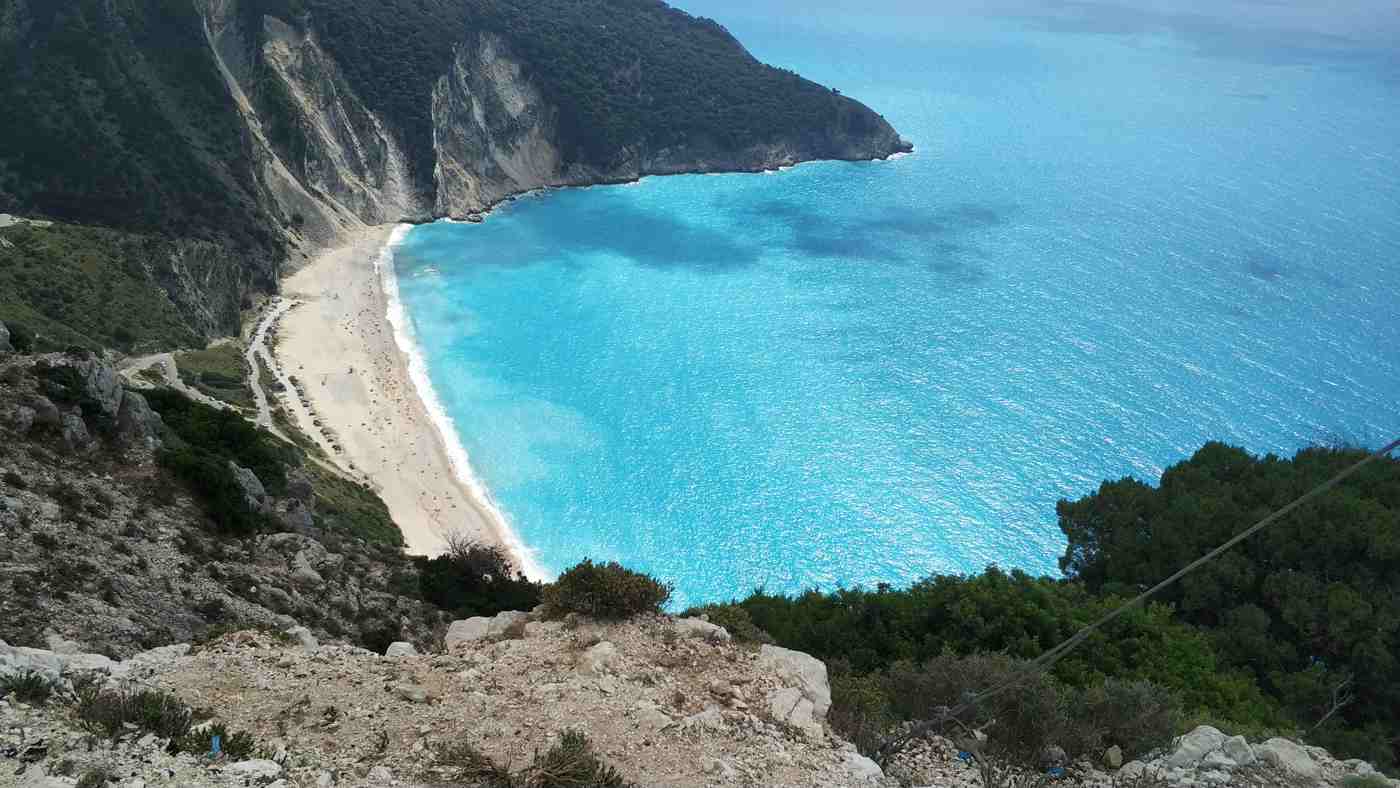
Kefalonia rewards travellers who match the month to the plan. The largest of the Ionian Islands runs a long main season. It opens in late spring and closes in early autumn, and each stretch of it delivers a different island. Spring paints Mount Ainos and the Omala valley green, and leaves Myrtos almost empty. July and August pour heat, flights and visitors onto the same coast roads. September holds summer sea temperatures while the queues shorten. October hands the villages back to the people who live in them. Understanding that rhythm decides the shape of a trip. It turns a week into a swimming holiday, a walking holiday, or a driving tour of Assos, Fiskardo and Sami. Plan the whole trip with Greece Tours.
Climate explains most of the pattern. Kefalonia sits in the Ionian Sea off western Greece and takes more rain than the Cyclades. The island stays far greener as a result, with Cephalonian fir on the high ground and olive groves below. Summers turn hot and dry, while winters stay mild and wetter. The shoulder months carry the mildest walking weather of the year. Access follows the same curve. Kefalonia Airport and the ferry links to Kyllini, Patras, Astakos and Ithaca all run hardest in midsummer, then thin out either side. This guide works through the calendar season by season. The timing question therefore gets a concrete answer rather than a general one.
When is the best time to visit Kefalonia?
Late May through early October delivers the best conditions on Kefalonia. Warm sea, reliable sunshine and full ferry and flight schedules define that stretch. June and September balance heat against crowds, while July and August run hottest and busiest.
Kefalonia runs a long main season that opens in late spring and closes in early autumn. April and May bring green hills and mild days, June turns properly warm, and July and August hold the heat. September keeps the sea warm while the crowds thin, and October slides into softer light and wetter spells. The island stays open longer than its smaller Ionian neighbours, because it carries two working ports, an airport and a permanent population. Argostoli, Lixouri, Sami and Poros all function right through the winter. Travellers who want swimming weather aim between June and September. Travellers who want empty roads, mountain walking and wildflowers choose April, May or October instead, and accept a cooler sea.
The climate here is Mediterranean, with hot dry summers and mild wetter winters. Rain concentrates between late autumn and early spring. That extra water is why Kefalonia looks greener than the Cyclades even in high summer. Cephalonian fir covers the upper slopes of Mount Ainos. Olive groves and cypress fill the middle ground, and vineyards hold the Omala valley behind Argostoli. The moisture also changes what each month feels like underfoot. May hillsides still carry colour, while August hillsides run dry and pale. The first autumn rains pull the green back within weeks. Anyone comparing the island against Mykonos or Naxos notices the contrast in the landscape long before noticing it in the temperature.
Access shapes the season as much as the weather does. Kefalonia Airport sits about nine kilometres south of Argostoli. It handles its heaviest traffic in July and August, when direct European routes run at full frequency. Ferries link the island with Kyllini, Patras and Astakos on the mainland, while Sami connects east to Ithaca. Sailings thin out either side of the main season. A March or November trip therefore means routing through Athens and adding a longer mainland leg. Anyone planning tours, boat trips and transfers across Kefalonia finds the widest choice between June and September. Operators run daily departures in those months rather than fixed weekly ones.
Different months suit different plans. Swimmers point to July, August and September, when the water holds its warmth. Hikers on Mount Ainos prefer April, May and October. The fir forest stays cool in those months, and the climb to the summit ridge avoids the worst midday heat. Boat trips into the Melissani cave work best under a high sun. Late morning between May and September suits them, because the open roof throws light straight down onto the water. Wine tasting in the Omala valley and the drive north to Assos and Fiskardo work across the entire season. Both run far quieter outside August, when the coast road above Divarata carries less traffic.
What is spring like on Kefalonia?
Spring turns Kefalonia green, with wildflowers across Mount Ainos and the Omala valley, mild walking weather and quiet villages. April and May deliver the year’s clearest light and strongest hillside colour, though the sea stays cool until late May.
March and April open the walking season on Kefalonia. Hillsides above Argostoli and along the road towards Divarata carry orchids, cyclamen and broom. The fields around Skala and Lourdas run green rather than gold. Daytime temperatures sit in the mild range that suits long drives and village walks, and the light stays soft into the evening. Rain still arrives in bursts through March, clearing within a day. A spring itinerary therefore works better built around flexible plans than around fixed beach days. Photographers get the year’s cleanest views across the Ionian from the Assos road. The air holds far less haze in April than it does in August, so Ithaca and Lefkada stand out sharply.
Mount Ainos National Park reaches its strongest interest in April and May. The endemic Cephalonian fir covers the upper slopes, and the forest floor carries flowering shrubs. Semi-wild horses live on the mountain and move across open ground below the summit ridge. The road up from the Argostoli to Sami route climbs steadily to the park gate. Walking tracks near the top stay cool even once the coast warms. Spring also suits the Omala valley underneath. Robola vineyards leaf out there, and the monastery of Agios Gerasimos, the island’s patron saint, draws pilgrims through the season. Both stops fit inside one half-day, which frees the afternoon for the caves near Sami.
The sea lags behind the air right through spring. Water off Myrtos, Petani and Antisamos stays cool into May. Swimming feels brisk rather than comfortable until the final week of that month. The upside shows on the sand instead. Kefalonia beaches that fill by mid-morning in August sit close to empty in April. Parking above Myrtos or on the track down to Foki takes minutes rather than a long wait. Sunbed operators start setting up through May rather than April, so early visitors carry their own shade. Walkers and photographers get the whole northwest coast to themselves before the season’s traffic begins in earnest. The water still reads its clearest turquoise in the April light.
Practicalities tighten outside the main season. Flight choice narrows through March and April, and ferry frequency from Kyllini and Patras drops back. Part of the tourist infrastructure in Skala, Lassi and Fiskardo stays shut until May. Argostoli and Lixouri work all year, so food, fuel and car hire remain straightforward. Greek Orthodox Easter falls in spring and lifts village life across the island. Processions fill Argostoli and the mountain villages, and Greek travellers book out hotels over the long weekend. Anyone building a spring trip reserves the Easter dates well ahead. The rest of April and May then reads as the calmest stretch of the entire travel year.
How hot and busy does Kefalonia get in July and August?
July and August bring the island’s strongest heat, driest air and heaviest visitor numbers. Argostoli, Myrtos and the Melissani cave fill from mid-morning. Flights and ferries run at maximum frequency, and rooms across Fiskardo, Assos and Lassi book out early.
Heat defines the midsummer weeks. July and August deliver long dry days, with sun from early morning until late evening. The inland basins around Argostoli and the Omala valley hold that heat well after sunset. Rain effectively stops, hillsides turn pale, and the fir forest on Mount Ainos becomes the coolest ground on the island. Sensible planning shifts activity to the edges of the day. The drive to Assos and the climb to its Venetian castle work before eleven. A long lunch and a swim fill the middle, then Fiskardo or the Argostoli waterfront takes the evening. Shade at Myrtos is scarce, so an umbrella matters more there than at wooded Antisamos or Foki.
Crowd pressure concentrates on a short list of places. Myrtos takes the heaviest load. The cliff road above it fills with parked cars by late morning, and the viewpoints stay busy through the afternoon. Boat queues build at the Melissani cave, where the underground lake takes small boats one group at a time. The Drogarati cave nearby fills whenever a cruise ship calls at Sami. Antisamos, Xi, Makris Gialos and Platis Gialos all run at capacity in August. Arriving before nine or after five changes the experience completely. The southern beaches at Skala and Lourdas absorb visitors more comfortably, because both stretch far further along the shore than Myrtos does.
Transport reaches its yearly peak. Kefalonia Airport handles its densest schedule of direct European flights in July and August. Ferries from Kyllini, Patras and Astakos add sailings, and the short crossing between Argostoli and Lixouri runs frequently through the day. That abundance comes with competition. Hire cars sell out, and the popular boat trips from Sami and Fiskardo fill days ahead. Accommodation in the northern villages books out first, because Assos and Fiskardo hold limited rooms. Booking flights, a car and the Ithaca day trip together removes most of the friction. Travellers with flexible dates gain more by moving to late June or early September than by hunting bargains in August.
Wind behaves differently here than in the Aegean. The meltemi blows lighter across the Ionian. Kefalonia therefore escapes the sustained gales that hit the Cyclades in July and August, and morning seas are frequently glassy. The west coast still catches an afternoon swell. Myrtos sits open to that side, and its steep pebble shelf turns the water choppy once the breeze picks up after lunch. Petani, on the Paliki peninsula, behaves the same way. Swimming on that coast works best before midday. The sheltered east-coast bays near Sami stay calmer through the afternoon, and so do the south-facing sands at Xi and Skala. Antisamos holds that calm most reliably of all in August.
Is September or October a good time for Kefalonia?
September ranks among the island’s strongest months, holding summer sea warmth with thinner crowds and steady sunshine. October keeps mild days and quiet roads, though rain returns and part of the coastal infrastructure closes down for winter.
September works as the island’s balanced month. The sea holds the warmth built through July and August. Swimming at Myrtos, Antisamos and Makris Gialos stays comfortable from morning until evening. Air temperatures ease back from the midsummer peak, which makes the walk up to Assos castle far more pleasant. The drive over Mount Ainos improves for the same reason. Crowds fall away sharply once the first week passes and families return home, and the cliff road above Myrtos empties out. Boat trips from Sami and Fiskardo keep running daily. Restaurants in Argostoli and Lixouri stay open late, and hire cars become easier to secure at shorter notice.
October marks the wind-down. Days stay mild and the light softens, but rain returns in spells. The first storms roll in from the west, so a week on the island mixes beach afternoons with drives and village stops. Green creeps back onto the hillsides within weeks of the first proper rainfall. The Omala valley and the lower slopes of Ainos recover the colour lost through summer. Sunbed and watersports operators pack up through the month, and beach tavernas at Petani and Foki close. Evening life concentrates in Argostoli, Lixouri and Poros. Travellers who prefer walking, wine and photography over guaranteed swimming get strong value from the month.
Autumn belongs to the vineyards. The Robola harvest on the high Omala valley falls at the end of summer. The cooperative below the monastery of Agios Gerasimos runs at its busiest in that stretch. Village festivals across the island cluster around the same weeks, and the island’s food shifts towards the autumn table. Olive picking follows later in the year, across the groves between Argostoli and Sami. A morning in Omala combines well with the caves at Sami. It also pairs with the Katavothres sea mills and the De Bosset bridge in Argostoli. The driving stays cool, and the roads carry a fraction of the August traffic.
Schedules contract steadily through the autumn. Direct flights into Kefalonia Airport thin out from the end of September and largely finish by late October. Ferry frequency from Kyllini and Patras drops back towards the winter timetable. Fiskardo and Assos quieten first, since both live almost entirely on the season, and Skala and Lassi follow soon after. Argostoli, Lixouri, Sami and Poros carry on as working towns with year-round services. A late-October trip therefore works best based near Argostoli, with a hire car for the coast. The island turns inward once the last charter flights leave, and prices in the towns settle back to local levels.
What closes on Kefalonia in winter, and who does the island suit then?
Winter strips Kefalonia back to its two working towns. Resort hotels in Skala, Lourdas and Fiskardo shut from November, seasonal tavernas close, and ferry schedules thin, leaving Argostoli and Lixouri running for residents.
Kefalonia empties from the end of October. Beach hotels at Skala, Lourdas, Makris Gialos and Platis Gialos lock their doors for the winter, and the harbour at Fiskardo loses most of its restaurants by mid-November. Assos keeps a handful of houses lit. The steep road down to Myrtos beach carries almost no cars between December and February, and car-hire desks at Kefalonia Airport cut their fleets back. The excursion boats inside Melissani cave stop until spring, and the beach bars vanish from Antisamos and Xi. The island that stays open through the winter is the working one: Argostoli, Lixouri, the port at Poros and the inland villages of the Omala valley.
Rain defines the Kefalonian winter. The Ionian islands catch wet westerly weather that crosses the sea between November and March. That rain is why Kefalonia stays green while the Aegean islands turn dry and bare. Storms push waves against the exposed northwest coast at Myrtos and Petani. Strong wind cancels sailings from Kyllini, Patras and Astakos at short notice, and the Lixouri crossing pauses on the roughest days. Mount Ainos takes the worst of the weather, and the national park road up the ridge turns cold and cloud-covered. Argostoli sits in the most sheltered corner of the island, tucked into its bay in the southwest, and keeps its waterfront usable.
Winter suits travellers who want the town rather than the coast. Argostoli keeps its market, its cafes along the Lithostroto shopping street and the walk across the De Bosset bridge over the lagoon. The Napier Garden stays open through the wet months. The monastery of Agios Gerasimos and the Robola cooperative in the Omala plain receive visitors year round, and the Katavothres sea mills need no season at all. Anyone building a cold-weather itinerary from the wider list of things to do in Kefalonia works around monasteries, museums and towns. Beaches, boat trips and clifftop viewpoints at Myrtos and Assos move to the following spring.
Practical winter travel on Kefalonia runs through Argostoli. The short ferry across the bay to Lixouri keeps operating on a reduced timetable. The island bus network drops to school-and-market frequency, which makes a hire car close to essential for reaching Sami, Fiskardo or Skala. Sami and Poros stay awake as ports rather than as resorts. Two dates lift the calendar out of the quiet. The Argostoli carnival parade fills the streets before Lent, and Greek Easter brings families back to the Paliki peninsula and the Omala valley. Open accommodation concentrates in Argostoli and Lixouri, so booking a town base beats hunting for a coastal hotel.
Which months are best for swimming at Myrtos, Antisamos and Xi beach?
Sea swimming on Kefalonia runs comfortably from June to early October, and the water holds its warmth best in August and September. Myrtos, Antisamos and Xi lose their sunbeds and beach bars by late October.
May and early June open the beach season. Sunbeds appear at Makris Gialos and Platis Gialos outside Argostoli, and the beach bars at Antisamos near Sami reopen. The water turns swimmable for most visitors by the second half of June. The Ionian Sea warms later than the air, so a May swim at Myrtos feels sharp while the sun above the cliffs already feels like summer. Landscape favours the early season. The hills behind Assos and the Omala valley stay green into June. The wildflowers on the lower slopes of Mount Ainos have not burned off. The coast road north from Argostoli stays quiet.
July and August deliver the warmest sea and the fullest beaches. Myrtos fills its cliff-top car park well before mid-morning, and Antisamos runs at capacity from breakfast onwards. The red-orange sand at Xi beach on the Paliki peninsula draws day-trippers off the Lixouri ferry. Petani, on the western side of the same peninsula, takes the afternoon sun and the northwest swell together. Coastal accommodation in Skala, Lourdas, Lassi and Fiskardo books out earliest for these two months. Anyone comparing resorts through where to stay in Kefalonia reserves a summer base months ahead of arrival. Late bookers land inland, away from the July and August water.
September ranks as the strongest swimming month on Kefalonia. The sea holds the heat it gathered through July and August, and the beach bars at Antisamos, Xi and Skala keep working. Crowds at Myrtos drop away sharply once the school holidays end. Loggerhead sea turtles stay visible around Argostoli harbour and off Mounda beach in the south through the warm months. Calmer September water improves the odds of watching them from the quay without a boat. Trips from Fiskardo, Sami and Agia Efimia still sail daily through the month. Light on the northwest cliffs above Myrtos lengthens through the afternoon, and the coast road empties.
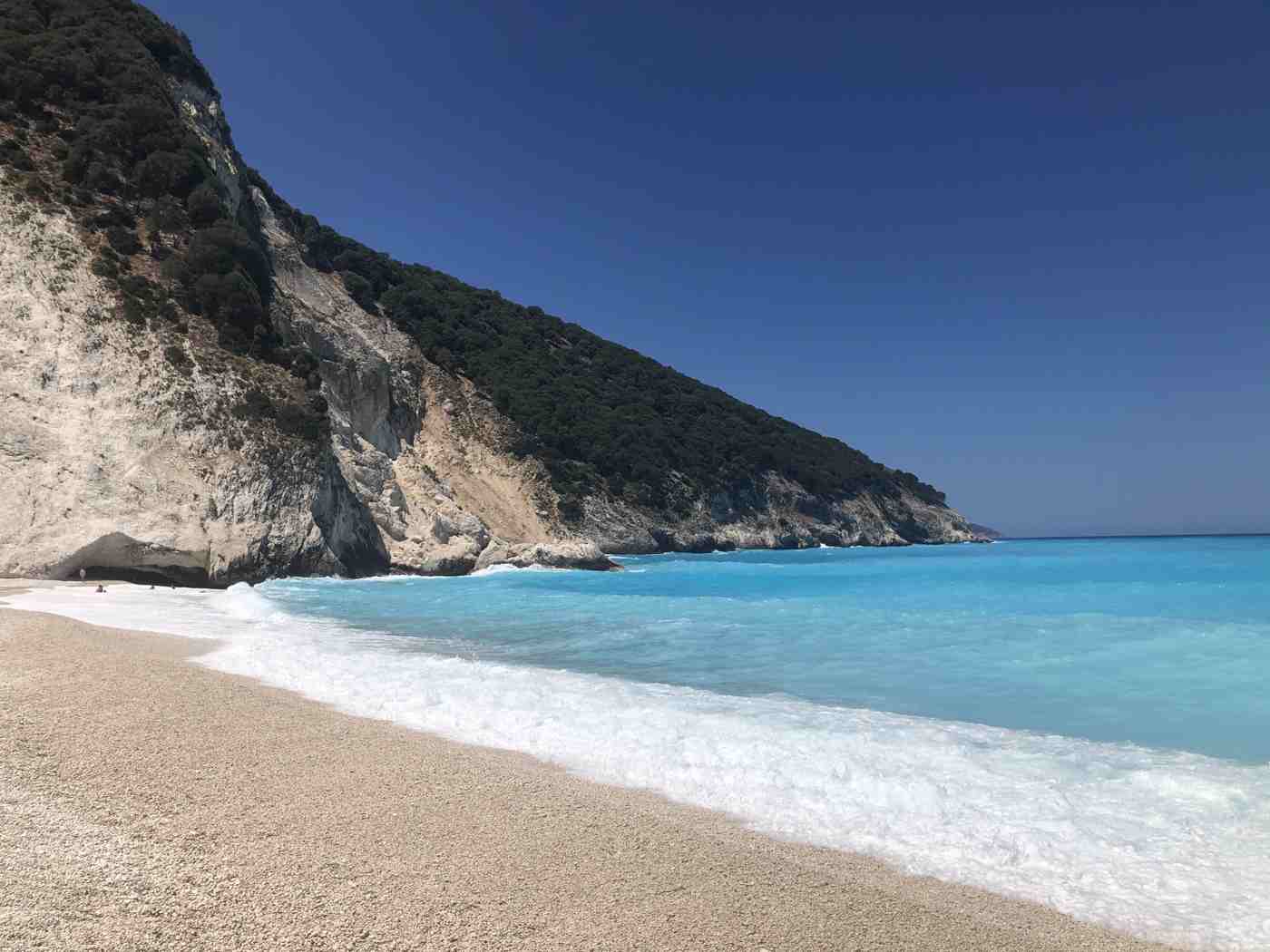
October closes the beach season in stages. The first half keeps warm water and open tavernas at Skala and Lourdas. The second half sees sunbeds stacked away and beach bars shuttered across the island. Wind matters more than temperature by then. Myrtos and Petani face the open northwest and pick up swell from autumn systems. Antisamos, Foki and Emblisi sit on sheltered east and north coasts, and they stay swimmable on days when the west side churns. Choosing a beach by its aspect, rather than by its reputation, extends usable swimming into the middle of October and keeps the final week of the season workable.
When is the best time to walk Mount Ainos and see Melissani cave on Kefalonia?
Mount Ainos walks work best in April, May, September and October, when the fir forest stays cool. Melissani cave rewards a midday visit, because overhead sun turns the water of the underground lake bright blue.
Spring belongs to Mount Ainos, the roof of the island. April and May bring wildflowers to the slopes below the summit ridge. The Cephalonian fir forest inside the national park holds its moisture, and the semi-wild horses graze the open ground near the top. The mountain reaches about 1,628 metres, the highest point in the Ionian Islands. Air on the ridge stays cooler than the coast at Argostoli or Sami, which makes a spring climb straightforward. The access road leaves the Argostoli to Sami highway and climbs the spine of the island. Clear April and May days open views across to Zakynthos, Ithaca and the mainland mountains behind Patras.
Midsummer pushes hiking on Kefalonia into the first hours of the morning. July and August heat makes the exposed sections of the Ainos ridge hard work after ten in the morning. The same applies to the castle path above Assos and the coastal walk out to Foki near Fiskardo. October restores comfortable walking, with cooler air, stable weather in the first half of the month and empty trails. Anyone driving up to the national park gate starts early in any season. Cloud builds around the summit through the afternoon and closes the views down to the Ionian, so the hours before noon carry the whole reward.
Melissani cave runs on the sun rather than on the calendar. The roof of the cavern near Sami collapsed long ago, and daylight now falls straight through that opening. Sun overhead turns the lake below an intense blue, so the boats between about eleven in the morning and two in the afternoon show the strongest colour. Queues build across July and August at exactly those hours. June, September and early October deliver the same midday light with a shorter wait at the jetty. Drogarati cave, the stalactite chamber up the road, keeps a steady cool temperature and works in rain as well as in bright sun.
Sightseeing across the rest of Kefalonia spreads through the shoulder months. Late September and October cover the Robola grape harvest in the high Omala valley, where the cooperative stands beside the monastery of Agios Gerasimos. Spring suits the Roman villa mosaics at Skala, the Venetian castle above Assos and the walk over the De Bosset bridge in Argostoli. All three of those sites turn hot and crowded through August. Fiskardo, the northern village that survived the great Ionian earthquake, keeps its Venetian-style harbour of pastel houses open from Easter to late October. The quieter weeks of June and late September show that harbour at its clearest.


How do flights, ferries and crowds on Kefalonia change through the year?
Flight frequency into Kefalonia Airport peaks in July and August, then thins sharply after October. Ferries from Kyllini, Patras and Astakos drop to winter timetables, so November to March arrivals route through Athens and the mainland.
Kefalonia Airport sits about 9 kilometres south of Argostoli, and its timetable follows the season closely. Charter and low-cost routes from across northern Europe concentrate between May and October. Choice peaks in July and August, then falls away once the summer programme ends, which leaves the domestic connections through Athens as the winter option. Ferry crossings from Kyllini, Patras and Astakos carry the mainland traffic, and they thin out on the same curve through November. Comparing the plane and boat routes side by side through how to get to Kefalonia shows how sharply the choice narrows once October ends and the charter season shuts down.
Ferry connections between the Ionian islands follow the same seasonal curve. Sami keeps the link to Ithaca working through most of the year and holds the mainland crossings to Astakos and Patras. The crossing from Pesada in the south to Zakynthos operates across the summer months alone. Lefkada links run out of Fiskardo in the warm season, and the small northern harbour fills with yachts alongside them. Poros takes the Kyllini boats and stays the practical southern entry point for cars from the Peloponnese. Winter traffic concentrates on the Kyllini to Poros and Patras to Sami routes, and westerly wind cancels those sailings at short notice.
Crowd levels on Kefalonia rise and fall in step with those schedules. July and August fill the cliff-top parking above Myrtos before mid-morning, queue the boats at Melissani and pack the small northern harbour at Fiskardo with yachts and cars. June and September carry the same open tavernas, boat trips and busy beach bars under far less pressure. The Lixouri ferry crosses the bay without a wait in either month, and parking in Argostoli stays workable. May and October run quieter again, with a shorter list of open coastal hotels and a full list of open sights, from Agios Gerasimos to the Katavothres sea mills.
Choosing a month on Kefalonia comes down to the trade each traveller accepts. July and August buy the warmest sea, the widest flight choice and the busiest roads together. June and September trade a slightly narrower schedule for calm at Myrtos, Antisamos and Xi. May and October favour walkers on Mount Ainos, drivers on the Assos and Fiskardo road, and visitors who prefer Argostoli to a resort. November to April removes the coast from the plan and leaves the towns, the monasteries, the Robola vineyards and the green interior of the island. Naming the priority first, then matching it against the season, makes the month obvious.
Frequently Asked Questions
What is the best month to visit Kefalonia?
September ranks as the strongest single month on Kefalonia. The sea holds the warmth it built through July and August, the beach bars at Antisamos, Xi and Skala still operate. Boat trips run daily from Fiskardo and Agia Efimia. Crowds at Myrtos thin out once the school holidays finish. June works almost as well, with cooler water, greener hills behind Assos and a full flight schedule into Kefalonia Airport. Travellers who rank hiking and sightseeing above swimming pick May or October instead. Mount Ainos and the Assos castle path stay comfortable in those months, and the light inside Melissani cave remains bright at midday.
August delivers the hottest sea and the busiest roads together, so it suits families tied to school holidays rather than visitors free to choose their own dates. Winter drops the coast out of the plan and leaves Argostoli, Lixouri and the Omala valley.
Is Kefalonia worth visiting in winter?
Winter on Kefalonia works for a town-based trip and fails for a beach one. Resort hotels in Skala, Lourdas, Lassi and Fiskardo close from November, seasonal tavernas shut and the Melissani boats stop. Flight and ferry schedules drop to their thinnest, and sailings from Kyllini, Patras and Astakos are cancelled during westerly storms. Argostoli and Lixouri keep running as real towns through those months, with markets, cafes on the Lithostroto, the De Bosset bridge walk and the Napier Garden. The monastery of Agios Gerasimos, the Robola cooperative in the Omala valley and the Katavothres sea mills stay accessible year round. Rain keeps the island green while the Aegean dries out.
The Argostoli carnival before Lent and Greek Easter both fill the villages. A hire car matters more than in summer, because bus frequency across the island falls away to a school-and-market timetable.
When can you swim in Kefalonia?
Swimming on Kefalonia runs comfortably from the second half of June to the middle of October. The Ionian Sea warms later than the air, so May swims at Myrtos and Petani feel sharp even under a hot sun. August and September hold the warmest water of the year. Beach infrastructure follows the same window: sunbeds and beach bars appear at Makris Gialos. Platis Gialos, Antisamos, Xi and Skala around May, then pack away through the second half of October. Aspect extends the season at both ends. Antisamos near Sami, plus Foki and Emblisi near Fiskardo, sit on sheltered east and north coasts. Those beaches stay swimmable when autumn swell hits the exposed northwest at Myrtos and Petani.
Choosing a beach by its exposure rather than its fame adds usable swimming days at both ends. In May and again in October.
What is the best time of day to visit Melissani cave?
Melissani cave shows its blue water between about eleven in the morning and two in the afternoon. The roof of the cavern near Sami collapsed long ago, and sunlight falls straight through that opening. Light entering from above lights the underground lake and produces the colour the cave is known for. Overcast weather and early or late hours flatten it. Those same midday hours draw the longest queues in July and August, so June, September and early October deliver identical light with a much shorter wait for the boats. Visitors pairing Melissani with Drogarati cave up the road take Drogarati first thing or late in the day.
The stalactite chamber keeps a steady cool temperature and needs no sunlight at all. Winter closes the Melissani boats entirely, along with most of the excursion traffic around Sami and Agia Efimia on the east coast.
When can you see loggerhead turtles in Kefalonia?
Loggerhead sea turtles appear around Kefalonia through the warmer months, and the two reliable places are Argostoli harbour and Mounda beach in the south. The turtles gather near the Argostoli fishing quay, where they are visible from the waterfront itself without a boat. Sightings run from the spring through to the autumn rather than across the whole year. Calmer water improves the view, which makes June and September stronger than the windier edges of the season. Mounda, on the southeast coast near Skala, is a nesting beach, so visitors keep to the marked areas, avoid the sand at night and leave nesting zones undisturbed. Winter removes the reliable sightings along with the excursion boats.
Pairing an early morning at the Argostoli quay with the De Bosset bridge, the Napier Garden and the Katavothres sea mills fills a half day in town.
When is the best time to hike Mount Ainos?
Mount Ainos walks best in April, May, September and October. The summit reaches about 1,628 metres, the highest point in the Ionian Islands, and the national park protects the endemic Cephalonian fir along with a herd of semi-wild horses. Spring brings wildflowers to the slopes and the clearest views across to Ithaca, Zakynthos and the mainland mountains behind Patras. July and August turn the exposed ridge sections hard going after mid-morning, so summer walkers start at first light and finish before the heat builds. Autumn restores cool air and quiet trails, and the first half of October holds the most stable weather of the season.
Cloud gathers around the summit through the afternoon in every month, which rewards an early start from Argostoli or Sami. Winter leaves the access road off the Argostoli to Sami highway cold, wet and frequently cloud-covered.