
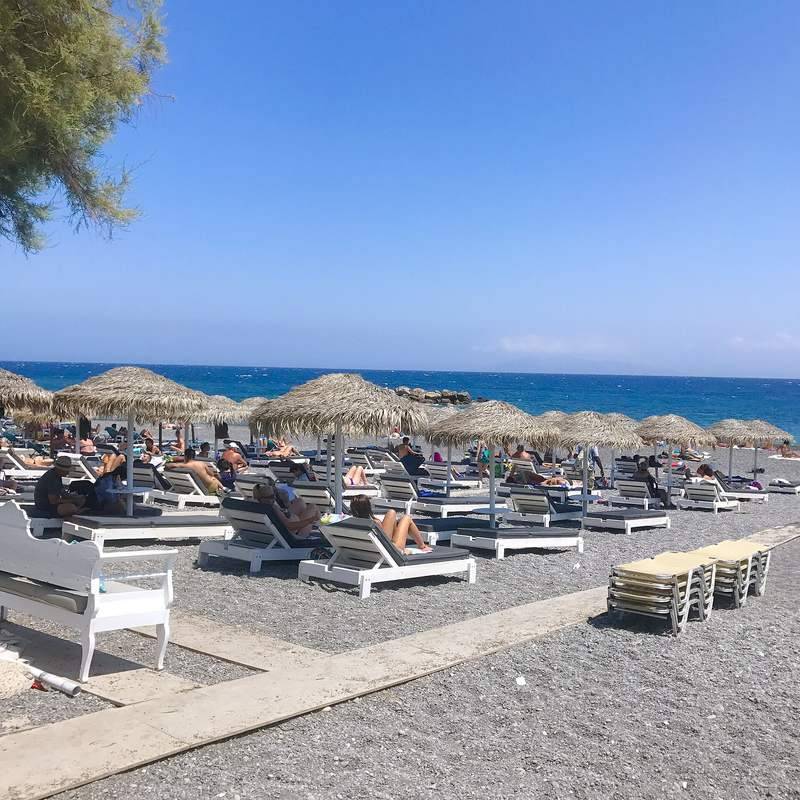
Kamari vs Perissa compares Santorini’s two big black-sand beach resorts, set on opposite sides of the same mountain. Kamari is more resort-like, polished and central; Perissa is longer, quieter, more laid-back and cheaper. This guide compares them on the beach, atmosphere, dining, location and which suits you. Plan the whole trip with Greece Tours.
Both are the main beach bases in the wider Santorini travel guide. They flank Mesa Vouno mountain. The sections below compare them.
What is the difference in Kamari vs Perissa?
The difference is that Kamari is the more developed, resort-like beach with a polished promenade and a dense restaurant strip, while Perissa is longer, less crowded, more laid-back and cheaper. They share the same black volcanic sand on opposite sides of Mesa Vouno.
Kamari and Perissa are Santorini’s twin beach resorts, almost mirror images separated by the great rock of Mesa Vouno, the mountain that carries ancient Thera on its summit. Both have long stretches of dark, volcanic black sand and pebble, organised sunbeds, clear water and a backdrop of cliffs, so the beaches themselves look much alike.
The difference is in character and development. Kamari is the more polished, resort-style choice with a smart paved promenade and a denser, more upmarket scene, while Perissa is longer, more spread out, quieter, more relaxed and generally cheaper. Both sit on the south-east coast, a short drive from the airport, and neither has a caldera view, so choosing between them comes down to the atmosphere you want, set within the wider Santorini beaches. The beaches differ in feel.
Which has the better beach?
Both have black volcanic sand and pebble beaches with similar swimming, but Perissa is longer and less crowded, with smaller, smoother pebbles gentler on the feet. Kamari’s beach is shorter, narrower and busier, though well organised.
The beaches are similar but not identical. Both are long strands of striking black volcanic sand and pebble shelving into clear, deep water, well equipped with sunbeds, umbrellas and beach bars. Both can grow hot underfoot in the sun, so sandals help, and both hold a Blue Flag for water quality. The dark sand is volcanic, ground down from the same lava that built Mesa Vouno, which gives the water its deep, clear look.
The key differences are length and comfort. Perissa’s beach runs considerably longer and more spread out, stretching on toward Perivolos, so it feels less crowded and offers more room to find your own space, and its pebbles tend to be smaller and smoother, easier on bare feet. Kamari’s beach is shorter and narrower and gets busier, though it is very well organised with a tidy promenade behind. The black sand absorbs the sun and grows genuinely hot by midday at both, so beach shoes help, and the water shelves quickly to swimming depth on each side. For length, space and a quieter stretch of sand, Perissa edges it, set out alongside the guides to Perissa beach, Kamari beach and Perivolos. Dining and nightlife favour Kamari.
Which has better dining and nightlife?
Kamari has the stronger dining and nightlife, with a wider choice of restaurants, tavernas and smarter bars along its organised promenade. Perissa has good, relaxed tavernas and beach bars but fewer and lower-key.
The evening scene sets the two apart. Kamari scores heavily for dining and going out, with a much greater number and variety of restaurants and tavernas and a selection of smarter, higher-end bars strung along its polished seafront promenade, giving a lively, resort-style atmosphere after dark. An open-air cinema behind the beach adds an evening option families enjoy.
Perissa is far from dull. It has good, friendly tavernas, cafes and easygoing beach bars, many with a youthful, backpacker-ish energy, and the long strip toward Perivolos holds well-known beach clubs with day beds and music. The choice is smaller and the mood more laid-back and casual, with prices generally a notch below Kamari’s. So travellers who want a wide pick of restaurants and a buzzier night out will prefer Kamari, while those after a relaxed, low-key beach evening or a lively beach-club afternoon will be happy in Perissa, set out alongside the guide to Santorini nightlife. Location may decide it.
Which location is better and who should choose what?
Kamari is handier for the airport and the north, including Fira and Oia, while Perissa gives easier access to the south coast. Choose Kamari for a polished, central resort; choose Perissa for a longer, quieter, cheaper beach.
Position and priorities settle the choice. Kamari lies a little closer to the airport, only minutes away, and has easier access north to Fira, Oia and the caldera sights, making it convenient as a central, well-connected base. Perissa sits on the southern side of Mesa Vouno with easier reach of the south coast and Akrotiri, and both are linked to Fira by regular buses in summer, from where you can change for the rest of the island.
The two are close as the crow flies but separated by the mountain, so by road you go around it, about 20 to 30 minutes, though a small boat runs between them in season and a hiking path climbs over the top past ancient Thera. In short, choose Kamari for a more developed, central resort with abundant dining and nightlife, and Perissa for a longer, quieter, more affordable and laid-back beach, set out alongside the guides to the airport and ancient Thera. The questions below cover the points travellers ask most.
Which is better for families and for hotels?
Kamari suits families with its organised promenade, shallow entry and range of hotels, while Perissa offers cheaper, more casual stays. Both have good-value rooms away from caldera prices, but Kamari trends smarter and Perissa more budget-friendly.
Both resorts make practical, affordable bases for a beach-focused trip. Kamari’s tidy promenade, calm shallows and cluster of mid-range and family hotels make it the easier choice for parents, with shops, a pharmacy and restaurants all within a short walk of the sand. The paved seafront runs flat and pram-friendly the length of the bay, and the open-air cinema gives an easy evening out. Perissa is more spread out and casual, with guesthouses, studios and beach bars that appeal to younger travellers and those watching the budget, and its long strip toward Perivolos keeps the sand feeling roomy even in high summer.
Neither has the caldera views or the high prices of Oia and Fira, so both give more room for your money. Rooms cost less the further back from the beach you stay, and a hire car or the bus links either resort to the rest of the island. Both resorts also make handy launch points for the south of the island, with the Red Beach, the White Beach and the ruins at Akrotiri all within easy reach by road or a short boat hop. For polish and convenience choose Kamari; for value and a relaxed pace choose Perissa, set out alongside the guides to where to stay in Santorini, Santorini with kids and the Red Beach. The questions below add the detail.
Frequently Asked Questions
Should you choose Kamari or Perissa?
You should choose Kamari for a more developed, central resort with a polished promenade and abundant dining and nightlife, and Perissa for a longer, quieter, cheaper and more laid-back beach. Both share the same black volcanic sand on opposite sides of Mesa Vouno mountain.
Is Perissa or Kamari beach better?
Both are black volcanic sand and pebble beaches with similar swimming, but Perissa is longer and less crowded, with smaller, smoother pebbles gentler on the feet, while Kamari is shorter, busier but very well organised. For space and quiet, Perissa edges it; for a polished resort feel, Kamari.
How do you get between Kamari and Perissa?
Kamari and Perissa sit on opposite sides of Mesa Vouno mountain, so by road you drive around it, about 20 to 30 minutes. In summer a small boat runs directly between the two beaches, and a hiking trail climbs over the mountain past the ruins of ancient Thera, linking them on foot.
Which is cheaper, Kamari or Perissa?
Perissa is generally the cheaper of the two, with more budget guesthouses, casual tavernas and beach bars, while Kamari trends slightly smarter and pricier. Both are far more affordable than caldera-view Oia and Fira, and rooms cost less the further back from the beach you stay.