
The Santorini to Folegandros ferry is a short hop of just 45 minutes to 3 hours, with daily summer sailings from around 7 euros, linking Santorini with one of the Cyclades’ most unspoilt small islands. This guide covers the journey time, the prices, the operators, the schedule and tips for the crossing. Plan the whole trip with Greece Tours.
Folegandros is a quiet, beautiful neighbour in the wider Santorini travel guide. It lies just to the west. The sections below cover the ferry.
How long is the Santorini to Folegandros ferry?
The Santorini to Folegandros ferry takes just 50 minutes on a high-speed boat or around 2.5 to 3 hours on a conventional ferry. Folegandros lies a short way west of Santorini, making it one of the quickest and easiest island-hopping hops.
The crossing to Folegandros is short and simple. High-speed vessels make the run in as little as 50 minutes, while the slower conventional ferries take roughly two and a half to three hours. Both head a short distance west from Santorini to its tranquil neighbour, so even the slow boat delivers you within an easy half-day.
Folegandros is one of the smallest and least spoilt of the Cyclades. It is famous for its spectacular cliff-top Chora, its dramatic coastline and its complete lack of mass tourism, a striking contrast to busy Santorini. The brief crossing puts this peaceful island within easy reach, whether for a day trip or a longer escape, set within the wider how to get to Santorini.
The boat type sets the pace of the day. A fast catamaran turns the trip into a quick 50-minute skip, ideal for a day out, while the conventional ferry makes the crossing part of the journey, with open decks and sea views. Travellers prone to seasickness often prefer the steadier conventional boat, especially when the summer wind picks up across the channel.
How much does the ferry cost?
The Santorini to Folegandros ferry is inexpensive, with one-way fares from around 7 euros on a conventional sailing up to about 80 euros for premium seats on a fast boat. Most fares average roughly 30 to 45 euros, rising in peak July and August.
Thanks to the short distance, this is one of the cheaper Cyclades crossings. A one-way foot-passenger ticket starts from as little as around 7 euros on a basic conventional sailing. It rises to roughly 80 euros for a premium seat on a high-speed boat, with most fares falling comfortably in between and averaging about 30 to 45 euros.
Vehicles and season nudge the price up. Taking a car averages around 35 euros, though Folegandros is small enough that most day visitors travel on foot. Because the hop is so brief, even the fast-boat tickets stay relatively affordable. Prices climb in the peak July and August season and as boats fill, so booking ahead secures both a place and the best fare, set out alongside the guide to a Santorini itinerary.
The fare gap between fast and slow is wide here. On such a short route the conventional ferry offers real savings for travellers happy to spend a little longer aboard. The high-speed premium seats buy speed and priority boarding rather than a dramatically different experience, so budget travellers lose little by choosing the cheaper conventional sailing when the timetable allows.
What is the schedule and who are the operators?
The route runs year-round with up to two daily departures, served by SeaJets, Fast Ferries and the local Maistros Santorini boat. The first ferry leaves Santorini around 9am and the last about 7.30pm, so the short crossing leaves time for a day trip.
The route is reliable and runs all year. Several operators serve it, including SeaJets and Fast Ferries with high-speed and conventional vessels, plus the local Maistros Santorini boat, giving up to two departures a day. The frequency dips in winter but holds up well across the long summer season, when island-hopping demand is highest.
The daily timing suits a day trip well. The first ferry typically leaves Santorini’s Athinios port around 9am, and the last returns around 7.30pm, which with the short crossing leaves a comfortable window ashore. Exact times shift by operator and season, so checking the current timetable before you plan a same-day return is essential, set out alongside the guide to Santorini day trips.
Winter travellers should plan more carefully. Outside the summer season the sailings thin out and the strong winds that funnel through the Cyclades cancel more crossings, so a firm same-day return is less certain. In the quiet months, allowing a flexible day or an overnight stay avoids the risk of being stranded by a cancelled afternoon boat.
Where do you catch the ferry in Santorini?
You catch the Folegandros ferry at Athinios, Santorini’s main passenger port on the west coast below the caldera cliffs. Reach it by KTEL bus, taxi or transfer from Fira, about 8 kilometres away. Arrive at least an hour early, as the port is busy.
Athinios is Santorini’s working ferry port. It sits on the caldera-facing west coast at the foot of a steep, winding road below the villages. Public KTEL buses run to Athinios timed loosely around the main sailings, and taxis and pre-booked transfers cover the trip from Fira, Oia and the airport, though traffic builds in summer.
The port is compact and hectic at sailing time. Cars, buses and foot passengers crowd the quay as boats load and unload in quick succession, so staff and signs direct each ferry’s queue. Reaching Athinios at least an hour before departure leaves time to find the right line and board without a rush, set out alongside the guide to getting around Santorini.
Can you do a day trip to Folegandros?
A day trip to Folegandros from Santorini is easy in summer, with the route running year-round and up to two departures a day. The first ferry leaves around 9am and the last returns about 7.30pm, so the short crossing leaves time to explore.
Folegandros makes a rewarding day out. With the fast boat crossing in under an hour, an early departure and a late return give a full day on the island. That is enough time to walk up to the clifftop Chora, wander its shaded squares, and reach a beach or the hilltop church before catching the evening ferry back to Santorini.
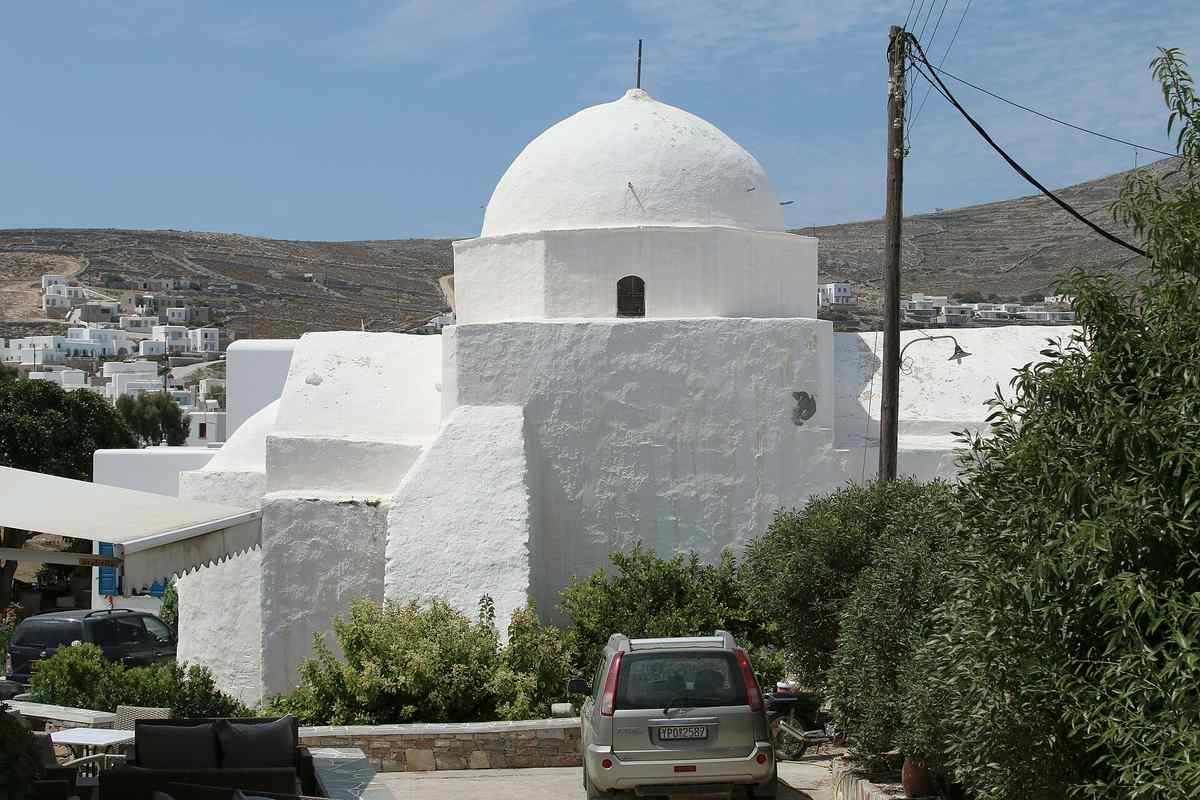
The island rewards the visit richly. The dramatic clifftop Chora is one of the prettiest in the Cyclades, a car-free knot of whitewashed lanes and plane-shaded squares. Above it stands the hilltop church of Panagia, reached by a zig-zag path with sweeping sea views. Quiet beaches such as Agali sit below, reached on foot or by small boat, set out alongside the guide to the best time to visit Santorini.
What tips help for the crossing?
Check the outbound and return times carefully for a day trip, book ahead in peak summer, and arrive at Athinios port at least an hour before departure. Allow flexibility for the meltemi wind, which can delay high-speed boats in midsummer.
A little planning makes the Folegandros hop seamless. For a day trip, the key step is to check both the outbound and return ferry times before you go, ensuring an early enough departure and a late enough return for a worthwhile day. Booking ahead in the busy summer months matters too, as the limited daily sailings fill quickly.
The port and the weather need attention on the day. Arrive at the busy Athinios port at least an hour before departure, as queues and port traffic build in season. Allow some flexibility, since the high-speed boats can be delayed or cancelled by the strong meltemi wind in midsummer, which blows hardest across this exposed western channel.
Pack for a car-free island. Folegandros’s Chora and many of its paths are walked rather than driven, so comfortable shoes, water and sun protection make the day easier. With the early ferry and a sensible plan, a full day exploring the Chora, the church of Panagia and the coastline is easily possible, set out alongside the guide to a Santorini itinerary.
Is Folegandros worth staying overnight?
Folegandros is well worth an overnight stay for travellers who want quiet, unspoilt Cyclades life. Staying lets you see the Chora lit up at night, catch a sunset from the church path, and reach beaches without racing the ferry back.
An overnight stay changes the whole feel of the island. The day-trip crowds thin in the late afternoon, and the clifftop Chora comes into its own in the evening, its lantern-lit squares and tavernas quiet and atmospheric. Watching the sun set from the path up to Panagia, without a ferry to catch, is one of the island’s real pleasures.
Folegandros suits slow travel. A night or two frees you to reach the further beaches by boat, eat unhurried dinners in the Chora, and settle into the island’s gentle pace. For travellers seeking the traditional, low-key Cyclades that busy Santorini has largely left behind, Folegandros is one of the finest choices in the group, set within the wider Santorini day trips.
Should you take the fast or conventional ferry?
Take the fast boat to save time, and the conventional ferry to save money or travel steadier. The high-speed boat crosses in about 50 minutes but costs more and feels the wind. The conventional ferry is slower, cheaper and calmer in a swell.
The fast boat is the day-tripper’s friend. It cuts the crossing to under an hour, maximising time ashore and making a same-day return comfortable. The trade-off is a higher fare and enclosed decks, and on this exposed western channel a light high-speed hull feels the meltemi more, so a windy forecast can mean a bumpier ride or a cancellation.
The conventional ferry rewards the unhurried. It takes longer but costs far less on such a short route, with open decks, sea air and a steadier ride when the wind is up. Travellers staying overnight, or anyone prone to seasickness, often pick the slower boat and treat the crossing itself as part of the trip, set out alongside the guide to Santorini day trips.
What is Folegandros like compared to Santorini?
Folegandros is quiet, small and unspoilt, where Santorini is famous, busy and dramatic. It offers a car-free clifftop Chora, empty beaches and traditional island life. The two make a strong contrast, pairing a world-famous island with a peaceful hidden one.
Folegandros keeps the old Cyclades feel. Its clifftop Chora is car-free and low-key, built around plane-shaded squares rather than boutiques and crowds. There are no resorts, no cruise ships and few cars, so the pace is slow and the nights are dark and quiet, a world away from the polished bustle of Oia and Fira.
The contrast is the reason to pair them. Santorini delivers the caldera, the sunset and the spectacle, while Folegandros offers space, silence and unhurried island life a short ferry away. Island-hoppers often use the frequent crossing to balance Santorini’s drama with a few gentle days on its quiet neighbour, set within the wider Santorini travel guide.
The size difference shapes each stay. Santorini packs its sights along a busy caldera rim, so getting around means shared roads and crowds in season. Folegandros is small enough to cross on foot and by a handful of buses, with a single main Chora and a scatter of beaches. That compactness is part of its charm, keeping the island calm even when day boats arrive.
Frequently Asked Questions
How long is the Santorini to Folegandros crossing?
The Santorini to Folegandros ferry takes just 50 minutes on a high-speed boat or around 2.5 to 3 hours on a conventional ferry. Folegandros lies a short way west of Santorini, making it one of the quickest island-hopping hops, ideal for a day trip or a quiet second-island stop.
How much is the Santorini to Folegandros ferry?
The ferry is inexpensive, with one-way fares from around 7 euros on a conventional sailing up to about 80 euros for premium seats on a fast boat, averaging roughly 30 to 45 euros. The short distance keeps even fast tickets reasonable, with prices rising in peak July and August.
Is a day trip to Folegandros possible from Santorini?
You can easily make a day trip to Folegandros, with the route running year-round and up to two departures a day. The first ferry leaves around 9am and the last returns about 7.30pm, so the short crossing leaves time to explore the clifftop Chora and coastline before returning.
Do the Folegandros ferries run in winter?
The Santorini to Folegandros ferry runs year-round, but sailings thin out in winter and strong winds cancel more crossings. In the quiet months, a firm same-day return is less certain, so allow a flexible day or an overnight stay to avoid being stranded by a cancelled boat.