
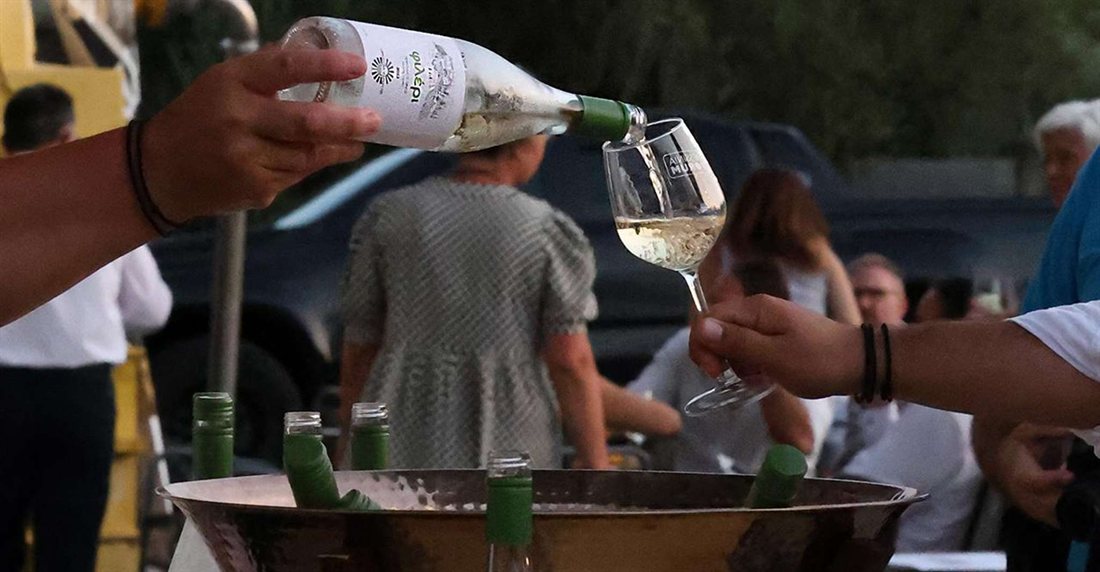
A Kalamata wine tasting pours Messinian wines at family wineries and tasting rooms between the Taygetus slopes and the Messinian Gulf. Peloponnese food and wine days sit beside every other trip on Greece Tours.
The sections cover the region, grapes, history, wineries, tour formats, pairings, tasting technique, olive oil, boats, wine routes, seasons, transport, families, buying bottles and practical details.
What is a Kalamata wine tasting?
A Kalamata wine tasting is a guided session at a Messinian winery or at a venue in the city. A host pours local wines and serves small food bites. You also hear the story of the vines, the land and the growers.
You can book a Kalamata wine tasting in three formats. Each one pours Messinian wine, but the group size, the pace and the length of the day differ:
- Private: a host leads your group alone, with no other guests at the table.
- Shared: you sit with other travellers and taste the same wines together.
- Full trip: a day out, with the tasting as one stop on a wider tour of Messinia.
Kalamata sits in the southwest Peloponnese, in southern Greece. It is the capital and chief port of Messinia, and the second-largest city of the Peloponnese after Patras. The Nedon River runs through the city into the top of the Messinian Gulf. This gulf is an arm of the Ionian Sea, framed by Messinia and the Mani peninsula.
A Kalamata wine tasting fits a wider stay in the city, as a short stop or part of a longer day. Our page on Kalamata tours covers the other guided trips that start from here.
Which wine region surrounds Kalamata?
Messinia surrounds Kalamata, and the whole district forms the PGI Messinia wine zone. A Kalamata wine tasting centres on wines from this southwest corner of the Peloponnese. Zone rules place the vineyards above 50 metres, between the Taygetus and the sea.
Messinia borders Elis to the north, Arcadia to the northeast and Laconia to the southeast. PGI stands for Protected Geographical Indication, which in Greece marks a quality wine of origin. The PGI Messinia zone lists two wine types: dry white and dry red. Two smaller PGI zones lie inside it:
- PGI Trifylia: the northwest of Messinia, around Kyparissia, Gargaliani and Filiatra. Its vineyards grow between 50 and 300 metres.
- PGI Pylia: the southwest of Messinia, around Pylos, Methoni, Koroni and Petalidi. Its listed wine type is dry white.
Farming drives the economy of Messinia, and grapes and wine rank among its main products, next to figs and raisins. Three natural features shape the land behind a Kalamata wine tasting:
- The Taygetus: Kalamata lies at the foot of its western outliers. The range runs about 100 km, from the centre of the Peloponnese to Cape Matapan. It peaks at Profitis Ilias, 2,405 metres high.
- The Messinia plain: this fertile lowland runs north to south through the centre of the district. The Pamisos, the largest river in Messinia, crosses it.
- The Messinian Gulf: the Pamisos ends its course here, and Venetiko Island and Cape Tainaron mark the gulf’s outer edges.
The Messinian lowlands run a little warmer than Athens. Snow falls mainly on the mountains, above all on the Taygetus. A Kalamata wine tasting takes place in this setting, between high mountains and the gulf coast.
Which grape varieties do you taste at a Kalamata wine tasting?
A Kalamata wine tasting pours Messinian wines from the Greek grapes Roditis, Fileri, Assyrtiko, Agiorgitiko and Fokiano. International grapes such as Chardonnay and Merlot join them in the glass. Each zone label on the bottle sets the grapes allowed in it.
Messinia grows a mix of Greek and foreign grapes. Its western part grows varieties that come mainly from abroad. So one Kalamata wine tasting can set a Greek white beside a French red.
- Roditis: a pink-skinned white grape, grown across the Peloponnese, that makes light wines with citrus flavours.
- Fileri: a local white grape, in fact a clone of Moschofilero.
- Assyrtiko: a white grape native to Santorini. It keeps its acidity as it ripens and recalls Riesling.
- Agiorgitiko: the red grape of Nemea, approved in the Trifilia zone of Messinia. It makes soft, fruity reds that can age for about five years.
- Fokiano: a Greek red grape that the PGI Messinia rules allow at up to a fifth of a blend.
- International grapes: Sauvignon Blanc for whites, and Cabernet Sauvignon, Cabernet Franc, Carignan and Grenache Rouge for reds. Trifilia adds Syrah and Tempranillo.
Producers in Messinia now work to bottle Fileri on its own, as a single-variety white. Lagorthi, Arintho and Ugni Blanc also sit on the zone’s white list, with Ugni Blanc capped at a fifth of a blend. A pure Fileri lets you taste the local grape alone.
Wines from Messinia can also carry the wider PGI Peloponnese label. That zone adds Moschofilero itself to the white list, beside Roditis and the red Fokiano. So at a Kalamata wine tasting, check the label to see which zone a bottle follows.
What history does wine have in Messinia?
A Kalamata wine tasting continues more than 3,000 years of Messinian wine. At the Palace of Nestor near Pylos, the first room of the Wine Magazine held at least 35 storage jars. Palace amphorae carried the Linear B sign for wine.
The palace stands on the hill of Epano Englianos, 17 km north of Pylos. Fire destroyed it around the 13th century BC and baked its clay tablets hard. A Greek and American team found about 1,000 of them in the 20th century. Linear B tablets record the wine trade and even name Dionysus, the god of wine.
Greece holds the world’s earliest evidence of crushed grapes, and winemaking there goes back about 6,500 years. Ancient Greeks carried their vines to colonies in Italy, Sicily, southern France and Spain. In the Middle Ages, Venice held the Messinian ports of Koroni and Methoni.
In the 20th century, the Greek Ministry of Agriculture set up a Wine Institute, and appellation laws followed. Greece also planted its first Cabernet Sauvignon vineyard. The PGI Messinia zone dates from the late 20th century. Messinia now ranks among the key winegrowing areas of Greece. A Kalamata wine tasting pours the fruit of that revival.
Which Messinia wineries host a Kalamata wine tasting?
A Kalamata wine tasting takes place at family wineries in the Messinia countryside. Psaroulis Wines in Vasilada hosts guided tastings next to Kalamata airport. A family estate in a small village about 35 km from the city also welcomes guests.
Psaroulis Wines sits in Vasilada, 15 minutes from Ancient Messini and 30 minutes from Kalamata. The family has farmed this land since the grandfather planted Assyrtiko. The site was once the bed of a prehistoric lake, and seashells and marine fossils still turn up during ploughing.
- Psaroulis Wines, Vasilada: Assyrtiko, Malagousia, Syrah, Merlot, Cabernet Sauvignon and Agiorgitiko. The winery stands right next to the vineyards. Its Assyrtiko plot covers about 3 hectares of a 17-hectare estate. The winery calls it the largest Assyrtiko vineyard in the southwestern Peloponnese.
- Family estate, Messinia village: Roditis, Carignan, Tempranillo, Merlot and Chardonnay from about 15 acres of private vineyards. The family works with a focus on minimal intervention.
- Oinomessiniaki, Kalamata–Messini road: ten bottled regional wines from Greek and international grapes, sold under the ANIMA and FARE labels. It runs a modern winemaking unit with ISO 9001 and HACCP certification. Its trade listing names no visitor tastings, so ask the winery first.
The family estate has passed down through generations. Mama’s Flavours arranges each Kalamata wine tasting there. The listings do not name the village, but they place it about 30 minutes by road from central Kalamata.
For a booked Kalamata wine tasting, GetYourGuide lists two Vasilada sessions: “Wine Tasting at Psaroulis Wines” and “Wine Tasting in Vasilada, Messinia”. The second runs three hours in a small group, with a winery tour, a tasting and Messinian delicacies.
What happens during a winery visit on a Kalamata wine tasting?
A Kalamata wine tasting at a Messinia winery mixes a vineyard walk, a production tour and a guided tasting with local bites. Psaroulis visits last about 1.5 hours, and the family estate tour runs about three hours.
At Psaroulis, guests walk through the winery and see how wine goes from vineyard to bottle. The tour also tells the story of the winery. The standard Kalamata wine tasting pours three wines. The premium option pours five and adds a tour of the vineyards. A guide leads each tasting in English.
Each visit at Psaroulis comes with bites from Messinia. The standard plate has extra virgin olive oil, country bread, freshly made Messinian lalaggia and olives. The premium plate adds local cheese, salami, cured meats and figs. The listing advises comfortable shoes, and vegan or vegetarian options are available on request.
At the family estate, the owners lead the vineyard walk. A winery tour explains how they make their wine. The Kalamata wine tasting covers the full range of five to seven labels over about one hour. Cheese, cold cuts and Messinian sausage come with the wines.
What do the GetYourGuide Kalamata wine tasting experiences include?
GetYourGuide sells two Kalamata wine tasting experiences, both hosted in the city itself. Each one pours Greek wines and explains what is in the glass. They differ in length, in the size of the wine line-up and in the detail each card gives.
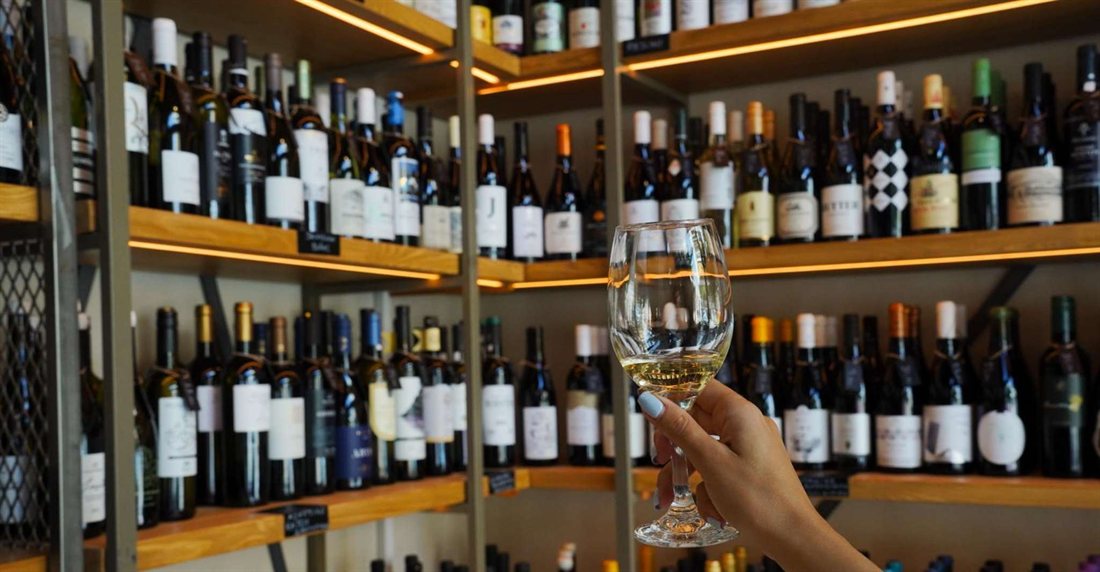
In wine terms, a flight is a set of wines tasted one after another. The two listings use this word on the widget but carry longer names on the booking page. The widget name and the booking-page name belong to the same tour, so either name leads to the same booking. Here is what each card states.
- Short Flight (Private Greek Wine Tasting Experience): 1 hour. It pours a selection of carefully chosen wines from across Greece.
- Big Flight (Greek Wine Tasting Experience, Full Trip): 2 hours and 8 wines. The line-up is 5 whites and 3 reds.
The Short Flight card describes a private wine tasting experience in Kalamata. You learn about the aromas, the structure and the grape variety of each wine. You also learn which Greek region it comes from. The card does not give the number of wines poured in this Kalamata wine tasting.
The Big Flight is pitched as a way to discover Greece through its grapes. Every wine on it comes from an indigenous Greek grape variety. It lets you compare whites and reds in one sitting. With a larger line-up than the Short Flight, it is the fuller Kalamata wine tasting of the two.
Can you book a private Kalamata wine tasting?
Yes. Both GetYourGuide listings sell a private Kalamata wine tasting for your own group. Each card carries a Private group tag, so no outside guests join your session. Neither listing offers a shared session as an alternative format, so the choice comes down to length.
GetYourGuide also tags both listings as small group. One booking covers 1 to 8 guests. A solo traveller can book alone, and a party of 8 still fits on one booking. The host’s time goes to your party alone. Both cards pin the same meeting spot in Kalamata.
Booking the private format is flexible. On the GetYourGuide widget, you pick a date on a calendar and set the number of guests. Neither widget card lists hotel pickup, so you make your own way to the meeting spot.
The Full Trip name can sound like a shared group outing. Its card carries the same Private group tag, so it is the longer private tasting, not a mixed-group tour. Book the Short Flight for a one-hour stop in your day. Book the Big Flight for a longer Kalamata wine tasting that names its whites and reds.
Which foods pair with a Kalamata wine tasting?
Foods from Messinia and Mani pair with a Kalamata wine tasting: Kalamata olives, white sfela cheese, syglino pork and fried lalangia. Crisp whites match olives, reds go with fatty pork, and sweet wines suit honey pastries such as diples.
Kalamata olives take their name from the city. They are dark purple, almond-shaped and meaty, with a slightly bitter edge. Under EU rules, the name belongs only to olives from the region around Kalamata. Curing in brine and wine vinegar gives them a sharp, salty taste.
The Mani peninsula reaches into Messinia, and its kitchen fills out the table. Sfela is a white, semi-hard local cheese. Syglino is salted pork preserved in pork fat. Lalangia are strips of fried dough, and diples are honey rolls. Cheese pies and wild greens, called horta, complete the spread.
Three rules from wine and food matching guide the choice at a Kalamata wine tasting. Acidity cuts through fatty, oily and salty food. Tannins in red wine bind to proteins and fats, so fatty food makes a red taste softer. Local dishes were traditionally paired with local wines. Try the dishes in town on the Kalamata food tour.
- Crisp dry white: Kalamata olives, sfela and horta.
- Dry rosé: fried lalangia and cheese pies.
- Red: syglino and the region’s pork dishes.
- Sweet wine: diples, plus salty cheese for contrast. The wine has to taste sweeter than the honey.
How do you taste wine properly at a Kalamata wine tasting?
At a Kalamata wine tasting, look at the color, swirl the glass, smell the wine, then sip slowly. Taste dry whites first, then rosé and reds, and finish with sweet wines. Keep pours small and clear your palate with water and bread.
The five S method works at a Kalamata wine tasting as it does anywhere: see, swirl, sniff, sip and savor. Together the steps cover four stages: appearance, aroma, the taste in your mouth and the finish.
- See: tilt the glass against a white background and check the color. Deeper colors point to heavier wines.
- Swirl: move the glass in gentle circles to release the aromas. Swirl sparkling wine lightly so the bubbles stay.
- Sniff: put your nose into the glass and breathe in slowly.
- Sip: take a small mouthful and hold it on your tongue for a moment.
- Savor: purse your lips, draw a little air over the wine, then notice the finish that stays after you spit or swallow.
Sparkling wine opens the flight at a Kalamata wine tasting when the winery pours one. Red tannins dull the palate for lighter wines, and sugar makes dry wines taste sharp or bitter. That is why light comes before heavy and dry before sweet.
Tasting pours are small. The standard INAO tasting glass is designed for a 50 ml pour. Spitting is not rude, so ask where the spittoon is before you start. Spat wine still passes alcohol through the mouth, so 20 to 25 samples add up. Water rinses the mouth between glasses, and plain bread acts as a palate cleanser.
How does a Kalamata wine tasting pair with an olive oil tasting?
A Kalamata wine tasting pairs well with an olive oil tasting because Messinia grows both vines and olive trees. Visitors can taste local wine in the morning and extra virgin oil in the afternoon. A single tour can also cover both products.
The Kalamata olive takes its name from the city in the southern Peloponnese. The name holds PDO status in the EU. It covers olives and olive oil from the region around Kalamata, which includes Messinia and nearby Laconia. The tree stands out, since its leaves grow twice the size of other olive varieties.
Koroneiki, grown across the Peloponnese, is the main oil olive of Greece. The variety covers 50 to 60 percent of the country’s olive acreage, and its small fruit gives a high-quality oil yield. Extra virgin oil needs a fruity note, no defects and no more than 0.8 percent free acidity. A peppery or bitter finish signals more polyphenols.
Booking sites list a Kalamata olive oil and wine tour that includes a traditional lunch. A family olive grove about 50 km from Kalamata hosts a workshop with three extra virgin oils and a light lunch.
The grove sits within 50 km of Kalamata, so a Kalamata wine tasting and a grove visit fit into one day. An organic farm in neighbouring Laconia pours wine and olive oil at a single stop. Our Kalamata olive oil tasting page lists the oil tours in full.


Can you combine a Kalamata wine tasting with a boat trip?
Yes, a Kalamata wine tasting can continue at sea. Sailing trips leave Kalamata Port and Kalamata Marina for the Messinian Gulf. Sunset sails list wine among the drinks on board, and one yacht company in town also arranges winery tours.
That company is Kalamata Yachting, based at the Central Pier of Kalamata. Its fleet of Italian-built yachts includes an Azimut 72 and a Ferretti Altura 50. Its wine tours visit boutique wineries and large estates, with sommelier-led tastings of reds, whites, rosés and sparkling wines. Guests walk the vineyards and step into the cellars.
Shared day sails leave Kalamata Port for about seven hours, with swim stops, lunch and a skipper. Operators advertise unlimited drinks for the whole trip. A shared sunset sail of about three and a half hours serves wine and beer with local food.
Private groups can charter a 14-metre Fountaine Pajot Saona 47 catamaran with crew for up to 12 guests. A private three-hour sunset sail from Kalamata Marina includes wine and drinking water. Its skipper speaks English and Greek.
Book the winery in the morning and a sunset sail later. The Kalamata wine tasting day then ends on the water. Ask Kalamata Yachting whether its wine tour and a yacht charter can run on the same day. Our Kalamata catamaran cruise page covers the boats and departures.
Which Peloponnese wine regions can you reach from a Kalamata wine tasting base?
A Kalamata wine tasting base puts three Peloponnese wine regions within road reach. They are Nemea for red Agiorgitiko, Mantinia for white Moschofilero and the Monemvasia area for Malvasia. The A7 Moreas motorway links Kalamata with Tripoli and Corinth.
Mantinia is the closest of the three. Its PDO vineyards fill the mountain valley around Tripoli in Arcadia, at about 600 metres. The zone ranks among the coldest wine areas in Greece. Moschofilero makes up at least 85% of each Mantinia PDO wine. The grape gives crisp, floral whites, both still and sparkling.
The A7 Moreas motorway serves two of the three regions. It runs 147 km from Kalamata to Corinth. Tripoli lies on the same road, 74 km south of Corinth. So a Kalamata wine tasting day in Mantinia starts with one motorway drive north.
Nemea lies further north in Corinthia, about 30 km from Corinth. Its basin sits near 300 metres, with hills that rise to about 750 metres. Agiorgitiko leads here, with deep red colour and a long, velvety palate. The zone counts 40 to 45 wineries. Our page on Nemea wine covers the cellars in detail.
Monemvasia sits on a rock off the east coast of Laconia. A sandy causeway about 400 metres long joins it to the mainland. From Kalamata, the EO82 road links the city with Sparta, the main town of Laconia. The Monemvasia area grows the local Monemvasia grape, along with Malvasia and Agiorgitiko.
How does Messinian wine compare with Monemvasia Malvasia?
A Kalamata wine tasting pours Messinian wines under the PGI label, a regional quality tier. Monemvasia-Malvasia holds PDO status, the higher appellation tier in Greece. Its Malvasia is a rich, aromatic, sweet dessert wine with a long trading past.
The two labels come from the Greek quality system. PDO marks an appellation of superior quality, tied to set grapes and a set area. PGI covers a wider zone of origin. So a Kalamata wine tasting shows the range of a broad region. A glass of Malvasia speaks for one named appellation.
Malvasia carries the older story. Its name comes from the Italian name for Monemvasia, a Byzantine sea fortress. Venetian merchants shipped so much of it that wine shops in Venice were called malvasie. English buyers knew the same wine as Malmsey. It ranked among the three main wines Greece exported in medieval times.
Medieval Malvasia was not grown on the rock. Traders gathered it from the Peloponnese and the Cyclades, then shipped it from the port. The old Malvasia vineyards were destroyed under Ottoman rule. A Monemvasia winery now grows rare varieties to revive the wine.
The grapes tell a different story from the name. DNA tests show the Monemvasia grape is not a close relative of the Malvasia family. Athiri, a widely planted Greek white, appears to be an ancestor of Malvasia instead.
A Kalamata wine tasting keeps the focus on Messinian labels close to the city. For the sweet Malvasia in its home port, our Monemvasia wine tasting page covers tastings on the Laconian coast.
When is the season for a Kalamata wine tasting?
A Kalamata wine tasting works in any season, but late spring and autumn bring warm days without the peak summer heat. The city sees hot, dry summers and wet winters, so plan vineyard walks for those months.
Spring brings mild days to the Messinian coast. April averages a daily high of 19.9 °C at Kalamata airport. Late spring climbs to 24.6 °C, with lows near 12.4 °C. Rain totals only 22.8 mm in late spring, and the sun shines for 286 hours that month.
These figures make a Kalamata wine tasting with a vineyard walk easy to plan. The air is warm enough for shirt sleeves, yet cool enough to stand among the vines at midday. Late spring and early autumn mornings are the sweet spot for an outdoor visit.
Summer is the hot stretch of the year. July and August average highs of 31.3 °C and 31.4 °C, and the airport record stands at 45.0 °C in June. July is also the sunniest month, with 367.6 hours of sun. Book a morning Kalamata wine tasting in these months, and carry water on any vineyard walk.
Autumn cools down step by step. September averages a high of 28.4 °C and October 24.3 °C. October days match late spring for warmth. Rain then climbs to 85.7 mm in October and 141.7 mm in November, so pack a rain jacket for late-season visits.
Winter visits work too, and November still averages 19.6 °C by day. One Messinia winery listed by Discover Greece hosts tastings Monday to Saturday all year. It closes on Sundays and Greek public holidays, so check the calendar before you book.
Can you join the grape harvest near Kalamata?
The harvest near Kalamata falls between late August and early October, with September as the traditional Greek harvest month. One Messinia winery pauses its Kalamata wine tasting in those weeks, so ask each winery before planning a harvest visit.
Greeks call the grape harvest trygos. Winemakers pick when sugar, acid and tannin levels show the grapes are ripe. The style of wine they want also sets the date. Heat, rain and hail can shift the picking day.
Wineries that pick by hand value workers who choose only healthy bunches. A harvesting machine picks 80 to 200 tons of grapes a day. An experienced hand picker manages 1 to 2 tons in the same time. Hand picking also suits steep vineyard slopes where machines cannot work.
On harvest dates and on Sundays, that Messinia winery can move the tasting to another winery in the region, depending on availability. Booking a Kalamata wine tasting in late spring or from mid-October onward avoids this gap.
Grape stomping belongs to the old Greek harvest. Visit Greece says the wine press is called the patitiri, where grapes were once crushed by foot. Newer methods have replaced foot stomping at wineries. Another old custom sent a basket of the first ripe grapes to church for a blessing on 6 August.
How do you reach Messinia wineries from Kalamata without a car?
A Kalamata wine tasting without a car starts with a booked tour or a taxi. KTEL coaches run from Kalamata to Tripoli, Corinth and Athens, and four urban bus lines cross the city and its suburbs. Greek drink-driving limits make a sober driver essential.
Trains no longer serve Kalamata, because its railway station is closed. Tour listings state whether hotel pickup is included, so check that line before you book. With a pickup, nobody on the Kalamata wine tasting drives between cellars. A taxi is the other door-to-door choice, so agree the return ride with the driver first.
Greek law sets a blood alcohol limit for each type of driver. The list gives each level as a blood reading, with the breath test reading in brackets:
- Standard drivers: 0.05% blood alcohol (0.25 mg/L).
- Drivers with under two years on their licence: 0.02% (0.10 mg/L).
- Motorcyclists, professional drivers and unlicensed drivers: 0.02% (0.10 mg/L).
- Above 0.11% (0.60 mg/L): a serious criminal offence.
Offenders above the top level face up to two years in prison, a court fine and a six-month licence loss. Police run routine breath tests without any cause, mainly on weekends and major holidays. One glass at each winery adds up fast across an afternoon, so the group’s driver stays on water or juice all day.
Is a Kalamata wine tasting suitable for non-drinkers and families?
A Kalamata wine tasting can suit non-drinkers and families when the booking allows it. The legal drinking and purchase age in Greece is 18, so only adults taste the wine. Younger guests and non-drinkers can still join the cellar visit with the group.
Greek law bans minors from drinking alcohol in public. On a Kalamata wine tasting, guests under 18 pass on each pour. Adults who do not drink can do the same and still enjoy the visit, the vineyard views and the talk with the hosts. Tell the host at the start, so nobody pours a glass by mistake.
Non-alcoholic choices differ on each Kalamata wine tasting, and children at wineries follow each venue’s own rules. A short message before you book clears up both points. It also lets the hosts set the table for the right number of tasters. Send these questions to the winery or the tour operator:
- Does the tasting include grape juice or another soft drink for non-drinkers?
- Are food bites served to every guest, or only to those who taste the wine?
- Does the listing set a minimum age for the tour?
- Can children join the vineyard walk and the cellar visit?
- Is there a shaded place where younger children can rest during the talk?
Read each listing for an age note before you add children to the booking. If the listing says nothing, message the operator first and wait for a clear reply in writing. A family Kalamata wine tasting runs smoothly when the hosts know children are coming and the whole group knows what to expect.
Which wines can you take home after a Kalamata wine tasting?
After a Kalamata wine tasting, buy the bottles you liked at the winery and pack them in checked luggage. Travellers moving between EU countries carry wine for personal use under guide levels that the EU sets.
Pick your bottles just after the last pour, while each taste is still fresh in your mind. Take a photo of every label you enjoy during the Kalamata wine tasting. The photo keeps the winery name and the grape on record. You can then look for the same wine in a shop back home.
Airport security limits liquids in cabin bags, so full bottles travel in the hold. Bags get dropped and stacked on the way to the plane, so pack each bottle with care. Follow these steps before you close the case:
- Seal each bottle in a plastic bag to catch any leak.
- Roll the bagged bottle inside a jumper or a pair of jeans.
- Place the bottles in the centre of the suitcase, away from the edges.
- Fill the gaps with shoes and soft clothes so nothing slides.
The EU’s Your Europe site gives a guide level of 90 litres of wine per traveller between EU countries. Only 60 litres of that can be sparkling. Each country can set a higher limit, but not a lower one. Visitors flying home outside the EU follow their own country’s customs rules for bottles from a Kalamata wine tasting.
How does a Kalamata wine tasting fit with other days out from Kalamata?
A Kalamata wine tasting pairs with two coast trips from the city. Spend one day in the Mani to the south and one day around Pylos to the west. Keep a quieter day in between for the tasting.
The Mani is the middle of three peninsulas that reach south into the Mediterranean. Its western part begins next to Kalamata. A coast road links the city with Kardamyli, Stoupa and Oitylo. Tower houses, the Diros Caves and Cape Matapan, the southern tip of the Greek mainland, lie further south. Join a Mani day trip from Kalamata to see them.
Pylos is the main harbour on Navarino Bay. At the Battle of Navarino, a British, French and Russian fleet destroyed the Ottoman-Egyptian fleet here. A Pylos day trip from Kalamata reaches these sights:
- Neokastro, an Ottoman fortress on the heights above the bay that replaced an older Frankish castle.
- The Palace of Nestor, a Mycenaean palace in the hills north of the town.
- Voidokilia beach, a small cove on the Ionian Sea.
- Gialova lagoon, a wetland and stopover for migrating birds, with more than 270 recorded species.
- Sphacteria, the narrow island in front of the bay.
Both coast trips leave from Kalamata and return the same day, so you keep one hotel for the whole stay. The Kalamata wine tasting then breaks up two days on the road with a slower pace. For a hands-on morning before the wine, join a Kalamata cooking class.
What practical details matter for a Kalamata wine tasting?
Check four things before a Kalamata wine tasting: the booking cut-off, the cancellation terms, the meeting point and the language. All four listings show free cancellation, and each one sets its own cut-off before the start time.
The Kalamata flight tastings and the Vasilada tour run in English and Greek. Each listing shows its open dates and free slots in a booking calendar. Read the full cancellation window on the listing before you pay, and keep the confirmation email. The Psaroulis Wines tasting accepts up to 40 guests in one booking, which suits a large party.
Meeting points differ by format. The Vasilada experience offers pickup, runs as a small group and is wheelchair accessible. The Psaroulis Wines tasting takes place at the winery itself. For the two Kalamata flights, read the meeting point in your booking confirmation. Arrive ten minutes early to check in with the host.
Before you go, sort out these six points so the visit runs smoothly:
- Flat, closed shoes for the winery tour in Vasilada.
- A note of any food allergy, sent to the host with your booking.
- A sober driver, because every format serves wine.
- A light layer for the cool air of a wine cellar.
- Your booking voucher on your phone, ready for the host.
- Sunglasses and a hat if your host walks you through the vines.
Which questions do travellers ask about a Kalamata wine tasting?
How long does a Kalamata wine tasting last?
It runs from one to three hours. The short flight in Kalamata takes one hour and the big flight two. A visit at Psaroulis Wines lasts one and a half hours. The Vasilada experience runs longest, because it combines a winery tour with the tasting. Add time for the trip to the venue and back when you plan the day.
How large is the wine line-up at a Kalamata wine tasting?
The count depends on the format. The big flight pours eight wines, and Psaroulis pours three on its standard tasting or five on its premium one. The family estate covers five to seven labels. The short flight card gives no exact number, so ask the host for the count when you book.
Does a Kalamata wine tasting include food?
It depends on the venue. Both Messinia winery visits serve local bites with the wine, from olives and bread to cheese and cured meats. The two flight cards in Kalamata list wine alone. Eat a light meal before those two formats, since the glasses add up over an hour or two.
Do you need to book a Kalamata wine tasting in advance?
Yes, every listing sets a booking cut-off. The two Kalamata flights accept bookings until 30 minutes before the start. The Vasilada tour closes 2 hours before, and the Psaroulis Wines tasting closes 10 hours before. The Vasilada tour lists 6 places per date, so book it a day or more ahead to secure a slot.
Is a Kalamata wine tasting good for beginners?
Yes. Hosts explain each grape, region and style as they pour, so no past knowledge is needed. The five steps of see, swirl, sniff, sip and savor give a first-timer a simple routine. Tell the host you are new, and the talk starts from the basics.
Can you join a Kalamata wine tasting with a food allergy or a vegan diet?
Yes, with notice. Psaroulis Wines serves vegan and vegetarian bites on request, and every host needs a note of any allergy at booking. EU wine labels flag sulphites, egg and milk, so ask the winery about these if you react to them.
What time of day suits a Kalamata wine tasting?
Morning slots suit summer, since vineyard walks stay cooler before midday. A late slot in the city fits after a coast day in the Mani or around Pylos. Leave the car at the hotel for any slot, or book a format with pickup.
Can you visit a Messinia winery without booking?
Book ahead instead. Messinia wineries host visitors through set tastings, and the GetYourGuide listings close bookings hours before the start. Staff at a working winery spend the day in the vineyard or the cellar, so message the winery a day or more ahead.