
Crete snorkeling runs as a guided boat trip out of Chania, Heraklion, Malia and Hersonissos, and as a free shore entry at the shallow lagoons and rocky points that ring the island, with the gear supplied on the organised trips. Plan the whole trip with Greece Tours.
This guide covers Crete snorkeling in full: the trips that run from each base, the best spots on the north, south and west coasts, what you see underwater, the ruins in the shallows, the season and the visibility, the equipment and how to fit it, what it costs, safety for families, and how to book.
What Is Crete Snorkeling And What Does A Guided Trip Include?
Crete snorkeling covers guided boat trips and independent shore swims across four distinct coastlines, using a mask, snorkel and fins to watch seagrass meadows, rocky reef and sandy shallows; a guided trip adds a skipper, a marine guide, fitted gear, a safety briefing and two or three swim stops chosen for calm water.
Crete snorkeling is booked ahead for a fixed, agreed price per person. A private Crete snorkeling trip keeps the boat to one group. The island of Crete stretches close to 260 kilometres from the Rodopos peninsula in the west to Sitia in the east, and its coastline switches character block by block: sheer limestone cliffs drop into the Libyan Sea on the south side, sandy bays with pale water sit along the west, and a gentler, sheltered shoreline runs the length of the north. A trip out of Chania looks nothing like a trip out of Elounda or a swim off Plakias.
Crete snorkeling is booked ahead for a fixed, agreed price per person. A private Crete snorkeling trip keeps the boat to one group. A standard boat trip runs half a day, gathers a group of ten to twenty guests, and works from a covered motor launch or a catamaran with a swim platform at the stern. Guests board wearing a life jacket, get a five-minute safety briefing on hand signals and swim boundaries, and receive gear sized to fit before the first stop.
Crete snorkeling is booked ahead for a fixed, agreed price per person. A private Crete snorkeling trip keeps the boat to one group. Independent shore snorkeling needs none of that structure: a beach entry at Ligaria, Almyrida or Bali puts a swimmer over reef within twenty metres of the shore, no boat and no booking required. A boat reaches reef, wrecks and headlands a shore swimmer never gets close to, plus a guide who names the fish and points out the octopus den under the rock.
Crete snorkeling is booked ahead for a fixed, agreed price per person. Every operator runs the same core structure: transfer to the harbour, boarding and briefing, a first stop at an easy sheltered bay, a second stop at a livelier reef, and a return leg with a snack or packed lunch on longer trips. The exact bays change from Chania to Heraklion to Agios Nikolaos, covered coast by coast below.
Do You Need Experience To Go Snorkeling In Crete?
No experience is needed: every guided trip starts with a briefing on land, fits the mask and fins to each guest, and hands non-swimmers a buoyancy aid or a flotation noodle before the first stop, so a first-timer and a certified diver join the same boat and the same swim.
For a first time in the water, Crete snorkeling starts with the mask fit and the briefing. Families take Crete snorkeling for the shallow bays and the flotation aids. Mask fit gets checked before the boat leaves the dock: the guest presses the mask to the face without the strap, breathes in through the nose, and if the seal holds without a hand pressing it, the mask fits. A mask that leaks around the nose or cheekbones gets swapped for a different frame size rather than tightened. Fins come in three or four size bands, open-heel styles for guests with reef shoes and full-foot styles for bare feet, and a crew member checks the fit at the ankle before entry.
For a first time in the water, Crete snorkeling starts with the mask fit and the briefing. Families take Crete snorkeling for the shallow bays and the flotation aids. Every guest gets a life jacket at check-in, and a flotation noodle sits within reach at each swim stop for anyone who wants to rest without treading water. The noodle tucks under both arms and lets a swimmer float face-down over the reef doing nothing more than kicking, turning a demanding swim into an easy float for a nervous guest.
For a first time in the water, Crete snorkeling starts with the mask fit and the briefing. Families take Crete snorkeling for the shallow bays and the flotation aids. The pre-swim briefing runs through hand signals — thumbs up to surface, a flat palm to stop, a pointed finger to mark something worth seeing — plus the swim boundary marked by the boat and buoy line. The guide repeats this briefing at every stop rather than once at the start.
For a first time in the water, Crete snorkeling starts with the mask fit and the briefing. A guest who cannot swim still joins a Crete snorkeling trip: the buoyancy aid, a full vest rather than a belt, keeps the head and shoulders clear of the surface without any swimming effort, and the guide stays within arm’s reach for the whole stop. Non-swimmers stay in the calmest, shallowest bay rather than the deeper second stop, and the boat crew never pressures a nervous guest into water past comfort.
What Snorkeling Trips Run From Chania And The North-West Coast?
The main Crete snorkeling trip out of Chania departs for Almyrida on a three-hour boat run, adds stand-up paddling at the first stop, and reaches the reef along the Souda and Apokoronas coast with a minivan transfer from central Chania included in the booking.
The choice of Crete snorkeling comes down to the base, the boat and the stops. The price of Crete snorkeling covers the boat, the guide and the equipment. Boats leave from the small harbour east of Chania town, close to the mouth of Souda Bay, and run toward Almyrida, a resort village on the Apokoronas peninsula. The three-hour format covers transfer, boarding, two swim stops and the return, fitting a morning slot before lunch or an afternoon slot ending before sunset.
The choice of Crete snorkeling comes down to the base, the boat and the stops. The price of Crete snorkeling covers the boat, the guide and the equipment. Stand-up paddleboards go out at the first stop, tied off the swim platform, and guests rotate between paddling and snorkeling rather than choosing one activity for the full three hours. The paddleboard run stays inside the sheltered part of the bay, away from boat traffic, and gives a break for a guest who tires of finning.
The choice of Crete snorkeling comes down to the base, the boat and the stops. The price of Crete snorkeling covers the boat, the guide and the equipment. Wetsuits and full-face masks sit in the standard kit on the Chania boats, since the north-west coast runs cooler than the sheltered east. The full-face mask covers the whole face, so breathing stays natural through the nose for a guest who finds a mouthpiece awkward.
The choice of Crete snorkeling comes down to the base, the boat and the stops. The Souda and Apokoronas coast carries a mix of seagrass flats close to shore and rockier drop-offs further out, with the water inside Souda Bay staying calmer than the open coast toward Almyrida on a windy day. A minivan collects guests from central Chania hotels ahead of departure and returns the group to the same pickup points after docking.
What Snorkeling Trips Run From Heraklion And Agia Pelagia?
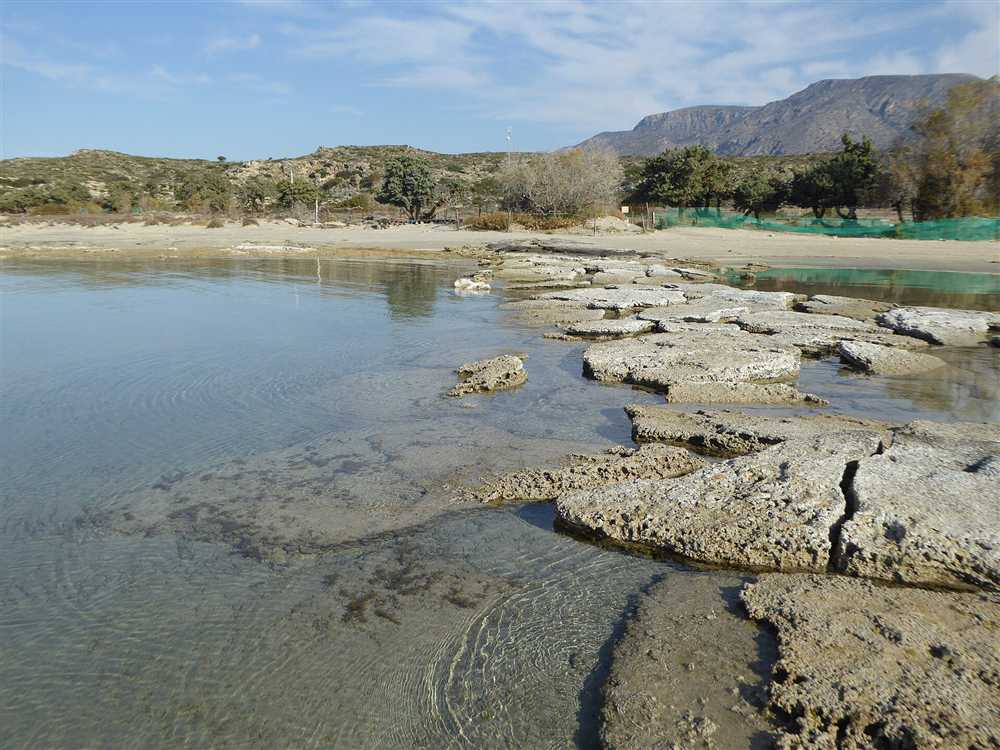
The Crete snorkeling trip out of Heraklion centres on Agia Pelagia, where an underwater seascooter option covers the Mononaftis coast and the reefs off the north-central shore, with hotel transfer covering a fixed radius around the resort and the capital.
A private Crete snorkeling trip keeps the boat to one group. The stops on Crete snorkeling reach the reefs and coves no swimmer walks to. Agia Pelagia sits a short drive west of Heraklion port, a resort built around a curved bay with clear water close to shore, and works as both a swim destination and a departure point for boat trips further along the coast, reached from Heraklion in under half an hour.
A private Crete snorkeling trip keeps the boat to one group. The stops on Crete snorkeling reach the reefs and coves no swimmer walks to. The seascooter option puts a battery-powered scooter in each guest’s hands, towing a swimmer along the reef at a pace no fin kick matches, covering ground a standard swim never reaches. A short practice run precedes the open swim, and the scooter stays at a fixed low speed for beginners.
A private Crete snorkeling trip keeps the boat to one group. The stops on Crete snorkeling reach the reefs and coves no swimmer walks to. The Mononaftis coast, the headland east of the main Agia Pelagia bay, carries small rocky coves with sea urchins along the base of the rock and damselfish schooling just beyond. The reef sits close enough to shore for a fin swim from the beach, and boats add it as a second stop.
A private Crete snorkeling trip keeps the boat to one group. Reefs off the wider north-central shore mix sandy patches with scattered rock, and the seabed drops gradually rather than in a sharp shelf, keeping visibility clean even a hundred metres from the boat. Transfer radius from Heraklion port covers the city centre, the airport hotels and Agia Pelagia itself.
What Snorkeling Trips Run From Malia, Hersonissos And The East Coast?
The Malia and Hersonissos Crete snorkeling trip runs as a boat trip with lunch and two swim stops, or as a faster jet-boat run to Saint George’s Bay, and both routes work the sheltered coves along the Hersonissos coast where the reef sits close to a sandy seabed.
The morning slot for Crete snorkeling fills first in high season. Crete snorkeling ends with the run back to the harbour and the gear handed in. Hersonissos harbour holds a working fleet of day-trip boats, and the standard format runs a full day with two swim stops, a packed lunch served on board or at a taverna, and a hotel transfer covering Malia, Hersonissos, Stalida and Chersonisos town itself.
The morning slot for Crete snorkeling fills first in high season. Crete snorkeling ends with the run back to the harbour and the gear handed in. The first swim stop, on most departures, sits in a sheltered cove close to the harbour, chosen for calm water and an easy entry for guests still finding their feet with a mask and fins. The second stop moves further along the coast to a livelier reef with a rockier seabed, giving stronger swimmers more to work with after the group warms up.
The morning slot for Crete snorkeling fills first in high season. Crete snorkeling ends with the run back to the harbour and the gear handed in. A jet-boat option cuts transfer time to Saint George’s Bay, a cove reached in a fraction of the time a standard hull takes, trading a steadier ride for speed. The format suits a guest on a tight schedule who still wants open water beyond the resort beach.
The morning slot for Crete snorkeling fills first in high season. The sheltered coves along the Hersonissos coast run shallow close to shore and deepen gradually, with rock formations breaking up the sandy seabed and holding sea bream and wrasse around their base. Boat trips from this stretch of coast run daily through the season, and the short crossing to the first stop leaves more of the day in the water.
Where Are The Best Crete Snorkeling Spots On The North Coast?
The strongest Crete snorkeling spots on the north coast run from Agia Pelagia and Mononaftis in the centre to Almyrida and the Rodopos side near Kolymbari in the west, with Bali, Panormo, Elounda and the Spinalonga bay adding sheltered, warm-water bays further east.
Families take Crete snorkeling for the shallow bays and the flotation aids. Crete snorkeling passes seagrass meadows, rock shelves and sandy patches. Agia Pelagia and the neighbouring Mononaftis coast carry the densest cluster of easy-access reef on the whole north shore, with rock formations close enough to the beach for a fin swim and boats adding deeper stops further out. Ligaria, the small bay next to Agia Pelagia, holds calmer water on a day when the main bay picks up chop, working as a fallback stop.
Families take Crete snorkeling for the shallow bays and the flotation aids. Crete snorkeling passes seagrass meadows, rock shelves and sandy patches. Almyrida, on the Apokoronas coast east of Chania, pairs a shallow sandy entry with a rocky headland at each end of the bay, and the reef along both headlands holds sea bream and octopus dens in the crevices. Kolymbari and the wider Rodopos side, further west, run rougher and less developed, with fewer boats and clearer water on a calm day.
Families take Crete snorkeling for the shallow bays and the flotation aids. Crete snorkeling passes seagrass meadows, rock shelves and sandy patches. Bali and Panormo, two fishing-village-turned-resort towns between Rethymno and Heraklion, split their coastline into small coves separated by low headlands — Bali’s inner coves stay sheltered and shallow, while the open stretch toward Panormo holds a stronger reef with more fish life. Both towns work as a stop on a longer coastal trip or a destination on their own.
Families take Crete snorkeling for the shallow bays and the flotation aids. Elounda and the Spinalonga bay, in the far east near Agios Nikolaos, sit inside the wide, sheltered Mirabello Bay, and the calm water here stays swimmable on days when the open north coast further west runs choppy. The channel between the mainland and Spinalonga island, the former Venetian fortress and leprosy colony, carries clear water over a mix of seagrass and sand.
Where Are The Best Crete Snorkeling Spots On The South Coast?
The best Crete snorkeling spots on the south coast run from Plakias and Damnoni in the centre to Preveli, Loutro, Sfakia and Agia Roumeli further west, where the Libyan Sea drops away fast into deeper, exceptionally clear water against the base of the White Mountains.
Crete snorkeling runs from Chania, Heraklion, Malia and Hersonissos. The mask and the fins are fitted before Crete snorkeling begins. Plakias, a resort town on the south-central coast, opens onto a wide bay with Damnoni beach a short walk east, and the coves between the two carry a rockier, more sheltered reef than the open main beach. Damnoni’s small headland breaks the bay into two distinct halves, each with a different seabed.
Crete snorkeling runs from Chania, Heraklion, Malia and Hersonissos. The mask and the fins are fitted before Crete snorkeling begins. Ammoudi and Shinaria, two smaller coves near Plakias reached by a short drive or coastal path, stay quieter than the main resort beaches through the season, and both hold clean water over a rocky bottom without the boat traffic of the bigger harbours. Preveli, further west, pairs a palm-lined river mouth with a beach flanked by cliffs, its outflow mixing fresh water into the sea close to shore.
Crete snorkeling runs from Chania, Heraklion, Malia and Hersonissos. The mask and the fins are fitted before Crete snorkeling begins. Loutro, a car-free village reachable only by boat or on foot, and Sfakia, the larger port town nearby, sit on a stretch of coast with no road access along the shoreline, which keeps the water free of runoff and close to untouched. The isolation that keeps both villages hard to reach by land keeps their reef in better condition than a spot with a car park at the water’s edge.
Crete snorkeling runs from Chania, Heraklion, Malia and Hersonissos. Agia Roumeli, at the foot of the Samaria Gorge and reachable only by ferry or on foot down the gorge, sits where the mountains meet the sea in a near-vertical drop, and the water offshore follows the same pattern, falling away fast into deep, exceptionally clear water rather than shelving gradually like a sandy north-coast bay. The clarity here comes from the depth close to shore and the lack of river silt outside the Preveli outflow.
What Are The Best Snorkeling Spots On Crete’s West Coast?
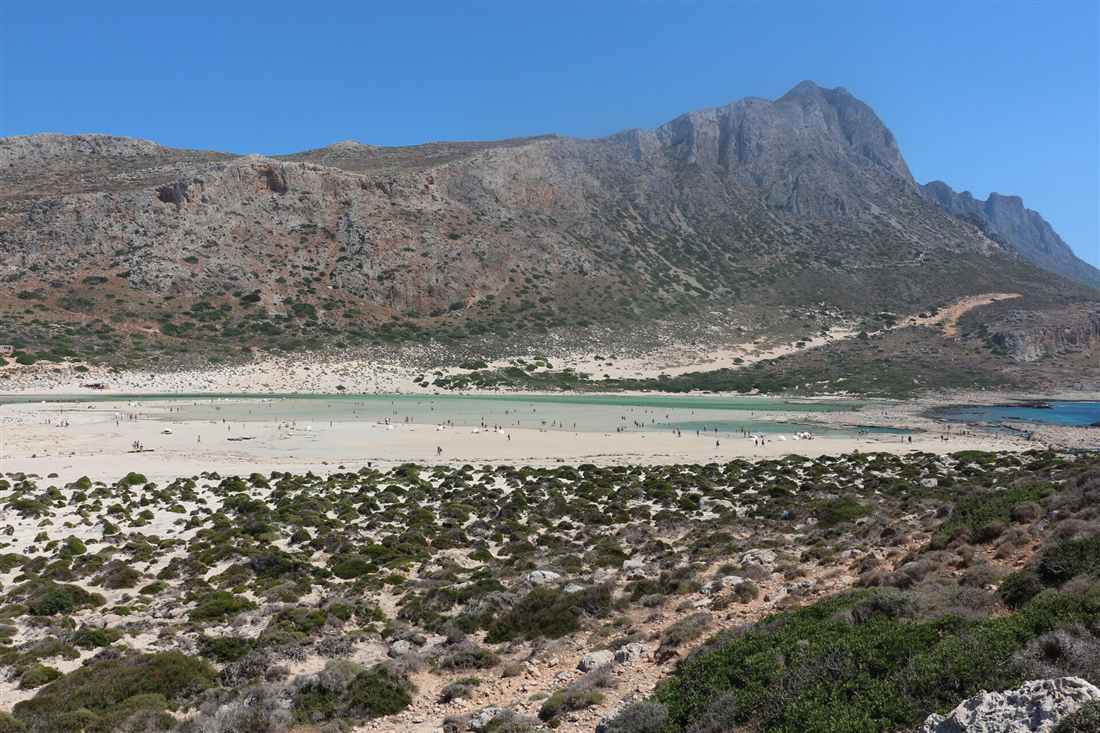
Crete’s west coast holds Elafonisi’s shallow pink-sand lagoon, the turquoise Balos lagoon near Gramvousa, the long sandy sweep at Falasarna, and quieter spots at Sfinari and Kedrodasos, all exposed to open swell that settles on calm, wind-free days.
The price of Crete snorkeling covers the boat, the guide and the equipment. The clear water off Agia Pelagia is a set piece of Crete snorkeling. Elafonisi sits at the island’s south-western tip, a shallow lagoon separated from open water by a sandbar, and stays calm and warm enough for a snorkel over seagrass and sand even when the open coast nearby runs rough. Elafonisi beach draws crowds for its pink-tinged sand, and the quieter water past the sandbar carries more fish and clearer visibility than the lagoon itself.
The price of Crete snorkeling covers the boat, the guide and the equipment. The clear water off Agia Pelagia is a set piece of Crete snorkeling. Balos, reached by boat from Kissamos or by a steep dirt track down to the shore, pairs a lagoon as pale and shallow as Elafonisi’s with the small island of Gramvousa just offshore, crowned by a Venetian fortress. The channel between the lagoon and Gramvousa carries deeper, clearer water with more reef structure than the lagoon, and boat trips out of Kissamos add a swim stop here.
The price of Crete snorkeling covers the boat, the guide and the equipment. The clear water off Agia Pelagia is a set piece of Crete snorkeling. Falasarna, on the coast just south of the Rodopos peninsula, runs as a long, open, west-facing sandy beach rather than a sheltered lagoon, and takes the full force of any westerly swell, making it a beach for sunbathing on a rough day and a snorkel spot only when the wind drops. The swell here builds bigger than anywhere else on this list, so checking wind direction first saves a wasted trip.
The price of Crete snorkeling covers the boat, the guide and the equipment. Sfinari, a small fishing village further south, and Kedrodasos, the quieter beach next to Elafonisi backed by a cedar forest, both stay less crowded than the two headline lagoons and reward a visitor willing to walk further. Days the west coast settles turn all five spots into the clearest water on the island and rank them among the standout Crete beaches too, while a windy day pushes a visitor back toward the sheltered north coast.
What Do You See When Crete Snorkeling?
Crete snorkeling shows dense Posidonia seagrass meadows, schools of salema and damselfish, wrasse and sea bream around the rocks, octopus and moray eels tucked into crevices, sea urchins and starfish on the seabed, nudibranchs on the rock face, and the occasional grouper in deeper water.
Crete snorkeling runs as a three-hour boat trip or a longer half day. Crete snorkeling carries wetsuits and full-face masks on the trips that supply them. Posidonia oceanica, the Mediterranean’s native seagrass, carpets huge stretches of shallow seabed around Crete in dense green meadows that sway with the current, and the meadow is a nursery for juvenile fish and a feeding ground for salema, a silver fish with gold stripes that grazes directly on the grass blades. A swim over an intact Posidonia meadow, rather than bare sand, is the biggest predictor of how much marine life turns up.
Crete snorkeling runs as a three-hour boat trip or a longer half day. Damselfish, small and dark with a blue sheen when young, cluster in the thousands around any patch of rock, darting in and out of crevices and holding territory over a patch the size of a dinner plate. Wrasse move in more varied colour through the same rocky ground — the ornate wrasse in blues and oranges, the rainbow wrasse changing colour through its life — while sea bream, sargo and saddled bream among them, hang in loose groups over sand close to rock.
Crete snorkeling runs as a three-hour boat trip or a longer half day. Octopus dens show up as a scatter of shell fragments and small rocks piled at a crevice mouth, the octopus itself tucked out of sight until a shadow passes close, at which point a body flushes from grey to deep red in under a second. Moray eels hold the same kind of crevice, jaw working open and shut to pump water over the gills, a motion that reads as aggressive but is simple breathing.
Crete snorkeling runs as a three-hour boat trip or a longer half day. Sea urchins cluster on shaded rock faces in numbers thick enough to avoid touching by hand or fin, their black spines brittle and painful rather than dangerous, while starfish — the red Mediterranean sea star among them — sit still on open rock or sand in a colour that stands out against the grey-brown seabed. Nudibranchs, small and slow, turn up on close inspection of rock and weed in colours that rival any reef fish.
Crete snorkeling runs as a three-hour boat trip or a longer half day. Grouper, in particular the dusky grouper, a large, dark, protected species, hold deeper rocky ground and drop-offs rather than the shallow reef most trips cover, and a sighting counts as a highlight rather than a routine one. The south coast’s deeper water off Agia Roumeli and Loutro carries the better odds of a grouper encounter, given the depth close to shore covered earlier.
What Amphorae, Ruins And Wrecks Turn Up On A Crete Snorkeling Trip?
Crete snorkeling around Elounda passes over the sunken remains of ancient Olous, with harbour blocks, wall foundations and a mosaic floor visible in the shallows below the boat, and the firm rule everywhere on the island is that nothing underwater gets touched, moved or taken.
The stops on Crete snorkeling reach the reefs and coves no swimmer walks to. Planning Crete snorkeling ahead beats the scramble for a summer date. Olous, the ancient city that once stood on the causeway and shoreline now occupied by modern Elounda, sank below sea level through gradual coastal subsidence, and its remains sit in water shallow enough for a snorkeler to make out cut stone blocks and wall lines from the surface on a calm, clear day. A section of mosaic floor, part of an early Christian basilica, lies close to the causeway and stays a reference point on the Elounda and Spinalonga run.
The stops on Crete snorkeling reach the reefs and coves no swimmer walks to. Planning Crete snorkeling ahead beats the scramble for a summer date. Harbour structures — quay blocks, foundation lines cut into bedrock, the outline of what were once buildings along the ancient shore — sit scattered across the shallow bay floor rather than gathered in one obvious wreck site, rewarding a slow swim over a fixed stretch of water. The coastal stretch around Crete carries scattered amphora fragments from ancient shipping routes, though an intact amphora on open ground is a rare find rather than a guaranteed sight.
The stops on Crete snorkeling reach the reefs and coves no swimmer walks to. The rule that binds every dive and snorkel site on the island, enforced under Greek law protecting underwater antiquities, is simple: nothing gets removed, moved or touched, whether it is a mosaic tile, an amphora shard or a worked stone block. A guide on any boat trip repeats this rule at the briefing stage specifically when the route passes over a known ruin site, and the penalty for lifting even a small fragment falls under national heritage law.
The stops on Crete snorkeling reach the reefs and coves no swimmer walks to. Beyond Olous, isolated finds turn up along stretches of coast that carried ancient harbours and shipping lanes, from the north shore near Chania to the bays around Agios Nikolaos, though most such sites stay unmarked on any standard trip route. A guide who knows a stretch of coast well flags anything unusual spotted on a swim, but the headline underwater ruin site remains Olous, the clearest of the island’s submerged remains.
How Clear Is The Water For Crete Snorkeling?
Crete snorkeling visibility runs from ten to over twenty-five metres on a calm day with no wind, drops fast under swell or a strong wind chop, stays best in the still morning hours, and reads clearer over a sandy bay than a stirred-up rocky point, especially right after heavy rain near a river mouth.
Booking Crete snorkeling ahead secures the date and the place on the boat. For a first time in the water, Crete snorkeling starts with the mask fit and the briefing. Visibility across the island’s coastline changes with wind, swell, the seabed type and the time since the last rain, and the south coast against the Libyan Sea runs clearer on average than the more sheltered but shallower north coast. A dead-calm morning with no wind overnight produces the clearest conditions anywhere on the island, with visibility past twenty metres a realistic figure on the best south-coast days.
Booking Crete snorkeling ahead secures the date and the place on the boat. For a first time in the water, Crete snorkeling starts with the mask fit and the briefing. Wind and swell stir sediment off the seabed and roughen the surface, both of which cut visibility fast — a bay that reads twenty metres clear at 8am can drop to eight or ten metres by early afternoon once the daily wind picks up, particularly on the exposed west coast around Falasarna. The meltemi, the strong seasonal north wind on the Aegean side of the island, has the biggest single effect on north-coast visibility through summer.
Booking Crete snorkeling ahead secures the date and the place on the boat. The still morning hours, from first light until the wind builds, give the flattest water and the best light angle for a snorkeler looking down through the surface, since a flat, glassy sea lets sunlight penetrate straight down rather than scattering across a chopped-up surface. Boats that run an early departure slot do it specifically to catch this window before the afternoon breeze arrives.
Booking Crete snorkeling ahead secures the date and the place on the boat. A sandy bay stays clearer under moderate wave action than a rocky point, since loose sand settles fast once stirred while fine silt trapped among rock and weed takes longer to clear, and a river outflow — Preveli on the south coast is the clearest example — drops visibility sharply for days after heavy rain as sediment mixes into the sea near the mouth. A guide checking conditions before departure weighs wind, swell, seabed and recent rainfall rather than picking a bay from habit.
When Is The Best Season For Snorkeling In Crete?
The Crete snorkeling season runs comfortably from May through October, with sea temperature climbing from the high teens in May to the high twenties at the August peak and dropping back through October, so a shorty wetsuit covers the shoulder months while July and August need no wetsuit at all.
Crete snorkeling ends with the run back to the harbour and the gear handed in. A private Crete snorkeling trip keeps the boat to one group. May opens the season with sea temperature in the high teens Celsius, cool enough that a wetsuit makes a long trip comfortable but warm enough for a short swim without one on a calm, sunny day. Water climbs steadily through June into the low twenties, and by July and August the sea sits in the high twenties across most of the coastline.
Crete snorkeling ends with the run back to the harbour and the gear handed in. A private Crete snorkeling trip keeps the boat to one group. September holds close to peak temperature into the first half of the month before a gradual cooldown begins, and October brings the water back down into the low twenties, still swimmable and still busy with boat trips running a full schedule. The shoulder months — May, June and October — pair slightly cooler water with thinner crowds and calmer conditions on the more sheltered coasts.
Crete snorkeling ends with the run back to the harbour and the gear handed in. A shorty wetsuit, covering torso and thighs but leaving the lower arms and legs bare, is standard kit on shoulder-season boats and on any trip along the cooler north-west coast around Chania, since even a warm day carries a current cooler than the surface suggests. Full-length wetsuits stay rare on Crete’s boats outside a handful of deeper, colder south-coast dive-style trips.
Crete snorkeling ends with the run back to the harbour and the gear handed in. The summer peak, July into early September, brings the busiest boats, the fullest booking calendar and the warmest water of the year, alongside the meltemi wind that builds through the afternoon on the north and east coasts and favours a morning departure. The south coast and the sheltered bays around Elounda and Mirabello stay less affected by the meltemi than the open north-facing shore.
What Time Of Day Is Best For Snorkeling In Crete?
The best window for snorkeling in Crete runs from early morning through late morning, when the sea sits flattest and the wind has not yet built, while midday brings the sun directly overhead for the strongest colour underwater and the afternoon brings rising chop that pushes most boats back to harbour.
The guide on Crete snorkeling stays in the water with the group throughout. Families take Crete snorkeling for the shallow bays and the flotation aids. Morning calm, from sunrise through roughly ten or eleven, gives the flattest sea of the day across almost every coast, since overnight cooling settles the air and the daytime thermal wind has not yet built. This window matches the light angle a snorkeler wants too — low, soft early light still reaches underwater at an angle that shows colour and shape clearly without the glare of a midday sun bouncing off the surface.
The guide on Crete snorkeling stays in the water with the group throughout. Families take Crete snorkeling for the shallow bays and the flotation aids. Midday, with the sun close to directly overhead, sends light straight down through the water column with the least distortion of the day, and colour underwater reads truest in this window — reds and oranges on fish and rock that fade to blue-grey in low-angle light show at full saturation under a high midday sun. A photographer on a boat trip times the second swim stop for exactly this window.
The guide on Crete snorkeling stays in the water with the group throughout. Afternoon chop builds through the day on most north and east-facing coasts as the local thermal wind strengthens, and by early-to-mid afternoon a bay that sat flat at 9am carries a real surface chop, cutting visibility and comfort for a nervous guest. Boats plan their return leg around this pattern, aiming to be back at the harbour before the wind peaks.
The guide on Crete snorkeling stays in the water with the group throughout. Departure times on the standard boat trips cluster in two bands — a morning slot leaving between 9am and 10am to catch the calm window, and an afternoon slot from around 1pm to 2pm for guests who prefer a later start, accepting a rougher second half in exchange for a free morning. High-season bookings fill the morning slot first, since the calmer water and cooler temperature make it the stronger choice.
What Equipment Do You Need For Crete Snorkeling?
Crete snorkeling needs a well-fitted mask, a snorkel, fins sized to the foot, a rash vest or a shorty wetsuit for sun and warmth, reef shoes for pebble and rock entries, a float or a life jacket on open water, and a dive flag marking any swimmer away from a boat, with operators supplying the full kit.
Crete snorkeling passes seagrass meadows, rock shelves and sandy patches. The price of Crete snorkeling covers the boat, the guide and the equipment. A mask forms the core piece of kit, and fit matters more than brand or price — a silicone skirt that seals against the face without the strap pulled tight, tempered glass rather than plastic, and a low internal volume that clears easily if water gets in. A snorkel with a splash guard at the top and a purge valve at the bottom drains trapped water by exhaling, making a long swim less tiring for a beginner.
Crete snorkeling passes seagrass meadows, rock shelves and sandy patches. The price of Crete snorkeling covers the boat, the guide and the equipment. Fins sized to the foot rather than oversized give proper propulsion without cramping a calf muscle; open-heel fins worn with a neoprene sock suit rockier entries, while full-foot fins suit a soft sandy beach entry with bare feet. A rash vest, or a full shorty wetsuit in cooler months, protects against sunburn on an exposed back during a long surface swim and the mild chafing that comes from hours in salt water.
Crete snorkeling passes seagrass meadows, rock shelves and sandy patches. Reef shoes matter most on the pebble and rock entries common along the south and west coasts, protecting the sole of the foot from sharp rock, urchin spines and hot stone on the walk down to the water, where a bare foot risks a cut that ends a swim before it starts. A float — a tow float on a short line or the flotation noodle already covered — gives a tiring swimmer somewhere to rest.
Crete snorkeling passes seagrass meadows, rock shelves and sandy patches. A dive flag, a red flag with a white diagonal stripe, marks any snorkeler swimming away from a boat in open water, warning passing traffic to give a wide berth, and Greek maritime law requires one on any independent swim beyond a marked bathing area. Every element on this list comes included on a standard guided boat trip, so a visitor without personal gear still joins the water fully equipped.
How Do You Fit A Mask And Clear A Snorkel?
A correctly fitted mask seals against the face on suction alone, with the strap sitting flat across the back of the head and no hair trapped under the skirt, while a snorkel clears by exhaling sharply through the purge valve or the open top, and light defogging before entry stops the lens misting over mid-swim.
For stronger swimmers, Crete snorkeling opens the deeper drop-offs off the points. The stops on Crete snorkeling reach the reefs and coves no swimmer walks to. The suction test checks fit before the strap even goes on: press the mask lightly to the face, breathe in through the nose, and let go — a mask holding itself in place on suction alone has a proper seal, while one that falls away needs a different frame size rather than a tighter strap. A strap pulled too tight to compensate for a poor seal only bruises the face and pushes the skirt out of shape.
For stronger swimmers, Crete snorkeling opens the deeper drop-offs off the points. The stops on Crete snorkeling reach the reefs and coves no swimmer walks to. Strap position sits low, across the widest part of the back of the head rather than up near the crown, spreading pressure evenly and stopping the mask sliding under water pressure. Hair caught under the silicone skirt, especially at the temples and along a fringe, breaks the seal exactly where a leak is hardest to notice, so pulling hair fully clear of the skirt edge before the strap goes on prevents most in-water leaks.
For stronger swimmers, Crete snorkeling opens the deeper drop-offs off the points. Defogging treats the inside of the lens before the mask goes on: a drop of proper defog solution, or in its absence a light rub of spit across the dry glass, wiped thin and rinsed with a splash of seawater, stops the fine condensation that clouds a lens within minutes of entry. A brand-new mask carries a manufacturing film that fogs heavily until burned off with toothpaste before first use.
For stronger swimmers, Crete snorkeling opens the deeper drop-offs off the points. A dry-top snorkel with a float valve seals automatically if a wave breaks over the top, keeping water out without action from the swimmer, while a basic snorkel with a purge valve clears by a sharp exhale that forces trapped water out through a one-way valve at the bottom. Clearing water from a purge-free snorkel needs a stronger blast from the base of the lungs, pushing the water column up and clear in one continuous breath rather than three or four short puffs.
What Does A Crete Snorkeling Trip Cost And What Is Included?
Crete snorkeling trip pricing is set per person at the point of booking and covers the boat, the skipper and guide, the full equipment set, hotel transfer on most routes, and a lunch or snack on the longer full-day trips, with the exact figure varying by operator, season and trip length rather than fixed island-wide.
The mask and the fins are fitted before Crete snorkeling begins. Crete snorkeling ends with the run back to the harbour and the gear handed in. Per-person pricing gets confirmed at the point of booking rather than fixed as a single island-wide rate, since a half-day trip costs less than a full-day trip with lunch and two swim stops, and peak-season demand pushes rates above shoulder-season rates on the same route. A group booking a private boat rather than joining a shared departure pays a different structure, covering the whole vessel rather than a per-head seat.
The mask and the fins are fitted before Crete snorkeling begins. Crete snorkeling ends with the run back to the harbour and the gear handed in. The boat itself — fuel, mooring fees, insurance and running cost — sits inside the quoted price on every standard trip, alongside the skipper who handles navigation and the marine guide who runs the in-water briefing and points out marine life at each stop. A trip advertising a guide separate from the skipper tends to run at the higher end of the pricing band for that route.
The mask and the fins are fitted before Crete snorkeling begins. Full equipment — mask, snorkel, fins, wetsuit where the season calls for it, and the life jacket every guest wears — comes included as standard rather than as an add-on, and a visitor bringing personal gear from home is welcome to use it instead without a discount for skipping the rental kit. Reef shoes, sun cream and a towel stay a guest’s own responsibility on almost every operator’s kit list.
The mask and the fins are fitted before Crete snorkeling begins. Hotel transfer covers a defined radius around the harbour on most routes — central Chania, central Heraklion, the Hersonissos and Malia strip, the Agios Nikolaos and Elounda area — and a guest staying outside that radius arranges their own way to the departure point or checks with the operator first. Lunch or a snack comes included on the longer full-day formats, while shorter half-day trips carry water and a light snack rather than a full meal.
Is Snorkeling In Crete Safe For Children And Families?
Snorkeling in Crete works for families once a child clears the operator’s minimum age, set at six or seven on most boats, and pairs a flotation aid with a shallow sheltered bay, a guide staying within arm’s reach and a swim stop that always stays optional rather than compulsory for a nervous child.
Crete snorkeling includes the hotel transfer inside the operator’s radius. Crete snorkeling passes seagrass meadows, rock shelves and sandy patches. Minimum age on the standard boat trips sits at six or seven years on the majority of operators, tied less to a hard safety rule than to a practical judgment about a child’s ability to follow instructions, stay calm in open water and manage a mask and fins without constant one-to-one support. A family with a younger child looks for the handful of operators running a dedicated family format with a lower age limit.
Crete snorkeling includes the hotel transfer inside the operator’s radius. Crete snorkeling passes seagrass meadows, rock shelves and sandy patches. Shallow bays — Ligaria near Agia Pelagia, the inner cove at Bali, the calm first stop on the Hersonissos routes — form the backbone of any family-friendly trip, since a child needs standing depth or close-to-standing depth within easy reach at all times. A guide checks these bays specifically for calm water and gentle entry before adding a family group to the day’s route.
Crete snorkeling includes the hotel transfer inside the operator’s radius. Flotation aids for children run as a full vest rather than arm bands or a simple belt, covering the torso and keeping the head clear of the surface with no swimming effort required, and every operator carries child-sized versions alongside the adult kit. A guide pairs directly with any child in the water at a ratio tighter than the standard adult group.
Crete snorkeling includes the hotel transfer inside the operator’s radius. Every swim stop on a family booking stays optional: a child who wants to stay on the boat, or a parent who judges the conditions too choppy for a first attempt, sits out without any pressure from the crew to join. Keeping a child within arm’s reach at all times, rather than letting them range across the swim area with older guests, remains the single practical rule every family applies beyond whatever the operator provides.
What Are The Safety Rules For Snorkeling In Crete?
Crete snorkeling safety rests on five rules: never swim alone, stick to the buddy system, stay inside the marked swim zone away from boat traffic, respect currents at any headland, and manage sun exposure and hydration across a long surface swim under direct sun.
The clear water off Agia Pelagia is a set piece of Crete snorkeling. The mask and the fins are fitted before Crete snorkeling begins. Swimming alone strips away the single biggest safety margin any snorkeler has: a second person notices a cramp, a panic response or a missed hand signal long before a guide watching from a boat does, and a solo swimmer who runs into trouble has nobody close enough to help in the critical first minute. Every guided trip pairs guests into buddy groups at the briefing stage to remove this risk.
The clear water off Agia Pelagia is a set piece of Crete snorkeling. The mask and the fins are fitted before Crete snorkeling begins. The buddy system works on a simple principle: two swimmers stay within sight of each other at all times, check in periodically with a hand signal or a direct look, and surface together if either wants to head back to the boat. A buddy pair that drifts apart during a swim closes the gap immediately, since the whole value of the system depends on staying close enough to act fast.
The clear water off Agia Pelagia is a set piece of Crete snorkeling. The marked swim zone, set by buoy lines or by the boat’s position and the guide’s verbal boundary, keeps snorkelers clear of boat traffic passing through the same stretch of water, and straying past the marked line risks a collision with a vessel whose skipper is watching for other boat traffic rather than a low swimmer’s head against a chopped surface. Currents build strongest around headlands, so a swim near any prominent headland stays inside the guide’s marked limit.
The clear water off Agia Pelagia is a set piece of Crete snorkeling. Sun exposure across a long surface swim hits the back and shoulders hardest, since that is the part of the body facing the sun for the whole duration, and reef-safe sun cream applied before entry, plus a rash vest covering the shoulders, cuts the risk of a burn that only becomes obvious once back on dry land. Hydration matters just as much — salt water and sun both draw moisture from the body faster than a swimmer notices, so water breaks between stops keep a guest ahead of dehydration.
What Marine Life Do You Keep Clear Of When Snorkeling In Crete?
Snorkeling in Crete calls for distance from sea urchins on shaded rock, weever fish buried in sand, jellyfish that drift in during certain weeks of the season, and bearded fire worms on open rock, under one firm rule: touch nothing, and wear reef-safe sun cream to protect the reef itself as much as the swimmer.
Every Crete snorkeling trip starts with the safety briefing on board. The clear water off Agia Pelagia is a set piece of Crete snorkeling. Sea urchins cluster on shaded, north-facing rock faces and in cracks close to shore, their black spines brittle enough to snap off under skin on contact and painful enough to end a swim early, though rarely dangerous beyond the initial sting and the awkward job of working the fragments back out. Reef shoes and a careful eye on rocky entries cut the risk close to zero.
Every Crete snorkeling trip starts with the safety briefing on board. The clear water off Agia Pelagia is a set piece of Crete snorkeling. Weever fish bury themselves in sand in shallow water, close enough to shore that a swimmer standing up risks stepping directly on one, and the dorsal spine carries a venom that causes a sharp, immediate pain far out of proportion to the fish’s small size. Shuffling the feet through sand rather than stepping down directly gives a weever fish time to move off, and hot water on the sting site breaks down the venom fast if a sting happens anyway.
Every Crete snorkeling trip starts with the safety briefing on board. Jellyfish drift into Cretan waters in patches tied to wind and current rather than a fixed calendar date, and a bloom appears over a matter of days and clears just as fast, so a guide checks current conditions before any swim. The mauve stinger, pale purple and translucent, is the species most commonly reported around the island, and its sting stings sharply without carrying serious risk beyond the discomfort itself.
Every Crete snorkeling trip starts with the safety briefing on board. Bearded fire worms, found on open rock and among rubble at the reef edge, carry white bristles that detach into the skin on contact and cause a burning, itching reaction that lasts for hours; the worm itself moves slowly and poses no threat to a swimmer who avoids handling rock directly. The rule covering every one of these species is the same rule that covers the ruins in Elounda: touch nothing, and reef-safe sun cream keeps that same protective principle running toward the reef itself.
How Does Snorkeling In Crete Compare With A Discover Scuba Dive?
Crete snorkeling stays on the surface with no training required, while a Discover Scuba dive takes a first-timer to depths near twelve metres under full tank and regulator gear with a certified instructor at close range, costing more, running longer, and opening a wider view of the reef in exchange for a stricter minimum age and a short shallow-water lesson first.
Crete snorkeling carries wetsuits and full-face masks on the trips that supply them. The morning slot for Crete snorkeling fills first in high season. Depth marks the clearest split between the two: a snorkeler stays at the surface, diving down under their own breath-hold for a closer look before returning to breathe, while a Discover Scuba dive puts a diver on a tank at depths that reach close to twelve metres, held there on continuous air rather than a held breath, giving far longer at any one spot on the reef.
Crete snorkeling carries wetsuits and full-face masks on the trips that supply them. The morning slot for Crete snorkeling fills first in high season. Equipment scales up accordingly — a mask, snorkel and fins cover snorkeling, while Discover Scuba adds a buoyancy vest, a regulator, a weight belt and a full air tank, plus a wetsuit as standard rather than optional gear. The heavier kit needs a short briefing and a shallow practice session, run one-on-one or in a small group with an instructor holding continuous contact distance.
Crete snorkeling carries wetsuits and full-face masks on the trips that supply them. No training or certification is required for either activity as a first-timer, but the two differ sharply in supervision: a snorkeling guide watches a group from the surface or alongside in the water, while a Discover Scuba instructor stays within touching distance of each diver for the entire dive, managing buoyancy and air on the diver’s behalf. This tighter supervision is what allows a complete beginner to reach real depth safely on a single short briefing.
Crete snorkeling carries wetsuits and full-face masks on the trips that supply them. Cost runs higher for Discover Scuba than for a standard snorkeling trip, reflecting the tank fill, the instructor time and the heavier equipment, and the age limit sits higher too — commonly ten years and up rather than the six or seven common on snorkeling boats. Chania scuba diving operators run Discover Scuba sessions alongside certified dives, and a guest who tries the format moves on to book a certification course next.
How Does A Boat Snorkeling Trip Compare With Snorkeling From The Beach?
A boat snorkeling trip reaches reef, headlands and coves no shore swimmer gets close to, comes with a guide and full equipment supplied, and runs as a group activity at a set cost, while snorkeling straight from the beach costs nothing beyond personal gear, runs on the swimmer’s own schedule, and reaches only what a stretch of shoreline exposes directly.
The set price on Crete snorkeling covers the boat, the guide and the transfer. Planning Crete snorkeling ahead beats the scramble for a summer date. Access marks the biggest practical difference: a boat reaches remote coves, offshore reef and headland points a shore swimmer never gets close to without a long, exposed open-water swim, and a route like the Elounda ruins or the deep drop-offs near Agia Roumeli exists only as a boat trip. A shore entry, by contrast, opens only the reef directly in front of an accessible beach, ruling out plenty of the island’s best water.
The set price on Crete snorkeling covers the boat, the guide and the transfer. Planning Crete snorkeling ahead beats the scramble for a summer date. A guide on a boat trip adds knowledge a solo beach swimmer never gets: naming fish on sight, pointing out an octopus den or a moray tucked in a crevice that a solo swimmer finishes an hour without ever noticing, and reading conditions to pick the calmest, clearest bay for that specific day. Equipment supplied on a boat removes the need to travel with a mask, snorkel and fins, useful for a visitor without checked luggage space for gear.
The set price on Crete snorkeling covers the boat, the guide and the transfer. The group format on a boat trip means a fixed schedule and a fixed group size, trading flexibility for structure — a departure time set in advance, a route chosen by the operator, and company from other guests rather than a private swim. A shore snorkel runs entirely on the swimmer’s own clock, starting and ending whenever suits, with no group to wait for and no fixed route beyond what a stretch of coastline offers on foot.
The set price on Crete snorkeling covers the boat, the guide and the transfer. Cost separates the two sharply: a shore entry with personal gear costs nothing beyond the gear itself, a one-time purchase that pays for itself across a whole trip, while a boat trip runs a per-person fee covering the vessel, crew, guide and equipment rental for guests without their own. Crete boat trips earn that cost back through access and knowledge a free shore swim cannot match.
How Do You Book A Snorkeling Trip In Crete And Where Does It Fit In A Trip?
Booking a Crete snorkeling trip ahead of the date secures a place on the popular morning slot before it fills in high season, and confirming swimming ability and the hotel pickup radius at booking avoids a mismatch on the day, with a half-day format leaving the rest of the day free for a beach, a town visit or a second activity.
Planning Crete snorkeling ahead beats the scramble for a summer date. For a first time in the water, Crete snorkeling starts with the mask fit and the briefing. Booking ahead matters most in the peak July and August stretch, when the morning departure slot — the calmest water and coolest temperature of the day — fills first and leaves only the rougher afternoon slot for a late booking. A guest with a fixed set of travel dates and a preference for the morning window books as early as the itinerary allows.
Planning Crete snorkeling ahead beats the scramble for a summer date. For a first time in the water, Crete snorkeling starts with the mask fit and the briefing. Confirming swimming ability at the point of booking, rather than leaving it for the dockside briefing, lets an operator match a guest to the right trip format — a sheltered, shallow, family-style route for a non-swimmer or nervous beginner, against a livelier route with a deeper second stop for a confident swimmer. This single detail, communicated honestly at booking, shapes a good experience more than any piece of equipment on the boat.
Planning Crete snorkeling ahead beats the scramble for a summer date. The hotel pickup radius, covered under each region’s trips above, needs confirming against the exact accommodation address before the booking locks in, since a hotel sitting just outside a stated radius either pays extra for a longer transfer or arranges its own way to the harbour. A quick check against the operator’s stated pickup zone at booking time avoids a stressful morning scramble.
Planning Crete snorkeling ahead beats the scramble for a summer date. A half-day format, running three to four hours door to door, leaves the balance of the day free for a beach stop, a walk through a nearby old town, or a second activity entirely, which is why the shorter format outsells the full-day option on most routes despite covering fewer swim stops. A full-day trip with lunch suits a guest treating the water as the whole day’s plan, and either format closes out a snorkeling day that pairs naturally with a beach afternoon, a scuba taste session, or resting up before the next stop.
Frequently Asked Questions
Do you need experience for Crete snorkeling?
No. The guide fits the mask and the fins on the boat, gives a briefing before the first stop and carries noodles and flotation aids. Weak swimmers wear a buoyancy aid and stay beside the guide.
When is the best season for Crete snorkeling?
May to October holds comfortable water, with the warmest sea from late July into October. The shoulder months call for a shorty wetsuit. The morning stays calmest, and the wind decides which coast works on the day.
Where are the best Crete snorkeling spots?
Agia Pelagia, Almyrida and Bali on the north coast; Plakias, Damnoni and Shinaria on the south; Elafonisi, Balos and Falasarna in the west. Each holds shallow rock, seagrass and clear water in settled weather.