
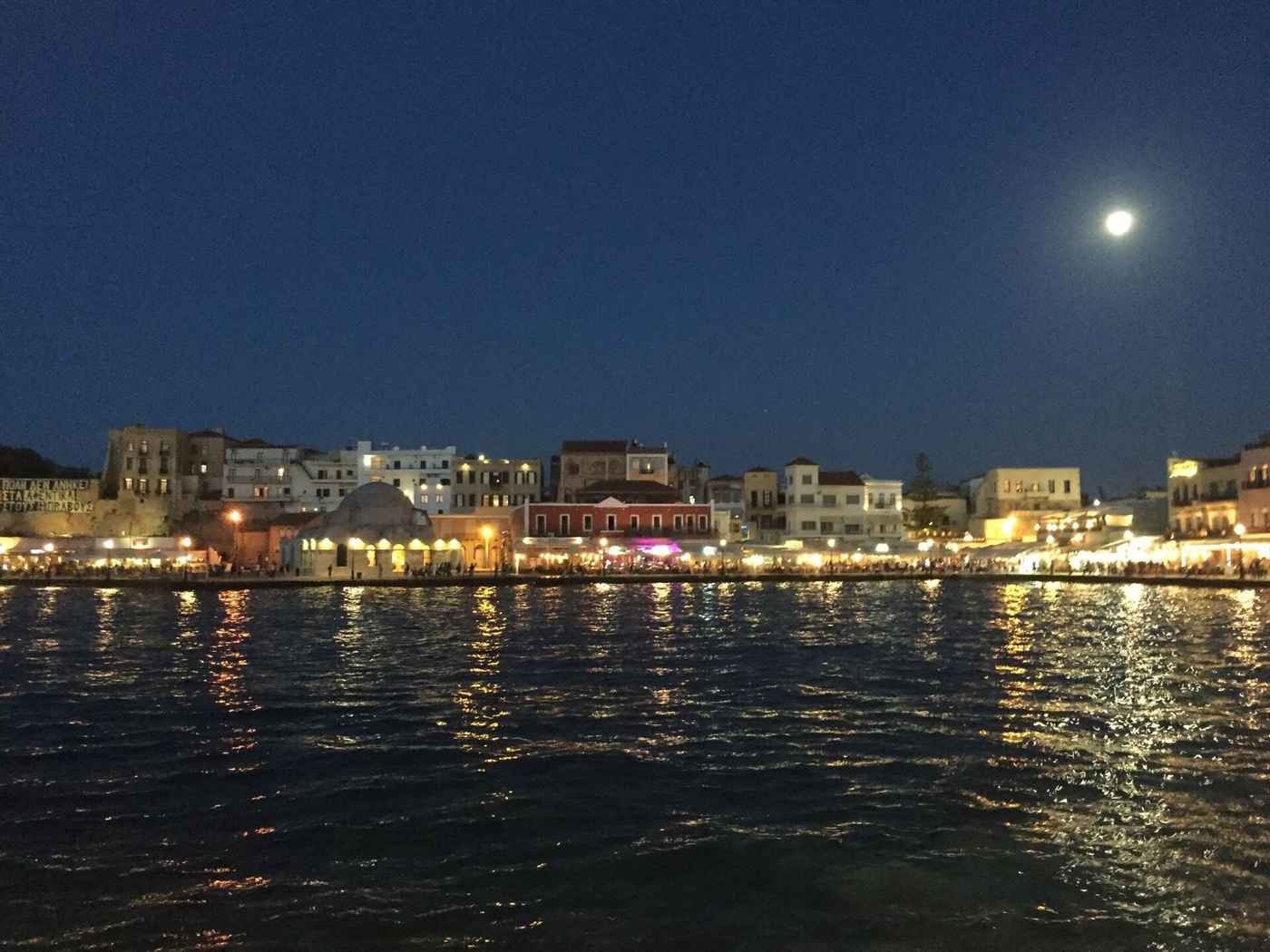
Crete offers nightlife to suit every mood, from pounding club strips to candlelit harbour tavernas where locals linger over raki until dawn. The island’s after-dark scene divides neatly between resort party zones east of Heraklion and the more laid-back rhythm of its historic cities and villages. Malia and Hersonissos draw the loudest crowds, while Heraklion and Chania keep a year-round buzz fuelled by students and residents. Smaller towns and coastal villages favour slow dinners, live lyra music and conversation over late-night dancing. Plan your evenings with My Greece Tours.
Cretan nights start late and stretch long, shaped by the island’s own traditions of hospitality, music and shared plates. The sections below cover the main nightlife zones, from raucous bar streets to quieter cultural evenings, helping you match your mood to the right spot. Expect rooftop cocktails in the cities, beach-club beats in the resorts and intimate taverna sessions in the countryside. Our Crete travel guide offers broader context for planning your visit across the island’s diverse regions and seasons.
Where is the wildest nightlife in Crete?
Malia holds the crown for the island’s most intense party scene. Its bar street fills with young travellers through summer, offering nonstop clubs and cheap drinks until sunrise. Hersonissos runs a close second with beachfront venues and themed nights.
Malia’s reputation as Crete’s party capital is well earned. The town’s main strip transforms each evening into a continuous parade of bars, clubs and music that peaks around two in the morning and continues until dawn. The crowd skews young, drawn by package deals and the promise of uninhibited fun. Expect foam parties, drink promotions and international DJs spinning commercial dance tracks. The atmosphere is loud, energetic and unapologetically geared toward tourists seeking a classic Mediterranean club holiday. Hersonissos offers a similar vibe just west along the coast, with beachfront clubs and cocktail bars that cater to the same demographic but with slightly more polish and variety in venue styles.
Both towns operate on a summer schedule, with most venues opening late May and closing by October. The scene quiets dramatically outside peak season, leaving only a skeleton crew of year-round bars. Dress codes are relaxed, prices are competitive and the focus is squarely on volume and spectacle rather than sophistication. The music leans heavily toward chart hits, EDM and nostalgic party anthems. These resorts deliver exactly what they promise: high-energy, low-commitment nights where inhibitions drop and the party never pauses. The experience is far removed from traditional Cretan culture but remains the island’s most concentrated dose of hedonistic nightlife.
What is Crete nightlife like in Heraklion and Chania?
Heraklion and Chania sustain year-round nightlife aimed at locals and students rather than package tourists. Rooftop bars, live-music tavernas and cafes that fill after midnight define the scene. Expect a more sophisticated, culturally grounded atmosphere than the resort strips.
Heraklion pulses with student energy, particularly around the old port and the pedestrian streets near Lion Square. Rooftop bars offer sunset views over the Venetian fortress, while basement clubs host Greek rock bands and alternative DJs. The crowd is predominantly local, the music eclectic and the vibe unpretentious. Cafes transform into buzzing social hubs after midnight, a distinctly Greek phenomenon where coffee and conversation matter as much as alcohol. The city maintains this rhythm throughout the year, making it reliable for visitors outside the summer peak. Prices are reasonable, dress is casual and the atmosphere welcomes curious travellers willing to step beyond the tourist bubble.
Chania adds romance to the mix with its Venetian harbour setting. Waterfront bars and restaurants stay open late, their tables spilling onto cobblestones lit by lanterns. The old town’s narrow lanes hide cocktail lounges, jazz clubs and wine bars that draw a slightly older, more cosmopolitan crowd. Live music is common, ranging from traditional Cretan lyra performances to contemporary Greek pop. The pace is relaxed, the setting beautiful and the experience feels authentically local rather than manufactured for tourists. Both cities reward night owls who prefer conversation and atmosphere over relentless beats and crowded dance floors.
Does Crete have traditional evening entertainment?
Traditional Cretan evenings centre on tavernas with live lyra music, local wine and shared mezes. These sessions start late and stretch for hours, blending food, drink and spontaneous dancing. The experience prioritizes community and culture over commercial clubbing.
The lyra, a three-stringed bowed instrument, anchors traditional Cretan music. Tavernas across the island host live performances, particularly on weekends and during summer. Musicians play mantinades, improvised rhyming couplets, while diners clap, sing along and occasionally leap up for a spontaneous dance. The atmosphere is warm, inclusive and deeply rooted in local identity. Raki flows freely, plates of grilled meat and cheese arrive in waves and the evening unfolds without a fixed schedule. This is nightlife as social ritual rather than entertainment product, shaped by centuries of island tradition. Cretan food plays a central role, with mezes designed for sharing and lingering over multiple hours.
Villages and smaller towns offer the most authentic versions of these evenings, though even the cities maintain tavernas where locals gather for music and company. The experience requires patience and openness; there are no set start times, no printed programmes and no guarantees. The best nights happen organically, sparked by a talented musician, a generous host or simply the right mix of people. Visitors who embrace the slow pace and participatory spirit often find these evenings more memorable than any nightclub. The tradition connects directly to Cretan identity, offering a window into how islanders have celebrated together for generations.
What is the nightlife like in Rethymno?
Rethymno’s old town and harbour create a relaxed evening buzz. Bars and cafes cluster along the waterfront and within Venetian lanes, offering a middle ground between resort intensity and village quiet. The atmosphere suits couples and older travellers seeking charm without chaos.
Rethymno strikes a balance that appeals to visitors wanting nightlife without surrendering to full resort excess. The Venetian harbour provides a picturesque backdrop for evening drinks, with tables positioned to catch the sea breeze and views of the lighthouse. Bars range from cocktail lounges to casual beer gardens, most playing background music at conversational volume. The old town’s labyrinthine streets hide wine bars, gelato shops and small clubs that come alive after ten but rarely reach Malia-level intensity. The crowd mixes tourists with locals, students with retirees, creating a diverse and generally mellow vibe.
Live music appears regularly, from acoustic guitarists in harbour-side restaurants to DJ sets in the handful of dedicated nightclubs. The town maintains activity year-round, though summer brings the fullest energy and longest hours. Dress is smart-casual, prices are moderate and the overall experience feels more curated than the party resorts but less formal than upscale Chania venues. Rethymno works well for visitors who want options without committing to either extreme of the island’s nightlife spectrum. The setting itself, with its Venetian and Ottoman architecture, adds considerable charm to any evening out.
How does nightlife work in Crete’s villages and smaller resorts?
Villages and smaller resorts wind down early, favouring slow taverna dinners over late clubs. Evenings revolve around raki, conversation and perhaps live music in a local kafeneion. The pace is gentle, the atmosphere intimate and the focus on connection rather than entertainment.
Outside the main towns and party resorts, Cretan nightlife follows a quieter rhythm. Tavernas serve dinner late by northern European standards, with meals beginning around nine and stretching past midnight. The evening centres on food, wine and company rather than dancing or loud music. Raki appears at the end of the meal, often accompanied by fruit or sweets, and the conversation continues as long as anyone cares to stay. Local kafeneions, traditional coffee houses, serve as social hubs where men gather to play cards, discuss politics and share news. These spaces welcome respectful visitors but operate primarily for locals, maintaining routines unchanged for decades. The experience offers cultural immersion but little in the way of conventional nightlife excitement.
Coastal villages add beach bars to the mix, though even these tend toward relaxed sunset drinks rather than all-night parties. The resort strip at Platanias, west of Chania, is the liveliest exception in the west. Things to do in Crete extend well beyond nightlife in these areas, with the emphasis on daytime activities, natural beauty and slower rhythms. The lack of late-night options is a feature, not a bug, for visitors seeking tranquility and authenticity. Evenings end earlier, stars are brighter and the sound of the sea replaces bass-heavy club tracks. This version of Cretan nightlife suits travellers prioritizing rest, reflection and genuine local interaction over high-energy entertainment.
Frequently Asked Questions
What time does nightlife start in Crete?
Cretan nightlife operates on a late schedule by most standards. Dinner rarely begins before eight or nine in the evening, with restaurants filling up closer to ten. Bars and clubs open earlier but remain quiet until midnight, when the real action begins. The peak hours run from one to four in the morning, particularly in the resort towns and cities. This timing reflects Greek cultural norms around meals, socializing and sleep. Visitors accustomed to earlier schedules should adjust expectations and perhaps take an afternoon rest to manage the late nights. The rhythm feels natural once you adapt, allowing for leisurely evenings that unfold without rush.
Even traditional taverna sessions with live music rarely start before ten, building gradually as more people arrive and the raki begins to flow. The late start means mornings are quiet, with most businesses opening later to accommodate the nocturnal schedule.
Is Crete nightlife safe for solo travellers?
Crete maintains a generally safe environment for solo travellers, including during nightlife hours. The island has low violent crime rates and a culture of hospitality that extends to visitors. Standard precautions apply: watch your drinks, stay aware of your surroundings and avoid walking alone in deserted areas late at night. The main party resorts like Malia can get rowdy, with occasional fights fuelled by excessive alcohol, but serious incidents remain rare. Cities like Heraklion and Chania feel safe even after midnight, with locals and tourists mixing freely in well-lit areas. Women travelling alone should exercise normal caution, particularly in crowded bars where pickpocketing can occur. Taxis are reliable and affordable for late-night transport.
The biggest risks are sunburn, dehydration and overindulgence rather than crime. Locals are typically helpful if problems arise, and most bar staff speak enough English to assist tourists. Trust your instincts, stay in populated areas and the experience should be trouble-free.
Do I need to book tables at Crete nightlife venues?
Reservations are rarely necessary for bars and clubs in Crete, which operate on a walk-in basis. The exception is upscale rooftop bars in Heraklion and Chania during peak summer months, where booking ahead guarantees a good table with views. Restaurants serving dinner benefit from reservations, particularly popular harbour-side spots in Rethymno and Chania where seating is limited. Traditional tavernas with live music sometimes fill up on weekends, though most accommodate walk-ins by adding tables or creating space. Beach clubs occasionally require advance booking for sunbeds and VIP areas but allow free entry to the bar and dance floor. The party resorts of Malia and Hersonissos never require reservations; the business model depends on high volume and spontaneous crowds.
Calling ahead takes minimal effort and can save disappointment at the most sought-after venues, but the majority of Crete’s nightlife remains accessible without planning. Flexibility is part of the island’s charm.