
To get from Chania to Mochlos, drive east on the E75/A90 national road through Rethymno and Heraklion to the Agios Nikolaos area, then the coast road toward Sitia and down to the village, about 200 kilometres in 3 to 3.5 hours, reaching the tiny fishing hamlet on the Gulf of Mirabello in the Lasithi region. Plan the whole trip with Greece Tours.
This guide covers the trip from Chania to Mochlos in full: where it is, how to drive it, the long KTEL bus corridor, the fishing hamlet and its harbour tavernas, the Minoan island 150 metres offshore and how to reach it, the beaches and the Richtis gorge nearby, and whether this far north-east trip is worth it or better as a base.
Where is Mochlos and how far is it from Chania?
Mochlos is a fishing village on the north-east coast of Crete, in the Lasithi regional unit, on the Gulf of Mirabello east of Agios Nikolaos and west of Sitia. It sits 200 kilometres east of Chania, a drive of 3 to 3.5 hours.
The distance stretches the full width of Crete. Chania anchors the far west of the island; Mochlos hides in the north-east, past Rethymno, past Heraklion, and past Agios Nikolaos. The route crosses three of the four Cretan regional units in a single line east, from Chania to Rethymno to Heraklion and into Lasithi, where the last stretch drops off the national road onto quiet coast roads that thread toward the Sitia direction.
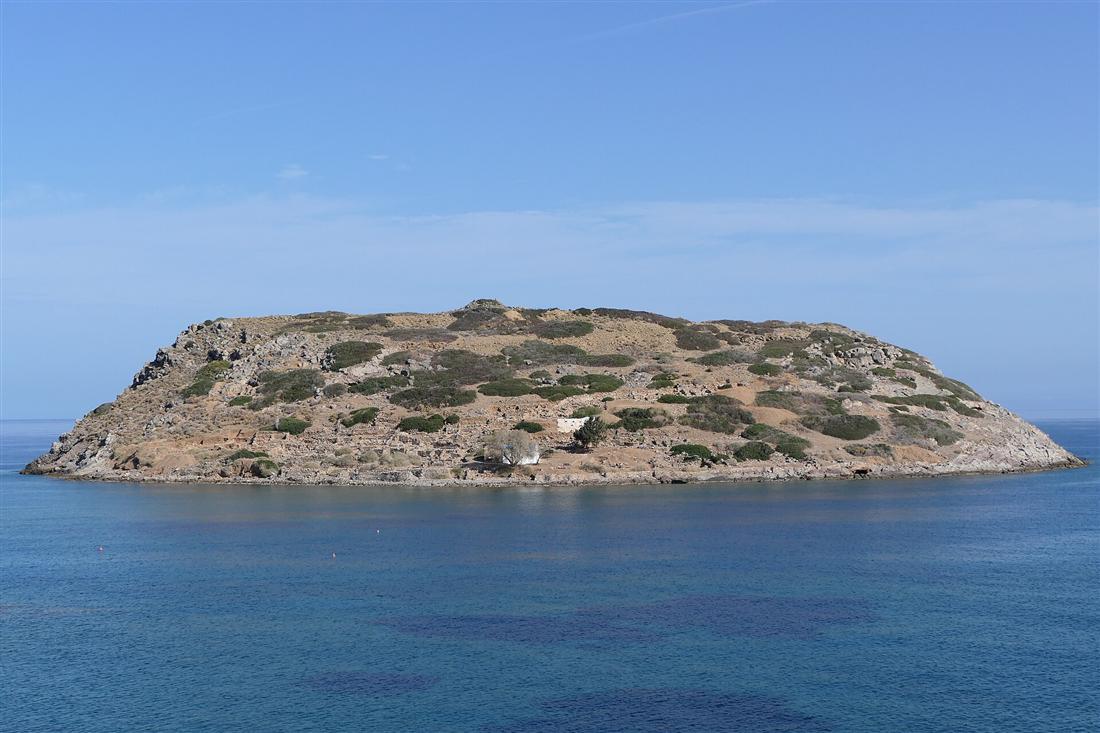
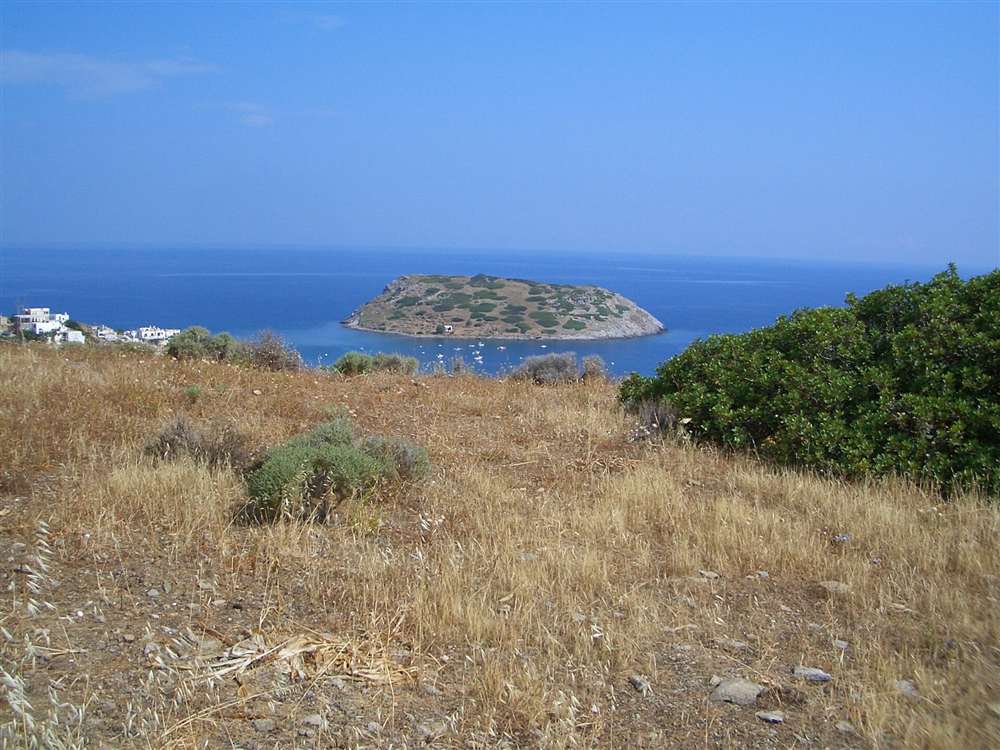
Mochlos faces the open sea on the eastern arm of the Gulf of Mirabello. The village strings along one small harbour, and 150 metres directly offshore lies the low islet that carries its name and its Minoan ruins. The setting is intimate: a pebble-and-sand beach, a line of fish tavernas at the water’s edge, and hills that rise fast behind the houses. This is one of the longest single-destination day trips a traveller starts from Chania, and the geography is the whole reason. West Crete and east Crete are two different worlds joined by one long road.
Set the expectation before setting out. Mochlos is not a quick coastal hop. It is a full commitment of a driving day, out and back, and the reward is a village and an archaeological islet that carry none of the crowds that press on the western beaches. The 200 kilometres are the price of that quiet.
How do you drive from Chania to Mochlos?
Drive east on the E75/A90 national road through Rethymno and Heraklion to the Agios Nikolaos area, then take the coast road toward Sitia and turn down to Mochlos. The trip is 200 kilometres in 3 to 3.5 hours; the national road ends near Agios Nikolaos and the final legs are two-lane roads.
Leave Chania on the E75/A90, the north-coast national road that runs the spine of Crete. The first hour carries you past Georgioupoli and into Rethymno; the second hour presses on through the Heraklion approaches, where traffic thickens near the island’s capital. Skirt Heraklion on the bypass, keep east, and the road climbs and falls through the hills that guard the entrance to Lasithi. The national road stays fast and dual-lane as far as the Agios Nikolaos junctions.
Past Agios Nikolaos the character of the drive changes. The national road ends, and the route becomes a two-lane coast road that curls east along the Gulf of Mirabello toward Sitia. This stretch is slower and more beautiful, with the sea on the left and dry hills on the right. Watch for the signed turning that drops down to Mochlos: a narrow 5-kilometre descent through olive terraces and old villages to the harbour. The last kilometres are steep and tight, and a careful pace is the rule.
Budget 3.5 hours rather than 3 if the Heraklion belt is busy or if you stop for coffee in Rethymno. Fuel up before the eastern leg, because stations thin out east of Agios Nikolaos. A rental car is the clean way to do this, and Mochlos rewards drivers who want to fold in the beaches and gorge nearby. For travellers weighing the full menu of day trips from Chania, this one sits at the far, ambitious end of the list, and the car is what makes it possible in a single day.
Parking in the village is simple. A small area near the harbour front and the roadside above take the cars that arrive, and the walk to the tavernas and the beach is level and short. Arrive by mid-morning to claim a spot before the lunch tables fill.
Break the drive to make it human. Rethymno’s old town, at the one-hour mark, offers a Venetian harbour and a coffee stop that resets the legs. Heraklion’s bypass moves fastest before 09:00 and after the midday peak, so an early Chania start clears the capital’s traffic before it builds. The eastern coast road past Agios Nikolaos rewards a slow hand on the wheel, with lay-bys that frame the Gulf of Mirabello and the far shape of the Mochlos islet growing on the horizon. Set the day loose enough to enjoy the road, because the road is half the trip.
How do you get from Chania to Mochlos by KTEL bus?
No direct bus line links Chania and Mochlos. Ride the coastal KTEL from Chania to Heraklion (2.75 to 3 hours), change for the Heraklion to Sitia bus (about 3 hours) via Agios Nikolaos, alight at the Mochlos junction on the main road, then walk 5 kilometres downhill or take a taxi to the village. It fills a full travel day.
The public route demands patience and planning. Start at the Chania KTEL station with the frequent coastal service to Heraklion, the busiest inter-city line on Crete. That leg runs 2.75 to 3 hours and drops you at Heraklion’s main bus terminal near the port. From there, board the Heraklion to Sitia bus, which tracks the same eastern national road a driver takes, passing through Agios Nikolaos before turning onto the Sitia coast road.
The Sitia bus does not enter Mochlos. Ask the driver to stop at the Mochlos junction on the main road, the top of that 5-kilometre descent. From the junction the village lies downhill: a walk of 5 kilometres through olive country, or a taxi if one waits at the junction or answers a call. The walk down is scenic and steady; the walk back up, after a long lunch and sun, is the hard part, and a taxi number saved in advance solves it.
Timing is the whole game. The connection through Heraklion and Sitia eats the middle of the day, so an early Chania departure is the only way to reach Mochlos with hours to spare and still catch the return legs. Check the KTEL timetables for the day of travel, because the Sitia line runs fewer services than the coastal trunk. For a traveller without a car, this is a committed adventure, best framed as a full day out and back rather than a casual excursion.
Carry the practicalities. Buy the Chania-Heraklion ticket at the station counter and the Heraklion-Sitia ticket on arrival at the eastern terminal, and confirm the last return departure from the Mochlos junction before leaving the village, since missing it strands you for the night. Pack water, sun cover, and firm shoes for the 5-kilometre descent, and save a local taxi number for the climb back to the junction. Weighed against a rental car, the bus turns Mochlos into a long, deliberate expedition; the car halves the day and hands back the freedom to fold in the beaches and the gorge on the way home.
What is Mochlos like as a village?
Mochlos is a tiny fishing hamlet strung along a small harbour, with a cluster of fish tavernas at the water’s edge, a pebble-and-sand beach, and a slow, undeveloped pace. It stays small on purpose, and the sea sits at the centre of everything.
The village is one line of low houses following the shore, a short waterfront, and a harbour where working boats and a handful of pleasure craft tie up. The tavernas open straight onto the water, their tables set close enough to the edge that the sea laps below the railings. Grilled fish, octopus dried on the line, horta, and cold Cretan wine carry the menus, and the cooking leans on what the boats land that morning. Lunch here stretches long because nothing about the place hurries.
The beach is a mix of pebble and coarse sand curving beside the harbour, clear and calm on still days, exposed when the meltemi blows in from the north. Swimmers wade out toward the islet that floats 150 metres offshore, and snorkellers trace the shallow rocks. There is no resort strip, no line of loud bars, no crush of buses. A shop or two, rooms above the tavernas, and a scatter of studios make up the accommodation, and the rhythm stays that of a place that fishes and farms first and hosts second.
What defines Mochlos is the contrast between its quiet surface and the weight of history in front of it. A working village so plain and so peaceful sits across a narrow channel from one of the important Minoan sites in the east of Crete. That combination, a slow lunch by the water and a Bronze Age port within swimming distance, is the character of the place, and it is why people drive the width of the island to reach it.
The pace is the point. Days here move on the light and the boats: fishermen in at dawn, tables laid by noon, swimmers drifting to the islet through the afternoon, and the harbour turning gold at dusk. No bus fleets park on the front, no promenade of shops competes with the sea, and the loudest sound is the water against the hulls. Travellers who want that stillness treat Mochlos as a destination in its own right, not a stop on a busy circuit, and they leave the width of Crete behind for an afternoon that belongs entirely to the harbour.
What is the Minoan island of Mochlos and how do you reach it?
The islet of Mochlos lies 150 metres offshore and holds an important Minoan settlement and cemetery. A local fisherman ferries visitors across on a short boat trip from the harbour. It carries house foundations, paved streets, and stone-built tombs of the Early Minoan period that yielded gold jewellery and stone vases.
In the Bronze Age the islet was a thriving Minoan port, and it was not an island then. A narrow isthmus joined it to the mainland, giving the settlement two sheltered harbours on either side of the neck. Rising seas drowned that isthmus, and the 150-metre channel that now separates islet from shore is the flooded remnant. What was a peninsula town became a rock in the water, and the ruins froze in place.
On the islet the excavated remains read clearly: foundations of houses, paved streets running between them, and the stone-built tombs of the cemetery on the higher ground. Those tombs gave up gold jewellery, delicately carved stone vases, and fine craft goods that mark Mochlos as a wealthy trading centre of the Early Minoan period. The finds sit in the museums of Heraklion and Agios Nikolaos, and the site itself stands open to the wind and the sea. Excavation continues on the islet and on the facing shore, where more of the settlement extends under the modern village.
Reaching it is part of the charm. A local fisherman runs visitors across from the harbour in a small boat, a crossing of three to five minutes, and returns to collect them. Strong swimmers cover the 150 metres directly, though the boat is the sensible route for carrying nothing and stepping ashore dry. Wear firm shoes for the rock, carry water and sun cover, and give the ruins an hour to walk. Standing on the islet, looking back at the tavernas across the channel, the shape of the vanished isthmus is easy to picture, and the reason a Minoan port grew here becomes plain.
The wider dig extends the story onto the shore itself. Archaeologists work the facing land, where a ceramic workshop, house blocks, and burial ground of the same period run under and beside the modern village, showing that Bronze Age Mochlos spread across both sides of the old isthmus. The twin harbours the isthmus created gave the port shelter from the wind on any bearing, and that natural advantage drew the traders, the metalworkers, and the seal-carvers whose goods reached across the Aegean. A short line of interpretive detail on the islet ties the paved streets and tombs to the finds now held in the museums inland, so the walk reads as a place people lived and worked, not a bare field of stone.
What beaches, gorge, and sights lie near Mochlos?
Near Mochlos lie the beaches of Tholos and Sfaka, the Richtis gorge to the east toward Sitia, the pottery-and-weaving traditions of the coast, and the town of Agios Nikolaos to the west. The village works well as the base for a wider day in eastern Crete.
West of the village, the small beaches of Tholos and Sfaka break up the coast with quiet coves and clear water, reached by short drives off the main road. They draw far fewer people than the western Cretan strands, and on a calm day they offer swimming and shade without a crowd. The coast here also carries living craft traditions, with pottery and weaving worked in the villages inland, a thread that reaches back to the same Minoan skill that shaped the stone vases found on the islet.
East toward Sitia opens the Richtis gorge, a green ravine that cuts down to the sea past a waterfall and a shaded stream, ending at a small beach. It is a walk of a morning, cool and wooded in contrast to the dry hills above, and it pairs with Mochlos as a two-part day: ruins and lunch at the harbour, then the gorge on the road east. Drivers combine the two without difficulty on the same eastern loop.
To the west sits Agios Nikolaos, the lively lakeside town of the Gulf of Mirabello, with its harbour, museums, and shops. Its archaeological museum holds finds that tell the wider story of Minoan Lasithi, and the town gives the trip a base with services, cafes, and rooms. Between the beaches, the gorge, the craft villages, and Agios Nikolaos, the country ringing Mochlos holds enough to fill a second day for travellers who stay the night rather than turn straight back to Chania.
Is the long trip worth it, and when is the best time to go?
The trip rewards travellers who want Minoan history without crowds and a slow fishing village at the water’s edge. Given the 200-kilometre distance and 3 to 3.5-hour drive each way, spring and autumn are the strongest windows, and an overnight beats a rushed same-day return.
Weigh the distance honestly. Four hundred kilometres of driving out and back, or a full public-transport day through Heraklion and Sitia, is a heavy investment for one village. The payoff is specific: a Minoan port on a rock 150 metres offshore, ferried across by a fisherman, a harbour lined with fish tavernas, and a beach with no resort behind it. For a traveller drawn to archaeology and quiet, that trade is worth making. For one wanting an easy beach afternoon, the western beaches near Chania answer better and closer.
Season shapes the day. Spring brings green hills, wildflowers, mild sun, and warm-enough sea, and the roads run clear. Autumn holds the summer-warmed water into the shoulder months with softer light and thinner traffic on the national road. High summer turns the drive hot and the eastern light hard, and the north wind stirs the exposed beach; an early start beats the heat and reaches the islet before the midday glare. Deep winter closes the tavernas and stills the boat crossings, so the shoulder seasons win.
Plan the visit to breathe. Leave Chania early, drive straight through with one coffee stop, reach Mochlos by mid-morning, cross to the islet, walk the ruins, and settle into a long harbour lunch before the return. Better still, break the distance with a night in Agios Nikolaos or in the village rooms, fold in the Richtis gorge and the Tholos and Sfaka beaches, and turn a punishing day trip into a rounded two-day loop through eastern Crete. Framed that way, the width of the island stops being an obstacle and becomes the journey itself.
The distance sets the shape of the visit. A base at Mochlos, Sitia or Agios Nikolaos turns the 200-kilometre run from Chania into a single one-way transfer and puts the Minoan island, the Richtis gorge and the beaches of Tholos and Sfaka within a short reach. Fuel and lunch in Agios Nikolaos break the outbound drive, and the coast road along the Gulf of Mirabello carries its own sea views. A day return from Chania spends six to seven hours on the road for a few hours at the harbour, so the far east rewards a stay over a dash.
The reward answers the effort. Mochlos delivers a version of Crete that the north-coast resorts have erased: a working harbour where the fishing boats still land the catch, tavernas that cook it at the water’s edge, and an archaeological island a fisherman rows visitors across in minutes. The pebble beach shelves into clear water, the pace slows to the rhythm of the boats, and the Bronze Age tombs on the islet sit open to the sea. Travellers who treat the long drive as the price of that quiet arrive in the right frame of mind, and a stay of two or three nights lets the harbour, the island and the eastern beaches set the pace instead of a clock.
Frequently Asked Questions
How do you get from Chania to Mochlos?
From Chania to Mochlos, drive east on the E75/A90 national road through Rethymno and Heraklion to the Agios Nikolaos area, then the coast road toward Sitia and down to the village, 200 kilometres in 3 to 3.5 hours. By bus, take the KTEL Chania to Heraklion, Heraklion to Sitia, alighting at the Mochlos junction.
How far is Mochlos from Chania?
Mochlos lies 200 kilometres east of Chania on the north-east coast of Crete in the Lasithi regional unit, on the Gulf of Mirabello east of Agios Nikolaos. The drive takes 3 to 3.5 hours, with the final legs on two-lane coast roads.
Is the trip from Chania to Mochlos worth it?
The trip from Chania to Mochlos rewards visitors with a tiny undeveloped fishing village, harbour fish tavernas and a Minoan island a short boat ride offshore. The 200-kilometre distance makes Mochlos a north-east base rather than a day trip from Chania.