
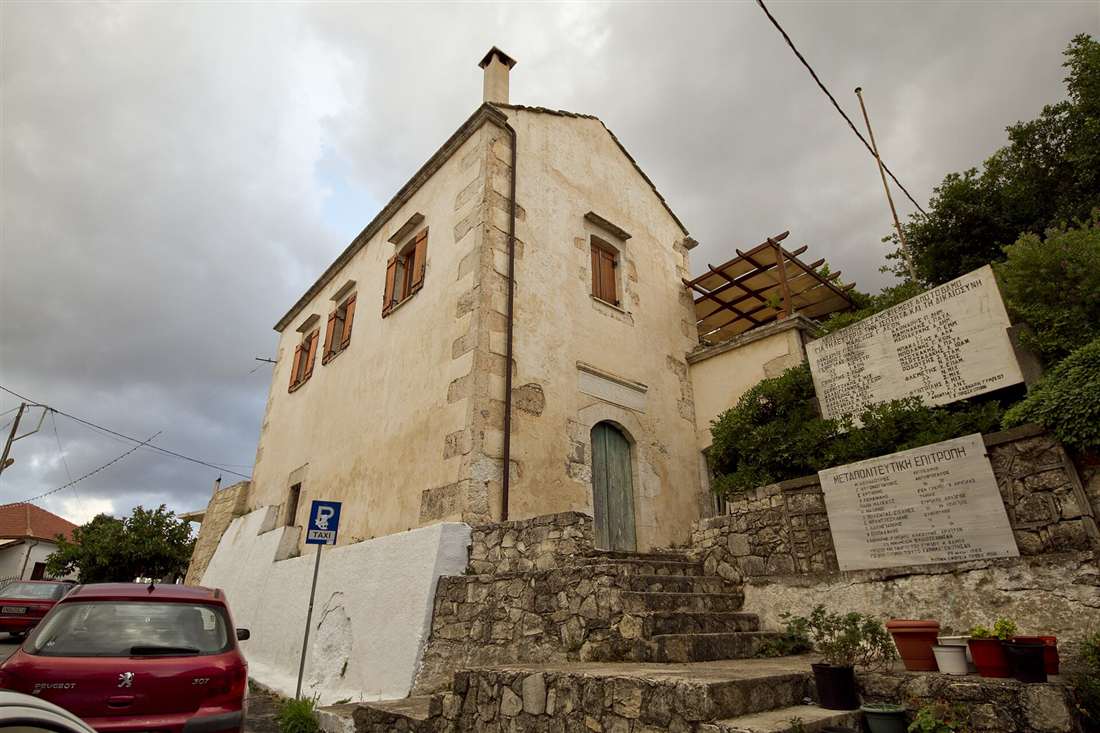
To get from Chania to Vamos, drive east on the E75/A90 national road to the Vamos and Apokoronas exit, then the local road inland to the village, about 28 kilometres in 35 to 40 minutes, reaching the traditional hill village and historic seat of the Apokoronas among its olive groves. Plan the whole trip with Greece Tours.
This guide covers the trip from Chania to Vamos in full: where it is, how to get there by car and by bus, the restored stone village and its agrotourism cooperative, what there is to do in and near it, the villages of Gavalochori and the beaches of Almyrida and Kalyves below, the lake of Georgioupoli, and whether this short Apokoronas trip is worth it or a base for the region.
Where is Vamos and how far is it from Chania?
Vamos sits 28 kilometres east of Chania, the historic administrative seat of the Apokoronas area in the Chania regional unit. The village rests on a low hill among olive groves at an altitude of 210 metres, inland from the north coast of west Crete.
Vamos anchors the Apokoronas, the green district that spreads east of the city between the north coast and the White Mountains foothills. The village holds the seat that once governed the surrounding communities, and that administrative weight left it a solid stone centre, a network of cobbled lanes and a stock of 19th-century houses that outlasted the region’s smaller hamlets. The olive groves that ring the hill feed the local presses and set the working rhythm of the place through the harvest months.
The distance from Chania is short in both kilometres and time. The E75/A90 national road runs east along the coast, and Vamos lies a single turn inland from it, so the transfer from the Old Town to the village hill covers 28 kilometres. The 210-metre altitude lifts Vamos above the coastal strip and opens views across the Drapano peninsula and the Almyrida bay to the north, with the White Mountains rising to the south.
Placing Vamos on the map fixes every practical decision that follows. The village is close enough to Chania for a half-day visit, far enough inland to keep the quiet, lived-in character that the coast has lost, and central enough within the Apokoronas to reach Gavalochori, Kalyves, Almyrida and Georgioupoli in minutes. That position makes Vamos both a destination and a base for the wider district.
How do you drive from Chania to Vamos?
Drive east out of Chania on the E75/A90 national road, hold the coastal route for 22 kilometres, then take the signed Vamos and Apokoronas exit and follow the local road inland to the village. The full run covers 28 kilometres in 35 to 40 minutes.
The route starts on the national road that skirts the north coast east of the city. Traffic moves fast on this dual-lane stretch, and the surface stays smooth the whole way to the Apokoronas junction. Signs for Vamos and the Apokoronas villages mark the exit clearly, so the turn inland is simple to catch. From the junction, the local road climbs gently through olive groves toward the 210-metre hill on which the village stands.
The inland leg is the part that rewards a slower pace. The road narrows as it leaves the national route, threading between stone walls, olive terraces and the smaller settlements of the district. Drivers reach the edge of Vamos where the modern approach meets the old stone core, and parking sits on the village fringe rather than inside the cobbled lanes, which stay tight and pedestrian in character. A rental car is the tool that fits Vamos and the wider Apokoronas, because the same vehicle reaches Gavalochori, the Almyrida beaches and Georgioupoli within a quarter of an hour of the village.
Timing the drive is straightforward. Off the main tourist rush, the transfer holds to 35 minutes; in the peak of the summer coastal traffic it stretches to 40. Fuel stations line the national road before the exit, so a full tank is easy to arrange on the way out of the city. For a traveller weighing this against the wider day trips from Chania, Vamos ranks among the closest and least demanding, with no mountain passes and no long detours between the city and the village hill.
How do you reach Vamos by bus?
The KTEL coastal line from Chania serves the Apokoronas villages on set departures. Buses run toward Vamos and the surrounding settlements, and a change or a short taxi from the national-road junction completes the last leg to the village centre on its inland hill.
KTEL operates the intercity network across the Chania regional unit, and the eastbound coastal service passes the Apokoronas turnoffs on its way toward Georgioupoli and Rethymno. Departures leave from the Chania KTEL station on a fixed timetable, so a bus traveller checks the posted schedule before setting out and plans the return around the same board. The coastal buses drop passengers at the junctions that feed the inland villages, and from those stops the final climb to Vamos runs by a connecting service or a waiting taxi.
The bus suits a traveller without a vehicle who wants the village itself, the tavernas, the stone lanes and the agrotourism core. The limitation is the last leg and the spread of the Apokoronas: the coastal line delivers passengers to the main road, and the inland settlements sit above it, so a single ticket rarely reaches the village square without a transfer. For a visitor set on Gavalochori, the Almyrida beaches and the Drapano peninsula in one outing, the coordination grows harder, and that is where the rental car earns its place.
A workable plan pairs the two. Take the KTEL coastal bus east from Chania, step off at the Apokoronas junction, and finish the short inland run by taxi to the Vamos centre. The reverse works for the return, with the taxi carrying the passenger back down to the national road in time for a westbound service. This keeps the cost low while removing the strain of the last hill, and it leaves the village itself, not a transport puzzle, as the point of the trip.
What is Vamos like as a village?
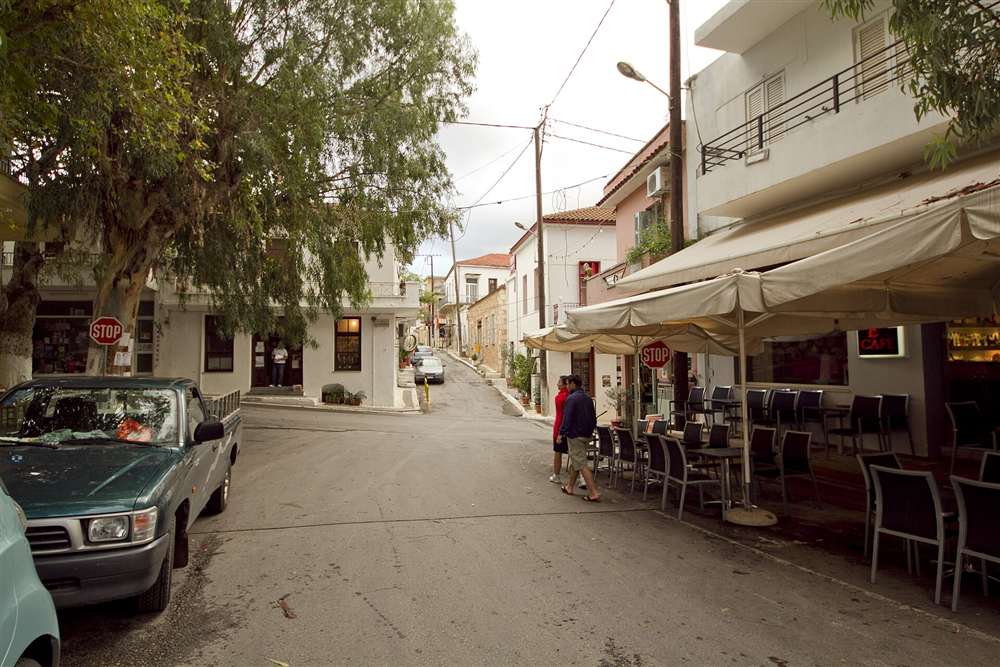
Vamos is a restored stone village of 19th-century houses, arched doorways and cobbled lanes, and a pioneer of Cretan agrotourism. The Vamos cooperative turned old houses into guest lodgings and revived traditional crafts, olive-oil making and cooking, giving the place a quiet, lived-in character away from the coast.
The fabric of the village is honest stone. Thick walls, arched openings and worn cobbles run through the old core, and the restoration kept the 19th-century houses intact rather than replacing them with new build. That preservation is the work of the Vamos cooperative, a local initiative that took the emptying village and put it back to use. Old dwellings became guest houses, disused workshops reopened, and the crafts, the olive-oil pressing and the Cretan cooking that had thinned out returned as part of the village economy.
This makes Vamos a landmark in the story of Cretan agrotourism. The cooperative model let the village earn from its own heritage without turning into a resort, so visitors sleep in restored stone houses, eat food grown in the surrounding groves and watch crafts practised where they were always practised. Raki distillation runs deep in the local culture, and the autumn pressing of grapes and olives sets the working calendar as firmly as any festival.
The result is a village that feels inhabited rather than staged. Tavernas serve the district’s produce, the olive groves press against the edge of the built core, and the lanes stay quiet after the coastal crowds thin. Vamos trades the beach-town bustle for a slower, agricultural rhythm, and that contrast, minutes from the Almyrida sand yet a world apart in pace, is the reason the restoration drew the attention it did.
What is there to do in and around Vamos?
Walk the cobbled lanes and photograph the arched stone houses, eat in the tavernas on the district’s own produce, visit a raki distillery in the autumn pressing season, and set out on the walking trails that link the Apokoronas villages through olive groves and gorges toward the White Mountains foothills.
The village itself fills an unhurried morning. The restored core rewards a slow walk, with the 19th-century houses, arched doorways and worn cobbles making the whole centre a piece of preserved architecture. The tavernas anchor the food side of the visit, plating Cretan dishes built on the olive oil, greens, cheese and meat of the surrounding land, and the raki culture turns the autumn into an event as the grape pressing gets underway.
Walking is the second draw. Trails thread out of Vamos and connect the Apokoronas settlements through olive terraces, low ridges and the gorges that cut toward the mountains. These paths give a walker the district at ground level, past presses, chapels and stone walls, and they climb south toward the White Mountains foothills that wall off the horizon. The routes range from level village-to-village strolls to longer gorge walks, so a visitor sets the effort to the day.
The surrounding coast and countryside round out the list. Below the hill, the beaches of Almyrida and Kalyves face the calm north-coast bays, minutes from the village by car. The Drapano peninsula reaches out to the north, Georgioupoli and its palm-lined lake and beach lie to the east, and the traditional village of Gavalochori sits close by with its own draws. Vamos works both as the destination and as the fixed point from which the whole Apokoronas opens up within a quarter of an hour of driving.
What do Gavalochori, Almyrida and Georgioupoli add to the Apokoronas nearby?
Gavalochori holds a folklore museum and Venetian wells, Almyrida and Kalyves front the calm coastal bays below the hill, the Drapano peninsula reaches north, and Georgioupoli offers a palm-lined lake and long beach to the east. These sit within a quarter of an hour of Vamos.
Gavalochori is the cultural neighbour. The traditional village keeps a folklore museum that lays out the crafts, tools and domestic life of the Apokoronas, and its Venetian wells survive as working evidence of the island’s layered history. A short drive from Vamos, Gavalochori pairs naturally with the village on a single outing, one stop for the museum and the wells, the other for the stone core and the tavernas.
The coast supplies the water and the sand. Almyrida and Kalyves sit on the shoreline directly below the Vamos hill, sheltered beaches on the calm bays that the Drapano peninsula helps to enclose. The peninsula itself pushes north into the sea and marks the eastern edge of the Chania coastline, a headland of quiet coves and open views. This puts a morning in the stone village and an afternoon on the beach within easy reach of each other.
Georgioupoli closes the eastern side of the district. The town spreads around a palm-lined lake and a long sweep of beach, a soft, green setting where a river meets the sea, and it lies a short drive east of Vamos along the coastal road. Between Gavalochori’s museum, the Almyrida and Kalyves bays, the Drapano headland and the Georgioupoli lake and beach, the Apokoronas hands a Vamos base a full week of outings without a single long transfer.
Is the trip to Vamos worth it, and when to go?
The trip to Vamos is worth it for a traveller who wants preserved stone architecture, working Cretan agrotourism and a quiet inland base minutes from the beaches. Spring and autumn bring green landscapes, mild days and the olive and grape pressing; summer pairs the village with the coastal bays below.
Vamos earns the visit on its character rather than on any single monument. The restored 19th-century core, the cooperative that revived the crafts and lodgings, the tavernas plating the district’s produce and the trails linking the Apokoronas villages give the place substance that a beach town lacks. Sitting 28 kilometres from Chania and a single turn off the national road, it costs only 35 to 40 minutes of driving, so the reward against the effort is high for anyone weighing an inland stop over another stretch of coast.
Season shapes the experience. Spring dresses the olive groves and the gorge trails in green, the wildflowers colour the terraces, and the days stay mild for walking the village-to-village routes. Autumn brings the pressing, the grapes and olives that turn Vamos into a working agricultural village and fill the raki culture with its yearly purpose, and the heat drops back to a comfortable range for exploring the stone core.
Summer keeps its own logic. The inland altitude of 210 metres tempers the heat above the coastal strip, and the Almyrida, Kalyves and Georgioupoli beaches sit minutes below, so a summer visitor splits the day between the shaded lanes of the village and the sand of the bays. For a base that mixes preserved architecture, real Cretan food and quick access to both mountains and sea, Vamos holds its ground against the better-known names on the Chania coast.
Frequently Asked Questions
How do you get from Chania to Vamos?
From Chania to Vamos, drive east on the E75/A90 national road to the Vamos and Apokoronas exit, then the local road inland to the village, 28 kilometres in 35 to 40 minutes. By bus, take the KTEL Apokoronas line from Chania; a change or a taxi from the national-road junction completes the trip.
How far is Vamos from Chania?
Vamos lies 28 kilometres east of Chania, on a low hill at 210 metres in the Apokoronas area of the Chania regional unit. It is the historic administrative seat of the Apokoronas, and the drive on the fast national road takes 35 to 40 minutes.
Is the trip from Chania to Vamos worth it?
The trip from Chania to Vamos rewards visitors with a restored stone village, a pioneering agrotourism scene, olive groves and traditional Cretan food, 35 minutes from the city. The short distance makes Vamos an easy day out and a quiet base for the Apokoronas.