
To get from Chania to Maleme, drive west on the old coastal national road or the E75/A90, about 16 kilometres in 20 to 25 minutes, to the coastal village on the road toward Kissamos, defined by its wartime airfield, Hill 107 and the German War Cemetery above the sea. Plan the whole trip with Greece Tours.
This guide covers the trip from Chania to Maleme in full: where it is, how to get there by car and by bus, the village and its wartime history, the Battle of Crete and the fight for Hill 107, the German War Cemetery on the ridge, the Minoan tomb and the beach, the villages of Tavronitis and Kolymbari nearby, and whether this short west-coast trip is worth it.
Where is Maleme and how far is it from Chania?
Maleme is a coastal village on the north-west coast of Crete, 16 kilometres west of Chania in the Chania regional unit. It sits on the road toward Kolymbari and Kissamos, between the sea and a low ridge, a 20 to 25 minute drive from the city.
The village lies on the flat coastal strip that runs west from the city of Chania, where the mountains pull back from the shore and leave a band of farmland, olive groves and citrus orchards between the road and the Cretan Sea. Maleme fills part of that strip, its houses spread between the old national road and a long beach, with the airfield and the low rise behind it climbing toward the foothills of the interior.
To place it precisely: the resort of Platanias stands 6 kilometres to the east, closer to Chania; the village of Tavronitis stands just to the west across the river of the same name; and the Kolymbari peninsula with the Gonia monastery continues the coast further west toward Kissamos. Maleme therefore marks the point where the busy tourist strip east of it gives way to the quieter farming coast that leads on to the far western corner of the island.
The 16 kilometres between city and village follow a single east-west axis, so the route is direct and hard to mistake. Two roads cover the distance in parallel: the old coastal national road that threads through each settlement, and the newer E75 national road, the A90 corridor, that bypasses them at speed. Both deliver a traveller to Maleme in well under half an hour, which puts the wartime airfield, the German War Cemetery on Hill 107 and the long pebble beach within easy reach of a morning from Chania.
How do you drive from Chania to Maleme?
Drive west out of Chania on the old coastal national road or the E75 national road, the A90, heading toward Kolymbari and Kissamos. Maleme lies 16 kilometres along that axis, a run of 20 to 25 minutes with signs marking the village, the airfield and the cemetery.
From the centre of Chania, pick up the westbound coastal road that passes the Nea Chora seafront and runs on through Galatas and Agia Marina. This old national road stays close to the shore, linking one beach settlement to the next, and it carries the local traffic of the strip. Through Platanias it narrows and slows behind tavernas, hotels and pedestrians, so the pace drops in the built-up stretch before the road opens out again on the approach to Maleme.
For a faster line, join the E75 national road, the A90, which runs a short way inland and bypasses the coastal villages. It moves traffic at highway speed and reaches the Maleme and Tavronitis exits in 15 to 20 minutes from the edge of the city. Leave the national road at the Maleme junction and drop down toward the sea, and the village, the airfield and the signed turn for the German War Cemetery follow within a kilometre. The cemetery road climbs Hill 107 in a short series of bends to a car park beside the visitor pavilion.
Parking is straightforward. The cemetery has its own free car park at the top of the hill, the beach has open ground and roadside space along the shore, and the village keeps room beside its tavernas and shops. A car gives the freedom to string Maleme together with the other stops of the west coast, and the drive is one of the standard day trips from Chania for travellers who want to reach the battlefield and the beaches under their own timing rather than a bus schedule.
How do you reach Maleme by bus?
Take the KTEL coastal line from Chania toward Kissamos. Buses run on frequent departures through the day, stop at Maleme on request, and complete the 16 kilometres in 30 to 40 minutes. The fare is a few euros, and the stop sits on the main road beside the village.
The regional KTEL network operates the green-and-white intercity buses of Crete, and the Chania to Kissamos service is the one that serves Maleme. Departures leave from the central KTEL bus station in Chania, run west along the coastal corridor through Platanias and Tavronitis, and set down passengers at the Maleme stop on the main road. Buy the ticket at the station counter before boarding, or from the driver when boarding at a roadside stop, and tell the driver Maleme so the bus halts there.
Timings favour the traveller without a car. The line runs from early morning to evening on a dense schedule, so the wait between buses is short and a return the same day is simple. The 30 to 40 minute ride reflects the stops the bus makes through the coastal villages, longer than the direct drive but cheap and free of parking. The one point to plan for is the walk at the far end: the bus stop sits on the flat coast road, and the German War Cemetery stands up on Hill 107 above the village, a climb of 15 to 20 minutes on foot from the stop to the cemetery gate.
For a visitor whose focus is the battlefield, the cemetery and the beach, the bus covers everything the village holds. It links back to Chania with the same frequency, and it slots Maleme into a wider run along the coast, since the Kissamos line continues west past Kolymbari and on toward the beaches of the far corner of the island.
What is Maleme like as a village?
Maleme is a low, spread-out farming and seaside village rather than a resort. Houses, tavernas and small shops line the old road and the fields behind, olive groves and orchards fill the plain, and a long pebble-and-sand beach runs along the front, with the wartime airfield and Hill 107 defining its character.
The village keeps the working feel of the Cretan coast. Away from the packed hotel strip of Platanias to the east, Maleme spreads across the flat land in a loose grid of lanes, its buildings mixing plain village houses with a scatter of rooms, studios and family tavernas. Fields of olives, oranges and vegetables reach back from the shore toward the foothills, and the pace is quiet, set by farm work and by the visitors who come for the history rather than by mass tourism.
The seafront is the everyday draw for those who stay. The beach stretches for kilometres of pebble and coarse sand, open and uncrowded, with clear water and a handful of tavernas and cafes set behind it. It faces the open Cretan Sea and catches the afternoon wind that blows along this coast, so it suits a walk and a swim more than a manicured resort day. Behind the beach the flat ground of the old airfield still reads on the landscape, and the ridge of Hill 107 rises directly behind the village, crowned by the dark cypresses of the German War Cemetery.
What sets Maleme apart from its neighbours is that weight of history pressed into an ordinary village. A traveller walks the same fields, road and hill where the airborne invasion of Crete turned on the fight for the airfield, and the monuments, ruins and graves sit among houses, farms and beach tavernas. The result is a place that rewards a slow, thoughtful visit: part quiet seaside village, part open-air battlefield, with the two woven together across a single stretch of coast.
What happened at the Battle of Crete, Hill 107 and the German War Cemetery?
Maleme was the decisive ground of the Battle of Crete. Its airfield and the low rise known as Hill 107 were the focus of the German airborne invasion, the first large-scale airborne assault in history, and the fight for the airfield settled the battle. The German War Cemetery on Hill 107 now holds the graves of about 4,465 soldiers.
During the Second World War, German forces launched an airborne assault on Crete, dropping paratroopers and landing gliders across the north-west of the island. Maleme’s airfield was the prize, because whoever held the runway controlled the flow of reinforcements by air. Defending troops held Hill 107, the ridge above the airfield, and the fighting there was close and costly. Control of the hill and the airfield passed to the attackers, and once transport aircraft landed men and supplies on the captured runway, the balance of the whole battle tipped and Crete fell to the invaders.
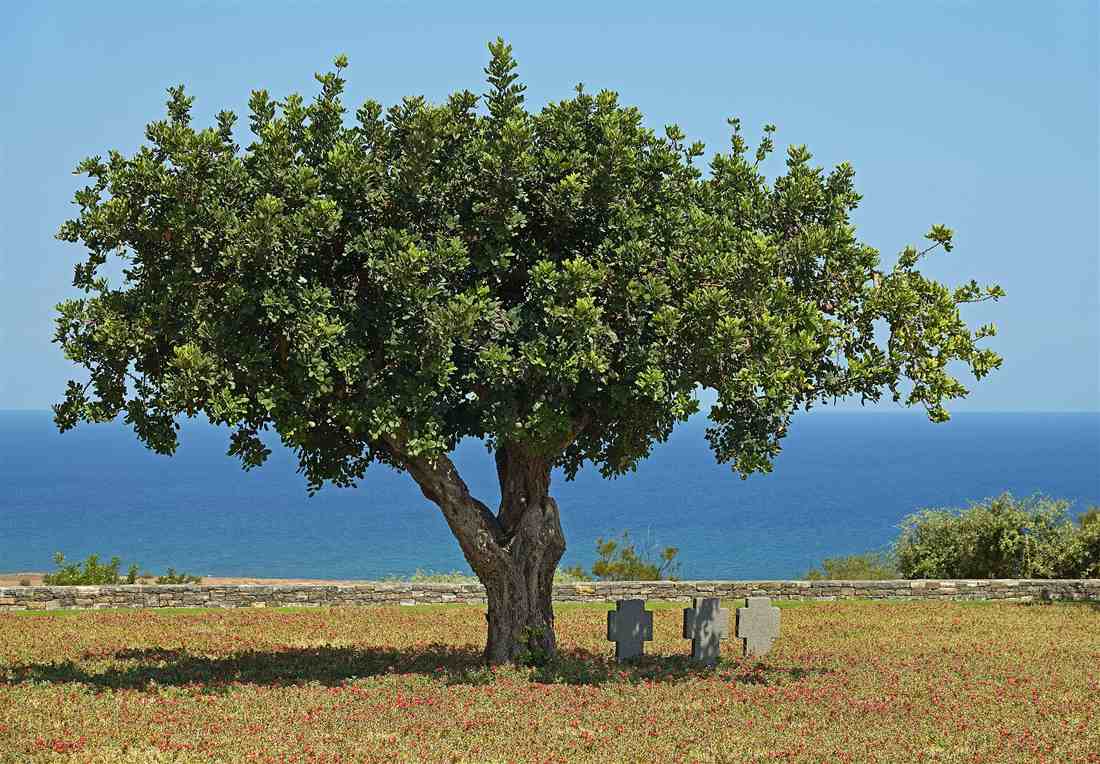
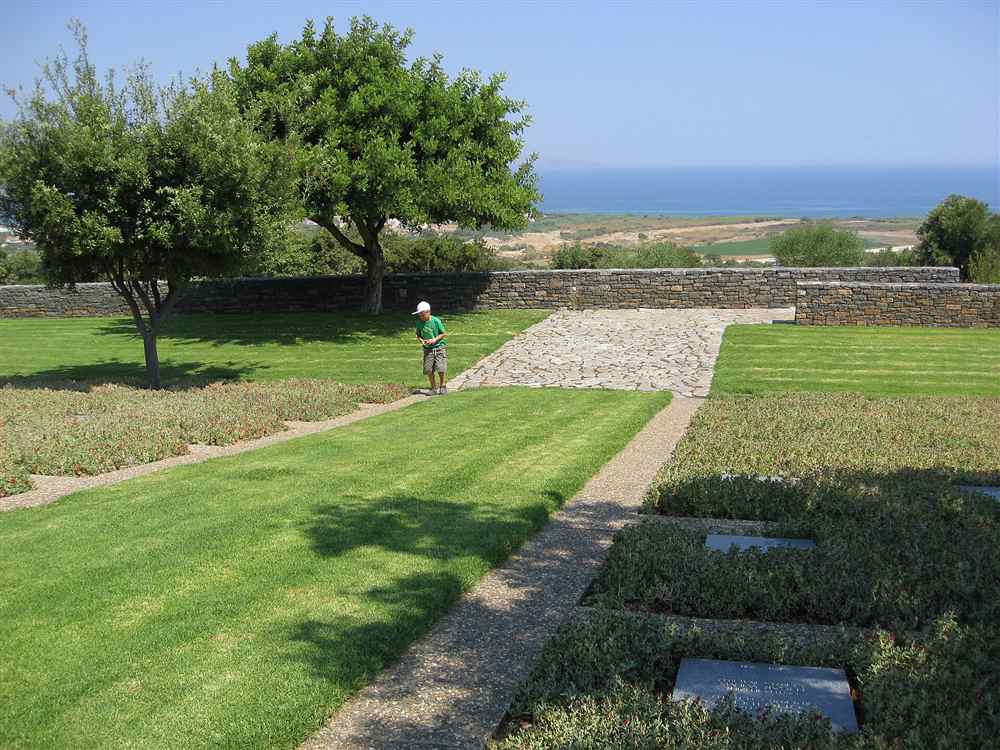
The German War Cemetery stands on Hill 107, on the very ground the fighting turned on, above the village and the airfield it decided. It holds about 4,465 German soldiers, their graves set flat in the earth and laid out in ranks across the slope, each marked in stone. A visitor pavilion at the entrance sets out the story of the battle and the airborne landings, and from the ridge the view runs down over the old airfield, the coast and the sea from which the assault came. The site is sober and well kept, planted with cypress and shaded, and entry is free.
The whole hill reads as a battlefield to anyone who walks it. Standing at the graves, a traveller looks straight down onto the flat runway ground and the open coast, and the reason the ridge mattered becomes plain: it commands the airfield below. Across the surrounding fields and the approach to Tavronitis, ruins and monuments of the fighting remain, so the cemetery is the centre of a wider landscape of memory rather than a single isolated stop.
What are the Minoan tomb, the beach and the sights near Maleme?
Near Maleme stand a Late Minoan vaulted tholos tomb, the long pebble-and-sand beach, and the ruins and monuments of the battle scattered across the fields. Close by lie Platanias to the east, Tavronitis across the river to the west, and the Gonia monastery on the Kolymbari peninsula further along the coast.
The tholos tomb sets the history of Maleme far deeper than the war. Near the village survives a Late Minoan vaulted tomb, a beehive-shaped burial chamber of dressed stone built into the ground, a rare monument of the Bronze Age culture that ruled Crete from its palaces. It shows that this stretch of coast held importance long before the airfield, and it gives a visitor a second, older layer to read on the same ground where the paratroopers landed.
The beach and the battlefield remains fill out a full day. The shore runs long and open in pebble and coarse sand, backed by tavernas and set against the Cretan Sea, good for a swim after the climb to the cemetery. Across the fields between the airfield and the Tavronitis river lie the ruins and monuments of the fighting, markers and remnants that reward a slow walk. Together with Hill 107 they make Maleme a place a traveller reads on foot, moving between the graves, the tomb, the fields and the water within a compact area.
The surroundings extend the trip in every direction. Platanias, 6 kilometres east, offers the resort’s hotels, restaurants and nightlife. Tavronitis sits just west across the river, a working village on the road on. Further west the Gonia monastery stands on the Kolymbari peninsula above the sea, a fortified Orthodox house of great age, and beyond it the road runs to Kissamos and the famous beaches of the west coast. Maleme therefore works both as a destination in itself and as the first stop on a longer westward run along the coast.
Is the trip to Maleme worth it, and when is the best time to go?
The trip is worth it for anyone drawn to the Battle of Crete, quiet beaches or the history of the island, since Maleme joins a decisive battlefield, a sober war cemetery, a Minoan tomb and a long shore in one short excursion 16 kilometres from Chania. Spring and autumn bring the finest conditions.
For a history-minded traveller the visit is essential. Nowhere else on Crete concentrates the story of the airborne invasion so tightly: the airfield that was the prize, the hill that commanded it, and the cemetery that now holds about 4,465 of the men who fell for it, all within a single walk. Add the Late Minoan tholos tomb and the beach, and the stop rewards a broad range of visitors, from those who come only for the battlefield to families who want a swim and a taverna lunch beside it. The short distance and the free cemetery entry make the reward large for the effort spent.
Season shapes the experience. Spring brings green fields, wildflowers across the hill and mild air, and the light on the coast is clear and soft. Autumn holds warm sea, thinner crowds and comfortable walking weather for the climb to the graves. High summer turns hot and bright, and the exposed ridge of Hill 107 gives little shade in the middle of the day, so an early or late visit beats the heat. The strong afternoon wind that blows along this coast cools the beach but stirs the water, worth weighing for a swim.
For timing within the day, reach Hill 107 in the morning or the late afternoon, when the light is kind and the temperature bearable, then drop to the beach or a taverna afterward. Whether by the 20 to 25 minute drive or the 30 to 40 minute bus, Maleme fits comfortably into a half day from Chania, and it pairs naturally with Platanias, Tavronitis or the Gonia monastery for a fuller run along the west coast.
The short distance makes Maleme an easy half-day from Chania that pairs history with the coast. Drive out in the cool of the morning to walk the cemetery on Hill 107, read the ground where the airborne assault turned the battle, and look down over the airfield and the sea. Combine it with a swim at the Maleme or Tavronitis beach, lunch at a village taverna, and the drive on to the Gonia monastery at Kolymbari. The day trips from Chania guide strings the west-coast stops into one route, and a base at Platanias or Maleme puts the whole coast within minutes.
Frequently Asked Questions
How do you get from Chania to Maleme?
From Chania to Maleme, drive west on the old coastal national road or the E75/A90, 16 kilometres in 20 to 25 minutes. The KTEL coastal line from Chania toward Kissamos stops at Maleme on frequent departures, a ride of 30 to 40 minutes.
How far is Maleme from Chania?
Maleme lies 16 kilometres west of Chania on the north-west coast of Crete, in the Chania regional unit, on the road toward Kolymbari and Kissamos. The drive on the coastal road takes 20 to 25 minutes.
Is the trip from Chania to Maleme worth it?
The trip from Chania to Maleme rewards visitors with the most important Battle of Crete site, the German War Cemetery on Hill 107 with its view over the coast, and a Minoan tomb, 20 minutes from the city. The short distance makes Maleme a half-day of history and beach.