
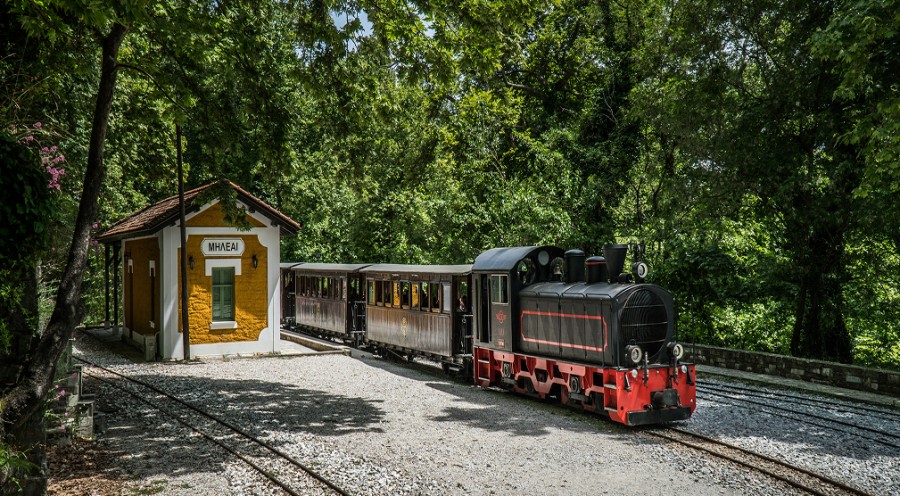
Best scenic train rides in Greece: Pelion Railway, Odontotos Gorge, Meteora & coastal lines—plus booking, seat-side tips and day-trip planning. Plan the whole trip with Greece Tours.
If we’ve spent time road-tripping in Greece, we know the drill: hairpin turns, surprise goats, and that one “quick” drive that somehow eats half the day. But every summer, I (Yannis) still end up carving out a few train days, because Greece by rail hits differently. The best scenic train rides in Greece slow the country down in the best way: sea glints along the Gulf, pine forests on the slopes of Pelion, the sudden drama of a gorge, and then, almost unfairly, Meteora‘s stone pillars rising out of the plains.
In this guide, we’re keeping it practical. We’ll cover what “scenic” really means on Greek rails, how to pick the right route for your trip style, the standout lines (with what to look for out the window), and the booking details that save you from last-minute surprises.
Key Takeaways
- The best scenic train rides in Greece deliver big landscapes over short distances, from Gulf coastlines to gorges, forests, and the Meteora plains-to-pillars finale.
- Choose scenic routes by trip style: pick Odontotos or Pelion for high-impact day trips, and use Athens–Kalambaka (Meteora) or Athens–Thessaloniki to turn transfer time into sightseeing.
- Ride the Odontotos Rack Railway (Diakopto–Kalavryta) for nonstop Vouraikos Gorge drama—tunnels, cliffs, and waterfalls—so book ahead and keep your camera ready from the start.
- Take the Pelion Railway (Ano Lechonia–Milies) for a slow, heritage-paced mountain ride with stone bridges, chestnut forests, and Gulf glimpses that pair perfectly with a relaxed village stop in Milies.
- For coastal light and easy logistics, the Corinth–Patras line offers repeat sea views along the Gulf, with late-afternoon rides often delivering the strongest scenery and photos.
- Plan like a pro by checking Hellenic Train timetables close to your travel date, selecting a window seat when possible, and bringing water/snacks because onboard services and accessibility vary by route.
What Makes A Greek Train Ride Scenic (And What To Expect)
A “scenic train ride” in Greece usually isn’t about luxury carriages or champagne service. It’s about landscape variety packed into short distances, and routes that follow old engineering logic, hugging coastlines, threading gorges, and climbing mountain shelves where roads would be a headache.
We also need to set expectations: Greek trains range from modern intercity services to heritage-style tourist lines. Some rides are comfortable and fast; others are intentionally slow, a little nostalgic, and absolutely worth it.
Landscapes You’ll See: Coastlines, Gorges, Mountains, And Plains
Greece is compact, but it’s geographically dramatic, so the best views tend to come in “chapters.” Here’s what we’re typically looking at when we say a route is one of the best scenic train rides in Greece:
- Coastlines (Gulf views): On lines like Corinth–Patras, the sea sits close enough to feel like a travel companion. The light changes fast, especially late afternoon, so the same stretch can look totally different depending on timing.
- Gorges and rivers: The headline act is the Vouraikos Gorge on the Odontotos rack railway (Diakopto–Kalavryta): cliffs, tunnels, waterfalls, and that “how is there a railway here?” feeling.
- Mountains and forests: The Pelion Railway is a classic: chestnut and plane trees, stone bridges, and quick peeks toward the Pagasitikos Gulf.
- Plains that build suspense: On Athens–Kalambaka (Meteora), the route across Thessaly’s plains is intentionally calm, until the rock pillars start appearing and the landscape flips from flat to mythical.
- Valleys between giants: The north–south run Athens–Thessaloniki gives us mountain drama (Olympus area) and the greener feeling of central Greece, especially around the Tempe Valley segment.
Comfort, Views, And Practical Realities On Greek Trains
Let’s be honest: in Greece, scenery and practicality come as a bundle.
- Comfort level: On main routes operated by Hellenic Train, seats are generally comfortable, air-conditioned, and perfectly fine for a few hours. On heritage/tourist lines, comfort is simpler, but the whole point is the vibe and the view.
- Trip length: Many of the best scenic rides are short enough to do without stress, roughly 1 to 4.5 hours depending on the route.
- Pricing: For regular services, fares are often very reasonable (commonly in the €8–€18 range depending on route and ticket type). Tourist/heritage rides can be priced differently and may be sold as round-trip tickets.
- Schedules can be seasonal: Some scenic “specials” run weekends or have seasonal patterns. We always recommend checking timetables close to travel dates.
- Views aren’t guaranteed from every seat: A window seat matters. So does which side you’re on (we’ll give tips per route below).
If we go in expecting Switzerland-level rail frequency, we’ll be disappointed. If we go in expecting big landscapes, good value, and a slower rhythm, we’ll have a great day.
How To Choose The Right Scenic Route For Your Trip
Choosing the right route is less about “what’s the prettiest” (they’re all pretty in different ways) and more about how you want the day to feel: quick and punchy, slow and nostalgic, or a longer intercity journey that doubles as a sightseeing ride.
Best For Day Trips Vs. Multi-Day Itineraries
If we’re planning efficiently, especially in high summer when islands and beaches compete for attention, this is how we’d split the options:
Best scenic train day trips (easy wins):
- Odontotos Rack Railway (Diakopto–Kalavryta): About 1 hour each way and visually intense. It’s one of those rides where you’re looking out the window the entire time.
- Pelion Railway (Ano Lechonia–Milies): Around 90 minutes and deliberately slow, with that old-world mountain-rail feel.
- Corinth–Patras suburban line: Flexible for a coastal day, especially if we’re already near Athens/Corinth and want sea views without a long commitment.
Best scenic routes that fit multi-day travel:
- Athens–Kalambaka (Meteora): Great when we actually want to arrive somewhere iconic, not just do a loop. It sets up an overnight in Meteora (or nearby) beautifully.
- Athens–Thessaloniki (via Tempe Valley): This is the classic backbone route if we’re building a mainland itinerary, Athens → Central Greece → Northern Greece.
- Thessaloniki–Edessa–Florina: Ideal as a northern “add-on” for lakes, waterfalls, and a different, greener Greece.
A good rule: if we only have one day, pick a route that’s scenic from minute one (Odontotos, Pelion). If we’re relocating anyway, use the intercity rides to turn transfer time into sightseeing.
Best For Families, Photographers, And Slow Travel
Different travelers see “scenic” differently, so here’s how we match routes to styles:
- Families (short, fun, low friction): The Pelion Railway is hard to beat, nostalgic, easy to pair with a village lunch, and the ride itself feels like an activity.
- Photographers (high drama, changing light):
- Vouraikos Gorge on the Odontotos line for waterfalls, tunnels, and cliff geometry.
- Edessa for moving water and misty scenes.
- Corinth–Patras for sea glare, golden hour, and silhouettes near sunset.
- Slow travel (linger, walk, connect the dots):
- Odontotos pairs well with small hikes and unhurried time in Kalavryta.
- Northern routes around Florina/Prespa reward us if we’re okay with fewer “big ticket” landmarks and more local texture.
If we want one “signature Greece” moment from a train window, we go to Meteora. If we want raw landscape intensity in a short burst, we go to Vouraikos Gorge.
Pelion Railway (Ano Lechonia–Milies): The Mythical Mountain Train
Pelion has a special place in our hearts because it feels like two Greeces stitched together: the sea not far away, and then these shaded mountain villages with stone mansions, cobbled paths, and chestnut forests. The Pelion Railway captures that mood perfectly.
Route Overview And Best Time To Go
The Pelion Railway (Ano Lechonia–Milies) is a short, heritage-style ride, about 90 minutes, that climbs into Mount Pelion’s greenery, crossing small bridges and curving through forested slopes.
What we love most is the pacing: it’s not trying to “get somewhere fast.” It’s designed to let the landscape do the talking.
Best time to go:
- Spring and early summer: greener hills, comfortable temperatures.
- Autumn: arguably the prettiest light and color in the trees.
- Mid-summer: still lovely, but aim for earlier departures to avoid the hottest part of the day.
The tourist operation often runs on weekends and can be popular, so checking the latest schedule before we plan the day is essential.
Viewpoints, Stops, And What To Pair It With In Pelion
This ride is even better when we build a “Pelion day” around it.
What to look for on the ride:
- Forest tunnels of shade where the air feels cooler.
- Quick openings where we catch glimpses of the Pagasitikos Gulf.
- Old stonework, bridges, and small structures that feel like part of the landscape rather than imposed on it.
How we like to pair it:
- Milies village: A classic Pelion village stop, stone architecture, a slow coffee, and a walk that doesn’t require a plan.
- Volos food stop: If we’re starting near Volos, we can bookend the day with tsipouradika (small plates with tsipouro). It’s one of those “only here” experiences.
- Add a short nature walk: Pelion is made for gentle wandering. Even 30–60 minutes on foot changes the whole day.
If we’re traveling with kids or anyone who’s not thrilled by long drives on mountain roads, this is one of the easiest ways to get Pelion’s magic without the stress.
Odontotos Rack Railway (Diakopto–Kalavryta): Gorges And Waterfalls
If we had to pick one ride that consistently makes people say “wait… Greece has this?”, it’s the Odontotos rack railway. It’s short, sharp, and ridiculously scenic.
Route Overview Through The Vouraikos Gorge
The Diakopto–Kalavryta line runs about 22 km and climbs from the coast up into the mountains in roughly one hour, using rack railway technology to handle the steep gradients.
The star is the Vouraikos Gorge: narrow passages, rock walls close to the train, little bridges, and a soundtrack of water in places where you don’t expect it, especially in spring.
A few practical notes we’ve learned the “local way”:
- Sit ready with your camera early. The best gorge moments don’t politely announce themselves.
- The ride is popular, and for good reason. Booking ahead is smart when you’re traveling on weekends or in summer.
Top Photo Spots And Side Trips Near Kalavryta
Best photo moments (what we watch for):
- Tunnel exits: the light shift makes for dramatic frames.
- Waterfalls and streams: especially after rain or in spring melt.
- Cliff sections: where the gorge feels close enough to touch.
What to do in Kalavryta:
- Easy town wander + lunch: Kalavryta is built for a relaxed afternoon.
- Seasonal mountain energy: In winter, it’s known for nearby skiing; in warmer months, it’s about cool air and trail time.
- Pair with a broader Peloponnese loop: If we’re already exploring places like Mystras, Messinia, or the Mani, this train day is a perfect change of pace.
This is one of the best scenic train rides in Greece for travelers who want maximum landscape per minute, no warm-up required.
Thessaloniki–Edessa–Florina: Waterfalls, Lakes, And Northern Vistas
Northern Greece often surprises people. It’s greener, more water-rich, and, especially outside July/August, feels calmer. The rail route from Thessaloniki to Edessa and Florina is a great way to see that different Greece without needing a car for every step.
Edessa’s Waterfalls And The Best View Windows On The Train
Edessa is famous for its waterfalls, and yes, they’re the real deal. The train ride itself gives us rural Macedonia scenery: fields, distant hills, and a sense of space that we don’t always get in the south.
Our best advice for the ride:
- Go for a window seat and keep an eye out as towns thin out and the landscape opens.
- The “best windows” depend on direction and time of day, but generally, we like to avoid harsh midday glare if photography is the goal.
Once in Edessa, the waterfalls are close enough to make this a simple and rewarding stop, even if we’re not doing a huge day.
Extensions To Florina, Prespa, And Lakeside Towns
If we have extra time, we extend to Florina, which gives us an even more northern feel, cooler air in the shoulder seasons, and a gateway to lake country.
From Florina (and with local transport or a planned tour), we can aim for:
- Prespa Lakes: a standout region for nature and birdlife.
- Lakeside towns and viewpoints: slower, quieter, and very different from the Aegean rhythm.
This route isn’t “cinematic cliffs every minute.” It’s a scenic train ride in Greece that rewards travelers who like atmosphere: water, open horizons, and the feeling of moving through everyday landscapes that tourists often skip.
Corinth–Patras Suburban Line: Coastal Views Along The Gulf
For pure ease, it’s hard to beat a coastal suburban line, especially when we want scenery without committing to a full-day excursion. The Corinth–Patras corridor runs along the northern Peloponnese with long stretches facing the Gulf.
Best Sections For Sea Views And Sunset Timing
We ride this line when we want that simple pleasure: water on one side, towns and hills on the other, with the light doing half the work.
How to time it:
- Late afternoon into sunset can be spectacular, especially in summer when the sun drops slowly, and the Gulf turns metallic.
- If we’re shooting photos, we try to sit on the side facing the water (and we’ll adjust depending on the direction we’re traveling).
Even when the train passes more built-up areas, the coastline keeps reappearing, like the sea is following us.
Easy Connections From Athens And Patras
This is also one of the most practical scenic train rides in Greece because of how easily it fits into real itineraries:
- From Athens, we can connect via the suburban rail network to Corinth and beyond.
- From Patras, it’s a straightforward way to see the Gulf-side towns without a car.
If we’re balancing islands with mainland (something we do constantly, Lefkada one week, Peloponnese the next), this line is a low-effort scenic reset.
Athens–Kalambaka (Meteora): Plains To Pillars Of Stone
Meteora is one of those places that sounds exaggerated until we see it. And arriving by train, watching the terrain shift from orderly plains to vertical stone, adds a slow-build drama we don’t get by car.
What You’ll See En Route And When The Scenery Peaks
The Athens–Kalambaka route crosses broad central landscapes that feel almost agricultural-minimalist at first: open fields, distant ridgelines, and towns that flash by.
Then the scenery starts tightening. The sense of anticipation builds, and as we approach Kalambaka, the Meteora rock formations begin to appear, first as odd silhouettes, then as full-on towers.
When the scenery peaks:
- The final approach to Kalambaka is the “heads turn to the window” moment.
If we’re traveling with someone who’s never been, we always tell them: don’t nap near the end. That’s the whole show.
How To Combine The Train With Meteora Viewpoints And Tours
The train gets us there: the viewpoints make it unforgettable.
How we structure a smooth Meteora plan:
- Arrive and check in (Kalambaka or Kastraki).
- Sunset viewpoint the same day if timing allows, Meteora at golden hour is why photographers get emotional here.
- Next-day monastery loop (by local bus, taxi, rental, e-bike, or a guided tour).
If we want to keep logistics easy, we book a local tour once we arrive, especially in peak season when parking and timing can become a puzzle. The main win of taking the train is that we arrive calmer and can save our energy for walking and viewpoints instead of driving.
Athens–Thessaloniki (Via Tempe Valley): Greece’s Classic North–South Ride
This is Greece’s backbone ride: connecting the capital to the north’s biggest city, and slicing through central landscapes that many travelers otherwise miss. We’ve taken it for practical reasons, and still found ourselves glued to the window.
Most Scenic Segments And Seat Selection Tips
The scenery comes in waves, but the most talked-about stretch is around the Tempe Valley area, where the landscape tightens and gets more dramatic.
Seat tips (small choice, big payoff):
- If we’re heading southbound (Thessaloniki → Athens), we often prefer the right side for some of the most memorable mountain/valley views.
- If we’re heading northbound (Athens → Thessaloniki), we’ll flip that preference depending on the segment and sun angle.
And one more practical reality: on intercity services, we’re not “hunting” for an open window seat like on a bus. We can usually pick seats during booking, so it’s worth doing.
Stopover Ideas In Larissa And Thessaloniki
If we’re using this route as part of a larger trip, a stopover turns a transit day into a mini-exploration.
Larissa:
- A useful break point in central Greece.
- Great if we want to slow down, grab a proper meal, and avoid arriving late.
Thessaloniki:
- Waterfront walks that don’t require a plan.
- Food culture that deserves its own itinerary (and honestly, we could write one).
- A strong base for day trips deeper into Macedonia, like Edessa, or onward toward Florina and the lake regions.
This line may not be a “tourist train,” but it’s absolutely one of the best scenic train rides in Greece if we care about seeing the country between the headline attractions.
How To Book, Ride, And Plan Like A Pro
A scenic train day can go from effortless to annoying based on two things: (1) whether we checked the timetable recently, and (2) whether we assumed we could just show up and wing it. Here’s how we keep it smooth.
Tickets, Reservations, And Timetables
Where to start:
- For most services, we check Hellenic Train for current timetables and ticket rules.
Reservations:
- On several popular scenic/tourist lines (especially heritage-style routes), reservations can be required, or seats can sell out quickly on weekends.
Our planning habits (simple but effective):
- We verify the schedule the week of travel, not just when we first draft the itinerary.
- We screenshot key details (departure time, station name, ticket/QR code) because the signal is not always reliable at smaller stations.
Seats, Luggage, Food, And Accessibility
A few details we wish everyone knew before boarding:
- Seats: If seat selection is available, choose it. Window seats matter more on scenic routes than almost anywhere else.
- Luggage: Intercity trains handle luggage fine, but space can be limited. For short scenic rides, we travel lighter; one daypack is ideal.
- Food and water: Don’t assume there will be a full dining setup. We bring water and a small snack, especially for day trips.
- Accessibility: Accessibility varies by route and rolling stock. If we’re traveling with mobility needs, we check station facilities and train type in advance.
One last local tip: if we’re doing a “famous” scenic train (Pelion, Odontotos, Meteora), we treat it like an attraction, not just transport. That mindset shift makes us book earlier, arrive earlier, and enjoy it more.
Conclusion
The best scenic train rides in Greece aren’t trying to compete with the Alps. They’re something else: a way to watch Greece change texture, sea to gorge, plains to stone pillars, city edges to waterfalls, without fighting traffic or staring at a GPS.
If we’re choosing just one, we match it to the feeling we want: Pelion for nostalgia and mountain shade, Odontotos for gorge drama, Meteora for that once-in-a-lifetime arrival, and Athens–Thessaloniki when we want scenery woven into a real itinerary.
And if we’re traveling the way many of us do, mixing islands like Milos, Santorini, Corfu, or Lefkada with mainland classics, adding even one train day can be the reset that makes the whole trip feel richer. We step on, sit down, and let Greece do what it does best: surprise us.
Frequently Asked Questions About the Best Scenic Train Rides in Greece
What are the best scenic train rides in Greece for first-time visitors?
For a first trip, the best scenic train rides in Greece are the Odontotos (Diakopto–Kalavryta) for Vouraikos Gorge drama, the Pelion Railway (Ano Lechonia–Milies) for nostalgic forest-and-bridge views, and Athens–Kalambaka for the unforgettable Meteora arrival. Each offers big scenery without needing a car.
Which scenic train ride in Greece is best for a quick day trip from Athens?
For a high-impact day trip, take the Odontotos rack railway from Diakopto to Kalavryta (about 1 hour each way). It packs cliffs, tunnels, streams, and waterfalls into a short ride through Vouraikos Gorge. Book ahead on weekends or in summer because seats can sell out.
How scenic is the Athens–Kalambaka train to Meteora, and when do the views peak?
Athens–Kalambaka is scenic in a “slow-build” way: wide Thessaly plains and distant ridgelines first, then the landscape tightens. The views peak on the final approach to Kalambaka, when Meteora’s rock pillars suddenly dominate the horizon. Don’t nap near the end—watch the windows.
Is the Pelion Railway worth it, and what’s the best time of year to ride?
Yes—Pelion is one of the best scenic train rides in Greece if you like slow, heritage-style travel. The 90-minute ride climbs through chestnut-and-plane forests, stone bridges, and occasional Gulf glimpses. Spring/early summer is lush, and autumn has the best light and color; mid-summer is nicer early.
How do I book tickets for scenic train rides in Greece, and do I need reservations?
Check timetables and buy tickets through Hellenic Train for most routes, then confirm details again the week you travel, since schedules can be seasonal. Reservations are often required (or strongly recommended) for tourist/heritage lines like Pelion and Odontotos, especially on weekends and in peak summer.
What should I pack or plan for comfort on Greece’s scenic trains?
Plan for practical comfort: choose a window seat if seat selection is available, bring water and a small snack because full dining isn’t guaranteed, and keep luggage light—space can be limited. Accessibility varies by route and rolling stock, so check station facilities and train type in advance if needed.
See more in My Greece Tours:
- Greece Escorted Tours: How To Choose The Right Itinerary For Your Trip
- Must-See Places In Athens: The Ultimate 2,000-Word Guide
- How To Travel Between Greek Islands: Ferries, Flights, And Smart Island-Hopping Routes
- Adventure Activities In Greece: The Best Outdoor Experiences By Land, Sea, And Air
- Top Archaeological Sites In Greece: Must-See Ruins And Ancient Cities
- A Practical Guide To Ancient Greek Ruins: What To See And How To Visit
- Family-Friendly Greece Travel Tips: Stress-Free Planning, Best Places, And What To Know
- The Ultimate Guide to Choosing the Right Greek Tour
- Budget Tips For Greece Visitors: How To Travel Well For Less
- Greece Tours 2026: Complete Guide To Trips, Vacations, And Packages