
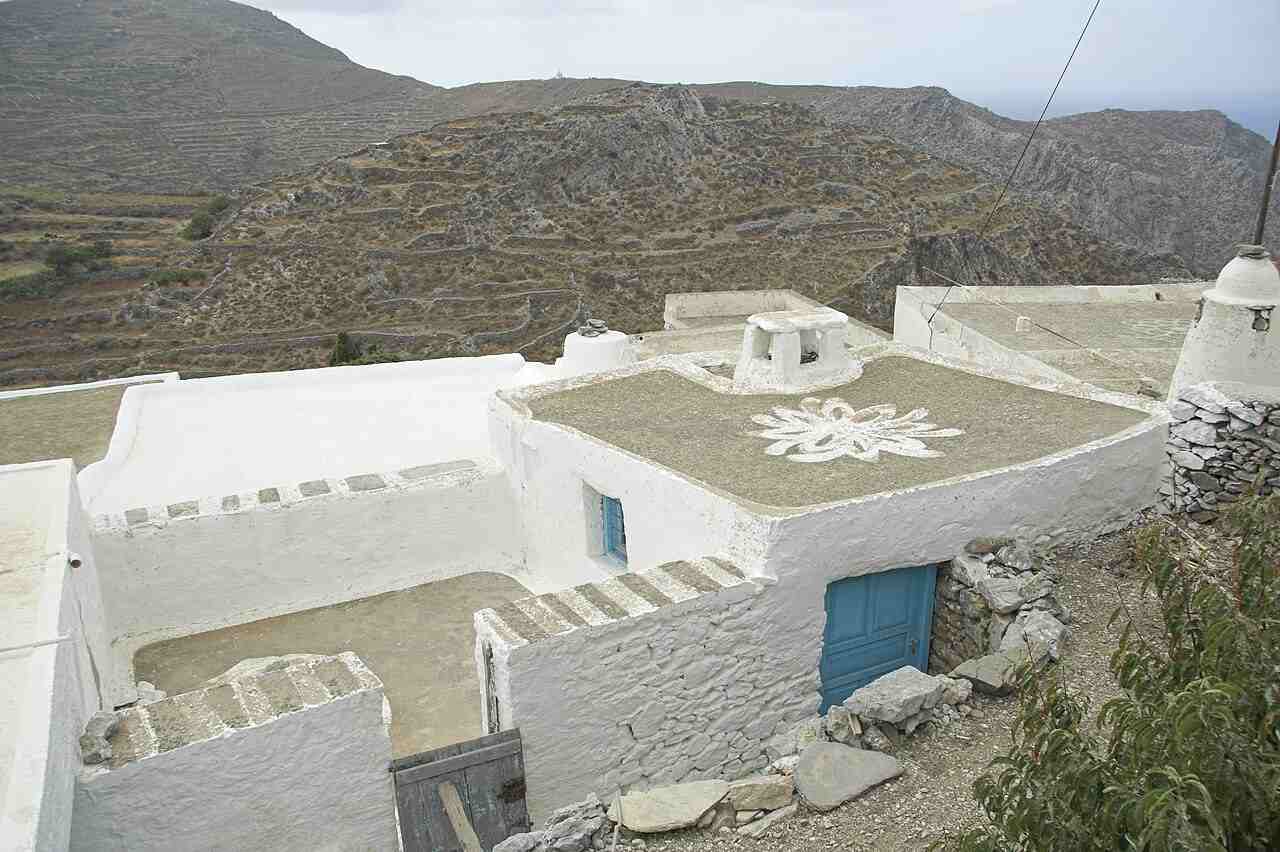
The food of Amorgos is hearty, rustic and rooted in the island’s rugged land and long tradition of livestock farming. Meat is at its core, above all the slow-cooked goat stew patatato, alongside home-made cheeses, the island’s own fava, cured pork and sausages, wild-herb honey and the famous psimeni raki. It is a cuisine of the mountain taverna, honest and generous. Plan the whole trip with Greece Tours.
This guide covers what to eat on Amorgos: the signature patatato, the island cheeses, the fava and vegetable dishes. The cured meats and seafood, the sweets and honey, the local drinks. Where to find them. Read it beside the wider Amorgos travel guide and the guide to things to do.
What is Amorgos food known for?
Amorgos is known for patatato, a slow-cooked goat or lamb stew with potatoes, and for its psimeni raki, a spiced honey-raki spirit.
The cuisine of Amorgos grows out of its rugged land and its strong tradition of raising goats and sheep, so meat and dairy are at its heart. The signature dish is patatato, kid goat or lamb slow-cooked with potatoes in a rich red sauce, the centrepiece of festivals and village tavernas, hearty and full of flavour.
Around it sit the island’s home-made cheeses, the distinctive fava made from the local Katsouni pea, cured pork and sausages, wild-herb honey and fresh fish and seafood from the harbours. The island is also famous for its drink, the psimeni raki, a spirit sweetened and spiced with honey, offered as a welcome across Amorgos.
This is a cuisine of the mountain taverna and the family kitchen, honest, generous and tied to the seasons and the land. Seeking out the traditional dishes, from a patatato in a village taverna to a glass of psimeni raki, is one of the authentic pleasures of a visit to the island.
What is patatato, the signature dish of Amorgos?
Patatato is the signature dish of Amorgos, kid goat or lamb slow-cooked with potatoes, tomato and herbs in a rich sauce. Traditionally cooked for festivals and Sundays, it is hearty and rustic, served in the mountain village tavernas above all.
Patatato is the dish that defines Amorgian cooking. It is made from the meat of the island’s free-range goats or lambs, slow-cooked with potatoes. Tomato, onion and herbs until the meat falls from the bone and the sauce is rich and deep. The name comes from the potatoes, patates, that cook down in the sauce and soak up its flavour.
The dish is tied to celebration and community, traditionally prepared for the saints’-day festivals, the panigyria, and for Sunday and family gatherings, cooked in large pots to feed many. It reflects the island’s pastoral life, in which goat and lamb were the everyday meats and slow cooking made the most of them.
For visitors, ordering patatato in a mountain taverna, above all in the villages of Langada and Tholaria. Is the essential Amorgos food experience, best enjoyed with a village salad, local bread and cheese. A glass of wine or raki. Hearty and rustic, it captures the character of the island.
What cheeses does Amorgos produce?
Amorgos produces home-made goat and sheep cheeses, including the hard, salty melipasto, the tangy xinomizithra, soft myzithra, graviera and the sharp kopanisti. Made from the milk of the island’s flocks, they appear on every taverna table.
The island’s long tradition of livestock farming gives it a rich range of home-made cheeses from the milk of its goats and sheep. The most distinctive is melipasto, a hard, salty cheese matured and often sun-dried, used grated and in cooking, while xinomizithra, a tangy soft whey cheese. Fresh, mild myzithra are eaten young.
Amorgos also makes graviera, a firm, nutty table cheese, and, in smaller quantities, the soft, sharp, spreadable kopanisti shared across the Cyclades. These cheeses are mostly home-produced in small batches, and their variety is remarkable for so small an island, a direct expression of its pastoral life.
The cheeses appear on every taverna table, eaten on their own as a meze, drizzled with the island’s thyme honey, baked into pies or grated over dishes. Sampling them, especially the local melipasto and xinomizithra, is an easy and rewarding way into the island’s food culture.
What is fava and what vegetable dishes does Amorgos have?
Amorgos is known for its fava, a puree of the local Katsouni yellow pea, served with onion, oil and lemon or dressed as fava pantremeni. Wild greens, herb pies, pulses and garden vegetables fill out the island’s meatless dishes.
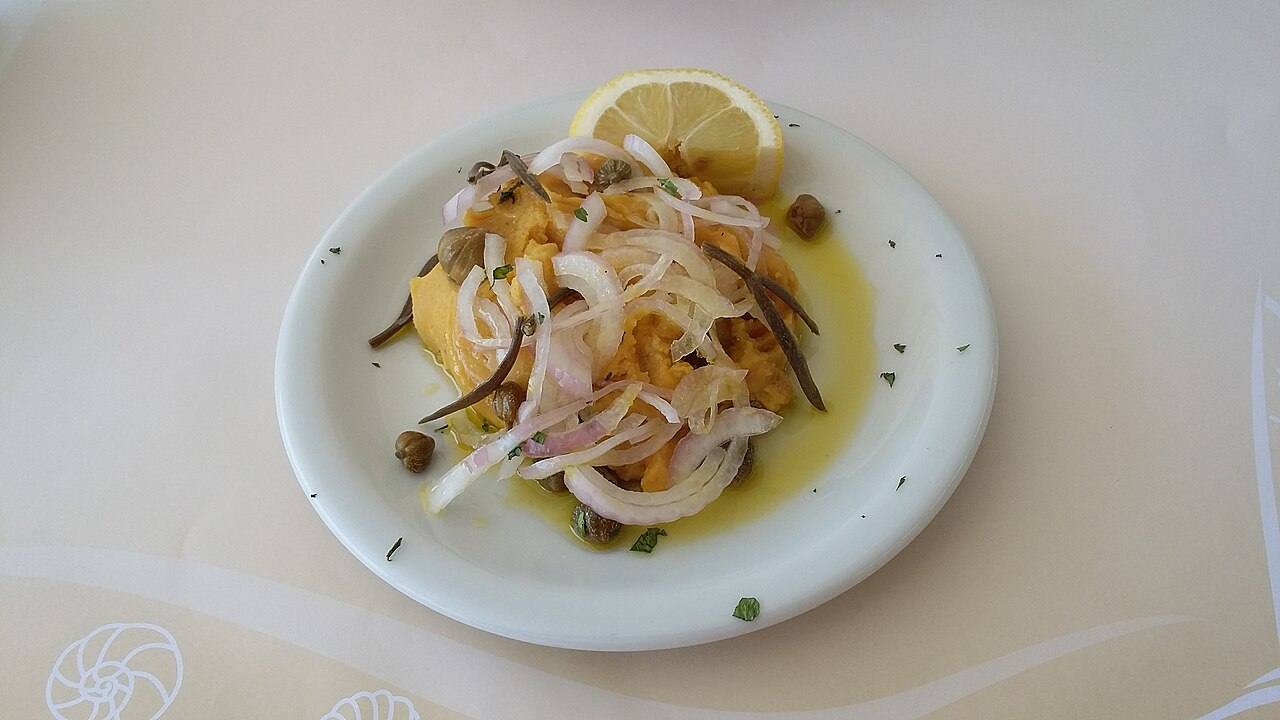
Fava, the Cycladic split-pea puree, is a speciality of Amorgos, made from the island’s own Katsouni pea variety and prized for its flavour. Served warm and smooth, topped with thinly sliced raw onion, olive oil and lemon. It is a staple meze. In the version called fava pantremeni, the married fava, it is dressed with sauteed onions, capers and more oil.
Beyond fava, the island’s rugged land yields wild greens and herbs that fill green pies and salads. Pulses such as chickpeas and beans that go into hearty soups like revithia and fasolada. Garden vegetables, tomatoes, courgettes and aubergines, are stuffed, baked or fried in season, cooked in the island’s own olive oil.
These vegetable and pulse dishes, rooted in the island’s fields and hillsides, form the everyday backbone of Amorgian home cooking alongside the meat, and they offer plenty for vegetarians. Eaten with bread, cheese and the local wine, they are a wholesome, flavourful side of the island’s table.
What cured meats and seafood does Amorgos have?
Amorgos makes cured louza pork and local loukanika sausages from its pig-raising tradition, and serves fresh seafood from its harbours, including stewed octopus and sun-dried picarels. Hearty meat dishes like aranista and the tripe soup xidato are island specialities.
The island’s pork tradition yields its cured meats: louza, a spiced, air-dried pork loin sliced thin as a meze. The local loukanika. Sausages flavoured with herbs and sometimes citrus, both staples of the taverna meze plate. Beyond patatato, older meat dishes include aranista, a goat stuffed and served in a rice soup, and the vinegary tripe soup xidato.
From the sea, the harbours of Katapola, Aegiali and the coves bring fresh fish and seafood to the table. Stewed and grilled octopus is a favourite, alongside grilled fish, fried small fish and the sun-dried picarels. Marides, that make a classic snack with ouzo or raki. Fish soups such as kakavia in the cooler months.
Together the cured meats, the hearty meat stews and the fresh seafood show the range of the island’s table, drawing on both its pastoral land and its seafaring coast. These dishes, served in the harbour and village tavernas, are central to eating well on Amorgos.
What sweets and honey is Amorgos known for?
Amorgos is known for its aromatic thyme honey, gathered from the island’s wild herbs, and for traditional sweets such as the crisp fried pastries xerotigana, sesame and honey pasteli, and almond confections, often drizzled with the local honey.
The island’s wild hillsides, thick with thyme and other herbs, support a thriving beekeeping tradition, and Amorgian thyme honey is prized for its aroma and depth. It is drizzled over cheese and yoghurt, used in sweets and drinks, and sold as one of the finest edible souvenirs of the island.
For sweets, the crisp fried pastries called xerotigana, coiled and drizzled with honey and sesame, are the local speciality. Along with pasteli, the honey-and-sesame bars that are an old Cycladic energy food, and almond confections. These simple, honey-rich sweets round off a meal or accompany a coffee.
The honey also flavours the island’s famous psimeni raki, tying the sweet and the spirit together. Buying a jar of Amorgian thyme honey, or a box of xerotigana, makes a fine gift to carry home, a taste of the island’s herb-scented hills.
What is rakomelo and psimeni raki in Amorgos?
Psimeni raki, also called rakomelo, is the emblematic drink of Amorgos: a spirit made by simmering raki with honey and spices such as cinnamon and cloves.
The signature drink of Amorgos is psimeni raki, literally cooked raki, a spirit made by gently simmering the local raki with honey and warming spices like cinnamon and clove. Sweet, aromatic and warming, it is the island’s own take on rakomelo and a source of local pride, made to closely guarded family recipes.
Psimeni raki is woven into the island’s hospitality: it is offered to guests as a welcome. Drunk as an aperitif or digestif. Famously presented, with a piece of loukoumi, to visitors who climb to the Hozoviotissa Monastery. Sharing a glass is a gesture of friendship and a taste of the island’s warmth.
Alongside it, the island produces its own wine and plain raki, and the honey that sweetens the psimeni raki ties the drink to the beekeeping tradition. Trying psimeni raki, ideally offered in a village taverna or home, is an essential part of the Amorgos food experience, as the guide to things to do notes.
Where you eat in Amorgos?
For traditional food, seek out the mountain village tavernas of Langada and Tholaria, where patatato and local cheeses are at their best.
The best of Amorgian food is found in two settings. The mountain village tavernas, above all in Langada and Tholaria above Aegiali, serve the traditional dishes, patatato, local cheeses. Wild greens and grilled meat, cooked as they have been for generations. Eating in a village kitchen is the surest way to taste the authentic island.
On the coast, the seafront tavernas of Katapola and Aegiali specialise in the day’s catch, with tables by the water for a long seafood meal, while the capital Chora offers the widest choice, from classic tavernas and mezedopoleia in its squares to a growing number of more modern tables. Each setting has its own appeal.
The old advice holds: for the most traditional cooking, seek out the tavernas away from the busiest tourist spots, in the mountain villages and the back lanes. Combining a village patatato with a harbour seafood meal and a glass of psimeni raki gives the fullest taste of the island, as the guide to Chora describes.
Frequently Asked Questions
What is the traditional dish of Amorgos?
The traditional dish of Amorgos is patatato, kid goat or lamb slow-cooked with potatoes, tomato, onion and herbs in a rich red sauce until the meat falls from the bone. Tied to the island’s saints’-day festivals and family gatherings, it is hearty and rustic. Served best in the mountain village tavernas of Langada and Tholaria. It captures the pastoral character of the island’s cuisine.
What you drink in Amorgos?
The drink to try in Amorgos is psimeni raki, also called rakomelo, the island’s emblematic spirit made by simmering raki with honey and spices such as cinnamon and clove. Sweet, warming and aromatic, it is offered as a welcome and a digestif across the island, including to visitors who climb to the Hozoviotissa Monastery, alongside a piece of loukoumi. The island also makes its own wine, plain raki and prized thyme honey.
Is Amorgos good for food lovers?
Yes. Amorgos has a hearty, authentic cuisine rooted in its pastoral land and seafaring coast. Food lovers can enjoy the signature patatato goat stew, distinctive home-made cheeses such as melipasto, the local Katsouni-pea fava, cured louza and sausages, fresh seafood. Aromatic thyme honey and the famous psimeni raki, sampled in traditional mountain-village tavernas, seafront harbour tables and the growing dining scene of Chora, far from the crowds of the busier islands.