
Agios Konstantinos is a small seaside village on the green north coast of Samos, set about midway between Kokkari and Karlovasi. The settlement is best known for its flowers, its plane-shaded seafront and a pebble shore that drops quickly into clear water. Homes climb the lower slope of Mount Ampelos behind a single coast road, and the whole village runs only about three hundred metres end to end. Its scale, quiet and greenery mark it out from the busier resorts elsewhere on the island. Plan the whole trip with Greece Tours.
This guide covers what Agios Konstantinos is and where it sits on the north coast, its flowered promenade and plane trees. The pebble beach and swimming, the calm family atmosphere. The mountain setting below Ampelos. It also outlines road access from Vathy and Karlovasi and the walking trails up to the hill villages. The aim is a clear, practical picture of a village that rewards travellers who prefer a slow, green base over nightlife and crowds.
What is Agios Konstantinos, the north-coast village between Kokkari and Karlovasi on Samos?
Agios Konstantinos is a small seaside village on the north coast of Samos, set about midway between Kokkari and Karlovasi. It sits below green mountain slopes and centres on a flower-lined seafront beside a pebble shore.
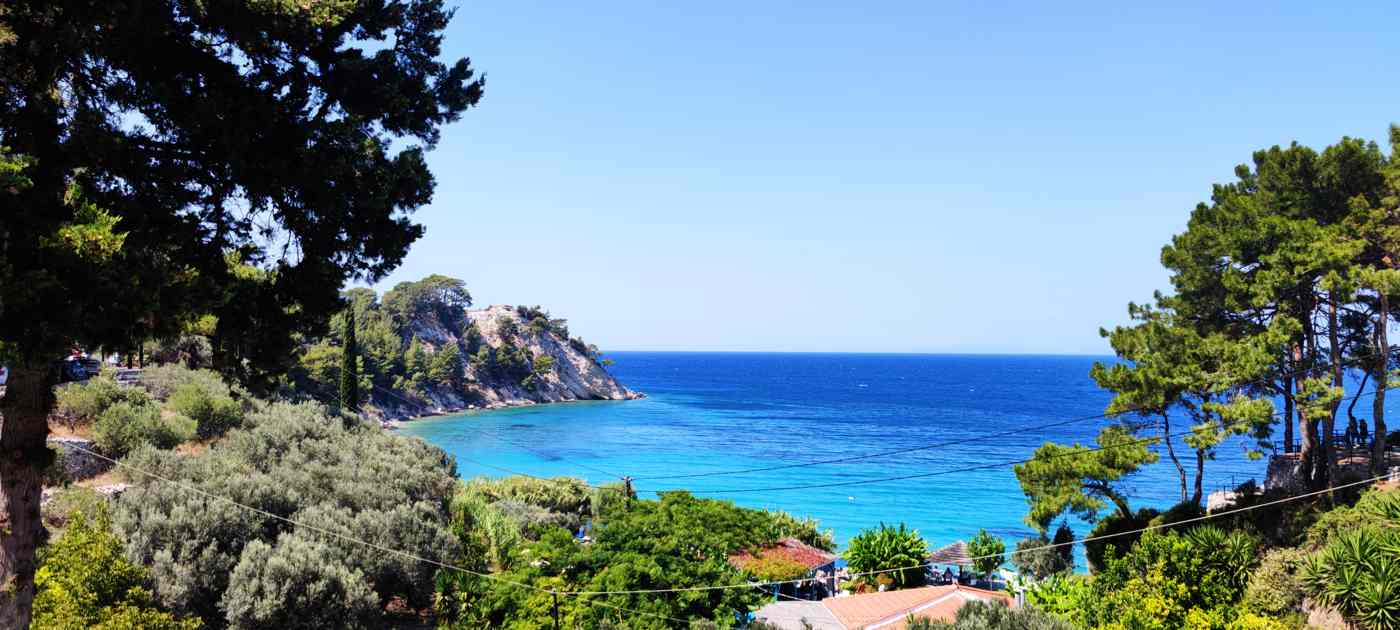
Agios Konstantinos is a seaside village on the north coast of Samos, in the eastern Aegean. The village sits about halfway along the north coast road. It faces open water toward the Turkish shore across the strait. The settlement grew around a small church dedicated to Saints Constantine and Helen. Homes climb the lower slope behind the narrow seafront. A single main road threads through the centre and along the water. Fishing boats and small craft use the shelter near the shore. The village stays compact, walkable end to end within minutes. Green hillsides rise close behind the tiled rooftops. This north-coast position gives the village its mild, sheltered feel.
Visitors reach it easily by car or local bus along the coast road. The place stays quiet and green through the year.
The village lies between two well-known points on the north coast. To the east sits Kokkari, the fishing and windsurf village with its pebble bays. To the west stands Karlovasi, the second ferry port of the island. Agios Konstantinos falls roughly midway on the coast road linking them. The drive from Kokkari takes about ten minutes east to west. Karlovasi lies about ten to fifteen minutes further along the road. This middle position makes the village a calm base between busier centres. Travellers passing along the north road reach beaches on either side. The coastline here curves in a series of small pebble coves. Wooded ridges frame the water and the settlement below.
The setting keeps the village quiet yet well connected. Both directions offer easy day trips by car.
Road access defines daily life in Agios Konstantinos. The coast road connects the village to Vathy, the island capital, in about thirty minutes. Heading west, the road reaches Karlovasi and its harbour within a quarter of an hour. Local buses run along this route through the day. Drivers find parking along the seafront and the side lanes. The airport near Pythagorio lies about an hour away by car. Ferries dock at Vathy and at Karlovasi for mainland links. Most visitors arrive by hire car and stop for a meal. The village works as a rest point on the north-coast drive. Its position suits travellers touring the green northern slopes.
Short distances to both ports keep arrivals and departures simple. This central spot suits touring the whole north coast.
Agios Konstantinos keeps a working-village character alongside its visitors. Year-round residents run tavernas, rooms and small shops near the water. The population stays small, numbering around three hundred through the seasons. Life centres on the seafront square and the village church. Morning brings fishing boats returning with the day’s catch. Cafes fill in the evening as the summer heat eases. The village avoids the crowds of the larger island resorts. Its small scale lets visitors settle in within a day. Neighbours know one another, and the pace stays unhurried. The north coast climate keeps summers warm and winters mild. Greenery from the mountain behind reaches down toward the shore.
This blend of settled community and quiet coast defines the place. The village rewards travellers who prefer calm over nightlife.
Why is the seafront promenade of Agios Konstantinos on Samos lined with flowers and plane trees?
The seafront of Agios Konstantinos is famous for its flowers. Residents plant bougainvillea, hibiscus and geraniums along the promenade, while tall plane trees shade the walkway. This greenery earns the village its name as the flowered village of Samos.
The seafront promenade forms the heart of Agios Konstantinos. A paved walkway runs along the water for about three hundred metres. Bright flowerbeds line the path on the landward side. Bougainvillea climbs walls and pergolas in deep pink and purple. Hibiscus and oleander add red and white through the warm months. Residents tend these plantings with visible care each season. The display earns the village its name as the flowered village. Benches sit at intervals for resting and watching the sea. Streetlamps and low walls edge the promenade neatly. The walk stays level and easy for all ages. Families stroll here in the cool of the evening.
The colour and the scent set this seafront apart on the north coast. Pots of geraniums brighten the doorways too.
Tall plane trees give the promenade its deep, welcome shade. These broad-leaved trees grow well near the fresh water of the slopes. Their spreading canopies cover the walkway and the taverna terraces. This shade keeps the seafront cool even at midday. Sparrows and swifts nest in the branches through summer. The trunks stand thick, marking years of steady growth. Cafes set their tables beneath the leaves along the water. The plane trees pair with the flowers to green the whole front. Sunlight filters through in shifting patterns on the paving. In autumn the leaves turn and fall along the path. The trees frame open views out to the Aegean.
This mix of shade and colour draws walkers through the day. Their canopy makes summer afternoons bearable here.
The promenade connects the two ends of the village. At one end stands the main church and its small square. At the other, the road curves toward the coves beyond. Tavernas and cafes face the water along the middle stretch. Their terraces spill onto the walkway under the trees. Small jetties and moorings break the shoreline here and there. Fishing boats tie up within sight of the taverna tables. The walkway stays busy in the early evening hours. Children play along the flat paving near the shore. The sea laps close beside the promenade edge. Lamplight and flowers make the front pleasant after dark. This central strip gathers the daily life of the village.
Visitors often linger here longer than on the beach itself. The scene stays lively yet calm through the evening.
The flowered seafront shapes how visitors remember the village. Photographs of the promenade show colour against white walls and blue water. The scene stays green even through the dry summer months. Careful watering keeps the beds and the trees alive in heat. The effect draws day visitors from Kokkari and beyond. Most stop for a coffee under the plane trees. The promenade offers the shade that the open beaches lack. Sunset light warms the flowers and the sea together. The walk suits a slow hour before dinner. Local pride in the display shows in its steady upkeep. The seafront remains the village’s best-known feature across the island. This green, flowered front defines Agios Konstantinos more than anything else.
Return visitors seek out this shaded, colourful walk.
What is the pebble beach at Agios Konstantinos on Samos like for swimming?
The beach at Agios Konstantinos is a narrow strip of grey pebbles beside the promenade. The water deepens quickly and stays clear and clean. Swimmers find calm, sheltered conditions here, with tavernas and shade close behind the shore.
The beach at Agios Konstantinos runs along the village front. It consists of grey and white pebbles rather than sand. The strip stays narrow, backed by the promenade and its walls. Water reaches a good depth within a short distance of the shore. The pebble bed keeps the sea clear and free of sand clouds. Swimmers enter over smooth stones near the waterline. Bathing shoes help on the pebbles for tender feet. The shore faces north across open water. Morning brings the calmest conditions for a swim. The beach sits only steps from the tavernas and cafes. Sun loungers appear along parts of the front in season.
The setting suits a quiet dip rather than a wide sandy resort. The clear water invites an easy morning swim.
Swimming here favours calm mornings and sheltered days. The north coast catches the meltemi wind on breezy afternoons. On still days the water lies flat and clear to the seabed. Depth increases quickly, suiting confident swimmers well. The pebble bottom means no sudden shelves close to shore. Families keep younger children near the shallow edge. Fish gather among the stones and draw snorkellers. Visibility stays high in the clean, sand-free water. Shade from the plane trees waits just behind the shore. Swimmers alternate their dips with coffee under the canopy. The sea temperature warms through summer into early autumn. Rocky coves nearby offer clear water too. These conditions make the village beach easy and reliable for bathing.
Calm bays reward swimmers who start early each day.
The village beach forms one of a string of north-coast coves. Small pebble bays lie either side along the coast road. Certain coves sit below the road and need a short walk down. Others open beside tavernas within the village itself. The pebbles keep every cove clear and blue. Rocky headlands separate one bay from the next. Walkers reach four or five within about five minutes on foot. Each cove stays small, with room for a handful of bathers. The clean water rewards those who explore beyond the main strip. Boats anchor offshore in the calm bays through summer. These coves give the village more shore than its size suggests.
Swimmers spread out along the coast on busy days. The quiet bays reward an early start before the crowds.
Facilities at the beach stay simple and close at hand. Tavernas and cafes line the promenade directly behind the pebbles. Showers and taps appear at points along the front. Loungers and umbrellas cover parts of the shore in season. Changing happens at the rooms and small hotels nearby. The flat promenade gives easy access to the water’s edge. No large beach bars or watersports crowd the shore. The calm suits families and older visitors alike. Fresh fish and coffee wait steps from the sea. The plane trees shade the whole front through midday. Parking sits along the seafront road for drivers. This close mix of beach and village keeps swimming easy.
Bathers reach food, shade and shore within a short walk. The simple setup keeps the shore uncluttered all season.
Why does Agios Konstantinos on Samos feel like a quiet, family-friendly resort?
Agios Konstantinos stays small and calm, with a flat seafront, shallow-edged pebble coves and family-run tavernas. It lacks loud nightlife and large hotels, so families and older travellers find a relaxed, safe base on the north coast.
The village draws families for its calm, contained scale. Everything sits within a short walk along the flat seafront. Parents keep children in sight from the tavernas to the shore. Traffic stays light on the single coast road through the centre. The promenade gives a safe, level place for evening strolls. Small squares and jetties offer room for children to play. The pace stays slow, without loud bars or clubs. Rooms and small hotels replace large resort complexes. Family-run tavernas serve simple, home-style Greek food. Owners often know returning guests by name. The village suits multi-generation trips and older travellers well. Quiet nights and green surroundings shape the atmosphere here.
This settled, low-key feel keeps families coming back each season. The calm scale reassures parents of young children.
Accommodation stays small and personal across the village. Rooms, studios and small hotels line the seafront and the lanes. Family-run guesthouses make up most of the beds here. Balconies look out over the flowers and the sea. Prices sit lower than the big southern resorts, in general terms. Hosts often cook and serve the breakfast themselves. Most rooms sit steps from both the beach and the tavernas. The small scale keeps service warm and unhurried. Guests find quiet nights away from resort noise. Long-stay visitors return to the same rooms each year. The village avoids package-tour crowds and high-rise blocks. Simple, clean rooms suit families on a modest budget. Booking ahead helps in the peak summer weeks.
This human scale defines staying in Agios Konstantinos.
Dining centres on the seafront tavernas under the trees. Menus feature grilled fish, meat and Greek village dishes. Owners source vegetables and herbs from the green slopes above. Fish comes from the boats moored just offshore. Tables sit under the plane trees beside the water. Meals run long and slow into the evening. Children move safely between the tables on the flat front. Prices stay moderate compared with the larger island resorts. Local Samos Muscat wine appears on most tables. Coffee and sweets follow dinner under the lamplight. Breakfast cafes open early along the front. Fresh bread arrives from the village bakery each morning. The tavernas double as the social heart of the village.
This food and setting anchor the family atmosphere. Long, shared meals define the evenings here.
Quiet defines nights in Agios Konstantinos through the season. The village lacks clubs, loud bars and late music. Evenings pass with dinner, coffee and slow walks. The promenade fills gently as the day’s heat fades. Children play near the water while parents linger. Cicadas and the sea provide the main sound. Streetlamps light the flowers along the front. Most visitors sleep to open windows and calm air. The contrast with busier resorts stands out clearly here. This peace draws couples and families seeking rest. Walkers rise early for the mountain trails above. The daily rhythm follows the sun rather than nightlife. Neighbouring Kokkari offers more evening bustle a short drive away.
Such calm keeps the village a steady family choice on Samos. The deep quiet suits an early night for all ages.
How do the wooded slopes of Mount Ampelos shape the setting of Agios Konstantinos on Samos?
Agios Konstantinos sits directly below Mount Ampelos, the green mountain that feeds its springs and shades its slopes. Pine and plane woods rise behind the village, and walking trails climb to the mountain villages of Manolates and Vourliotes.
Mount Ampelos rises steeply behind Agios Konstantinos. The mountain reaches over a thousand metres above the coast. Pine, oak and plane woods cover its lower slopes. Springs from the mountain feed the village greenery and gardens. This water keeps the flowers and plane trees alive in summer. The slopes catch cloud and rain more than the dry south. Terraced vineyards climb the mountain for Samos Muscat grapes. The wooded backdrop frames the village from the sea. Streams run down the ravines toward the north coast. The mountain shelters the village from the southern heat. Green ridges stand close behind the tiled rooftops. This mountain setting gives Agios Konstantinos its lush, watered character.
The contrast of blue sea and green slope defines the view. The mountain and coast frame every outlook here.
Walking trails climb from the coast into the Ampelos woods. Paths rise from Agios Konstantinos toward the mountain villages. Manolates sits high on the slope amid pine and vine. Vourliotes stands nearby, one of the oldest hill villages. Ambelos village gives the mountain its name on the ridge. The trails pass springs, streams and shaded gullies on the way. Walkers climb through thick woodland out of the heat. The routes take about three hours up and back. Views open over the coast and the sea below. Tavernas in the hill villages serve walkers at the top. Signposts mark the main paths from the coast road. Cooler air rewards the climb through the summer months.
These walks link the flowered shore to the green heights above.
The mountain shapes the daily weather along this coast. Cloud gathers on Ampelos and cools the evenings. Rain falls more here than on the southern plains. The extra water explains the village’s deep greenery. Streams flow through the gullies even in the dry months. Vineyards and gardens climb the terraced lower slopes. Bees work the mountain flowers for local honey. The woods hold pine, chestnut and plane along the streams. Birdsong fills the ravines above the village. The green backdrop stays vivid through the summer heat. Walkers and cyclists use the shaded mountain roads. Cool nights follow warm days beside the water. This watered landscape sets the north coast apart from the south.
The mountain and the sea define the village together. This green setting cools the whole coast.
The setting below Ampelos suits active, nature-focused visits. Mornings begin with a swim off the pebble shore. Afternoons climb into the shaded woods on foot. The village sits at the meeting of coast and mountain. Trails, beaches and tavernas all lie within easy reach. Cyclists ride the quiet coast and mountain roads. Birdwatchers and walkers explore the ravines and springs. Wine lovers visit the vineyards on the terraced slopes. The green surroundings cool the summer heat noticeably. Families combine gentle beach days with short mountain walks. The scenery stays lush where the south turns dry. Photographers find colour from the shore to the summit. This blend of sea, flowers and forest defines the place.
Agios Konstantinos rewards travellers who value calm and green landscapes. The mix fills an active, unhurried week.
How do the walking trails from Agios Konstantinos climb to the mountain villages of Ambelos, Manolates and Vourliotes?
Marked footpaths leave Agios Konstantinos and climb the wooded slopes of Mount Ampelos toward Ambelos, Manolates and Vourliotes. The trails follow old cobbled kalderimi, streams and terraces, gaining roughly 400 to 600 metres over about four kilometres.
The village sits at the foot of Mount Ampelos, and the walking network begins where the seafront road meets the slope behind the houses. Wooden signposts of the Samos footpath scheme mark the routes with numbers and destinations. The lower sections pass gardens, olive groves and vineyards on stone terraces, then enter shaded forest of plane, chestnut and pine. Water runs in the ravines through much of the year, so the ground stays green and cool. Walkers gain height steadily rather than sharply, and the gradient suits anyone with a normal level of fitness. Sturdy shoes, water and a sun hat cover the essentials.
The full circuit up to the villages and back takes around three to five hours at a steady walking pace, with time for short rests.
The three villages sit at different heights on the green flank of Ampelos. Vourliotes stands at around 350 metres, built around a central square shaded by plane trees and ringed by tavernas. Ambelos, the highest of the group, keeps its old stone houses and narrow lanes above the vineyards that give the mountain its name. The paths link the settlements, so walkers can climb to one village, cross to another and descend by a different route. Terraced vines supply the grapes for Samos Muscat wine, and the harvest colours the slopes in autumn. Springs and small chapels punctuate the way.
From the upper lanes the view opens north over the coast and the strait toward the Turkish shore about a dozen kilometres away across the blue water.
Manolates draws the most walkers of the mountain villages, and a marked trail joins it to the Agios Konstantinos routes. The Manolates lanes climb between stone houses hung with bougainvillea, and workshops sell ceramics, honey and herbs. Tavernas on the terraces serve local dishes with a view down the valley to the sea. Walkers often make the village their turning point, resting over lunch before the descent. The path between Manolates and Vourliotes runs through chestnut and oak forest known as the Valley of the Nightingales, where a stream and small bridges cross the route. Bird song fills the shaded gorge in spring.
From the village edge the trail back to the coast drops steadily through terraces to the seafront at Agios Konstantinos, closing the loop.
Spring and autumn suit the walk best, when temperatures stay mild and the streams still flow. Summer heat makes the climb hard by midday, so an early start before about ten in the morning works well. The trails carry little traffic outside the peak weeks, and walkers often meet only goats and the occasional farmer. Water sources exist along parts of the routes, yet carrying about one and a half litres per person stays sensible. Mobile signal drops in the deep gorges, so a printed map or offline route helps. The paths connect to the wider Samos network, allowing longer days that link three or four villages.
Descending back to Agios Konstantinos, walkers reach the seafront tavernas in time for a late lunch or an evening swim in the pebble bay.
What are the seafront tavernas and places to stay like in Agios Konstantinos?
Agios Konstantinos lines its shore with family-run tavernas under tamarisk and plane trees, serving fish, grilled meat and Samos wine.
The seafront promenade forms the social centre of the village, and tables spread under the trees close to the water. Tavernas serve fresh fish and seafood landed by local boats, alongside grilled meat, Greek salads and vegetable dishes cooked in olive oil. Samos Muscat wine appears on most menus, poured sweet as a dessert or dry with the meal. Prices track the island average rather than the higher rates of the busy resorts. Meals run long into the evening as the light fades over the sea. The atmosphere stays calm and family-led, with owners often cooking and serving themselves. Cats wait near the tables, and the sound of the water carries across the promenade.
Breakfast spots and cafés open through the morning for coffee and pastries.
Accommodation stays small in scale, matching the quiet character of the village. Rooms to let, studios and apartments fill the lanes behind the seafront, often run by the families who own them. Small hotels and guesthouses supply a modest number of extra beds, most within about a hundred metres of the beach. Rooms frequently open onto gardens thick with flowers, the feature that gives Agios Konstantinos its reputation on the coast. Self-catering studios suit longer stays, with a kitchenette for simple meals. Booking ahead matters for the peak weeks of July and August, when the small stock fills quickly. Outside those weeks rooms stay easy to find and rates drop.
The village works as a calm base for exploring the north coast by car or local bus.
Evenings shape the rhythm of the village, with dinner along the promenade the main event. Tables fill from about eight as families and walkers return from the beach and the hills. The tavernas grill fish and octopus over charcoal, and mezedes such as fried courgette, tzatziki and stuffed vine leaves start the meal. Local wine and ouzo accompany the food, and the pace stays slow. Cafés serve coffee, juice and desserts later into the night, yet the village keeps early hours compared with the larger resorts. No loud bars or clubs break the quiet. The lights of fishing boats mark the dark water offshore.
Children play on the promenade while adults linger over the last glass, and the sound stays gentle across the flowered front.
The village supplies the basics for a comfortable stay without the bustle of a large resort. A mini-market, a bakery and a couple of shops cover food and daily needs, and a pharmacy and cash point serve the area. Sunbeds and umbrellas line part of the pebble beach, with basic water-sports options in high summer. Car and scooter hire helps visitors reach the wider island, since the village itself covers a small area on foot. Renting for a week or more brings the calm rhythm into focus, with mornings on the beach and afternoons in the hills. The flowered gardens and the quiet nights draw repeat visitors year after year.
Families, couples and walkers form the main crowd, and the mix stays relaxed throughout the season.
Which pebble coves lie either side of Agios Konstantinos along the north coast of Samos?
Pebble and shingle coves line the north coast on both sides of Agios Konstantinos. East toward Kokkari lie Tsabou, Lemonakia and Tsamadou; west toward Karlovasi the shore leads to Potami and the wilder Seitani bays under the cliffs.
Three pebble coves east of the village toward Kokkari rank among the finest on the north coast. Tsamadou spreads white pebbles below a pine-clad slope, with clear deep water and a nudist section at one end. Lemonakia sits in a sheltered curve just beyond, its round stones easy on the feet and its bay calm for swimming. Tsabou lies closest to Kokkari, a quiet strip backed by tamarisk with a small taverna above. Sunbeds and umbrellas cover part of each cove in summer, while the ends stay free. Parking sits along the coast road above each bay, and steps lead down to the shore.
The colour of the water shifts from pale turquoise near the shore to deep blue offshore. A guide to Samos beaches lists these coves among the island’s best.
The coast west of the village toward Karlovasi turns wilder, and the beaches grow larger. Potami stretches as a long curve of pebbles and sand near Karlovasi, backed by a river valley that leads to waterfalls and a Byzantine chapel inland. Beyond Potami a coastal footpath reaches Mikro Seitani, a small pebble cove, and Megalo Seitani, a broad sand beach under high cliffs with no road access. Monk seals shelter along this protected stretch, part of a Natura conservation zone. The walk from Potami to Megalo Seitani takes around ninety minutes each way over an exposed path. Swimmers find deep clear water and thin crowds even in August.
Bringing water and shade matters here, since no tavernas serve the Seitani bays and no facilities exist along the shore.
The village beach itself runs as a strip of grey pebbles along the seafront promenade. The water deepens quickly a short way out, so the bay suits swimmers who prefer clear cool sea over shallow sand. Tamarisk and plane trees throw shade to the water’s edge, a rare feature on the island’s beaches. Sunbeds and umbrellas cover the central part in summer, while the ends stay quiet for those who bring a mat. The pebbles keep the water clear, and snorkelers spot fish over the stony bottom. Meltemi winds from the north can raise a swell in high summer, so the western coves offer calmer swimming on windy days.
The gentle slope and the shade make the main beach a steady choice for families with children.
Reaching the coves needs a car, scooter or the coast bus, since the beaches spread along roughly ten kilometres of shore. The road between Agios Konstantinos and Kokkari passes above Tsabou, Lemonakia and Tsamadou, with signed turnings and small car parks. Boat trips from Kokkari and Samos Town also call at the north-coast bays in summer. Morning brings the calmest water and the best light before the northerly wind builds after midday. Each cove keeps its own character, from the organised sunbeds of Tsamadou to the empty sand of Megalo Seitani. Carrying water, a hat and beach shoes handles the pebbles and the sun.
Swimmers who move between two or three coves in a day sample the range of the north coast within a short drive.


How do you reach Agios Konstantinos from Vathy and Karlovasi on Samos?
Agios Konstantinos sits on the north-coast road midway between Vathy and Karlovasi, about 25 kilometres from each.
Vathy, the capital and main ferry port, sits about 25 kilometres east of Agios Konstantinos on the north coast. The road runs west along the shore through Kokkari, past the pebble coves, and reaches the village in around thirty minutes by car. Buses of the island network connect Vathy with the north-coast villages, stopping at Agios Konstantinos on the Karlovasi route. The service runs times a day, with more departures in summer than winter. Ferries from Piraeus and the other Aegean islands dock at Vathy, so most visitors arrive there first. Taxis wait at the port and cover the trip for a fixed island rate.
The drive follows the coast the whole way, with the sea on one side and Mount Ampelos rising on the other.
Karlovasi, the island’s second town and ferry port, lies about 25 kilometres west of Agios Konstantinos. The coast road runs east from Karlovasi, climbing above Potami and the wooded shore before descending to the village in around thirty minutes. Ferries from Piraeus and the northern Aegean also call at Karlovasi, giving a second arrival point on the island. The town holds a university faculty, so shops, services and cafés stay open year-round. Buses link Karlovasi with Vathy along the north coast, passing through Agios Konstantinos on the way. The port sits below the old upper town of Ano Karlovasi, with its stone houses and churches.
Renting a car at either Karlovasi or Vathy gives the freedom to reach the village and the coves along the shore.
Samos International Airport, named Aristarchos of Samos, sits near Pythagorio on the south-east coast. The drive from the airport to Agios Konstantinos crosses the island and takes around forty-five minutes by car. The route climbs over the central hills between Mount Ampelos and Mount Kerkis before dropping to the north coast. Charter and scheduled flights link the airport with Athens and other European cities in the summer season. Car hire desks operate at the airport, and pre-booking a vehicle smooths the transfer to the north coast. Public buses connect the airport area with Vathy, from where the north-coast service continues.
The ferry ports at Vathy and Karlovasi offer the alternative sea route from Piraeus and the neighbouring islands of the eastern Aegean chain, including Ikaria and Chios.
Getting around from the village works best with a hired car, since bus times suit set routes rather than flexible days. The north-coast bus links Agios Konstantinos with Kokkari, Vathy and Karlovasi, running to a timetable posted at the stop. Journey times stay short, with Kokkari about fifteen minutes east and Karlovasi about thirty minutes west. Taxis serve the village on call and cover trips to the airport, the ports and the beaches. Scooter and bicycle hire suit shorter hops along the coast in fine weather. Parking stays easy in and around the village, unlike the busier resorts.
Walkers reach the mountain villages on foot without any transport at all, using the marked trails from the seafront up the slopes of Mount Ampelos toward Manolates.
Who does the quiet village of Agios Konstantinos suit, and when is the best time to visit?
Agios Konstantinos suits families, couples, walkers and older travellers who want a calm base over nightlife.
The village fits travellers who value quiet over crowds and prefer scenery to nightlife. Families choose it for the shaded beach, the calm bay and the short walking distances within the village. Couples come for the flowered gardens, the seafront tavernas and the slow evenings without loud bars. Walkers use it as a base for the trails up Mount Ampelos to the mountain villages. Older visitors and returning guests value the steady pace and the family-run rooms. The village works less well for those who want clubs, water parks or a long sandy beach. Independent travellers with a hired car gain the most, combining the calm base with day trips across the island.
The mix of sea, mountain and flowers draws people who return each year.
Spring, from April to June, opens the season with green hills, flowing streams and gardens in full flower. Temperatures climb from mild to warm, and the walking trails stay cool and comfortable. The sea warms through June to a swimmable temperature by the month’s end. Wildflowers cover the slopes of Mount Ampelos, and the villages hold Easter and saint’s-day feasts. Rooms stay easy to book and rates sit below the summer peak. The village earns its reputation for flowers most clearly in these weeks, when the gardens and balconies bloom. Birdlife fills the wooded gorges above the coast, giving the Valley of the Nightingales its name.
Spring suits walkers and nature visitors who want the trails and the coves before the summer crowds arrive on the north coast.
Summer, from July to August, brings hot dry days, warm sea and the busiest weeks of the year. Even at the peak the village stays calmer than Kokkari or Pythagorio, keeping its quiet character. The Meltemi wind blows from the north across the Aegean, cooling the air but raising a swell on exposed beaches. Autumn, through September and into October, holds the warm sea while the crowds thin and the light softens. September ranks among the best months, with swimmable water, mild evenings and the grape harvest on the slopes of Mount Ampelos. Rates fall from the summer peak as the season winds down. The tavernas stay open into October, and the walking trails regain their cool comfort.
Autumn suits couples and walkers who want warmth without the summer crowds.
Winter, from November to March, turns quiet as most tavernas and rooms close for the season. The hills stay green with rain, the streams run full, and Mount Ampelos catches occasional snow on its highest ground. Local life continues in the mountain villages, though visitor services shrink to a minimum on the coast. The flowered village of spring and summer gives way to a working farm landscape of olives and vines. For most travellers the season runs from late April to mid-October, with the flowers, the sea and the trails all at their best. Agios Konstantinos rewards those who match its slow pace, choosing shaded beaches, mountain walks and long taverna evenings over crowds and nightlife.
The quiet north-coast village stands among the calmest bases on Samos through the warm months.
Frequently Asked Questions
Is Agios Konstantinos worth staying in on Samos?
Agios Konstantinos rewards travellers who want a quiet, green base on the north coast of Samos. The flowered seafront, the shaded pebble beach and the family-run tavernas give the village a calm character rare on the busier parts of the island. Its position midway between Vathy and Karlovasi, about 25 kilometres from each, puts the north-coast beaches and the mountain villages within easy reach. Walkers value the trails that climb Mount Ampelos to Manolates and Vourliotes, while families use the sheltered bay and the short distances in the village. The tavernas serve fresh fish and Samos Muscat wine along a promenade shaded by plane and tamarisk trees.
Nightlife stays limited, so those who want clubs and long sandy beaches look elsewhere. A hired car widens the range for day trips across the island. For a base that trades bustle for flowers, shade and quiet swimming, the village stands among the best quiet choices on Samos.
Is Agios Konstantinos good for a family holiday with kids?
Agios Konstantinos suits families with children who want a calm, safe base rather than a lively resort. The pebble beach on the seafront shelves gently near the shore and stays shaded by tamarisk and plane trees, giving cover from the midday sun. The bay stays calm on most days, though the water deepens a short way out, so young swimmers need supervision. The compact village lets children walk to the beach, the tavernas and the shops within a couple of minutes. Family-run rooms and studios with kitchenettes suit longer stays and self-catering. The tavernas welcome children and serve simple dishes alongside the fish and grills. Quiet nights and the absence of loud bars help early bedtimes.
For older children, the walking trails up Mount Ampelos and boat trips from nearby Kokkari add variety. A hired car reaches the sandy beaches and family sights across the island. The village works best for families seeking calm over entertainment.
Can you walk from Agios Konstantinos up to the mountain villages?
Marked footpaths climb from Agios Konstantinos up the slopes of Mount Ampelos to the mountain villages of Ambelos, Manolates and Vourliotes. The trails start where the seafront road meets the hillside behind the village and follow old cobbled kalderimi through terraces and forest. Walkers gain roughly 400 to 600 metres of height over about four kilometres, with the full circuit taking around three to five hours. Wooden signposts of the Samos footpath network mark the routes with numbers and destinations. Manolates draws the most walkers, its lanes lined with stone houses, workshops and tavernas with valley views. The path onward to Vourliotes crosses the wooded gorge called the Valley of the Nightingales.
Spring and autumn suit the walk best, when the streams flow and the heat stays mild. An early start before the midday sun helps in summer. Sturdy shoes, water and a hat cover the essentials for the climb and the descent back to the coast.
What are the nearest beaches to Agios Konstantinos?
The village beach runs along the seafront as a strip of grey pebbles shaded by tamarisk and plane trees. East toward Kokkari lie three of the finest coves on the north coast: Tsabou, Lemonakia and Tsamadou, each a pebble bay with clear deep water backed by pine. West toward Karlovasi the coast leads to Potami, a long curve of pebbles and sand near a river valley with waterfalls inland. Beyond Potami a coastal path reaches the wild Seitani bays, Mikro Seitani and Megalo Seitani, set under high cliffs with no road access and no facilities. The pebble beaches shelve quickly, so the water stays clear and cool for swimming and snorkelling.
A car, scooter or the coast bus reaches the coves within about fifteen to thirty minutes. Morning brings the calmest water before the northerly wind builds after midday. Beach shoes, water and shade handle the pebbles and the summer sun along this stretch of coast.
Where do you eat on the Agios Konstantinos seafront?
Family-run tavernas line the Agios Konstantinos seafront under tamarisk and plane trees, with tables set close to the water. The kitchens serve fresh fish and seafood landed by local boats, alongside grilled meat, Greek salads and vegetable dishes cooked in olive oil. Mezedes such as fried courgette, tzatziki and stuffed vine leaves open the meal, shared across the table. Samos Muscat wine appears on most menus, poured sweet as a dessert or dry with the food, and ouzo accompanies the mezedes. Prices track the island average rather than the higher rates of the busy resorts. Cafés and a bakery serve coffee, juice and pastries through the morning and afternoon.
Meals run long into the evening as the light fades over the sea and the pace stays slow. No loud bars break the quiet, so dinner along the promenade forms the main event of the night. Booking ahead helps in the peak weeks of July and August.
How do you get to Agios Konstantinos on Samos?
Agios Konstantinos sits on the north-coast road midway between Vathy and Karlovasi, about 25 kilometres from each. Ferries from Piraeus and the eastern Aegean islands dock at both Vathy and Karlovasi, giving two arrival points by sea. From Vathy the coast road runs west through Kokkari to the village in around thirty minutes; from Karlovasi the drive east takes a similar time. Samos International Airport, named Aristarchos of Samos, sits near Pythagorio on the south-east coast, about forty-five minutes away by car. Charter and scheduled flights connect the airport with Athens and other European cities in summer. Buses of the island network link Vathy and Karlovasi along the north coast, stopping at Agios Konstantinos on the way.
Taxis serve the ports and the airport for a fixed island rate. Car hire at the airport or either port gives visitors the most freedom to reach the village and explore the north coast and the mountain villages.
Is Agios Konstantinos quiet or busy in summer?
Agios Konstantinos stays quiet through the year and keeps its calm character even in the peak weeks of July and August. The village lacks the clubs, large hotels and long sandy beaches that draw crowds to Kokkari and Pythagorio, so it never fills in the same way. Summer brings its busiest weeks, when the rooms and tavernas reach capacity, yet the pace stays relaxed and the nights stay early. The pebble beach and the flowered promenade fill by day but empty by dark, when dinner along the seafront forms the main event. Families, couples and walkers make up the main crowd rather than a nightlife party scene.
Spring and autumn stay quieter still, with easy rooms, lower rates and cooler trails. The Meltemi wind cools the summer air and thins the beach crowds on windy days. For travellers who want a calm base over nightlife, the village holds its quiet through the whole warm season.