
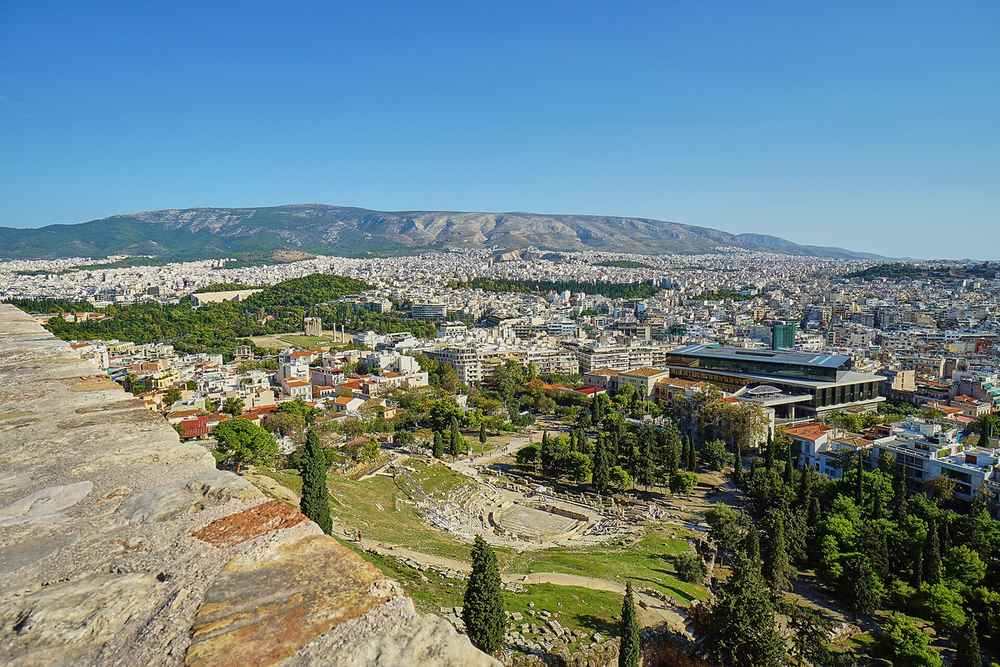
The Acropolis Museum highlights include the top-floor Parthenon Gallery with its 160-metre frieze, the five original Caryatids, the Archaic Kore statues and the glass-floored building over ancient ruins, the perfect complement to the Acropolis itself. See it all stress-free with skip-the-line tickets and guided tours from My Greece Tours for a richer visit. Plan the whole trip with Greece Tours.
The Acropolis Museum is the essential companion to the rock in the Acropolis tickets and tours guide. The sections below cover the must-see highlights in full.
What are the highlights of the Acropolis Museum?
The highlights of the Acropolis Museum are the top-floor Parthenon Gallery, with the temple’s 160-metre frieze displayed at the Parthenon’s exact orientation; the five original Caryatids from the Erechtheion; the Archaic Kore statues and pre-Parthenon pediments; and sculptures from the Temple of Athena Nike. The glass-floored modern building over ancient ruins is itself a highlight.
The Acropolis Museum, opened at the foot of the sacred rock, is one of the finest museums in the world and the perfect complement to a visit to the Acropolis, displaying the original sculptures and treasures from the monuments above. With over 4,000 artefacts, it gathers the finest surviving art of the Acropolis under one roof. Its standout highlights are unmissable: the breathtaking top-floor Parthenon Gallery, a glass hall built to display the temple’s great sculpted frieze at the same size and orientation as the Parthenon itself; the five original Caryatids, the marble maidens removed from the Erechtheion for protection; the serene Archaic Kore and Kouros statues that once stood on the Acropolis; the sculptures from the Temple of Athena Nike; and the striking modern building, with glass floors revealing ancient ruins beneath your feet. Seeing the original sculptures here, after viewing the monuments on the rock, completes and deepens the whole Acropolis experience. The museum is a treasure house of Classical art, set out alongside the guide to the Acropolis Museum tickets. The Parthenon Gallery is the crowning glory.
What is the Parthenon Gallery in the Acropolis Museum?
The Parthenon Gallery is the top-floor glass hall of the Acropolis Museum, built to display the Parthenon’s 160-metre sculpted frieze, metopes and pediment figures. The gallery is rotated to align exactly with the Parthenon, visible through its glass walls, so you view the sculptures at the same orientation and scale as on the temple itself.
The crowning glory of the Acropolis Museum is its top-floor Parthenon Gallery, one of the most brilliantly conceived museum spaces in the world. This vast, light-filled glass hall was designed specifically to display the surviving sculptures of the Parthenon, above all the famous Ionic frieze, around 160 metres long, which once ran around the temple’s inner chamber and depicts the great Panathenaic procession in honour of Athena. The genius of the gallery lies in its orientation: the rectangular hall is rotated to align exactly with the Parthenon on the rock above, and it is surrounded by glass walls, so as you walk around the frieze you can look up through the glass and see the actual temple it came from, at the same angle and the same scale. The marble slabs are mounted at the same height and arrangement as on the original building, with plain casts standing in for the sculptures held in the British Museum and elsewhere, making the gaps in the collection poignantly visible. Standing here, surrounded by the frieze with the Parthenon framed beyond, is a moving, unforgettable experience. The Parthenon Gallery alone is worth the visit, set out alongside the guide to the Parthenon. The Caryatids are another star.
Where are the Caryatids in the Acropolis Museum?
The five original Caryatids are displayed on the first floor of the Acropolis Museum, standing together on a balcony where you can walk around them and see their intricate detail up close. They are the maidens that once supported the Erechtheion’s porch, hand-carved from marble, each unique. The sixth Caryatid is in the British Museum in London.
Among the most beloved exhibits in the Acropolis Museum are the original Caryatids, the famous sculpted maidens that once supported the roof of the Erechtheion’s southern porch, the Acropolis’s most sacred temple. Five of the six surviving Caryatids are displayed together on the museum’s first floor, arranged on a special balcony in roughly their original formation, where visitors can walk all the way around them and admire from close range the extraordinary detail of their flowing, finely carved drapery, their elaborate hairstyles and their subtly individual poses, each maiden being unique. Removed from the Erechtheion to protect them from pollution and weathering, and now beautifully lit and conserved indoors, they can be appreciated far better here than the replicas standing on the temple itself. The empty sixth place is a quiet reminder of the missing maiden, taken by Lord Elgin around 1800 and held in the British Museum in London, separated from her sisters. Seeing the genuine Caryatids up close is a highlight of any museum visit, set out alongside the guide to the Erechtheion and Caryatids. There is much more to see.
What else can you see in the Acropolis Museum?
Beyond the Parthenon Gallery and Caryatids, the Acropolis Museum displays the Archaic Kore and Kouros statues with traces of original colour, the pediments of older temples destroyed by the Persians, the sculpted parapet of the Temple of Athena Nike including Nike adjusting her sandal, everyday finds from the Acropolis slopes, and an excavated ancient neighbourhood beneath the glass floor.
The Acropolis Museum rewards a thorough visit, with treasures filling its galleries far beyond the headline exhibits. On the first floor, the Archaic Gallery is a highlight, displaying a wonderful collection of Kore statues, serene marble maidens, and Kouros figures from the 6th century BC that once stood as offerings on the Acropolis, some still bearing traces of their original painted colour, a reminder that ancient sculpture was vividly coloured. You can see the surviving sculptures from the pediments of the older temples that the Persians destroyed in 480 BC, including dramatic mythological scenes. The exquisite sculpted parapet from the Temple of Athena Nike is here too, including the celebrated relief of Nike bending to adjust her sandal. The galleries also show finds from the sanctuaries and slopes of the Acropolis, including votive offerings and objects of daily religious life. At ground level, glass floors reveal the excavated ruins of an ancient Athenian neighbourhood discovered beneath the museum, which you walk above on your way in. This wealth of art and archaeology makes the museum endlessly rewarding, set out alongside the guide to the history. The building itself is remarkable.
Why is the Acropolis Museum building special and how do you visit?
The Acropolis Museum, opened, is a striking modern building of glass and concrete set over an excavated ancient neighbourhood, with glass floors and walls framing views of the Acropolis. It sits in the Makrygianni area by the Acropoli metro station, a short walk from the rock. Visit after seeing the Acropolis, allow a couple of hours, and book tickets ahead.
The Acropolis Museum is celebrated not only for its collection but for its remarkable contemporary building, completed. Designed to display the Acropolis sculptures in natural light and in direct dialogue with the monument, the modern glass-and-concrete structure is itself a highlight: it is built on slender pillars above an excavated ancient Athenian neighbourhood, which is preserved and visible through glass floors, and its extensive glass walls frame stunning views up to the Acropolis, linking the museum to the rock it celebrates. Practically, the museum is ideally located in the Makrygianni district at the southern foot of the Acropolis, right by the Acropoli metro station on Line 2 and a short walk from the south slope entrance, so it combines perfectly with a visit to the site. The best plan is to visit the Acropolis first and then the museum, allowing around two hours to do it justice, ideally booking tickets in advance to skip queues, and noting it is a separate ticket from the archaeological site. There is also a fine café with Acropolis views. The museum completes the Acropolis experience beautifully, set out alongside the guides to the museum tickets and a one-day itinerary. The questions below cover the points visitors ask most.
How much time do you need at the Acropolis Museum, and what tips help?
You need around two hours to enjoy the Acropolis Museum’s highlights, or longer for a thorough visit. Visit after the Acropolis itself, buy tickets in advance to skip queues, start on the upper Parthenon Gallery, allow time for the Caryatids and Archaic statues, and enjoy the café with Acropolis views. It is air-conditioned and child-friendly.
A little planning helps you get the most out of the Acropolis Museum, one of the finest museums in the world. Allow around two hours to take in the main highlights at a comfortable pace, or more if you love to linger over the sculptures and read the displays in depth. The ideal sequence is to visit the museum after exploring the Acropolis itself, so you arrive having just seen the monuments and can connect the original sculptures to the buildings they came from. Buy your museum ticket in advance, ideally skip-the-line, to avoid queuing, and note it is a separate ticket from the archaeological site, though combined options exist. Inside, a good strategy is to work your way up to the top-floor Parthenon Gallery, the highlight, where the frieze is displayed in line with the temple, and to allow plenty of time on the first floor for the five original Caryatids and the beautiful Archaic Kore statues. Don’t miss the glass floors over the excavated ancient neighbourhood at the entrance. The museum is air-conditioned, a cool refuge from the heat, and family-friendly with children’s trails, and its café terrace offers fine Acropolis views for a break. These tips ensure a rewarding visit, set out alongside the guide to the Acropolis Museum tickets. The questions below cover the points visitors ask most.
Frequently Asked Questions
What are the must-see highlights of the Acropolis Museum?
The must-see highlights of the Acropolis Museum are the top-floor Parthenon Gallery, with the temple’s 160-metre frieze displayed at the Parthenon’s exact orientation; the five original Caryatids from the Erechtheion; the Archaic Kore statues; and the sculptures from the Temple of Athena Nike. The glass-floored building over ancient ruins is itself a highlight.
Are the original Caryatids in the Acropolis Museum?
Yes, five of the six original Caryatids are displayed on the first floor of the Acropolis Museum, where you can walk around them and see their detail up close. They were removed from the Erechtheion for protection. The sixth Caryatid is held in the British Museum in London, separated from the others.
Is the Acropolis Museum worth visiting?
Yes, the Acropolis Museum is well worth visiting and is the perfect complement to the Acropolis, displaying the original sculptures from the monuments. Highlights include the Parthenon Gallery aligned with the temple, the Caryatids and the Archaic statues, in a striking building over ancient ruins. Allow around two hours and visit after seeing the rock.