
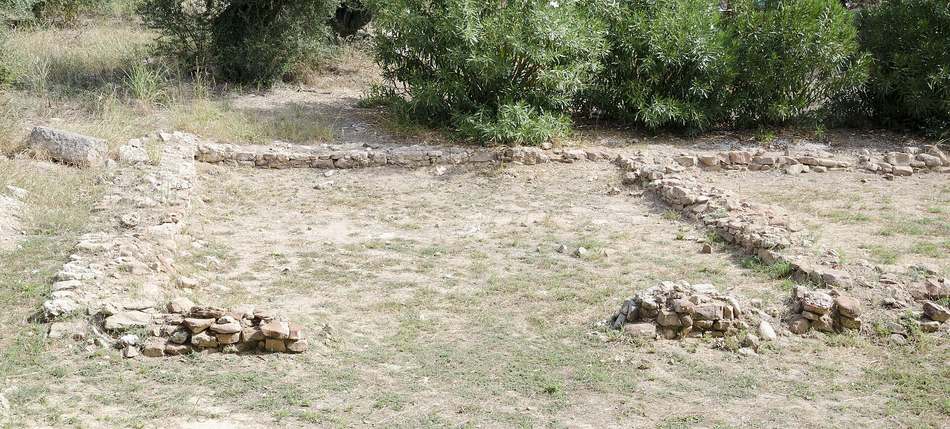
The Bronze Age collapse was the wave of destruction that ended the Mycenaean world. It struck the eastern Mediterranean toward the close of the second millennium before the common era. Within three or four generations the great palaces of Mycenae, Pylos, Tiryns and Thebes were burned or abandoned. The Linear B script and the palace economy disappeared, and long-distance trade broke down. Scholars still argue over why so much fell so fast. No single answer has ever won the field of debate outright. Trace the end of that lost age and walk the ruins where it played out with My Greece Tours.
This collapse closed the story of Mycenae as a living Bronze Age capital. It pushed Greece into a poorer, less connected period once called a dark age. Yet memory of the vanished kingdoms did not die. It survived in myth and in the epics of Homer, who sang of a heroic world long after its palaces lay in ruin. The sections below cover the scale of the destruction, the debated causes, the loss of writing and trade, the dark age, and how the fall still shapes a Mycenae travel guide.
What was the Bronze Age collapse at Mycenae?
The Bronze Age collapse was a wave of destruction that burned or emptied the great Mycenaean palaces. It ended Linear B and the palace economy and broke long-distance trade toward the close of the second millennium before the common era.
The collapse struck the Mycenaean world as a chain of destructions. It spread across the eastern Mediterranean over three or four generations. The great palaces that had ruled the mainland fell one after another. Mycenae itself, the capital that gave the age its name, saw its citadel burned and its power broken. The palace economy had recorded flocks, grain, oil and bronze on clay tablets, and that record simply stopped. With it went the officials, scribes and craftsmen who had made the palaces run. What ended was not a single city but a whole system of connected kingdoms. They had shared writing, trade and a common way of ruling.
The scale marks this out from an ordinary raid, because so much of the region unravelled at nearly the same moment.
The great mainland centres fell together, and their shared ruin gives the collapse its weight. Mycenae, Pylos, Tiryns and Thebes were each a seat of power with its own palace, archive and territory. Each was burned or abandoned within the same span of years. The palace of Mycenae had crowned the citadel as the heart of a wealthy kingdom. Its end left the great walls standing over empty halls. The network that bound the palaces to Egypt and the wider sea fell with them. The wealth that flowed along those routes drained away in step. The collapse therefore reads less as the death of one place than as the failure of an entire order.
That order had held the region together for centuries, and nothing of equal reach replaced it.
Why did the palaces of Mycenae and the Mycenaean world burn?
Scholars debate the causes and point to a mix of raiders known as the Sea Peoples, earthquakes, drought and famine, internal revolt, and the failure of the trade networks the palaces relied on. No single cause explains the collapse.
The reasons behind the burning of the palaces remain contested. The honest answer is that historians have not settled on one. Raiders remembered as the Sea Peoples appear in Egyptian records as a threat that pressed on the eastern Mediterranean in these years. Their movements may have struck the Mycenaean coasts. Earthquakes offer another line of thought, since the region is seismic and certain ruins carry signs of violent shaking. Drought and the famine that follows a failed harvest could have drained the palaces of the surplus they lived on. Each idea explains part of the picture, yet none accounts for every burned hall on its own. The collapse most likely grew from more than one pressure.
Those pressures struck a fragile system at the same fatal moment.
Trouble from within belongs in the account alongside blows from outside. The palaces held tight control over land, labour and stored wealth. That grip could breed resentment among the people who did the work, so internal revolt sits among the proposed causes. The whole order also leaned on long-distance trade for the tin and copper that made bronze. It relied on that trade too for the luxuries that marked out kings. The failure of those networks would have cut the palaces off from what sustained their rank. The Mycenaean civilization had grown rich on connection, and that dependence became a weakness once the wider system began to fail.
Raiders, quakes, hunger, revolt and broken trade may all have played a part in the same slow unravelling.
What was lost when the Mycenaean palaces fell?
The fall erased the Linear B script and the palace economy that used it. It cut the long-distance trade in metals and luxuries, and ended the officials, scribes and craftsmen whose work depended on the palaces standing.
The clearest loss was writing itself, which vanished from Greece with the palaces that had used it. Linear B was a script kept by palace scribes to record the business of the kingdom. It counted the flocks, the rations, the offerings and the stores of bronze. It had no life outside the walls that employed it. The record of Linear B stops abruptly at the collapse, and Greece would then go without writing for a long stretch afterward. With the script went the whole habit of keeping accounts, the trained hands that pressed the tablets, and the ordered economy those records served. A society that had catalogued its wealth in detail lost even the means to do so.
That loss is a plain sign of how deeply the fall cut into daily life.
Trade fell away as sharply as writing. The palace economy had reached across the sea for the copper and tin that were melted into bronze. It reached too for the ivory, gold and fine goods that dressed a king and his court. The palaces burned, and the ships, the agents and the exchanges that carried those cargoes dried up with them. The eastern Mediterranean grew quieter and poorer. The craftsmen who had turned imported metal and stone into weapons, jewellery and ornament lost both their raw material and the patrons who paid them. What disappeared was a whole way of gathering, storing and spending wealth, built up across long centuries of palace rule.
Its absence left the generations that followed plainer and far less connected than the world that had come before.
What was the dark age that followed the collapse?
Greece entered a poorer, less connected period once called a dark age, in which writing and monumental building were lost for a long time. Settlements shrank, trade thinned, and the ordered world of the palaces gave way to something plainer.
The period after the palaces is often named a dark age, a phrase that catches both its poverty and how little of it can be read. With Linear B gone, no written records survive to light these years from within. The age is dark to us as well as to those who lived it. Population fell, settlements grew smaller, and the grand building in dressed stone came to a halt. The skills that had shaped the palaces faded for want of patrons and purpose. Life did not stop, but it drew inward. Each small community was left to fend for itself, where a network of kingdoms had once bound the land together.
The change ran deep, and it held for generations before Greece began to recover its footing.
The contrast with the height of Mycenaean power measures the depth of the change. The Cyclopean walls were raised from blocks so huge that later Greeks thought giants had set them. They stood on as silent reminders of a vanished command of labour and stone. No new work matched them for generations. The wider ruins near Mycenae tell the same tale. The nearby citadel of Tiryns likewise outlasted the world that built it, a mass of masonry with no palace left to guard. The dark age was the long trough between two peaks. It was a stretch in which the memory of greatness outweighed anything the living could raise, until Greece slowly gathered strength again.
The ruins that survived stood as a quiet measure of everything the collapse had taken away.
How is the fall of Mycenae remembered today?
Memory of the vanished Mycenaean kingdoms survived in myth and in Homer’s epics, which sang of a heroic age long after the palaces fell. The collapse closed the story of Mycenae as a Bronze Age capital yet made it legend.
The kingdoms that fell did not vanish from Greek memory, even after their writing and their palaces were gone. Stories of a heroic age passed down by word of mouth across the dark centuries. In them the fallen capitals kept a golden glow. Homer’s epics stand at the end of that long chain of telling. They sing of great kings and rich halls that belonged to a world already ancient by his day. Mycenae holds a place of honour in that memory as the seat of a leading king. The poems preserve the idea of a mighty past even as they blur its details. The collapse, for all its ruin, handed the Greeks a legend.
The story of Mycenae lived on in verse long after the last hearth in its palace grew cold.
That inheritance still draws travellers to the citadel and shapes how the site is understood. Visitors climb through the Lion Gate to walls and graves that carry the whole arc from height to fall. The earlier history of Mycenae gives the collapse its weight by showing how much power was lost. The ruins speak of an ending as much as a rise, of a great order broken and a memory that refused to fade. Standing among the stones, a visitor meets both the real Bronze Age capital and the legend Homer gave it. The two together explain why the fall of Mycenae still holds such a firm grip on the imagination.
The site turns a distant collapse into something a traveller can touch, weigh and carry home from the citadel.
Frequently Asked Questions
When did the Bronze Age collapse and the fall of Mycenae happen?
The collapse fell toward the close of the second millennium before the common era. The wave of destruction unfolded across three or four generations rather than in a single year. This was no sudden overnight event but a chain of blows that struck the eastern Mediterranean over decades. It toppled the Mycenaean palaces one after another. Mycenae, Pylos, Tiryns and Thebes were burned or abandoned within that same broad stretch of time. The Linear B script and the palace economy disappeared alongside them. Historians read the ruins, the burnt layers and the Egyptian records to fix the period. The exact sequence is still argued over, because writing failed at the very moment that might have recorded it.
What is clear is the shape of the change. A rich, connected age of palaces gave way, within living memory of those who saw it, to a poorer and quieter world. That boundary is the great divide between the Bronze Age of Mycenae and the long dark age after it.
Did the Sea Peoples destroy Mycenae?
The Sea Peoples belong among the debated causes rather than standing as the proven answer. They appear in Egyptian records as raiders who pressed on the eastern Mediterranean in the years of the collapse. Their movements may well have struck the Mycenaean coasts and shared in the ruin of the palaces. Yet scholars stop short of laying the whole fall at their feet. Earthquakes, drought and famine, internal revolt and the failure of long-distance trade all sit beside the raiders as possible forces. The destruction spread too wide to spring from a single cause. The most careful view treats the Sea Peoples as one pressure among the competing forces that bore down on a fragile system at once.
They may have been a symptom of the wider upheaval as much as its author. The honest verdict leaves the burning of Mycenae as a collapse of mixed causes, with the raiders playing a part that cannot be measured for certain.
What can you still see of Mycenae’s fall at the site today?
The citadel of Mycenae carries the whole arc of rise and fall in its stones, and much of it still stands. The great Cyclopean walls, built from blocks so vast that later Greeks credited giants with lifting them, ring the height. They speak of the command over labour that the collapse swept away. Within the circuit lie the burnt and abandoned remains of the palace that once crowned the hill. Its halls were emptied by the destruction that ended the age. The famous Lion Gate still guards the main approach, and the grave circles hold the rich burials of the era before the fall.
The nearby citadel of Tiryns shows the same massive masonry outlasting the world that raised it. Walking the site, a visitor reads both the height of Mycenaean power and its ending in the same view. The stones make the collapse tangible in a way that no record alone could match.