
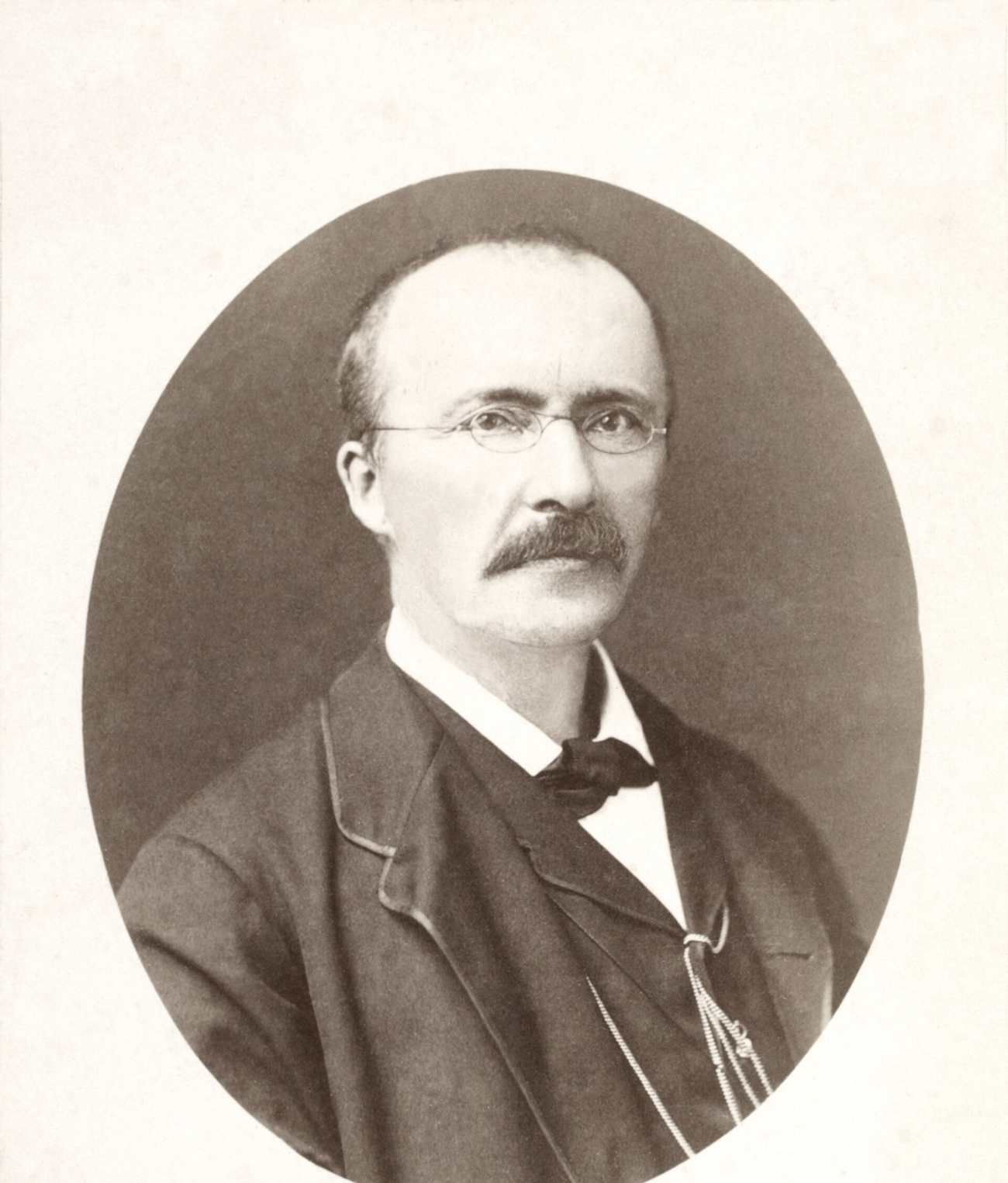
Heinrich Schliemann was a wealthy German businessman who turned late in life to archaeology, driven by a stubborn belief that Homer’s poems held real history rather than pure invention. Fresh from his celebrated digs at Troy, he brought that same conviction to the citadel of Mycenae in the later nineteenth century. Where scholars saw only legend, Schliemann expected to find kings, gold and the physical remains of a heroic age. His work here was rough by the careful standards that came after, yet it changed the way the world understood Greek prehistory. Trace his footsteps across the citadel and its graves with My Greece Tours.
This is the story of how one determined outsider read a poet as a map and struck gold beneath a Bronze Age fortress. Schliemann opened the shaft graves of Grave Circle A inside the walls and lifted out masks, jewellery, weapons and vessels buried with early rulers. The sections below cover the man himself, his methods, the golden mask he tied to Agamemnon, the treasures he raised, and the lasting mark he left on the study of the Aegean past. For the wider setting, our Mycenae travel guide places his discoveries within the whole ruined city.
Who was Heinrich Schliemann and why did he dig at Mycenae?
Heinrich Schliemann was a wealthy German businessman turned archaeologist who dug at Mycenae in the later nineteenth century. He believed Homer’s poems held real history and hoped the citadel would yield the tombs of its legendary kings.
Schliemann made a fortune in trade before archaeology captured him, and that wealth let him chase a lifelong obsession with the world of Homer. He read the Iliad and the Odyssey not as poetry alone but as memory dressed in verse, convinced that a real war and real rulers lay behind the familiar stories. This faith carried him first to the mound of Troy, where his controversial digs won him fame and fierce critics in equal measure. Mycenae drew him next because Homer named it as the seat of Agamemnon, the king who led the Greek host against Troy.
The ruined citadel in the Argolid, with its massive walls and famous gateway, matched the poet’s picture of a place rich in gold, and Schliemann arrived certain that its earth held proof.
The scholarly world of his day largely treated the heroic age as fable, a shimmering backdrop with no solid ground beneath it. Schliemann rejected that comfortable consensus outright and staked his reputation and his money on the opposite view. He was self-taught, driven and often careless with the truth of his own accounts, yet his instinct for where to dig proved uncanny. At Mycenae he ignored the doubters and drove his trenches inside the walls rather than outside them, trusting a line in an ancient writer over the caution of the experts. That gamble sits at the heart of his enduring legend and defines the risk-taking spirit of his whole career.
The nearby Lion Gate still frames the entrance he passed through each day as he set his workers to the task that would make his name.
How did Schliemann excavate the shaft graves at Mycenae?
Schliemann drove his trenches inside the citadel rather than beyond it, opening the shaft graves of Grave Circle A near the main gate. His methods were rough, but they exposed deep stone-lined pits holding the burials of early rulers.
Guided by an ancient description of the tombs standing within the walls, Schliemann chose to dig inside the fortified citadel, a decision that flew against the expectations of his critics. His workers cleared the earth just beyond the great gateway and came down onto a ring of upright slabs enclosing a circle of ground. Below that circle lay the deep shaft graves, stone-lined pits sunk into the rock and sealed long ago beneath the surface. Each grave held one or more bodies laid out with astonishing wealth, undisturbed since the Bronze Age.
The scale of the find stunned onlookers and turned a speculative dig into one of the great archaeological events of its century, all the more remarkable for having followed a hunch drawn straight from an old text.
The methods themselves were crude by the exacting standards archaeology later adopted, and much valuable evidence about layers and positions went unrecorded in the rush to reach the gold. Schliemann worked fast, watched over his workers closely and reported his progress in breathless letters and dispatches. Modern scholars wince at the losses, yet the sheer richness of what came out of the ground silenced most complaints at the time. The burial ground he cleared is known today as Grave Circle A, and it remains one of the most visited spots inside the walls.
Standing beside its ring of upright slabs, visitors today look down into the very pits where a determined, self-taught treasure hunter proved that the old myths rested on solid Bronze Age foundations.
What is the golden mask Schliemann linked to Agamemnon?
The most famous find is a thin golden funerary mask beaten into the face of a bearded man. Lifting it from a shaft grave, Schliemann is said to have believed he had gazed on the face of Agamemnon himself.
Among the gold raised from the shaft graves, one object above all seized the imagination of Schliemann and the world beyond. It was a funerary mask of beaten gold, shaped to the features of a bearded man and laid over the face of a dead ruler at burial. The workmanship, calm and dignified, gave the long-dead king a strangely living presence when the earth fell away. Schliemann, steeped in Homer and hungry for a direct link to the epics, is said to have believed he had looked upon the true face of Agamemnon, the great king of Mycenae.
The exact words later attached to him remain debated, yet the story fixed itself to the object and never let go, and the name endures despite the doubts.
The mask is far older than any war that a historical Agamemnon might have fought, so the romantic label belongs to legend rather than proven fact. Its true owner was an early ruler of the citadel, buried generations before the events the poems describe. That gap between myth and date does nothing to dim the object’s power, and the golden face remains among the most recognised images to survive from the ancient Aegean. Travellers who want to set the mask against the broader story can follow the history of Mycenae from its rise to its fall.
The mask stands as the emblem of Schliemann’s whole quest, a fragile sheet of gold that seemed, for one electric moment, to press a mythic hero back into human form.
What treasures did Schliemann uncover in the shaft graves?
Beyond the famous mask, the graves yielded a stunning hoard of gold masks, jewellery, weapons and vessels buried with early rulers. Bronze daggers, gold cups and ornaments filled the pits, proving the wealth of Bronze Age Mycenae.
The shaft graves gave up a hoard that dazzled everyone who saw it, a concentration of gold rarely matched anywhere in the ancient Aegean world. More than one funerary mask came from the pits, along with diadems, rings and delicate ornaments that had adorned the dead at burial. Weapons lay beside them, bronze daggers and swords, the finest inlaid with scenes in gold and silver that spoke of skilled craft and a warrior culture. Cups and vessels of gold rounded out the collection, hammered and decorated with a confidence that reshaped scholarly ideas about the Bronze Age.
This was no crude prehistoric outpost but the seat of rulers who commanded genuine wealth, artistry and power, exactly the world Homer had described in his songs of kings and gold-rich halls.
The abundance of the finds settled the central question that had drawn Schliemann to the citadel in the first place. A rich and powerful civilization had indeed flourished here in the age before written Greek history, and its rulers had gone to their graves clothed in gold. Visitors can study the range of objects through the treasures unearthed at Mycenae, from the smallest bead to the grandest mask. Together the finds transformed a legendary name into a documented culture with weapons, ornaments and burial customs that could be examined, compared and dated with real precision.
What Schliemann pulled from the ground did more than fill a run of museum cases; it handed scholars the raw material for an entirely new chapter in the human past.
What lasting mark did Schliemann leave on the study of Mycenae?
Schliemann brought Mycenae to world attention and helped found the study of Aegean prehistory. His finds proved a rich Bronze Age civilization stood behind the Greek myths and now fill museums in Athens and at the site.
Schliemann’s dig did far more than empty a set of graves; it opened a whole field of study almost overnight. In the years before his trenches cut into the citadel, the deep Greek past was a realm of poets and doubtful scholars, with little hard evidence to anchor it. Afterward, the world had gold masks, weapons and burial circles to examine, physical proof that a sophisticated culture had risen and fallen long before classical Greece. His work turned Mycenae into a name known far beyond the study of history and drew a generation of archaeologists toward the Aegean Bronze Age.
The whole discipline that studies these early palace cultures traces part of its origin to the dust and gold of the shaft graves he uncovered inside the walls.
The objects themselves live on in careful display rather than in the ground where they slept for so long. The finest finds are shown in Athens, while others remain close to where they were found, letting travellers connect the treasure to the place. Those visiting the site can pair the ruins with the Mycenae archaeological museum, and a short walk beyond the citadel leads to the great domed tomb known as the Treasury of Atreus. Schliemann’s own reputation remains mixed to this day, admired for his bold vision and questioned for his rough methods, yet nobody disputes the size of the door he pushed open.
He gave the ancient myths a foundation of stone and gold that scholars across the world have been building on ever since.
Frequently Asked Questions
Was Schliemann right that he had found the tomb of Agamemnon?
Schliemann believed the golden mask and the shaft graves belonged to Agamemnon and his court, yet the dates tell a different story. The burials in Grave Circle A are far older than any period that could hold a historical Trojan war, so the king who wore the famous mask lived generations before the events the poems describe. Schliemann read Homer as literal history and let that reading shape his conclusions, naming the find for the hero he most wanted to touch. The mask is said to have prompted his claim about gazing on the face of Agamemnon, and the label stuck despite the mismatch in dates. His deeper instinct proved sound even where the detail failed.
A rich Bronze Age civilization truly had ruled from this citadel, its dead buried in gold exactly as the epics suggested. The specific identification belongs to romance, but the world he uncovered was as grand as the poems promised, and that larger vindication secures his place in the history of archaeology.
Why are Schliemann’s methods criticised today?
Schliemann worked in the early days of the field, before careful recording of layers and find positions became standard practice, and his haste cost a great deal of evidence. He drove trenches quickly toward the objects he wanted, and the exact context of the finds went largely unrecorded in the excitement of reaching the gold. He was also loose with his own accounts, dramatising discoveries and shaping the record to fit the story he wished to tell, which leaves later scholars unsure how far to trust his reports. The controversy that trailed him from Troy followed him to the citadel as well. Set against modern archaeology, with its patient stratigraphy and careful documentation, his approach looks destructive.
The judgement is fair, yet it needs balance. He worked without the tools later generations inherited, and his eye for where to dig was extraordinary. His flaws are real and his losses genuine, but the discipline that judges him so sternly grew from the very excavations that show those flaws most plainly.
Can you still see what Schliemann discovered at Mycenae?
Visitors to the citadel can walk straight to the heart of Schliemann’s discovery, since the burial ground he cleared lies just inside the main gate and stays open to the public. The ring of upright slabs around Grave Circle A survives, and you can look down into the shaft graves where the golden masks and treasures were found. The great domed tomb outside the walls, long linked by tradition to the ruling house, adds another stop for anyone tracing the wealth of the Bronze Age city. The objects themselves have moved to safer keeping, with the finest gold shown in Athens and further material displayed near the site.
Pairing the ruins with the museum lets travellers connect each treasure to the pit it came from, turning a set of glass cases back into a living excavation. A visit rewards a little reading beforehand, since knowing what Schliemann did here, and why he was so sure of himself, deepens every step across the ancient stones.