
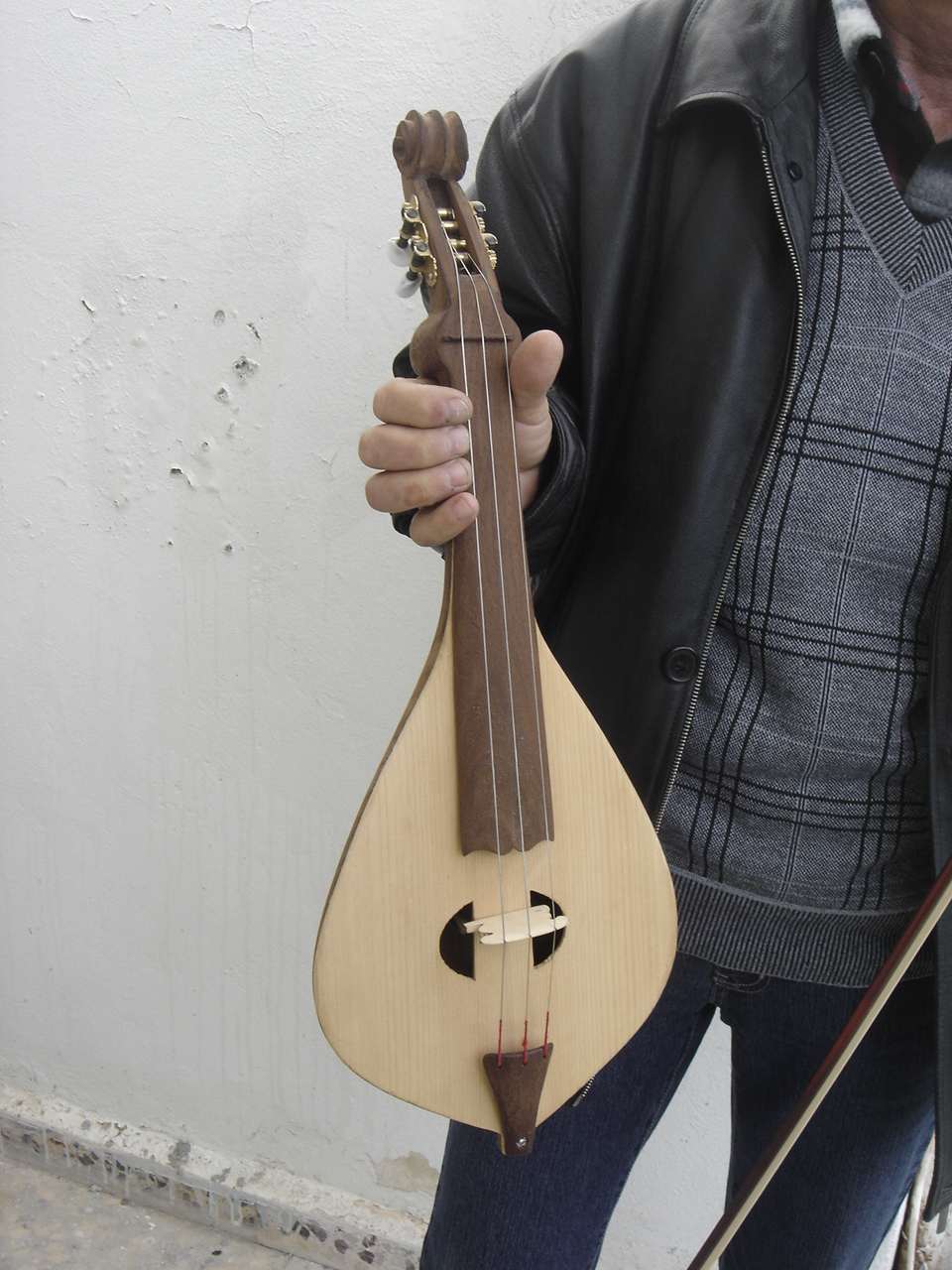
Music runs through the heart of Cretan life like a pulse that never stops. The lyra, a three-stringed pear-shaped fiddle bowed on the knee, leads the melody while the laouto, a long-necked lute, drives the rhythm beneath. Together these instruments fill weddings, festivals and taverna nights across the island with sound that belongs to the mountains and villages rather than concert halls. Sung verses called mantinades carry stories of love, loss and pride in rhyming couplets, while fast dances such as the pentozali and syrtos bring everyone to the floor. Experience this living tradition with My Greece Tours.
The mountain villages of Anogeia and the Amari and Mylopotamos areas remain famous cradles of this musical heritage, where legendary players are celebrated across the island. Visitors hear live lyra in tavernas, at village panigyria and at festivals through the summer months. Cretan music stays a living tradition passed down the generations rather than a show staged for tourists in the resorts. The sections below cover the instruments, the songs, the dances, where to hear authentic performances, and how this tradition continues today. Our Crete travel guide offers further cultural insights.
What instruments define Cretan music tradition?
The lyra and laouto form the core of Cretan music. The lyra is a three-stringed pear-shaped fiddle played upright on the knee, while the laouto is a long-necked lute providing rhythmic accompaniment and bass.
The lyra stands as the soul of Cretan music, its three strings tuned to produce a bright, penetrating tone that carries across mountain valleys and crowded festival squares. Players hold the instrument upright on the knee, drawing the bow across the strings while using fingernails to stop the notes from the side rather than pressing from above. This distinctive technique creates the characteristic sound that defines the island’s musical identity. The pear-shaped body, traditionally carved from mulberry wood, resonates with a voice that can shift from joyful celebration to deep melancholy within a single phrase.
Master lyra players command respect throughout Crete, their names known in every village and their recordings played in homes and cars across the island. The village of Houdetsi, south of Heraklion, hosts a music workshop and summer festival.
The laouto provides the rhythmic foundation that allows the lyra to soar and improvise above. This long-necked lute, related to the oud found across the eastern Mediterranean, has four double courses of strings that the player strikes with a plectrum in driving, syncopated patterns. The laouto player must maintain steady rhythm while responding to the lyra’s melodic variations, creating a conversation between the two instruments that forms the backbone of every performance. The combination appears at every significant moment in Cretan life, from baptisms to weddings to memorial services. Exploring things to do in Crete inevitably leads to encountering this instrumental partnership in authentic settings across the island.
What are mantinades in Crete’s musical culture?
Mantinades are rhyming couplets sung to lyra accompaniment, improvised verses expressing love, loss, pride and daily life. These fifteen-syllable lines follow strict meter and rhyme, carrying the poetic soul of Cretan expression through generations.
The mantinade represents the verbal art that complements the instrumental tradition, a poetic form that every Cretan learns from childhood. Each couplet consists of two fifteen-syllable lines with a rhyme at the end, following rhythmic patterns that fit perfectly with the lyra’s melodic phrases. Singers improvise these verses at celebrations, responding to the moment or engaging in friendly competitions where one person’s verse prompts another’s witty reply. The subjects range from declarations of love to political commentary, from descriptions of mountain landscapes to laments for the dead. The best mantinades become part of the collective memory, repeated and adapted across generations while new ones emerge constantly to address contemporary life and emotions.
The mountain village of Anogeia particularly celebrates the art of the mantinade, where skilled improvisers can craft verses on any topic with seemingly effortless creativity. The form demands both linguistic skill and emotional authenticity, as listeners immediately recognize forced rhymes or shallow sentiments. Mantinades appear not only in musical performances but also in everyday conversation, on social media, and even painted on walls and vehicles. The tradition connects modern Cretans to centuries of oral poetry, maintaining a living link to ancestors who expressed their deepest feelings through these carefully crafted couplets. The verses often accompany meals featuring Cretan food, creating complete cultural experiences.
Which dances accompany Cretan music across Crete?
The pentozali and syrtos lead Cretan dance traditions. The pentozali moves fast with leaping steps, while the syrtos follows a slower, dignified pattern. Both bring communities together in circles that welcome dancers of all ages and abilities.
The pentozali embodies the spirited character of Cretan culture, its rapid tempo and energetic steps demanding stamina and precision from dancers. The name refers to the five basic steps that repeat throughout the dance, though skilled performers add variations and improvisations that showcase individual flair. Men traditionally lead the line, executing high leaps and athletic movements while the music accelerates, testing endurance and coordination. The dance appears at weddings, festivals and taverna celebrations, often continuing for extended periods as the lyra player pushes the tempo higher. Dancers hold hands or grasp shoulders, forming circles or lines that snake through available space, pulling in bystanders until everyone joins the collective movement.
The syrtos provides contrast with its slower, more stately progression, allowing older participants and beginners to join without the athletic demands of the pentozali. The steps follow a dignified pattern that moves the circle steadily counterclockwise, creating a meditative quality even amid celebration. The dance serves social functions beyond entertainment, reinforcing community bonds and allowing courtship under acceptable public conditions. Visitors discover these dances at village panigyria throughout the summer months, open-air festivals where the entire community gathers around musicians and dancers. The Crete nightlife scene in traditional tavernas regularly features live music and spontaneous dancing that welcomes respectful participation from guests.
Where can visitors hear authentic Cretan music in Crete today?
Mountain villages like Anogeia and areas such as Amari and Mylopotamos remain music strongholds. Tavernas across the island host live performances, while summer panigyria and festivals offer the most authentic experiences beyond tourist resorts.
The mountain villages maintain the strongest connection to musical tradition, where lyra playing passes from grandparents to grandchildren in unbroken chains of transmission. Anogeia stands particularly renowned for producing legendary musicians, its high-altitude isolation having preserved older styles and repertoires that disappeared elsewhere. The Amari valley and Mylopotamos region similarly nurture musical excellence, their tavernas and coffee houses serving as informal conservatories where young players learn by watching and gradually joining sessions. These areas celebrate their musical heritage openly, with performances happening spontaneously rather than on scheduled tourist timetables. Visitors willing to venture beyond coastal resorts discover music in its natural habitat, integrated into daily life rather than presented as cultural spectacle.
Summer panigyria, village festivals honoring patron saints, provide the richest opportunities to experience Cretan music in full community context. These celebrations bring together musicians, dancers, and entire villages in outdoor settings that continue from evening until dawn. The city of Rethymno hosts festivals that balance accessibility for visitors with authentic programming, while countless smaller villages offer more intimate experiences. Traditional tavernas in both mountain and lowland areas regularly feature live music, particularly on weekend evenings when locals gather for extended meals and socializing. The hidden gems in Crete often include small venues where respected musicians play for appreciation rather than tourist income, creating memorable encounters with living tradition.
How does Cretan music continue as living tradition?
Families pass musical skills across generations through direct teaching and participation rather than formal schools. Young players learn at celebrations and tavernas, joining sessions as their abilities develop, keeping the tradition alive and evolving naturally.
The transmission of Cretan music happens through immersion rather than instruction manuals or academic programs. Children grow up hearing lyra and laouto at family gatherings, weddings, and festivals, absorbing rhythms and melodies before they consciously study them. Aspiring musicians receive instruments from relatives and begin practicing under the guidance of older players who demonstrate techniques and repertoire through direct example. The learning process emphasizes listening and imitation, with young players gradually joining informal sessions at coffee houses and tavernas where mistakes are tolerated as part of development. This apprenticeship model ensures that musical knowledge includes not just technical skills but also the social contexts, etiquette, and emotional understanding that make performances meaningful within Cretan culture.
Contemporary Cretan musicians balance respect for tradition with creative evolution, incorporating new influences while maintaining the core identity that makes the music distinctively Cretan. Recording technology and social media now spread performances beyond village boundaries, allowing musicians from different regions to hear and influence each other more readily than in previous generations. Music workshops and festivals create additional learning opportunities, though the fundamental transmission still happens through family and community participation. The tradition remains vibrant because it serves real social functions rather than existing as preserved heritage, continuing to provide the soundtrack for celebrations, expressions of identity, and emotional release.
Young Cretans take pride in their musical heritage, ensuring its continuation into future generations with both reverence and innovation.
Frequently Asked Questions
Can tourists learn to play the Cretan lyra during a visit?
Learning the lyra requires extended commitment beyond typical vacation timeframes, as the instrument demands specialized technique including the distinctive method of stopping strings with fingernails from the side rather than pressing from above. The bowing patterns and ornamentation that characterize Cretan style take months or years to develop through consistent practice. Visitors genuinely interested in learning should seek out music workshops occasionally offered in mountain villages or cultural centers, where instructors provide introductions to the instrument and its role in Cretan culture. These sessions offer valuable cultural insight even without producing performance ability. Serious students sometimes arrange extended stays in musical villages like Anogeia, where they can study with master players through informal apprenticeship arrangements.
Bringing a lyra home requires careful transport planning, as the instruments are delicate and sensitive to climate changes. The laouto presents a somewhat more accessible option for beginners, as its playing technique relates more closely to familiar stringed instruments like guitars, though mastering the rhythmic patterns still demands dedicated practice and cultural understanding.
What is the best time of year to experience Cretan music festivals?
Summer months from June through September offer the richest opportunities for experiencing Cretan music at village panigyria and outdoor festivals. These celebrations honor patron saints on specific calendar dates, with each village hosting its festival on the assigned day, creating a continuous schedule of events across the island throughout the warm months. The largest and most famous festivals occur in mid-August, coinciding with the Assumption holiday when Cretans return from Athens and abroad to their ancestral villages. Mountain areas become particularly active during summer, as mild evening temperatures make outdoor celebrations comfortable and roads remain passable without winter weather concerns. Spring and autumn also feature musical events, though with less frequency and often in indoor venues.
Winter sees music continuing in tavernas and coffee houses, offering more intimate settings where visitors can observe local musicians playing for their own communities rather than festival crowds. Checking local event calendars or asking at accommodations reveals specific festival dates, though the most authentic experiences often happen at smaller village celebrations discovered through exploration and conversation with residents.
Are there recordings available of traditional Cretan music to purchase?
Music shops in Cretan cities stock extensive collections of traditional recordings, from historical archives of legendary players to contemporary artists maintaining the tradition. Heraklion, Chania and Rethymno all have specialized stores where knowledgeable staff can recommend recordings based on visitor interests, whether seeking classic lyra performances, vocal mantinades, or modern interpretations. The recordings range from field recordings made in villages during the mid-twentieth century to professional studio productions featuring current master musicians. Labels dedicated to Cretan music have documented the island’s musical heritage extensively, creating catalogs that preserve regional styles and individual artist legacies.
Digital platforms now make much of this music accessible internationally, though physical purchases in Crete often include better liner notes explaining cultural context and musician backgrounds. Tavernas and festival vendors sometimes sell recordings by local performers, offering opportunities to take home music heard live during travels. The quality and authenticity vary considerably, making purchases from reputable music shops or directly from musicians the most reliable approach for obtaining genuine traditional recordings rather than tourist-oriented compilations.