
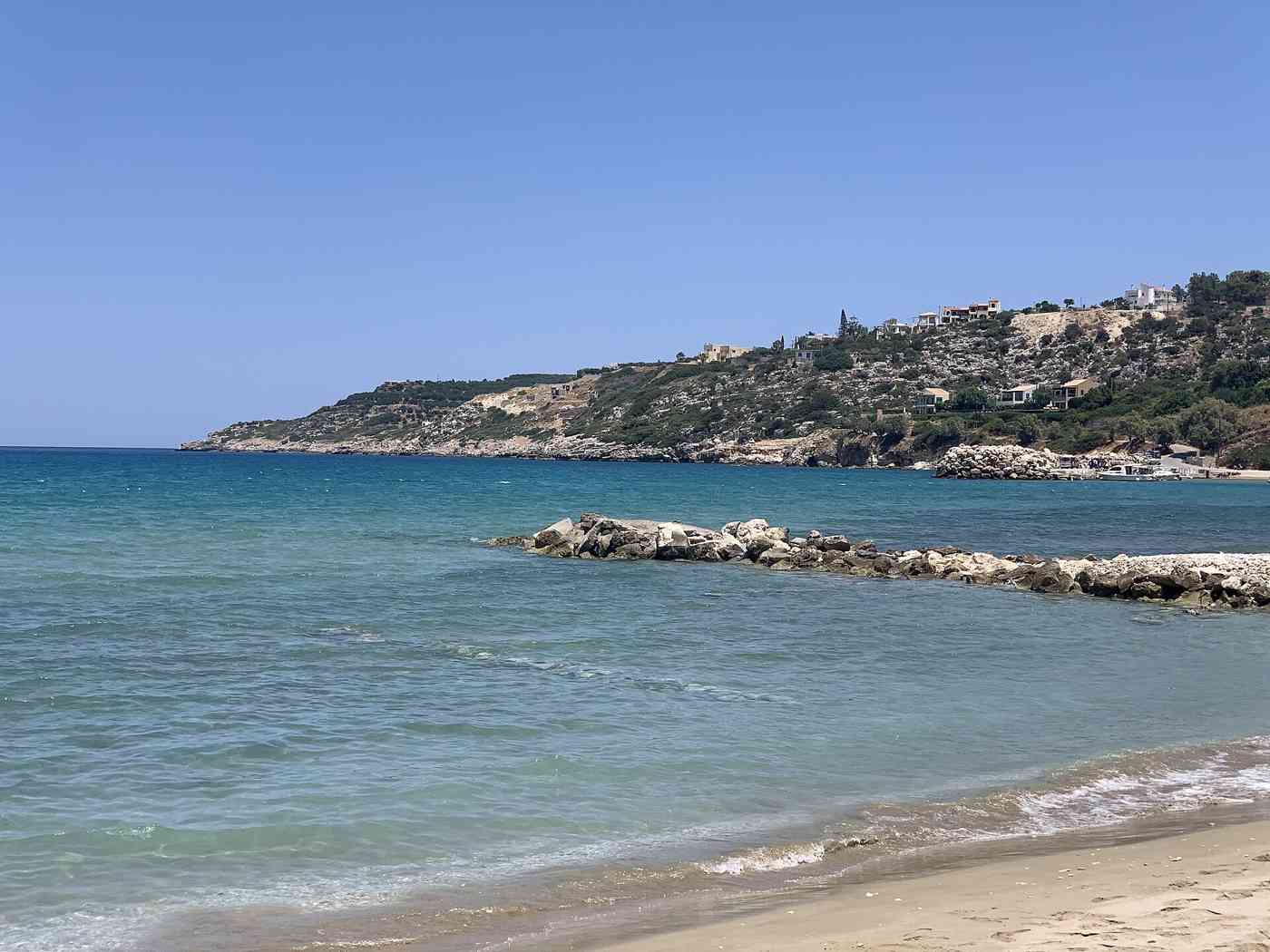
Apokoronas spreads across the green foothills east of Chania, a fertile pocket of north-west Crete where stone villages sit among olive groves and cypress trees. Vamos, Gavalochori, Almyrida and Kalyves hold restored Venetian houses, shaded squares and traditional tavernas that give travellers a settled, lived-in feel far removed from resort strips. Sandy beaches at Almyrida and Kalyves suit families, while inland lanes wind toward Lake Kournas and the Dictamnos gorge. The region offers a central base within easy reach of Chania, Rethymno, quiet coastline and mountain trails, making it ideal for longer stays and rural exploration with My Greece Tours.
The area sits in the Chania regional unit between the sea and the White Mountains, combining village life with access to the island’s main sights. Rural villas and restored houses have made Apokoronas popular for week-long stays, giving visitors a slower pace without isolation. The sections below cover the villages, beaches, inland attractions and practical details that define this green corner of the island. For broader context and island-wide planning, consult the main Crete travel guide before booking accommodation.
Which villages define Apokoronas in Crete?
Vamos, Gavalochori, Kalyves and Almyrida form the core settlements. Vamos holds restored stone houses and a crafts cooperative. Gavalochori keeps folklore museums and Venetian architecture. Kalyves and Almyrida pair village squares with beachfront tavernas and easy coastal access.
Vamos sits inland on a hillside, its narrow lanes lined with renovated Venetian mansions now serving as guesthouses and workshops. The village cooperative runs weaving and pottery studios, and tavernas around the central square serve dishes prepared from estate olive oil and mountain greens. Stone archways frame doorways, and bougainvillea spills over courtyard walls. Gavalochori lies a short drive north, its streets holding three small folklore museums that display embroidery, agricultural tools and photographs from the early twentieth century. Venetian doorways bear carved lintels, and the village square fills with locals each evening.
Both settlements reward slow exploration on foot, their quiet lanes offering glimpses of rural Cretan life that has adapted to tourism without losing its daily rhythms or architectural character. The old district capital of Vamos leads its agrotourism revival.
Kalyves stretches along the coast, its waterfront promenade linking tavernas, cafés and a long sandy beach. The village retains a working harbour and a mix of old stone houses and newer apartments, giving it a lived-in feel that appeals to families seeking where to stay in Crete for a week or more. Almyrida lies a few kilometres west, a smaller settlement curving around a shallow bay with two sandy beaches separated by a low headland. Sunbeds line the shore, and tavernas serve grilled fish within sight of the water. Both villages offer calm swimming, gentle slopes into the sea and a relaxed pace that suits young children.
The proximity to Chania and the airport makes them practical bases for exploring the wider region without committing to the bustle of the city itself.
What beaches and coastal access does Apokoronas offer?
Almyrida and Kalyves hold the main beaches, both sandy with shallow water for families. Almyrida’s twin bays give calm swimming and waterfront tavernas. Kalyves beach stretches longer behind a promenade, with safe, accessible swimming beside village amenities.
Almyrida’s two beaches curve around a small headland, creating sheltered bays with fine sand and gradual depth. The western bay holds most of the sunbeds and tavernas, while the eastern stretch remains quieter. Water stays clear, and the gentle slope makes it easy for children to paddle and swim without strong currents or sudden drops. Tavernas line the waterfront, serving grilled octopus, Greek salads and cold beer within a few steps of the shore. The village itself sits just behind the beach, so accommodation, minimarkets and car hire offices lie within walking distance.
Almyrida suits travellers seeking a low-key coastal base with village character, and its position makes it a practical starting point for day trips along the north coast or into the hills. The seaside resort of Almyrida sits on the district’s sheltered coast.
Kalyves beach extends for more than a kilometre, a broad strip of sand backed by a paved promenade that links cafés, tavernas and small hotels. The water remains shallow for several metres, and the beach attracts local families as well as visitors. Sunbeds and umbrellas cover much of the sand, but free stretches remain at either end. The village centre sits just inland, its streets holding bakeries, pharmacies and supermarkets that give the area a functional, year-round feel. Kalyves works well for Crete with kids, combining safe swimming with easy access to services.
The beach lacks dramatic cliffs or turquoise coves, but it delivers reliable sunshine, calm conditions and a relaxed pace that suits longer stays focused on simple pleasures rather than sightseeing intensity.
What inland attractions lie within reach of Apokoronas?
Lake Kournas, Crete’s only freshwater lake, sits a short drive south, with pedalo hire. The Dictamnos gorge gives a short walk through greenery. Olive groves and cypress-lined lanes fill the land, rewarding slow drives and roadside taverna stops.
Lake Kournas occupies a basin ringed by low hills, its surface reflecting the sky and the surrounding vegetation. Pedalos and kayaks can be hired from the shore, and a handful of tavernas serve drinks and snacks under plane trees. The lake attracts turtles, eels and waterbirds, and a path circles part of the shoreline for walkers. The drive from Apokoronas villages takes fifteen to twenty minutes, and the lake makes a pleasant stop on the way to Rethymno or the south coast. The Dictamnos gorge lies closer, a short walking trail that follows a stream through greenery and rock walls. The route takes less than an hour and requires no special equipment, making it accessible for families.
Both sites offer a change of pace from beach days, and their proximity means they fit easily into a morning or afternoon without long drives or complex planning. The village of Kalyves anchors the coast where two rivers meet the sea.
The inland lanes between villages wind through olive groves and past stone farmhouses, their verges lined with wildflowers in spring and cypress trees standing sentinel on hillsides. Roadside tavernas appear in unexpected places, their terraces shaded by vines and their menus built around whatever the kitchen has prepared that day. Stopping for a coffee or a plate of dakos and mizithra cheese becomes part of the rhythm of exploring the area. The landscape lacks dramatic gorges or mountain peaks, but its gentle beauty and agricultural character provide a counterpoint to the coast.
Drives to Lake Kournas or the village of Georgioupoli reveal this quieter side of the region, where the pace slows and the focus shifts to small details rather than headline attractions.
How does Apokoronas fit into a broader Crete itinerary?
Apokoronas sits centrally between Chania and Rethymno, both thirty minutes away by car. The airport lies close, and mountain villages, gorges and south-coast beaches fall within day-trip range. The region bases you in western Crete without daily hotel changes.
The location between two major towns gives Apokoronas practical advantages for travellers who want to explore without constant packing. Chania’s Venetian harbour, covered market and museums lie half an hour west, while Rethymno’s old town and fortress sit the same distance east. The airport at Chania makes arrival straightforward, and car hire desks operate in Kalyves and Almyrida as well as at the terminal. Mountain villages such as Argyroupoli and Askyfou lie within an hour’s drive, and the Samaria gorge trailhead at Omalos takes roughly ninety minutes. South-coast beaches at Frangokastello or Plakias require similar journey times, making them feasible for day trips.
The central position means travellers can sample the variety of things to do in Crete without spending hours on the road each day or committing to a single corner of the island.
Staying in Apokoronas for a week allows a rhythm of beach days, village walks and excursions without the pressure of a packed itinerary. The area suits travellers who prefer a settled base to constant movement, and the availability of villas and apartments with kitchens supports self-catering and longer stays. The villages hold enough tavernas, bakeries and minimarkets to make daily life comfortable, and the beaches provide an easy default when no specific plan appeals. The region lacks major archaeological sites or dramatic natural landmarks within its own boundaries, so it works best for visitors who value a central location and a slower pace over headline attractions on the doorstep.
The combination of green landscape, traditional architecture and coastal access creates a balanced environment that reflects the island’s character without overwhelming newcomers or demanding relentless sightseeing.
What practical details matter when visiting Apokoronas in Crete?
Car hire is essential for exploring beyond the village. Accommodation runs from restored stone houses to modern villas, often booked by the week. Tavernas serve traditional Cretan food. Spring and autumn bring milder weather and quieter lanes than summer.
Public transport links Kalyves and Almyrida to Chania, but buses run infrequently and reaching inland villages or beaches beyond the main settlements requires a car. Rental agencies operate in the larger villages and at Chania airport, and roads throughout the region remain in good condition with clear signage. Parking rarely presents problems outside peak summer weeks. Accommodation leans toward villas, studios and guesthouses rather than large hotels, and booking a week or more often secures better rates. Stone houses in Vamos and Gavalochori offer character and traditional architecture, while modern villas near Almyrida and Kalyves provide pools and sea views.
Minimarkets in each village stock bread, fruit, yogurt and basics, and bakeries open early for fresh tyropita and koulouri. Tavernas focus on Cretan staples such as lamb with stamnagathi, grilled fish, dakos and local cheeses, with menus changing according to season and availability rather than catering to international tastes.
Summer temperatures climb into the mid-thirties Celsius, and beaches fill with families during July and August. Spring arrives early, with wildflowers covering hillsides from March and temperatures comfortable for walking and cycling. Autumn extends the season into October, when the sea remains warm and the landscape takes on golden tones. Winter sees quieter villages and occasional rain, with some tavernas closing until Easter. The shoulder seasons suit travellers seeking photography, hiking or a slower pace without the intensity of peak summer. The region’s green character depends on winter rain, so the landscape looks lusher in spring than late summer.
Packing should include sun protection, comfortable shoes for cobbled lanes and village exploration, and a light jacket for evenings even in summer. The area rewards visitors who approach it without rigid schedules, allowing time for spontaneous stops, long lunches and the kind of unhurried exploration that reveals the rhythms of rural Cretan life.
Frequently Asked Questions
Is Apokoronas suitable for families with young children?
Apokoronas works well for families seeking a quieter alternative to resort areas. The beaches at Almyrida and Kalyves offer shallow water, gentle slopes and calm conditions that suit young swimmers, and the villages provide a safe, walkable environment with tavernas, playgrounds and minimarkets close at hand. Villas and apartments with kitchens make self-catering practical, and the central location allows day trips to attractions such as Lake Kournas or the aquarium near Chania without exhausting drives. The area lacks dedicated kids’ clubs or waterparks, so it suits families comfortable with a slower pace built around beach time, village walks and simple pleasures rather than organized entertainment.
The combination of safe swimming, traditional village life and easy access to wider Crete makes Apokoronas a practical base for a week-long family stay, particularly outside the peak summer crowds of July and August.
Can I visit Apokoronas without hiring a car?
Visiting Apokoronas without a car limits your options significantly. Buses connect Kalyves and Almyrida to Chania, but services run infrequently and reaching inland villages such as Vamos or Gavalochori requires taxis or organized tours. Exploring the wider region, including Lake Kournas, mountain villages or quieter beaches, becomes impractical without your own transport. Taxis operate from the main villages, but costs add up quickly for multiple trips. Staying in Kalyves or Almyrida and focusing on the immediate beach, village tavernas and walks along the coast remains feasible on foot, but you miss much of what makes the area appealing.
Car hire opens access to the full range of attractions, allows spontaneous stops at roadside tavernas and olive groves, and makes day trips to Chania, Rethymno and the mountains straightforward. The investment in a rental proves worthwhile for anyone planning more than a few days in the region and wanting to experience its character beyond a single village.
What makes Apokoronas different from other parts of Crete?
Apokoronas distinguishes itself through its green, fertile landscape and the concentration of traditional villages within a small area. The region lacks major archaeological sites or dramatic gorges, so it attracts travellers seeking village life, rural character and a central base rather than headline attractions. The combination of restored Venetian architecture, working olive groves, family beaches and proximity to both Chania and Rethymno creates a balanced environment that suits longer stays and self-catering accommodation. The area feels lived-in rather than touristic, with locals outnumbering visitors outside peak summer and daily life continuing around the tavernas and squares.
The landscape remains greener than the south coast or eastern plains, and the foothills of the White Mountains provide a scenic backdrop without demanding strenuous hiking. Apokoronas works for visitors who value a slower pace, appreciate traditional architecture and want a base that offers access to the island’s variety without the intensity of busier resorts or the isolation of remote mountain villages.