
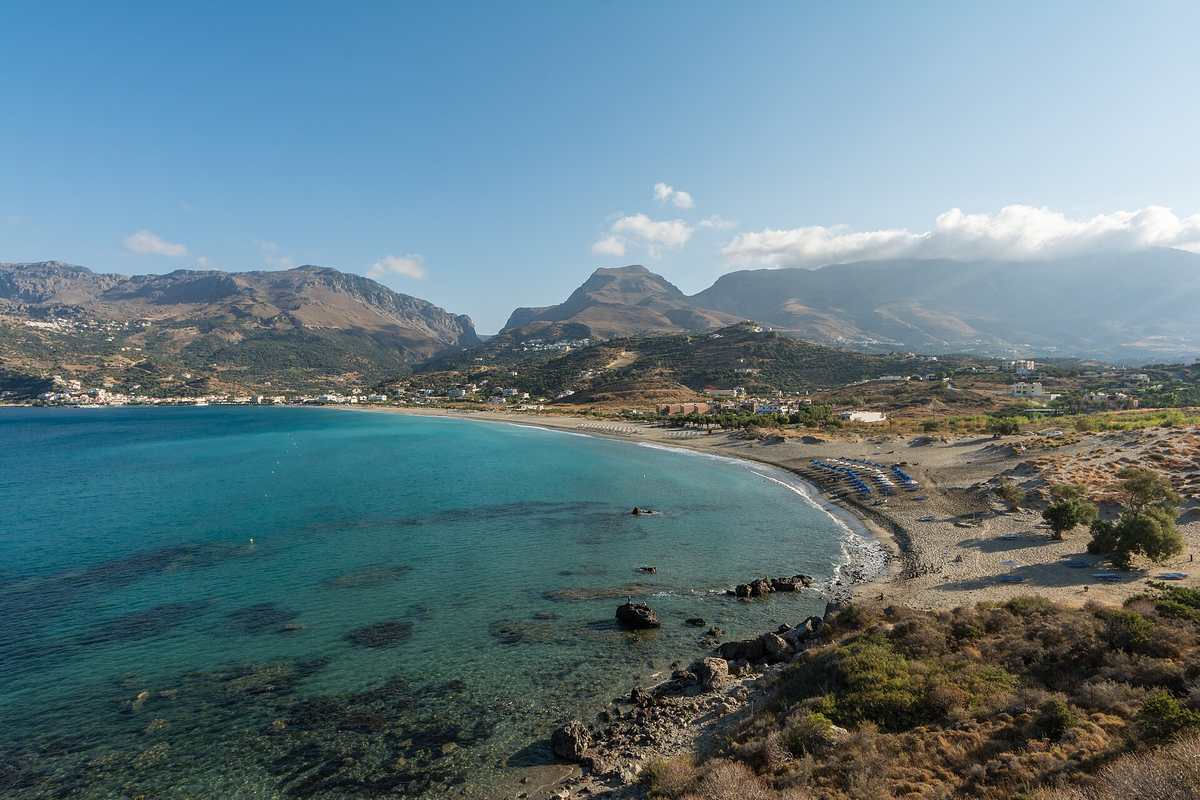
Plakias sits on the southern shore of Crete, a low-key resort village that has kept its independent spirit intact. The long sandy beach sweeps around a bay framed by mountains and the dramatic mouth of the Kotsifou gorge. Waterfront tavernas serve fresh fish and local wine, while the village attracts hikers, backpackers and travellers seeking a quieter alternative to the packed resorts of the north coast. Nearby beaches at Damnoni, Souda and Schinaria offer seclusion, and boat trips run east to the palm-fringed shores of Preveli. Plan your south coast escape with My Greece Tours.
The village retains an easy-going atmosphere that appeals to those who prefer smaller-scale tourism. Accommodation ranges from family-run studios to modest hotels, and the waterfront promenade invites evening strolls under the stars. The sections below cover the beach, nearby coves, excursions to Preveli, practical tips for your stay and the best seasons to visit. For broader island planning, consult our Crete travel guide to explore mountain villages, archaeological sites and coastal trails across the region.
What makes the beach at Plakias special in Crete?
The main beach stretches over a kilometre along the bay, with fine sand and shallow water ideal for families. Mountains rise behind, and the Kotsifou gorge opens to the west, creating dramatic scenery that sets Plakias apart from crowded northern resorts.
The beach curves gently from the eastern headland to the harbour breakwater, offering ample space even during peak summer weeks. Sunbeds and umbrellas line the central section, while the eastern and western ends remain quieter for those who bring their own towels. The seabed slopes gradually, making the water safe for children and less confident swimmers. Tamarisk trees provide patches of natural shade near the promenade, and the backdrop of rugged peaks adds a wild beauty that contrasts with the calm turquoise shallows. Snorkelling reveals rocky patches teeming with small fish, and the lack of strong currents keeps conditions gentle. Waterfront tavernas sit just steps from the sand, so you can enjoy lunch without leaving the beach.
The setting feels open and unspoiled, a quality that draws visitors back year after year and ranks Plakias among the more authentic Crete beaches on the southern coast.
Sunset transforms the bay into a palette of gold and rose as the sun dips behind the western cliffs. Evening swimmers enjoy the warm, still water, and the promenade fills with strollers heading to dinner. The beach remains public and uncommercialized, with no jet skis or loud beach bars to disturb the tranquil mood. Local fishermen moor their boats at the small harbour, and you can often buy fresh catch directly from them in the early morning. The combination of long sandy shore, mountain scenery and laid-back vibe makes Plakias a standout choice for travellers seeking relaxation without the trappings of mass tourism.
Families appreciate the safe swimming, while solo travellers and couples value the peaceful atmosphere and the ease of exploring nearby coves and gorges on foot or by car. The road north climbs through the dramatic Kotsifou gorge toward Sellia.
Which nearby beaches are worth visiting from Plakias?
Damnoni lies five kilometres east, a sheltered cove with fine sand. Souda is a closer pebbly stretch favoured by naturists, and Schinaria, further east, has turquoise shallows and dramatic rock formations, all a short drive away.
Damnoni attracts families and couples who want a smaller, more intimate setting than the main Plakias strand. The beach curves around a protected bay, and a handful of tavernas serve grilled fish and salads under vine-covered pergolas. Sunbeds are available, but the beach never feels overcrowded. The water remains shallow for many metres, ideal for young children, and snorkelling along the rocky edges reveals octopus, sea urchins and colourful wrasse. A short walk over the headland brings you to a second, quieter cove where you can often find solitude even in July and August. Souda beach lies just west of Plakias, accessible by a ten-minute walk along a dirt track.
The shore is mostly pebble, and the beach has a bohemian feel, popular with free campers and naturists who appreciate the lack of facilities and the sense of freedom it affords.
Schinaria sits roughly fifteen kilometres east, reached by a narrow road that winds through olive groves and past stone-walled fields. The beach is small but stunning, with white pebbles and water that shifts from pale jade to deep sapphire. Rock formations frame the cove, and the lack of development keeps the setting pristine. Arrive early to claim a sunbed, or bring a mat and settle on the smooth stones. A single taverna provides drinks and simple meals, and the snorkelling here ranks among the best on the south coast.
Exploring these coves adds variety to your stay and showcases the diversity of things to do in Crete beyond the main resort strips, rewarding those who venture off the beaten track with beauty and tranquillity.
How do you reach Preveli beach from Plakias in Crete?
Boat trips depart Plakias harbour daily in summer, taking thirty minutes to reach Preveli’s palm-lined river mouth. Alternatively, drive east via the coast road, park at the clifftop lot, then descend a steep footpath to the beach and its famous freshwater stream.
The boat excursion offers the easiest and most scenic route, departing mid-morning and returning in the afternoon. The journey hugs the coastline, passing sea caves and rocky headlands where cormorants perch on ledges. Skippers often pause for swimming stops in secluded bays, and the approach to Preveli reveals the lush palm grove that makes the beach iconic. The river flows year-round, creating a cool oasis where you can wade upstream beneath the shade of Phoenix theophrasti palms. The boat drops passengers on the sand, giving you two or three hours to explore, swim and relax before the return trip. Tickets are sold at the harbour kiosks, and the ride costs around ten to fifteen euros per person.
The sea can be choppy on windy days, so check conditions before booking if you are prone to seasickness.
Driving to Preveli takes roughly thirty minutes along a winding road that climbs over the headland and descends to the clifftop car park. The final approach involves a steep, stepped path that zigzags down to the beach, taking about fifteen minutes each way. The descent is manageable for most visitors, but the return climb in midday heat can be strenuous, so carry water and wear sturdy shoes. The reward is the chance to spend as long as you wish at Preveli beach, exploring the river, swimming in the clear sea and photographing the palms that rise from the narrow gorge.
Sunbeds and a small canteen operate in summer, and the beach remains one of Crete’s most photographed natural wonders, blending tropical greenery with Mediterranean light and colour.
What practical tips help when staying in Plakias?
Book rooms early for July and August, since the village is small and fills quickly. Rent a car to reach hidden beaches and mountain villages, shop in the minimarkets, and eat fresh seafood at the waterfront tavernas.
Plakias has no large supermarket, but three or four well-stocked minimarkets sell fresh bread, local cheese, fruit, wine and essentials. The village centre is compact, so everything is within a five-minute walk. ATMs are available, but carry cash for smaller tavernas and beach canteens that may not accept cards. Mobile coverage is reliable, and most hotels and studios offer Wi-Fi. The nearest petrol station sits on the main road a few kilometres inland, so fill your tank before heading into the mountains or along remote coastal tracks. Parking is free along the waterfront and in side streets, though spaces can be tight in peak season.
The village has a small medical centre for minor issues, and the regional hospital in Rethymno is an hour’s drive north for more serious needs.
Tavernas serve lunch from midday and dinner from early evening, with menus featuring grilled fish, lamb kleftiko, dakos salad and moussaka. Prices remain lower than in northern resorts, and portions are generous. The waterfront fills with diners at sunset, so arrive early to secure a table with a sea view. Hiking trails lead into the Kotsifou gorge and up to mountain hamlets where you can taste raki and buy honey from local producers. The relaxed pace and lack of nightlife make Plakias ideal for families, older couples and independent travellers who value authenticity over entertainment.
Understanding where to stay in Crete helps you choose between the lively north coast towns and quieter southern villages like Plakias, each offering distinct experiences and atmospheres.
When is the best time to visit Plakias in Crete?
May, June and September bring warm weather with fewer crowds and lower prices. July and August are the hottest and busiest, April and October suit hikers, and winter is quiet with most hotels closed.
Spring arrives early on the south coast, with wildflowers carpeting the hillsides and temperatures climbing into the low twenties by late April. The sea warms quickly, reaching comfortable swimming temperatures by mid-May. June delivers long, sunny days without the intense heat of midsummer, and the village remains relatively quiet until the school holidays begin. Tavernas open their terraces, boat trips to Preveli start running daily, and the hiking trails through the gorges are at their most beautiful, with streams still flowing and greenery at its peak. Autumn mirrors spring in climate and ambience, with September offering the warmest sea temperatures of the year and October providing crisp mornings and golden light that photographers prize.
Harvest season brings fresh grapes, figs and olives to the markets, and the pace slows as the summer rush fades. East along the coast, the quiet beaches of Rodakino stretch toward Frangokastello.
July and August see the village at its busiest, with European families filling the hotels and studios. Temperatures often exceed thirty degrees, and the beach becomes the focal point of daily life. Sunbeds fill early, and tavernas serve continuously from noon until late. The heat can be intense for hiking, so most walkers set out at dawn or wait until late afternoon. Winter transforms Plakias into a sleepy outpost, with only a handful of year-round residents and a few open cafés. Rain falls intermittently from November through March, and the mountains sometimes wear a dusting of snow.
Understanding the best time to visit Crete helps you align your trip with your priorities, whether you seek solitude, perfect beach weather or the vibrant energy of high summer on the southern shore.
Frequently Asked Questions
Is Plakias suitable for families with young children?
Plakias works well for families seeking a quieter alternative to the large north coast resorts. The main beach slopes gently into shallow water, allowing young children to paddle and play safely under supervision. Tamarisk trees provide natural shade, and the promenade is flat and stroller-friendly. Tavernas welcome families and offer simple dishes like pasta, chips and grilled chicken alongside traditional Greek fare. The village has no theme parks or organized entertainment, so families who prefer a relaxed, beach-focused holiday will enjoy the setting. Nearby Damnoni beach offers an even more sheltered cove, and the boat trip to Preveli adds an adventurous element that older children find exciting.
Minimarkets stock nappies, snacks and essentials, and most accommodation providers offer family rooms or studios with kitchenettes. The lack of traffic and the safe, pedestrian-friendly layout make Plakias a low-stress destination for parents.
Can you hike from Plakias into the Kotsifou gorge?
The mouth of the Kotsifou gorge opens just west of Plakias, and a trail follows the riverbed inland for those who enjoy scrambling over rocks and wading through shallow pools. The full gorge walk is challenging and requires good fitness, sturdy boots and plenty of water, as the route involves boulder-hopping and occasional climbs. Most casual walkers prefer the shorter loop that explores the lower section, offering dramatic cliff views and wildflowers in spring. The gorge is dry in summer, but flash floods can occur after heavy rain, so check weather forecasts and avoid entering if storms threaten.
Guided hiking tours operate from Plakias, providing local knowledge and safety support for those who want to explore deeper into the canyon. The landscape is wild and beautiful, with vultures circling overhead and the scent of thyme and sage rising from the sun-warmed rocks. Hikers should inform someone of their plans and carry a charged phone, as mobile signal can be patchy within the gorge.
How far is Plakias from Rethymno and the airport?
Plakias sits roughly forty kilometres south of Rethymno town, a drive that takes about fifty minutes along a winding mountain road. The route climbs through olive groves and traditional villages before descending to the coast, offering spectacular views over the Libyan Sea. Chania airport lies approximately one hundred and twenty kilometres west, a journey of around two hours by car, while Heraklion airport is slightly closer at one hundred kilometres to the east, also taking about two hours depending on traffic and road conditions. Public buses connect Plakias to Rethymno twice daily in summer, with reduced service in winter, but a rental car offers far greater freedom to explore the south coast and mountain hinterland.
Taxis from the airports are expensive, so most visitors arrange car hire at the terminal or book a private transfer through their accommodation. The drive from either airport is scenic, passing through gorges, hilltop monasteries and terraced vineyards that showcase the island’s rugged interior.