
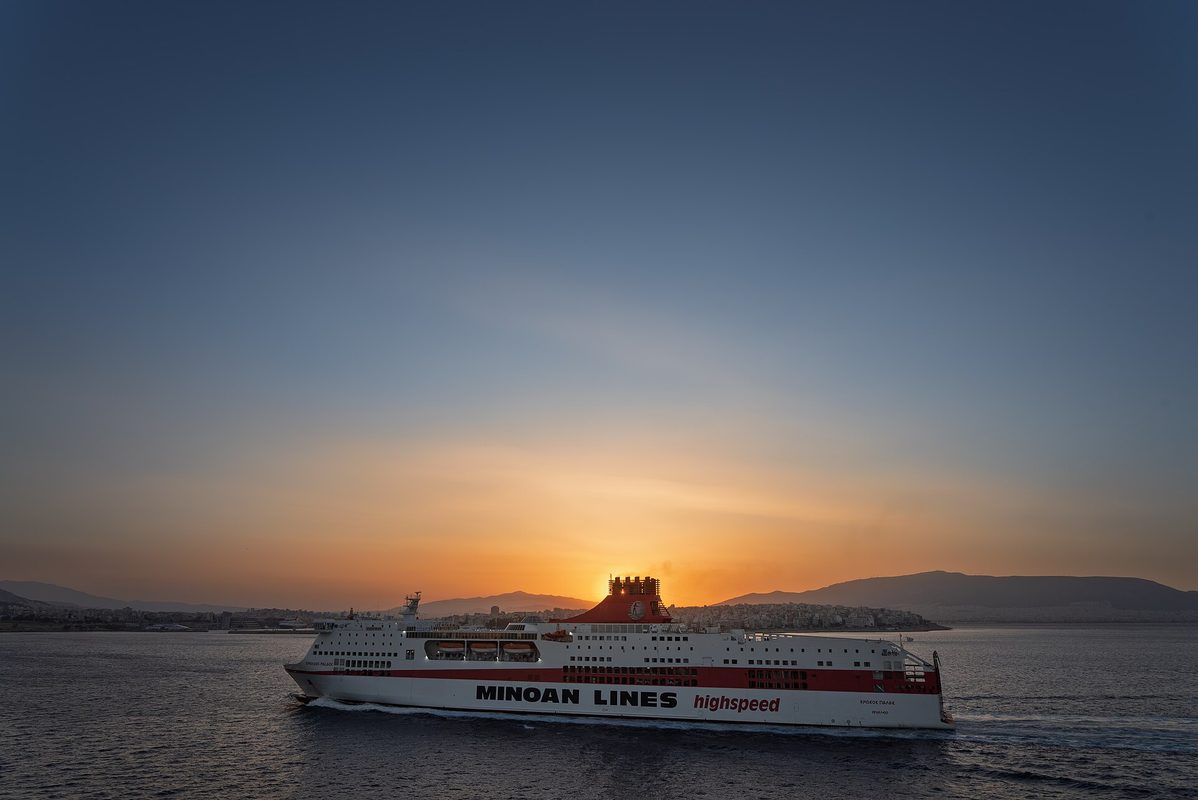
Crete sits at the southern edge of the Aegean. No bridge or road links it to the mainland, so every visitor arrives by air or by sea. Flights land at Heraklion or Chania in under an hour from Athens. Overnight ferries from the port of Piraeus turn the journey into a comfortable night crossing with a cabin. Each option suits a different plan, budget, and mood. The right choice often depends on where you want to stay and how much luggage or gear you carry. This guide lays out both routes clearly. You can weigh speed against experience and start your trip with My Greece Tours.
The two arrival methods reward different travellers. Understanding them early makes the rest of your planning far smoother. Our Crete travel guide gives the wider picture. This page focuses purely on the practical mechanics of reaching the island from Athens and beyond. The sections below cover which airports serve Crete, how the overnight ferries from Piraeus work, the seasonal routes that connect the island to the Cyclades and the Dodecanese, whether you should bring a car, and the timing that keeps summer travel calm rather than stressful.
Which airports serve Crete?
Crete has two main airports, Heraklion (Nikos Kazantzakis, code HER) and Chania (Daskalogiannis, code CHQ), plus a smaller airport at Sitia in the east that handles a limited domestic schedule for travellers heading to that corner.
Heraklion airport, coded HER, sits close to the island capital. It serves the central and eastern regions. That makes it the natural gateway for travellers heading toward Knossos, the Lasithi Plateau, or the beaches of the north coast. Chania airport, coded CHQ, lies on the Akrotiri peninsula in the west. It works best for anyone based around the old harbour, the Samaria Gorge, or the pink sands of the far southwest. Choosing the closer airport shortens the drive on arrival. It can save you an hour or more of winding coastal road at the end of a long travel day. Match the airport to your base rather than to the cheapest headline fare.
The whole trip then starts smoother, with less time on the road and more on the beach.
Domestic flights run year-round from Athens and Thessaloniki into both HER and CHQ. You can reach Crete quickly even outside the tourist season. Summer layers direct international routes from across Europe on top. That lets travellers skip the mainland entirely and land straight on the island. The Sitia airport in the east handles a thinner domestic timetable. It suits people exploring Zakros or the palm beach at Vai, though most trips still route through the two larger hubs. To plan your base against the right airport before you book, read our notes on where to stay in Crete. Let the region you love decide the runway you land on, and the rest of the itinerary follows easily.
A short flight into the correct airport saves the fatigue of a needless cross-island transfer on day one.
How do ferries from Piraeus to Crete work?
Overnight car ferries sail from Piraeus, the port of Athens, to Heraklion and to Souda, the port of Chania. The crossing runs roughly nine to ten hours, usually through the night, with cabins available to book.
The Piraeus route is the backbone of sea travel to Crete. It links the port of Athens with both Heraklion and Souda, the harbour that serves Chania. Ferries typically depart in the evening and arrive the next morning. The nine-to-ten-hour crossing becomes a night’s sleep rather than a full day lost in transit. Cabins range from simple inside berths to outer rooms with a window. Booking one transforms the trip from a deck-chair endurance test into genuine rest. You wake already on the island, ready to drive off and begin exploring within minutes of docking. This overnight structure is the quiet genius of the sea route.
It folds your transport and a night’s accommodation into a single reservation and a single fare, saving both money and the effort of a separate hotel booking for the first night.
This overnight rhythm makes ferries a strong choice for travellers who value a slower, more scenic entry to Crete. They arrive rested rather than rushed. The ships carry vehicles alongside passengers, so the same sailing that brings you also brings your car onto the island. Our Athens to Crete page walks through the full context on this corridor. It shows how the leg fits a wider Greek itinerary and pairs with time in the capital, helping you slot it into a bigger plan. To make the most of the port city where these ferries dock, our guide to Heraklion points you toward its markets, its Venetian walls, and its lively waterfront tavernas.
Stepping off the ramp into a walkable port city gives the sea route a satisfying arrival that a distant airport rarely matches.
Can you reach Crete from other Greek islands?
Yes. Seasonal ferries link Crete to Cycladic islands such as Santorini, Milos, Paros and Mykonos, while eastern routes reach Rhodes and the Dodecanese, making island-hopping to and from Crete a genuinely practical plan in summer.
Crete does not sit isolated at the bottom of the map. In the warmer months it plugs directly into the island network spread above it. Seasonal ferries connect the island to Cycladic favourites including Santorini, Milos, Paros and Mykonos. You can fold Crete into a longer hopping route rather than treating it as a standalone destination reached only from Athens. A popular plan pairs two or three nights on a whitewashed Cycladic island with a longer stay on Crete. A single ferry leg bridges the two without doubling back to the mainland. These routes concentrate in the high season.
The sailing calendar matters as much as the map, and checking the timetable early keeps a multi-island itinerary from unravelling at the first missed connection. Build the plan around the boat days rather than hoping a convenient sailing appears on demand.
To the east, ferry lines run toward Rhodes and the wider Dodecanese. They open a very different corner of the Aegean to travellers willing to sail on past the usual circuit. This eastern corridor rewards anyone chasing quieter harbours and a slower pace away from the busiest Cycladic ports. It stitches Crete into a route that most visitors never consider. Arriving by inter-island ferry lets you step off the boat and dive straight into the things to do in Crete, from gorge hikes to harbour tavernas. You skip the detour back through Athens that a flight-only itinerary so often demands. The sea route turns Crete from a dead end into a natural hub of the southern Aegean.
Weaving the island into a broader boat trip rewards travellers who prefer the deck rail to the departure gate.
Should you bring a car to Crete?
Car ferries carry vehicles, so you can drive your own onto the boat or take a hire car across from the mainland. On a large island like Crete, having wheels unlocks the beaches and villages that buses miss.
Crete is big enough that a car changes the whole shape of a visit. The ferries make bringing one straightforward from the start. Every overnight sailing from Piraeus carries vehicles on its lower decks. You can load a hire car picked up in Athens or drive your own machine straight aboard without a second thought. This suits families weighed down with luggage, surfers travelling with boards, and anyone chasing the remote southern beaches that public transport reaches slowly or not at all. Reserving vehicle space in advance keeps a summer plan intact rather than leaving it to chance at a busy port.
The freedom to stop wherever a view or a taverna tempts you is exactly what the island rewards, and a car makes that freedom real.
Renting on arrival is the simpler path for most travellers. Agencies cluster at both airports and both ports, ready to hand over keys the moment you land or step off the boat. A car turns the west of the island into a genuine playground of hidden coves and mountain roads. Our guide to Chania shows how much lies within an easy drive of that harbour town, from the old Venetian port to gorge trailheads. Weigh the freedom against city parking, though. The old quarters of Crete’s towns favour two feet over four wheels, and a car can become a liability in the narrow lanes once you have found your base for the night.
Park on the edge of the centre and explore the historic streets on foot for the smoothest stay.
When should you book travel to Crete?
Book cabins and vehicle space well ahead for summer travel to Crete, when both sell out fastest. Flights and ferries fill steadily through the peak season, so early reservations protect your chosen dates and your budget together.
Summer is the pinch point for reaching Crete, and the ferries feel the squeeze first. Cabins on the overnight Piraeus crossings and the vehicle decks below them sell out earliest. Securing both weeks ahead spares you a deck seat or a frantic scramble for an alternative sailing. Peak demand also lifts prices as departures fill. An early booking guards your wallet as firmly as it guards your schedule. Travellers building a fixed itinerary around specific dates gain the most from locking in these legs before the season tightens. A sold-out sailing can force an awkward reshuffle of everything downstream.
A little foresight here removes the single biggest source of summer travel stress on the island route, so plan the sea leg first. The rest of the trip settles neatly around a confirmed crossing and a reserved cabin.
Flights follow a similar curve. The popular Athens services and seasonal international routes into HER and CHQ fill as the calendar warms toward high season. Booking early keeps your preferred arrival airport and a sensible fare within comfortable reach rather than forcing a compromise. Shoulder-season travellers enjoy far more slack in the timetable. Even then the overnight ferry cabins reward a little foresight and fill faster than the daytime seats. Timing your arrival smartly also shapes the days that follow. A well-planned entry pairs naturally with a relaxed first day, so the trip flows easily from the first hour ashore rather than opening on a rushed transfer and a hunt for beds.
Plan the arrival with care and the rest of the holiday tends to fall neatly into place around it.
Frequently Asked Questions
Is there a bridge or road to Crete?
No bridge or road connects Crete to mainland Greece. The island sits well out in the southern Aegean, so every arrival happens by air or by sea. There is simply no fixed link to drive across. That leaves two clear choices for the journey. You can fly into Heraklion or Chania and reach the island in under an hour from Athens. You can also sail on an overnight ferry from Piraeus, the port of Athens, and wake up ashore the next morning after a crossing of roughly nine to ten hours. The ferries carry vehicles, which is the closest thing to driving to Crete.
You load your car onto the boat rather than onto a bridge that does not exist. This mix of routes actually works in a traveller’s favour. It offers a fast option for tight schedules and a restful overnight option for anyone who would rather sleep their way across the sea and save a full day.
How long is the ferry from Athens to Crete?
The ferry crossing from Piraeus, the port of Athens, to Crete runs roughly nine to ten hours. The ships usually sail through the night. That timing is deliberate. It turns what could feel like a long haul into a single night’s rest aboard the vessel. You board in the evening, settle into a cabin, and step off the next morning in Heraklion or Souda, the port of Chania, ready to start the day fresh. Cabins range from basic inside berths to outer rooms with a window. Reserving one makes the overnight passage far more comfortable than a reclining seat out on deck.
The vessels also carry cars, so your vehicle travels with you on the same sailing and rolls off ready to drive. For travellers who dislike early airport starts, this overnight rhythm is the quiet advantage of the sea route. It delivers both transport and a night’s accommodation in one journey and sets a relaxed tone for the whole trip.
Which is better for reaching Crete, flying or the ferry?
Neither route wins outright. The better choice depends entirely on your priorities. Flying is the fast option. It drops you at Heraklion or Chania in under an hour from Athens and frees more of the day for the island itself. It suits short trips, tight schedules, and travellers arriving on a seasonal international route that skips the mainland altogether. The overnight ferry from Piraeus trades raw speed for experience and value. A cabin doubles as a night’s accommodation, the deck offers a slow sunrise over the Aegean, and the vehicle decks let you bring a car aboard rather than renting on arrival.
Cost, luggage, and whether you want wheels on a large island all tip the balance one way or the other. A common compromise flies one direction and sails the other. You capture both the quick arrival and the scenic crossing across a single trip, enjoying the best of each without committing fully to either.