
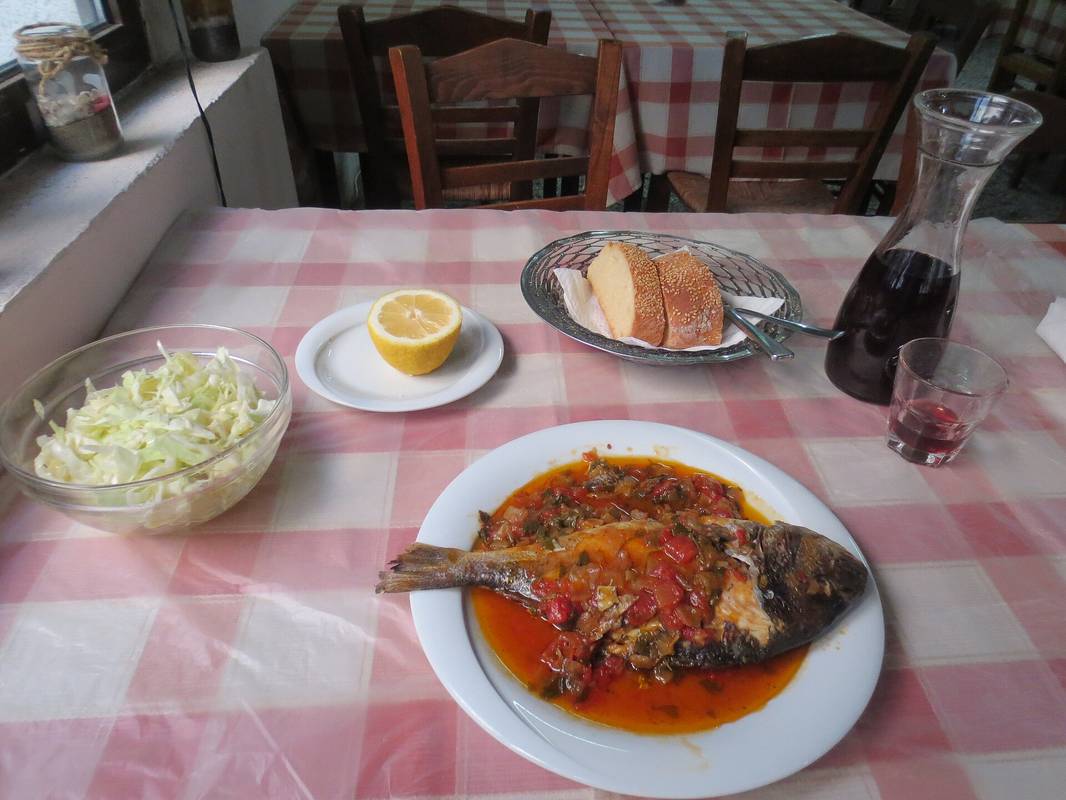
Meals in Meteora belong to two neighbouring settlements at the foot of the rock pillars: Kalabaka, the market town, and Kastraki, the smaller village pressed against the cliffs. Both are lined with family-run tavernas cooking Thessalian mountain food, from slow-roast lamb to wild greens and oven casseroles. Lunch slots neatly between two monastery visits, and dinner arrives with the last light sliding off the sandstone towers. Kalabaka offers the wider choice and year-round openings; Kastraki trades scale for terraces that face the pillars head on. Plan your table alongside the climbing and the cliffs with My Greece Tours.
Eating here is inseparable from the wider itinerary, so pair this page with the full Meteora travel guide to line up monasteries, walks, and viewpoints around your meals. The two dining hubs sit ten minutes apart, and the choice between them shapes whether you look up at the rocks or across at them while you eat. The sections below cover the character of Kalabaka and Kastraki, the Thessalian dishes worth ordering, when to eat around monastery hours, and how a terrace table turns dinner into a front-row seat for the sunset over Meteora.
Where should you eat in Meteora, Kalabaka or Kastraki?
Kalabaka offers the widest choice and year-round tavernas near the central square, while Kastraki trades scale for terraces facing the pillars. Choose Kalabaka for variety, Kastraki for rock views over dinner.
Kalabaka anchors dining in Meteora because the town holds the market, the bus links, and the densest run of tavernas, most clustered within three streets of the central square. Kitchens here stay open through winter, so a January traveller finds hot casseroles and grilled meats without hunting. The choice runs from grill houses to full mezze tavernas, which suits groups splitting different dishes. Base yourself here if you value walking distance from your table to your bed, and read the practicalities in where to stay in Meteora before you book. The town also fills fastest at dinner, so an early sitting around seven avoids the wait for a table on the square.
Kastraki rewards a different appetite. The village sits directly under the rock towers explained in the geology of Meteora, and its tavernas open terraces that put those pillars at eye level while you eat. Menus lean traditional, portions run generous, and the pace is slower than the town. Fewer kitchens operate in deep winter, so confirm openings if you visit off-season. Detail on the village itself sits in the Kastraki guide. Walkers stopping between trailheads land here naturally at midday, then return for a sunset table. The trade-off is plain: Kastraki gives you the view, Kalabaka gives you the range and the reliability.
What Thessalian dishes should you order in Meteora?
Order slow-roast lamb or goat kleftiko, grilled meats and local sausages, wild greens, bean soup, oven-baked casseroles, and Thessalian cheeses such as feta and kasseri, finished with honey-and-walnut sweets.
Thessalian cooking is mountain food built for cold winters and long days, and it shows on Meteora menus. Slow-roast lamb and goat, cooked kleftiko-style until the meat falls from the bone, headline most kitchens. Grilled chops, skewers, and coarse village sausages fill the meat side, while horta, the boiled wild greens dressed with lemon and olive oil, and fasolada, a thick white-bean soup, carry the plainer everyday tradition. Oven-baked casseroles layer meat with vegetables and cheese for a single hearty plate. Book a guided food-and-sites day through Meteora tours if you want a local to steer the ordering rather than guessing from a laminated menu.
Cheese runs through the region: sharp feta on every table, firmer kasseri for grilling, and local variants that change from taverna to taverna. Drink the Thessaly wine or ask for tsipouro, the clear grape spirit poured as an aperitif or a digestif with small plates. Sweets close the meal with honey, walnuts, and syrup-soaked pastries rather than chocolate. Portions are generous and prices moderate, so two shared mains and a plate of greens feed three people well. Time your table using the one day in Meteora plan so lunch lands in the gap between the morning and afternoon monastery visits rather than cutting one short.
When should you eat around Meteora monastery visits?
Eat lunch in the midday gap when several monasteries close for two or three hours, then take dinner after the last visit so a full afternoon of sightseeing stays uninterrupted around Meteora.
Monastery hours shape the eating day in Meteora more than hunger does. Individual sites close on rotating rest days and shut for a midday break, so the sensible pattern is a morning of climbing, a long lunch during the closed hours, and a return for the late-afternoon reopening. Confirm which houses open on your date in the Meteora monasteries guide, then reserve a table for around one o’clock in Kalabaka or Kastraki. A midday sitting also dodges the dinner crowd and lets a slow-cooked casserole justify the pause. Carry water and a snack for the trail, since the monasteries themselves sell nothing beyond the entrance ticket and a small candle stand.
Dinner works best after the last monastery locks its gate, when the rock faces glow and the tavernas fill. Kastraki terraces face the pillars, so a table booked for the golden hour turns a meal into the evening’s main sight. Kalabaka stays livelier later and keeps kitchens running past nine, which suits travellers arriving on an evening train. Off-season, verify closing times before you set out, because winter service in the smaller village winds down early. The town base described in the Kalabaka guide keeps you a short walk from a late table on nights when the cliffs disappear into the dark.
Are Kastraki tavernas with rock views worth it?
Yes. Kastraki tavernas open terraces at the base of the pillars, so dinner comes with the rocks turning gold at sunset, an experience Kalabaka’s square-facing tables cannot match.
Kastraki earns its reputation on position. The village presses against the sandstone towers, and its tavernas run terraces that look straight up at them, so a summer dinner unfolds against pillars shifting from ochre to rose as the sun drops. That view is the draw, and it is genuine rather than a marketing line, because the rocks stand a few hundred metres away with nothing built between the table and the cliff. Walkers finishing the trails detailed in the village guide often stay on for the meal. The Kastraki pages set out how to reach the terraces on foot from the Kalabaka side in roughly twenty minutes.
The trade-off is honest. Kastraki holds fewer kitchens than the town, and off-season some close, so a winter visitor may find one or two terraces open rather than a full row. Book the sunset slot in advance during high season, since the view tables go first. Menus stay traditional Thessalian, so the food matches the setting without pretending to be fine dining. Pair a Kastraki dinner with an early climb and structure the whole day using the one day in Meteora itinerary, which leaves the evening free for a slow meal under the rocks rather than a rushed grab between sites.
How much does a taverna meal cost in Meteora?
Prices are moderate across Kalabaka and Kastraki tavernas. A shared table of grilled meats, greens, and salad feeds a small group affordably, with generous portions that reward ordering communally rather than per person.
Meteora dining stays moderate because the tavernas are family-run and the cooking is regional rather than imported. Grilled meats, bean dishes, and greens cost less than fish or fine-dining plates, and portions run large enough that three or four shared dishes feed a small group. Order communally, greek-style, with a couple of meat mains, a plate of horta, a salad, and bread, and the per-head figure stays reasonable even in high season. Tap water is standard and free, house wine comes by the carafe, and tsipouro is poured in small measures rather than sold as a costly cocktail. Slot the meal into a costed day using the one day in Meteora plan.
View tables in Kastraki sometimes carry a slight premium at sunset, and the town square tavernas in Kalabaka can nudge higher in peak months, but neither turns dinner expensive. Lunch runs cheaper than dinner, which is another reason to eat the main meal in the midday monastery gap. A guided day booked through Meteora tours can bundle a taverna stop so the cost sits inside one ticket. Winter travellers find the quietest kitchens most willing to serve a small table well, and the same regional dishes cost the same off-season. Budget for two sit-down meals a day and the food side of a Meteora trip stays comfortably affordable.
Frequently Asked Questions
Do Meteora tavernas open all year round?
Kalabaka keeps tavernas open through winter, so a visit in any month finds hot food near the central square without difficulty. The town’s role as a market and transport hub sustains year-round trade, and kitchens there serve casseroles, grilled meats, and greens even on cold January evenings. Kastraki runs a shorter season in practice, and some terraces close once the sunset crowds thin in late autumn, so an off-season traveller confirms openings before walking over from the town. High season, from spring through early autumn, sees every kitchen in both settlements working, with the Kastraki view tables filling first at dinner.
Plan the base town using the Kalabaka guide so a late meal stays a short walk from your room on winter nights when the smaller village has wound down. Reserve ahead for sunset in peak months, since the terrace tables under the rocks book out early.
Is the food near Meteora vegetarian-friendly?
Thessalian cooking leans on meat, yet the same tradition gives vegetarians a strong run of plates in Meteora. Horta, the boiled wild greens dressed with lemon and olive oil, appears on every menu, and fasolada, the thick white-bean soup, makes a full meal on its own. Gigantes, oven-baked butter beans in tomato, stuffed vegetables, and Greek salad with local feta round out the choice, and grilled kasseri or saganaki cheese adds a hot option. Lent, the Orthodox fasting season, expands the meat-free range further, since kitchens cook nistisima dishes without animal products for religious diners. Ask the taverna what came fresh that morning rather than reading only the printed card.
A guided food day through Meteora tours can steer a vegetarian table toward the strongest dishes. Vegans manage well on the greens, beans, and oil-based casseroles, though confirming cheese-free plates with the kitchen avoids surprises.
Should you book a taverna table in Meteora in advance?
Booking matters most for two situations in Meteora: a sunset table on a Kastraki terrace in high season, and a large group at dinner in Kalabaka’s central square. Terrace tables facing the rocks are limited, and they go first once the golden-hour light draws diners, so a call ahead secures the view rather than a back-row seat. The town square tavernas fill fast at the main dinner sitting around eight, and walk-ins then wait. Lunch is easier, since the midday monastery gap spreads diners across more kitchens and tables turn over quickly. Off-season, booking is rarely needed and a walk-in finds space, though verifying a Kastraki kitchen is open at all matters more than reserving.
Structure the day so meals fall at sensible hours using the one day in Meteora plan, and pair the timing with the Meteora monasteries opening hours so a booked table never clashes with a site you still want to reach.