
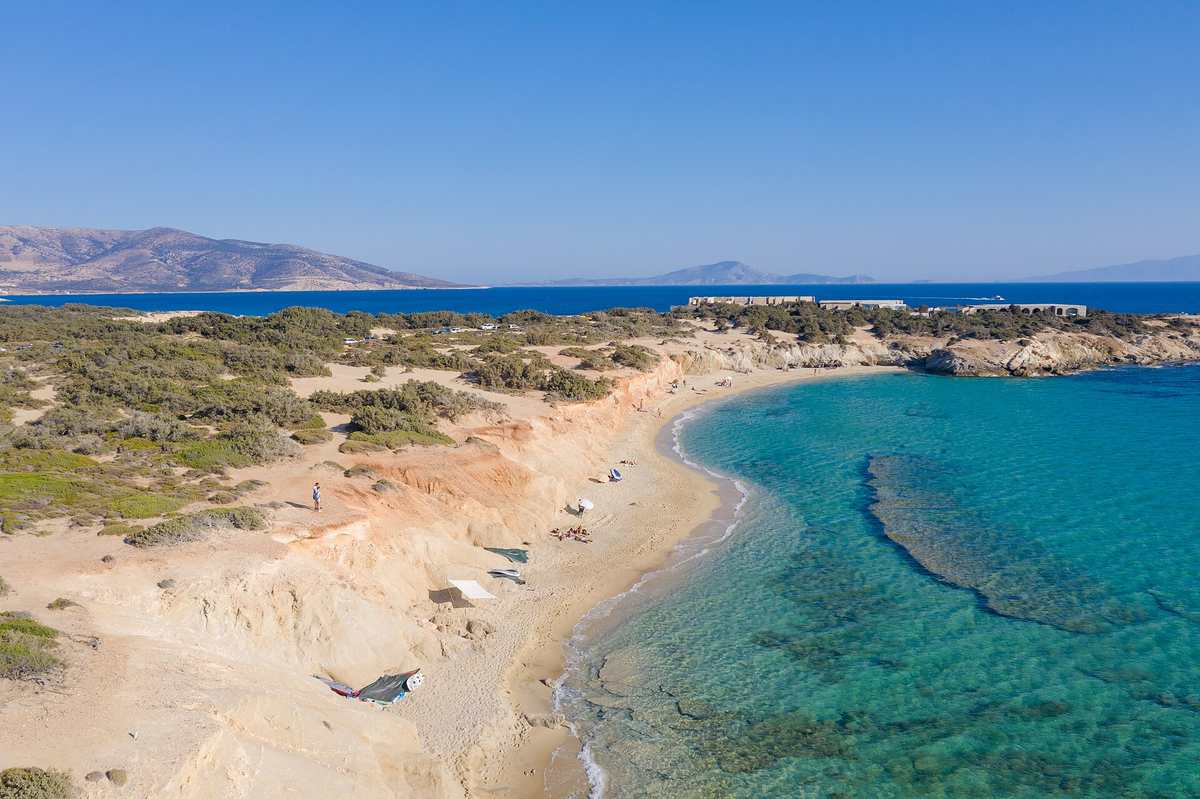
Orkos Beach sits on the southwest coast of Naxos, roughly 18 kilometres south of Naxos Town, tucked between the long shore of Plaka to the north and the twin bays of Mikri Vigla to the south. It is not one beach but a chain of small sandy coves, separated by low rocky outcrops and pale flat rocks that step down into remarkably clear, shallow water. There is no organised strip of sunbeds here, no bars pumping music, only fine golden sand, cedar and dune scrub, and open views toward the islet of Paros. Windsurfers and kitesurfers gather when the meltemi blows, while everyone else comes for the calm. Plan the trip properly with My Greece Tours.
This page explains exactly what Orkos is, how to reach it by car or bus, what to expect for water and wind, and which neighbouring beaches pair well with a day here. For wider context on the island, its towns and its other shores, use our Naxos travel guide as your starting point. The sections below cover directions and parking, the sand and swimming conditions, the windsurf and kitesurf scene, the near-total lack of facilities, and the best beaches within a short drive of Orkos.
Where exactly is Orkos Beach and how do you get there in Naxos?
Orkos lies on the southwest coast of Naxos, about 18 kilometres and a 30-minute drive south of Naxos Town, between Plaka and Mikri Vigla. Take the coastal road toward Mikri Vigla, then follow signed dirt tracks to the coves.
From Naxos Town you drive south past Agios Prokopios and Agia Anna, staying on the main coastal road that runs behind the dunes toward Mikri Vigla. Roughly 16 kilometres out, a series of small brown signs and unpaved side tracks branch west toward the sea; these lead down to the separate Orkos coves. The tracks are dusty and lightly rutted rather than dangerous, and a normal rental car manages them slowly in dry conditions. It pays to explore a little: the first track you meet is not always the prettiest bay because each cove has its own approach.
Travellers who would rather build a full itinerary first can turn to our Naxos travel guide maps the whole southwest coastline and its access roads.
There is no dedicated car park, so drivers pull onto the hard verges and flat clearings where the tracks widen near the shore; arrive before mid-morning in high season to claim a shaded spot under the cedars. Public buses on the Naxos Town to Pyrgaki line stop at Mikri Vigla and Plaka, from where Orkos is a walk of ten to twenty minutes along the sand and over the low rocks that divide the bays. Most visitors simply park at neighbouring Mikri Vigla and stroll north into the quieter Orkos coves. Cycling and walking the coastal path between the two is easy and flat, and it is the best way to see how the sandy stretches link together.
What is the sand and water like at Orkos in Naxos?
Orkos has fine, pale golden sand in each cove and exceptionally clear, shallow water shading from turquoise to deep blue. Flat rocks separate the bays, the seabed is soft sand, and the gentle gradient keeps the coves calm on windless days.
Each Orkos cove is small, framed by smooth grey-gold rock that you can walk out on and dive from where the water deepens. The sand is soft and clean, backed by low dunes and hardy scrub rather than tavernas, so the shoreline keeps a wild, undeveloped character. In the sheltered pockets the water stays shallow for tens of metres, warming quickly and staying glassy when the wind drops. This makes these bays a reliable choice for families and cautious swimmers on calm mornings. Snorkellers find good visibility around the rocky dividers, where small fish shelter.
For a broader picture of how these coves compare with the island’s organised strands, browse the wider guide to the beaches of Naxos.
The character of the water changes markedly with the wind. On still days the coves are mirror-calm and ideal for floating and paddling; when the summer meltemi picks up from the north, chop and small waves roll in and the sea turns lively. This is precisely why Orkos draws two different crowds on the same afternoon. Protected swimming with more amenities, the long shallow shelf at nearby Plaka beach just to the north is a gentler alternative. The cedar-backed lagoons of Alyko beach further south offer a similar unspoilt feel with quieter water in most conditions if you want guaranteed shallow.
Why is Orkos popular with windsurfers and kitesurfers?
Orkos and the adjoining Mikri Vigla bay catch the reliable summer meltemi, a steady north wind funnelling along the southwest coast. Flat shallow water inside plus open sea outside suits beginners and advanced riders alike, making it a core Naxos wind-sport spot.
The southwest corner of Naxos is one of the most dependable wind-sport zones in the Cyclades because the meltemi accelerates around the headland at Mikri Vigla and sweeps across Orkos through July and August. The layout here is unusually forgiving: shallow, sandy flats sit close to shore for learners and freestyle riders. Cleaner, stronger wind and swell wait just beyond the rocks for those who want to plane and jump. Kitesurfers favour the wide sandy launch areas, and windsurfers appreciate the long reaches along the coast. Schools and rental centres cluster around the Mikri Vigla headland rather than in the Orkos coves themselves. Most riders base there and use the open water off Orkos as their playground.
The wind is seasonal and directional, so timing matters. Mornings are often calm and best for swimming, while the breeze typically builds through the afternoon, which is when the sails and kites appear. Conditions can turn quickly, so beginners should take lessons at a school rather than launch alone. For a full rundown of spots, schools, seasons and skill levels across the island, see our dedicated guide to windsurfing in Naxos. Retreat into the most sheltered Orkos pocket or move north to the calmer flats near Plaka for the afternoon if the wind is blowing too hard for comfortable swimming.
What facilities are there at Orkos Beach?
Almost none. Orkos is a natural, unorganised beach with no sunbed rows, no lifeguard and no permanent bars or tavernas. There is little shade beyond the low cedars and rocks, so bring water, food, an umbrella and everything you need.
Orkos is deliberately undeveloped, and that is its appeal. You will not find the sunbed-and-umbrella concessions, beach bars or watersports huts that line the busier resorts to the north; the coves are left to the sand, rock and scrub. There are no toilets, no showers and no lifeguard, and mobile signal can be patchy in the more secluded bays. Pack in ample drinking water, sun protection, a shade umbrella and snacks, and pack out all your rubbish to keep the coves clean. Sturdy sandals help on the walk over the hot rocks between bays. This self-sufficient set-up is exactly why the beach stays quiet even in August, when the organised strands nearby are full.
For food, drinks and any supplies, the practical plan is to stock up in Naxos Town or the resort villages beforehand, or to base yourself at Mikri Vigla. A handful of tavernas, rooms and surf centres sit within walking distance. Families wanting sunbeds, cafes and easy amenities usually pair a wild swim at Orkos with a longer stop at a serviced beach such as Agios Prokopios beach, one of the most developed shores on the west coast. Treating Orkos as a peaceful half-day escape rather than a full-service resort, and combining it with a nearby organised beach, gives you the best of both worlds.
Which beaches are near Orkos and worth combining with it?
Orkos sits at the heart of Naxos’s best beach coast. Plaka lies immediately north, Mikri Vigla just south, Alyko a short drive further south, and Agios Prokopios and Agia Anna minutes up the road, all easy to combine.
The southwest coast of Naxos is effectively one long ribbon of sand broken by headlands, so Orkos is never more than a short walk from another fine beach. Directly north, the vast shallow sweep of Plaka beach offers kilometres of soft sand with a mix of quiet ends and lightly serviced stretches, ideal when you want more space and a handful of amenities. Immediately south, the double bay and dramatic headland of Mikri Vigla gives you the surf schools, tavernas and the iconic granite promontory that separates its two beaches. Walking or driving between these three takes only minutes and turns a single day into a tour of the coast’s finest sands.
Push a little further and the variety grows. To the south, the cedar forest and hidden turquoise lagoons of Alyko beach deliver another wild, unspoilt swim, while northward the busy, family-friendly arc of Agios Prokopios beach brings full facilities, restaurants and easy bus links. A sensible loop is to start early with a calm swim at Orkos, ride or watch the wind at Mikri Vigla through the afternoon, then finish with sunset from the dunes or over drinks at a serviced beach nearby. Plan your visit and tours through our Naxos travel guide.
Frequently Asked Questions
Is Orkos Beach suitable for families with young children?
Orkos can be excellent for families, but only on calm days and with the right preparation. A handful of its coves have soft sand and a gentle, shallow gradient, so on windless mornings the water stays warm, clear and easy for small children to paddle in. The low rocks make natural sheltered pools. The catch is that Orkos is completely unorganised: there is no lifeguard, no toilets, no shade beyond the cedars and no shop. You must bring everything, including no shortage of water, sun protection and a shade umbrella. The afternoon meltemi brings waves and chop quickly, which is less comfortable for toddlers, so families often swim early and leave before the wind builds.
Families wanting guaranteed shallow water plus sunbeds, cafes and easier access can pair Orkos with the long shallow shelf at Plaka or the fully serviced Agios Prokopios for a relaxed, child-friendly day on the same stretch of coast.
When is the best time to visit Orkos Beach?
The main season runs from late spring through early autumn, with the warmest sea and longest days in high summer. For swimming and calm coves, aim for mornings, when the wind is usually light and the water glassy; this is also the quietest, most peaceful time to have a bay almost to yourself. Afternoons in July and August are when the meltemi typically strengthens, turning the sea lively and drawing windsurfers and kitesurfers. Choose your hours to match what you want from the day. Late spring and early autumn bring fewer visitors, softer heat and often gentler wind, which most travellers prefer for a wild, unorganised beach like this.
Whatever the month, arrive earlier rather than later to secure a shaded parking clearing under the cedars, since there is no formal car park and the flat verges near the best coves fill up fast on busy summer days.
Do you need a car to reach Orkos Beach?
A car, scooter or quad is by far the easiest way to reach Orkos, because the coves lie down unpaved side tracks off the main southwest coastal road, roughly 18 kilometres from Naxos Town. There is no direct bus to the sand itself. That said, you can reach Orkos without your own vehicle: public buses on the Naxos Town to Pyrgaki route stop at Mikri Vigla and Plaka. From either you can walk to the Orkos coves in about ten to twenty minutes along the beach and over the low dividing rocks. A host of visitors deliberately do this, parking or getting dropped at Mikri Vigla and strolling north into the quieter bays.
A normal rental car handles the dirt tracks slowly in dry weather. Drive carefully, as the surface is dusty and lightly rutted and there is no marked parking area, only flat clearings and verges near the shore where you leave the vehicle in the shade of the cedars.