
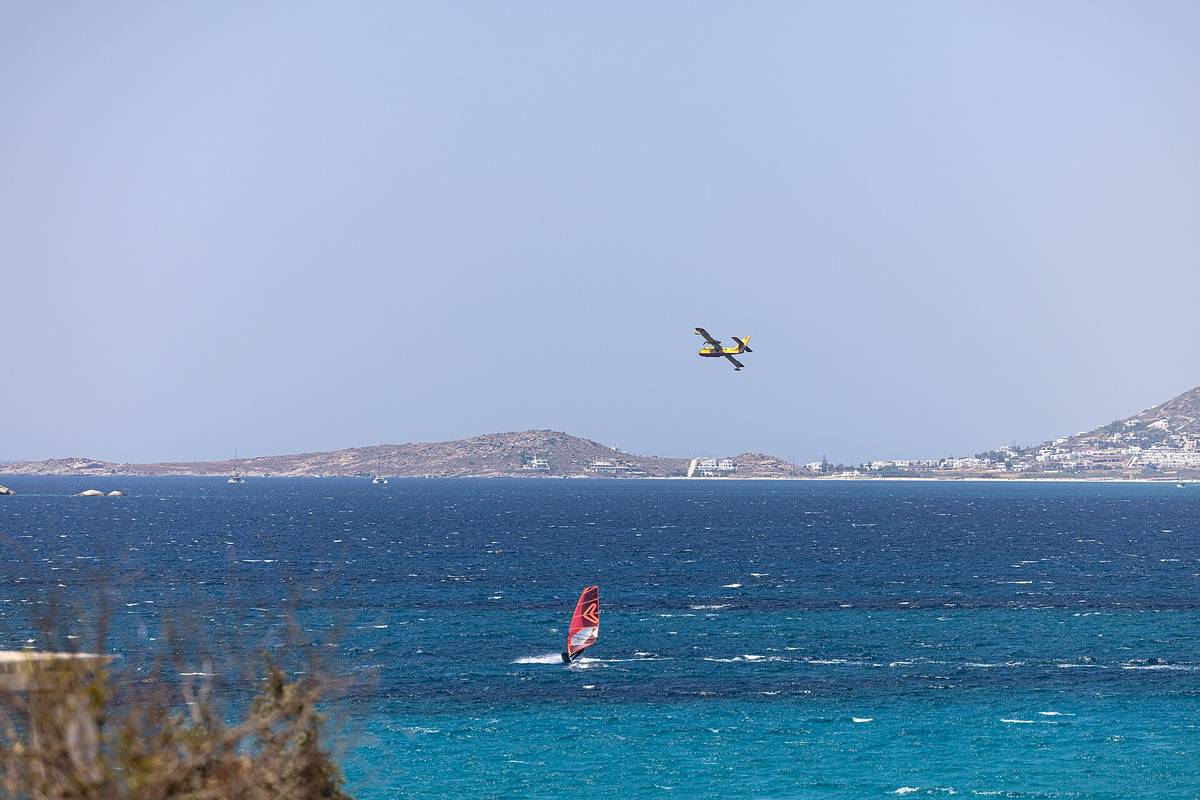
Naxos is the windsurfing and kitesurfing capital of the Cyclades, and the reason is the meltemi, the dry north wind that sweeps the Aegean through summer and turns the island’s southwest coast into a reliable playground for board sports. From the flat lagoon at Mikri Vigla to the shallow beginner bay at Agios Georgios, Naxos offers a spot for every skill level, backed by long sandy beaches, established schools and warm, safe water. Advanced riders find genuine wave and freeride conditions, while first-timers learn in waist-deep shallows a short walk from town. This guide explains where to ride, when the wind blows and how to start, whether you plan an independent trip or book lessons and transfers with My Greece Tours.
Travellers still mapping out a holiday can pair this article with our wider Naxos travel guide, which sets watersports alongside villages, beaches and day trips so you can plan the whole week rather than a single afternoon on the water. The sections below cover why the meltemi makes Naxos so consistent, the main windsurfing and kitesurfing spots, the schools and rental gear you will find, the best months and typical wind strength, and how beginners and advanced riders should choose their beach and conditions.
Why is Naxos one of the best wind spots in the Cyclades?
Naxos is a top Cyclades wind spot because the meltemi, a steady north-to-northwest wind, funnels down the Aegean and accelerates around the island from late May to September, giving reliable afternoon wind on the exposed southwest beaches.
The meltemi is the engine behind Naxos windsurfing. This dry northerly forms when high pressure over the Balkans meets low pressure over Turkey, and it channels between the Cycladic islands so that gaps and headlands speed the flow. Naxos sits in the heart of this channel, and its long southwest-facing beaches, from Agios Georgios down through Mikri Vigla to Plaka, catch the wind almost side-on. That cross-to-side-onshore angle is ideal: it holds you close to the beach rather than blowing you out to sea, which is exactly why the island suits both learners and freeriders. You can preview the full coastline in our roundup of the beaches of Naxos before choosing where to base yourself.
The other advantage is consistency and shape. Because the meltemi is largely thermally boosted through the afternoon, mornings are often calmer and lessons run early, while the wind fills in and peaks between midday and sunset. Water temperature climbs into the mid-twenties Celsius by high summer, so a shorty wetsuit or boardshorts are enough, and the Aegean here is clean and shallow close in. The southwest beaches also line up so you can move a few kilometres to find flatter water or bigger swell without leaving the island. That range of options within a short drive is what earns Naxos its reputation across the things to do in Naxos as the region’s most complete board-sports destination.
Which are the main windsurfing and kitesurfing spots on Naxos?
The three main spots are Mikri Vigla, the island’s flagship twin-bay riding zone; Agios Georgios, the shallow in-town beginner bay by Naxos Town; and Plaka, a long sandy stretch with open freeride space.
Mikri Vigla is the headline destination and the beating heart of Naxos windsurfing and kitesurfing. A rocky headland splits it into two very different bays. On the north side, the Laguna offers a wide sheet of shallow, flat, waist-deep water behind a sandbar, which is perfect for freestyle, kite learners and anyone building confidence in safe conditions. On the south side, Parthena delivers cross-onshore wind and, on stronger meltemi days, wave riding for advanced windsurfers and experienced kiters. Having both flat water and waves at one beach is rare, and it is why schools cluster here. Read the full profile of Mikri Vigla to understand how the two sides trade off with wind direction and strength.
Closer to the capital, Agios Georgios beach is the natural first stop for beginners. It is a long, gently shelving sandy bay right beside Naxos Town where you can stand up over a big area. That makes it forgiving for early windsurf and kite lessons, with the town’s cafes and rentals steps away. Just south, Plaka beach stretches for kilometres with plenty of room to rig and ride, offering freeride conditions in the meltemi without the crowding of the marquee spots. Nearby Kastraki beach extends the same open southwest coastline, giving intermediates uncrowded space when Mikri Vigla is busy.
What schools, rentals and gear can you find on Naxos?
Naxos has several established watersports centres, concentrated at Mikri Vigla and along the Agios Georgios and Plaka coast. They offer windsurf and kite lessons for all levels, board and rig rental, storage, IKO and VDWS instruction, plus SUP and wingfoil gear.
Most schools cluster at Mikri Vigla because it packs beginner flat water and advanced waves into one beach, so a centre can teach a first lesson in the Laguna and coach a rider through waves at Parthena on the same day. Typical rental fleets carry a spread of freeride, freestyle and wave boards with a range of sail sizes from around 3.5 up to 7 or 8 square metres, so you can match your gear to the day’s wind. Kite centres stock trainer kites for lessons and larger sizes for lighter days, along with harnesses and impact vests.
Booking a package that bundles storage and unlimited rental for several days usually works out cheaper than paying per session, especially in peak meltemi weeks.
Instruction quality is a real strength here. Reputable centres run beginner courses following recognised systems such as VDWS for windsurfing and IKO for kitesurfing, which structure your progress from first uphaul or body-drag through to planing and self-launching. Lessons are commonly taught early when the wind is lighter and safer, then free riding fills the windier afternoon. Beyond windsurf and kite, you will find stand-up paddleboards for calm mornings, wingfoiling gear as that discipline grows, and general beach watersports. If you want the surrounding beaches, villages and food sorted around your riding days, plan the trip through our Naxos travel guide so the logistics fit your session times.
When is the best time to windsurf and kitesurf on Naxos?
The prime season runs from late May to late September, with July and August the windiest and most reliable months when the meltemi reaches Force 5 to 7. June and September are lighter, warmer and less crowded.
The meltemi defines the calendar. It begins to establish itself in late May and June, strengthens through July, and peaks in August. At its peak it can blow for days at a stretch and reach Force 6 or 7, roughly 25 to 35 knots, on the exposed southwest beaches. This is why advanced windsurfers and kiters target high summer: the wind is dependable, the water is warm, and you can plan a whole week around it with confidence. Afternoons are the money hours because the thermal effect adds to the gradient wind, so many riders rest in the calmer morning and hit the water from midday onward as the meltemi fills in across the bays.
June and September are the connoisseur’s choice for lighter, friendlier wind. The meltemi still runs but with more moderate, Force 4 to 5 days mixed in, ideal for improvers who want planing conditions without being overpowered, and for beginners who benefit from the gentler mornings. Crowds thin out either side of the August peak, sea temperature stays comfortable into autumn, and lesson slots are easier to book. Whatever month you pick, check a marine forecast the evening before and the morning of, since strength varies day to day. To combine your wind window with sightseeing on the quieter days, browse the things to do in Naxos and slot land activities into the low-wind mornings.
How should beginners and advanced riders choose their spot and conditions?
Beginners should start in the shallow flat water of Agios Georgios or the Mikri Vigla Laguna, with a lesson and small gear, on lighter mornings. Advanced riders target Parthena or open Plaka on strong meltemi afternoons for waves and freeride.
For a first time on a board, the priorities are shallow water you can stand in, gentle wind and a school beside you. Agios Georgios beach next to Naxos Town is the classic beginner bay because its long, gently shelving sand lets you practise uphauling and turning without being swept away, and everything you need is within walking distance. The Laguna at Mikri Vigla is the other great learner zone: flat, waist-deep water behind a sandbar where kite students can body-drag and water-start safely. Book a structured lesson, ride the lighter morning wind, use a small sail or trainer kite, and always wear the harness and vest the school provides.
The open sand at Kastraki beach gives improvers extra room once they can hold a course.
Experienced riders should chase the meltemi’s punch. The Parthena side of Mikri Vigla turns on with cross-onshore wind and builds real wave faces on strong summer afternoons, making it the island’s premier advanced spot for wave windsurfing and progression kiting. When you want long, uncrowded freeride runs and space to work on freestyle or foiling, the kilometre-plus of Plaka beach and the neighbouring beaches of Naxos deliver open water without the launch congestion of the headline spot. Rig down as the wind climbs into Force 6 or 7, respect the offshore-drift risk on any south-facing section, and check conditions with the local schools who read these bays daily.
Plan your visit and tours through our Naxos travel guide.
Frequently Asked Questions
Is Naxos good for complete beginners in windsurfing or kitesurfing?
Yes, Naxos is one of the friendliest islands in Greece to learn either sport, which is a big part of why it attracts so many first-timers each summer. The key advantage is shallow, safe water. At Agios Georgios beach beside Naxos Town, and in the Laguna at Mikri Vigla, you can stand up over a wide area, so early mistakes on a windsurf board or during kite body-drags are low-consequence. Several established schools run structured beginner courses under recognised systems such as VDWS for windsurfing and IKO for kitesurfing, and they typically teach in the calmer morning when the meltemi is lighter and easier to manage.
For a first holiday on the water, book a multi-day course rather than a single session, since two or three consecutive mornings let the basics stick. Bring or rent a shorty wetsuit for comfort, listen to your instructor about wind direction and drift, and progress from the shallows outward only when you can reliably hold a course and return to the beach.
What is the meltemi wind and how strong does it get on Naxos?
The meltemi is the dry, generally north to northwest wind that dominates the Aegean in summer, and it is the single reason Naxos is a world-class board-sports destination. It forms from a pressure pattern between high pressure over the Balkans and low pressure over Turkey and the eastern Mediterranean, and it accelerates as it funnels between the Cycladic islands. On Naxos it typically starts building in late May and June, strengthens through July, and peaks in August. Strength varies day to day, but on the exposed southwest beaches it commonly reaches Force 5 to 7, roughly 20 to 35 knots, with the strongest gusts on prolonged August blows.
It is often thermally reinforced through the afternoon, so wind usually builds after midday and eases overnight, which is why lessons run in the morning and free riding fills the afternoon. June and September see more moderate Force 4 to 5 days. Always check a marine forecast the day before and morning of, since a strong meltemi demands smaller sails and more caution.
What other watersports can you do on Naxos besides windsurfing and kitesurfing?
Naxos supports a full range of water activities, so a windsurf or kite trip mixes easily with calmer pursuits, especially on lighter-wind mornings or days when the meltemi rests. Stand-up paddleboarding is popular in the flat morning water at Agios Georgios, Mikri Vigla and the sheltered corners of the southwest coast, and most watersports centres rent boards by the hour. Wingfoiling has grown quickly and gear is increasingly available at the main schools, appealing to riders who already windsurf or kite. Beyond board sports you will find sea kayaking along the coast, snorkelling over rocky sections, boat trips to nearby beaches and islets, and diving through operators on the island.
The long sandy beaches from Plaka to Kastraki also suit swimming and family beach days when you are off the water. The island’s compact size makes it easy to build a varied week. Ride the windy afternoons, paddle or snorkel the calm mornings, and use the low-wind days for boat excursions or exploring the island’s villages and interior.