
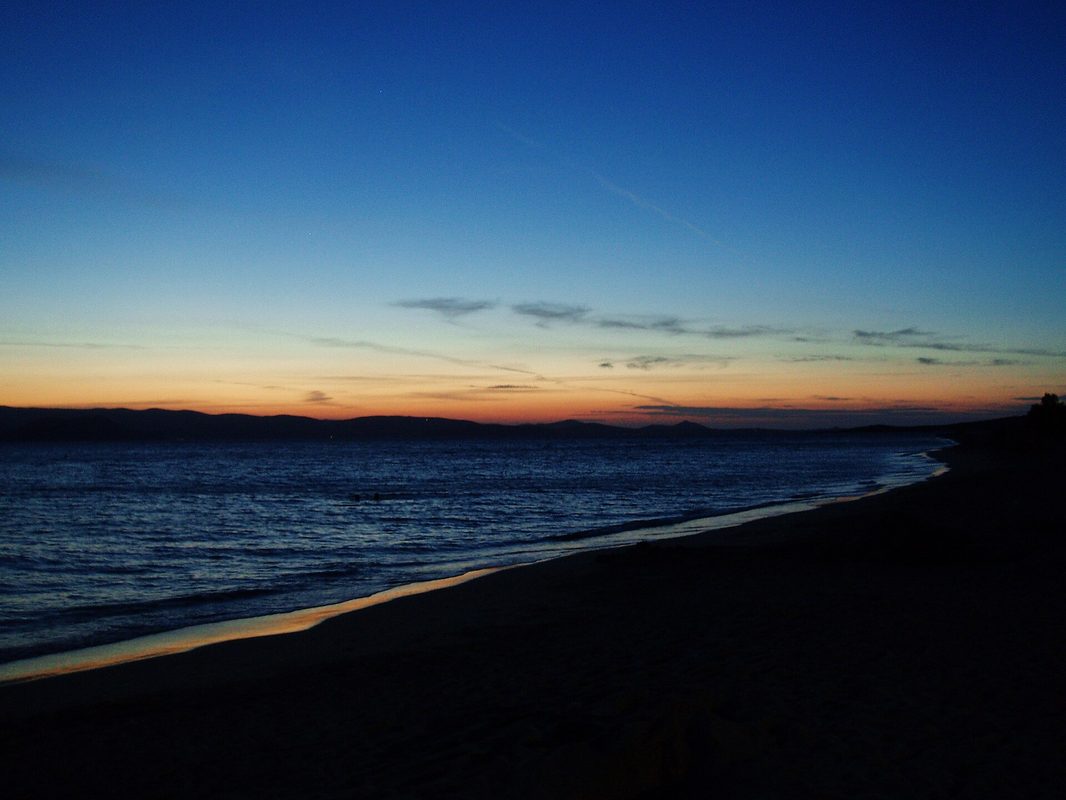
Plaka Beach is the longest continuous sandy shore on Naxos, stretching roughly four kilometres down the island’s southwest coast. Backed by low dunes and rows of feathery tamarisk trees, it faces west across the Aegean and catches wide, calm sunsets almost every evening. The sand is pale gold and fine, the water shallow and clear, and the mood stays unhurried even in high summer. Families, couples and free spirits all find their own patch here, from lively bar zones to empty natural sand. Day trips and island excursions are easy to arrange with My Greece Tours if you would rather relax while the logistics are handled for you.
This page sits within our wider Naxos travel guide and focuses on everything that makes Plaka one of the Cyclades’ most loved beaches. The sections below cover what Plaka Beach actually is, what the sand and water are like, how the organised and quiet stretches differ, the facilities and where Plaka sits along the coast, and exactly how you get there from Naxos Town.
What is Plaka Beach?
Plaka Beach is a long, roughly four-kilometre stretch of golden sand on the southwest coast of Naxos, backed by dunes and tamarisk trees. It is the island’s longest beach, known for shallow turquoise water, a relaxed atmosphere and both organised and wild sections.
Plaka Beach unrolls along the western edge of Naxos, beginning just south of Agia Anna and running southward toward the headland of Mikri Vigla. At close to four kilometres, it is comfortably the longest single beach on the island, and its scale is exactly what gives it such a spacious, uncrowded feel. Even on the busiest August afternoons you can walk a couple of minutes from the nearest beach bar and find a quiet, near-empty patch of sand to call your own. Low grassy dunes rise behind the shoreline, and clumps of tamarisk trees throw natural shade over the back of the beach.
Plaka is one of the most photographed of the a wide range of beaches of Naxos, and understanding its sand and water helps explain why.
The beach faces roughly west, so it takes the full length of the afternoon and evening sun. This westerly aspect is one reason Plaka is so beloved for sunsets, when the sky and the flat, shallow water glow together in gold and rose. The seabed slopes very gently, meaning the sea stays knee to waist deep a long way out, which suits paddling children and nervous swimmers alike. The exact character of your day depends entirely on where you set down your towel because the beach is so long and open.
The organised northern end near Agia Anna feels social and busy, while the southern reaches turn steadily wilder and quieter, a contrast worth understanding before you choose your spot. Brings us naturally to the sand and water themselves.
What is the sand and water like?
The sand at Plaka is fine, soft and pale gold, sloping gently into shallow, clear turquoise water. Tamarisk trees behind the beach offer natural shade, while the calm, warm shallows make it ideal for families, long swims and easy paddling far from shore.
The defining feature of Plaka is its sand: fine-grained, soft underfoot and a warm pale-gold colour that stretches unbroken for kilometres. There are almost no pebbles or rocks along the main shore, so walking barefoot is a pleasure from the dunes right down to the waterline. The seabed continues that same soft sand into the sea, giving the water its famous clarity and colour. In the shallows it reads as pale turquoise, deepening to richer blues further out. Because the bottom is clean sand rather than weed or stone, visibility stays excellent for snorkelling near the shore.
The gentle gradient means the water warms quickly through the day, so swims here feel mild and inviting well into the evening.
Shade is the other thing Plaka does well. The tamarisk trees that grow along the back of the beach lean out over the sand, creating pockets of dappled cover where you can escape the midday sun without renting an umbrella. A host of visitors bring a mat and settle under these trees rather than paying for sunbeds, which keeps the natural stretches feeling wonderfully low-key. The combination of soft sand, shallow warm water and free natural shade is exactly what makes Plaka such a strong choice for families with young children and for anyone planning a long, lazy beach day.
That easy comfort, though, comes in two quite different flavours depending on whether you want service or solitude, which is the next thing worth sorting out. Families often base here in a private Naxos villa a short walk from the sand.
How do the organised and quiet stretches differ?
Plaka’s northern end near Agia Anna is organised, with beach bars, sunbeds, umbrellas and watersports. Head south and the beach turns wild and natural, with vast empty sand, tamarisk shade and a well-known naturist section toward the quieter southern reaches.
It effectively works as a series of beaches in one because Plaka is so long. The northern end, closest to Agia Anna, is the organised zone. Here you will find a handful of relaxed beach bars and tavernas set just behind the sand, along with rows of sunbeds and straw umbrellas you can rent for the day, usually with a drinks-and-food service that comes to your lounger. This stretch tends to draw a younger, more social crowd, and a couple of the bars run gentle music and occasional watersports such as paddleboards and kayaks.
It is the easiest place to spend a full day without carrying a great deal of, since food, shade and cold drinks are all a handful of steps away, which suits first-time visitors well.
Walk south, though, and the character changes completely. The sunbeds thin out, the crowds fall away, and you enter long, open runs of natural sand backed only by dunes and tamarisk. This is where Plaka feels genuinely wild, and it is prized by people who want space, silence and a swim without a soundtrack. Toward the quieter southern reaches there is a well-established naturist area, discreetly separated by distance and the dunes, where clothing-optional bathing has long been the norm. There is no hard border between the zones; the beach simply grows calmer the further you go.
Knowing this gradient lets you match the spot to your mood, and it pairs closely with the practical question of facilities and exactly where along the coast Plaka lies. Budget travellers pitch at the organised grounds in our guide to camping in Naxos.
What facilities are there and where does Plaka sit?
Plaka sits on the southwest coast between Agia Anna to the north and Mikri Vigla to the south. Facilities cluster at the northern end: beach bars, tavernas, sunbed rentals and rooms to let, with far fewer services along the wilder southern sand.
Geographically, Plaka forms the middle link in a chain of west-coast beaches. To the north it runs on from Agia Anna and, beyond that, the popular Agios Prokopios beach; to the south it gives way to the windsurfing headland of Mikri Vigla. This position, close enough to the resort strip yet long enough to escape it, is a big part of Plaka’s appeal. Most of the built facilities sit at the northern, Agia Anna end. You will find beach bars, sit-down tavernas serving fresh fish and Naxian dishes, sunbed and umbrella rentals, and small markets for supplies.
There are also a wealth of studios, rooms to let and low-key hotels set just behind the dunes, making it very possible to stay right on the beach.
The wilder stretches reward a little planning. The services fade quickly toward the south. Beyond the first cluster of bars there are a handful of taps, toilets or kiosks. This means bringing your own water, snacks and shade if you intend to spend the day on the natural sand. That trade-off is precisely the point: fewer facilities buy you more space and quiet. Parking is informal, with sandy pull-offs and small lots dotted along the back road, and the closer you park to Agia Anna the more amenities you will have on hand. With a sense of where Plaka sits and what it offers, the last practical piece is simply getting yourself there from Naxos Town.
How do you get to Plaka Beach?
Plaka Beach lies about six to eight kilometres southwest of Naxos Town. You can reach it by frequent local bus, by rented car or scooter in ten to fifteen minutes, or by taxi, with easy parking along the back road behind the dunes.
Getting to Plaka from Naxos Town, the island’s main port and hub, is straightforward. In summer the local KTEL bus network runs frequent services down the west coast toward Agia Anna and Plaka. The ride takes only around fifteen to twenty minutes, dropping you within a short walk of the sand. The bus is cheap and reliable and saves you the bother of parking, though it does keep you near the busier northern end. Renting a car, an ATV or a scooter is the classic Naxos choice.
The drive from town is an easy ten to fifteen minutes on paved road with informal parking behind the dunes if you prefer freedom to roam the length of the beach or continue on to Mikri Vigla.
One local factor is worth planning around: the meltemi, the strong northerly summer wind that funnels through the Cyclades. On windy days the exposed southern end and the Mikri Vigla side can whip up sand and chop, which is exactly why windsurfers love that headland, while the more sheltered pockets near the tamarisk and the northern bars stay calmer. Checking the forecast and choosing your spot accordingly makes a real difference to comfort. Arrive earlier in the day for the gentlest water and the pick of the natural shade, and bring cash for the bus, the sunbeds and the smaller tavernas. Plan your visit and tours through our Naxos travel guide.
Frequently Asked Questions
Is Plaka Beach on Naxos suitable for families with children?
Yes, Plaka is one of the most family-friendly beaches on Naxos, and for good reason. The sand is soft and fine with almost no pebbles, so it is comfortable for small feet and for setting up a base with towels and toys. The seabed slopes very gradually, which keeps the water shallow and calm a long way from shore, giving children ample safe space to paddle and play without sudden drop-offs. The tamarisk trees along the back of the beach provide natural shade where little ones can cool down out of the midday sun. The organised northern end near Agia Anna adds sunbeds, umbrellas, tavernas and toilets within easy reach.
Base yourself at that northern section; if you prefer quiet, the wider natural stretches are still gentle underfoot but you should bring your own water, snacks and shade if you want facilities close at hand. On very windy meltemi days the more sheltered pockets near the trees stay calmer for younger swimmers.
Does Plaka Beach have a naturist section?
Yes, Plaka has a long-established naturist area, and it is one of the beaches on Naxos most associated with clothing-optional bathing. There is ample room for different styles of beach day to coexist without overlapping because Plaka runs for close to four kilometres. The organised, family-oriented zone sits at the northern end near Agia Anna. The naturist stretch lies further south along the wilder, natural sand, discreetly separated by distance and by the low dunes and tamarisk that break up the shoreline. There is no fence or hard boundary; the beach simply grows quieter and more relaxed as you walk south, and the naturist section has developed naturally in those calmer reaches.
Visitors who prefer to stay clothed will not stumble into it unexpectedly, since it is well away from the busy bar area. Those seeking it will find it by continuing south past the organised loungers. Facilities are minimal there, so bring your own water and shade as with the rest of the natural sand.
When is the best time to visit Plaka Beach?
Plaka is enjoyable across the whole warm season. The sweet spots are early and late summer, when the water is warm, the days are long and the crowds are thinner than at peak. During the hottest, busiest weeks the beach still absorbs visitors easily thanks to its length, so even then you can walk south to find quiet sand. Within any given day, mornings are the most rewarding: the sea is at its calmest, the natural shade under the tamarisk is easy to claim. Parking near Agia Anna is simpler before the daytrippers arrive.
Late afternoon is the other prime window, because Plaka faces west and delivers a portion of the finest sunsets on Naxos, with the shallow water mirroring the colours of the sky. The main thing to plan around is the meltemi wind. Can pick up on summer afternoons and stir sand along the exposed southern end; on breezy days, settle near the sheltered tamarisk pockets or the northern bars for the calmest conditions.