Greece holidays range from a three-day Athens city break to a two-week loop through the islands. Browse every trip on Greece Tours before you choose.
The guide below sorts Greece holidays by region, length, airport and holiday type, then covers board bases, rules and the excursions you add on the ground.
What are Greece holidays?
A holiday in Greece is a leisure trip across the mainland, the coast and the islands of one country. Travellers choose the mix: a city stay, a week by the sea, or a route linking two or more islands.
Greece is a country on the Balkan peninsula of Southeastern Europe, with thousands of islands. That shape gives Greece holidays a wide range of settings, from mainland towns to small island villages.
Estimates of the island count run from about 1,200 to 6,000, depending on the minimum size counted. The number of inhabited islands is cited as between 166 and 227.
The coastline is 13,676 kilometres long, the 11th longest national coastline in the world. It is also the longest on the Mediterranean basin. Greece holidays are never far from the sea.
The Peloponnese shows how mixed the map is. It is a peninsula, yet it has been technically an island since the Corinth Canal was built. Greece holidays here can feel like a mainland trip and an island trip at once.
Travellers who plan Greece holidays around the islands can read Greek islands for first-timers before they pick a group. The groups below show the choices.
Which regions do Greece holidays cover?
Nine traditional regions make up the map of Greece: six on the mainland and three island groups. Daily speech still uses these names, although the official map now has 13 administrative regions.
Each region gives Greece holidays a different character. The six mainland regions come first.
- Macedonia: the largest region, in the north. Thessaloniki, Katerini and Kavala sit on its southern coastline, and it borders Albania, North Macedonia and Bulgaria.
- Central Greece: the region with the largest population, with Athens as its old seat. Its archaeological sites include the Acropolis of Athens, Delphi, Thermopylae and Hosios Loukas.
- Peloponnese: a southern peninsula joined to the mainland by the Isthmus of Corinth. The first Olympic Games took place at Olympia in its west, and Mycenae was a palace centre of the Bronze Age.
- Thessaly: a region of northern central Greece with Larissa as its capital. It appears in Homer’s Odyssey under its old name, Aeolia.
- Epirus: a rugged, mountainous region in the northwest, bordering the Ionian Sea and Albania. The Vikos-Aoos and Pindus National Parks lie in the Ioannina area.
- Thrace: the Greek part lies in the northeast, with the Aegean Sea to the south. Alexandroupolis is its largest city.
Three regions are island groups. A holiday on the Aegean Islands means the sea between mainland Greece, Turkey and Crete. The word archipelago comes from the ancient Greek name of that sea.
Crete is the largest Greek island by area and by population, with a coastline of 1,046 kilometres. Its Minoan palace of Knossos is a holiday stop on the north coast. The Ionian Islands are the smallest region in both size and population.
Greece holidays on the islands also use six traditional clusters. Crete and Euboea sit outside them.
- Ionian Islands: seven principal islands, from north to south Corfu, Paxos, Lefkada, Ithaca, Kefalonia, Zakynthos and Kythira. Centuries of Venetian rule kept them outside Ottoman control and left Italian influences.
- Cyclades: about 220 islands around sacred Delos, in the central Aegean. Naxos is the largest, and Syros has the largest population.
- Dodecanese: 15 larger and 150 smaller islands in the southeastern Aegean, and 26 of them are inhabited. Rhodes leads the group, while Kos and Patmos are important in history.
- North Aegean Islands: scattered islands off the Turkish coast that form no chain, among them Samos, Ikaria, Chios, Lesbos and Lemnos. Samothrace and Thasos lie in the far north.
- Sporades: 24 islands northeast of Euboea. Greece holidays here use the four permanently inhabited ones: Alonnisos, Skiathos, Skopelos and Skyros.
- Saronic Islands: an archipelago just off the Greek mainland near Athens. Salamis, Aegina, Agistri and Poros are the main inhabited islands, and Salamis is the largest.
A region fits a plan when it holds the islands or mainland towns a traveller wants to know. Greece holidays then follow that choice.
How long do Greece holidays last?
A 3-day break covers Athens alone. A 7-day break adds one island, a 10-day break reaches Crete, and a 14-day break adds the north. Distances from the capital set each limit, and the sources below give them.
A 3-day Greece holiday fits one base. Athens International Airport lies about 20 kilometres east of central Athens. By road the trip is 30 kilometres, because hills lie in between. A short stay absorbs that transfer at both ends, so the capital alone fills the days.
For Greece holidays of 7 days, add one island to Athens. Santorini lies about 200 kilometres southeast of the mainland. Blue Star Ferries states that the Piraeus to Santorini journey lasts from 6 hours and 6 minutes. That crossing takes a large part of a day, so a week holds one island.
Ten days reach Crete. The island lies about 160 kilometres south of the Greek mainland. Heraklion airport is the primary airport on Crete and the second busiest in the country after Athens. Greece holidays of 10 days can split between Athens and one Cretan base.
Fourteen days add the north. Thessaloniki is located 502 kilometres north of Athens, and its airport lies 13 kilometres southeast of the city. A two-week trip can pair that second mainland city with the capital and one island.
Every length of Greece holidays loses time on transfers. Blue Star Ferries lists gates E6 and E7 at Piraeus for the Santorini ferries. Read the Greek ferry booking tips before fixing a ferry day in a short schedule. Add the road transfer on each side of the crossing to the sailing time itself.
Which airports serve Greece holidays?
The Wikipedia list of airports in Greece names eight of the ten gateways below as international airports. These are Athens, Thessaloniki, Heraklion, Chania, Rhodes, Corfu, Kos and Zakynthos. The list files Mykonos and Santorini under national airports.
Athens International Airport sits in Spata, Attica, and serves the Athens Metropolitan Area. Its two parallel runways are 4 kilometres and 3.8 kilometres long. For Greece holidays that start in the capital, this is the arrival point.
Thessaloniki Airport lies in Thermi and connects to the A25 motorway towards Chalkidiki. Thessaloniki is the second-largest city in the country. Pick the mainland gateway that matches the city of your first night.
Heraklion International Airport is 5 kilometres from the city centre, according to the Hellenic Civil Aviation Authority. Chania International Airport lies 14 kilometres from Chania, near Souda Bay on the Akrotiri peninsula. Wikipedia calls it a gateway to western Crete. The two Cretan airports serve opposite ends of the island.
Rhodes International Airport stands on the west side of the island, about 14 kilometres southwest of Rhodes city. Kos International Airport lies near Antimachia village. It mainly serves charter airlines, which bring customers on holiday to the island, with flights from German and British airlines. The island measures 42.1 by 11.5 kilometres.
Corfu International Airport serves scheduled and charter flights from European cities. It lies 2.7 kilometres from Corfu city, and the trip by car or taxi takes about 10 minutes. Greece holidays on Corfu start with that short transfer.
Zakynthos International Airport is 4.3 kilometres from Zakynthos city and close to Laganas, Tsilivi and Kalamaki. Flights are not permitted to take off or land there between 10:00 PM and 5:00 AM in summer. Wikipedia ties the rule to the loggerhead sea turtles that lay eggs on the marine park beaches.
Mykonos Airport lies 4 kilometres from Mykonos town and serves domestic and European metropolitan destinations. Santorini Airport sits north of the village of Kamari and works as both a military and a civil airport. Wikipedia counts Santorini among the Cyclades islands with a major airport.
For Greece holidays, choose the arrival airport from the first overnight stay, then read the transfer distance in this list. A longer trip adds one onward transfer for each new city or island.
Which Greece holidays suit a city break?
A city break fits travellers with three or four nights who want to unpack once. Athens brings the scale of a capital, Thessaloniki a northern harbour city, and Nafplio a small seaside town. Each one gives these Greece holidays a different pace.
Athens is the Greek capital and its largest city by population, and the southernmost capital on the European mainland. Its municipality alone is divided into seven municipal communities and 53 municipal districts. Locals divide the downtown by neighbourhoods such as Plaka, Anafiotika, Koukaki and Kolonaki, each with its own history and character.
Athens also gives short Greece holidays a car-free walking route. Dionysiou Areopagitou Street is pedestrianised. It starts at the Temple of Olympian Zeus and passes under the southern slopes of the Acropolis near Plaka. It ends just beyond the Temple of Hephaestus in Thiseio. Along the way, you see the Parthenon and the Agora.
Thessaloniki ranks second among Greek cities by size and leads the north. It sits on the Thermaic Gulf, in the northwest of the Aegean. City-based Greece holidays use it as a calmer alternative to Athens, with just over 300,000 residents in the city proper.
The White Tower is the main landmark of Thessaloniki. Ano Poli, the Upper Town, was not engulfed by the great fire that hit the centre. It keeps small stone-paved streets, old squares, and homes in old Greek and Ottoman style. One city break can pair the tower with an evening walk uphill.
Nafplio is a coastal city in the Peloponnese and the capital of the regional unit of Argolis. It was the first official capital of the modern Greek state. The old town carries colourful Venetian-influenced buildings and neoclassical ones. Palamidi castle stands on a hill north of the old town, and Bourtzi sits in the middle of the harbour.
Chania on Crete suits an island city break. Its old town lies next to the old harbour, and Venetian fortifications once surrounded it. Today the old town holds cafes, bars and restaurants. Pick one of these four bases per trip. Greece holidays work well when one city gets the whole stay.
Which Greece holidays suit a beach break?
Pick a coast by the day you want, not by a ranking. A resort shore keeps food and shade close, while a quiet cove keeps the setting simple. Under Greek law, the shore and the beach are common-use property, so the public has free and unimpeded access.
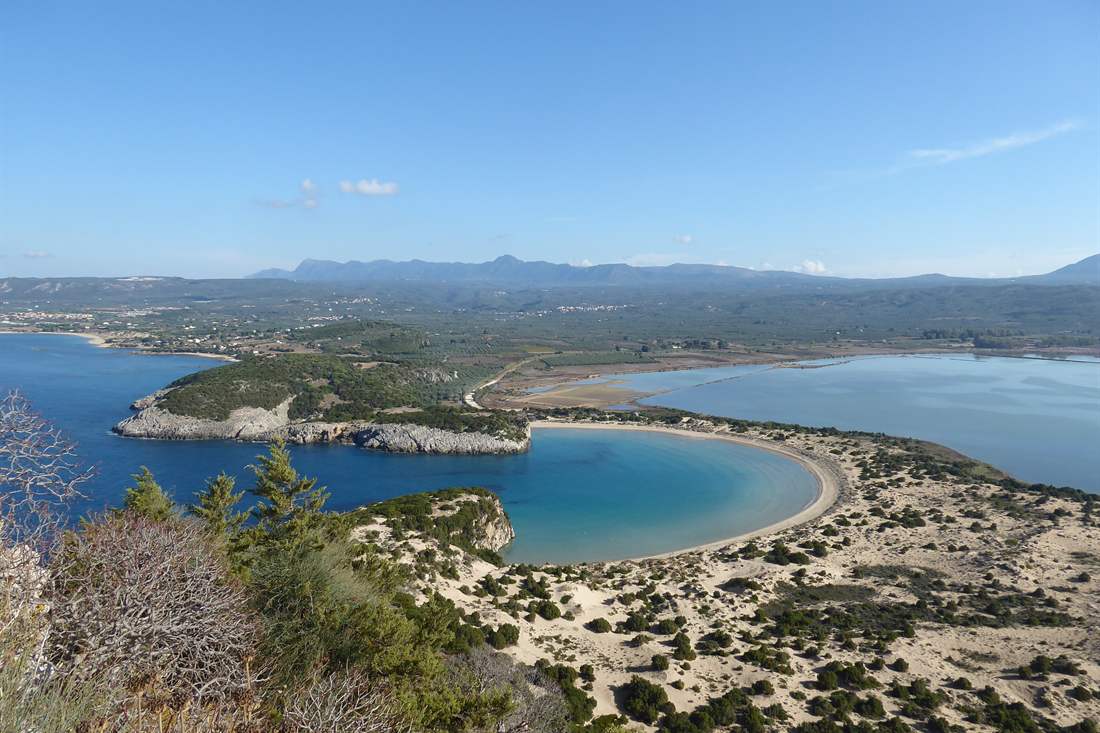
Beach Greece holidays come in two shapes. A resort coast puts restaurants and sunbeds a short walk from the sand. A quiet cove asks you to carry water, food and shade yourself. Decide first whether you want a full day of services or a short swim stop.
Sand and pebbles feel different underfoot on any beach break. Sand is soft for sitting and walking barefoot. Pebbles are firmer, so water shoes help on the way into the sea. Neither surface says anything about water quality, so judge each beach on its own description.
An organised beach is a section where a business holds a grant of simple use for sunbeds and umbrellas. In Greece, the State, through its Property Services, and the public property company ETAD grant these rights. A free beach is a stretch with no such grant. On those Greece holidays, you bring your own towel.
The grant comes with conditions that protect the public. The grantee keeps a free zone at least four metres wide along the coastline. People can then walk along the water. Loungers and umbrellas cover up to 60 percent of the granted area. The grantee also posts a sign with the rights of the public and a QR code.
Stricter rules apply on certain beaches. A protected beach lies inside the European ecological network of protected areas. Loungers there cover up to 30 percent of the granted area. On a beach designated as untrodden, placing umbrellas and loungers is prohibited. Beach Greece holidays on a wild coast therefore mean bringing your own shade.
Blue Flag is a certification by the Foundation for Environmental Education. A beach must meet at least 30 criteria across four categories. These are water quality, environmental management, safety and services, and environmental education and information. The flag says nothing about sand colour or crowds. For named shores, read our guide to the top beaches in Greece.
Which Greece holidays suit hikers and nature lovers?
Greece holidays for walkers build on two routes: the E4 European long distance path and Mount Olympus. The E4 links villages across the whole country, while Olympus gives walkers one base in the town of Litochoro.
The E4 starts at Cabo de San Vicente in Portugal and ends in Cyprus. It is more than 10,000 kilometres long and also visits Crete. In Greece, the path enters from Bulgaria at Kulata and crosses the border at Promachon. The Hellenic Federation of Mountaineering and Climbing set up the Greek route and maintains it.
Greece holidays on the E4 begin with a northern section of 300 kilometres from Promachon to Florina. It continues through Nymphaeo, Amyntaeo, Dion and Litochoro, then passes Mount Olympus, Meteora and the Agrafa mountains. Central Greece follows, with Karpenissi and Delphi, and the route reaches Itea, 900 kilometres from Florina.
For Greece holidays on foot, the Peloponnese stage is a clear block of days. It starts at Diakofto and passes Kalavryta, Vytina, Tripoli, Sparti and Mystras. It ends at Gythio, after the refuge of Taygetos. The source says this stage has board and lodging for every night of the 14 days it takes.
A ferry from Gythio links Greece holidays on the E4 to Kastelli Kissamou on Crete. Mount Taygetus holds the tallest summit in the Peloponnese, Profitis Ilias, a popular hiking destination. The E4 runs along the lower slopes of the range. The Vyros Gorge on the western side carries snowmelt to the sea at Kardamyli.
Olympus draws more walkers than any other summit in Greece. Its highest peak, Mytikas, is also the highest peak in the country. Greece holidays on Olympus start in Litochoro, where almost all climbing routes begin to the southwest of town. A path through beech forest links Prionia, at 1,100 metres, to the Spilios Agapitos refuge.
Weather on Olympus can change more than once in a day. Summer brings evening thunderstorms, sometimes with hail and strong winds. Water springs above 2,000 metres are scarce, so carry water. The average temperature is minus 5 degrees Celsius in winter and 10 degrees in summer.
Greece holidays on the E4 follow waymarks. These are aluminium signs with a yellow rhombus on white, marked E4/6. Poor marking, blocked paths and eroded sections can slow a walk, and streams can be impassable. Plan for long diversions, and do not count on reaching an end point on a fixed day.
Bears and wolves live in the far north of Greece. The source says walkers meet signs of them far sooner than the animals themselves. Store food with care. Mountain refuges can be closed. Anavasi publishes hiking maps for Olympus, the Pindus range and the mountains of Central Greece.
Greece holidays for walkers combine a long route such as the E4 with one base such as Litochoro. That mix gives a multi-day plan and day outings. For other outdoor styles, read our guide to adventure activities in Greece.
Which Greece holidays suit a spa and thermal-springs break?
A thermal break centres on warm mineral water, a spa town and slow days. Greece holidays of this type use the hot springs of Loutraki, Aidipsos, Kamena Vourla, Thermopylae, Methana and Therma on Ikaria. Each place has its own water and history.
The Greek word loutro means bath, bath-house or spa, and it translates as thermae in English. Thermae was also the ancient name of the Loutraki area, and the word means hot springs. A thermal bath visit means soaking in warm mineral water at a spring or in a spa town.
Greece holidays at Loutraki centre on a seaside resort town on the Gulf of Corinth, 81 kilometres west of Athens. The town is known for its natural springs and therapeutic spas. An announcement in Italy about the therapeutic benefits of its thermal spas drew settlers and created the modern town. The Geraneia mountains rise to the north and east.
Of Greece’s 752 hot springs, 80 lie in Aidipsos, a village on Euboea. The village is a popular tourist destination. Its ancient town, Aedepsus, left remains inside the modern borders of the municipal unit.
Kamena Vourla lies on the south coast of the Malian Gulf, beside the A1 motorway between Athens and Thessaloniki. Its springs gained importance when a chemist found a high concentration of radon in the water. The first hotels followed nearly ten years later, and after World War II the town became a tourist attraction.
Eight kilometres uphill from Kamena Vourla stands the monastery of the Metamorphosis of the Saviour, built around the 11th century. A monument to the Battle of Thermopylae also stands near the town. Greece holidays here can pair a spring visit with the Thermopylae monument.
Thermopylae means hot gates. The name comes from the hot sulfur springs of the pass in Phthiotis. The springs still exist close to the foot of the hill. In one version of the Heracles myth, the hero tried to wash off the Hydra’s poison there. The waters turned hot as a result.
Greece holidays at Methana visit a volcanic peninsula attached to the Peloponnese, in the Attica region. It holds more than 30 volcanic eruption centres, and its highest point reaches 740 metres. The volcano area has thermal springs and mofettes, which are gas exhalations. The ancient writer Pausanias described hot springs there after the last eruption.
Therma is a spa town on the island of Ikaria, 3 kilometres east of the port of Agios Kirykos. A University of Thessaloniki study found the largest radon concentration in Greece in the saline hot mineral springs of Ikaria. Three springs now operate in Therma, with water at 45 to 52.8 degrees Celsius.
Greece holidays on Ikaria include the Therma springs, which are open to visitors from late spring until November. Ancient Ikaria had a city called Thermae, and by the fifth century BC it belonged to the Delian League. A spa break on Ikaria therefore follows a bathing tradition that is older than the modern town.
What does an all-inclusive board basis cover on Greece holidays?
All-inclusive covers lodging, three meals, drinks, activities and entertainment for one fixed price. Hotels call each meal arrangement a board basis. Compare all five bases before you book Greece holidays, because each one covers a different set of meals and drinks.
A board basis is the level of catering in a hotel rate. Room only includes no meals. Bed and breakfast adds the first meal of the day. Cvent places bed and breakfast and room-only deals with city hotels, and half board, full board and all-inclusive with resorts.
Half board includes two meals: breakfast, plus lunch or dinner. Dinner is the more common choice. Drinks come with breakfast only, so guests pay separately for drinks at the other meal. This basis suits travellers on Greece holidays who leave the hotel by day and return for dinner.
Full board includes breakfast, lunch and dinner, served as buffets. The plan can leave extra restaurants at the same hotel outside the price, so guests pay a la carte there. Full board suits guests on Greece holidays who want to stay and relax at the hotel all day.
All-inclusive includes all meals and drinks through the whole day. Cvent lists the main buffet restaurant, specialty venues, snack bars and room service as part of it. Wikipedia adds indoor and outdoor activities and entertainment to the fixed price. Travellers sometimes confuse all-inclusive with full board, so read the list of inclusions.
The label has no single meaning. Wikipedia reports that this ambiguity leaves travellers expecting services that are missing or cost extra. Guests can find that only cheap liquor is included, with top-shelf drinks at an extra charge. Check the inclusions line before you pay for any of the Greece holidays on your list.
Match the basis to your day. All-inclusive suits guests who stay in the resort and enjoy its facilities. Full board carries the risk of paying for meals you skip. Cvent says a hotel can offer a take-out meal for a long outing, so ask about it first.
How do tour-based Greece holidays differ from flight-and-hotel holidays?
A flight-and-hotel holiday fixes transport and a bed, and leaves the days open. A tour-based holiday adds a set route and a guide. Under EU rules, both count as a package when one trader sells the services together for the same trip.
A flight-and-hotel holiday fixes two things: how you reach Greece and where you sleep. These Greece holidays leave the sightseeing open. Wikipedia describes a package tour as transport and accommodation sold together by a tour operator. A rental car, activities or outings can come as extra services. Wikipedia notes that package tours opened up mass tourism to Crete.
A tour-based holiday adds a planned route to that base. A guide leads the visits, and each stop sits in a written itinerary. On tour-based Greece holidays, the day plan fixes the order of the sites. The flight and the hotel form the frame.
The booking information shows what is fixed and what is free. Before you book a package, Your Europe says the seller must state the itinerary, dates and duration. It must also list any transfers, visits and excursions, and the services included. Read it to see which days hold a set visit and which days stay open.
Transport depends on the package. Your Europe lists transport, accommodation and car hire as services that a package can include. The itinerary names any transfers, so check whether the airport transfer sits inside the package before you book.
Dynamic packaging sits between the two formats of Greece holidays. Wikipedia says it lets travellers build a package of flights, accommodation and a rental car themselves. Wikipedia also describes combination trips, which bundle more than one destination into one itinerary. They offer structured itineraries while allowing personal customisation.
The rules on problems differ too, so compare them before you pick Greece holidays. Your Europe states that the organiser answers for all travel services in a package. If a provider cannot run an agreed service, the organiser must fix it at no extra cost to you. A flight or a room booked on its own sits outside these rules.
A guided tour added to a hotel stay counts as a package in one case only. It must make up 25% or more of the trip value, or be an essential feature of the trip. For a guide who plans a route for your group alone, read about Greece private tours.
Pick the format by how much structure you want. A tour gives each day a set order, and a flight-and-hotel stay leaves the planning to you. Whichever you choose for Greece holidays, read the written inclusions before you book.
Which Greece holidays suit a winter ski break?
Skiers get seven mainland centres on Greece holidays in winter. They run from Parnassos near Delphi to Seli and 3-5 Pigadia on Mount Vermio. Each centre publishes its own heights and lift counts, so you can compare them before you pick a base.
Wikipedia calls Parnassos the largest ski centre in Greece. Its two areas are Kelaria and Fterrolakas. The base sits at 1,600 metres and the highest point at 2,250 metres. The centre lies 180 kilometres from Athens, so short Greece holidays can start in the capital.
Wikipedia lists 16 lifts at Parnassos, including six drag lifts and four baby lifts. The longest run is four kilometres. Vasilitsa, in the Pindos mountains, is 42 kilometres from Grevena. Its summit stands at 2,113 metres, with a vertical drop of about 450 metres, five lifts and 16 trails.
Seli runs from 1,530 to 1,890 metres. Visit Greece lists 17 pistes, seven main lifts and four baby lifts, with room for 4,500 skiers an hour. It calls Seli the first organised ski centre in the country. A winter trip to Seli is one of the older kinds of Greece holidays.
3-5 Pigadia shares Mount Vermio with Seli. Its official site gives 1,430 metres at the base and 2,050 metres at the summit. The lift page names one chairlift, four skilifts and two magic carpets. The slopes page rates the Paradeisos 2 slope as green, ideal for beginner skiers.
Pelion has the lowest base of the group, at 1,471 metres. Its own site calls that height surprisingly low for a ski centre. The centre has five lifts and five pistes with a combined length of 15 kilometres. One piste is a five-kilometre cross-country trail. Volos lies 27 kilometres away, which suits Greece holidays by the sea and snow.
Kalavryta lies on the northeast side of the Chelmos range, 15 kilometres from Kalavrita village. Its history page lists eight lifts and 13 groomed runs, 25 kilometres in all. The top point, Neraidorachi, stands at 2,340 metres. The page gives the base as 1,700 metres in one line and 1,730 metres in another.
Falakro is the eastern choice. Wikipedia gives its highest summit, Profitis Ilias, as 2,232 metres, in the Drama regional unit. It notes a ski resort on the mountain. For ski Greece holidays, pick the base by the day you want. Learner slopes wait at 3-5 Pigadia, a long run at Parnassos and a low trail at Pelion.
Which Greece holidays suit a self-drive road trip?
An independent drive suits travellers who want to set their own pace. Greece drives on the right. Two motorways frame Greece holidays by car: Egnatia Odos in the north and Attiki Odos around Athens.
On self-drive Greece holidays the rules start with the road side. The RAC states that motorists in Greece drive on the right and overtake on the left. Overtaking is forbidden on and near level crossings. Priority goes to vehicles from the right unless a sign says otherwise. Plan time to adjust if you drive on the left at home.
Speed limits matter on Greece holidays by car. The RAC lists 110 to 130 kilometres an hour as the motorway limit unless signs say otherwise. Main roads outside built-up areas are limited to 90, and built-up areas to 50. It warns that road quality and signs vary on rural, mountain and island routes, above all in snow or ice.
Egnatia Odos follows the line of the Roman Via Egnatia, which was built between 146 and 120 BC. The motorway has two lanes and an emergency lane in each direction. Its operator counts 63 interchanges, 177 bridges and 73 tunnels. It passes through 11 cities, among them Ioannina, Thessaloniki and Kavala. Self-drive Greece holidays in the north can use it as the spine of a route.
Attiki Odos is the ring road of greater Athens. Each direction has three lanes and an emergency lane, and the Athens suburban railway runs in the central reservation. It is a closed toll motorway with controlled access points. It links the Athens–Lamia National Road with the Athens–Korinthos National Road and bypasses the city centre.
The RAC states that visitors must be 18 or over and hold a full, valid driving licence. It also states that licences issued in EU and EEA countries are accepted. Visitors from other countries follow a rule on the Greek government portal. It depends on the state that issued the licence.
The gov.gr page sets the rule for visitors without normal residence in Greece. If the issuing state is outside the Vienna Convention, you must hold a valid international driving licence. Carry it with your current national licence. If it falls under the Convention, your national licence is enough until you take normal residence in Greece.
Not every journey needs a car. If you prefer to leave the wheel to others, compare this style with exploring Greece by public transport. The two styles set different paces for Greece holidays, so choose by the number of stops you want.
What health and safety rules apply to Greece holidays?
Dial 112 or 166 and ask for an ambulance. Greece holidays also call for a health card and a phone set to receive emergency alerts. Add care in summer heat, wildfire warnings and beach flags.
Save the emergency numbers before the trip. The UK government says to dial 112 or 166 and ask for an ambulance. It also says to call 112 for the emergency services if an accident happens or you become lost.
Greece holidays for UK travellers need a Global Health Insurance Card (GHIC) or a European Health Insurance Card (EHIC). The card gives medically necessary state healthcare. For EU travellers, the EHIC is proof of insurance in an EU country. It gives the same rights to care as people insured in Greece.
A GHIC or EHIC is not an alternative to travel insurance. The UK government names costs the card does not cover. They are private healthcare, private clinics, medical repatriation and changes to bookings.
Healthcare differs between the mainland and the islands. The UK government describes treatment and facilities as good on the mainland and limited on the islands. It calls the public ambulance service basic, with serious ambulance shortages on certain islands. It also names altitude sickness as a risk in parts of Greece.
Summer heat shapes the day on Greece holidays. During a heatwave, the Civil Protection ministry tells people to stay in shaded, cool places. It says to avoid walking for a long time or running under the sun. It advises large amounts of water and fruit juices, light clothing and a hat.
For children, the ministry says to dress them as lightly as possible. It adds that they must not be exposed to the sun after swimming and must always wear a hat.
The UK government describes a high risk of wildfires during the summer season from April to October. Greece holidays in that season call for the emergency alerts setting switched on. The UK government also advises following 112 Greece on X for official updates. The Civil Protection ministry publishes a Fire Risk Map page on its website.
Causing a wildfire is a criminal offence in Greece, even when unintentional. Do not light fires and leave no litter, especially glass. The ministry adds that open-air barbecues stay out of forests and places close to dry vegetation in summer.
Respect the signs that prohibit access in periods of high risk. Greece prohibits camping in tents at archaeological sites, seashores, beaches and the edges of public forests. Parking camper vans there is also prohibited. Use licensed campsites to avoid fines.
The UK government says people drown in the sea and in swimming pools in Greece every year. Where an organised beach flies flags, learn the system and follow its warnings. A red flag means you must not enter the water.
Take extra care and get local knowledge where there are no lifeguards, flags or signs. Follow local advice if jellyfish are present. Swimming rules matter on every one of the Greece holidays that include a beach.
Which entry and money rules apply to Greece holidays?
Greece is a Schengen member and uses the euro. The common visa policy lets nationals of certain countries enter without a visa. Those stays run up to 90 days within a 180-day period. Your passport decides which group you belong to.
The 90-day limit is set for the Schengen Area as a whole, not for Greece alone. A trip that adds other member countries counts every day inside the area toward the same total.
Nationals of certain other countries must hold a visa, either on arrival or in transit. Stays beyond 90 days follow separate rules. Check the entry rules for your own passport before you book Greece holidays.
The Entry/Exit System, or EES, records the border crossings of non-EU and non-EFTA citizens. It works at Schengen Area border checkpoints. It is operational at all of them, and passport stamps for entries and exits are discontinued. Travellers with an EU passport or national identity card fall outside it.
At the first crossing, a border officer takes a picture of the face and/or scans the fingerprints. The system stores name, date of birth, biometrics and the locations and times of crossings. At later entries, an officer only verifies identity. Greece holidays for non-EU visitors start with this step.
ETIAS is a different system. It is a planned authorisation for visa-exempt visitors to the Schengen Area. It is not a visa and does not guarantee entry, because national border officers keep the final say on admission. Its rollout is postponed indefinitely.
Greece uses the euro, and the same notes and coins work in every euro-area country. Your Europe notes that travellers rely on debit and credit cards for day-to-day expenses. It adds that they avoid carrying large amounts of cash.
Your Europe also gives a card rule. A card payment made in euro within the EU is charged no more than a national electronic payment. The comparison uses the same value in euros. For ways to keep costs down on Greece holidays, read these budget tips for Greece visitors.
Which excursions do Greece holidays add on the ground?
Greece holidays gain depth from day trips. Ancient sites, boat outings, cooking classes and wine visits each work as one outing from your base. Compare the meeting point, transport and what the booking covers before you pay.
From Athens, Delphi is the classic ancient-site day. The Hellenic Heritage site describes it as the navel of the Earth, and the drive takes 3 hours. The Phocis intercity bus also links the two.
Cape Sounion is the shorter coastal trip. Its Temple of Poseidon stands at the highest point of the cape, and sailors used it as a landmark. Intercity buses run to the site from Athens.
Boats add a different kind of day. The Saronic Gulf islands of Spetses, Hydra, Poros, Methana, Agistri and Aegina all sit close to Athens. Hydra allows no wheeled vehicles, so a visit there is a walk.
Aegina is known for the temple of Aphaia and for pistachios. Poros lies about 58 km south of Piraeus and is a weekend destination for Athenians. A boat trip to either island suits your Greece holidays as one full day.
On Santorini, excursions follow the volcano. Akrotiri was buried in ash, which preserved its frescoes, and guided visits explain what the site shows. Guides also explain how the caldera formed.
Wine suits a slower afternoon of Greece holidays on Santorini. The island grows the local Assyrtiko grape, and its vines are old and spaced far apart. A tasting visit lets you hear that story from the growers.
Crete adds food and palace excursions. Knossos lies about 5 km south of Heraklion and was the largest centre of Minoan civilisation. Cretan cooking uses dakos, graviera cheese, olive oil and sweets, which a cooking class can teach.
Guided visits make sense at sites with little signage on any Greece holidays route. A guide links the myths, rituals and building plans to the stones in front of you. Leave time at each stop to walk alone.
You can book such outings online before you fly or on the spot in the town. Online booking fixes the meeting point and the language in advance. Booking locally lets you pick a day after you see the weather. Readers who want a ready list can compare Greece tours from Athens with a day they plan themselves.
Plan one excursion per base, not one per day. Two or three outings across a week of Greece holidays leave room for the beach and for long lunches.
What do travellers ask about Greece holidays?
Six practical answers settle the first questions. Entry papers depend on nationality, and Greece uses the euro. Tipping is a thank-you, and Athens tap water is safe. Sockets take C and F plugs, and Greek is the official language.
Do I need a passport for Greece holidays?
EU rules set the travel documents you need. They differ for EU nationals, their non-EU family members and other non-EU nationals. Nationals of countries on the EU visa list need a visa for up to 90 days in any 180-day period.
What currency do Greece holidays use?
Greece uses the euro, and the EU lists it as the country currency. Cards are widely accepted, yet cash is still handy, so carry small coins and notes for tips.
Do I need to tip on Greece holidays?
Tipping in Greece is not obligatory, but it is a polite way to thank someone for good service. Rounding up a bill to the nearest euro is enough in a restaurant or taxi.
Can I drink tap water on Greece holidays?
Athens has a safe public water system that meets European Union standards. Bottled water is recommended on other Greek islands and in remote areas. Ask where you stay before you fill a bottle.
Which plugs and voltage do Greece holidays need?
Greece uses plug types C and F, a 230 V supply and a 50 Hz frequency. A travel adaptor changes only the plug shape. It does not convert the voltage or the frequency of your devices.
What language do people speak on Greece holidays?
Greek is the official EU language of Greece. The Greek alphabet looks unfamiliar at first. Learned greetings and a photo of the street names help you find your way.