
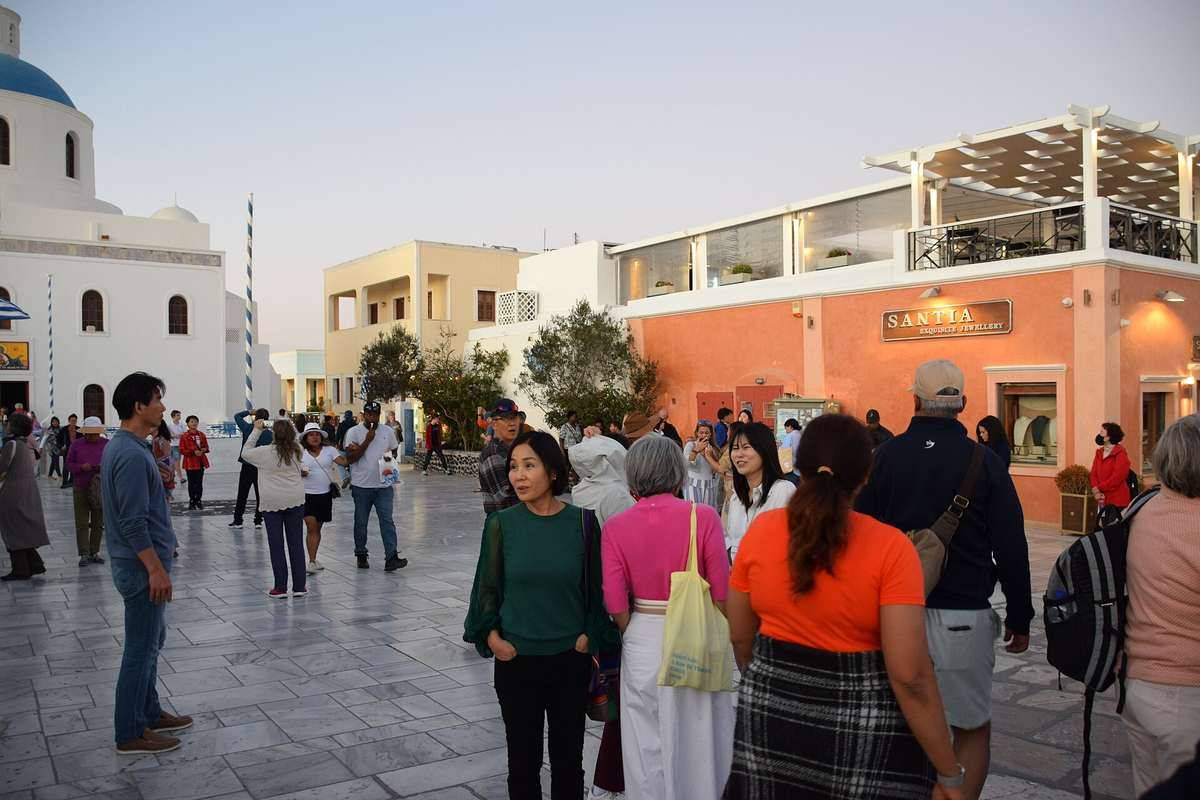
Santorini shopping centres on the lanes of Oia and Fira, with jewellery on the famous Gold Street, handmade ceramics, art galleries, textiles and local wine and olive oil. This guide covers where to shop, what to buy, the best souvenirs and tips for shopping on the island.
Browsing the boutiques is a pleasure of the wider Santorini travel guide. The two main villages hold most shops. The sections below cover shopping.
Where do you shop in Santorini?
You shop mainly in Oia and Fira, the two main villages. Oia’s Nomikos Street is the principal boutique, art and antique street. Fira has the famous Gold Street for jewellery, plus shops, galleries and boutiques along its lanes.
Santorini’s shopping is concentrated in its two best-known villages. Oia and Fira hold the vast majority of the island’s shops, set along their picturesque clifftop lanes. In Oia, Nomikos Street is the main commercial artery, lined with independent boutiques, art galleries and antique shops in one walkable stretch, alongside its galleries and silk and textile stores. Fira, the capital, has the densest concentration, including the celebrated Gold Street, Ypapantis Street, packed with jewellery shops, as well as fashion boutiques, ceramic studios and souvenir stores threading through its centre. Browsing these lanes, with the caldera as a backdrop, is a pleasure in itself, set within the wider Fira. The island has distinctive things to buy.
What should you buy in Santorini?
The best buys are gold and silver jewellery from Gold Street, handmade ceramics and pottery, art from Oia’s galleries, woven textiles and linens, and local produce such as Assyrtiko wine, Vinsanto and olive oil. Volcanic-stone jewellery is distinctive too.
Santorini offers some genuinely special purchases. Jewellery is a highlight, with the famous Gold Street and other boutiques selling gold and silver pieces by noted Greek designers, from classical to contemporary. Handmade ceramics and pottery, the bowls, plates and vases crafted on the island, make beautiful and characterful keepsakes, while Oia in particular is known for its art galleries, showing both folk art and contemporary Greek work. Lightweight, packable textiles, woven scarves, embroidered linens and silk, carry traditional Greek patterns, and the island’s produce is a delicious souvenir: a bottle of crisp Assyrtiko or sweet Vinsanto, local olive oil, or natural beauty products. Donkey-themed trinkets are the cheerful, ubiquitous classic, set out alongside the guides to the wineries and Santorini wine. The shopping experience varies.
What is shopping in Oia versus Fira like?
Oia’s shopping is upmarket and artistic, with boutique galleries, antiques, silk and designer pieces. Fira is busier and broader, with Gold Street jewellery, souvenir and fashion shops and lower-priced options. Oia suits art and gifts; Fira suits variety and value.
The two villages offer different shopping moods. Oia leans upmarket and artistic, its Nomikos Street and surrounding lanes full of stylish boutiques, art galleries, antique dealers and specialist shops such as silk stores, in a refined, romantic atmosphere that suits browsing for a special piece of art, jewellery or a unique gift, at correspondingly higher prices. Fira is livelier and more varied, with the famous Gold Street for jewellery alongside a broader mix of souvenir shops, fashion boutiques, ceramics and everyday stores, generally offering more choice and better-value options. So for art and one-off treasures head to Oia, and for variety, jewellery and gentler prices browse Fira, set out alongside the guide to Oia vs Fira. A few tips help.
What tips help for shopping?
The tips are to buy distinctive local items like wine, ceramics and jewellery over mass-produced trinkets, compare prices between Oia and Fira, shop in the cooler morning or evening, and pack or ship fragile ceramics carefully. Most shops close over winter.
A little strategy makes for better buys. Favour the island’s distinctive products over generic souvenirs. Locally made ceramics, designer jewellery, art, textiles and Santorini wine all make lasting mementoes. Prices vary between villages. Compare Oia’s pricier galleries with Fira’s broader, cheaper shops before a significant purchase.
Shop in the cooler morning or evening rather than the midday heat. When buying fragile ceramics or glass, ask the shop to wrap the piece well or arrange shipping. Most shops close over the winter, so the warm season is the time to browse. This pairs with the guide to the best time to visit Santorini. The questions below cover the points travellers ask most.
What local food and wine can you take home?
You can take home Assyrtiko and sweet Vinsanto wine, sun-dried cherry tomatoes and tomato paste, fava split-pea, capers, white aubergine products, thyme honey and local olive oil. These volcanic-soil foods are the island’s signature edible souvenirs.
Santorini’s volcanic soil grows produce found nowhere else, which makes food an ideal souvenir. The bottled wines lead the list: crisp, mineral Assyrtiko and the sweet, sun-dried Vinsanto pressed from grapes left to raisin in the sun. Both travel well when packed upright and cushioned. The island’s Assyrtiko and Vinsanto are protected regional products, so a bottle carries genuine local provenance.
Beyond wine, look for jarred and dried foods that pack flat. Santorini’s small, intense cherry tomatoes appear as paste, sun-dried tomatoes and tomato-based spreads. The island’s yellow fava, a split-pea purée, is sold dried by weight, and capers, white aubergine, thyme honey and cold-pressed olive oil round out a pantry haul. These pair naturally with the wider Santorini food guide.
What jewellery and ceramics are made on Santorini?
Santorini makes gold and silver jewellery on Fira’s Gold Street, volcanic-stone and lava-inspired pieces, and handmade ceramics such as bowls, plates, vases and tiles thrown and glazed in island studios in blue-and-white and earthy volcanic tones.
Jewellery is the island’s flagship craft. Gold Street in Fira concentrates goldsmiths and silversmiths whose work ranges from classical Greek key and Byzantine motifs to modern minimalist design. Distinctive to the island are pieces that set or echo volcanic stone, lava and black-sand tones, which tie a keepsake directly to Santorini’s geology. Prices scale with the metal, the stone and the designer’s name.
Ceramics form the second signature craft. Island studios throw and glaze bowls, plates, mugs, vases and decorative tiles, often in the caldera’s blue-and-white palette or in earthy reds and blacks that echo the volcanic landscape. Each piece is fragile, so ask the studio to wrap it for travel or arrange shipping. Pottery makes a characterful, usable memento rather than a throwaway trinket.
Where are Oia’s boutiques and art galleries?
Oia’s boutiques and art galleries cluster along Nomikos Street and the connecting clifftop lanes, holding contemporary art, folk works, silk and textiles, antiques and designer fashion in a compact, walkable stretch above the caldera.
Oia is the island’s gallery quarter. Nomikos Street and the narrow lanes off it hold contemporary Greek art, folk pieces, sculpture and photography, alongside silk stores, antique dealers and designer boutiques. The setting, whitewashed walls and the caldera view, makes browsing a pleasure in its own right. The village works best explored slowly on foot, and it anchors the wider Oia guide.
Can you shop in Pyrgos and Megalochori?
You can shop in Pyrgos and Megalochori, quieter inland villages where artisan studios, small ceramic and jewellery workshops, wineries and local-produce shops sit among traditional lanes, offering a calmer alternative to the busier boutiques of Oia and Fira.
Beyond the caldera-edge crowds, the inland villages reward browsers who want craft at a slower pace. Pyrgos, the island’s former capital, keeps studios and small workshops among its stepped alleys, and its position near the wineries makes it a natural stop for buying bottles at source. The village anchors the wider Pyrgos guide.
Megalochori adds a second quiet option, with restored mansions, a handful of artisan shops and canava wine cellars set among whitewashed lanes. Buying directly from a village winery or studio often means meeting the maker and picking pieces you will not find in the main resorts. These stops sit within the wider Megalochori guide.
When are shops open and can you claim tax-free?
Shops in Oia and Fira open through the warm season from spring to autumn, often into the evening, and close over winter. Non-EU visitors can claim a VAT refund on qualifying purchases above the threshold when they present forms and goods at departure.
Santorini’s retail follows the tourist season. From spring through autumn, boutiques in Oia and Fira open daily and often stay open late to catch the sunset crowd. Over winter the two villages quieten and a large share of shops close, so the warm months are the reliable time to browse. Hours are not fixed island-wide, so treat evening opening as typical rather than guaranteed.
Non-EU residents can often reclaim value-added tax on qualifying goods bought from participating shops. Ask the retailer for a tax-free form at the point of sale, keep the receipt and the item unused, and present the paperwork and goods for validation when leaving the European Union. Refund rules, thresholds and processing are set by the scheme, not the individual shop, so confirm the details in store before buying.
Frequently Asked Questions
What should you buy in Santorini?
The best things to buy in Santorini are gold and silver jewellery from the famous Gold Street, handmade ceramics and pottery, art from Oia’s galleries, woven textiles and linens, and local produce such as Assyrtiko wine, Vinsanto and olive oil. Donkey-themed souvenirs are the cheerful classic.
Where is the best shopping in Santorini?
The best shopping is in Oia and Fira. Oia’s Nomikos Street has upmarket boutiques, art galleries and antiques, while Fira has the famous Gold Street for jewellery plus a broader mix of souvenir, ceramic and fashion shops. Oia suits art and gifts, Fira suits variety and value.
Is Santorini good for shopping?
Santorini is good for distinctive shopping, especially jewellery, handmade ceramics, art, textiles and local wine and olive oil, concentrated in the lanes of Oia and Fira. Prices can be high, particularly in Oia’s galleries, so compare between the villages and favour genuine local products.
What food products should you bring back from Santorini?
Bring back bottled Assyrtiko and sweet Vinsanto wine, sun-dried cherry tomatoes and tomato paste, dried yellow fava split-pea, capers, white aubergine products, thyme honey and cold-pressed olive oil. These grow in the island’s volcanic soil, pack well and carry genuine local provenance, making them the most authentic edible souvenirs.
Can non-EU visitors claim tax-free shopping in Santorini?
Non-EU residents can claim a VAT refund on qualifying purchases above the scheme threshold from participating shops. Ask for a tax-free form at the till, keep the receipt and the unused goods, then validate the paperwork and present the items when leaving the European Union. Confirm thresholds and rules in the shop before buying.