
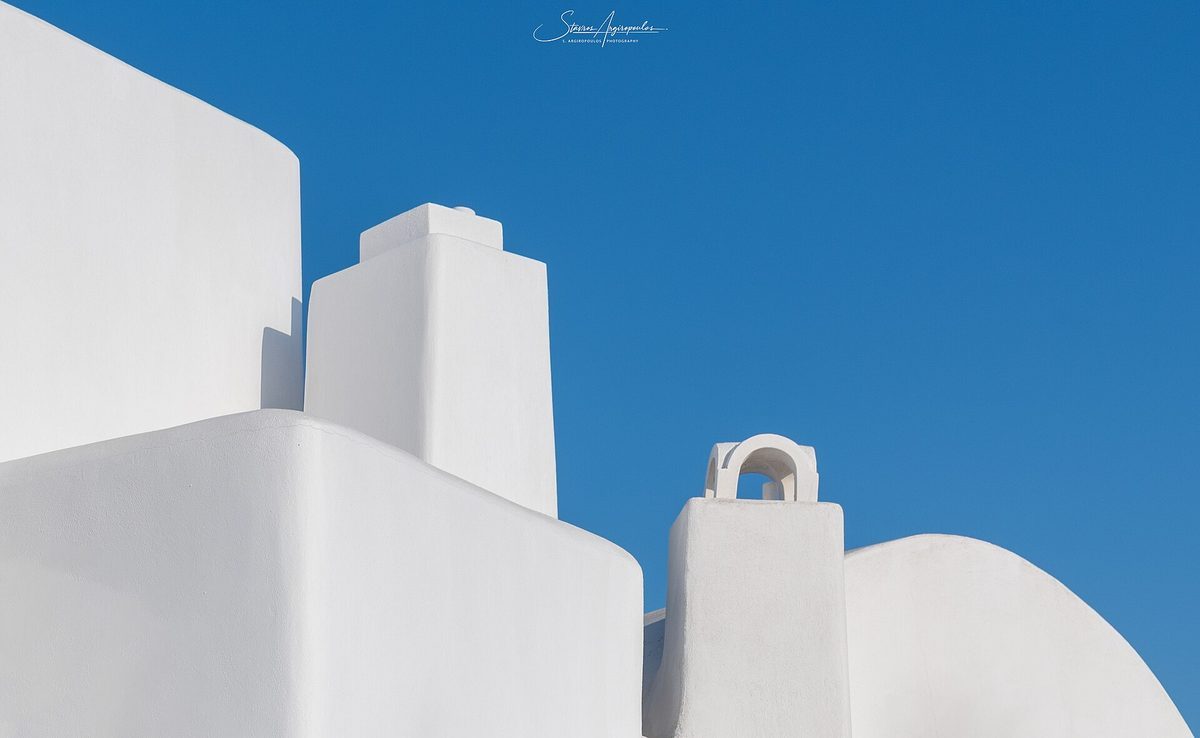
The Santorini villages beyond Oia and Fira reveal a quieter, more traditional island: hilltop Pyrgos with its Venetian castle, the living medieval fortress of Emporio, wine-country Megalochori and clifftop Imerovigli, the balcony of the Aegean. This guide covers the best villages and what each offers. Plan the whole trip with Greece Tours.
The inland and clifftop villages are the authentic heart of the wider Santorini travel guide. They lie a short drive from the busy towns. The sections below cover them in turn.
What is Pyrgos like?
Pyrgos is a beautiful hilltop village near the centre of Santorini, the former capital, built around a Venetian castle at one of the island’s highest points. Its winding lanes, churches and panoramic views make it a peaceful, traditional highlight.
Pyrgos is one of the island’s most rewarding villages. Set on a hill near the centre of Santorini, it was the island’s capital until the early nineteenth century and retains a genuine community feel, with locals gathering for ouzo and meze in the square at noon. Built around the Venetian Kasteli, a former castle at one of the highest points on the island, its tangle of whitewashed lanes, blue domes and old churches climbs to a summit with sweeping views over the entire island, the caldera and the Aegean.
Pyrgos comes into its own at Easter, when thousands of flaming tin cans light the village on Good Friday and draw visitors from across the island. Above the village stands the Prophet Elias monastery on Santorini’s highest peak, an easy add-on for the views alone, its terrace taking in both the caldera and the open Aegean. Good tavernas and a growing crop of small wine bars make it a fine lunch stop, set within the wider things to do in Santorini and detailed in the guide to Pyrgos. Emporio is the largest village.
What is Emporio like?
Emporio is the largest village in Santorini, once the island’s trading hub, famous for its remarkably preserved medieval fortress, the Kasteli. Built against pirates, the castle is still inhabited, with people living among centuries-old archways and blue domes.
Emporio is a step back into medieval Santorini. The island’s biggest village, once its commercial centre, spreads below a hill in the south-centre, and its great treasure is the Kasteli, a Venetian-era fortress raised in the fifteenth century to shelter residents from pirate raids. What makes it special is that the castle is still lived in: families occupy the medieval buildings, with washing hanging above ancient archways and cats dozing in Venetian doorways.
The maze of narrow, shaded alleys, hidden churches and blue domes makes Emporio wonderfully atmospheric to wander, and it is easy to lose the way among its blind passages. The outer houses once formed a defensive ring, their blank walls turned outward against raiders, so the village reads like a single fortress from a distance. It is one of five old castle settlements on the island and the most alive of them, with the least tourist polish. The windmills on the ridge above catch the sunset, set out alongside the guides to Emporio and Akrotiri. Megalochori is wine country.
What is Megalochori like?
Megalochori is one of Santorini’s most historic villages, set in wine country with old captains’ mansions, hidden squares and bell towers. Home to renowned wineries including Boutari, it is a favourite stop on a wine tour.
Megalochori is a romantic, unspoilt village at the heart of the island’s vineyards. Once a centre for Vinsanto production and trade, it preserves grand walled mansions with sturdy wooden doors, narrow alleys and pretty squares shaded by trees where locals gather at traditional cafés, along with old bell towers and churches. Its history of pirate hideaways and hidden cellars stretches back through the seventeenth century.
Surrounded by volcanic vineyards, Megalochori sits in prime wine country, with the renowned Boutari winery on its outskirts and several others within a short drive. The island’s Assyrtiko vines grow in low basket shapes to shield the grapes from the wind, a method found almost nowhere else, and the sweet Vinsanto has been made here for centuries. That makes it a natural first stop on a wine tour and a charming, quieter base for travellers who want the island’s food and wine rather than the crowds. The village photographs beautifully in the soft late light, set out alongside the guides to Megalochori, Santorini wine and Vinsanto. Imerovigli crowns the caldera.
What is Imerovigli like?
Imerovigli sits on the highest point of the caldera just north of Fira, quieter and more refined, known as the balcony of the Aegean for its panoramic views. Home to Skaros Rock and elegant suites, it offers Santorini’s finest sunsets in peace.
Imerovigli is the connoisseur’s caldera village. Its name means viewpoint, and perched on the highest part of the caldera rim a short walk north of Fira, it earns its nickname as the balcony to the Aegean with uninterrupted panoramas over the volcano and the sea. Quieter and more romantic than Fira or Oia, it is dotted with elegant cave suites and small luxury hotels, making it a favourite for honeymooners.
Below the village juts the dramatic Skaros Rock, once a fortified medieval refuge from pirates that held the island’s main castle before earthquakes brought it down, and now a rewarding short hike to the tiny chapel of Theoskepasti on its seaward side. The sunsets here rival Oia’s without the crush, and the caldera footpath links the village straight into Fira and on toward Oia. It suits couples above all, set out alongside the guides to Imerovigli, Skaros Rock and the sunset. A village day ties them together.
Which quieter villages are worth seeing?
Beyond the famous four, Finikia near Oia, Mesaria and Karterados in the centre, and Firostefani on the caldera rim reward a detour. Each keeps traditional lanes, cave houses and local life with far fewer visitors than Oia and Fira.
Santorini rewards travellers who stray off the caldera track. Finikia, a short walk east of Oia, is a tiny, traditional village of whitewashed lanes and cave dwellings that stays calm while Oia fills. Firostefani, between Fira and Imerovigli, gives caldera views and good tavernas at a gentler pace. Inland, Mesaria and Karterados keep old captains’ houses and shaded squares, and Exo Gonia perches quietly above the eastern plain.
These lesser-known villages are where island life carries on much as it always has, with bakeries, small churches and vineyards rather than boutiques. Karterados, close to Fira, hides pretty ravine houses and is handy for anyone who wants a quiet room near the capital, while Vourvoulos and Vothonas keep old cave dwellings carved into the soft volcanic rock. They make relaxed lunch stops between the big sights and give the fullest picture of the island, set out alongside the guides to Finikia, Firostefani and Mesaria. Linking the villages into a day is easy.
How do you visit the villages?
You visit the inland villages best by hire car, quad or guided tour, as Pyrgos, Emporio and Megalochori lie within 15 minutes of each other in the island’s centre. A classic day combines all three, ending with an afternoon wine tasting.
The traditional villages are easy and rewarding to explore together. Pyrgos, Emporio and Megalochori cluster in the centre and south of the island, all within about 15 minutes of one another, so a single day links them well. A good plan takes Pyrgos and its castle in the cooler morning, Emporio’s medieval Kasteli after lunch, and Megalochori with a winery tasting in the afternoon.
A hire car, quad or guided village tour is the most flexible way to reach them, since the local buses run mainly to Fira and the coast rather than between villages. Clifftop Imerovigli and Firostefani are an easy walk from Fira along the caldera path. Exploring these villages offers a calm, authentic counterpoint to the crowds of Oia and Fira, set out alongside the guides to a Santorini itinerary and car rental. The questions below cover the points travellers ask most.
Frequently Asked Questions
What are the best villages to visit in Santorini?
The best villages beyond Oia and Fira are hilltop Pyrgos with its Venetian castle and views, Emporio with its inhabited medieval fortress, wine-country Megalochori, and clifftop Imerovigli, the balcony of the Aegean. Each offers a quieter, more traditional side of the island.
What is the old capital of Santorini?
Pyrgos was the old capital of Santorini until the early nineteenth century. Built around a Venetian castle at one of the island’s highest points, this hilltop village offers winding lanes, churches and sweeping panoramic views over the whole island and the caldera.
How do you visit Santorini’s traditional villages?
You visit the inland villages best by hire car, quad or guided tour, as Pyrgos, Emporio and Megalochori lie within 15 minutes of each other in the island’s centre. Clifftop Imerovigli is an easy walk from Fira along the caldera path, and a wine tour often includes Megalochori.
Which Santorini village is quietest?
Finikia, near Oia, and the inland villages of Mesaria, Karterados and Exo Gonia are among the quietest on Santorini, keeping traditional lanes and local life with few visitors. Megalochori and Pyrgos are also far calmer than crowded Oia and Fira, especially outside peak season.