
This 8-day archaeology activity holiday in Greece joins guided visits to ancient sites with a cycling day to Tegea and a hike through the Lousios Gorge. Tours across the rest of the country are listed on Greece Tours.
The sections below cover what the archaeology activity holiday includes, Delphi, Tegea and the Temple of Athena Alea, the Lousios Gorge, Epidaurus, Sparta and Mystras, fitness, season, packing and booking, with links into the Peloponnese tours pages. The tour shown is checked on GetYourGuide.
What is the 8-day archaeology activity holiday in Greece?
The 8-day archaeology activity holiday is a Greece tour sold on GetYourGuide. Its listing title joins three themes: archaeology, cycling and hiking. It sets eight days of ancient sites alongside time on a bike and on foot.
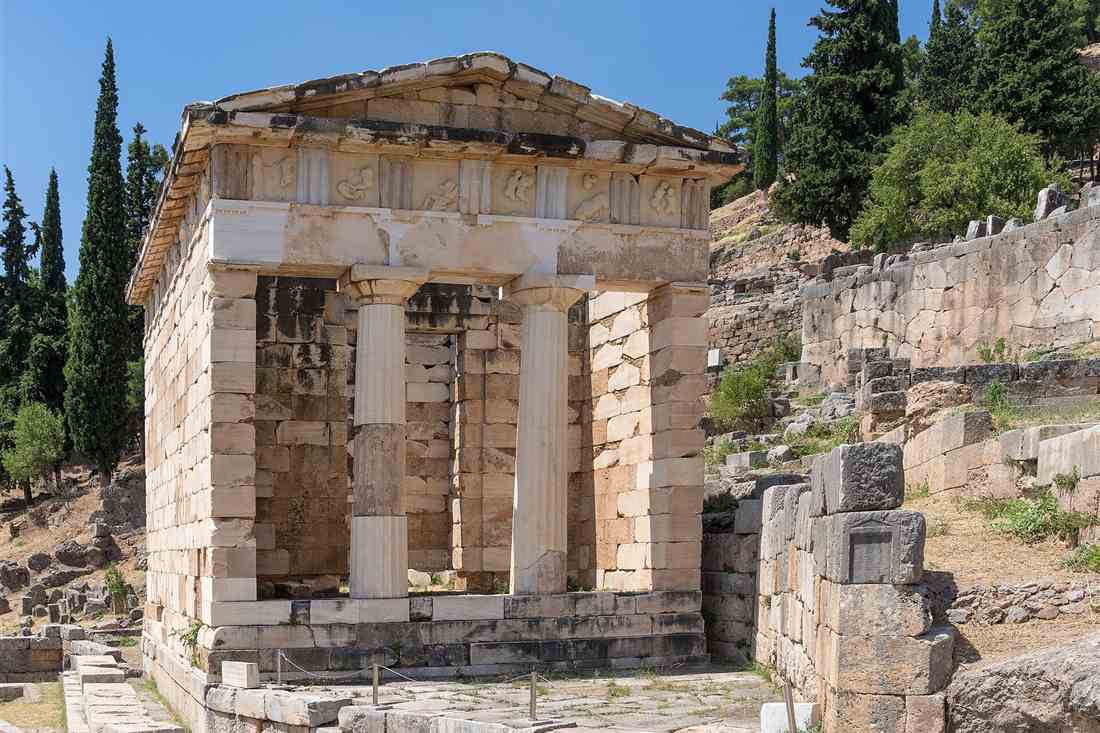
The full listing title is “Greece: 8-Day Archaeology Holiday with Cycling & Hiking.” GetYourGuide lists the tour under Delphi, so you find it among the Delphi tours on that site. The listing photos include the Athenian Treasury at Delphi.
Archaeology leads the name, so the ancient sites form the core of the trip. Cycling and hiking add the active side. Eight days make it a full holiday rather than a day trip. That length gives room to cover places in two separate areas of Greece.
This archaeology activity holiday suits travellers who want ancient history and outdoor activity in one booking. The sites, the ride and the hike all sit in the same listing. You plan one trip instead of three.
What does the archaeology activity holiday listing include?
The archaeology activity holiday listing promises three things. You explore ancient Greece on an archaeology tour with local experts. You cycle to ancient Tegea, and you hike the Lousios Gorge to hidden monasteries. The listing then adds four travel features.
The bike ride has a clear target: the temple of Athena Alea at ancient Tegea. The hike has one too: the monasteries that the listing calls hidden. The four travel features appear as short labels on the listing:
- Duration: 8 days
- Group: a small group
- Cancellation: free cancellation
- Reviews: none yet, as a new activity
A small group keeps the numbers down at each site and on the trail. That leaves more room for questions to the local experts.
Free cancellation means you can cancel without a fee within the terms shown on the listing. You can book early and still change your plans. That helps when flights or other bookings are not yet fixed.
The tour is new on GetYourGuide, so no traveller reviews appear yet. You judge it on the listing itself: its route, its activities and its photos.
Which places does the archaeology activity holiday cover?
The archaeology activity holiday covers six places named in its listing and photos, in two areas. Delphi lies in central Greece on Mount Parnassus. The other five places, Tegea, the Lousios Gorge, Sparta, Mystras and Epidaurus, lie in the Peloponnese.
Four places appear in the tour’s photos, and two more appear in the listing text. Here is each place with its region:
- Delphi, central Greece: the Athenian Treasury, shown in the photos
- Epidaurus, the Argolis: the ancient theatre, shown in the photos
- Sparta, Laconia: the statue of Leonidas, shown in the photos
- Mystras, Laconia: a Byzantine church, shown in the photos
- Tegea, Arcadia: the ancient city, named in the text
- Lousios Gorge, Arcadia: the gorge and its monasteries, named in the text
The photos mark places on the route shown by the listing. They do not set the order of the days.
Among the named places, Delphi is the only one outside the Peloponnese. The other five sit in three regions: Arcadia, Laconia and the Argolis. On this archaeology activity holiday, Arcadia holds the goals of both the ride and the hike.
The Mystras church adds a Byzantine layer to a route built around ancient sites. The gorge monasteries add more Christian history to the same trip. Epidaurus adds an ancient theatre, a different kind of site from a temple or a treasury.
What do you see at Delphi on this archaeology activity holiday?
At Delphi, this archaeology activity holiday reaches the sacred precinct on the south-western slope of Mount Parnassus. The tour’s photos show the ancient Athenian Treasury, one building inside the precinct. UNESCO lists Delphi as a World Heritage Site.
Delphi was the seat of the Pythia, the oracle consulted across the ancient world. Athens was not the only city with a treasury here. Other Greek city-states also built treasuries at the sanctuary.
The Athenian Treasury is built entirely of Parian marble, sculptures included. Parian marble comes from the island of Paros. Pausanias wrote that the Athenians dedicated it from the spoils of the Battle of Marathon. That battle was fought against the Persians.
The treasury’s metopes, the carved panels on the building, show Herakles and Theseus. The Theseus panels are the earliest known large-scale sculpture of that hero. Look for both heroes when the tour reaches the treasury.
For a visit outside the tour, see our Delphi tickets page.
How does the archaeology activity holiday mix walking, cycling and site visits?
The archaeology activity holiday mixes three kinds of activity. One day is a bike ride to ancient Tegea. Another day is a hike through the Lousios Gorge. The third kind is visits to ancient sites with local experts.
The ride and the hike give the trip its two active days. Archaeology is the thread that runs through the whole trip. The site visits bring in the local experts, who explain each place on the spot.
Walking and cycling serve the archaeology here. The bike carries you to a temple, and the trail carries you to monasteries. So each active day still has a historic goal.
A different 8-day option on GetYourGuide takes another approach. The 8-day highlights tour pairs Delphi with Meteora, Athens and Santorini. Its title names no cycling or hiking, and no Peloponnese stop.
Choose the cycling and hiking trip for active days and the Peloponnese. Choose the highlights tour for Meteora and Santorini. Both run for eight days, and both include Delphi.
What does the cycling day to ancient Tegea cover?
The cycling day of this archaeology activity holiday reaches ancient Tegea and its temple of Athena Alea. Tegea was one of the oldest and strongest towns of ancient Arcadia. It lay in the south-east of the region.
The ancient town stood near the modern villages of Alea and Episkopi. Today Tegea is a municipal unit of the Tripoli municipality, with an area of 118 square km. Legend names its founder Tegeates, a son of Lycaon, and the town’s name echoes his.
Tegea long resisted Sparta. An oracle misled the Spartan king Charillus, and he invaded. Charillus was defeated and captured with his surviving men. Tegea later joined the Sparta-led Peloponnesian League.
The ride to Tegea pairs cycling with ancient history on this archaeology activity holiday. Tegea and the Lousios Gorge both lie in Arcadia, so the ride and the hike share one region. Travellers who want more of the area can compare our Arcadia tours.
What is the Temple of Athena Alea at Tegea?
The Temple of Athena Alea joined the Olympian goddess Athena with Alea, a local goddess. Riders on this archaeology activity holiday reach it by bike. The site was a focus of worship from the 10th century BC.
Pausanias wrote that the local hero Aleus built the first temple. The hero Aleus and the goddess Alea have similar names. The nearby village of Alea carries the goddess’s name today. Herodotus wrote that the temple held chains from a failed Spartan attack in the 6th century BC.
The old temple burned in the early 4th century BC. The Parian architect Scopas then built a new one. Pausanias counted it among the finest temples of the Peloponnese. The new temple rose about two centuries after the Spartan attack recorded by Herodotus.
The temple was a place of asylum, a safe refuge for people in danger. The Spartan king Leotychides took refuge there. The Spartan general Pausanias did the same. He is a different man from the writer Pausanias. On this archaeology activity holiday, the temple shows how Tegea sheltered even Sparta’s leaders.
What does the hike through the Lousios Gorge cover?
Hikers on this archaeology activity holiday walk the Lousios Gorge to hidden monasteries. The Lousios is a river and gorge in western Arcadia. It stretches from Karytaina north to Dimitsana. The gorge is about 15 km long and about 2 km wide.
The gorge hiked on this archaeology activity holiday is heavily forested, with steep cliffs. The river is fast and cold. Pausanias called it the coldest river in the known world. Tradition says Zeus washed at its sources after his birth.
Two towns, three monasteries and one ancient city stand in or beside the gorge along its length:
- Dimitsana, at the northern end of the gorge
- Stemnitsa, at about 1,050 m above the left bank of the Lousios
- The Old and New Philosophou Monasteries, inside the gorge
- The Prodromou Monastery, also inside the gorge
- Ancient Gortys, at the southern end of the gorge
Gortys had a temple of Asclepius built of Pentelic marble. Scopas also made its statues of Asclepius and Hygieia, so his name links Tegea and Gortys. Remains of fortifications, temples and baths have been found at the site.
Stemnitsa is known for its gold- and silversmiths. Dimitsana has an open-air Water Power Museum with a flour mill, a tannery and a gunpowder mill. The town’s gunpowder mills supplied the Greek War of Independence.


What does Epidaurus add to the archaeology activity holiday?
Epidaurus is shown in the tour’s photos, and it brings theatre history to this archaeology activity holiday. Its theatre is counted the finest ancient Greek theatre for acoustics and design. UNESCO lists it together with the sanctuary of Asclepius.
The ancient theatre was built in the late 4th century BC. Pausanias credits Polykleitos the Younger as its builder. It held 13,000 to 14,000 spectators at a time. That makes it a work of the same century as Scopas’s temple at Tegea.
The Epidaurus Festival stages plays in the theatre in summer. So the building still works as a stage, not only as a ruin. Our Epidaurus tickets page covers entry to the site.
Where Tegea shows a temple, Epidaurus adds a theatre to this archaeology activity holiday. Asclepius also links Epidaurus with ancient Gortys at the Lousios Gorge. Together, the sites show worship and drama in ancient Greece.
What do Sparta and Mystras add to the route?
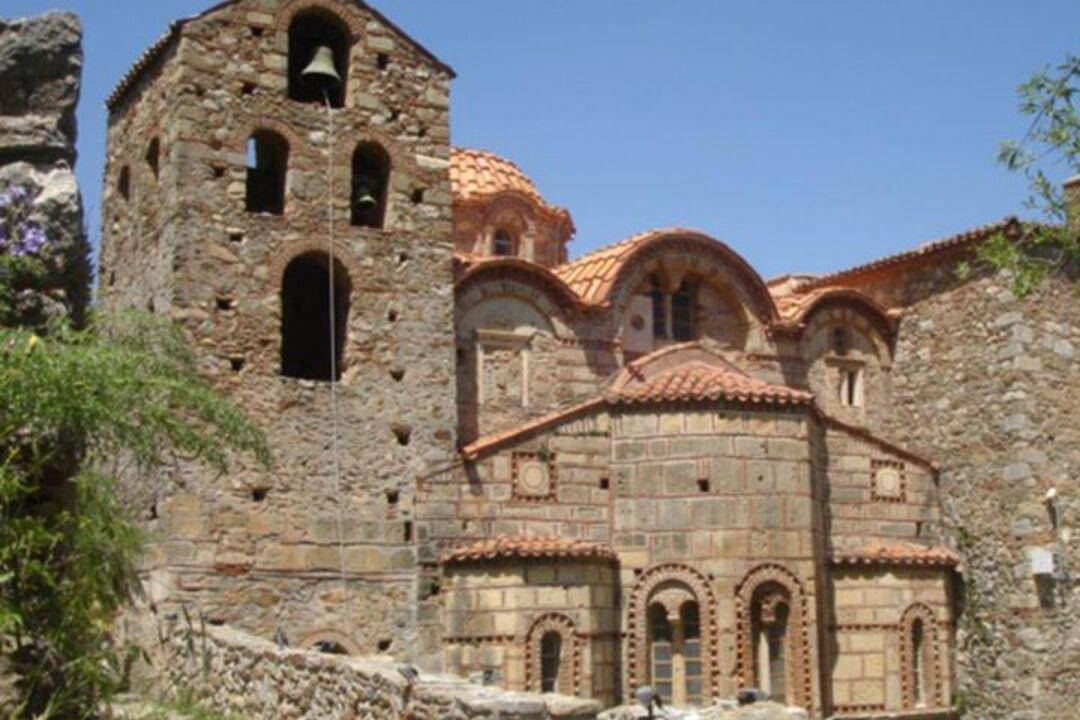
Sparta and Mystras are shown in the tour’s photos for this archaeology activity holiday. Sparta brings the story of Leonidas. Mystras brings a well-preserved Byzantine city, a UNESCO World Heritage Site for its Late Byzantine and post-Byzantine art.
Modern Sparta is the seat of the Laconia region and stands on the Eurotas River. Leonidas, king of Sparta, led the Greek forces at the Battle of Thermopylae in the 5th century BC. He died there and became the hero of the 300 Spartans.
On this archaeology activity holiday, a statue of Leonidas appears in the tour’s photos. For a longer visit to the town, see our Sparta tours.
Mystras rises above the modern village of Mystras and above Sparta. On an archaeology activity holiday, it adds the Byzantine age to the ancient sites. Its story runs through these points:
- Churches covered in frescoes during the Palaeologan Renaissance
- The Palace of the Despots, which grew over the 14th and 15th centuries
- Constantine XI Palaiologos, despot of Mystras before he took the throne in Constantinople as the last Byzantine emperor
- Abandonment in the 19th century, when new Sparta was built about 8 km to the east
Frescoes are paintings made on wet plaster. Ways to explore the site are listed on our Mystras tours page.

How fit do you need to be for the cycling and hiking days?
An archaeology activity holiday suits travellers who ride a bike with ease and walk on rough paths. Regular exercise at home prepares you for the bike day and the gorge hike. Steady legs matter more than speed.
The Lousios Gorge is heavily forested, with steep cliffs and a fast, cold river below. Stemnitsa, the village above the gorge, stands at about 1,050 m. Steep ground near the cliffs asks for strong knees and steady footing. Hill walks at home build both before you travel.
The site visits add more walking on ancient stone paths and steps. At Epidaurus you climb the theatre rows. At Delphi you walk the sacred way. Stair practice at home prepares your legs for these old, uneven surfaces.
Ride a bike once or twice a week in the month before your archaeology activity holiday. Hills train your legs better than flat roads. Our page on cycling routes in Greece sorts rides by region, season and skill level.
Which season suits an archaeology activity holiday in the Peloponnese?
Spring and autumn suit an archaeology activity holiday in the Peloponnese. Both seasons bring milder days for cycling and for hiking. Summers here are hot and dry, so long rides and gorge walks feel harder work.
Late spring gives mild riding weather before the summer heat arrives. Early autumn gives the same mild days after the heat fades. Both windows suit long hours on a bike saddle and on gorge paths.
Central Greece follows the same pattern, and Delphi stands in that region. A spring or autumn date keeps both regions comfortable for walking at the sites.
A summer date brings one bonus. The Epidaurus Festival stages plays at the ancient theatre in summer. Heat is the trade-off, so rest in shade and drink water at each stop.
Match the season to your goal on this archaeology activity holiday. Pick spring or autumn for comfort on the bike. Pick summer if the festival matters more to you than cool air.
What do you pack for an archaeology activity holiday?
An archaeology activity holiday needs kit for the bike saddle, the gorge path and the open sites. Pack light, because you carry a day pack on the active days. Choose clothes and shoes that work for riding and walking.
Use this list as a starting point, and check the listing for any extra items before you fly.
- Cycling shorts or comfortable clothes for the bike day
- Padded gloves to ease hand strain on the handlebars
- Hiking shoes with grip for the gorge path and ancient steps
- A hat and sunscreen
- A refillable water bottle
- A light rain layer for spring or autumn dates
- A small day pack
- A passport or ID card
Grip matters on two surfaces: the gorge path and the ancient stone steps. Wear your hiking shoes before the trip so they feel broken in. New shoes on day one bring blisters.
Fill your bottle before each ride and each walk. Pack your ID card in a zipped pocket of the day pack. That way, it stays dry and safe on the bike. Sunscreen goes on before you leave, and again at midday breaks.
How do you book and cancel the archaeology activity holiday?
You book the archaeology activity holiday on its GetYourGuide listing. Choose a date and the number of travellers, then pay online. Free cancellation runs up to 24 hours before the start on listings that show it.
The listing sits under Delphi on GetYourGuide. Read the terms on the listing before you pay, since they set the rules for changes.
Fix your flights first, so the tour start date fits your arrival in Greece. The confirmation arrives by email after payment. Save it on your phone, so you can show it offline on day one.
Short on time? These day tours in Arcadia also appear on GetYourGuide.
- A Lousios Gorge hike to ancient Gortyna
- Private Day Tour in Arcadia: Agia Theodora and Philosofou Monasteries
- Arcadia Villages & Cliffside Monastery Private Experience
Each of these day tours shows its own dates and cancellation terms on its listing.
Frequently Asked Questions
How long is the archaeology activity holiday?
It lasts 8 days. The full listing name is “Greece: 8-Day Archaeology Holiday with Cycling & Hiking.” Across those days, the archaeology activity holiday mixes bike rides, gorge hikes and visits to ancient sites. Check the listing calendar for start dates. Shorter options in Arcadia appear in the booking section above.
Is the archaeology activity holiday a small-group tour?
Yes. The listing describes it as a small-group tour. Small groups keep the pace steady on bike rides and gorge paths. They also leave room for questions at each ancient site and at rest stops. Check the listing for the exact group size before you book.
Where is ancient Tegea?
Ancient Tegea lies in Arcadia, near the modern villages of Alea and Episkopi. The site belongs to the Tripoli municipality. Look for those two village names on a map to find it. On this tour, you reach Tegea and the temple of Athena Alea by bike.
How long is the Lousios Gorge?
The Lousios Gorge is about 15 km long and 2 km wide. Those numbers describe a long, narrow valley rather than a short ravine. On this tour, you hike the gorge to reach hidden monasteries. Ask at the start how much of the gorge your group walks that day.
Does the tour have reviews yet?
No. It is a new activity on GetYourGuide, so it has no reviews yet. The listing page is the main source of detail for now. Read the full description there before you book.