
Kos Olive Oil Tasting
A Kos olive oil tasting is a guided visit to an olive farm on the Greek island of Kos, where a host shows how the trees grow, how the oil is pressed and how to taste it the way trained panels do. It adds a farm day to the beach and history days that Greece Tours covers across the islands.
Two Kos olive oil tasting tours are on sale: a farm experience centred on the oil, and a tuk-tuk tour from Pyli that adds aloe vera and wine. Each Kos olive oil tasting teaches the same core skills, from judging fruitiness, bitterness and pungency to reading a label.
What is a Kos olive oil tasting?
A Kos olive oil tasting is a hosted session on a working olive farm where visitors learn how the oil is grown and pressed, then taste it and judge fruitiness, bitterness and pungency with a set method.
The format is simple and hands-on. A host walks the group through the grove, explains the trees and the harvest, and sets out small tasting cups at a table. Guests warm each cup, smell the oil, sip it with a slurp of air and describe what they find. A Kos olive oil tasting treats oil the way a wine tasting treats wine: as a farm product with a place and a harvest.
The session differs from a shop sampling, where oil sits on bread and the aim is a sale. On a Kos olive oil tasting the oil comes first, in a cup, with nothing to mask it, and the host explains why one oil catches the throat while another tastes of green tomato. That grounding makes the rest of the island’s food, from salads to grilled fish, easier to read and enjoy.
Which Kos olive oil tasting tours are on sale?
Two Kos olive oil tasting tours are on sale: a farm experience built around the oil itself, and a tuk-tuk tour from Pyli that pairs the oil with aloe vera and wine. Each listing states the details.
The first tour is listed as Kos: Olive Oil Tasting Farm Experience. The title points to one focus: time on a working farm, the story of how the oil is made and a guided tasting. For travellers who want the most depth on oil alone, this Kos olive oil tasting is the direct choice. The start time, meeting point and inclusions sit on the tour listing, so read it in full before booking.
The second tour is listed as Kos: Olive Oil, Aloe Vera and Wine Tasting Tuk-Tuk Tour, and it starts from Pyli, a mountain village on the slopes of Mount Dikaios below the Byzantine ruins of Old Pyli. The tuk-tuk carries guests between stops, and the tasting covers three local products. This Kos olive oil tasting suits travellers who want a broader taste of the island’s farms in one outing.
Where do olives grow on Kos?
Olive groves on Kos cover the lower slopes of Mount Dikaios and the plains around Zipari, Pyli and Antimachia. Koroneiki is the most widely planted Greek variety, and family farms press and bottle their own oil.
Kos is a long, narrow island, and its farmland lies between the mountains and the sea. Mount Dikaios, the highest peak on the island, rises inland, with olive trees on its lower slopes. The plains around Zipari, Pyli and Antimachia hold groves beside fields and vineyards. Olive trees need dry summers, mild winters and well-drained soil, and this belt supplies all three. A Kos olive oil tasting brings visitors into this farming country.
Koroneiki is the most widely planted olive variety in Greece, and its small fruit gives a green, peppery oil. For the exact varieties on a given farm, ask the host during the Kos olive oil tasting. The harvest runs from late October to December, when family farms and small mills press their fruit and bottle the new oil. A cup from that autumn tastes greener and sharper than the same oil a year later.
How does a farm visit run on a Kos olive oil tasting?
A farm visit on a Kos olive oil tasting combines three parts: a walk among the trees, an explanation of harvest and pressing, and a seated tasting. The exact order, timing and stops appear on each tour listing.
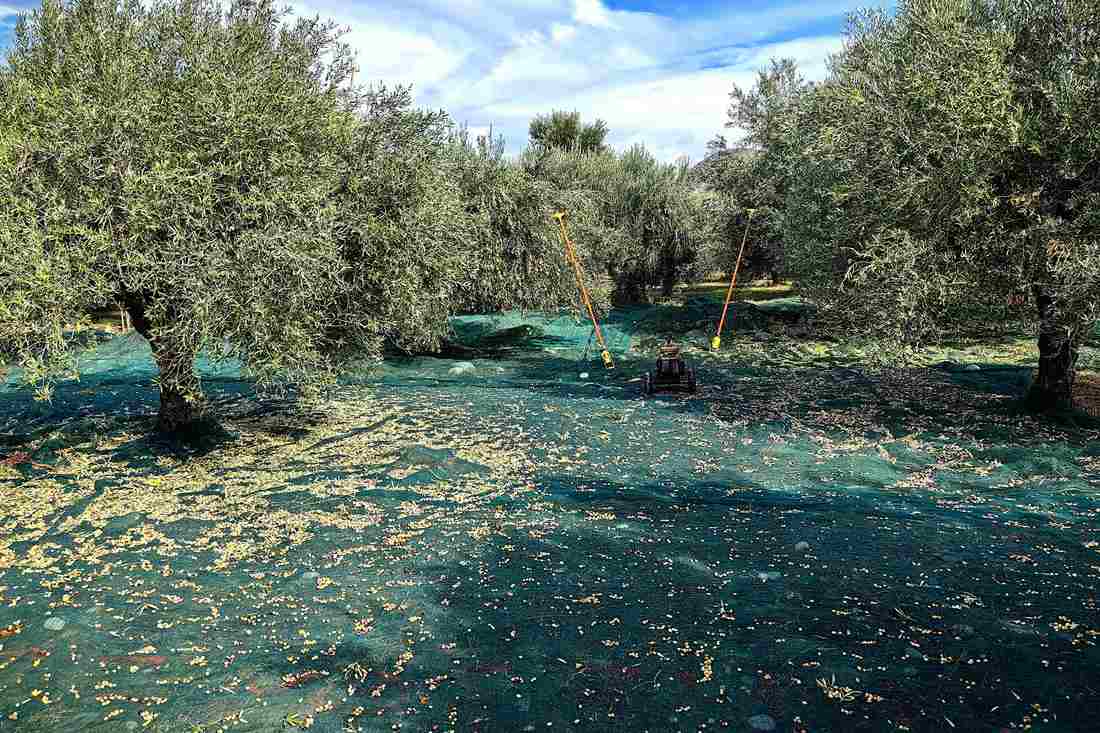
The visit opens outdoors. The host leads guests between the rows, points out the age of the trees, the pruning and the harvest nets, and explains how the farm cares for its grove through the year. This part answers the questions visitors bring: how old an olive tree gets, how much fruit it gives and why the leaves flash silver in the wind. Shoes for dry soil and a sun hat help here.
The second part moves to the press or the storage room. On a Kos olive oil tasting, the host explains each step from crushing to separation and shows where the oil rests before bottling. Farms with their own mill can show the machines, while others explain the process with tools and photos. Outside the harvest months the machines stand still, so the talk carries the process instead of a live run. The tasting table comes last.
How is olive oil made, from harvest to bottle?
Olive oil is made in five steps: harvest by nets and hand rakes, washing, crushing, malaxation, where the paste is mixed, and centrifuge separation. Cold extraction means the paste stays below 27 °C, which protects aroma and flavour.
The harvest starts in late October. Workers spread nets under the trees and comb the branches with hand rakes, so the fruit drops without bruising. The olives go to the mill fast, because fruit left in sacks ferments and spoils the oil. At the mill, leaves and twigs are removed and the olives are washed. A Kos olive oil tasting explains why these early steps decide the quality of the final cup.
Crushing turns the whole fruit, stone included, into a thick paste. Malaxation then mixes the paste slowly so the tiny oil drops join together. A centrifuge spins the paste and separates the oil from water and solids. The oil rests, is filtered or left cloudy, and goes into dark glass or tins. On a Kos olive oil tasting, hosts explain that a paste kept below 27 °C earns the label cold extraction.
- Harvest – nets and hand rakes.
- Washing – leaves out, fruit rinsed.
- Crushing – whole fruit into paste.
- Malaxation – slow mixing below 27 °C.
- Separation – a centrifuge splits the oil.
What makes an oil extra virgin, and how do you read the label?
An olive oil is extra virgin when its free acidity sits at or below 0.8% and trained tasters find no defects. A Kos olive oil tasting shows how the label states the grade and the harvest.
Extra virgin is the top grade of olive oil. It comes from the fruit by mechanical means alone, with no chemicals and no heat treatment, and it passes two tests. The first is a lab test of free acidity, at or below 0.8%. The second is a taste test by a trained panel, which must find fruitiness and zero defects. An oil that fails either test drops to a lower grade.
Reading a label takes a minute once the terms are clear. A Kos olive oil tasting walks through the details that separate a fresh farm oil from a tired one on a shelf. The harvest date matters more than the best-before date, because oil loses aroma with age. A dark bottle or a tin protects the oil from light, and a named origin tells the buyer where the olives grew.
- Grade – extra virgin on the front.
- Harvest date – the most recent season.
- Origin – the island or region named.
- Container – dark glass or a tin.
How do you taste olive oil step by step?
To taste olive oil, warm the small cup in your hand, cover and swirl it, smell it, then sip and slurp with air. A Kos olive oil tasting then asks for three notes: fruitiness, bitterness and pungency.
Professional tasters use small coloured cups so the colour of the oil does not sway their judgement. The cup is warmed in the palm to release the aroma, covered with the other hand and swirled. The taster lifts the cover and breathes in, looking for fresh-cut grass, tomato leaf, artichoke or green almond. On a Kos olive oil tasting, this first smell tells guests most of what the oil will taste like.
Next comes the sip. The taster draws air through the teeth with a slurp, a technique called strippaggio, which spreads the oil across the mouth. Bitterness shows on the tongue, while pungency is the peppery catch in the throat that comes from oleocanthal. Guests on a Kos olive oil tasting who cough at this point have met a fresh, pungent oil. Water and a slice of green apple clean the palate between cups.
- Warm – the cup in the palm.
- Swirl – the covered cup.
- Smell – the fresh aromas.
- Slurp – the oil with air.
- Reset – with water and apple.

Which flavours and defects does a Kos olive oil tasting teach?
A Kos olive oil tasting teaches three positive attributes, fruity, bitter and pungent, and four common defects: rancid, fusty, musty and winey. A good fresh oil is green-fruity, bitter and pungent, with none of the defects.
The positive side of the scale is easy to learn. Fruitiness is the aroma of fresh olives. Bitterness is the sharp taste on the tongue that comes from young fruit, and pungency is the peppery burn in the throat. Visitors who expect oil to taste smooth and mild find these notes surprising, yet they are signs of freshness. A Kos olive oil tasting shows how to value them rather than avoid them.
The defects matter just as much, because they mark oil that has aged badly or came from damaged fruit. Rancid oil smells of old nuts or crayons after long contact with air. Fusty oil comes from olives piled up before pressing, musty oil from mouldy fruit, and winey oil, with a vinegary edge, from fruit that fermented. After a Kos olive oil tasting, guests spot these faults in restaurant and supermarket oil back home.
- Fruity – fresh green or ripe olives.
- Bitter – sharpness on the tongue.
- Pungent – pepper in the throat.
- Rancid – old nuts from aged oil.
- Fusty – sour notes from piled olives.
Do Kos olive oil tastings pair the oil with food?
Yes, food pairings round off the lesson: plain bread, ripe tomatoes, olives, horta and a local cheese show how an oil changes a dish. The tour listing for each Kos olive oil tasting states what the farm serves.
Bread is the classic partner, but it softens the oil, which is why tasters try the oil alone first. Once the cups are done, bread with a pool of green oil shows the fruit and the pepper in a new light. Ripe tomato with salt and oil is the simplest Greek salad, and olives from the same trees close the loop. A Kos olive oil tasting uses these plain foods because they hide nothing.
Kos has its own cheese as well: the island’s soft white krasotyri, a local cheese that takes a drizzle of peppery oil well. Horta, the boiled wild greens served across Greece, arrive with oil and lemon. Tasting the oil on these foods helps in choosing a bottle to take home. For a full evening of local dishes after a Kos olive oil tasting, a Kos food tour continues the same theme.
Why does the tuk-tuk tour from Pyli add aloe vera and wine?
The tuk-tuk tour from Pyli adds aloe vera and wine because both are Kos farm products, like olive oil. Aloe vera grows on island farms and becomes gels and cosmetics, and the wine stop introduces the island’s vineyards.
Aloe vera is a succulent plant with thick, fleshy leaves filled with a clear gel. It likes heat, sun and dry soil, which suits Kos. Farms on the island harvest the leaves and turn the gel into skin creams and other cosmetics. On this Kos olive oil tasting, the aloe stop explains how the plant is grown and processed, a neat link to a beach holiday, since aloe gel is a common after-sun product.
The wine stop completes a trio of Kos farm products. Grapes grow on the same inland slopes as the olives, and the tasting introduces the local style. For more depth on the island’s vineyards, a Kos wine tasting goes further into grapes and cellars. The tuk-tuk turns this Kos olive oil tasting into an open-air ride through the countryside around Pyli, with the stops listed on the tour page.
Can you buy olive oil on Kos and take it home?
Yes, olive oil on Kos comes in bottles and 5-litre tins for travellers to take home. Liquids over 100 ml go in checked luggage, so pack oil in the hold, wrapped and sealed, rather than in a cabin bag.
Most visitors leave a Kos olive oil tasting wanting to bring the taste home. Bottles suit small amounts and gifts, while a 5-litre tin holds enough for months of cooking and keeps light out completely. Tins are also sturdier than glass in a suitcase. Before buying, read the label with the skills from the tasting: extra virgin grade, a recent harvest, a named origin and a dark container that blocks light.
Airport rules decide how the oil travels. Liquids over 100 ml go in checked luggage on flights from Greece, so every bottle bought after a Kos olive oil tasting goes in the hold. Wrap bottles in clothes, seal the caps with tape and place them in a plastic bag in the middle of the case. At home, store the oil in a cool, dark cupboard, away from the stove and the window.
- Tins – sturdy and light-proof.
- Bottles – wrapped in clothes.
- Caps – sealed with tape.
- Storage – cool and dark.
When is the best season for a Kos olive oil tasting?
The best season for a Kos olive oil tasting depends on the goal: late October to December shows the harvest and fresh oil, while summer suits beach holidays. In summer, a morning or late-afternoon start avoids the midday heat.
Harvest season is the richest time for oil lovers. From late October to December the nets are down, the mills are running and the new oil is at its greenest and most pungent. A Kos olive oil tasting in these months can include the sight of fresh fruit and just-pressed oil. The island is quieter then, and the mild weather suits a walk in the groves. Check the listing for autumn dates.
Summer brings most visitors to Kos, and a Kos olive oil tasting fits neatly between beach days. The oil on the table in summer comes from the previous harvest, so it tastes rounder and milder than in autumn, but the lesson is the same. Heat is the main factor in July and August, so pick a morning or late-afternoon start where the listing offers one, and carry water and a hat.
How do you book a Kos olive oil tasting?
Book a Kos olive oil tasting online through the tour listing, which shows available dates, start times, the meeting point and what is included. Booking ahead matters most in July and August, when demand on Kos peaks.
Each tour listing sets out the details that vary between the two tours: the start time, the pickup or meeting point, the stops and the tastings included. Read it in full, including the cancellation terms. Pick the farm experience for a focused Kos olive oil tasting, or the tuk-tuk tour from Pyli for a wider outing with aloe vera and wine. Resort guests check how to reach the meeting point.
A Kos olive oil tasting fills one part of a wider island stay, and the Kos island page lists the main days out. History fills a day in Kos Town and at the Asklepion, the ancient healing sanctuary outside town, while cycling on Kos follows the flat north coast. Oil, wine and food tours then round out the farm side of the island, giving a stay a balance of beach, history and local produce.
Is a Kos olive oil tasting worth it?
Yes, a Kos olive oil tasting is worth it for travellers who enjoy food, farming or slow days away from the beach. It teaches a lasting skill: telling fresh, well-made oil from tired oil in any kitchen or shop.
A Kos olive oil tasting suits couples, friends and families with older children, and it suits food lovers above all. Home cooks gain the most, because the method changes how they buy, store and use oil. Travellers who dislike strong flavours still learn from the session, since the host explains each note before the sip. Guests with food allergies check the tour listing and tell the host before any food is served.
The skill travels well beyond Kos. A guest who can spot a rancid or fusty oil reads every menu and market in Greece differently. The same method applies at an olive oil tasting on Rhodes or a Crete olive oil tasting, where different groves and varieties add new comparisons. As a first lesson in oil, a Kos olive oil tasting gives a clear, practical start that pays off at every Greek table.
Frequently Asked Questions
How long does a Kos olive oil tasting last?
The length of a Kos olive oil tasting depends on the tour, and each listing states its duration. The tuk-tuk tour from Pyli adds aloe vera and wine stops, so it covers more ground than the farm experience.
Can children join a Kos olive oil tasting?
Age rules differ by tour, so families check the tour listing before booking a Kos olive oil tasting. The grove walk and bread with oil suit young visitors, while the wine on the tuk-tuk tour from Pyli is served to adults only.
What does cold extraction mean on an olive oil label?
Cold extraction means the olive paste stayed below 27 °C during pressing. The lower heat keeps more aroma and flavour in the oil, and a Kos olive oil tasting shows how to read this term beside the grade and the harvest date.
Can you see the olive harvest on Kos?
Yes, the olive harvest on Kos runs from late October to December. A Kos olive oil tasting in these months shows nets, hand rakes and fresh green oil, and the tour listing confirms which autumn dates are open.
Can you take olive oil home from Kos on a flight?
Yes, but liquids over 100 ml go in checked luggage. Pack bottles wrapped in clothes with taped caps, or choose a 5-litre tin, which is sturdier and blocks light. Buy after the Kos olive oil tasting, once the preferred oil is clear.